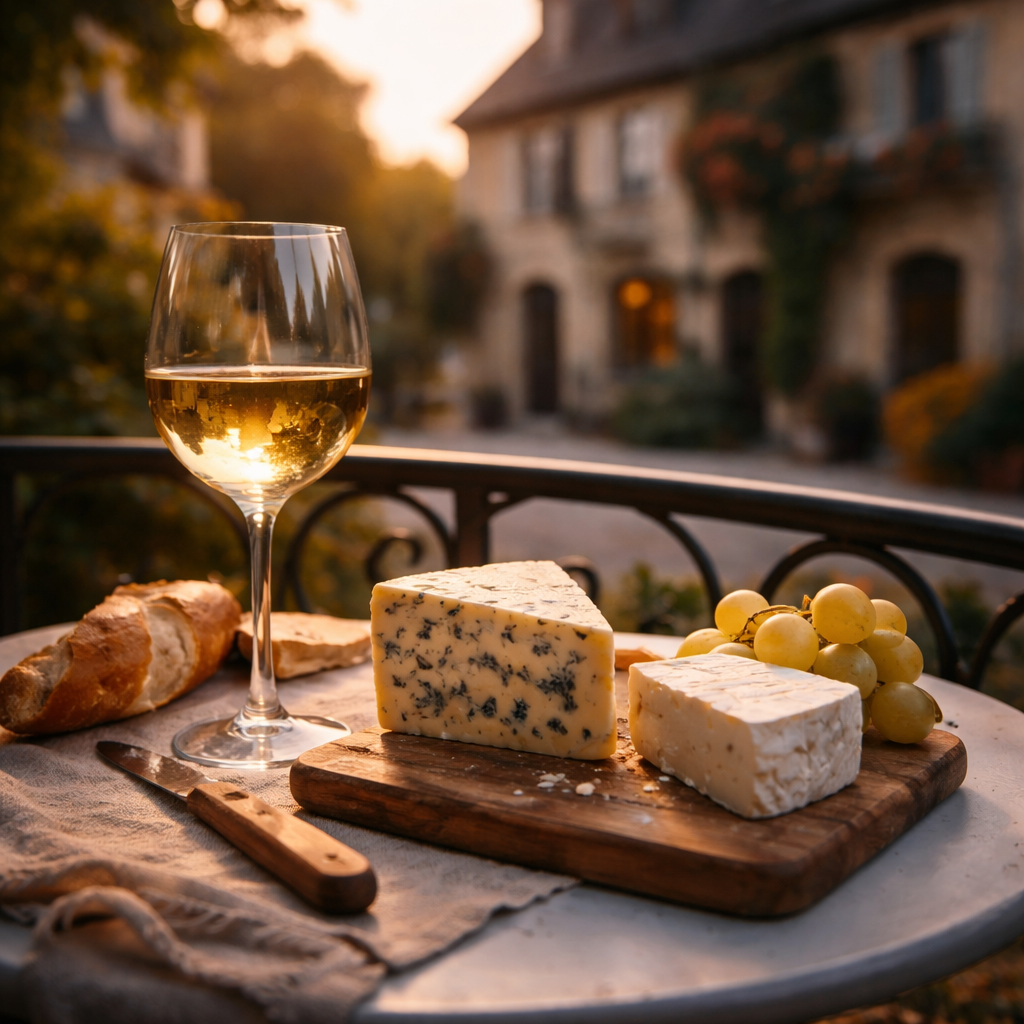
France does not treat wine and cheese as luxury props. It treats them as part of daily pleasure, regional identity, and the slow craft of knowing what belongs together. That difference matters, because many travelers arrive expecting a polished tasting fantasy and leave slightly overwhelmed—too many labels, too many varieties, too much pressure to “understand” everything correctly. The truth is much simpler: you do not need to be a connoisseur to enjoy France well. You need a little structure, a little curiosity, and enough confidence to stop trying to impress anyone.
That is why this is not another article that simply lists Bordeaux, Brie, Champagne, Camembert, and calls it a journey. You already know France has famous wine and famous cheese. What most travelers actually need is a usable French wine and cheese guide: how to order, how to pair, how to build a tasting day, how to avoid tourist traps, and how to enjoy the experience whether you are in a Paris wine bar, a village market, or a vineyard in the countryside. France becomes much more fun when you stop treating wine and cheese like exam material.
The best part is that French food culture rewards this more relaxed approach. A simple lunch with one good glass and one good cheese can feel more “French” than a rigid tasting with fifteen notes and a stressed face. The country is full of opportunities to taste beautifully, but the people who enjoy it most are usually the ones who understand rhythm: one or two meaningful combinations, one good setting, one slow hour. That is the mindset this guide is built to give you.
How Wine and Cheese Actually Work in France
The first thing to understand is that France does not treat wine and cheese pairing as a rigid science for tourists. Yes, there are classic combinations, and yes, some pairings are more harmonious than others, but the culture around them is much more intuitive than many visitors expect. People often pair by region, by texture, by intensity, and by occasion rather than by memorized rules. A soft cheese with a sharp, acidic white can work beautifully, and so can a fuller red with something aged and nutty, but context matters just as much as theory.
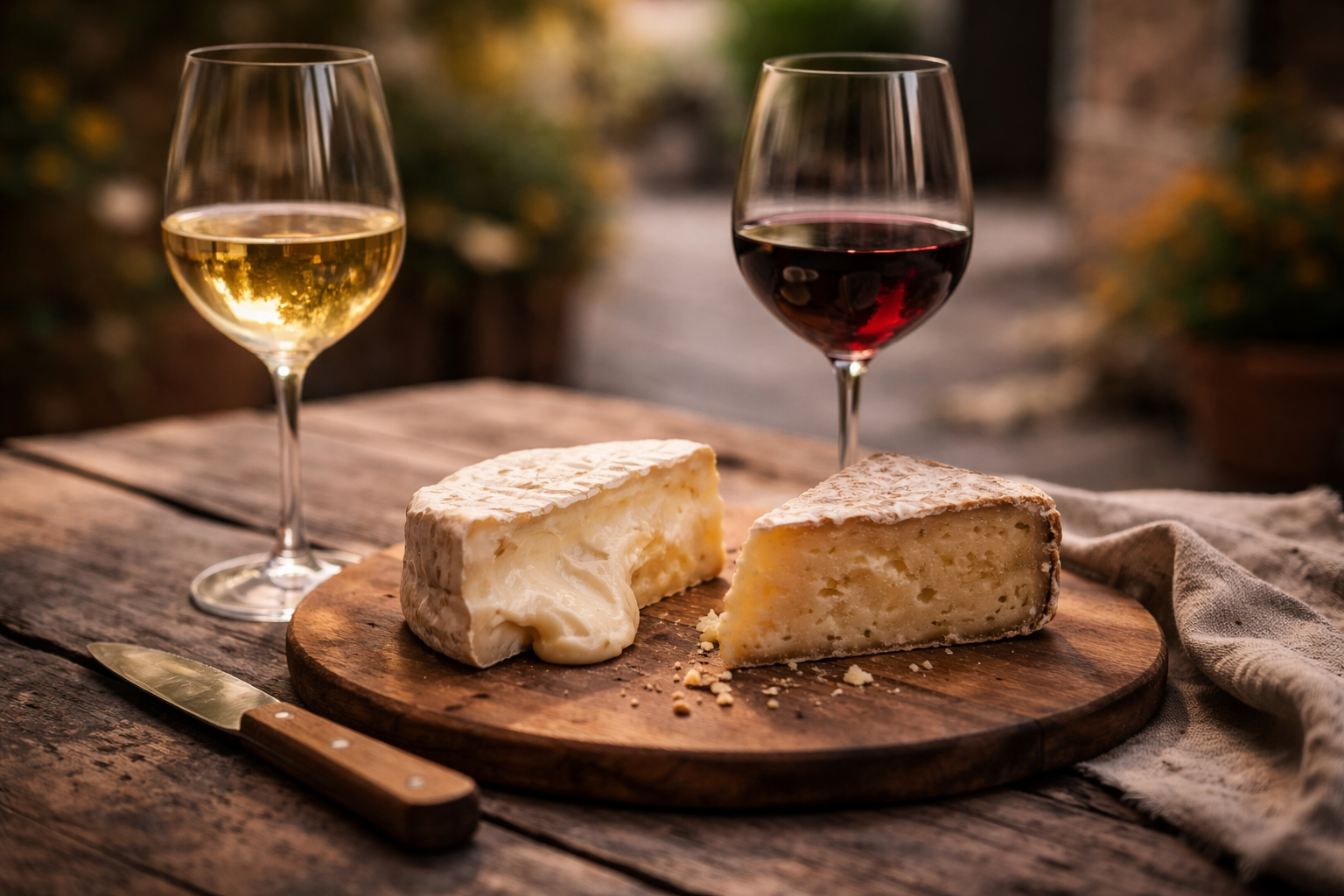
This is why travelers often enjoy France more when they think in categories rather than labels. Ask yourself simple questions: is the cheese creamy or firm, mild or pungent, fresh or aged? Is the wine light and crisp, sparkling, rich, earthy, or bold? When you think this way, you stop chasing “the correct answer” and start noticing balance. That shift is the beginning of enjoyable wine and cheese pairing in France, because pairing is really about matching weight and character, not performing expertise.
The second useful truth is that cheese is not always treated like a separate “cheese course” in the rigid way outsiders imagine. In many travel situations, cheese may be part of a board, part of a market lunch, or part of a casual apéro rather than a formal sequence. This is good news for readers, because it means you can engage with French wine and cheese culture almost anywhere—without booking some elaborate tasting event every time. France gives you constant access. You just need to know how to use it.
How to Taste Without Looking Like You’re Performing
Many travelers accidentally make wine and cheese in France more stressful than it needs to be. They worry about pronouncing everything perfectly, about ordering the “wrong” bottle, or about revealing that they are not experts. In reality, most good wine bars, cheese shops, and tasting rooms are used to visitors at every level. What matters more than expertise is curiosity and clarity. If you say what you generally like—lighter reds, dry whites, creamy cheeses, strong cheeses—you are already making the experience easier for everyone.
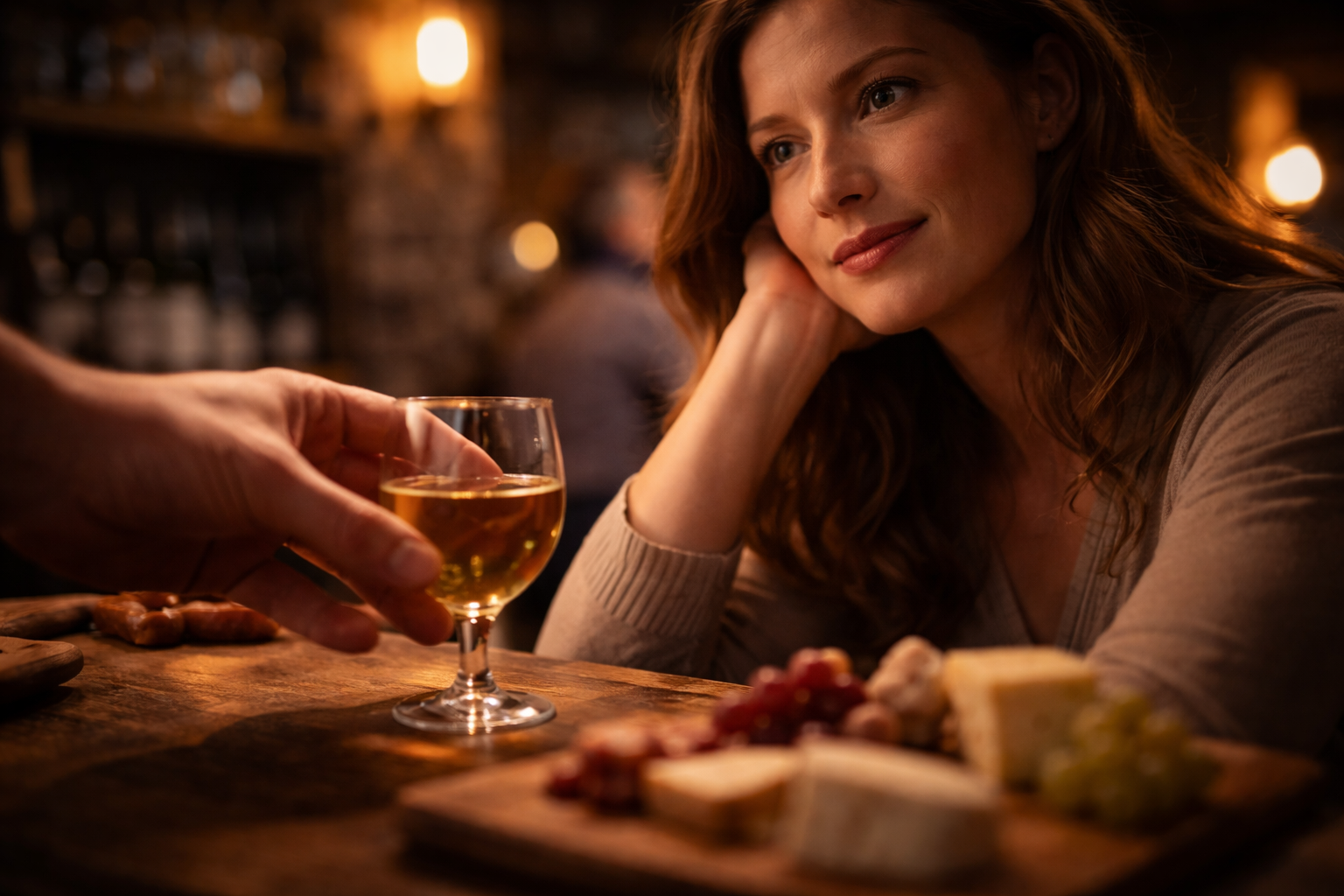
A few small behaviors go a long way. Don’t order the biggest, boldest thing on the menu just because it sounds impressive. Don’t pretend you know more than you do. And don’t overload the table with five cheeses and three wines if your real goal is simply to enjoy one hour. French food culture respects edit. A modest board with one glass you actually like is better than a giant tasting you can no longer taste properly by the end. That is one of the most underrated French wine tasting tips a traveler can learn.
It also helps to slow the pace. Let the first sip stand on its own before you eat. Then try the cheese, then go back to the wine and notice how it changed. You do not need to narrate this out loud or write tasting notes unless you enjoy that kind of thing. The point is just to give your mouth a moment to register contrast. That little pause is often what turns a casual snack into an actual memory.
The Easiest Places to Do This Well: Markets, Wine Bars, and Village Shops
The most satisfying French wine and cheese experiences often happen in places that are less intimidating than big-name vineyards. Markets are one of the best examples. You can buy a small piece of local cheese, add bread and fruit, maybe ask for one recommendation from a vendor, and build a lunch that feels personal and regional without spending very much. Markets also teach you what people actually buy and eat, which makes them far more useful for understanding food culture than some high-pressure tasting environments.
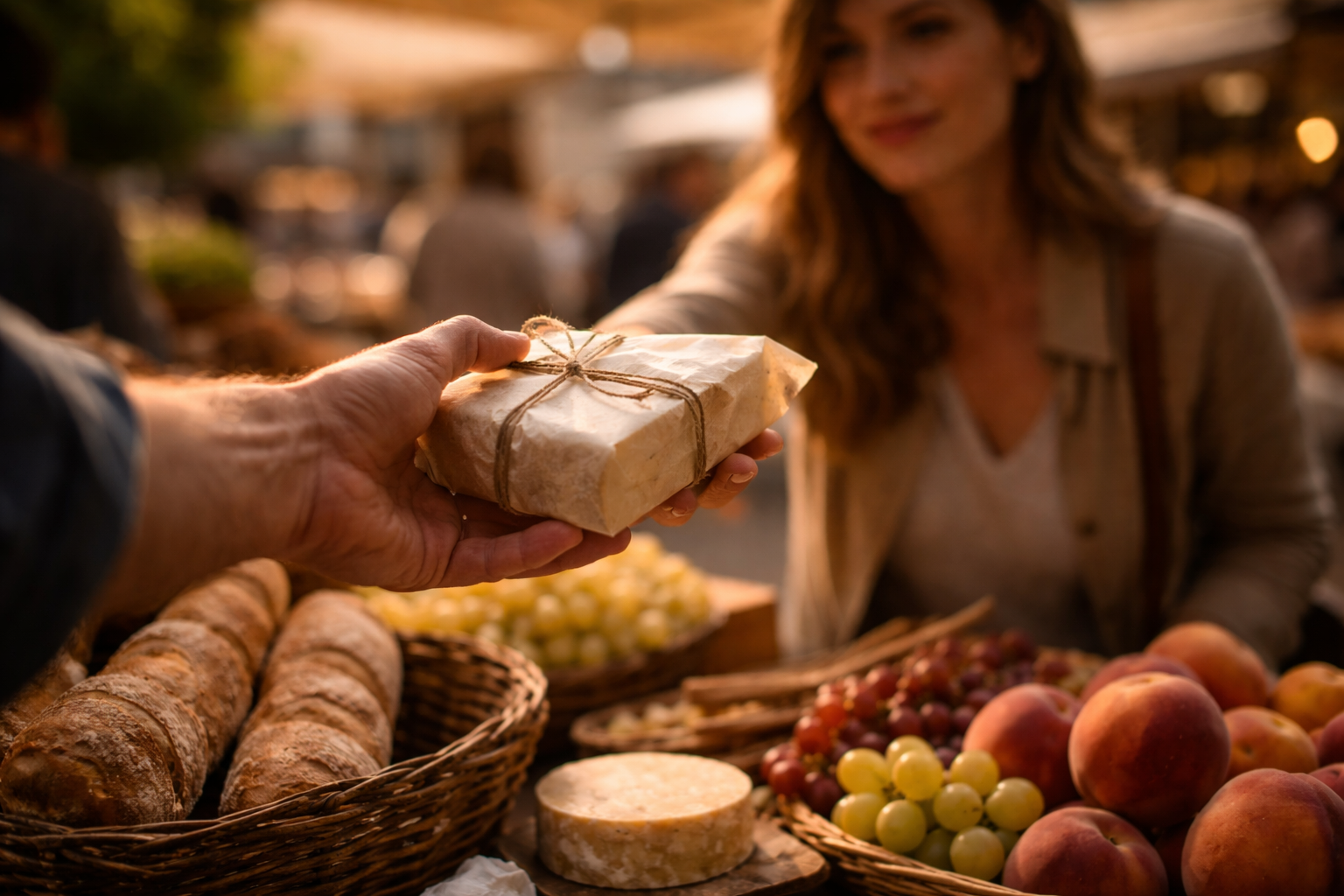
Wine bars are another ideal format because they remove a lot of the friction. Good ones are built around conversation, mood, and discovery rather than ceremony. You can ask for a glass instead of a bottle, try one pairing, then another, and leave feeling pleasantly informed instead of formally educated. This is where a French wine and cheese guide becomes most practical, because many readers are not planning a full wine-country itinerary. They are planning city travel and want one or two evenings that feel deeply French.
Village cheese shops and small caves à vin can also be magical if approached simply. These places often have less tourist volume, more regional specificity, and staff who know exactly what pairs with what they sell. If you are polite and specific, you can often walk out with a near-perfect picnic for the price of one mediocre tourist lunch. That is the kind of travel intelligence readers actually save and use.
Bordeaux: When You Do Want the Full Wine-Country Chapter
Bordeaux still belongs in the story, but not as a generic “famous wine region” paragraph. It belongs because it gives travelers a full-scale wine-country experience: vineyards, estates, tasting rooms, and the sense that wine is not just a product but a regional system. The point of going to Bordeaux is not simply to drink red wine. It is to understand what wine culture looks like when a whole landscape is organized around it. That makes the experience stronger and more distinct from urban wine-bar moments.
For readers considering Bordeaux wine tours, the main advice is to avoid overscheduling tastings. Two strong visits in a day are usually more than enough, especially if you want to actually remember what you tried. One vineyard in the morning, one slow lunch, one second tasting or a city evening is often the best rhythm. Anything beyond that starts to flatten the palate and the attention. Bordeaux works better when the day feels elegant rather than packed.
It is also worth reminding readers that Bordeaux is not only about “serious wine people.” You can enjoy the region without knowing the classifications by heart. Ask basic questions, taste what you genuinely like, and focus on atmosphere as much as the glass. The vineyards, the architecture, and the pacing are part of the value. Bordeaux becomes much more attractive when it is presented as a travel mood, not an exam.
If you want to turn Bordeaux into a broader regional route, this provincial France travel guide helps you plan it at a slower, more enjoyable pace.
Normandy, Loire, and Champagne: Better as Pairing Moods Than Checklists
Instead of repeating the usual “Normandy = Camembert, Loire = goat cheese, Champagne = Brie” formula mechanically, it is smarter to present these regions as pairing moods. Normandy is about richness, softness, and comfort—creamy cheeses, cooler weather, and flavors that feel rounder and more rustic. Loire feels fresher and brighter, where whites and goat cheeses create combinations that feel clean, precise, and almost effortless. Champagne is about contrast: bubbles against softness, celebration against creaminess, elegance against rural simplicity.
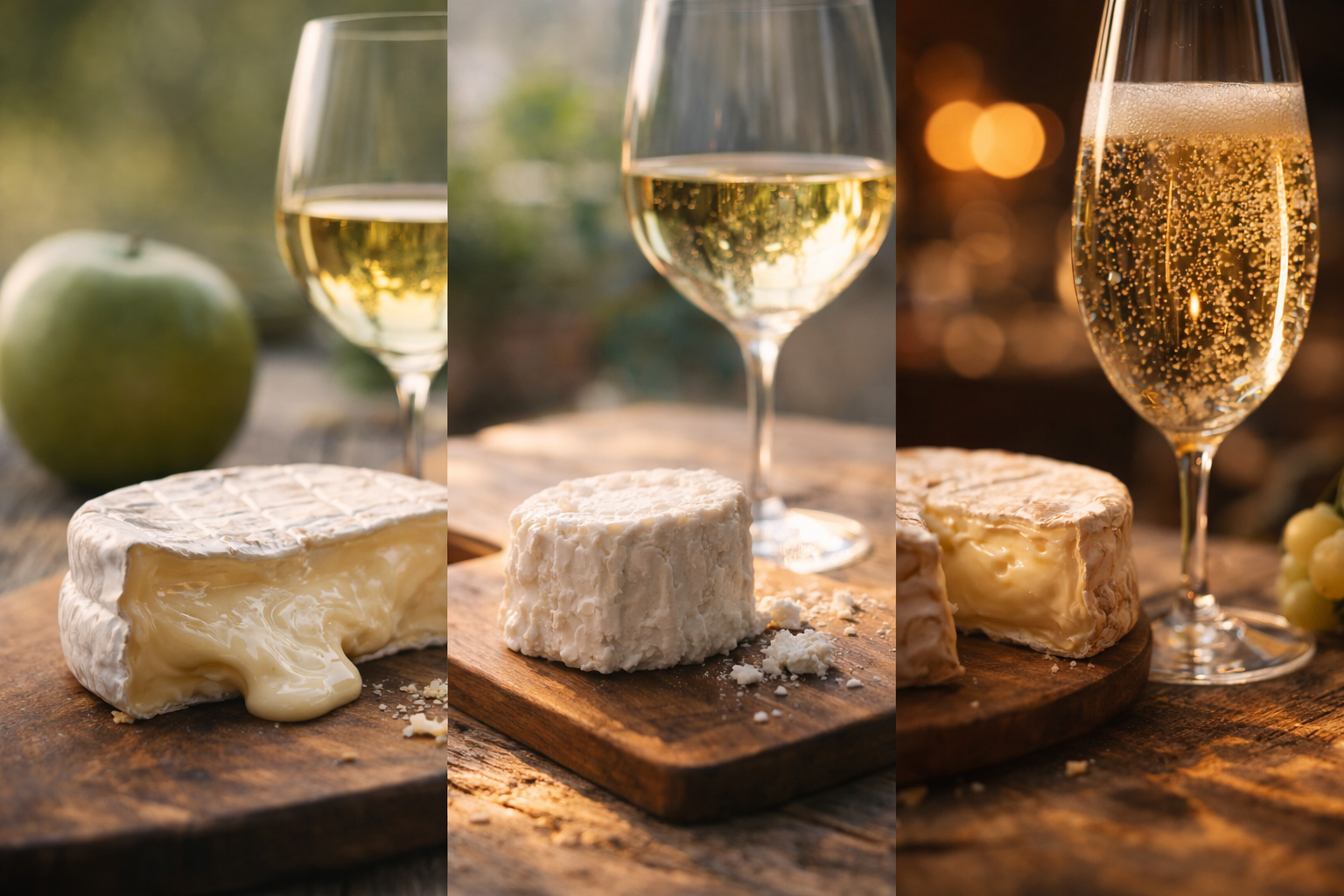
This approach is better because it helps readers remember what a region feels like, not just what name they are supposed to memorize. It also makes the article more unique compared with other countries’ wine content. We are no longer writing “French wine regions 101.” We are writing about how a traveler experiences flavor and place together. That is a stronger angle and much harder to confuse with a Portugal or Australia wine article.
It also gives you more room for practical travel logic. A reader does not necessarily need to visit every region. They need to understand which kind of pairing experience suits them. Do they want bold reds and more formal vineyard travel? Bordeaux. Do they want fresh whites and softer countryside pacing? Loire. Do they want something celebratory and elegant? Champagne. This makes the article feel immediately usable.
How to Build a Perfect Wine-and-Cheese Afternoon in France
A great French wine-and-cheese experience does not need to be a whole trip. It can be one afternoon designed properly. Start with one good source—a market, a wine bar, or a specialty shop—rather than collecting random things from four places. Choose two cheeses that contrast clearly: perhaps one soft and creamy, one firmer and more aged. Then choose one wine that is safe and versatile, or two glasses if the place allows you to taste by the glass. Keep bread simple, add fruit if you want freshness, and stop there.
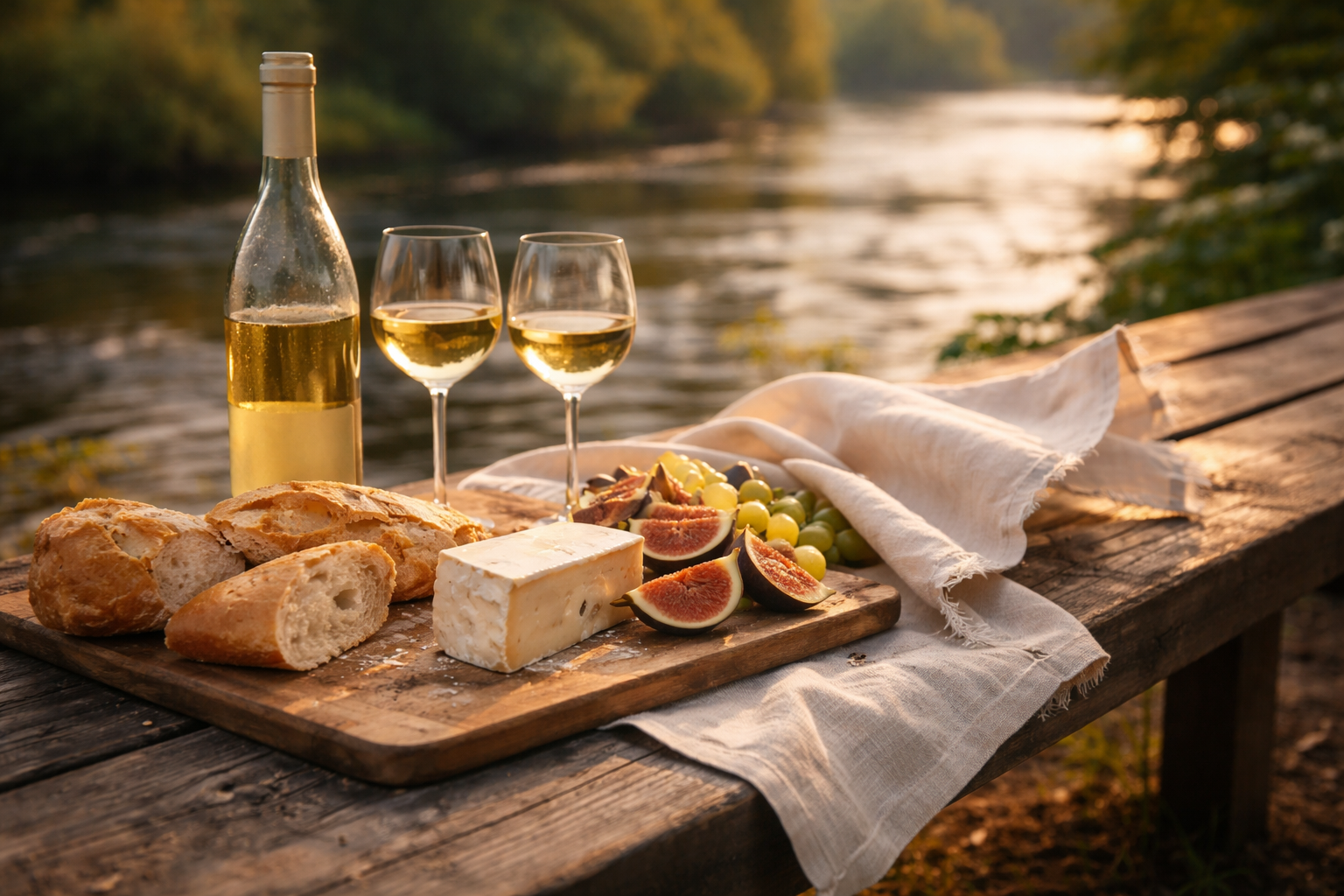
The location matters as much as the pairings. A park, a riverside bench, a hotel balcony, a village square, or a small terrace can all transform a simple tasting into a highlight of the day. This is part of why the French relationship with food feels enviable: pleasure is not always tied to extravagance. A modest spread in the right place can feel more luxurious than a complicated tasting room. That is exactly the kind of advice that makes a French wine and cheese guide stand out from generic gastronomic writing.
The most important part is pacing. Do not eat it all too fast. Let the combinations unfold. Notice which wine makes one cheese softer, sharper, saltier, or creamier. You are not trying to become a sommelier. You are simply turning an ordinary afternoon into a more attentive one. France rewards that kind of attention immediately.
What to Order If You’re Intimidated
For readers who freeze when handed a French menu or cheese board, the simplest solution is to ask for a small local selection and one recommended pairing. Most places can work with that. If you are in a region known for whites, start with white. If you are in a region known for reds, ask for a lighter option first unless you know you want something heavy. With cheese, start milder and build upward if you want. Strong cheeses can be incredible, but they can also dominate the whole experience if they arrive too early.
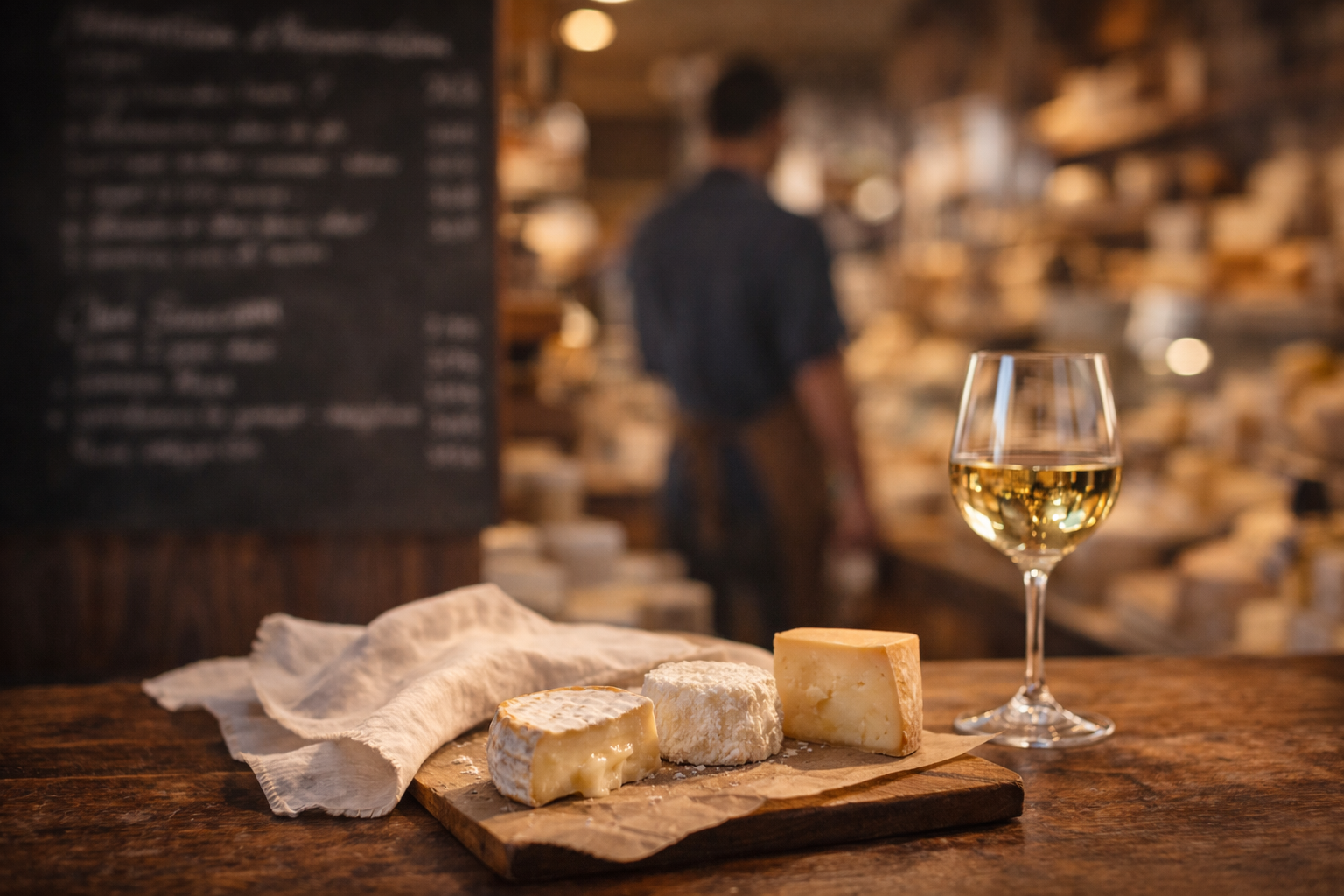
Another easy move is to trust regional logic. If you are in Normandy, ask for a local cheese and a local drink pairing. If you are in the Loire, ask what goat cheese the staff likes best with a local white. If you are in Champagne, ask for something that works with sparkling wine rather than just ordering the most famous cheese on the board. These are the kinds of French wine tasting tips that lower the pressure while increasing the chance of a genuinely good result.
And remember: the goal is not to prove taste, but to discover it. Travelers often have their best food experiences when they stop performing knowledge and start following appetite with a little guidance. France is actually very good at meeting people halfway when they do that.
Conclusion: France Is Best Tasted Slowly
The real power of French wine and cheese culture is not that it is famous. It is that it teaches people how to slow down and notice pleasure without needing a huge occasion. A market lunch, a village tasting, a wine bar evening, or one elegant vineyard day can all reveal the same thing: France is a country that understands that flavor is inseparable from pace, place, and attention. That is what makes the experience memorable.
So instead of turning this part of France into another “must-try regions” checklist, treat it as a practice. Learn one or two pairings you genuinely love. Build one beautiful afternoon around them. Follow the region, the season, and your own palate more than the pressure to “do it right.” That is when this French wine and cheese guide becomes more than information — it becomes the beginning of how you actually enjoy France.
For a broader official overview of France’s vineyard routes, see Explore France’s guide to French wine routes.