

Portuguese Literature: A Journey Through Writers, Cities, and Stories
Portuguese literature comes alive in a country where the boundaries between fiction and reality often blur. Portugal is a place where the sea feels like a narrator and the cities read like chapters of a poetic novel. Travelers come for sunshine, food, and architecture, but those who wander with curiosity discover a land built from stories. Literature is woven into public squares, metro stations, riverside walks, and the quiet corners of century-old cafés. The spirit of great writers — from Fernando Pessoa to José Saramago — lingers in bookstores, streetcar windows, and the melancholic chords of fado echoing through the night.
Exploring Portugal through its literature is a journey both physical and imaginative. It means walking the same hills where poets searched for meaning, sitting at marble tables where authors filled notebooks with restless thoughts, and stepping into neighborhoods whose cobbled streets became settings for novels now read around the world. This is not a traditional guide; it is an invitation to drift through Portugal’s cultural landscape the way one moves through a beloved book — slowly, with attention, letting atmosphere lead the way.
Related: Portugal’s Architectural Heritage
Lisbon: A City Built from Words and Light
Lisbon is the beating heart of Portuguese literary culture, a city where cafés feel like reading rooms and trams seem to carry the ghosts of authors still whispering lines into the air. The first impression of Lisbon is always brightness — sunlight reflecting off the Tagus River, yellow trams rattling up steep streets, limestone pavements shining after rain. Yet beneath that brightness lies an unmistakable melancholy, a sense of nostalgia that locals call saudade. It is this emotional tension that has shaped so much of Lisbon’s literature.

Walking through the Baixa district, a traveler might feel the presence of Fernando Pessoa, whose fragmented, introspective writing captured the strange duality of Lisbon: open to the world yet deeply inward-looking. His favorite haunt, A Brasileira café in Chiado, still stands as a literary landmark. Sitting there with an espresso, surrounded by old wood panels and photographs of poets, one feels the city’s creative pulse. Chiado itself remains Lisbon’s cultural neighborhood — home to historic bookstores, theaters, and narrow alleys filled with students, artists, and musicians.
Further downhill, the Alfama district offers an entirely different mood. Here the streets twist unpredictably, laundry hangs from iron balconies, and the scent of grilled sardines drifts between houses. This neighborhood feels like a living novel — layered, intimate, full of stories unfolding behind old tiled façades. Fado houses, tucked away in dimly lit courtyards, add to the sense of time slowing down. Listening to fado in Alfama is like hearing the city confess its vulnerabilities: longing, love, loss, and resilience. Lisbon is both poem and cityscape, written in stone and sung in minor chords.
Fernando Pessoa’s Lisbon: Where a Writer Becomes a City
To understand Lisbon’s literary soul, one eventually finds Pessoa everywhere. He wrote under multiple identities, each with distinct voices, philosophies, and inner worlds — a literary universe contained within a single man. Today, his presence is felt not only in museums and bookstores but in the very rhythm of the city.

Walking Rua Garrett in Chiado, you encounter the famous bronze statue of Pessoa sitting outside A Brasileira. Yet the real pilgrimage lies in following the writer’s footsteps along the quieter streets he once wandered in solitude. Locations mentioned in The Book of Disquiet reveal themselves subtly: a staircase here, a viewpoint there, a tram that seems to move with existential hesitation. Everything in Lisbon feels connected to his contemplative style — the slow ascent of a hill, the play of shadows in narrow alleys, the shifting weather over the Tagus.
Pessoa transformed Lisbon into a state of mind, a space where introspection meets city life. Exploring these streets with his texts in mind gives the journey a deeper resonance, as though the city whispers lines that were half-written a century ago.
José Saramago and the Landscape of Imagination
While Pessoa shaped Lisbon’s inner world, José Saramago transformed Portugal’s imagination. His novels are bold, layered, and philosophical, often blending myth with political commentary. Reading Saramago while traveling through Portugal feels like seeing the country with new clarity — noticing the small details that hold symbolic weight.

Lisbon appears in several of his works, yet it is often transformed into allegorical versions of itself. In The Year of the Death of Ricardo Reis, the city becomes a stage where life, death, and literature converge. In Baltasar and Blimunda, Saramago carries readers into the Portugal of the eighteenth century, revealing a world shaped by faith, power, and hope. The traces of this older Lisbon remain visible today in its monasteries, palaces, and sweeping river views.
Travelers can visit the José Saramago Foundation, located near the Alfama district, where exhibitions explore his writing process, political activism, and imaginative universe. The building itself, with its bold stone façade and geometric windows, feels like a monument to a mind unafraid of complexity. Reading Saramago while walking through modern Portugal is an experience of layering worlds — past onto present, fiction onto reality.
Porto: A Story Told in Granite and River Mist
If Lisbon is a poem written in shifting light, Porto is a novel carved in granite. This northern city carries a different personality — more industrial, more reserved, yet filled with a quiet charm that reveals itself slowly. The Douro River flows through its heart, bordered by ancient warehouses and bridges that look like architectural feats from another era. Porto has inspired many writers with its misty mornings, steep staircases, and blue-and-white tiles that tell stories older than the language itself.

The historic Ribeira district seems made for wandering. Narrow lanes descend toward the river in sharp, irregular patterns. Houses lean into each other as though sharing secrets across centuries. Cafés are tucked beneath arcades, offering views of the iconic Dom Luís I Bridge. From these riverside terraces, it is easy to imagine writers sketching out scenes, capturing the texture of Porto’s atmosphere.
Lello Bookstore, often listed among the world’s most beautiful, draws book lovers from across the globe. Its wooden staircase curves dramatically upward, creating the impression of ascending into a fictional realm. Although it is now crowded with visitors, the store still retains a magical quality — a reminder of how books can transform spaces into experiences. Porto invites lingering, reading, and reflecting, offering inspiration in its quiet corners and river-lit evenings.
Coimbra: Echoes of Youth, Poetry, and Academia
Traveling south from Porto, Coimbra emerges as one of Europe’s oldest university towns, a place where intellectual tradition meets youthful energy. The University of Coimbra, perched high above the city, dominates the skyline with its bell tower, courtyards, and baroque library. Students in traditional black capes walk between faculties, adding a dramatic flair to the streets. This city feels like a dialogue between generations — ancient walls listening to modern conversations.

Coimbra’s literary culture is shaped by its academic legacy. For centuries, students have written poetry, debated philosophy, and shared ideas in cafés along the Mondego River. Wandering these spaces feels like stepping into a long conversation that began centuries earlier. Traditional fado from Coimbra, performed by male students, carries a distinctive tone — softer, more introspective than the Lisbon style. Hearing it in an intimate courtyard connects listeners to a long tradition of longing, scholarship, and artistic expression.
The city’s riverbanks and gardens offer quiet spots for reading or contemplation. Even the old stone staircases leading up to the university feel like metaphors for the journey of intellectual discovery. Coimbra is not simply a city of learning; it is a city where knowledge and emotion intertwine.
Bookstores and Literary Cafés: Portugal’s Hidden Sanctuaries
Portugal’s literary world thrives not only through writers but through the spaces that nurture reading culture. Across Lisbon, Porto, Braga, Faro, and many smaller towns, bookstores function as sanctuaries — places where travelers pause, breathe in the scent of paper, and discover local authors who rarely appear on international shelves.

In Lisbon, the Livraria Bertrand, recognized as the world’s oldest operating bookstore, offers a gentle sense of continuity. Shelves curve around wooden columns, and reading lamps cast warm pools of light on tables where travelers and locals sit quietly. Not far away, Ler Devagar in the LX Factory district stands in dramatic contrast — housed in a former printing space, filled with towering bookshelves, art installations, and the soft hum of creativity. Here, reading feels communal, as though each visitor contributes to an expanding conversation.
Cafés play an equally important role. Many retain their early-twentieth-century charm — marble tables, mirrored walls, brass fixtures, and cigarette-stained memories of literary debates. In Lisbon, Café Martinho da Arcada by the riverbank is famous as Pessoa’s chosen refuge, while Café Nicola evokes the artistic vibrancy of earlier eras. In Porto, Café Majestic blends Belle Époque elegance with a bookish seriousness, making it an ideal setting for long conversations or solitary writing sessions.
These spaces offer more than coffee and books. They create an atmosphere where time slows, allowing readers to sink deeper into stories and travelers to reflect on the worlds they encounter.
Walking Through Literature: Cities as Living Narratives
Portugal is best experienced on foot, where narrow alleys, stairways, and riverbanks reveal themselves gradually, like pages turning in a well-loved novel. Walking connects literature and landscape, allowing travelers to experience scenes that inspired some of Portugal’s most iconic works.
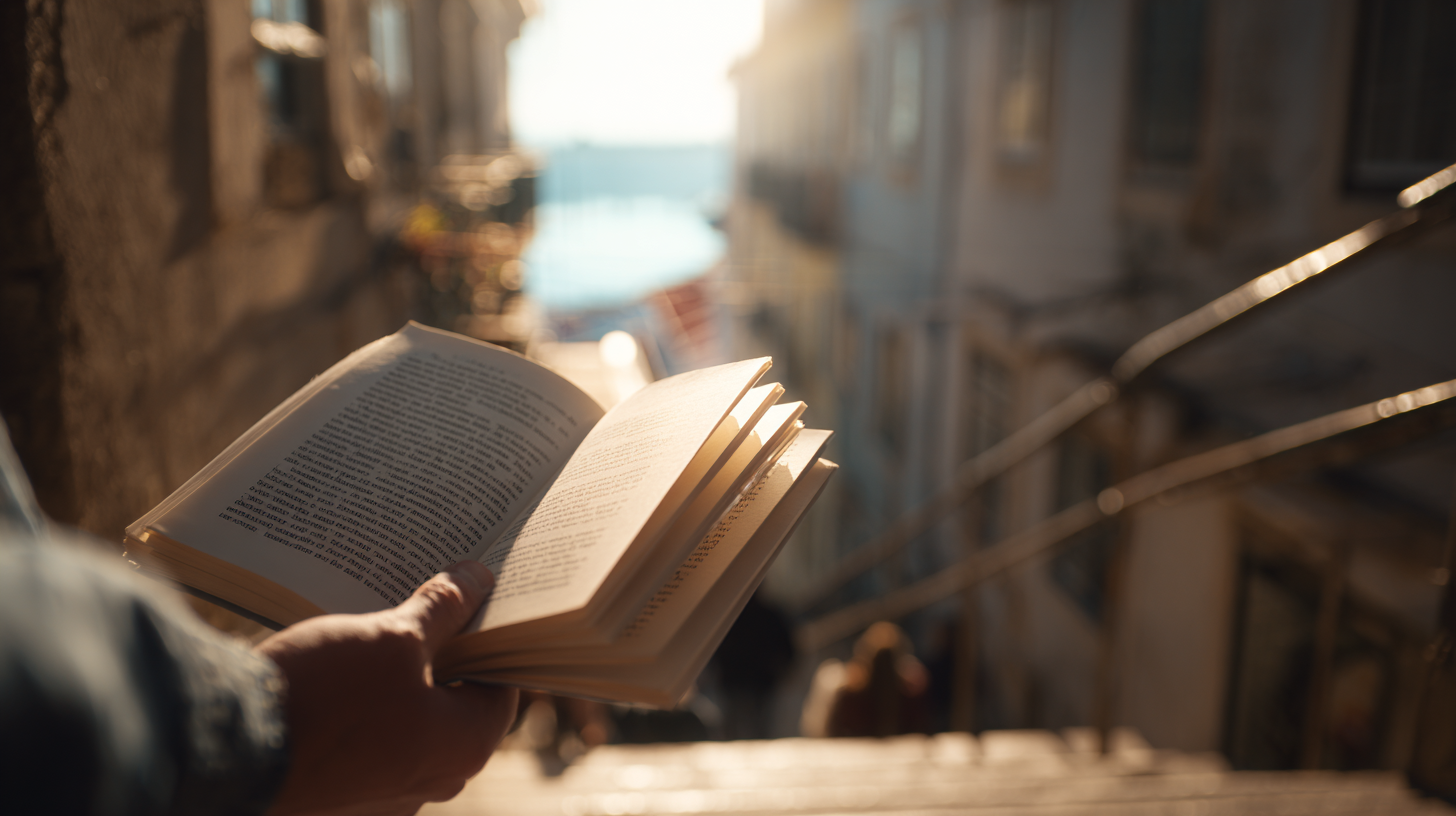
In Lisbon, following the tram tracks through Graça or climbing the steep paths to Miradouro da Senhora do Monte brings panoramic views that echo with the city’s long history. These viewpoints appear again and again in poetry and prose, always framed by the shifting mood of the sky. The Tagus River, glittering in late afternoon light, becomes a symbol of departure and return, echoing maritime tales from Portugal’s Age of Discoveries.
In Porto, wandering from Clérigos Tower down to Miragaia reveals a city built in layers. Laundry hangs from balconies, elderly residents chat on staircases, and the scent of baking pão de queijo drifts from small bakeries. These are scenes that evoke the intimate realism of Portuguese writing — everyday life rendered with affection and detail.
Coimbra invites slower walks, especially in the university quarter where stone archways create repeating frames of shadow and sunlight. At night, students gather with guitars beneath ancient arches, singing songs passed from one generation to the next. Here, literature feels alive in voices, footsteps, and conversations carried through quiet streets.
Conclusion
Exploring Portugal through its literature is an experience that merges imagination with travel, transforming cities into stories and landscapes into metaphors. From the philosophical solitude of Pessoa’s Lisbon to the layered imagination of Saramago, from Porto’s granite charm to Coimbra’s academic soul, the country reveals itself as a place where creativity thrives in sunlight, shadow, and the rhythm of daily life.
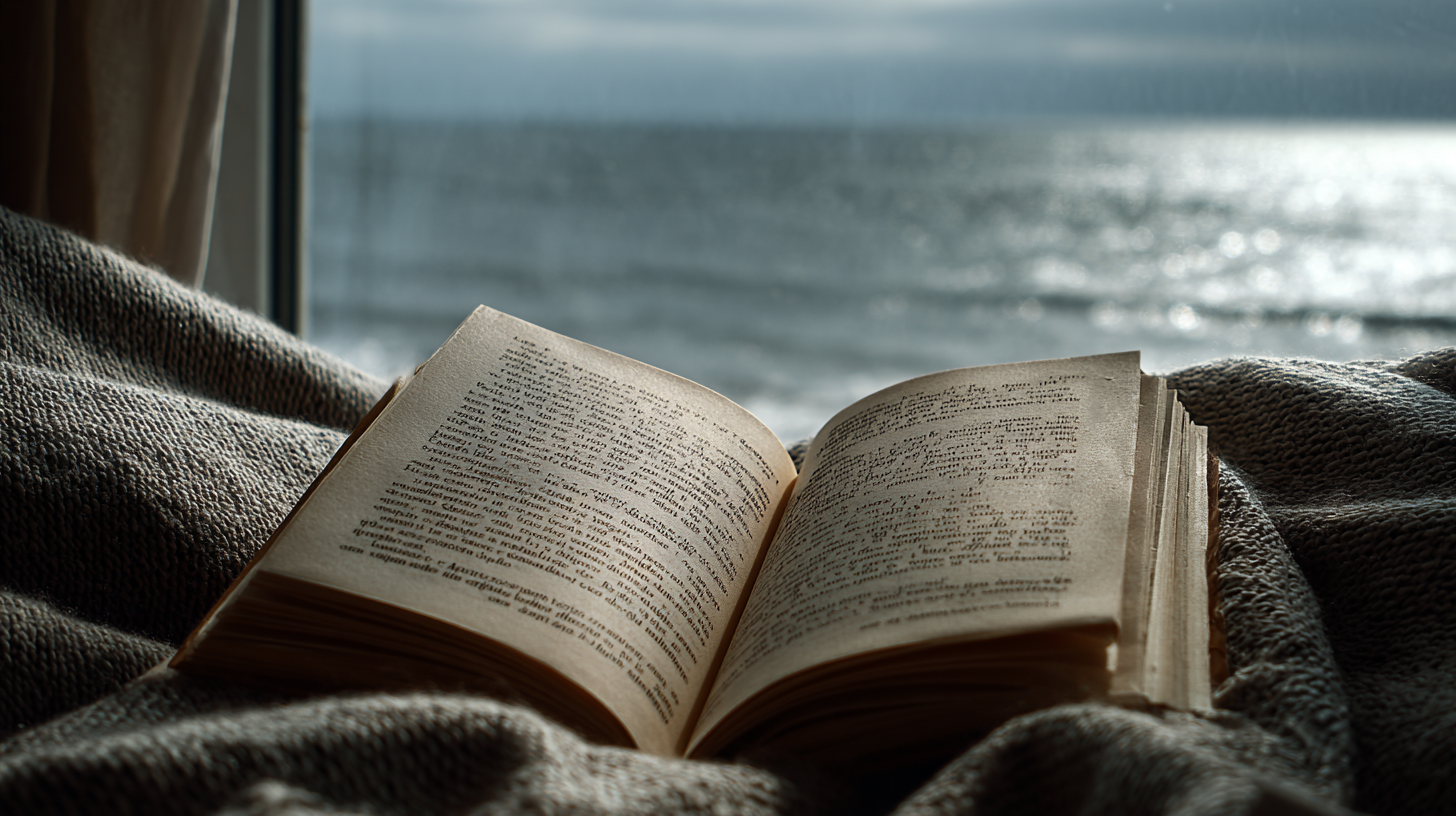
Bookstores, cafés, river walks, and viewpoints become part of a continuous narrative — one that travelers read not only with their eyes but with their senses. Portugal’s literary heritage is not locked in museums or textbooks; it lives in tram rides, coastal winds, blue-tiled façades, and the quiet act of pausing with a book overlooking the sea.
To journey through Portugal in this way is to understand that its stories are not simply written — they are lived. And anyone who wanders these streets carries a small piece of that narrative with them long after they leave.
Source: National Library of Portugal