

Indonesia History begins with a vast and layered story, as complex as the thousands of islands that make up the archipelago itself. Stretching across a maritime crossroads between the Indian and Pacific Oceans, Indonesia has absorbed influences from traders, migrants, conquerors, priests, and adventurers, while simultaneously shaping its own cultural identity. Its past is not a single linear narrative but a mosaic of kingdoms, religions, revolutions, and ideas carried by ocean winds.
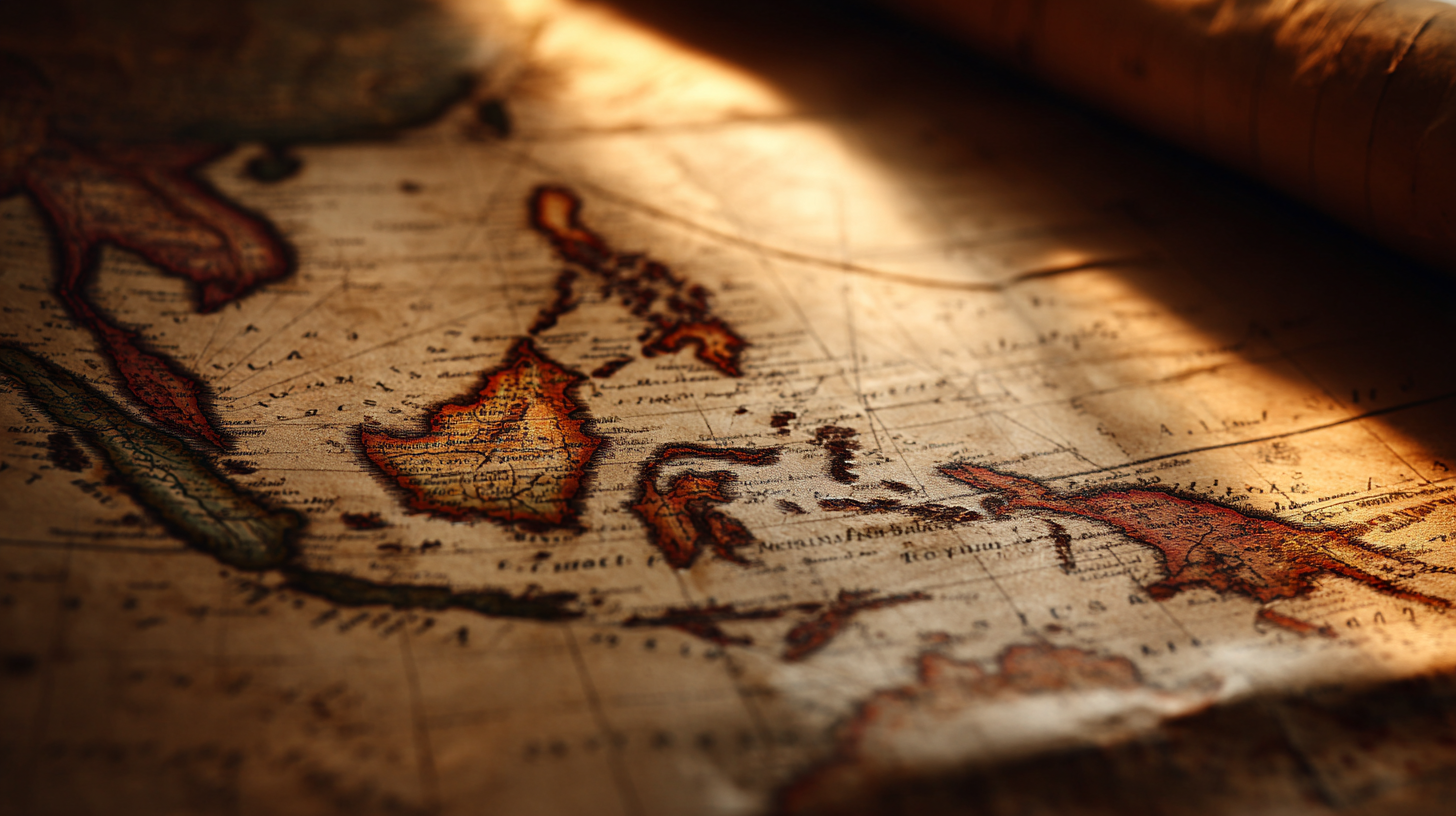
To trace Indonesia’s history is to follow the journey of a nation built on water and fire, on volcanic soil and shifting tides, on the rise and fall of empires and the resilience of communities who endured. The archipelago’s story unfolds through centuries of connection — between islands, between continents, between tradition and transformation. It is a story of adaptation and continuity, a history as fluid and powerful as the seas that bind the islands together.
For a deeper look into Indonesian culture, explore our guide to Indonesian Music
The Rise of Early Kingdoms: Maritime Power, Sacred Architecture, Cultural Brilliance
Long before Indonesia became a unified nation, the archipelago was home to powerful kingdoms whose influence extended across oceans. These early polities emerged from fertile river valleys, bustling ports, and strategic straits where trade routes crossed. Their societies blended indigenous traditions with ideas arriving from India, China, and later the Middle East, creating a unique cultural synthesis that still shapes Indonesia today.

These kingdoms were defined not only by political power but by their contributions to art, religion, and architecture. Monumental temples rose from jungle landscapes, intricate carvings depicted epics from foreign lands, and local beliefs merged with imported philosophies, giving birth to a cosmopolitan spiritual universe. The early Indonesian world was dynamic, outward-looking, and deeply connected to the wider region — a place where cultures met and evolved through exchange rather than conquest.
Srivijaya: The Empire of the Sea
Among the earliest and most influential of these kingdoms was Srivijaya, a maritime empire centered in Sumatra that flourished from the 7th to the 13th century. Srivijaya controlled much of the sea traffic through the Malacca Strait, transforming trade into a foundation of political and economic dominance. Its wealth came not from land but from water — from spices, silk, ceramics, and other goods carried by ships traveling between China, India, and the Middle East.
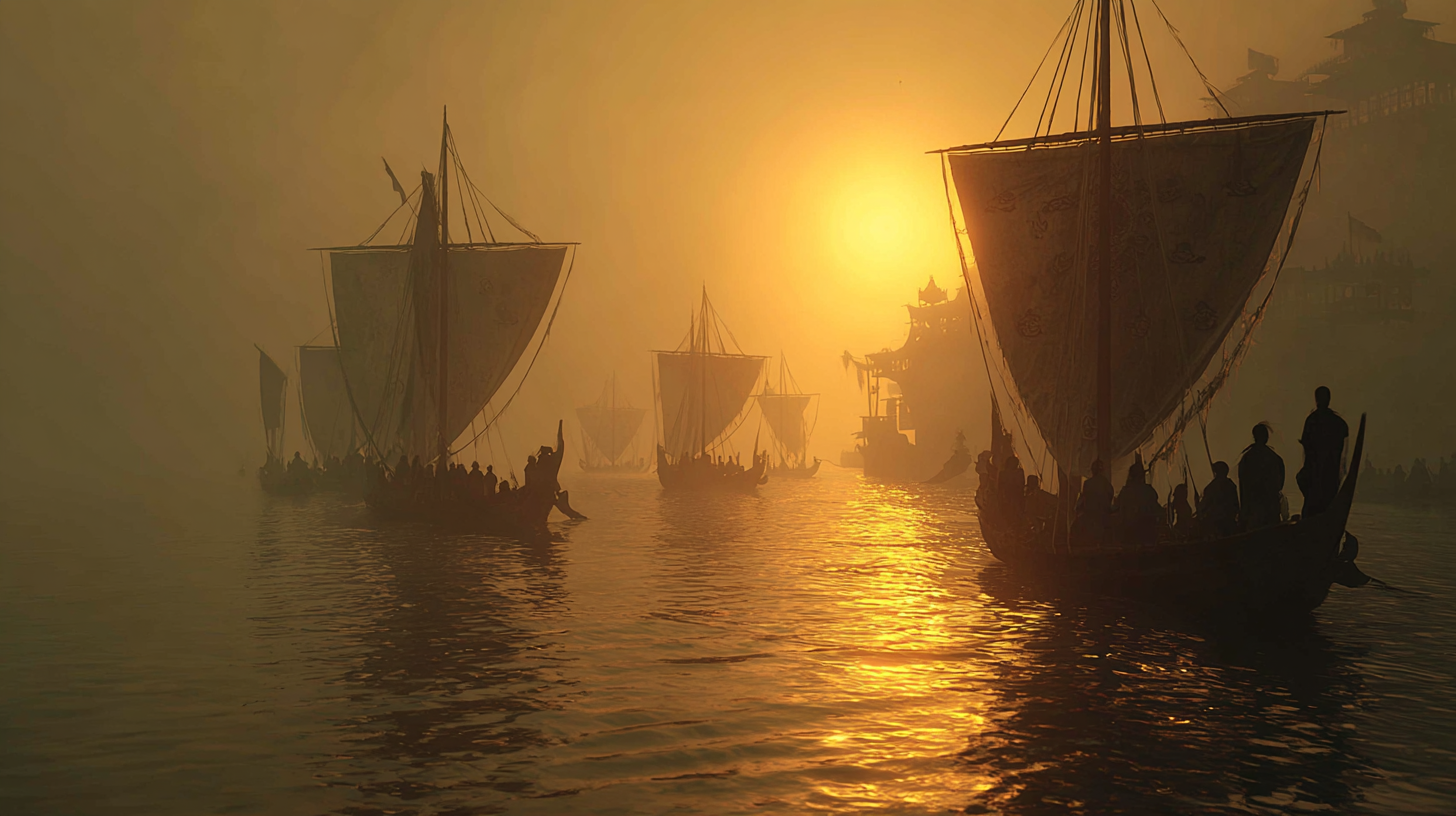
Srivijaya’s rulers patronized Buddhist learning and culture, attracting scholars from across Asia. Monasteries and centers of study thrived, contributing to the spread of Mahayana Buddhism throughout the region. The empire’s influence was so extensive that foreign travelers described it as a hub of learning, diplomacy, and religious devotion. Though little remains physically of Srivijaya today, its legacy endures in maritime traditions, linguistic ties, and Indonesia’s long-standing history as a center of Southeast Asian connectivity.
Majapahit: The Archipelago’s Golden Age
If Srivijaya mastered the seas, Majapahit mastered the land. Rising in East Java in the 13th century, the Majapahit Empire became one of the greatest political powers in Southeast Asia. It united vast stretches of the archipelago under a sophisticated administrative and cultural system, influencing territories that today include Indonesia, Malaysia, Singapore, and beyond.
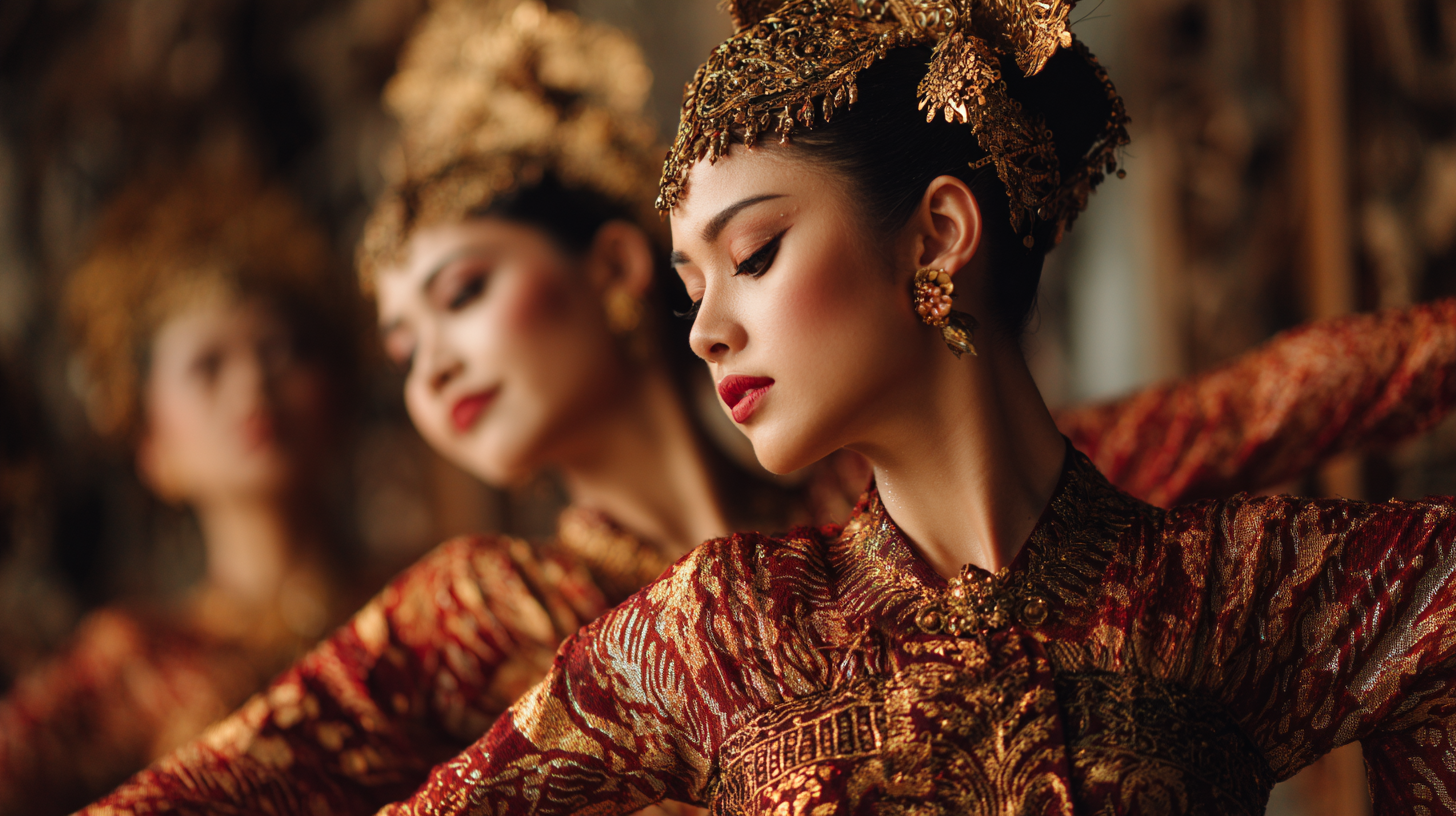
Majapahit’s courts nurtured literature, dance, and architecture, producing works that remain central to Indonesian cultural identity. The epic poem Nagarakretagama records the empire’s reach and the grandeur of its ceremonies, offering a window into a world of palace rituals, philosophical reflection, and intricate social organization. Majapahit’s downfall in the 15th century opened the way for new cultural transformations, but its legacy — particularly in Javanese culture — endures in language, arts, and political symbolism.
From Temples to Trade Routes: The Cultural Fabric of Pre-Colonial Indonesia
Indonesia’s pre-colonial history is woven from threads of religion, commerce, artistry, and migration. Hinduism and Buddhism left deep imprints on architecture and philosophy, visible today in Borobudur and Prambanan — monumental testaments to the spiritual and cultural sophistication of ancient Java.
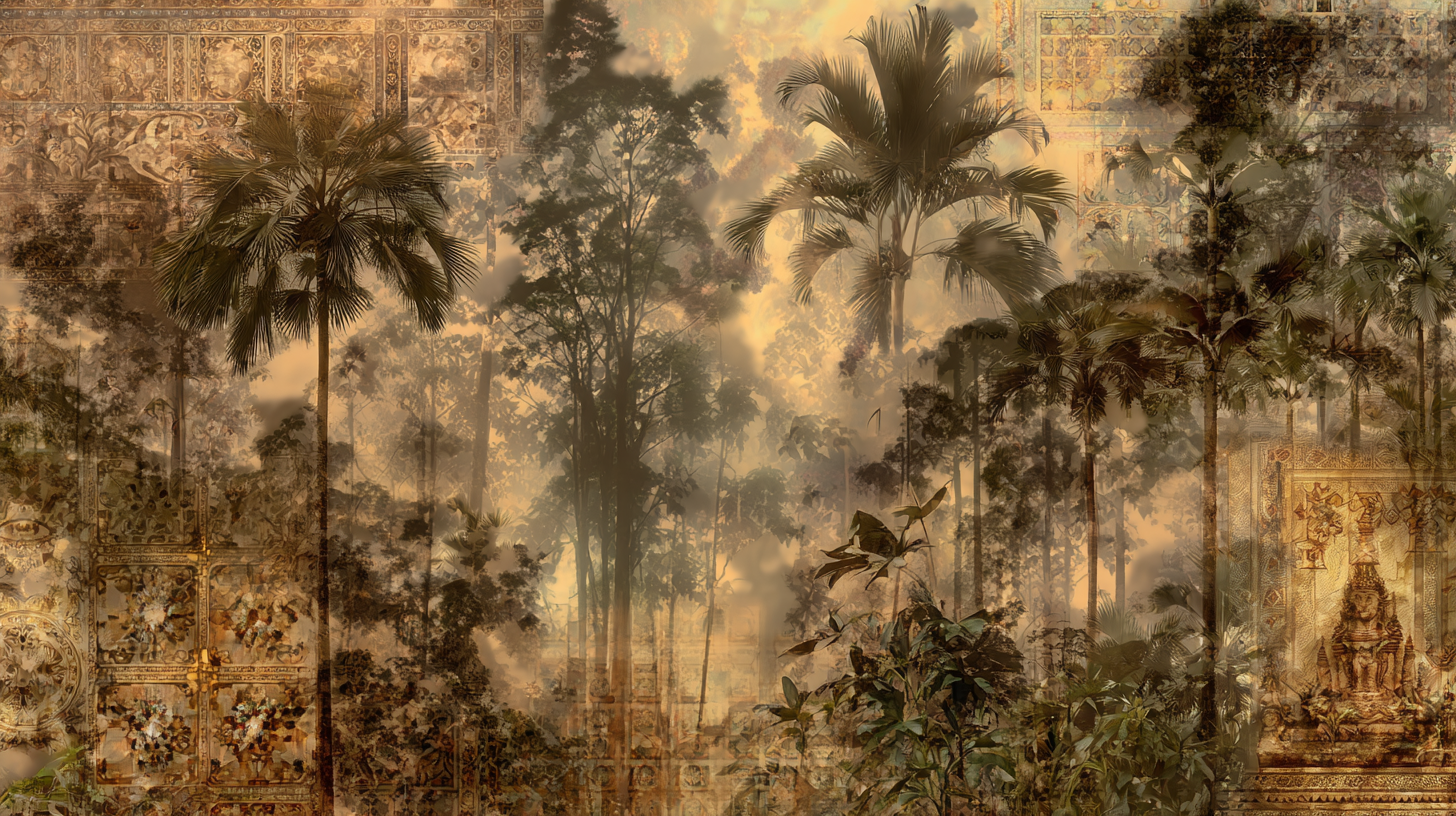
At the same time, trade connected Indonesia to the Islamic world. Muslim merchants introduced new ideas, values, and networks of knowledge that slowly took root in coastal communities. Over centuries, Islam spread inland, blending with local customs to form distinctive cultural traditions such as Javanese syncretism.
The archipelago became a tapestry of belief systems — Hindu-Buddhist courts, animist highland communities, Islamic coastal sultanates — each shaping music, dance, language, and ritual practice. Rather than fragment the region, these diverse influences enriched it, creating a cultural landscape characterized by harmony amid difference.
Foreign Winds: When the World Arrived at the Archipelago
For centuries Indonesia was a destination for traders seeking spices, gold, and exotic goods. But as European powers expanded across the globe, the archipelago became a stage for competition between empires eager to control its lucrative trade routes.
The Portuguese were the first Europeans to arrive in the early 16th century, capturing key ports and influencing local politics. They were followed by the Dutch and the British, each seeking dominance. The allure of nutmeg, cloves, and pepper — spices more valuable than gold — drove European rivalry, transforming Indonesian islands into battlegrounds for control of global commerce.

These new arrivals brought profound changes. New technologies, languages, and political alliances reshaped local societies. But European influence also marked the beginning of exploitation, restriction, and eventual colonization — forces that would alter the course of Indonesia’s history for centuries.
Dutch Rule and the Long Shadow of Colonialism
The Dutch East India Company (VOC) eventually emerged as the dominant colonial power, establishing a formidable network of control over Indonesia’s trade and territories. When the VOC collapsed in the late 18th century, the Dutch state took direct control, ushering in a new era of colonial governance characterized by strict regulation, resource extraction, and social stratification.

Colonial rule reshaped agriculture, labor systems, and everyday life. Plantations expanded, taxes increased, and local rulers were forced into alliances that often undermined traditional structures. While colonialism brought infrastructure, education systems, and new administrative practices, these developments served the interests of the colonizers rather than the people of the archipelago.
Despite these challenges, Indonesian culture remained resilient. Music, dance, religion, and community life continued to flourish beneath the pressures of foreign domination. This quiet resistance kept traditions alive and nurtured the early seeds of nationalism.
Seeds of Resistance: How a National Identity Began to Form
As colonial rule deepened, so did the desire for self-determination. In the early 20th century, new forms of education, urbanization, and global communication created opportunities for Indonesians to articulate a shared identity.

Students, intellectuals, and workers began forming organizations that promoted unity across ethnic and regional lines. They saw the archipelago not as separate kingdoms or islands but as a single nation with a shared destiny. Newspapers, literature, and public discourse helped shape this emerging national consciousness.
In 1928, the Youth Pledge (Sumpah Pemuda) declared three ideals: one motherland, one nation, one language — Indonesia. This moment became a powerful symbol of unity, signaling that the dream of independence was no longer abstract but deeply rooted in the hearts of the people.
World War II and the Turning of the Tide
World War II changed the course of Indonesian history with a speed no one could have predicted. When Japan swept across Southeast Asia in 1942, Dutch colonial power — which had seemed unshakable for centuries — collapsed in a matter of weeks. The Japanese occupation brought hardship, shortages, and forced labor, but it also dismantled the colonial administration that had controlled the archipelago for generations. For the first time, Indonesians saw the Dutch defeated on their own soil. This psychological shift was profound. It revealed that empires could fall and that independence was not just a dream, but a possibility.

The Japanese, seeking to win local support, encouraged Indonesian nationalism in strategic ways — training local militias, allowing limited political organization, and elevating figures like Sukarno and Hatta into more public roles. Though the intentions behind these actions were calculated, they inadvertently strengthened Indonesia’s leadership, giving nationalists the organizational experience and authority they needed to mobilize the country. As the war drew to an end and Japan faced defeat, a political vacuum opened across the archipelago. In this fragile moment, Indonesian leaders recognized that history had delivered a rare opportunity — a chance to define a new future before any foreign power returned to reclaim the land.
1945: The Birth of an Independent Nation
On August 17, 1945, Sukarno stepped onto the veranda of his home in Jakarta and proclaimed Indonesia’s independence. The air was heavy with uncertainty, but also with the electricity of a nation awakening. Crowds gathered in the streets — some arriving on foot from distant neighborhoods, others emerging from their homes still unsure whether the moment was real. With a handmade flag raised above them, people wept, shouted, prayed, and embraced. The words of the proclamation spread through the city like wildfire, carried by bicycles, handwritten notes, and whispered messages. It was a moment shaped not by grandeur but by a deeply human, powerful sense of destiny.

The declaration did not magically unify the archipelago overnight, nor did it guarantee international recognition. But it ignited a shared purpose that transcended language, ethnicity, and geography. After centuries of kingdoms, sultanates, colonies, and divisions, the islands finally stood under one name — Indonesia. Sukarno and Hatta’s leadership marked the symbolic beginning of a long journey, one that would require strength, sacrifice, and unwavering commitment. Independence was proclaimed with a single sentence, but its realization would demand far more.
The Revolutionary Years: Indonesia Fights for Itself
The years following the 1945 proclamation were marked by fiery determination and unrelenting struggle. The Dutch, refusing to accept the loss of their colony, attempted to reestablish control through military operations and diplomatic pressure. Indonesian fighters — many of them former students, farmers, laborers, and young idealists — took up arms with whatever resources they could find. Battles erupted across Java and Sumatra, with guerrilla forces using their knowledge of the land to outmaneuver far better-equipped Dutch troops.

Yet the revolution was not fought on battlefields alone. Diplomats traveled the world seeking recognition. Journalists documented the conflict, amplifying Indonesia’s voice on the global stage. Women served as couriers, nurses, strategists, and activists, ensuring that the struggle reached every layer of society. The revolution became a national movement in the truest sense — fought by everyone, endured by everyone.
By 1949, international pressure and Indonesia’s unwavering resistance forced the Dutch to recognize the new nation’s sovereignty. The victory was not simply political; it was emotional and existential. It affirmed Indonesia’s unity, validated its sacrifices, and marked the moment when an archipelago of islands became a single country with a shared future.
Indonesia History — The Past as the Foundation of the Future
Indonesia History is a story of movement, exchange, resilience, and transformation. From ancient maritime empires and powerful kingdoms to colonial rule and the triumph of independence, each chapter reveals a nation shaped by its diversity and strengthened by its unity.

Understanding this history brings the archipelago into focus — not just as a group of islands, but as a civilization shaped by ideas, tides, migrations, and dreams carried across centuries. Indonesia’s past informs its present and continues to inspire its future, reminding the world that identity is not fixed but formed through countless moments of adaptation and renewal.
This is the story of a nation born from islands, shaped by empires, and carried forward by the unwavering spirit of its people.
National Museum of Indonesia:
https://www.museumnasional.or.id/
Thank you so much for the tour of Indonesia…I’ve been there and tasted their boxes of raspberries. lol
Bless You! Sincerely, Connie