
Italy’s Canvas: More Than Just Ancient Ruins
To travel through Italy is to walk through a living textbook of Western civilization. Nowhere else on earth can you stand inside a Roman temple from 125 AD, stare at a Renaissance fresco, and touch a futuristic vertical forest—all in the same week. But with so much to see, “museum fatigue” is a real danger.
In this Italian art and architecture guide, we curate the chaos. Instead of trying to see everything, we focus on the masterpieces that define the culture. From the engineering miracles of Rome to the avant-garde design of Milan, here is how to experience Italy’s visual soul without getting overwhelmed.
1. The Eternal Giants: Rome’s Ancient Engineering
Rome wasn’t built in a day, and its structures were built to last forever. Exploring Italian art and architecture starts inevitably with the Romans, who invented concrete and perfected the arch.
The Must-Sees:
The Pantheon: The world’s largest unreinforced concrete dome. It is nearly 2,000 years old and arguably the most perfect building ever constructed.
Pro Tip: It’s now a church, so dress modestly. Entry is no longer free on weekends; book online!
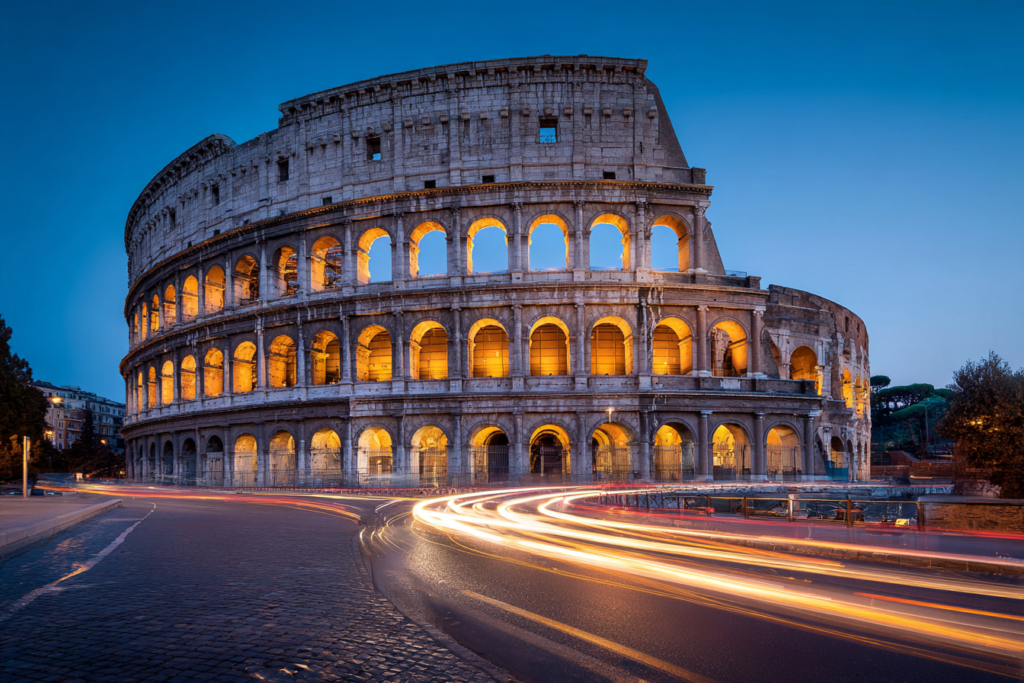
The Colosseum: Don’t just walk around the outside. Book an “Underground” tour to see the hypogeum—the backstage lifts and cages where gladiators waited.
St. Peter’s Basilica: Renaissance architecture on a god-like scale. The dome was designed by Michelangelo and dominates the skyline.
[GetYourGuide Tip]: The line for the Vatican Museums can be 3 hours long. Buying “Vatican Museums & Sistine Chapel Skip-the-Line Tickets” is not a luxury; it’s a necessity.
2. The Cradle of Genius: Renaissance Art in Florence
Florence is dense. It is a city where banks built chapels and artists became rock stars. If you are hunting for the best museums in Italy, this city has the highest concentration per square kilometer.
Where to Look:
Uffizi Gallery: Home to Botticelli’s Birth of Venus. It is the greatest collection of Italian Renaissance painting in the world.
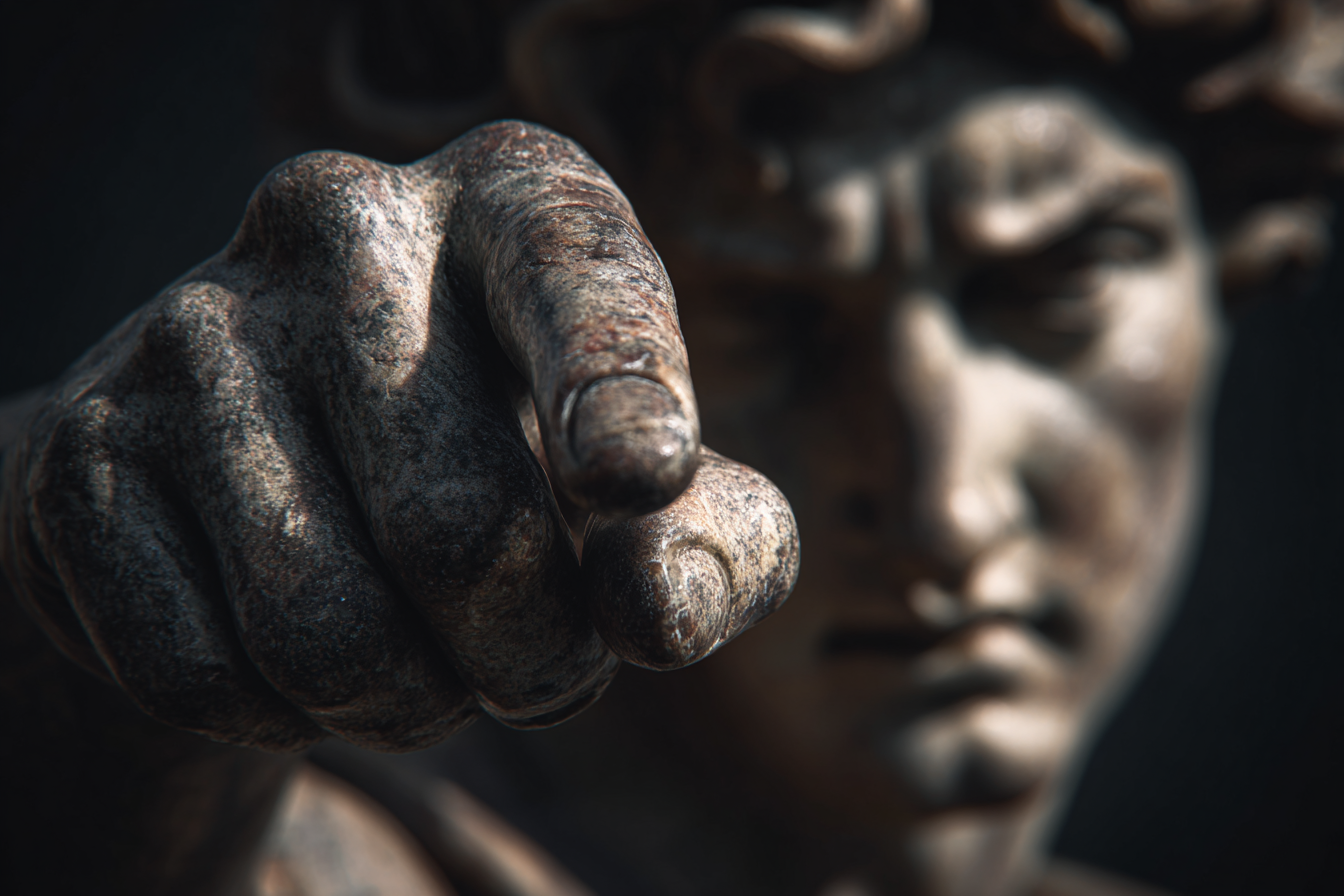
Accademia Gallery: People line up for hours for one thing: Michelangelo’s David. Seeing him in person, veins and all, is a completely different experience from seeing a photo.
Brunelleschi’s Dome: The cathedral dome was an architectural impossibility in the 1400s. You can climb between the two shells of the dome to see how he did it.
3. The Floating Palaces: Venice’s Gothic & Byzantine
Venice is a miracle of engineering—a city built on wood piles driven into mud. Its style is a unique mix of East and West.
Architectural Highlights:
Doge’s Palace: A masterpiece of “Venetian Gothic”—light, airy, and pink. It looks like it’s floating on the water.
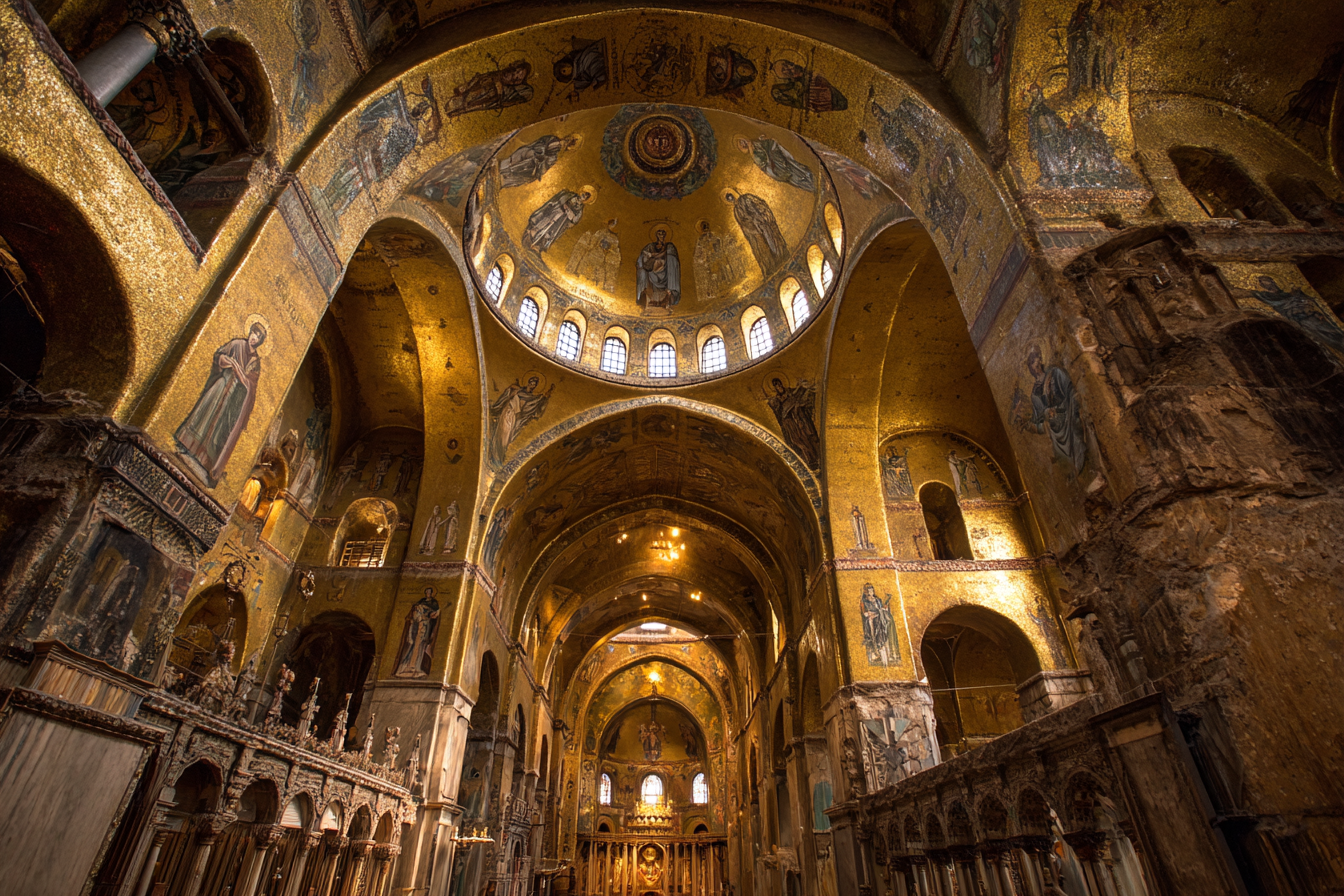
St. Mark’s Basilica: Covered in 8,000 square meters of gold mosaics, it shows the heavy influence of Byzantium (modern-day Istanbul).
The Biennale: Every two years, the Arsenale hosts the Art or Architecture Biennale, turning the historic shipyards into the world’s leading exhibition of contemporary ideas.
Visiting Venice? Combine art with sound by checking our Italian Music Travel Guide for concerts in historic churches.
4. The Future is Now: Modern Italian Architecture in Milan
While the rest of Italy protects the past, Milan invents the future. It is the capital of modern Italian architecture and industrial design.

The Icons:
Bosco Verticale (Vertical Forest): Two residential towers covered in 900 trees and 5,000 shrubs. It is a prototype for sustainable biodiversity in cities.
Prada Foundation: Designed by Rem Koolhaas (OMA), this former gin distillery is now a gold-leafed center for contemporary art. It is as much about the buildings as the art inside.
CityLife District: Skyscrapers by Zaha Hadid, Libeskind, and Isozaki redefine the Milanese skyline with their twisted and curved shapes.
Milan is also the fashion capital. Plan your shopping spree with our Italy Fashion & Shopping Guide.
5. The Golden Vault: Ravenna’s Mosaics
Often skipped by first-time visitors, Ravenna offers a completely different aesthetic. It was the capital of the Western Roman Empire when Rome collapsed.
Why Visit:
Basilica of San Vitale: The interior is not painted; it is “colored with light.” Millions of tiny glass tiles (tesserae) create 6th-century portraits of Emperor Justinian and Empress Theodora. It is psychedelic and spiritual.
Dante’s Tomb: The father of the Italian language is buried here, not in Florence.
6. Practical Tips: Surviving the Museums
Navigating Italy’s cultural heritage requires strategy. Here are Uffizi Gallery tips and general advice to save your sanity.
Booking Windows: For the Last Supper (Milan) and Vatican Scavi Tour, book 2-3 months in advance. They vanish instantly.
Museum Cards:
Firenzecard (Florence): Expensive (€85) but valid for 72 hours and covers almost everything. Worth it if you visit 4+ museums.
Roma Pass: Covers transport and 1-2 museums (Colosseum included).
Monday Blues: Most national museums in Italy are closed on Mondays. Plan your itinerary accordingly!
Conclusion
Italy’s art is not locked away in glass cases; it is carved into the fountains you drink from and the churches you walk past. Whether you are analyzing the brushstrokes of Raphael or looking up at a skyscraper covered in trees, you are witnessing a continuous 3,000-year conversation about beauty.
So book those tickets early, look up from your phone, and let Italy’s canvas inspire you.