
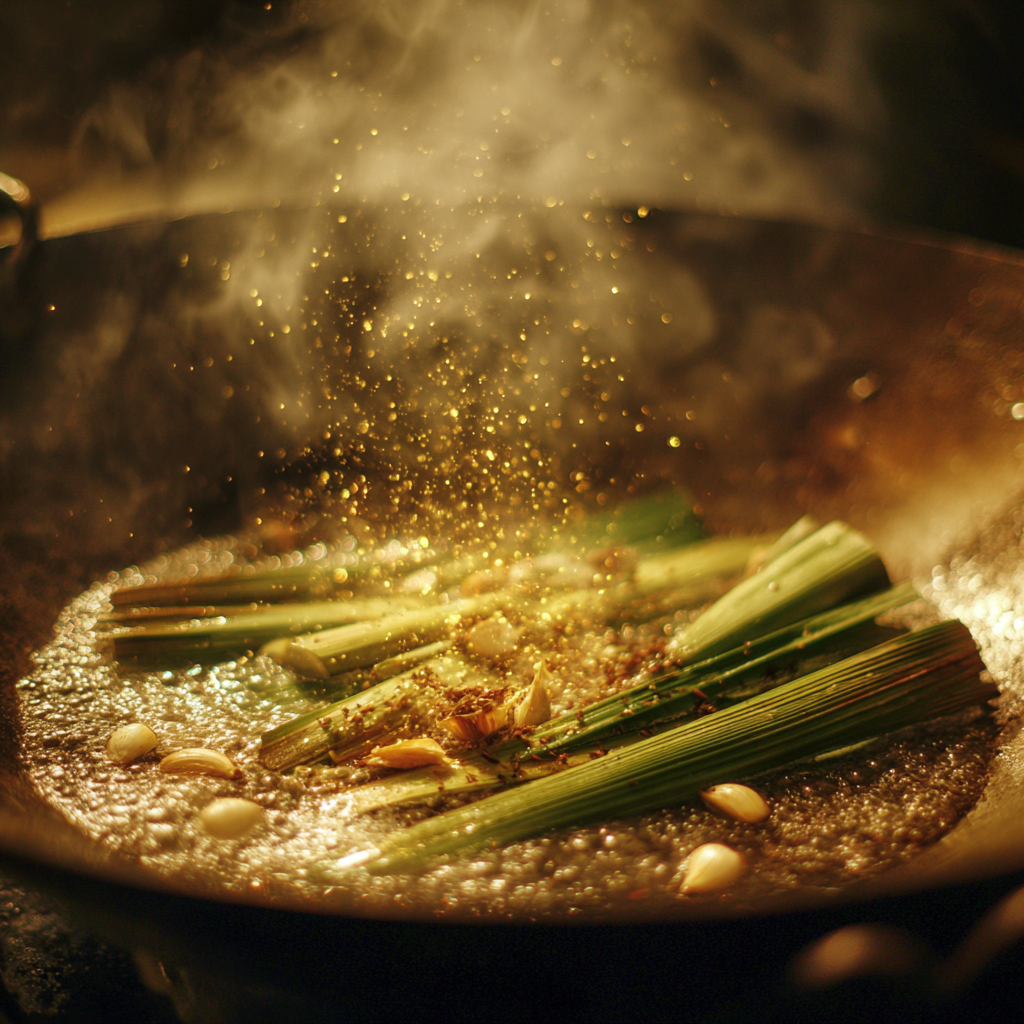
Thai Cuisine: Exploring the Flavors That Define Thailand
Thai cuisine is one of the world’s great sensory experiences—fiery yet delicate, bold yet balanced, rooted in tradition yet endlessly inventive. It is a cuisine born from monsoon forests, tropical coastlines, river valleys, mountain villages, and bustling urban markets. To taste Thai food is to taste landscapes, histories, families, communities, rituals, and rhythms of daily life. Every dish contains a philosophy: harmony of flavors, freshness of ingredients, celebration of contrast. Nothing exists alone; everything balances something else.
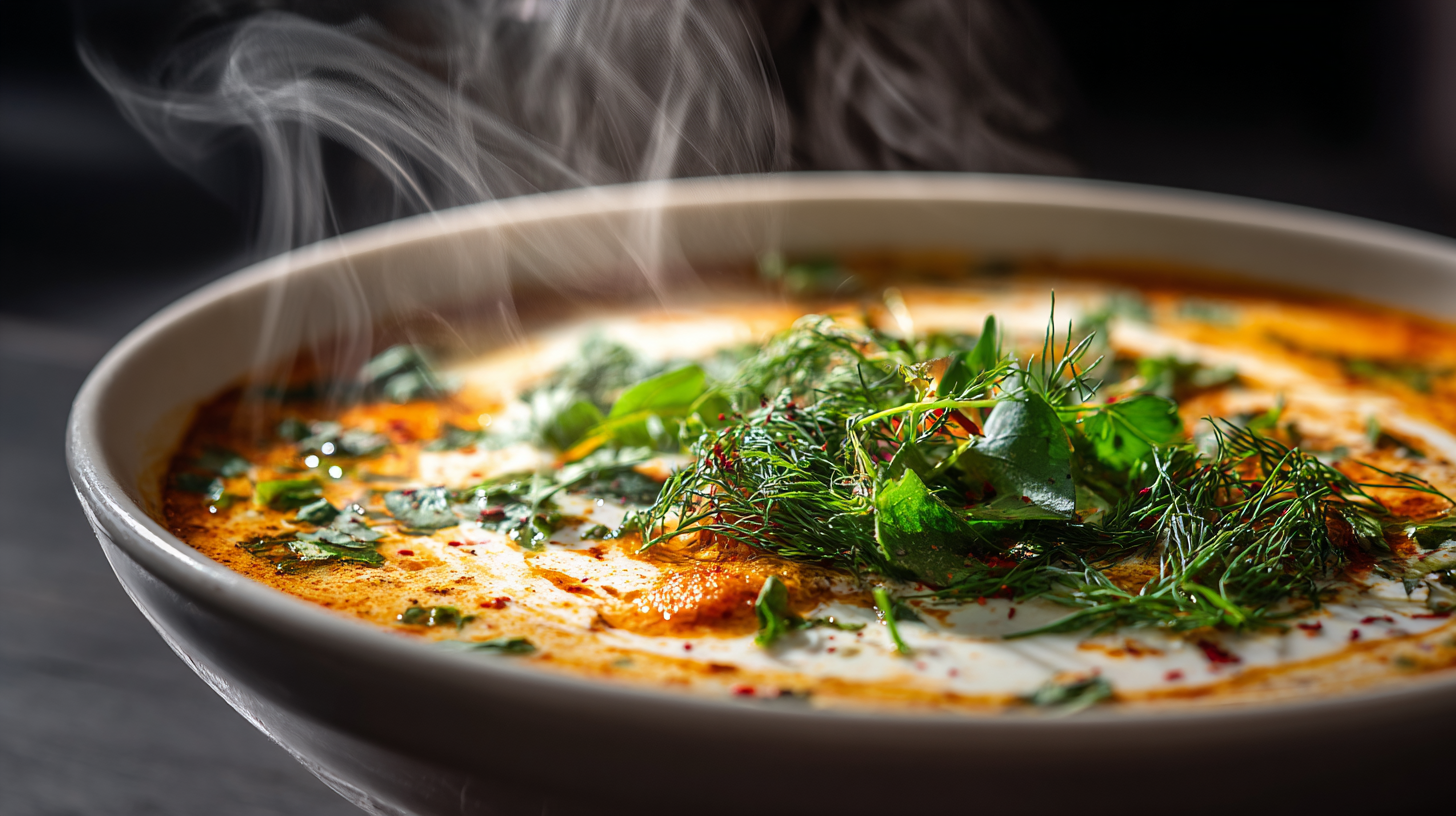
Travelers often arrive expecting heat, color, and spice—and they find all of that. But what surprises them is how emotional Thai cuisine feels. A bowl of fragrant soup becomes comfort after a long journey. A handful of herbs awakens curiosity. A street-side grill infuses the night with warmth and smoke. Eating in Thailand is less an activity and more a form of connection. You experience culture through your senses, and each meal becomes a chapter in the story of the country.
Thai cuisine is not one thing. It is a tapestry of regions, traditions, ingredients, and techniques. From Bangkok’s endless street food stalls to Chiang Mai’s fragrant northern dishes, from the bold flavors of Isaan to the rich curries of the southern coast, every region has its own voice. To eat across Thailand is to embark on a culinary journey that reveals the country’s diversity and soul.
Continue your culinary journey in our article: Thailand: A Tapestry of Spirit, Culture, Nature, and Endless Discovery
The Philosophy of Thai Flavors: Balance, Contrast, and the Art of Harmony
Thai cuisine is famous for its explosive flavors, but beneath that intensity lies a meticulous philosophy. Thai cooks seek harmony between the four foundational tastes—salty, sweet, sour, and spicy—often adding bitterness or astringency when the dish calls for it. Unlike cuisines where flavors build sequentially, Thai dishes strike all senses at once, creating a layered experience that unfolds with every bite.
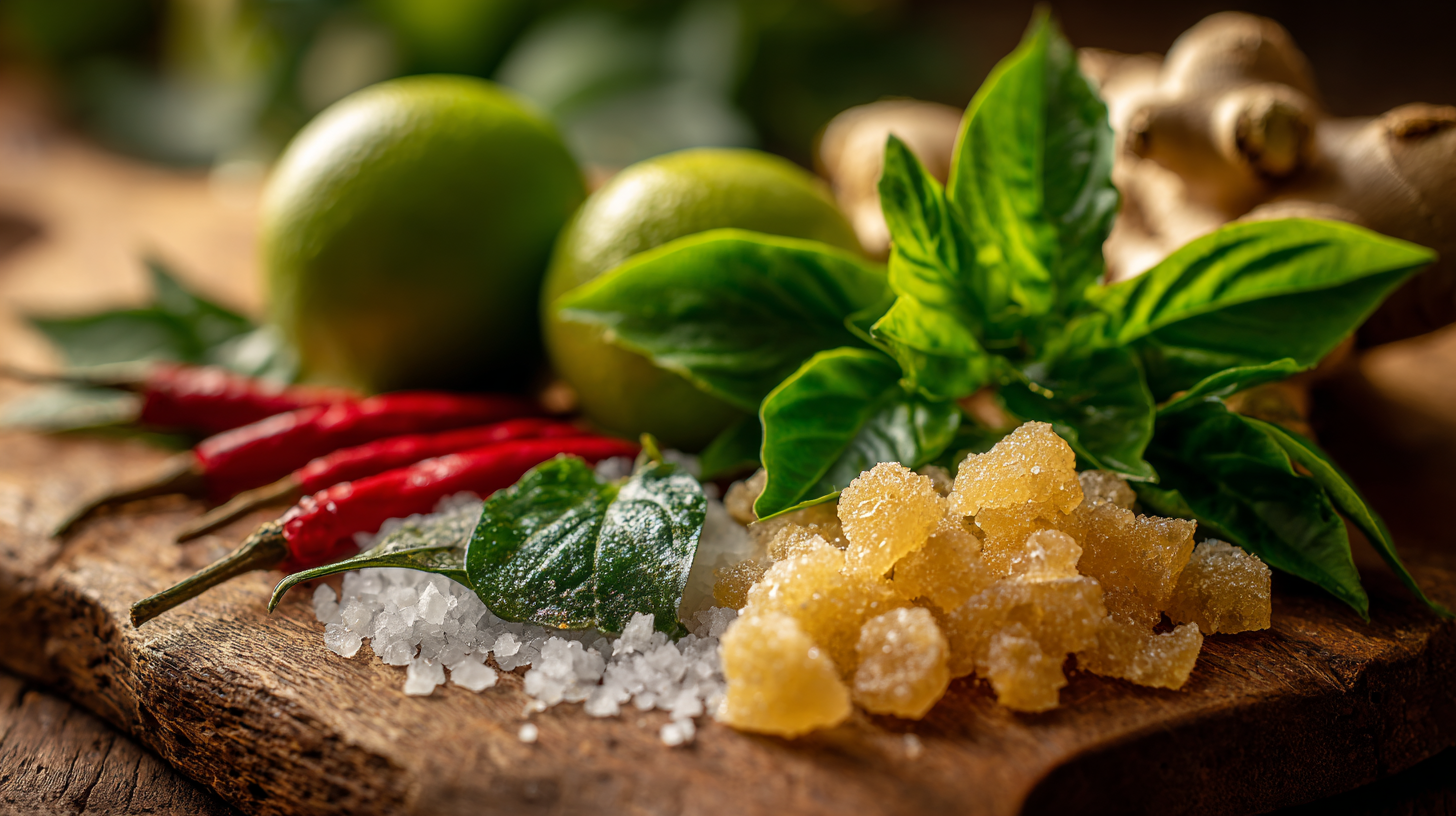
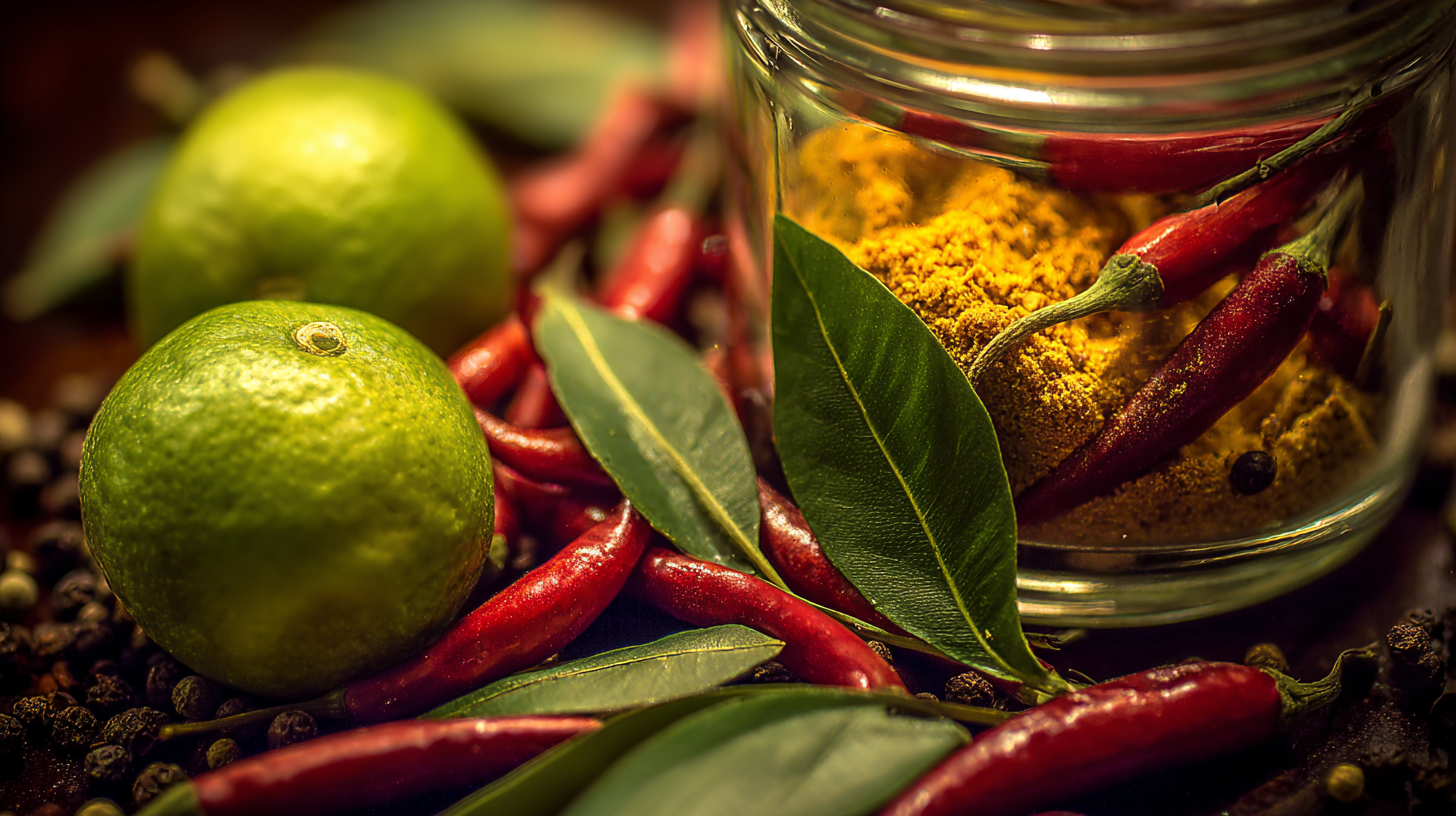
This harmony comes not from rigid rules, but from intuition. Home cooks taste constantly as they prepare dishes, adjusting with lime, palm sugar, fish sauce, herbs, and chili until the flavor feels balanced. The ingredients themselves reflect the environment: lemongrass from fields, basil from home gardens, chilies from local markets, coconut cream from fresh-pressed fruit, fish sauce from coastal villages. Thai food is fresh because its ingredients are alive—aromatic, vibrant, full of character.
Meals are meant to be shared. Plates are placed in the middle of the table, each one offering a different texture, temperature, and flavor profile. Rice acts as a grounding element, absorbing spicy, sweet, and tangy notes. Eating together becomes a ritual of exchange—of food, stories, laughter, and warmth. The philosophy of balance extends to the way meals bring people closer.
Bangkok: The City Where Street Food Never Sleeps
Bangkok is one of the greatest food cities on Earth, a place where culinary traditions coexist with constant innovation. Street food is not a trend here—it is a way of life. Markets, alleys, sidewalks, floating kitchens, and tiny shopfronts create an endless stage where food becomes performance. Morning brings rice porridge and fried dough dipped in condensed milk, steaming bowls of boat noodles, and stalls selling charcoal-grilled pork skewers. By afternoon, spicy papaya salads are pounded in mortars, and fresh fruit vendors carve mangoes with the speed of magicians.
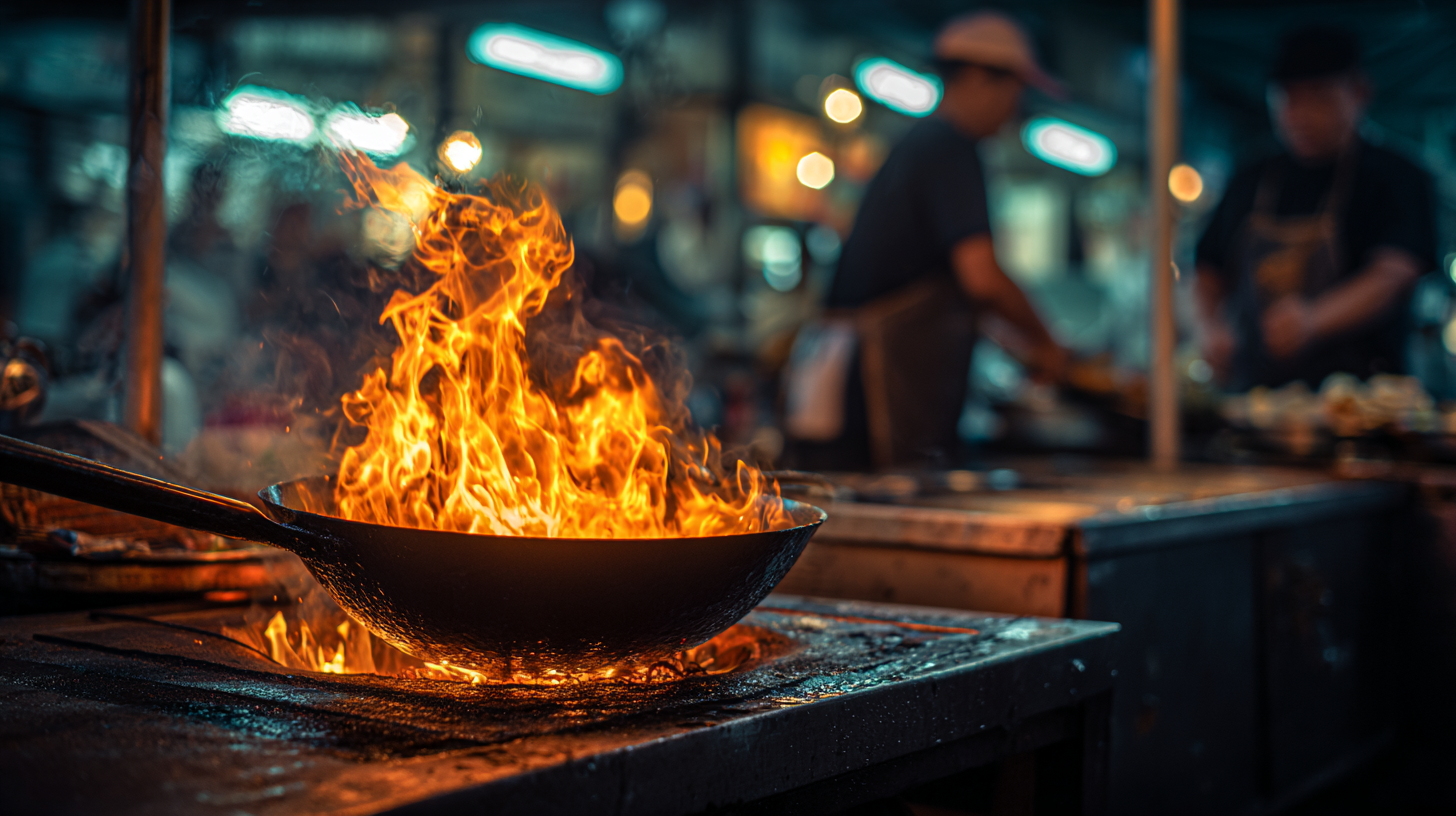
But it is at night that Bangkok’s street food culture becomes truly magical. Lanterns glow. Woks blaze. Aromas of garlic, chili, lemongrass, and tamarind drift through the air like a warm invitation. You wander through neon-lit streets where each stall offers something irresistible: crispy pork belly over jasmine rice, silky coconut curry, stir-fried noodles tossed with prawns, or sweet roti filled with banana and drizzled with condensed milk.
Street food is Bangkok’s greatest equalizer. Office workers, students, tourists, and families all gather at plastic tables to share meals. There is no hierarchy—only flavor, fire, and the joy of eating well. In a city that moves fast, street food grounds people in simple pleasures: warmth, aroma, connection.
Northern Thailand: Herbs, Mountains, and Slow-Cooked Comfort
Northern Thai cuisine reflects the landscape—cool mornings, misty forests, and highland farms. Its dishes are aromatic rather than intensely spicy, relying on herbs, broths, and earthy flavors that feel comforting and soulful. Sticky rice replaces steamed rice as the daily staple, rolled into small balls and dipped into chili pastes or paired with grilled meats.
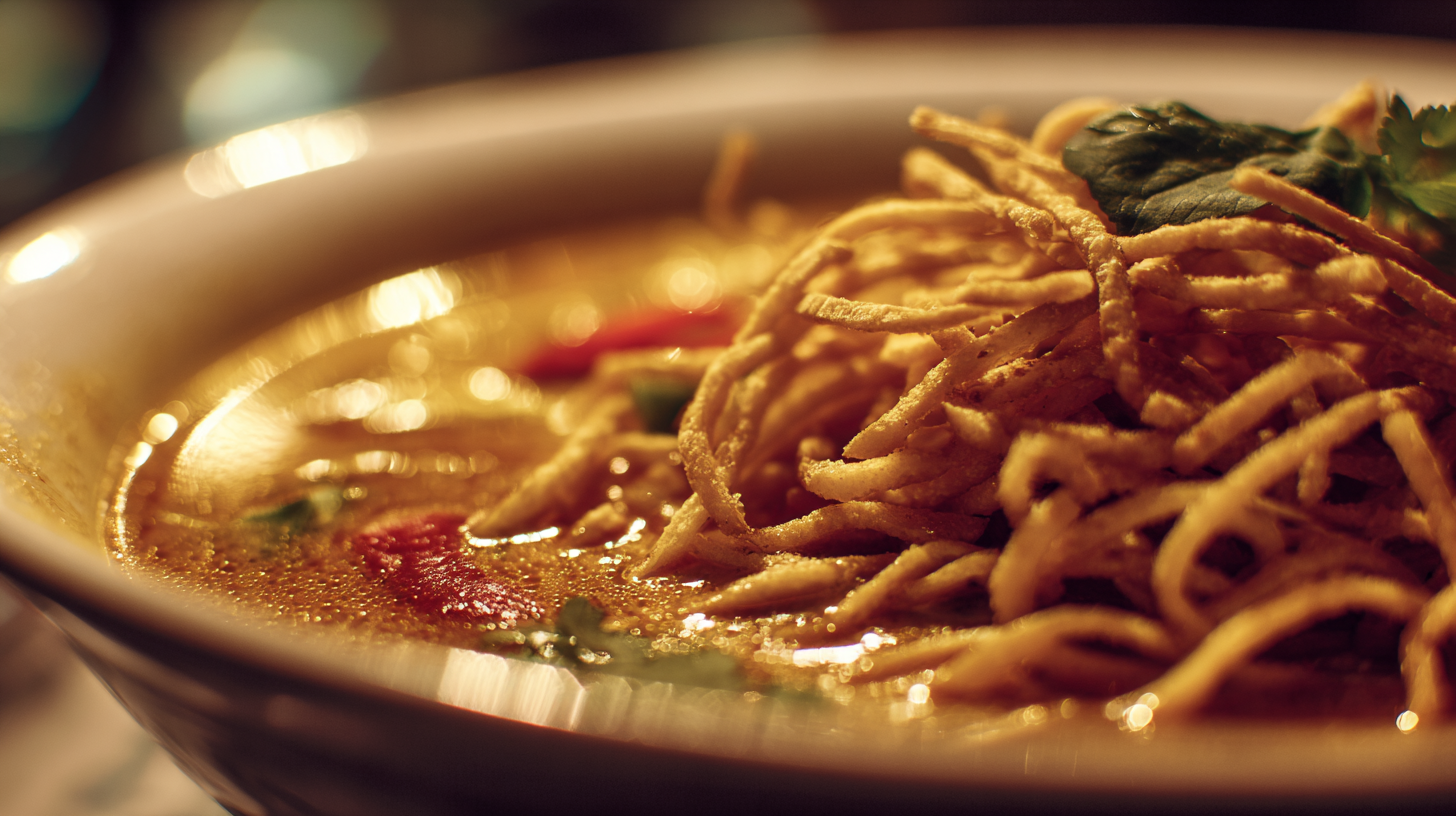
Chiang Mai is the heart of northern cooking, and its signature dish—khao soi—is a masterpiece. A bowl of creamy coconut curry broth filled with tender noodles, topped with crispy fried noodles, lime, pickled mustard greens, and chili oil. Every spoonful is a symphony of texture and temperature. Northern meals often include gaeng hung lay, a Burmese-influenced pork curry slow-cooked with ginger and tamarind, and nam prik ong, a tomato and minced pork chili dip eaten with fresh vegetables and sticky rice.
Markets in Chiang Mai reveal another layer of the cuisine—herbs piled high like green mountains, baskets of mushrooms gathered from forest floors, fermented ingredients rich in umami. Meals feel intimate, shaped by seasons and local landscapes. Eating in the north is like sitting down with history—flavors that traveled through mountains, villages, and generations.
Isaan: The Fiery, Bold Spirit of Northeastern Thailand
Isaan cuisine comes from Thailand’s northeast, a region known for its boldness—of flavor, character, and emotion. The dishes here are unapologetically intense, built on heat, tang, smoke, and crunch. Sticky rice is the foundation of every meal, eaten by hand in small, warm pieces.
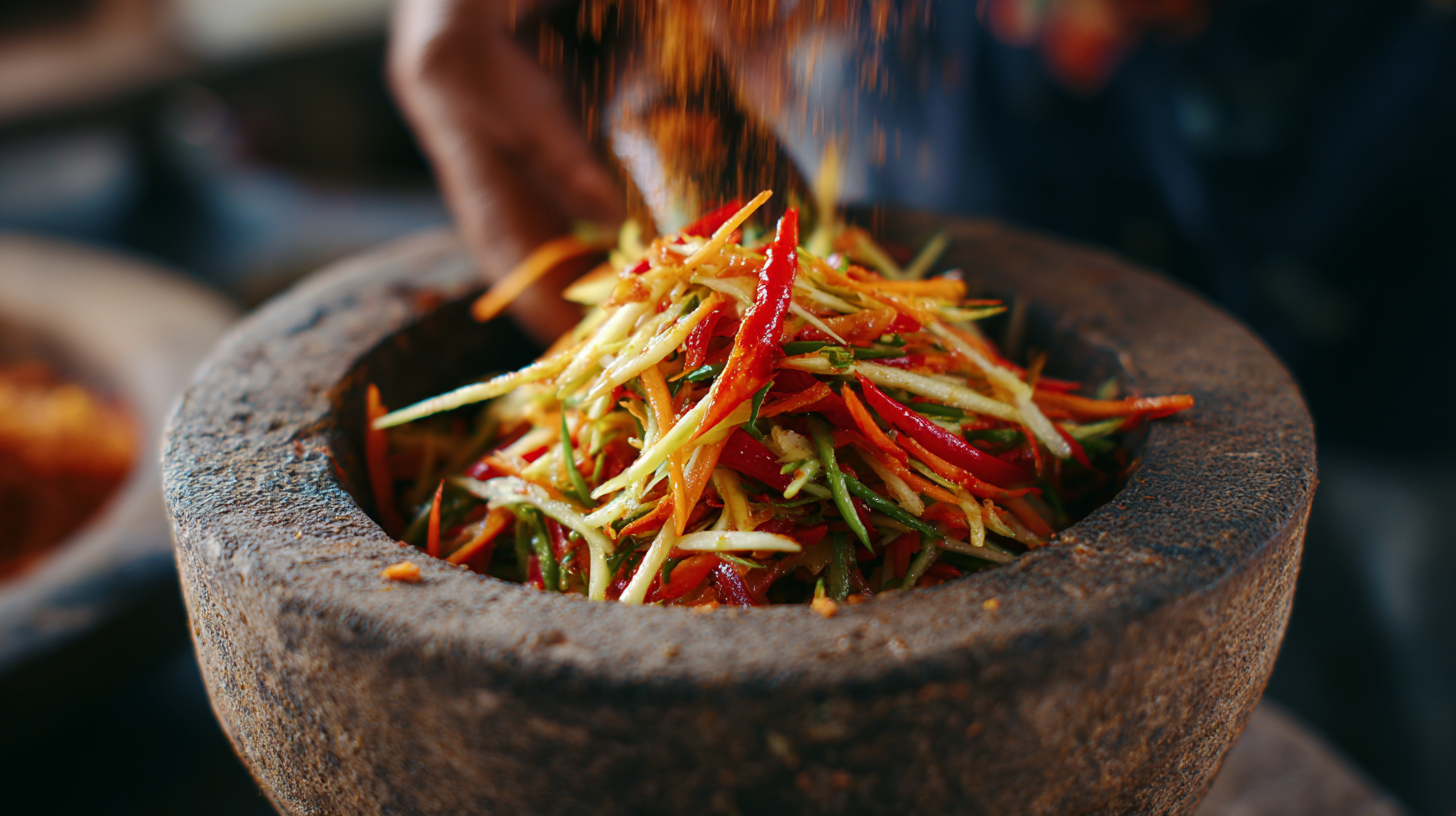
The iconic dish of Isaan is som tam—papaya salad pounded in a wooden mortar with chilies, lime, garlic, fish sauce, and sometimes fermented ingredients that give the dish its addictive depth. Each bite is electric: spicy, sour, salty, slightly sweet, and always refreshing. Alongside som tam, Isaan meals often include larb, a minced meat salad flavored with roasted rice powder, lime, and fresh herbs. The dish is both fiery and aromatic, capturing the spirit of the region in every spoonful.
Grilled meats—especially chicken and pork—are prepared simply yet cooked to perfection, often paired with tangy sauces that elevate their smoky flavor. Isaan cuisine is meant to energize, awaken, and excite. It is the loudest, brightest voice in Thailand’s culinary family, and once you taste it, you never forget it.
Southern Thailand: Spice, Coconut, and the Pulse of the Sea
Southern Thai cuisine is shaped by coastlines, fishing villages, tropical forests, and cultural influences from Malaysia and the Indian Ocean. It is the spiciest regional cuisine in Thailand, with curries that burn brightly but finish smoothly thanks to creamy coconut milk. Turmeric is a defining ingredient, coloring dishes in warm shades of gold.

Signature southern dishes include kaeng som, a sour and spicy curry with vegetables and fish; massaman curry, a rich blend of coconut milk, spices, tamarind, and roasted peanuts; and khao yam, a colorful rice salad filled with herbs, shaved vegetables, toasted coconut, and citrusy dressing. Seafood is abundant—grilled squid, prawns, crab, and fish prepared with simplicity that highlights freshness.
The south’s culinary identity is vibrant, sunlit, and deeply aromatic. Every meal carries the scent of the ocean, the warmth of spice, and the comfort of coconut.
Market Culture: The Beating Heart of Thai Food
To understand Thai cuisine, you must experience its markets. They are the true classrooms of Thai cooking. Morning markets fill with the sound of vendors arranging produce still wet with dew. Buckets of fish shimmer under fluorescent lights. Herbs release their scent every time someone brushes past them—basil, kaffir lime, culantro, coriander. Fruit stalls glow with color: dragon fruit, rambutan, mangoes, mangosteens, longan, papaya.
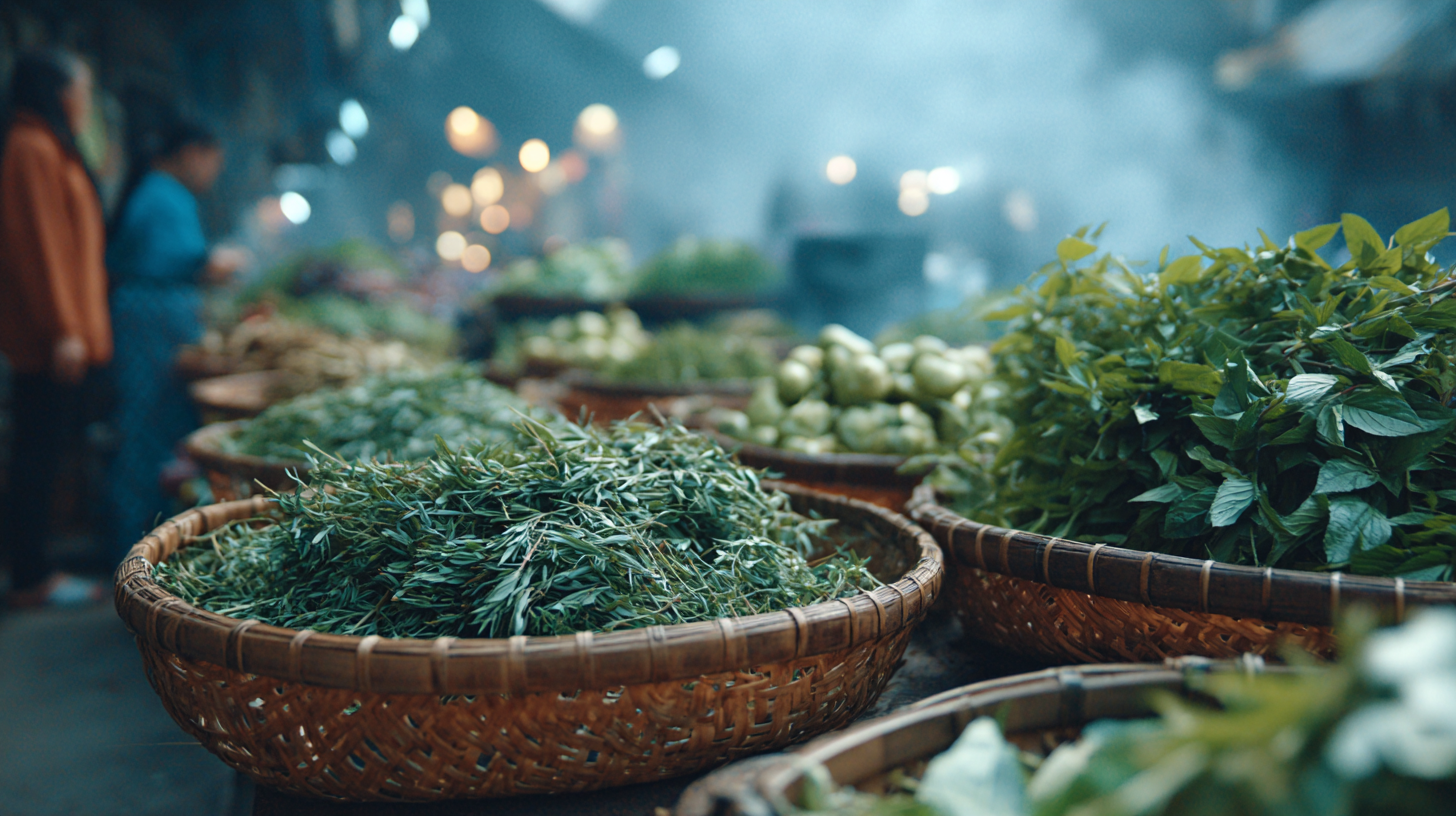
Markets in Thailand are social spaces as much as commercial ones. Families shop together, exchanging news with vendors they’ve known for decades. Children help carry baskets. Monks pass through collecting food offerings. The energy shifts throughout the day—crisp and cool in the morning, warm and lively in the afternoon, electric and aromatic at night.
Street food exists because markets exist. They feed each other—one providing ingredients, the other providing creativity. Together, they reveal the heartbeat of Thai cuisine.
Cooking Classes: Learning Thai Food Through Hands and Stories
For travelers captivated by Thai flavors, cooking classes offer more than recipes—they offer cultural insight. In these kitchens, instructors share the meaning behind ingredients, the philosophy of balancing flavors, and the stories of dishes passed down through families. You learn not only how to prepare curries, noodle dishes, and salads, but why certain flavors matter and how they dance together on the tongue.
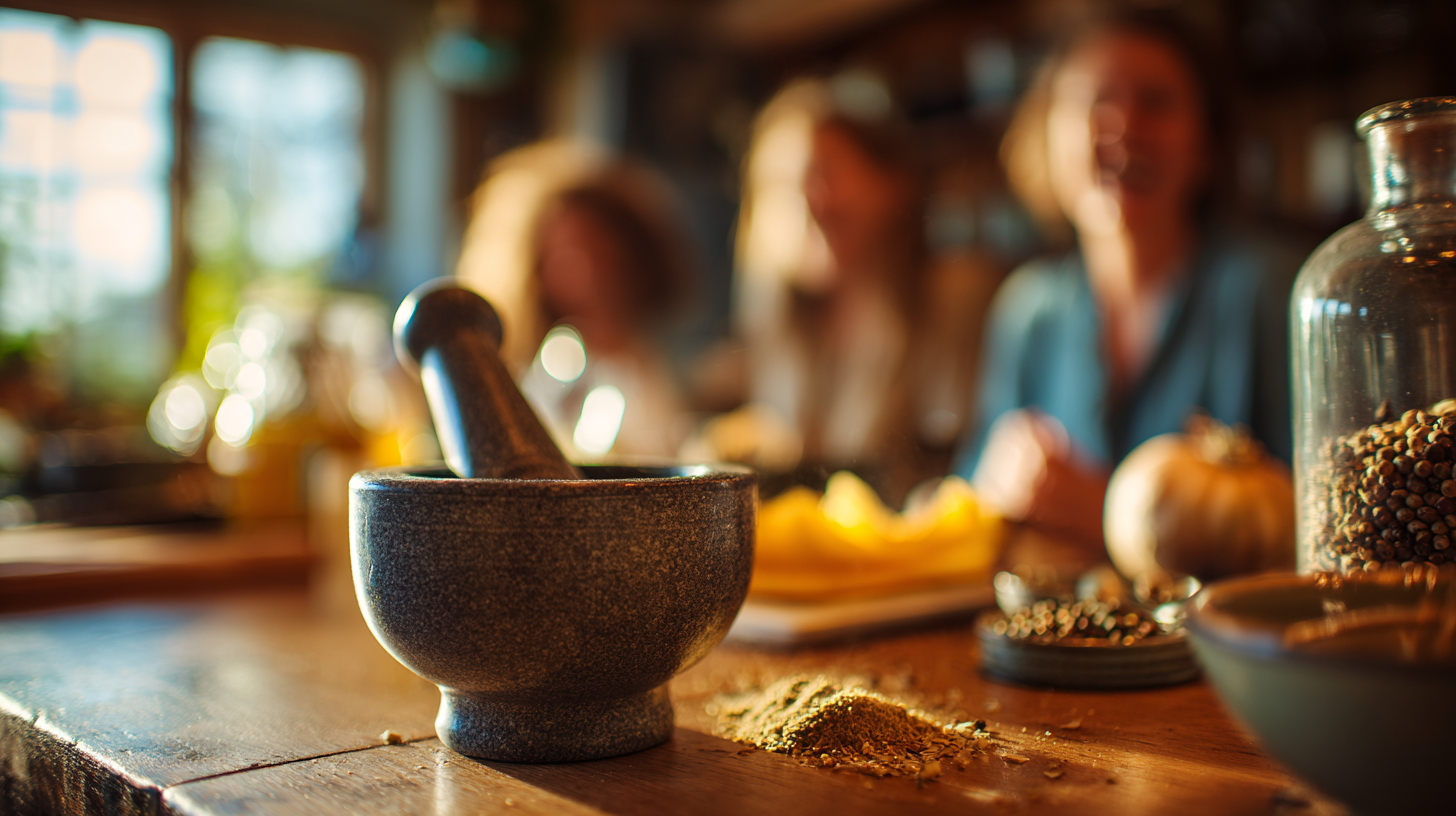
Most classes begin with a market visit, where participants select ingredients and learn to identify fresh herbs, tropical fruits, and specialty pastes. The cooking itself is hands-on—grinding spices with a mortar and pestle, simmering broths, tasting constantly, adjusting balance. The experience ends with a shared meal, eaten slowly and proudly.
A cooking class is not essential for enjoying Thai cuisine, but it is a memorable way to connect with the culture. It turns food into something personal, something you can carry home not in a bag or photograph, but in skill and memory.
Conclusion: Thailand’s Cuisine as a Journey Through Flavor and Feeling
Thai cuisine is not simply delicious—it is expressive. It tells stories of land and water, migration and trade, family and tradition. It invites visitors to slow down, taste carefully, and embrace contrast. Whether you eat from a plastic stool on a Bangkok sidewalk, share a home-cooked meal in the north, savor the intensity of Isaan, or explore markets filled with colors and scents, each bite becomes a moment of connection.
The flavors linger long after your journey ends. They stay with you like memories—warm, bright, bold, comforting. Thai cuisine is not just food. It is atmosphere. It is rhythm. It is culture. It is the soul of a country spoken in spices, herbs, smoke, and sweetness.
And once you’ve tasted it, Thailand never leaves you.
For more insights on Thai flavors, visit the official Tourism Authority of Thailand’s page on local food culture.