
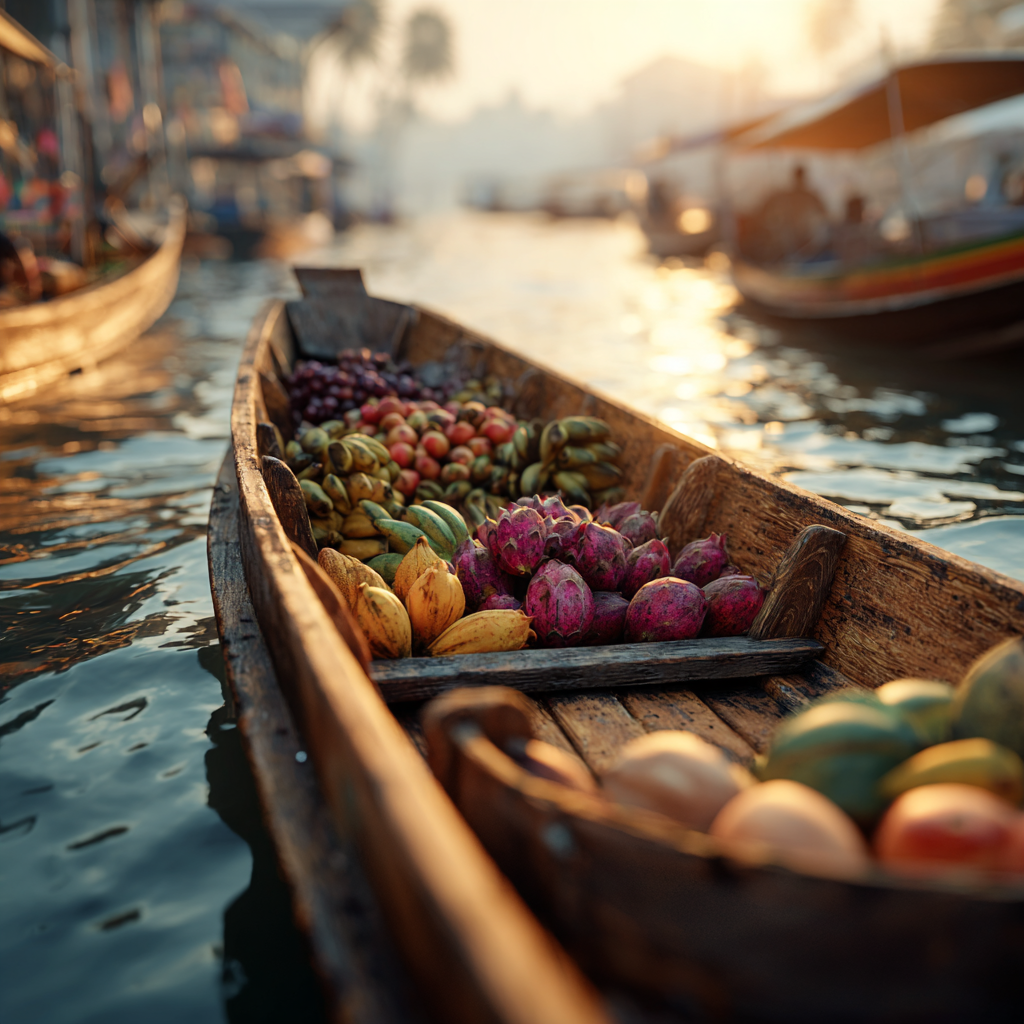
Thailand Floating Markets: A Journey Through the Country’s Living Waterways
Water has shaped Thailand for centuries. Long before highways connected cities and long before skyscrapers cast their shadows across Bangkok, rivers and canals were the country’s true roads. Goods moved by boat, families lived in wooden houses perched above the water, and floating markets became the heartbeats of communities—places where people gathered not just to trade, but to socialize, share news, eat, pray, and mark the passing of time. To explore Thailand’s floating markets today is to drift into a world where the past continues to ripple quietly through the present.

Unlike markets on land, where footsteps create rhythm, floating markets pulse with the movement of water. Boats glide along narrow canals carrying fruits, spices, flowers, steaming pots, and freshly cooked dishes. Vendors balance with effortless grace, passing bowls of noodles or bags of tropical fruit across the water with practiced precision. Morning light reflects off the ripples, creating a shimmer that makes everything feel softer, slower, more cinematic. What draws travelers here is not only the food or the shopping—it’s the feeling of witnessing a living tradition that still holds its original warmth.
To understand Thailand’s floating markets is to understand the culture of canal life itself. For generations, communities grew along waterways because rivers provided everything: transportation, irrigation, food, and connection. Homes opened directly onto canals. Children learned to paddle before they learned to cycle. Temples stood at water’s edge, their steps descending into the river so monks could collect offerings from passing boats. This fluid way of living created a unique rhythm, one that has survived even as modern infrastructure reshaped the country.
The Soul of Floating Markets: Life Moving at the Pace of Water
Floating markets are not replicas of the past—they are extensions of it. Even as tourism has grown, their core remains rooted in community. Vendors often come from families who have sold goods on the water for decades, waking before sunrise to prepare food, paddle to their spot, set up their floating kitchens, and greet customers with the same friendliness passed down through generations.
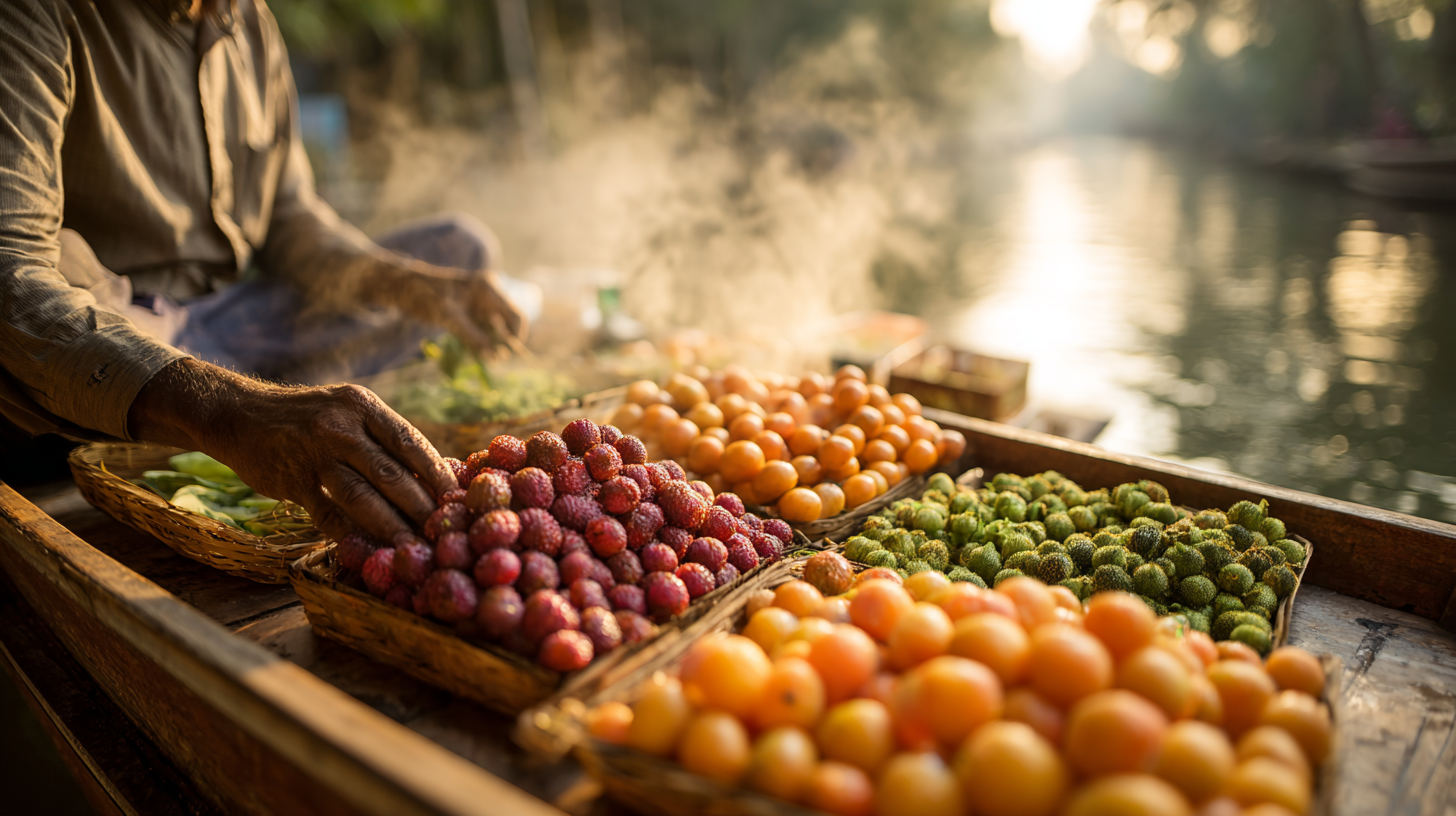
The markets begin slowly. Dawn paints the canal in soft shades of pink and gold. Mist rises from the water. The first boats drift quietly into place, each balancing stacks of mangoes, bananas, coconuts, herbs, handmade sweets, or the tools of a small floating kitchen. As the sun climbs higher, the canal becomes a mosaic of movement—paddles dipping into water, vendors calling gently to one another, and the scent of grilling fish or simmering broth drifting across the surface.
Visiting a floating market is not about rushing from stall to stall. It’s about watching life unfold. You observe the way an elderly vendor arranges her flowers with gentle precision. You see local families sharing breakfast on boat decks. You hear the soft clang of pots, the murmur of conversation, the laughter echoing between wooden houses. The market becomes a living performance, with every sound and gesture shaped by the water beneath it.
Time feels different here. Slower, warmer, more human.
Bangkok’s Canal Heritage: A City Once Called “The Venice of the East”
To outsiders, Bangkok appears as a modern metropolis of towers and highways. But beneath its surface lies a waterborne past. The city was once so full of canals—khlongs—that early travelers called it “The Venice of the East.” In those days, floating markets were not a novelty or an attraction; they were the backbone of daily life.
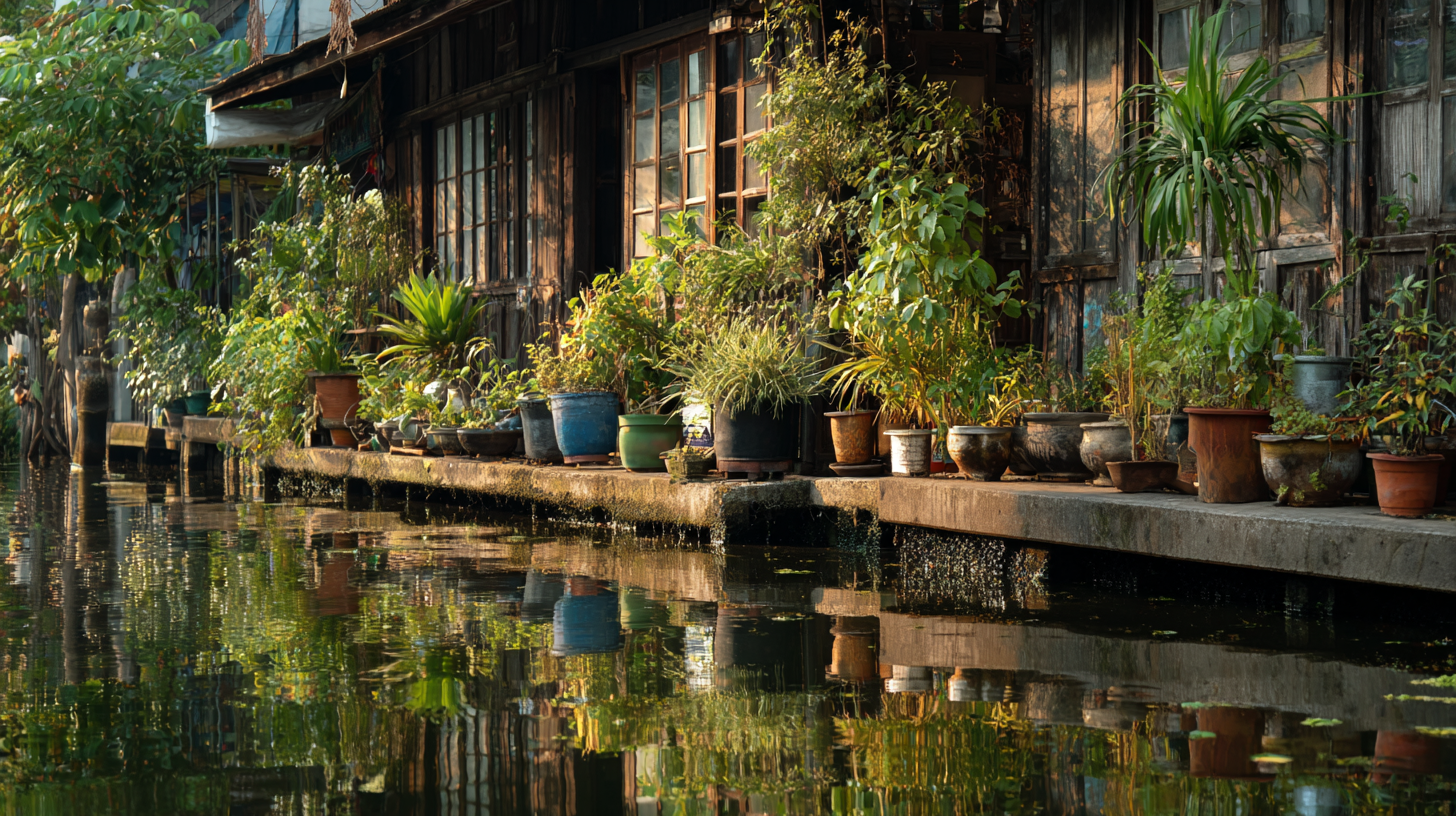
Families lived in stilted wooden houses along the canals. Boats served as grocery stores, mail carriers, mobile kitchens, and taxis. Monks paddled between temples and villages. Water festivals and rituals unfolded directly on the surface, blending community, spirituality, and commerce.
Today, many canals have been filled or hidden beneath roads, but several neighborhoods still carry the memory of Bangkok’s watery origins. Visiting a floating market becomes a way of stepping into that history—a reminder of the time when the city’s identity was inseparable from its waterways. Even now, in certain corners of Bangkok, the khlongs feel timeless. Children feed fish from porches suspended over the water. Elderly women sweep their wooden docks each morning. Temple bells ring across narrow canals, their sound softened by wind and water.
Floating markets in and around Bangkok hold onto this heritage. They are cultural anchors in a city that has changed rapidly, preserving the essence of life shaped by rivers.
Damnoen Saduak: A Market That Moves with Color and Motion
Damnoen Saduak is perhaps the most famous floating market in Thailand, known for its kaleidoscope of colors and bustling energy. While popular with travelers, it remains a remarkable place to experience the visual drama of canal life. Longtail boats glide past one another in close proximity, their engines purring beneath the chorus of vendors calling out greetings. Piles of bright fruit, steaming bowls of noodles, and handcrafted souvenirs fill the boats, turning the canal into a floating tapestry.
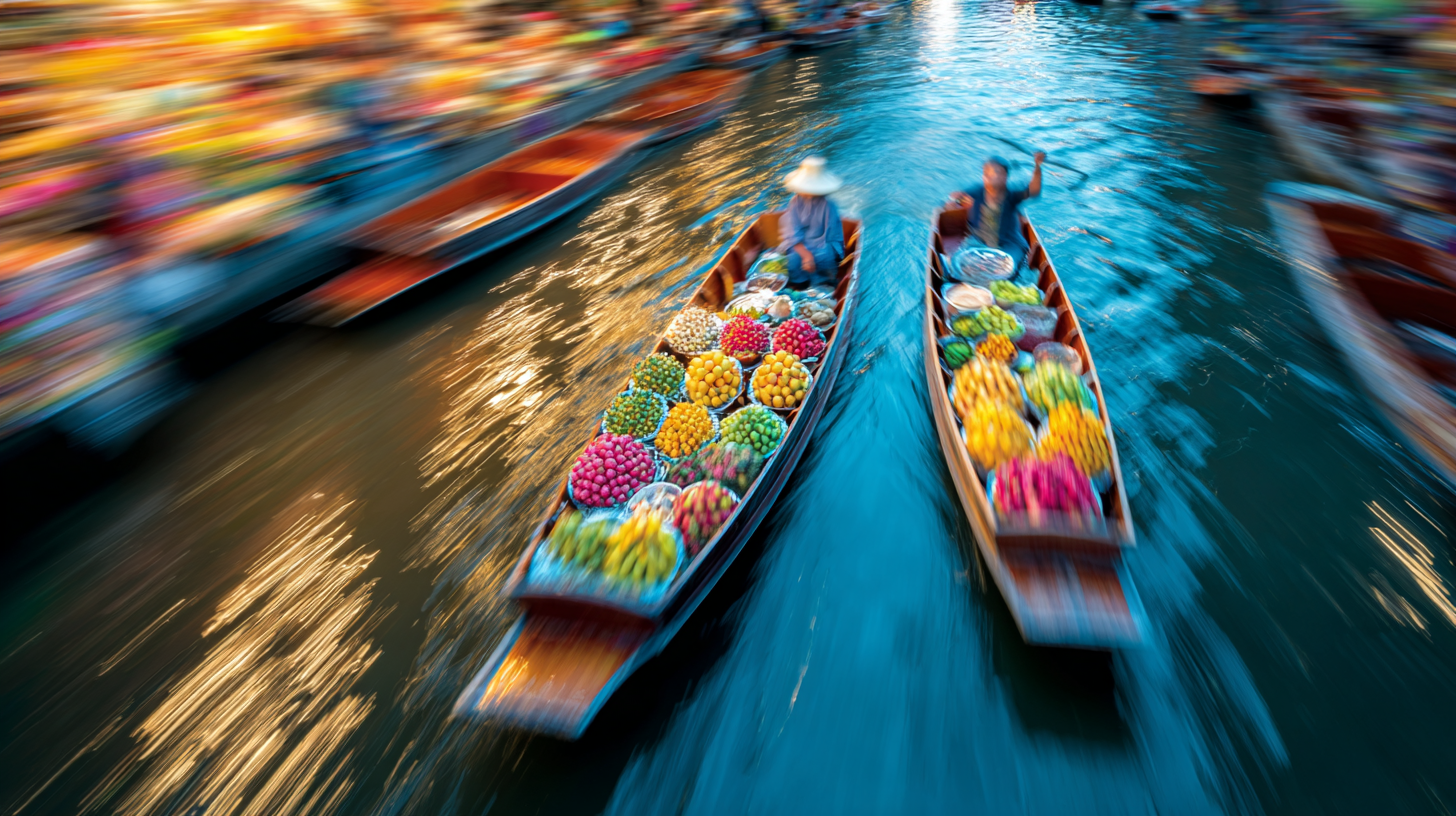
What makes Damnoen Saduak memorable is not only its vibrancy but its choreography. Vendors paddle with one hand while preparing dishes with the other, moving with practiced ease. Even in the busiest moments, there is a sense of flow—boats shifting, turning, weaving between one another like dancers responding to an unseen rhythm.
Visitors come for photos, yes, but those who stay long enough begin to see more: the quiet discipline behind the chaos, the long-standing relationships between vendors, and the intimacy between the market and the canal. Underneath the noise lies a deeply human story about livelihood, resilience, and connection.
Amphawa: Twilight Markets and Riverbank Rituals
Unlike the bright morning bustle of Damnoen Saduak, Amphawa comes alive in the late afternoon, when the heat eases and the canal turns golden with the sinking sun. The market stretches along wooden walkways, with boats anchored beside them, cooking meals that release fragrant steam into the cooling air. Amphawa feels less hurried, more contemplative—a market shaped by twilight.
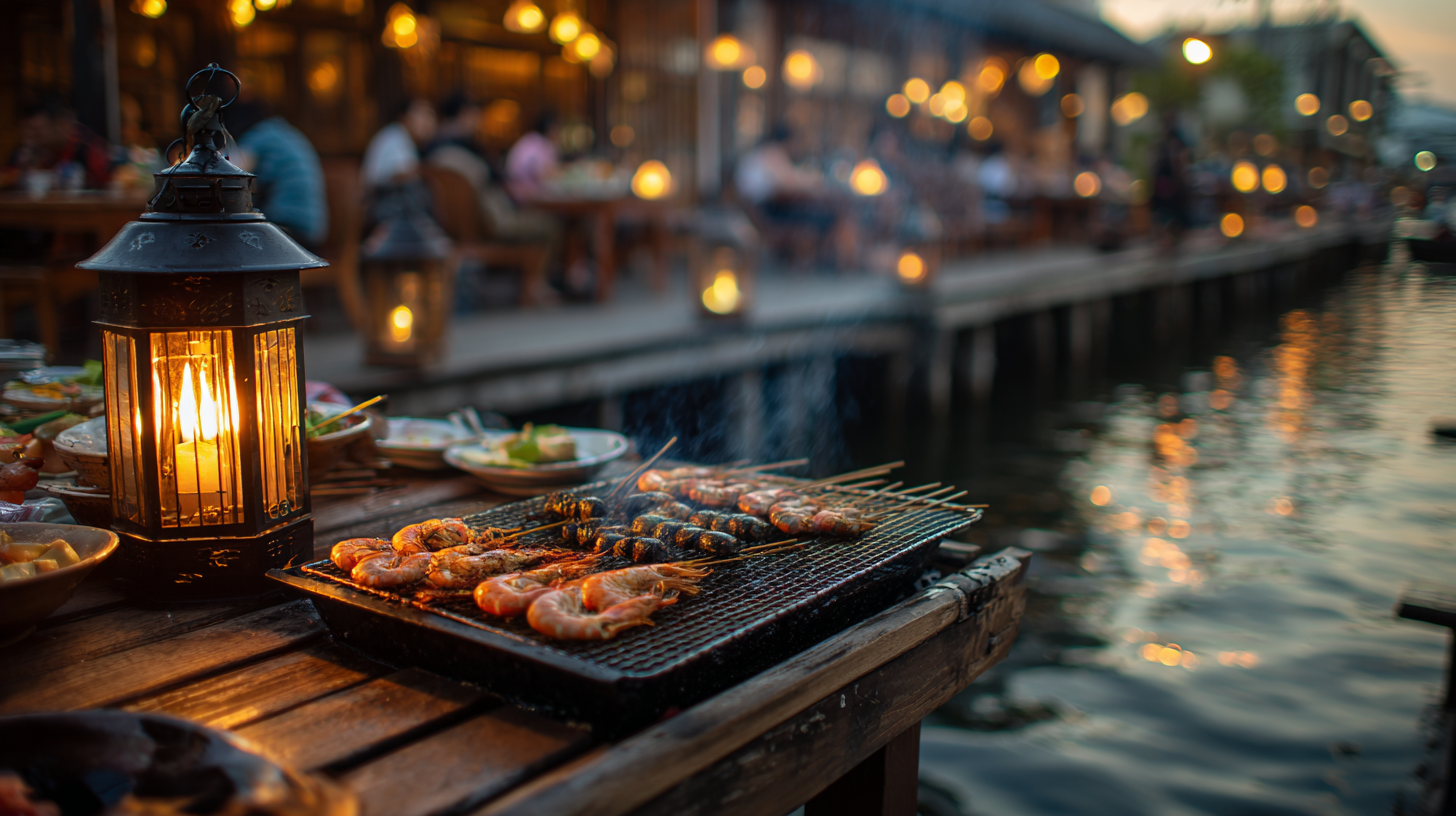
As evening settles, the market transforms. Lamps flicker on. Musicians play softly on wooden porches. Families gather to share grilled seafood, sweets wrapped in banana leaves, and iced drinks. The reflection of lights across the canal creates a dreamy atmosphere, as if the whole scene were painted in warm strokes of amber and rose.

One of Amphawa’s most enchanting rituals occurs after sunset, when travelers board small boats to glide past trees illuminated by fireflies. Their flickering lights create patterns above the water, turning the canal into a corridor of stars. Moments like this reveal why floating markets endure—not just as commercial spaces, but as places where nature, community, and tradition meet in quiet harmony.
If you want to dive deeper into Thailand’s culinary traditions, explore our guide to Thai Cuisine and discover the country’s most iconic dishes
Khlong Lat Mayom & Taling Chan: Markets that Still Belong to the Locals
Closer to central Bangkok, Khlong Lat Mayom and Taling Chan offer a different kind of floating market—one shaped more by local life than tourism. Here, you don’t see rows of souvenir stalls or staged performances. You see families gathering for weekend meals, children dipping their toes into the water, and vendors who greet customers by name.
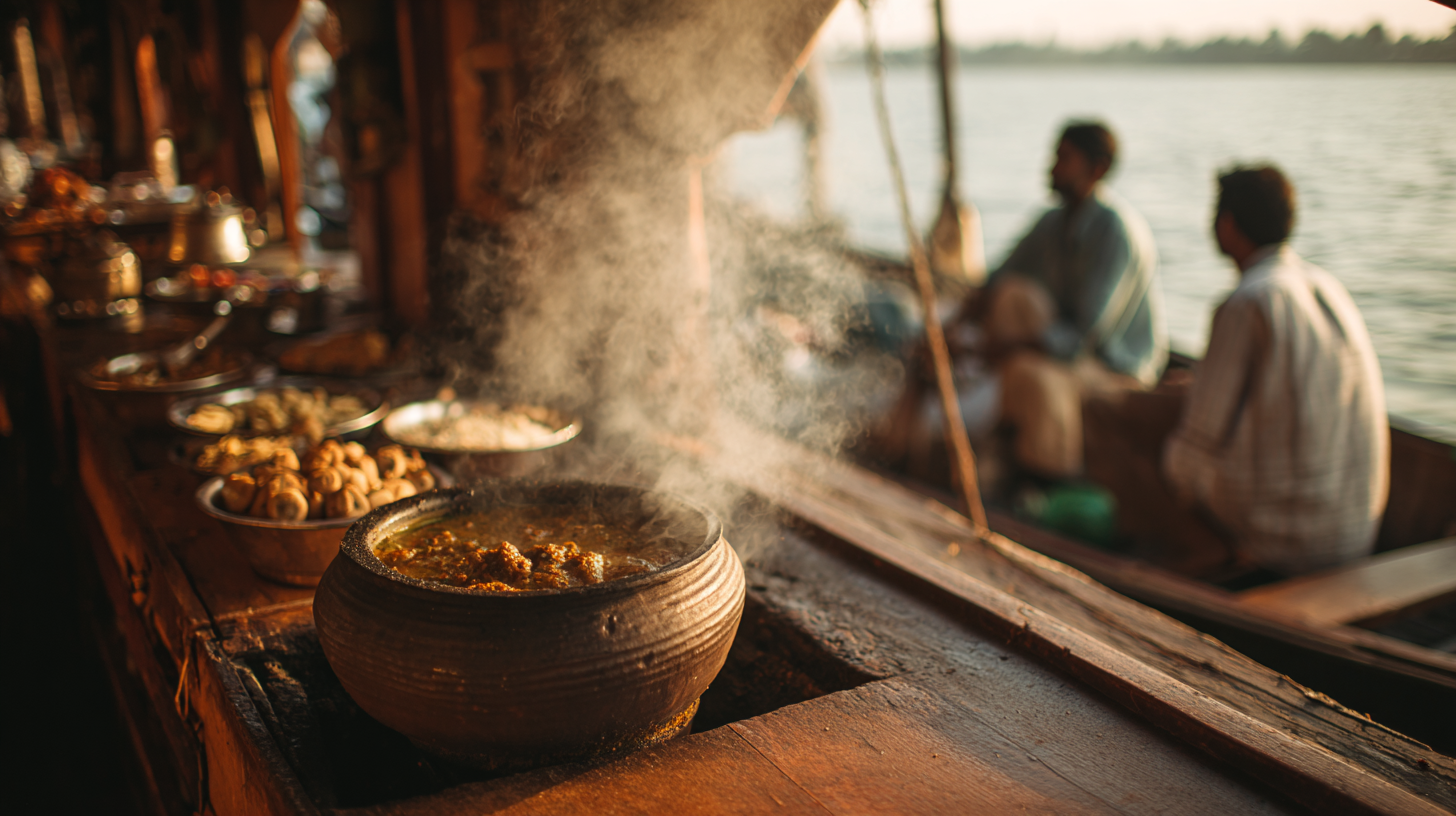
The food is a central attraction: grilled fish seasoned with herbs, curries simmering in clay pots, fresh fruit sliced on wooden boards. Boats move slowly, and visitors sit on low platforms at the canal’s edge, letting afternoon breezes drift across their faces. Conversations unfold without hurry. The market doesn’t perform—it simply exists.
In these markets, you sense the original spirit of floating commerce: warm, intimate, shaped by familiarity. The water carries sounds from one corner to another, and the market breathes with the relaxed rhythm of a community gathering, not a tourist spectacle.
Beyond the Markets: The Spirit of Water in Thai Culture
Floating markets endure because water remains a central symbol in Thailand’s cultural imagination. Rivers represent nourishment, travel, spirituality, and purification. Water festivals like Songkran celebrate renewal. Canal houses express harmony between nature and architecture. Even Thai cuisine, rich with herbs, fish, and coconut, reflects a long relationship with rivers and coastlines.

The markets express this connection beautifully. They show how people adapt to their environment, how communities survive by working with water instead of resisting it, and how tradition flows naturally into modern life. Traveling through floating markets teaches you that water is not an obstacle in Thailand—it is a companion, a resource, a narrative thread running through villages, cities, temples, and generations.
In a world that moves quickly and forgets easily, floating markets remind us that some rhythms are worth protecting.
Conclusion: Where Past and Present Drift Together
A journey through Thailand’s floating markets is not simply a search for food or photos. It is a way of experiencing a culture still shaped by the movement of water and the rituals of community. The boats, the colors, the voices, the scents—they create a world where the past is visible in every gesture, where the present feels connected to older ways of living, and where the atmosphere softens you without you noticing.
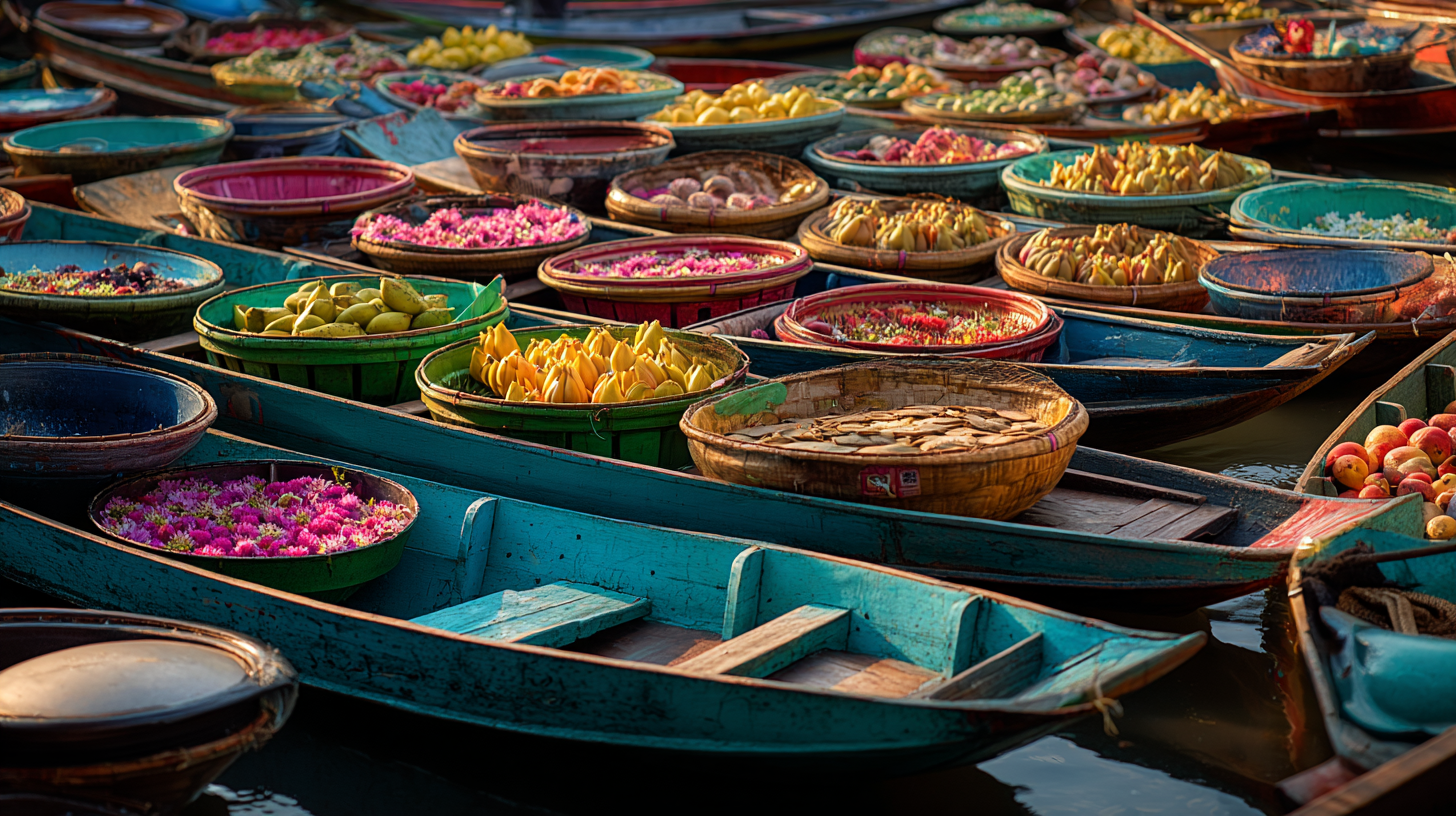
Floating markets endure because they speak to something universal: the desire for connection, for slow moments, for shared spaces that feel warm and alive. Whether you drift through bustling Damnoen Saduak, linger in twilight Amphawa, or sit quietly at Khlong Lat Mayom watching vendors prepare meals for neighbors they’ve known all their lives, you feel it—the gentle beauty of a culture unfolding along the water.
In Thailand, history doesn’t sit still.
It floats.
And if you follow the canals long enough, you find not only markets, but stories carried softly on the surface.
Tourism Authority of Thailand — Floating Markets Overview