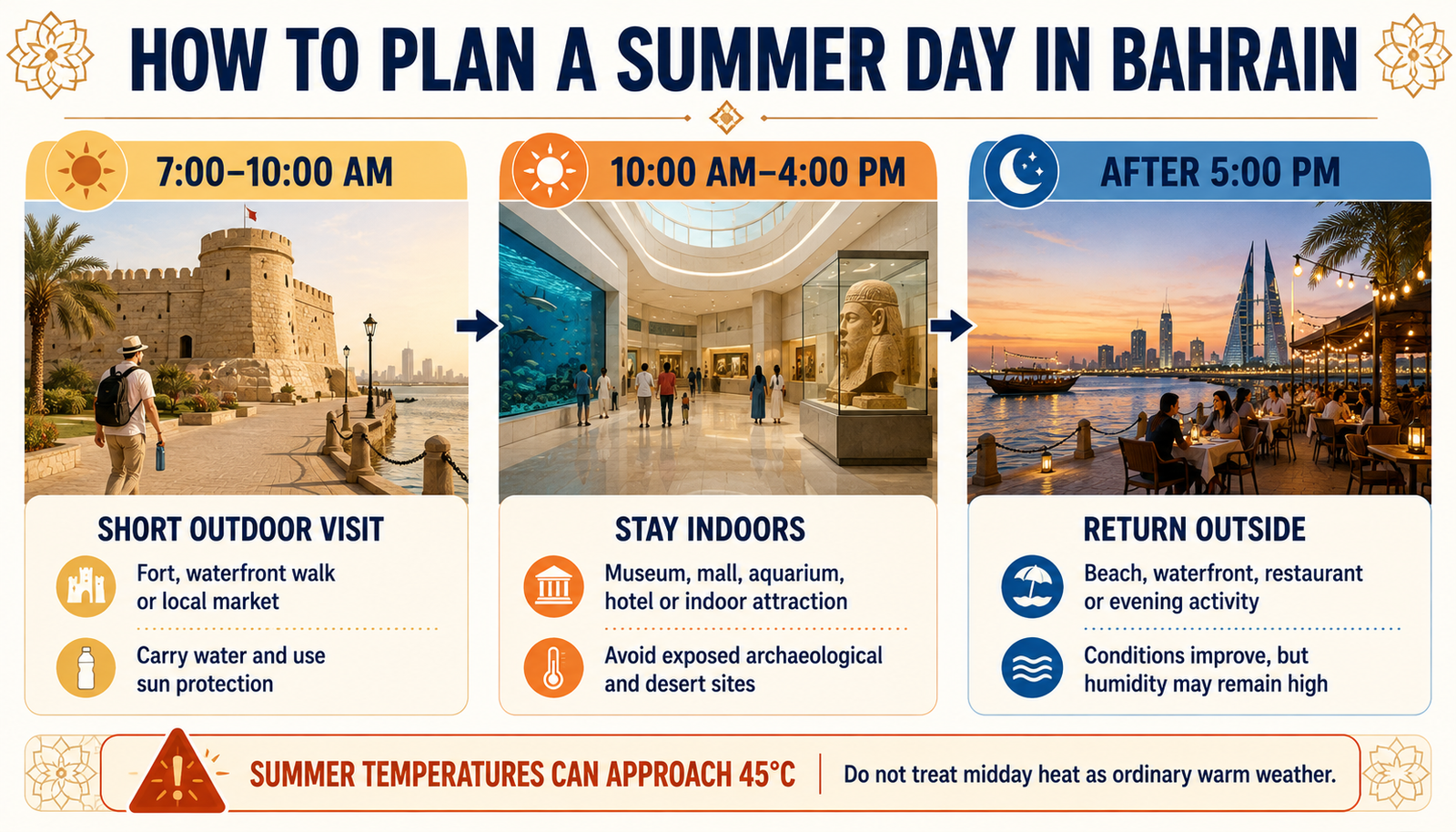
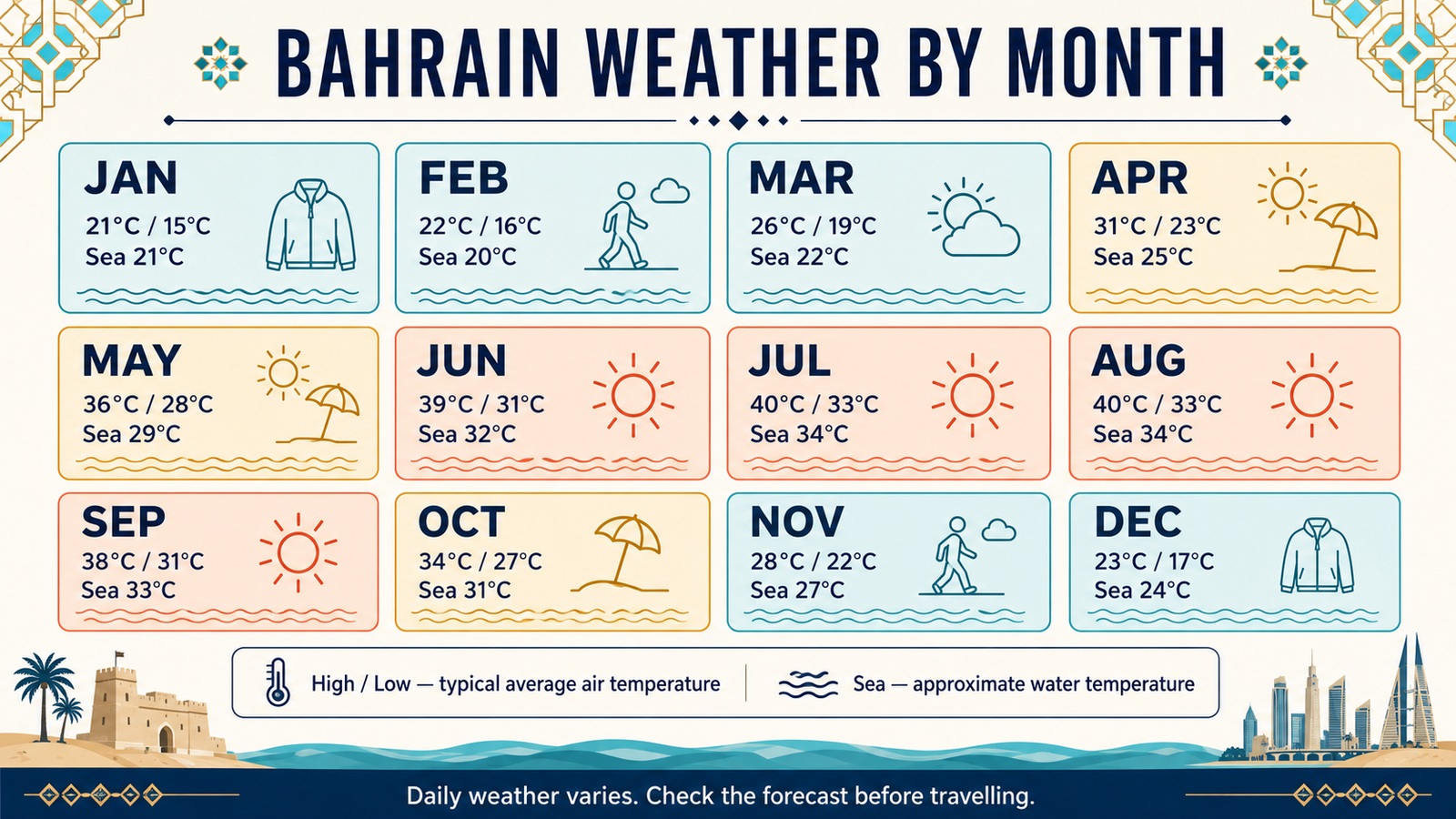
Bahrain Tourism describes fall, winter and early spring as the most suitable periods for outdoor travel. Summer temperatures can approach 45°C even when the monthly average maximum is lower. Review the official Bahrain weather guide and the Meteorological Directorate’s monthly temperature information shortly before departure.
Rainfall is limited and concentrated mainly between November and April. Rain is usually brief, but temporary flooding and slower traffic can occur because the landscape and drainage systems are not designed for prolonged wet conditions.
January: Best for Comfortable Outdoor Sightseeing
January is one of the easiest months for exploring Bahrain. Daytime temperatures of approximately 21°C make it possible to visit Qal’at al-Bahrain, the Pearling Path, Manama Souq and desert attractions without organising the day around extreme heat.
Evenings can feel cool, particularly near the waterfront or in exposed desert areas. A light jacket is useful after sunset.
The sea averages approximately 21°C. Some travellers will swim comfortably, while others may prefer a heated hotel pool.
Best for:
- Archaeological sites;
- long city walks;
- outdoor markets;
- desert attractions;
- horse racing and seasonal events.
Main trade-off: January belongs to the popular winter season, so well-located hotels may have less availability during weekends and events.
February: Best for Mild Weather and Outdoor Activities
February remains mild, with average daytime highs of approximately 22°C. It is particularly suitable for travellers interested in history, architecture and outdoor dining.
Wind can make the air and sea feel cooler than the temperature suggests. Bring an additional layer for evening boat trips, desert locations and waterfront restaurants.
Ramadan moves approximately ten or eleven days earlier each solar year and may overlap with February in some years. Check the religious calendar before booking because business hours and dining patterns will differ.
Best for: mixed cultural itineraries and active outdoor days.
Main trade-off: the sea is generally at its coolest annual temperature.
March: Best Balance for a First Visit
March is one of the best months to visit Bahrain because days become warmer without reaching summer extremes. Average highs of approximately 26°C are suitable for both sightseeing and time beside the water.
This period works particularly well for a first journey combining:
- Bahrain National Museum;
- Muharraq and the Pearling Path;
- Manama Souq;
- Bahrain Fort;
- Tree of Life;
- a beach or boat experience.
If March overlaps with Ramadan, the climatic conditions remain favourable, but the daily rhythm changes. Some attractions shorten daytime hours, restaurants may open later, and nightlife becomes quieter until after sunset.
Best for: travellers wanting culture, outdoor attractions and some beach time.
Main trade-off: variable Ramadan and event schedules.
April: Best for Warm Beaches and Outdoor Evenings
April brings average daytime highs of approximately 31°C and sea temperatures near 25°C. The water becomes more comfortable for swimming, kayaking and other activities.
Outdoor archaeological sites remain possible in the morning, but exposed locations become uncomfortable by mid-afternoon. Use museums, shopping centres or the hotel during the hottest hours.
April has traditionally been associated with Formula 1 travel, but visitors should not assume that the race will always occur on a particular weekend. The planned 2026 race at Bahrain International Circuit was officially called off by the FIA. For 2027, official Formula 1 ticketing currently provides a waitlist but no confirmed race date.
Check the official Bahrain Grand Prix ticketing page before booking flights or non-refundable accommodation.
Best for: warm-water swimming and morning sightseeing.
Main trade-off: increasing heat and potential event-related accommodation demand.
May: Best for Resort and Pool Holidays
May is hot, with typical daytime highs around 36°C. Beaches and pools are most comfortable early in the morning or toward the end of the afternoon.
Long walks through Manama or Muharraq become tiring, while exposed desert attractions should be scheduled close to sunrise or sunset. Vehicles, hotels, museums and shopping centres are heavily air-conditioned, creating a substantial contrast between indoor and outdoor temperatures.
Best for:
- Resort stays;
- beach clubs;
- waterparks;
- morning water sports;
- indoor attractions.
Main trade-off: increasingly difficult outdoor sightseeing.
Use the Bahrain beaches guide to compare public beaches, private clubs and resort day passes.
June: Beginning of the Extreme-Heat Period
June regularly produces daytime temperatures near 39°C, with individual days rising higher. The official Meteorological Directorate has recorded monthly average temperatures around 35°C and absolute maximums above 45°C during June.
This is not merely “warm weather.” Walking through an exposed archaeological site or souq at midday can become physically unsafe without sufficient water and shade.
A workable summer schedule is:
- 7:00–10:00 AM: short outdoor visit;
- 10:00 AM–4:00 PM: museum, mall, hotel or indoor attraction;
- after 5:00 PM: waterfront, restaurant or evening activity.
Best for: indoor attractions and travellers prioritising accommodation availability over outdoor comfort.
Main trade-off: heat significantly restricts the itinerary.
July and August: Hottest and Most Humid Months
July and August are generally the most challenging months for a conventional sightseeing trip. Average daily highs approach 40°C, nighttime temperatures can remain above 30°C, and humidity may make the apparent temperature feel higher.
The sea can reach approximately 34°C. It remains suitable for water activities, but it may no longer feel refreshing. Sand, pavement, metal surfaces and parked vehicles can become dangerously hot.
Summer travel can still work if the purpose is:
- A resort stay;
- visiting relatives;
- shopping;
- museums and galleries;
- indoor family entertainment;
- a short stopover.
Avoid constructing an itinerary that depends on walking between attractions. Even a distance that appears short on a map can be uncomfortable because pavements and shade are inconsistent.
Best for: indoor and hotel-based travel.
Main trade-off: extreme heat, humidity and limited outdoor time.
September: Warm Sea but Persistent Heat
September is slightly cooler than July and August, but average highs remain close to 38°C. The sea is still exceptionally warm.
This month can suit travellers who want a resort or beach-club holiday and do not mind limiting outdoor sightseeing. Cultural attractions should still be visited early or indoors.
Do not mistake the beginning of autumn on a European or North American calendar for cooler Gulf weather. Comfortable outdoor conditions generally return later.
Best for: warm-water activities and resort stays.
Main trade-off: the weather still feels like summer.
October: Best Shoulder Month for Beaches
October is one of the most useful compromise months. Daytime temperatures average approximately 34°C, while the sea remains close to 31°C.
The first half of the month can still be hot, but mornings and evenings gradually become more pleasant. By late October, combining a beach day with sightseeing becomes considerably easier.
Visitor demand may start increasing as the Gulf’s winter season approaches, but October usually offers more flexibility than the busiest winter periods.
Best for: beaches, pools and mixed indoor-outdoor itineraries.
Main trade-off: midday heat remains significant, especially early in the month.
November: Best Overall Month for Beaches and Sightseeing
For many travellers, November is the best month to visit Bahrain. Average highs near 28°C remain warm enough for beaches, while outdoor cultural sites become comfortable throughout more of the day.
The sea averages approximately 27°C, providing a better swimming balance than winter. Seasonal events, markets, exhibitions and outdoor dining also begin to expand.
Late November can become busier around major exhibitions and events. Verify the official Bahrain events calendar before selecting dates.
Best for:
- First-time visits;
- swimming;
- archaeological sites;
- outdoor dining;
- walking through Muharraq and Manama;
- mixed family itineraries.
Main trade-off: increasing accommodation demand.
December: Best for Culture and National Celebrations
December offers mild daytime temperatures around 23°C and cooler evenings. It is one of the most enjoyable months for historical sites, souqs, outdoor restaurants and desert attractions.
Events are frequently organised around Bahrain National Day on 16 December. Exact programmes vary each year but may include markets, performances, illuminations, fireworks and family activities.
Muharraq Nights has also been associated with the winter cultural season, using the historic Pearling Path for performances, food, crafts and exhibitions. Check the year’s programme rather than relying on dates from an older article.
The sea temperature averages approximately 24°C. Swimming remains possible, but it may feel cool in windy conditions.
Best for: culture, celebrations, outdoor walking and family travel.
Main trade-off: popular event weekends can be busy.
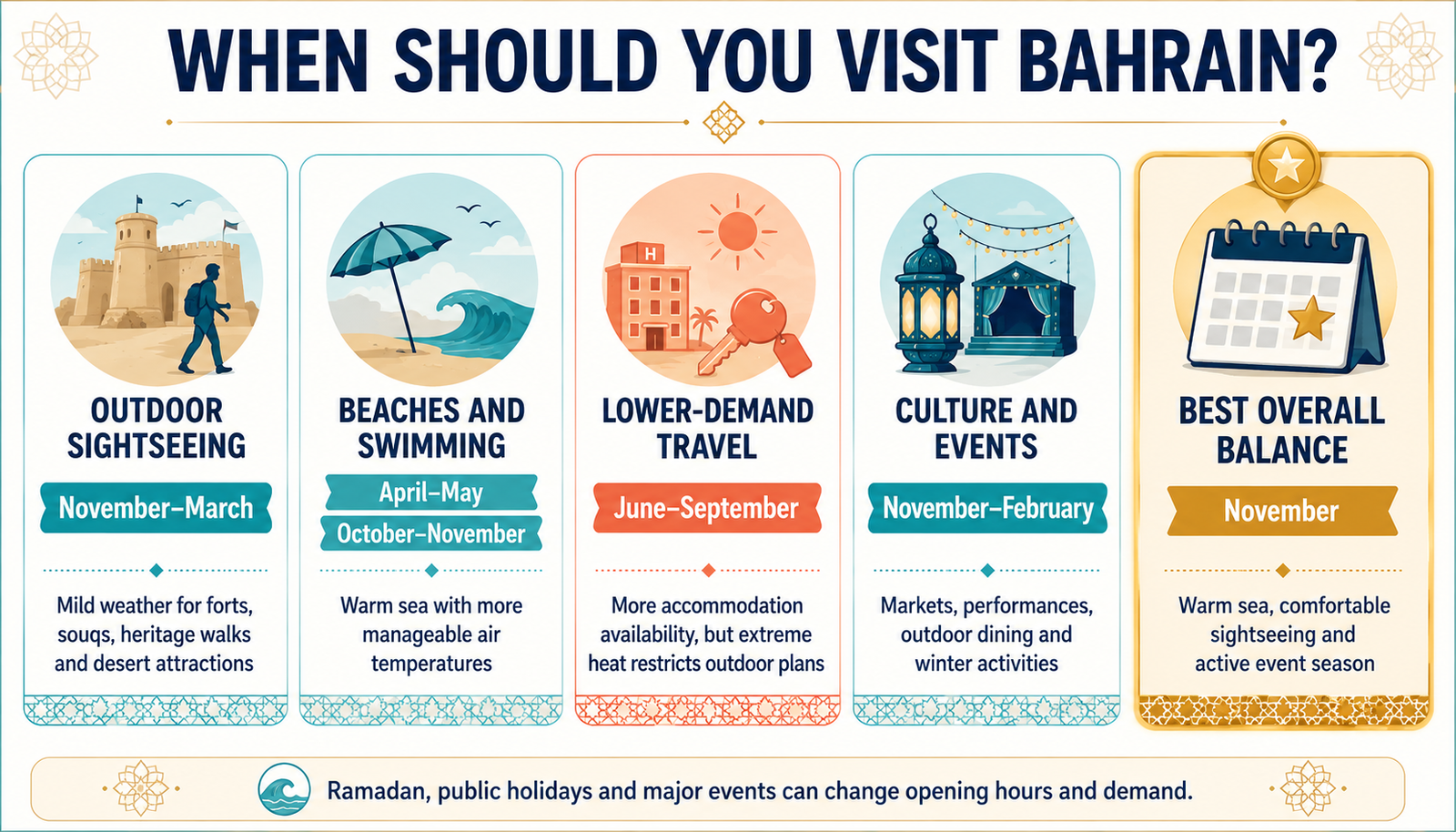
Best Months for Bahrain Beaches
Choose April, early May, October or November if swimming is a central part of the trip.
Bahrain’s beach options are not interchangeable. A free public coastline, BHD 2 serviced beach, private club and BHD 30–50 resort day pass provide very different experiences. Compare them in the complete guide to the best beaches in Bahrain.
Best Time for Historical and Cultural Attractions
November through March is the strongest period for:
- Qal’at al-Bahrain;
- Pearling Path;
- Dilmun Burial Mounds;
- Tree of Life;
- Riffa Fort;
- Manama Souq;
- walking through historic Muharraq.
Many of these sites have limited shade. Between May and September, schedule exposed locations immediately after opening or near sunset.
Museums remain suitable throughout the year. Bahrain National Museum is particularly useful during summer because it provides historical context for sites that may be too hot to explore extensively outside.
Plan the broader itinerary with the guide to the best things to do in Bahrain.
Is Ramadan a Good Time to Visit Bahrain?
Ramadan can be a rewarding time to experience Bahrain, but it requires different expectations.
The Islamic calendar is lunar, so Ramadan moves approximately ten or eleven days earlier each year. Final dates depend on the sighting of the moon.
During Ramadan:
- Some restaurants close during daylight hours.
- Tourist hotels may continue serving guests in designated areas.
- Museums, shops and attractions may shorten or divide their hours.
- Traffic becomes heavier shortly before sunset.
- Restaurants and social areas become lively after iftar.
- Alcohol availability may be limited.
- Music and evening entertainment may follow different policies.
- Modest clothing and respectful public behaviour become particularly important.
Do not eat, drink or smoke conspicuously in public during fasting hours. Follow the rules and guidance provided locally.
Ramadan is suitable for travellers interested in culture and evening atmosphere. It is less convenient for visitors who expect unrestricted daytime dining and a conventional nightlife schedule.
The official tourism site lists religious holidays as tentative until confirmed. Check Bahrain’s current travel and public-holiday information before departure.
Bahrain Events and Seasonal Demand
Events can affect accommodation prices and traffic more than ordinary seasonal tourism.
Bahrain Grand Prix
Formula 1 has historically generated very high demand around Sakhir and Manama. However, dates and even the operation of a particular race can change. As noted above, the planned 2026 Bahrain race at Sakhir was called off.
Do not book solely from an unofficial calendar, an old search result or a previous year’s race weekend. Verify the event directly through Formula 1 and Bahrain International Circuit.
National Day Season
Events are commonly held around 16 December. Expect additional traffic near waterfronts, malls and celebration sites.
Winter Cultural Events
Markets, horse racing, outdoor performances and events along the Pearling Path are concentrated in the cooler season. Individual programmes change annually.
Exhibitions and Conferences
Major exhibitions can increase weekday accommodation demand in Manama. Check the Bahrain International Exhibition and Convention Centre calendar if hotel prices appear unexpectedly high.
When Is Bahrain Cheapest to Visit?
June through September generally provides the greatest chance of hotel promotions because leisure sightseeing demand is reduced by the heat. However, “cheapest” does not automatically mean best value.
A lower room rate may be offset by:
- Greater reliance on taxis;
- spending most of the day indoors;
- paying for hotel pools or private beaches;
- an itinerary with fewer usable outdoor hours;
- increased electricity or resort charges embedded in accommodation pricing.
Winter offers better weather but stronger demand. Event weeks can raise prices sharply even when the surrounding month is not especially busy.
For meaningful comparison, check the same hotel and room type across several dates. A general label such as “high season” cannot show the actual difference for your chosen property.
A future Bahrain trip-cost guide will compare accommodation, food, transport and activity budgets without overloading this weather-focused article.
What to Pack by Season
November to March
Bring:
- Light clothing for daytime;
- a jacket or light sweater for evenings;
- comfortable walking shoes;
- sun protection;
- modest clothing for mosques and cultural areas;
- optional light rain protection.
April, May and October
Bring:
- Breathable clothing;
- high-SPF sunscreen;
- sunglasses and a hat;
- refillable water bottle;
- modest cover-up for public areas;
- lightweight layer for strong indoor air conditioning.
June to September
Bring:
- Loose, breathable clothing;
- high-SPF sunscreen;
- hat and sunglasses;
- reusable water bottle;
- sandals that tolerate hot surfaces;
- light outer layer for air-conditioned interiors.
Heat-sensitive medication, electronics and aerosols should not be left inside parked vehicles.
Bahrain is compact, but repeatedly crossing the island wastes time and increases transport costs. Group attractions geographically even when the weather is mild.