
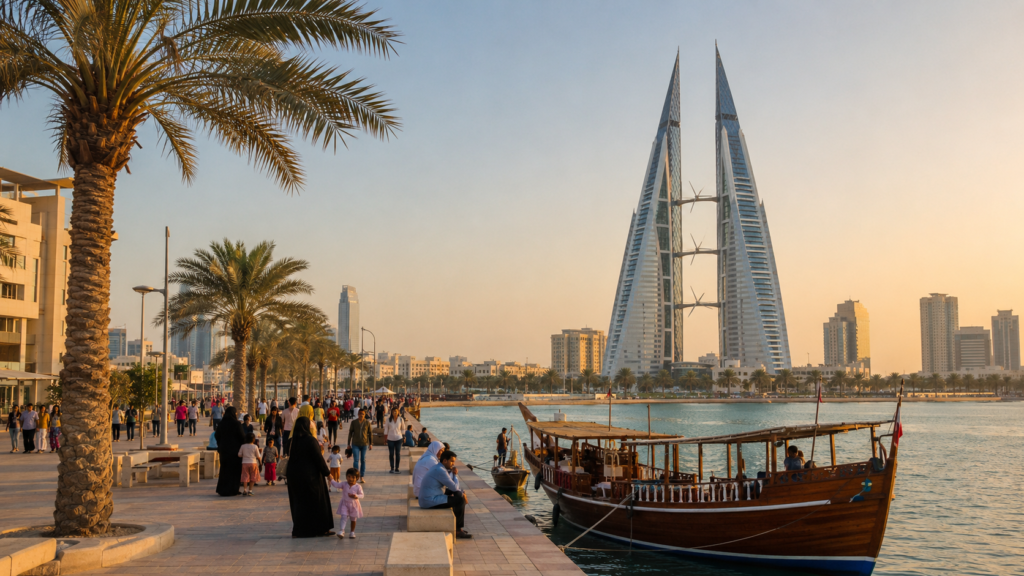
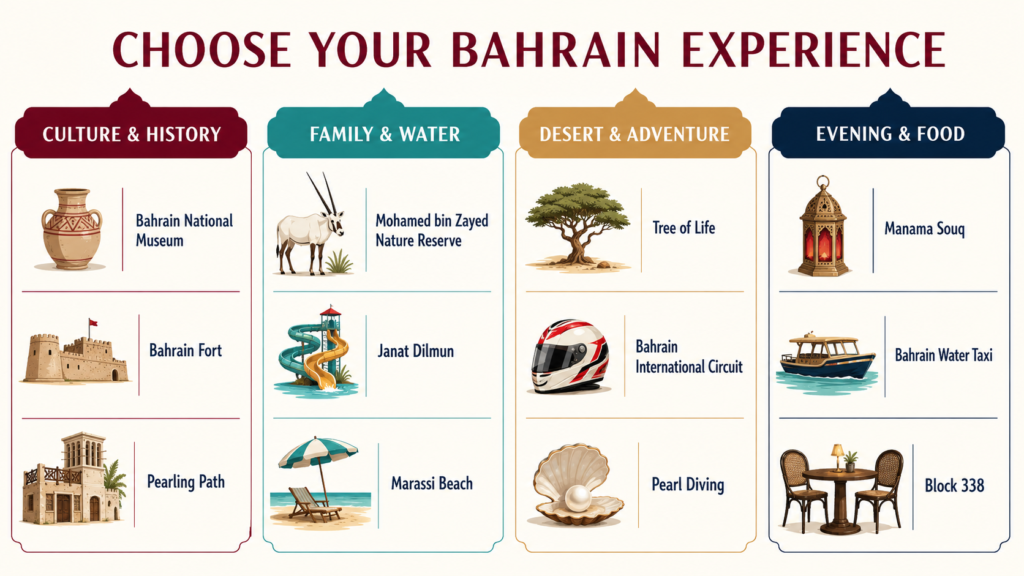
Historical and Cultural Places to Visit in Bahrain
1. Begin at the Bahrain National Museum
The Bahrain National Museum is the most useful first stop for understanding what you will see elsewhere on the island. Its galleries cover the Dilmun civilisation, burial customs, the Tylos and Islamic periods, traditional crafts, manuscripts and life before the discovery of oil.
This context makes later visits to Bahrain Fort, the Dilmun Burial Mounds and the Pearling Path much easier to understand. The museum also provides an indoor alternative during the hottest part of the day.
The government currently lists admission for tourists and residents at BHD 1. The official tourism site lists opening hours from 9:00 AM to 8:00 PM, with the museum closed on Tuesday. Allow at least two hours rather than treating it as a quick photo stop.
The museum waterfront also has a café and a dock used for boat trips towards Bu Maher Fort. Check the official Bahrain National Museum information before visiting.
Practical combination: Bahrain National Museum → Al-Fateh Grand Mosque → Block 338.
2. Explore Qal’at al-Bahrain and Its Site Museum
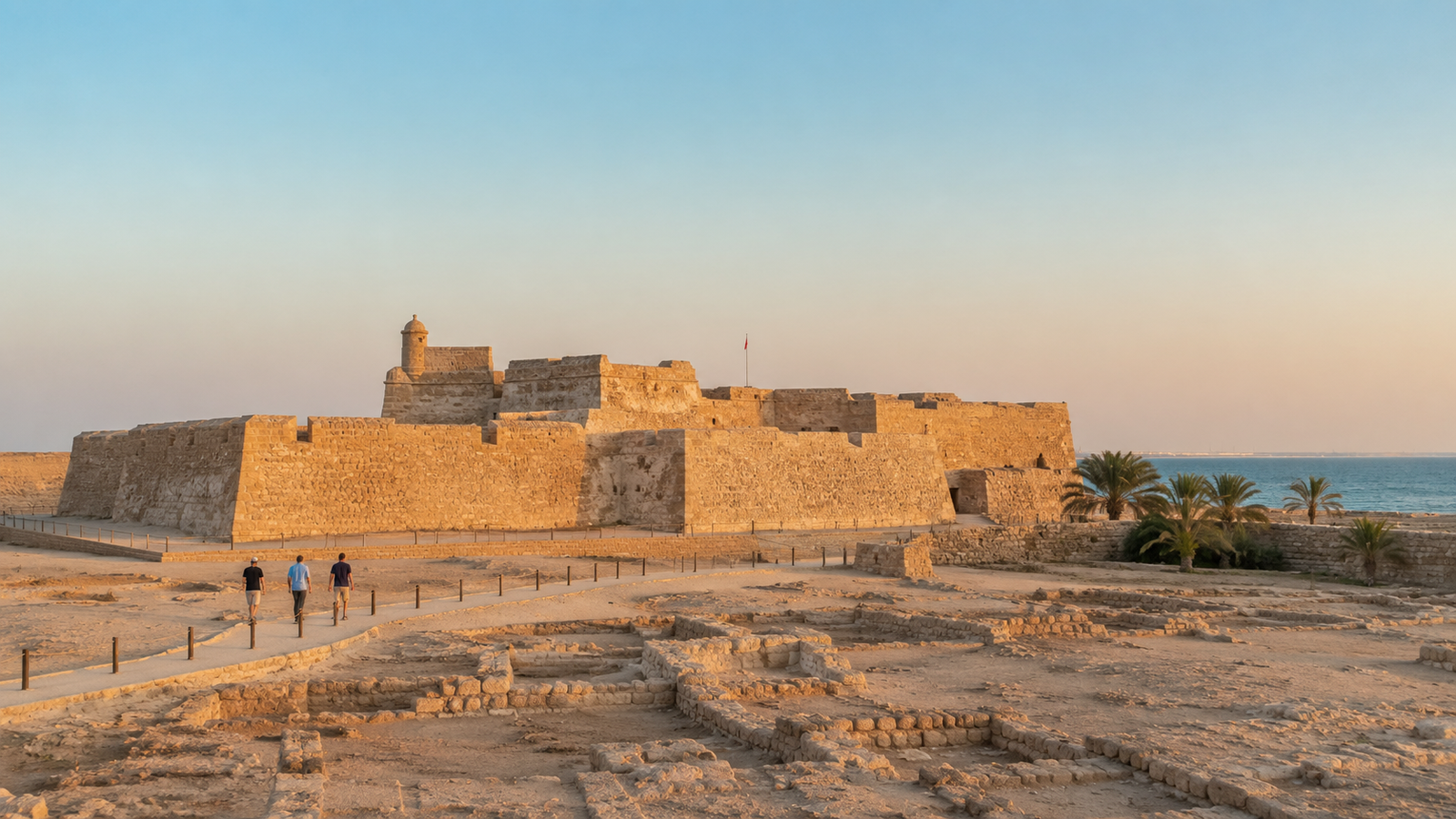
Qal’at al-Bahrain, commonly called Bahrain Fort, stands on an archaeological tell created by thousands of years of settlement. The site was once associated with the capital and harbour of the Dilmun civilisation and is now a UNESCO World Heritage Site.
Do not visit only the visible fort. The adjacent site museum uses archaeological objects and reconstructed layers to explain how the settlement changed across different periods. Visiting the museum first makes the ruins considerably more meaningful.
The Bahraini government currently lists the site museum admission as BHD 2 for tourists and residents. The fort itself can be explored without a museum ticket. Official pages agree that the museum closes on Monday but currently show different evening closing times, so verify the schedule before departure on the Bahrain Authority for Culture and Antiquities website.
Late afternoon is usually the most comfortable time for walking around the exposed archaeological site. It also allows visitors to see the fort in softer light near sunset.
For additional historical context, continue to the Bahrain History Guide.
3. Walk the Pearling Path in Muharraq
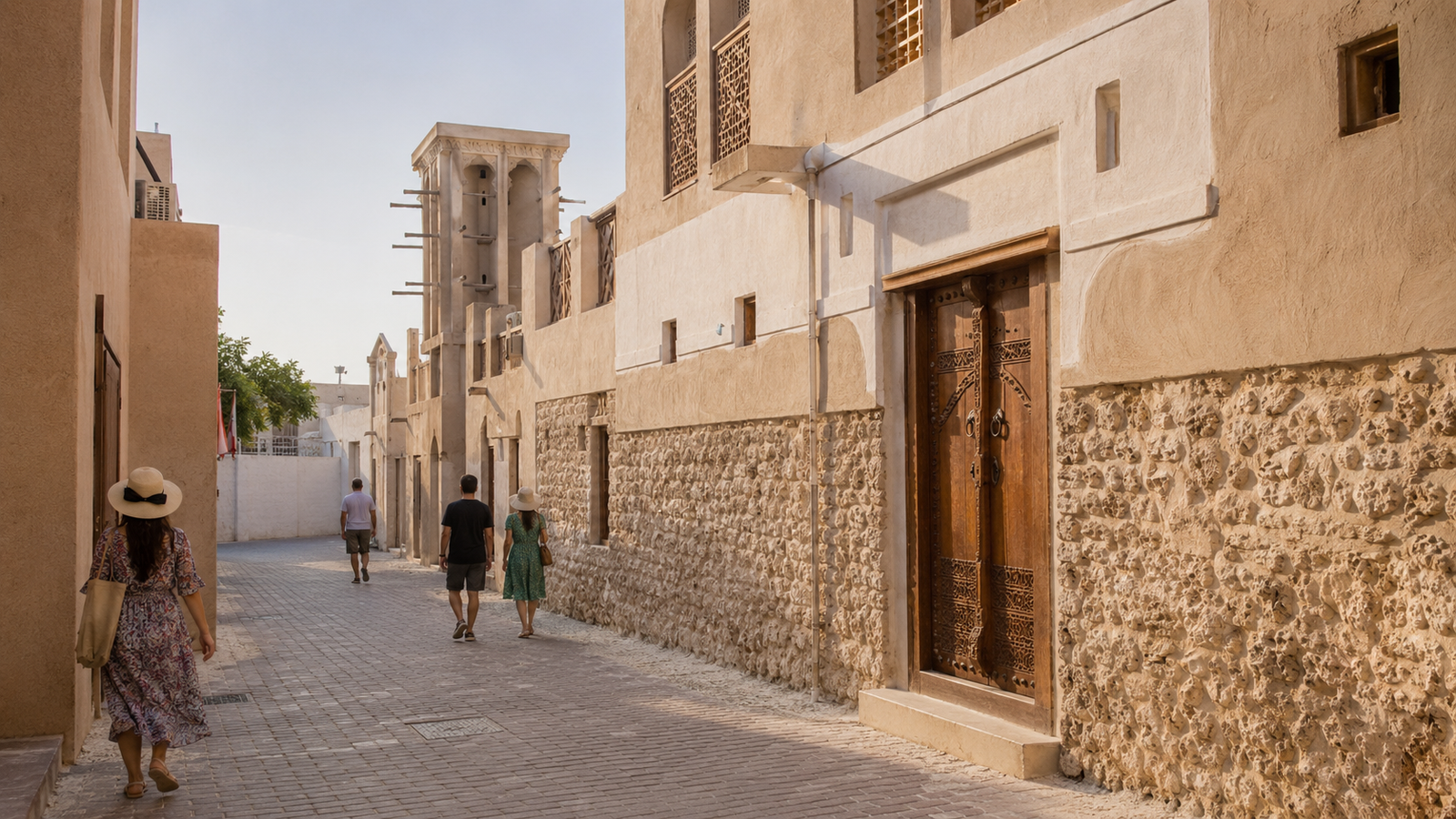
The Pearling Path is one of the most distinctive Bahrain attractions because it connects architecture, commerce and the social history of pearling rather than presenting them inside a single museum.
The UNESCO-listed property includes historic houses, shops, majlises, oyster beds and part of Bu Maher Fort. Its urban section extends for approximately three kilometres through Muharraq.
Start near the Pearling Path visitor centre and Souq Al Qaisariya. From there, explore the restored houses at a comfortable pace rather than attempting to rush through every building. Individual properties may follow different opening arrangements even when the main path is accessible.
The official tourism site currently lists the main visitor hours as 10:00 AM–6:00 PM, with Tuesday closed. A boat connection from the Bahrain National Museum towards Bu Maher Fort may also be available.
Consult the official Pearling Path page before choosing your starting point.
Allow: two hours for selected houses or half a day for a more complete walk.
4. Shop and Eat Around Bab Al Bahrain and Manama Souq
Bab Al Bahrain marks the entrance to one of the oldest shopping areas in Manama. The surrounding lanes contain textile shops, spice sellers, gold jewellery, perfumes, cafés and traditional sweets.
This is a better place for atmosphere and casual exploration than for following a rigid list of landmarks. Walk through Bab Al Bahrain, explore several side streets and stop for Bahraini breakfast, halwa or cardamom coffee.
The official tourism website lists general souq hours from 8:30 AM to 10:00 PM, but individual businesses may close at different times or pause during the afternoon. Late afternoon and evening usually provide a livelier experience than the middle of the day.
The market is free to explore. Food and shopping prices depend heavily on the individual business. Read more on the official Manama Souq page.
For background on food, clothing and local traditions, link this visit with the Bahraini Culture and Heritage Guide.
5. Visit Al-Fateh Grand Mosque Respectfully
Al-Fateh Grand Mosque is one of the most accessible places for visitors who want to learn about Islamic architecture and religious practice in Bahrain. Non-Muslim visitors are welcomed during designated hours, and multilingual guided introductions may be available.
The mosque covers approximately 6,500 square metres and can accommodate around 7,000 worshippers. Its interior contains Kufic calligraphy, large chandeliers, teak doors and a prominent fibreglass dome.
The official schedule currently lists visitor hours from 9:00 AM to 4:00 PM, Saturday through Thursday, with Friday closed. Religious services, Ramadan and special occasions can affect access.
Wear modest clothing covering shoulders and knees. Women may be asked to cover their hair, with suitable clothing usually available at the mosque. Photography rules should be confirmed on arrival.
See the current schedule on the official Al-Fateh Grand Mosque page.
For broader social context, see the Bahraini Society Guide.
6. See the Dilmun Burial Mounds and A’ali Pottery
The UNESCO-listed Dilmun Burial Mounds are spread across 21 archaeological components in western Bahrain. Together they preserve thousands of burial structures associated with the Early Dilmun period.
Unlike a conventional attraction, the mounds form part of the surrounding landscape. The Bahrain National Museum should ideally be visited first because its displays explain how the graves were constructed and what archaeologists learned from them.
In A’ali, the burial landscape can be combined with traditional pottery workshops. Some workshops sell finished pottery, while arranged sessions may allow visitors to observe or participate in the production process.
Do not climb the mounds, enter restricted areas or drive away from established roads. These are protected archaeological sites rather than recreational hills.
The Bahrain Authority for Culture and Antiquities provides more background on the Dilmun Burial Mounds.
7. Visit Riffa Fort for Architecture and Local History
Shaikh Salman bin Ahmed Al-Fateh Fort, usually called Riffa Fort, provides a different historical perspective from the archaeological remains at Qal’at al-Bahrain.
The restored fort contains courtyards, rooms and architectural details associated with Bahrain’s more recent ruling history. Its elevated setting also provides views across the surrounding area.
The Bahraini government currently lists admission to the museum exhibitions at BHD 2 for tourists and residents. Opening schedules may change around cultural events, so check the Bahrain Authority for Culture and Antiquities before travelling.
Riffa Fort works best as part of a southern or central Bahrain route rather than a separate journey from Manama.
8. See the Tree of Life in the Sakhir Desert
The Tree of Life stands approximately 35 kilometres from Manama in the Sakhir Desert. The mature ghaf tree is estimated to be around 440 years old and remains green despite its exposed desert setting.
The attraction includes a small visitor area that explains the tree and archaeological discoveries made nearby. Admission is free, and the official tourism website currently lists access from 6:00 AM to 10:00 PM daily.
The site is difficult to reach efficiently by public transport. A rental car, taxi with an agreed return journey or organised tour is more practical.
Visit in the morning or near sunset during warmer months. Do not climb the tree, carve its bark, leave rubbish or pour water around its roots. Its survival does not require visitor intervention.
Check the latest access information on the official Tree of Life page.
Practical combination: Tree of Life → Bahrain International Circuit → Janat Dilmun or the nature reserve.
Wildlife, Water and Family Attractions in Bahrain
9. Visit Mohamed bin Zayed Nature Reserve
The attraction long known as Al Areen Wildlife Park and Reserve was renamed Mohamed bin Zayed Nature Reserve in December 2025. Because many maps and older travel guides still use Al Areen, travellers should recognise both names.
Established in 1976, the reserve protects Arabian wildlife and native desert plants. Its publicly accessible section may include species such as Arabian oryx, sand gazelles, birds and reptiles, while breeding and research areas remain closed to ordinary visitors.
The official reserve website currently lists hours of:
- 8:00 AM–4:00 PM Saturday through Thursday;
- 12:30 PM–4:00 PM on Friday.
Confirm current admission arrangements before travelling. The reserve is particularly suitable for families, but visitors expecting a large urban zoo should understand that its main purpose is conservation.
Read the official reserve information and the more detailed Bahrain Wildlife Guide.
10. Spend a Hot Day at Janat Dilmun
Janat Dilmun is the current name used for the waterpark formerly known as The Lost Paradise of Dilmun. Retaining both names in the article is useful because older signs, reviews and search queries may still reference Lost Paradise.
Located near Sakhir, the park covers approximately 77,000 square metres and contains around 20 water slides and attractions, alongside an artificial beach, pools, children’s areas and private chalets.
This is a full recreational day rather than a short sightseeing stop. It is best suited to families, groups and travellers looking for an outdoor water activity during hot weather.
Admission prices, special sessions and seasonal operating hours vary. Check the official Janat Dilmun information and booking site immediately before visiting.
11. Try Karting at Bahrain International Circuit
Bahrain International Circuit is best known for Formula 1, but the venue is not limited to Grand Prix weekend. Depending on the calendar, visitors may find karting, circuit tours, off-road experiences and other driving activities.
The most accessible regular option is arrive-and-drive karting. Current official prices for a 15-minute session are:
- BHD 14 for a 9HP kart;
- BHD 17 for a 13HP kart;
- BHD 14 for a children’s 7HP kart;
- BHD 1 registration fee.
Age, height and footwear requirements apply. Pre-booking is essential, and walk-in participation may not be permitted.
Check availability and reserve through the official Bahrain International Circuit karting page. Formula 1 tickets, circuit experiences and karting should be treated as separate products.
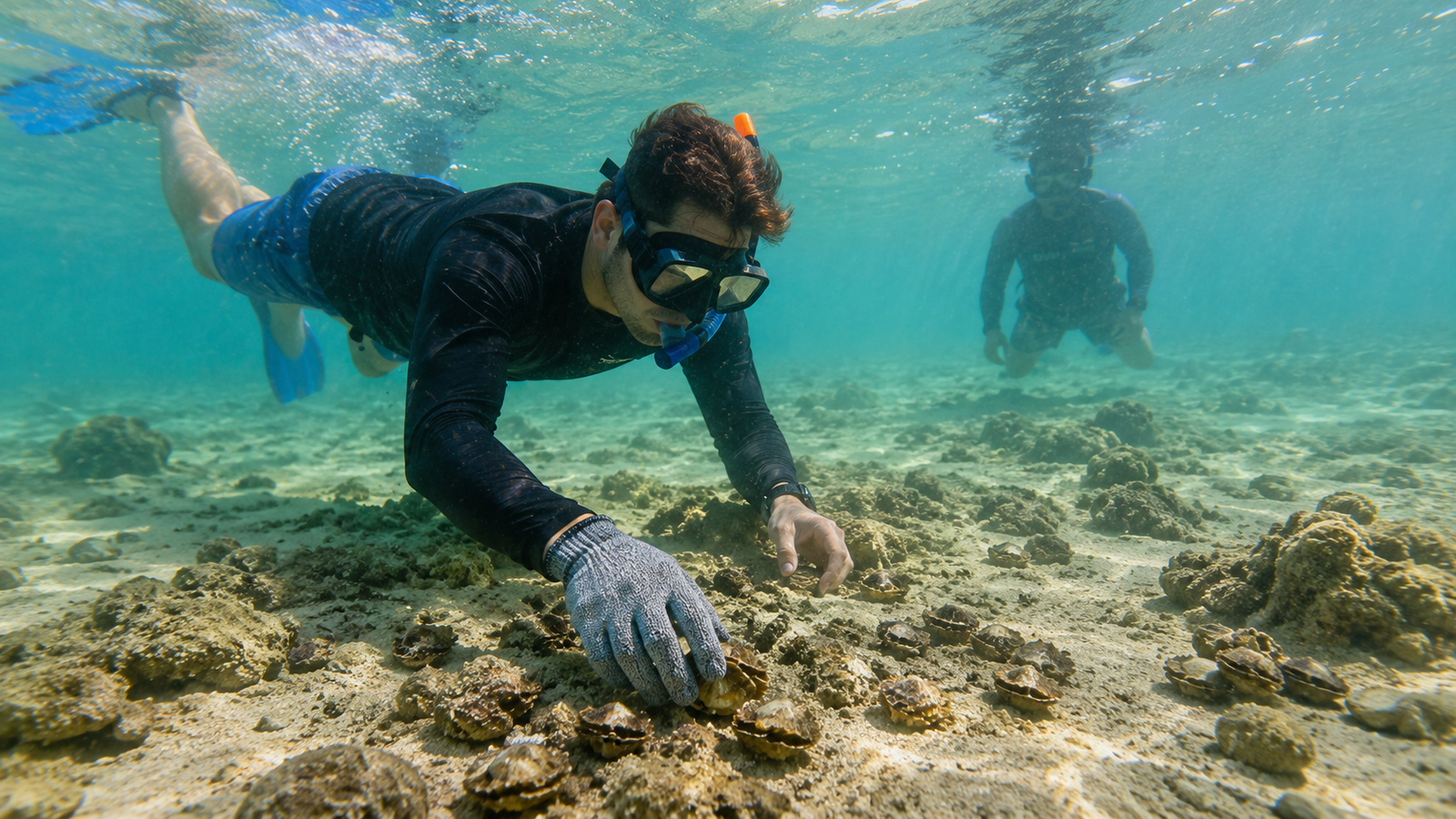
12. Go Pearl Snorkelling or Diving
Pearl snorkelling connects a modern marine activity with Bahrain’s historic pearl economy. Visitors travel by boat to oyster beds and search for oysters under the supervision of an approved operator.
Beginners can select a snorkelling experience in shallower water. Certified divers need an appropriate diving qualification for deeper excursions. The official guide states that visitors may collect a maximum of 60 oysters during an excursion and may keep any pearl they find.
Trips commonly depart from Sa’ada Marina or Bu Maher Fort, followed by a boat ride of approximately 20–30 minutes to the oyster beds.
This experience must be booked through a licensed operator approved by the Bahrain Tourism and Exhibitions Authority. Prices depend on the operator and whether equipment, diving or a Pearling Path visit is included.
Review the process and approved partners on the official pearl snorkelling and diving page.
13. Choose Between a Beach Day and an Island Trip
Bahrain has urban beaches, resort beaches and offshore sandbanks, but they provide very different experiences.
Marassi Beach is convenient for travellers who want beach access, water sports, restaurants and shopping in the same area. It is located next to Marassi Galleria in Diyar Al Muharraq.
Bilaj Al Jazayer is better suited to a more conventional beach day in southern Bahrain. Facilities and access arrangements can change as the surrounding development expands.
Jarada Island is an offshore sandbank reached by boat and affected by tidal conditions. It should only be visited through an experienced operator who understands the tides and provides safe transport.
Beach admission, parking, watersports and equipment rental vary by location. Compare access conditions, published prices and facilities in our guide to the best beaches in Bahrain. Check the official tourism listings and the venue’s own page before departure. Marassi details are available on the official tourism website.
Modern Bahrain and Evening Activities
14. See Manama and Muharraq from the Water Taxi
Bahrain’s water taxi combines public transport with waterfront sightseeing. Its stops connect areas including Manama East Coast, Sa’ada Marina, The Avenues, Bahrain Bay and Bahrain Financial Harbour.
The official tourism site currently lists:
- BHD 0.8 per stop for a regular ticket;
- BHD 2.5 for a regular full-day ticket;
- higher-priced VIP options.
Tickets and current services are managed through the Masar app. Routes, fares and operating times may change, so check before building an itinerary around a particular sailing.
The water taxi can be especially useful for connecting central Manama with Sa’ada Marina and the Muharraq heritage area while seeing the skyline from a different perspective.
See the current stops and fares on the official Bahrain Water Taxi page.
15. Finish the Day in Block 338
Block 338 in Adliya is one of Bahrain’s best-known dining and evening districts. The area combines restaurants, cafés, bars, galleries and pedestrian-friendly side streets.
It is not a single attraction with fixed hours or admission. Its value comes from having several dining choices within walking distance, making it suitable after a museum, mosque or Manama sightseeing day.
Visitors should check individual restaurant prices, dress codes, age restrictions and reservation requirements. Thursday and Friday evenings can be considerably busier than weekdays.
Travellers looking for a more traditional and less polished atmosphere should choose Manama Souq instead. Visiting both areas reveals two very different sides of Bahrain’s food and social life. To understand the local dishes you may encounter in the souq and restaurants, see our Bahraini food guide.
How to Organise Bahrain Attractions Efficiently
Bahrain is compact, but attractions should still be grouped geographically. Crossing between Manama, Muharraq and Sakhir repeatedly wastes time and taxi money.
One-Day Bahrain Route
For a short visit, concentrate on the essential first-time attractions:
Bahrain National Museum → Al-Fateh Grand Mosque → Bab Al Bahrain and Manama Souq → Qal’at al-BahrainThis route combines historical context, religious architecture, local shopping and Bahrain’s principal archaeological site.
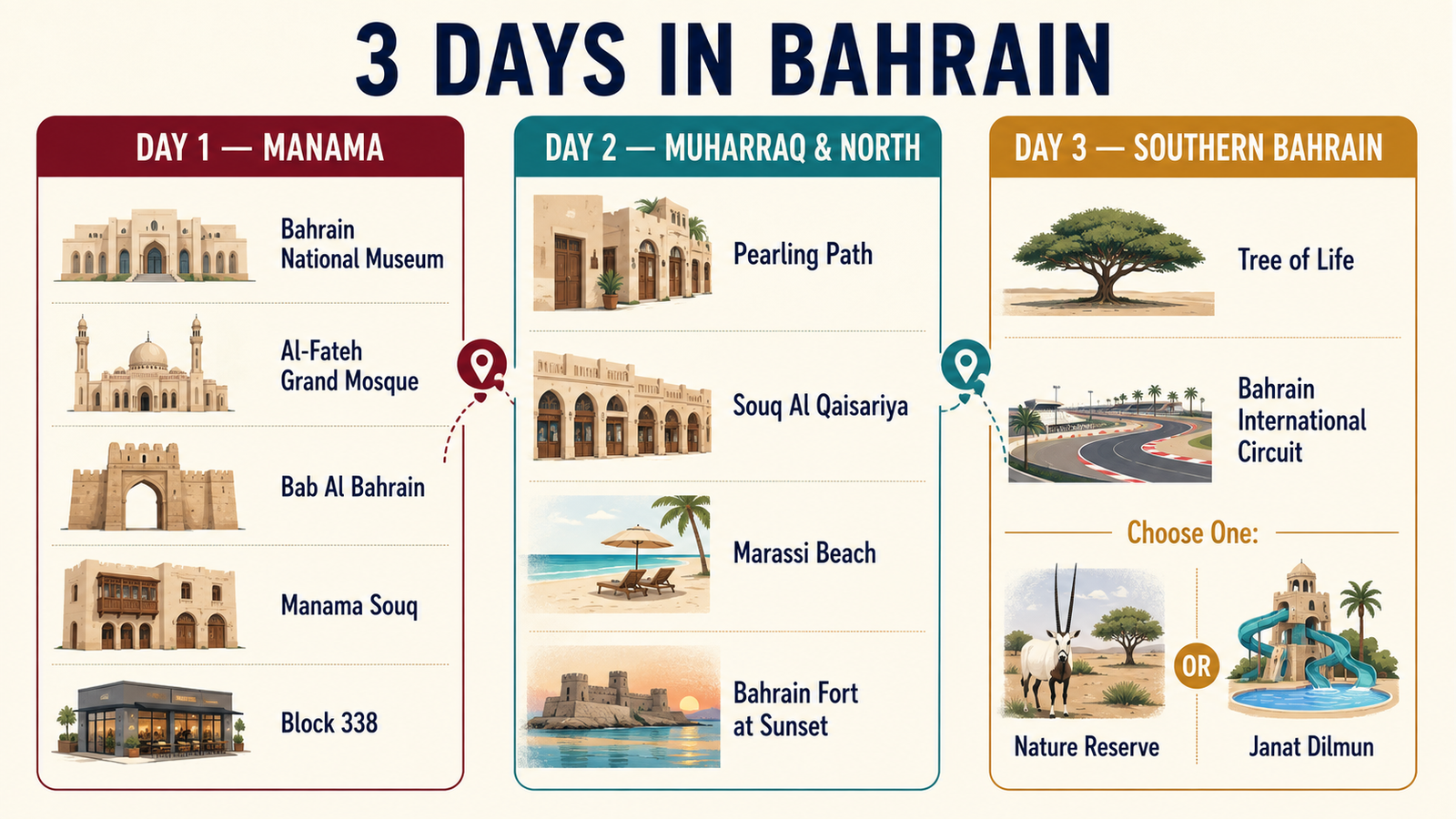
Two- or Three-Day Visit
Use a simple regional structure:
- Day 1 — Manama: National Museum, Al-Fateh Mosque, Bab Al Bahrain, Manama Souq and Block 338.
- Day 2 — Muharraq and the north: Pearling Path, Souq Al Qaisariya, Marassi Beach and Qal’at al-Bahrain.
- Day 3 — Southern Bahrain: Tree of Life, Bahrain International Circuit and either Janat Dilmun or Mohamed bin Zayed Nature Reserve.
For exact timing, meal stops, daily costs and alternative routes, use our Bahrain itinerary for 3, 5 or 7 days.
Use the map layers to show or hide attractions in Manama, Muharraq and northern Bahrain, and southern Bahrain. Locations and opening arrangements should be checked before travelling.
Getting Around Bahrain’s Tourist Places
Manama and Muharraq contain clusters of nearby attractions, but Bahrain as a whole is not consistently pedestrian-friendly.
- Taxi and ride-hailing: convenient for individual attractions and evening journeys.
- Public bus: useful on major routes. The official tourism site currently lists cash travel at 275 fils, a GO Card at 500 fils, and a seven-day pass at BHD 3.
- Rental car: most useful for the Tree of Life, Sakhir, the nature reserve and southern beaches.
- Water taxi: useful for selected waterfront stops but not a replacement for land transport.
Compare bus fares, taxis, airport connections and rental-car requirements in our complete Getting Around Bahrain guide.
When using a taxi for the Tree of Life or another remote attraction, arrange the return journey in advance. Do not assume another vehicle will be waiting nearby.
Current transport information is available through the official Getting Around Bahrain guide.