
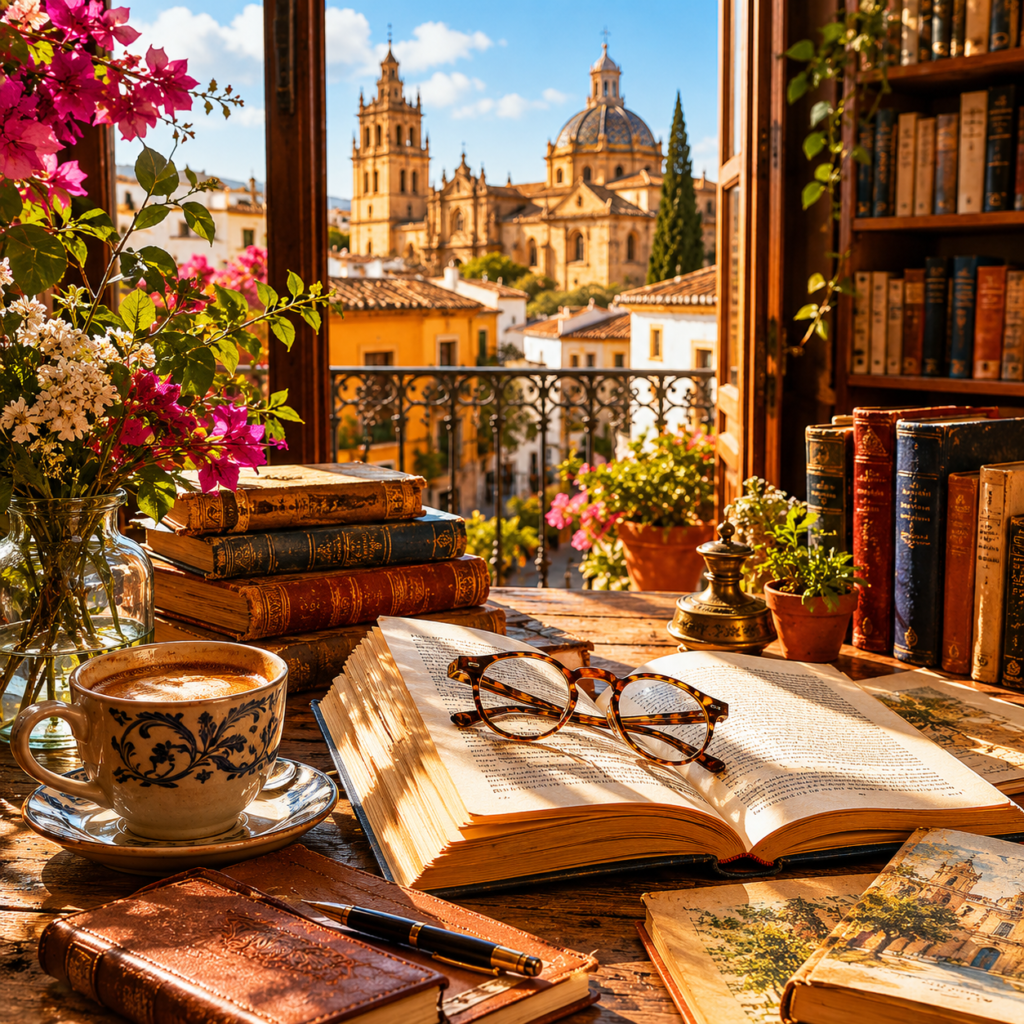
Spanish language and literature are among the most powerful ways to understand Spain beyond monuments, beaches, and food. The language carries rhythm, history, regional identity, humor, politics, poetry, and daily life. The literature reveals how Spain has imagined itself across centuries: heroic, tragic, ironic, mystical, rebellious, romantic, fractured, and constantly changing.
For travelers, this is not a purely academic subject. Spanish lives in street conversations, market signs, theater posters, flamenco lyrics, bookshops, local festivals, regional languages, and the way people tell stories. Spanish literature, from Miguel de Cervantes to Federico García Lorca and modern novelists, opens a deeper door into the country’s identity. To hear the language and read the stories is to understand Spain from the inside.
Why Spanish Matters Far Beyond Spain
Spanish is one of the world’s major global languages, spoken across Europe, Latin America, the United States, and many other communities. According to the Instituto Cervantes 2025 report, Spanish continues to grow as an international language of culture, education, communication, and global influence. This gives Spain’s language a reach far beyond its borders.
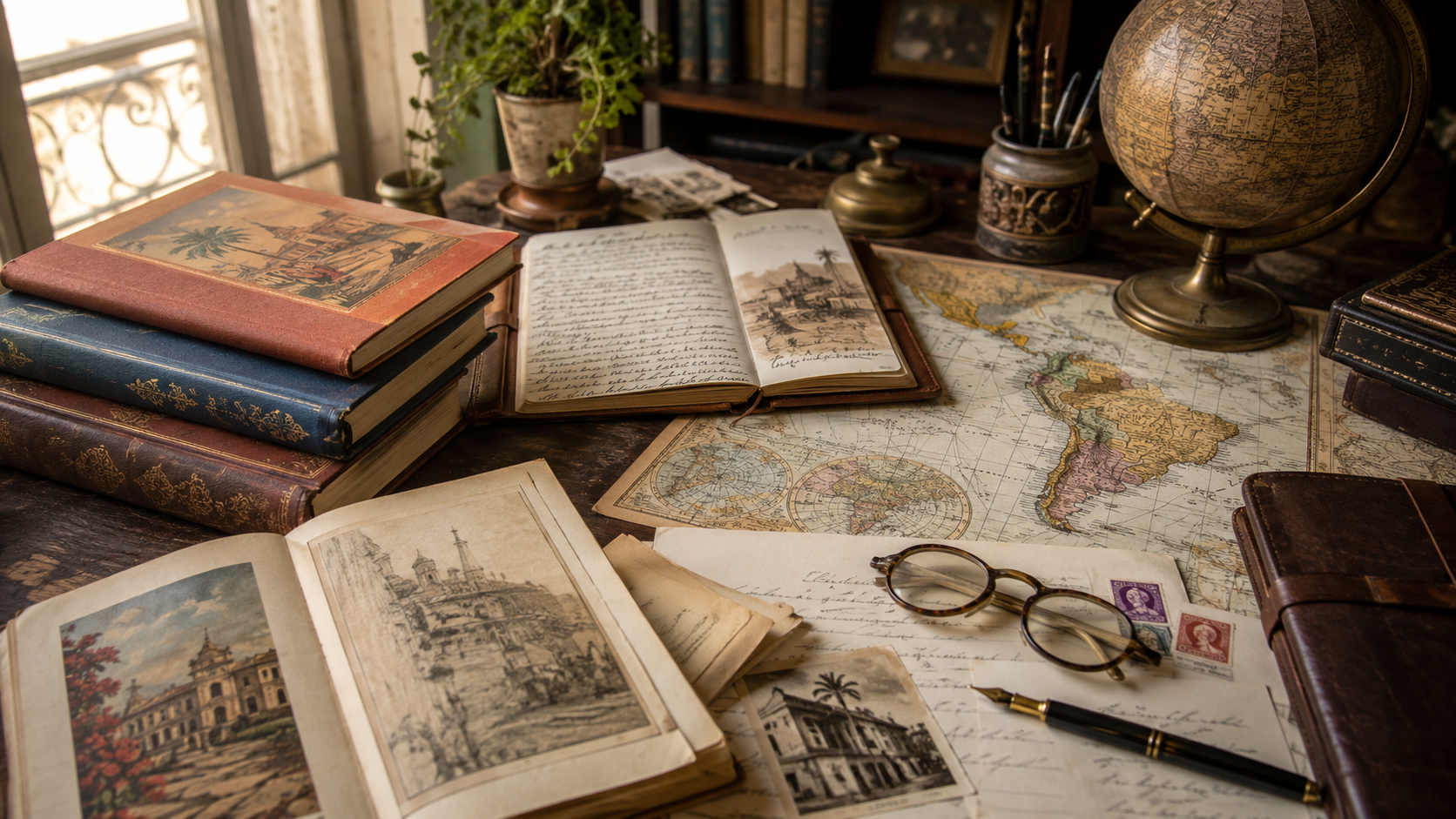
But in Spain itself, Spanish is more than a global tool. It is the language of everyday life, literature, politics, comedy, journalism, cinema, and public debate. It can sound different in Madrid, Andalusia, Galicia, Catalonia, the Canary Islands, or the Basque Country. Travelers who pay attention to accent, vocabulary, and tone quickly realize that Spanish is not a flat, uniform language. It changes with place.
Spanish Language in Spain: Castilian and Regional Identity
When people say “Spanish,” they usually mean Castilian Spanish, or castellano. This is the official language used across Spain and the form most learners study first. It is the language of national media, government, education, and much of Spain’s literary canon. For visitors, even a small amount of Spanish can make travel more personal and rewarding.
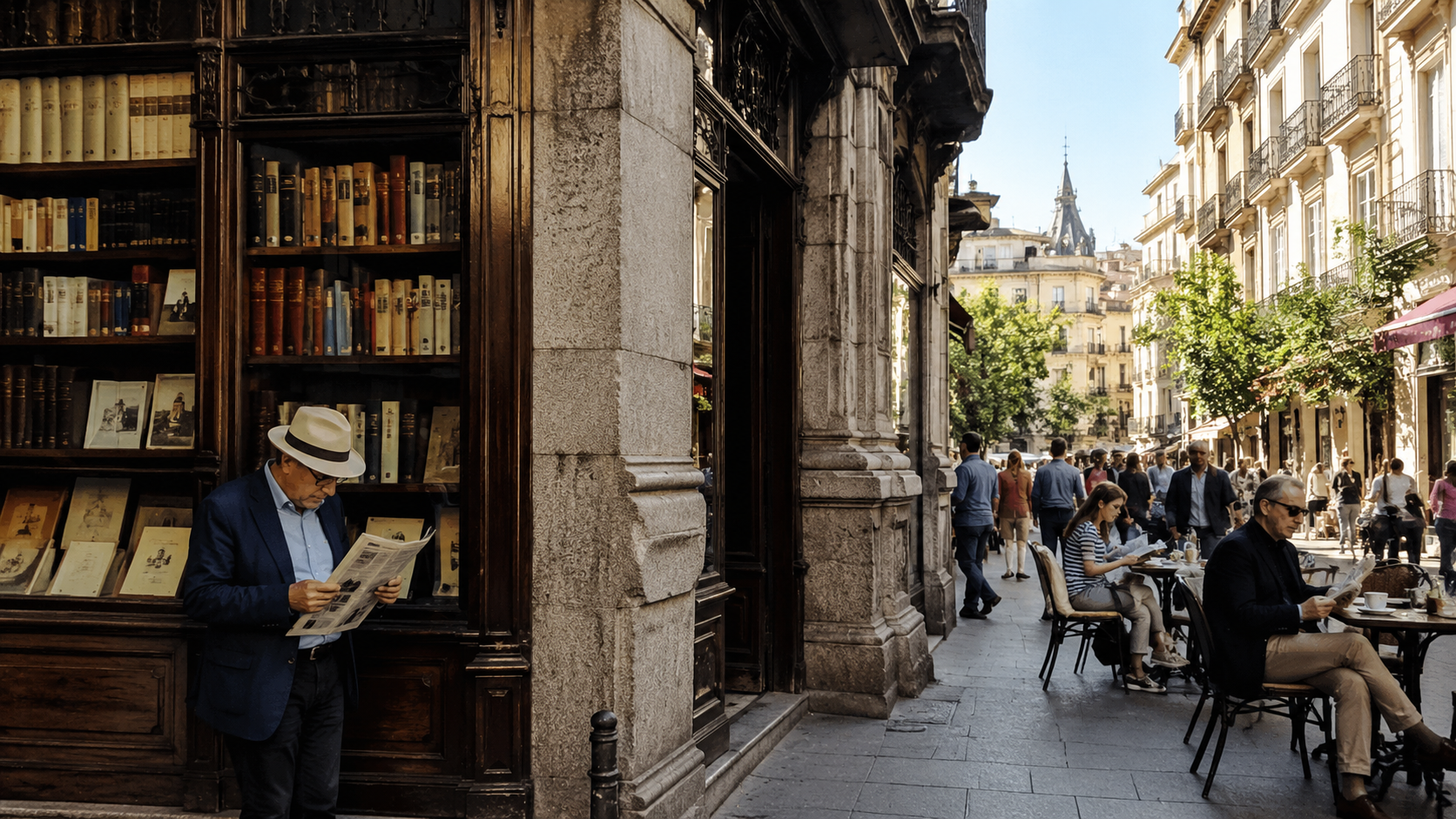
At the same time, Spanish language in Spain exists alongside other languages with deep cultural roots. Catalan, Basque, Galician, and other regional languages are not decorative local curiosities. They carry literature, music, memory, and identity. In some regions, they are central to public life. Understanding this multilingual reality helps travelers avoid seeing Spain as one single cultural voice.
The Regional Languages of Spain
The regional languages of Spain are essential to the country’s cultural richness. Catalan is spoken in Catalonia, Valencia, and the Balearic Islands in different forms and contexts. Galician connects Galicia to the wider Lusophone world through historical and linguistic ties. Basque, or Euskara, is especially distinctive because it is not related to the Romance languages around it.
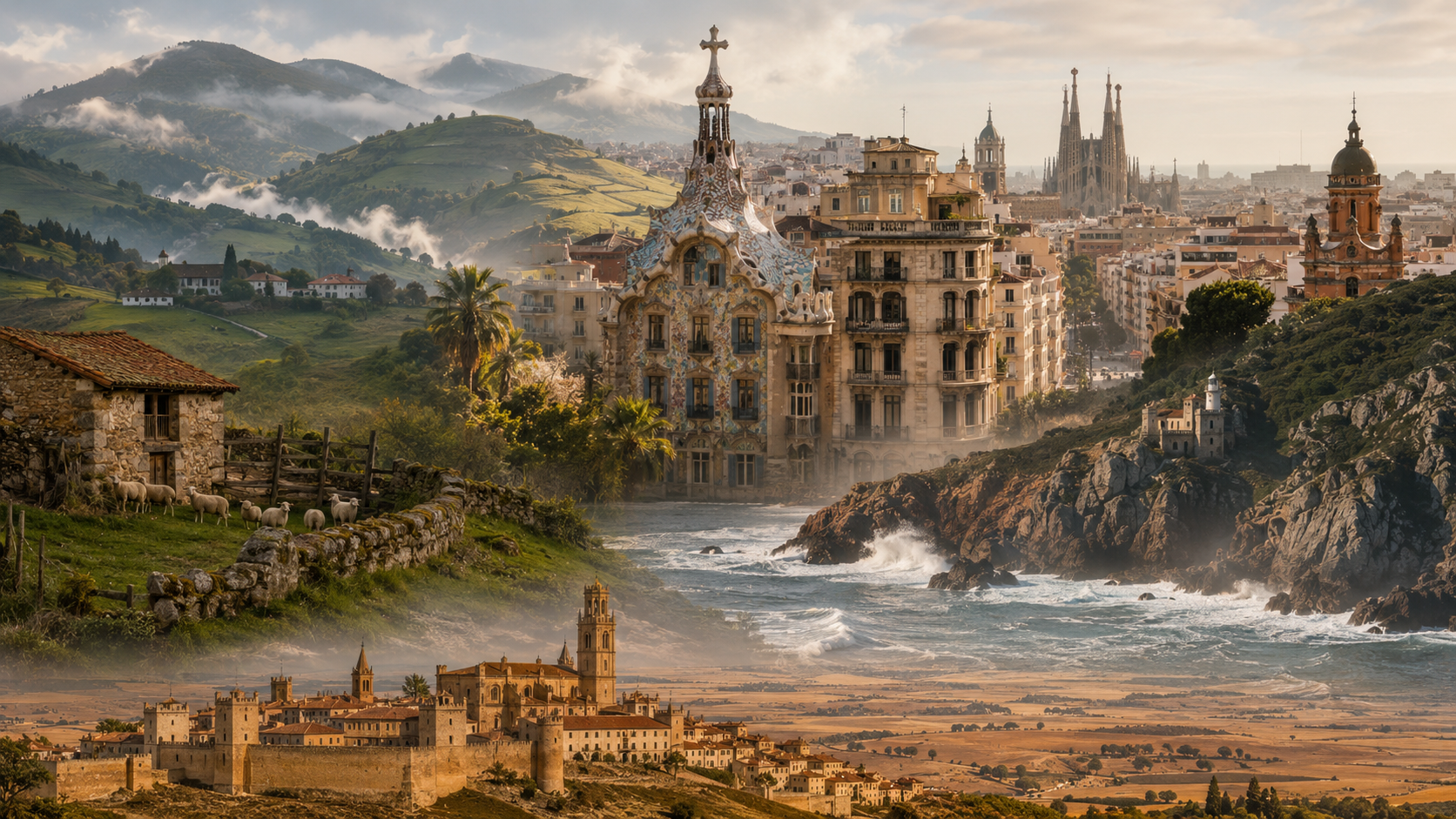
These languages shape how people experience belonging. A bilingual street sign, a local newspaper, a song, or a school conversation can reveal political and emotional layers that outsiders often miss. For travelers, noticing regional languages makes Spain feel more complex and more alive. It also connects naturally with Spain’s wider cultural world, from art and culture to festivals, music, and local traditions.
Miguel de Cervantes and the Birth of the Modern Novel
No journey into Spanish literature can avoid Miguel de Cervantes. His masterpiece, Don Quixote, is often described as one of the foundational works of the modern novel. It is funny, sad, strange, philosophical, and surprisingly modern in the way it plays with illusion, identity, storytelling, and the gap between dreams and reality.
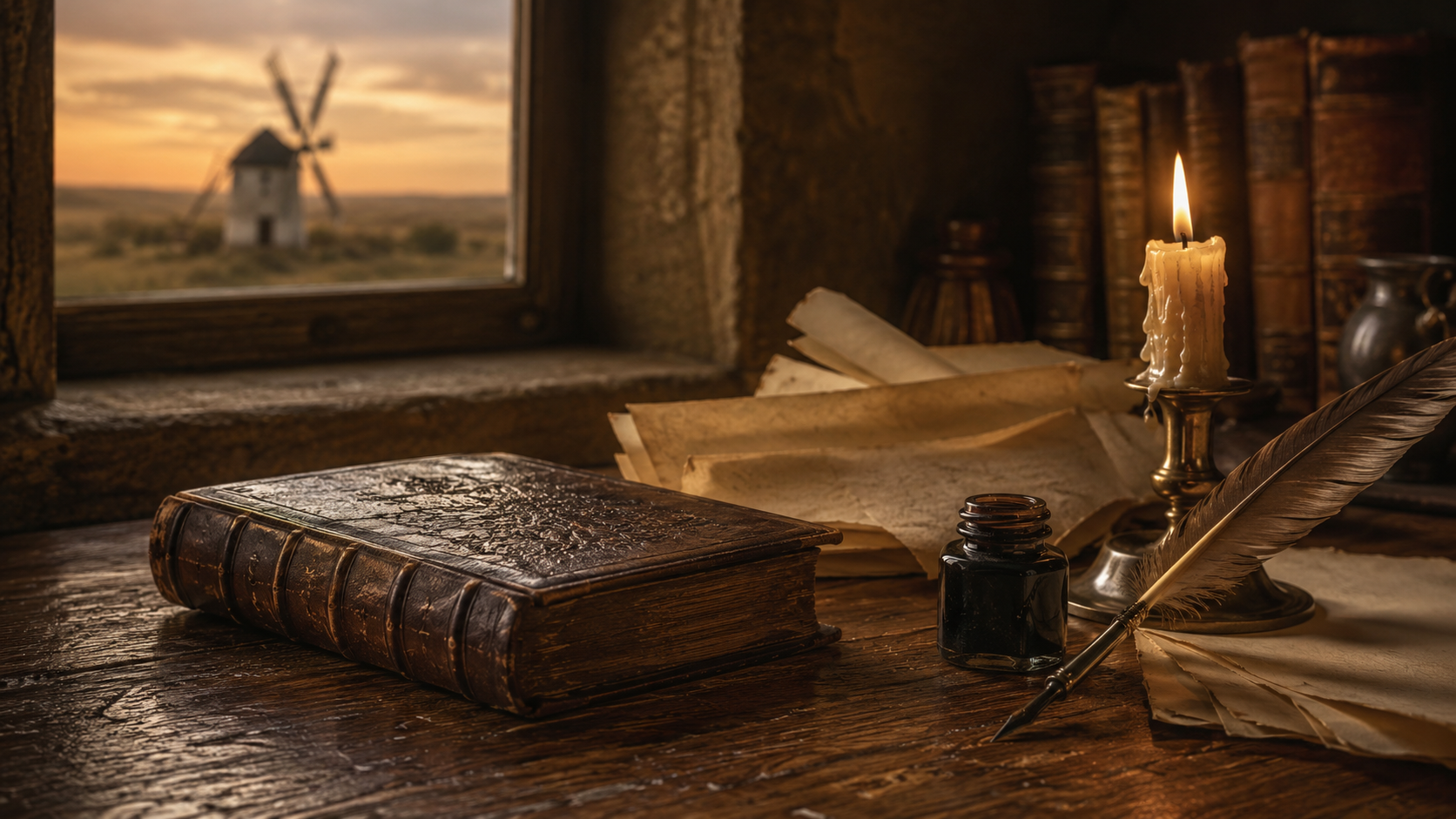
Cervantes matters because he did more than create two unforgettable characters. He changed what fiction could do. Don Quixote turns chivalric fantasy into comedy, but it also asks serious questions about madness, dignity, imagination, failure, and the stories people need in order to survive. For travelers in Spain, Cervantes is not only a name from school. He is part of the country’s literary DNA.
The Golden Age: Drama, Poetry, and Power
Spain’s Golden Age produced some of the most influential writing in the Spanish language. This period, roughly associated with the 16th and 17th centuries, includes Cervantes, Lope de Vega, Calderón de la Barca, Quevedo, and Góngora. It was a time of imperial power, religious intensity, artistic ambition, and social contradiction.
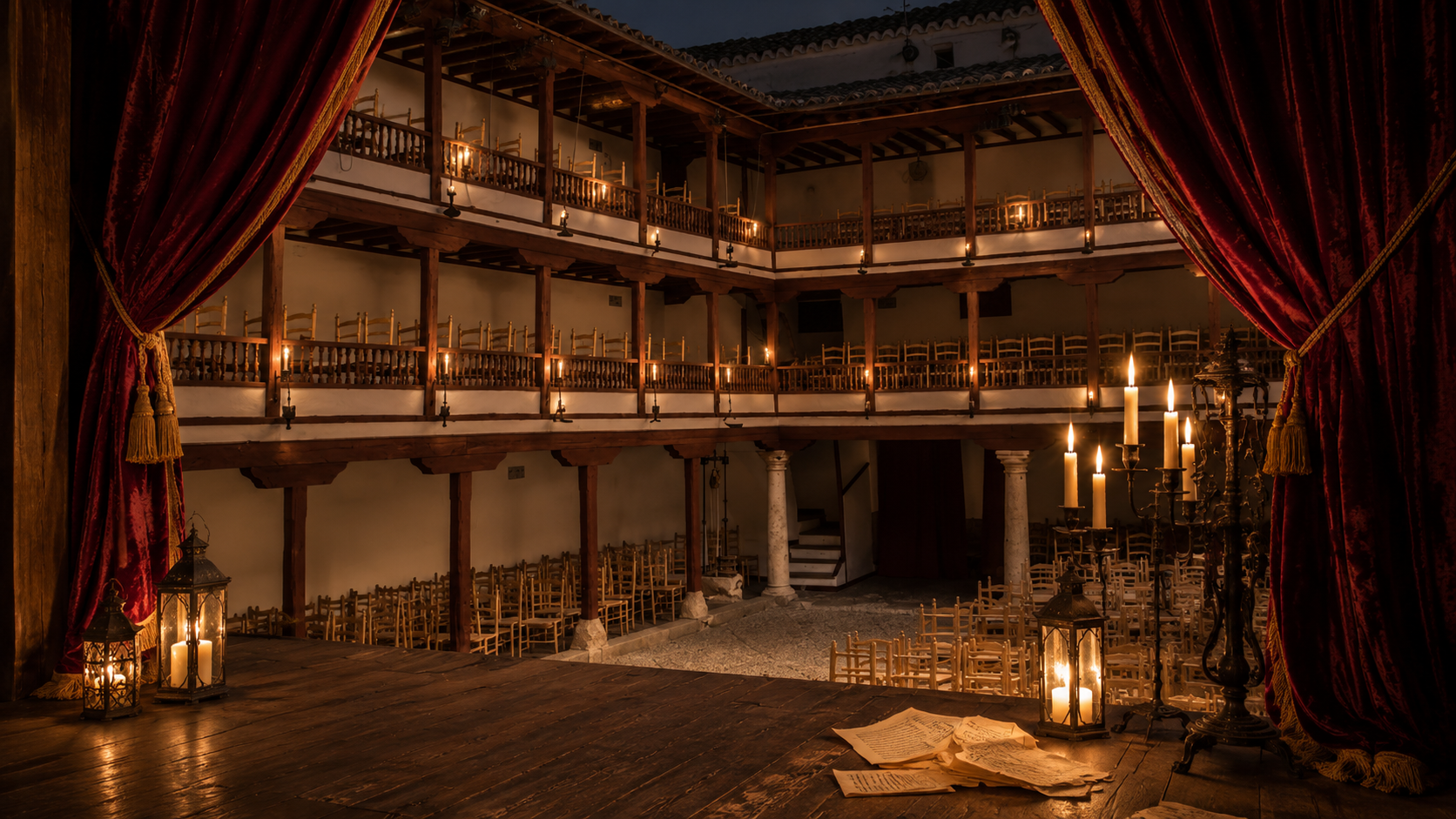
The literature of this period is not only grand or formal. It can be sharp, satirical, theatrical, mystical, and deeply human. Drama flourished, poetry became a battlefield of style and wit, and prose captured the tensions of a society full of hierarchy, faith, pride, poverty, and imagination. If you are visiting Spain’s historic cities and landmarks, this literary background adds texture to places like Madrid, Toledo, Seville, Salamanca, and Alcalá de Henares.
Lorca, Poetry, and the Soul of Andalusia
Federico García Lorca is one of the great voices of 20th-century Spanish literature. His poetry and plays are filled with music, desire, death, rural life, repression, beauty, and violence. Lorca’s work is closely associated with Andalusia, but its emotional power reaches far beyond one region.
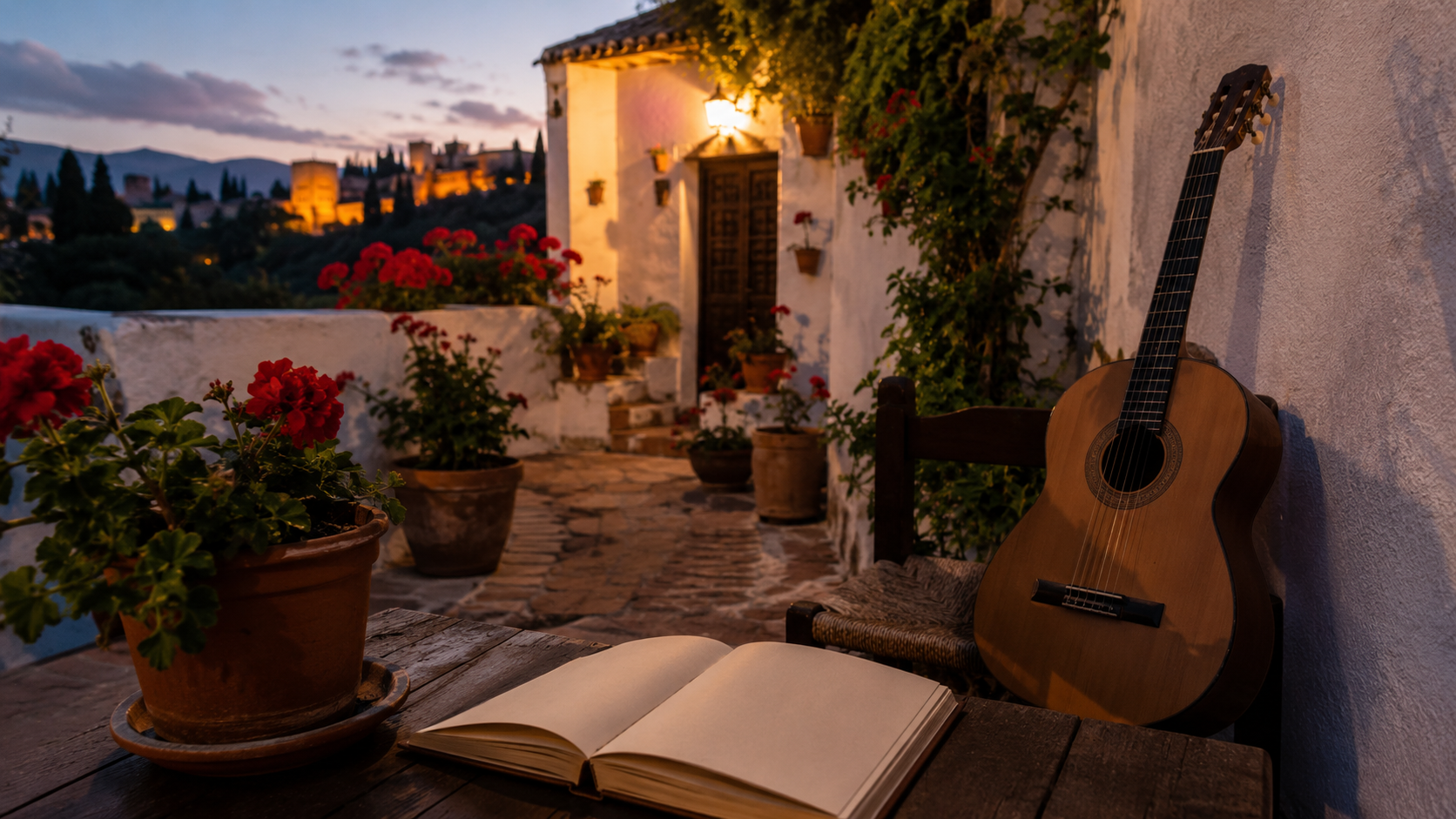
Lorca also connects literature with performance and sound. His writing is difficult to separate from song, rhythm, theater, and flamenco atmosphere. This makes him especially meaningful for travelers interested in southern Spain. The emotional world of Lorca pairs naturally with flamenco in Spain, where poetry, music, movement, and grief often meet.
Women Writers and Modern Spanish Voices
Spanish literature is not only Cervantes and Lorca. Modern Spain has produced powerful women writers and contemporary voices who explore memory, dictatorship, family, gender, politics, identity, and urban life. Writers such as Carmen Laforet, Ana María Matute, Carmen Martín Gaite, Almudena Grandes, Rosa Montero, and many others expanded the emotional and social range of Spanish fiction.

These authors are especially important because they show Spain after the Civil War, under Franco, and during the transition to democracy. Their work often reveals private lives shaped by public history. Through novels, memoirs, essays, and journalism, modern Spanish writers help readers understand how a country remembers trauma, rebuilds identity, and argues with itself.
Latin America and the Wider Spanish-Language World
It is important to separate Spanish literature from Spain and Spanish-language literature as a global field. Writers such as Gabriel García Márquez, Isabel Allende, Mario Vargas Llosa, Julio Cortázar, and Jorge Luis Borges are not “Spanish writers” in the national sense. They belong to Latin American literature. But they write in Spanish, and their work has transformed the language worldwide.
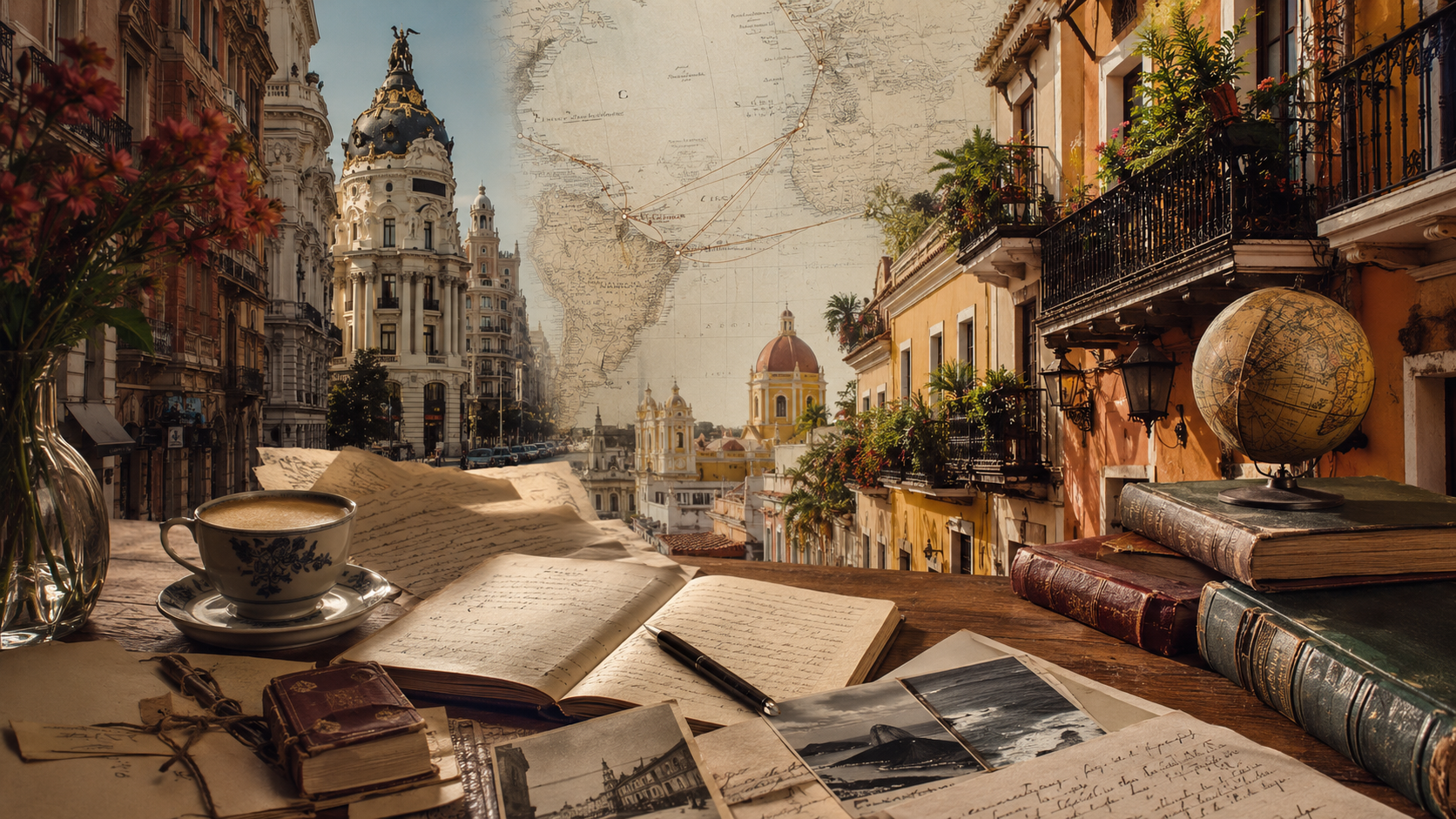
This wider Spanish-language world matters because it shows how the language escaped the limits of one country. Spanish became a literary universe with many centers: Madrid, Barcelona, Mexico City, Buenos Aires, Bogotá, Lima, Santiago, Havana, and beyond. For readers and travelers, this makes Spanish one of the richest literary languages on the planet.
Bookstores, Libraries, and Literary Places in Spain
Spain rewards travelers who love books. Madrid’s Barrio de las Letras, or Literary Quarter, is associated with Cervantes, Lope de Vega, and other writers of the Golden Age. Alcalá de Henares, Cervantes’s birthplace, is another important stop for literary travelers. Salamanca, with its old university atmosphere, gives language and literature a strong historical setting.
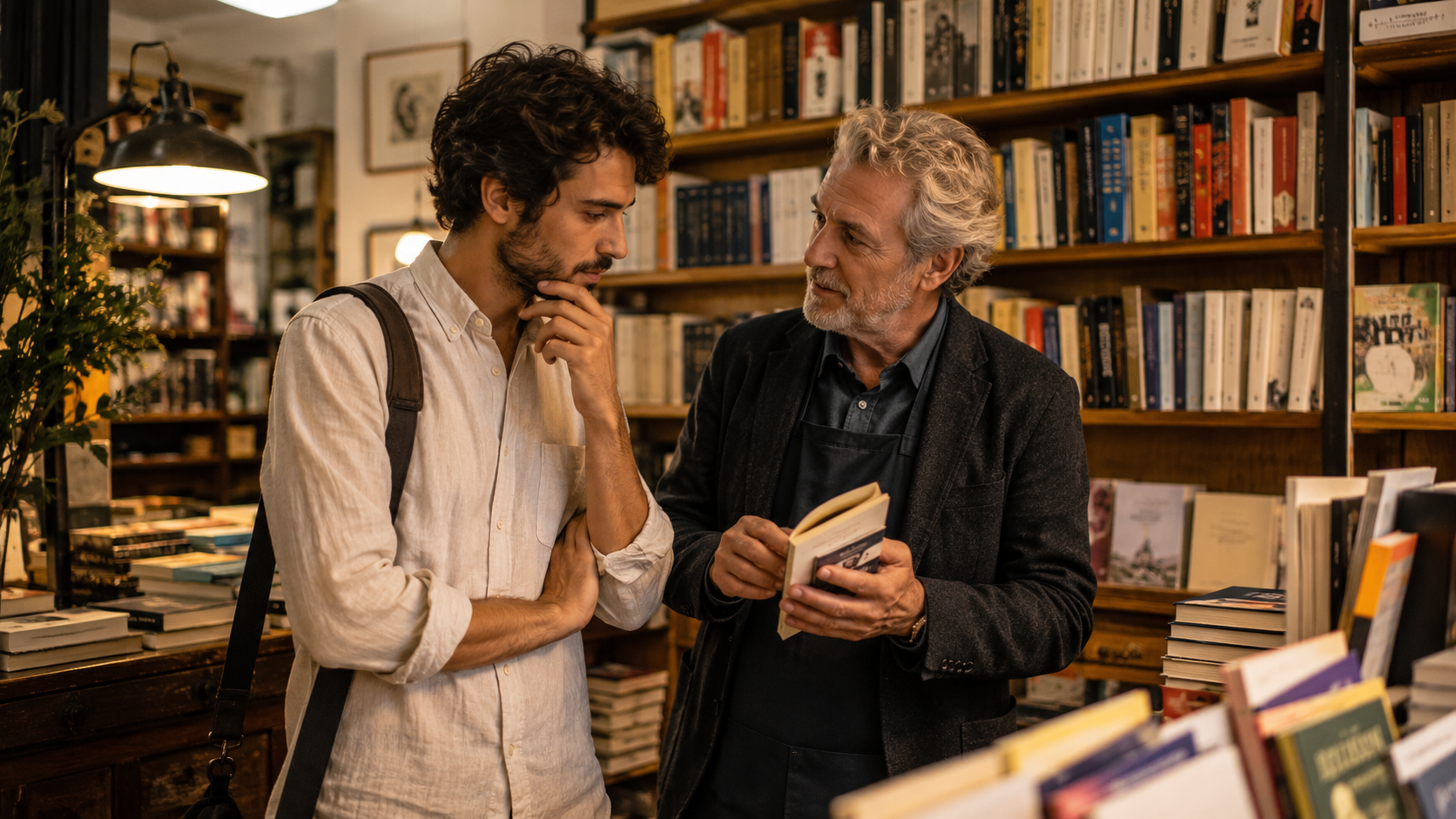
Barcelona has its own literary identity, shaped by Catalan culture, publishing houses, modernist architecture, and novels set in its streets. Granada, Seville, Toledo, and Santiago de Compostela all offer literary moods of their own. Spain’s literature is not locked inside libraries. It is connected to plazas, universities, theaters, cafes, old neighborhoods, and the emotional geography of cities.
Learning Spanish While Traveling
Learning even a little Spanish can change the way you travel in Spain. Simple phrases help with ordering food, asking directions, greeting people, reading signs, and understanding everyday interactions. More importantly, language creates small moments of connection. A local may switch to English, but the effort to begin in Spanish is often appreciated.

Travelers do not need perfect grammar to benefit. Listening matters too. Notice how people speak in Andalusia compared with Madrid, how Catalan appears in Barcelona, or how Galician gives Galicia a different soundscape. Spanish language and literature become more meaningful when the language is not only studied, but heard in real streets and real conversations.
How Literature Deepens a Trip to Spain
Reading before or during a trip can make Spain feel richer. Don Quixote changes the way you imagine La Mancha. Lorca adds emotional depth to Andalusia. Modern novels can make Madrid, Barcelona, or postwar Spain feel more layered. Poetry, theater, and fiction can turn a city from a destination into a lived world.
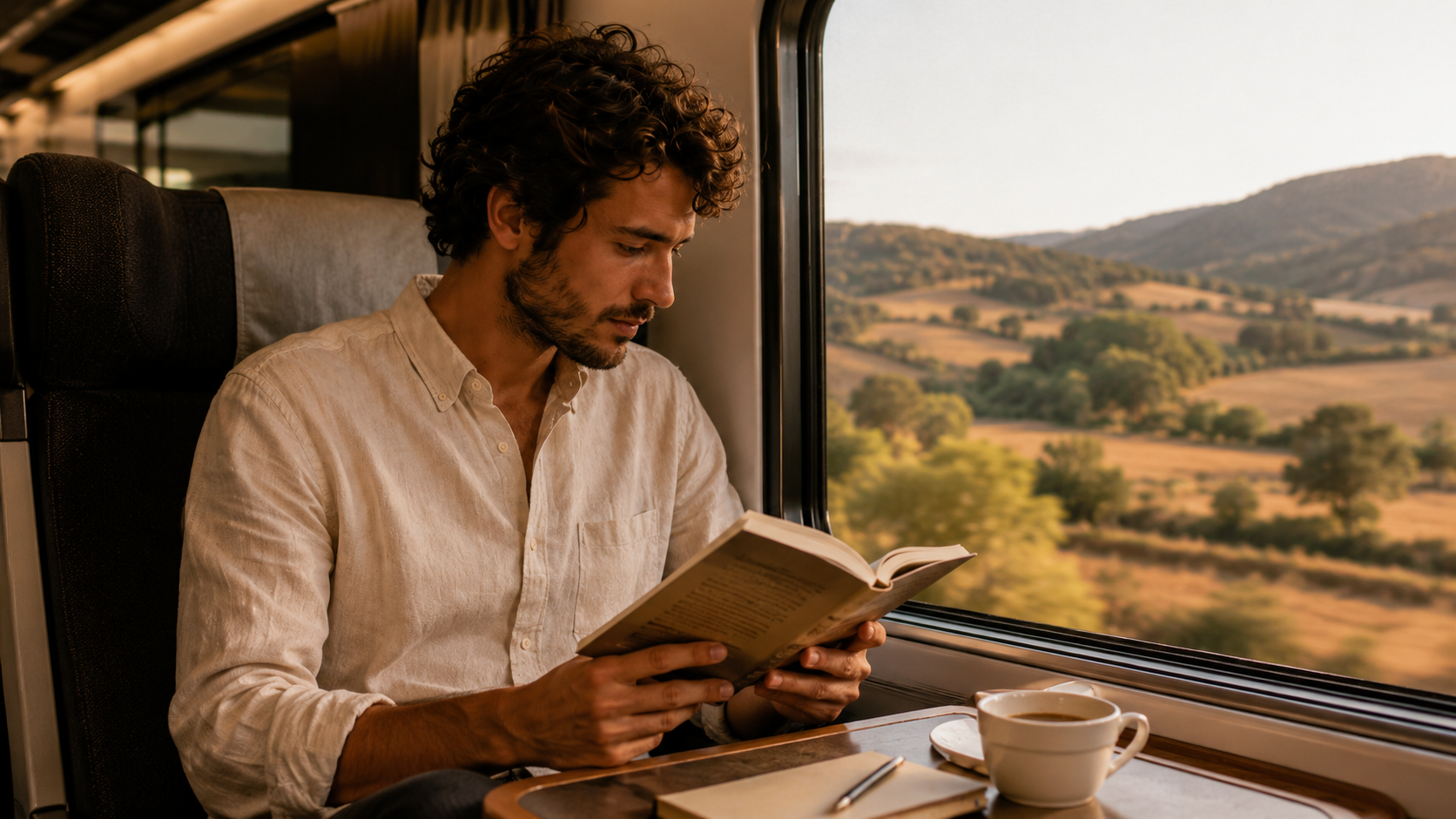
This is why Spanish language and literature belong in a travel blog. They help travelers move beyond surface impressions. Food, architecture, festivals, music, and landscape all become more meaningful when you understand the words and stories that surround them. Spain is not only seen. It is spoken, sung, written, argued, and remembered.
Conclusion
Spanish language and literature offer one of the deepest ways to understand Spain. The language connects daily life with global culture, while the literature reveals Spain’s humor, tragedy, imagination, regional identity, and historical memory. From Miguel de Cervantes and the Golden Age to Lorca, modern women writers, regional languages, and the wider Spanish-speaking world, this tradition is far richer than a simple list of famous books.
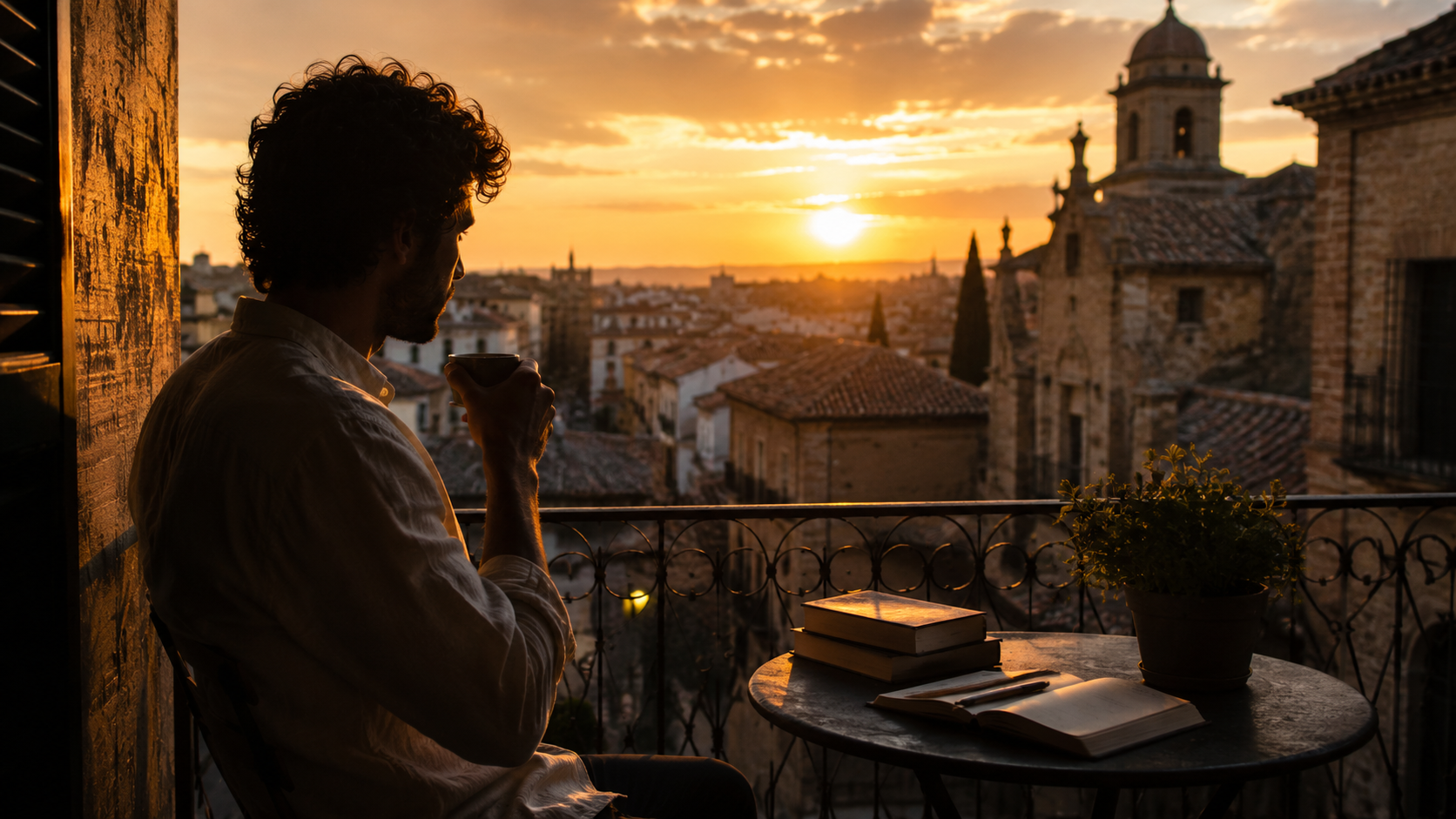
For travelers, engaging with Spanish does not require fluency or academic expertise. Learn a few phrases, listen carefully, visit a bookstore, notice regional languages, read a poem, or carry a novel connected to the place you are visiting. Spain becomes more vivid when you hear its voices, not just see its landmarks.