

The Origins of Indonesian Coffee
Few places on Earth grow coffee the way Indonesia does. Spread across a chain of islands forged by fire and shaped by ocean winds, Indonesia’s coffee culture is a story rooted in geography, climate, and the quiet resilience of people who work the land. The archipelago stretches thousands of kilometers, each island carrying its own history, its own soil, its own rhythm. Together, they create one of the most diverse coffee landscapes in the world — a mosaic of flavors defined by volcanic earth, misty highlands, dense forests, and tropical rains.

To taste Indonesian coffee is to taste the land itself: the depth of fertile soil, the brightness of morning fog, the sweetness of fruit growing under forest canopies, and the richness of beans processed with techniques as old as the farms that keep them alive. This is not merely a beverage; it is an expression of the archipelago’s elemental character. Indonesia does not simply grow coffee — it breathes it.
Coffee lovers may also enjoy our deep-dive into Ethiopian Coffee Culture.
Volcanic Soil: Indonesia’s Secret Ingredient
The story of Indonesian coffee begins with its volcanic roots. The archipelago sits on the Pacific Ring of Fire, a vast geological belt where tectonic plates shift and magma rises close to the surface. This constant reshaping of the Earth creates soils rich in minerals — potassium, phosphorus, iron — that give coffee plants unparalleled nourishment.
Walking through a highland plantation, the scent of wet soil mingles with the cooler air of elevation. Beneath the shade of towering trees, the ground is dark and fine, almost velvety. This soil is alive. It absorbs rainfall easily, drains well, and retains the minerals that give Indonesian beans their unmistakable character: deep, earthy, sometimes spicy, often smooth, always memorable.

Volcanic terroir shapes not only flavor but the personality of each island. On Sumatra, where the land rises sharply and rains fall in sheets, coffee develops low acidity and heavy body. On Java, with its older volcanoes and more balanced soil, beans grow cleaner and more structured. In the eastern islands, where eruptions continue to sculpt landscapes, coffee tastes brighter — a reflection of young earth still forming itself. This interplay of geology and botany gives Indonesia’s coffee an identity unmatched elsewhere. The land itself is the first artisan.
The Mountain Ridges: Where Mist and Altitude Make Magic
Indonesia’s best coffee grows not in open fields but in highland forests where the world feels suspended between earth and cloud. Morning mist drifts across ridges, softening the outlines of distant peaks. The sun rises slowly, filtered by layers of green canopy. In these quiet moments, coffee cherries glisten on branches, illuminated by dew that has gathered overnight.
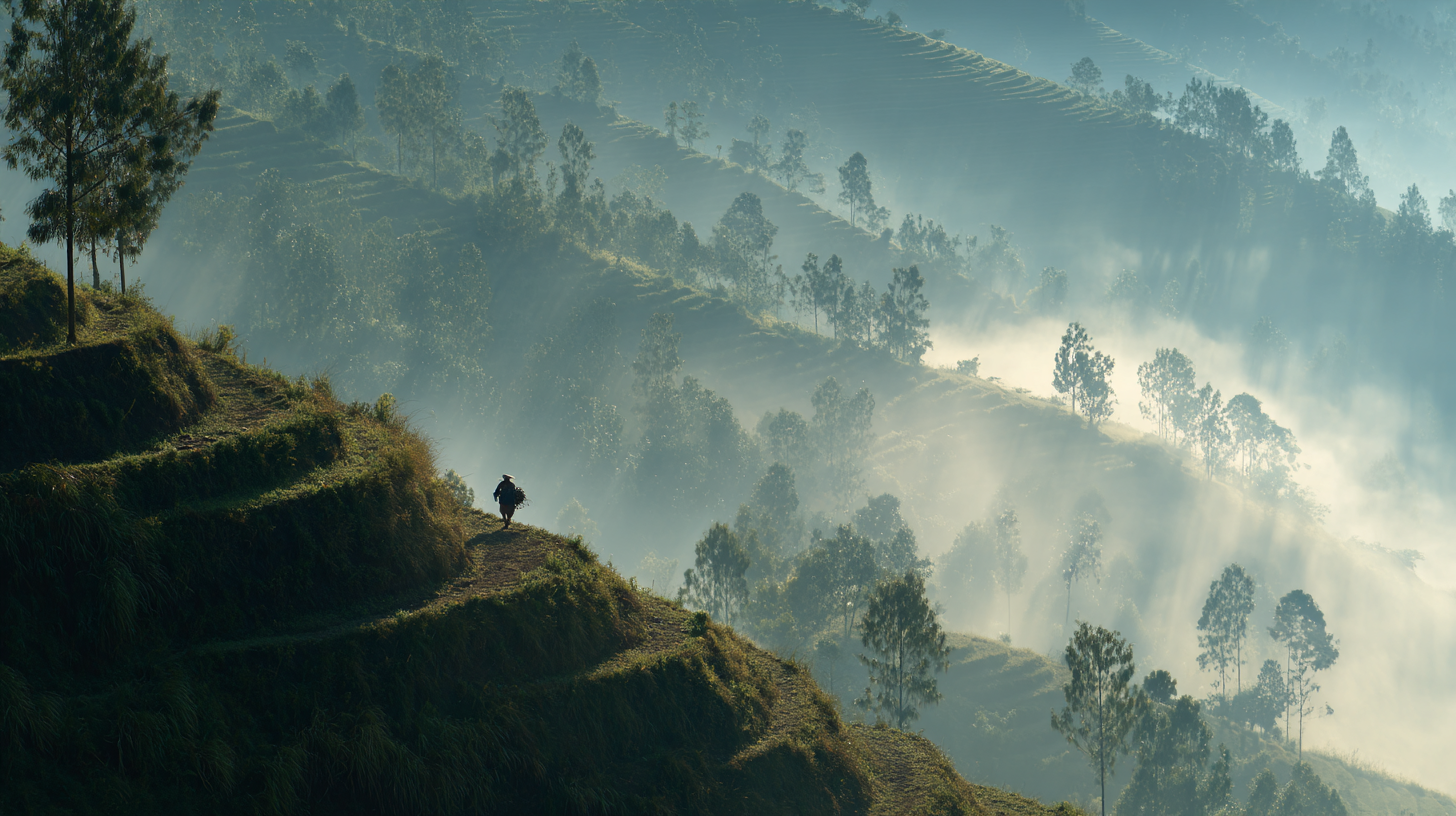
Altitude is a defining force in flavor. Higher elevations bring cooler temperatures, slower ripening, and more concentrated sugars. The beans grow denser, their interiors more complex. Farmers here know that each slope and elevation creates a different flavor — a nuance shaped by wind patterns, angle of sunlight, and the forest types nearby. In places like Aceh’s Gayo Highlands or South Sulawesi’s Toraja region, plantations sit between 1,200 and 1,800 meters above sea level. The air is thin and clean. The landscape is steep, requiring farmers to walk narrow paths carved into hillsides. Terraces rise in layers like giant staircases built by the Earth itself.
From these mountains come coffees with floral notes, hints of cocoa, subtle fruit sweetness, and an elegance that contrasts with the heavy-bodied beans grown at lower altitudes. Each cup carries the cool breath of highland mornings and the stillness of forests that have sheltered coffee trees for generations.
Island Identities: Coffee That Tastes Like Its Home
Indonesia’s archipelago creates a natural laboratory of microclimates. Each island — sometimes even each valley — has a distinct flavor profile shaped by weather, altitude, soil, and farming tradition. To drink Indonesian coffee is to journey across the islands, discovering personalities as varied as the landscapes themselves.
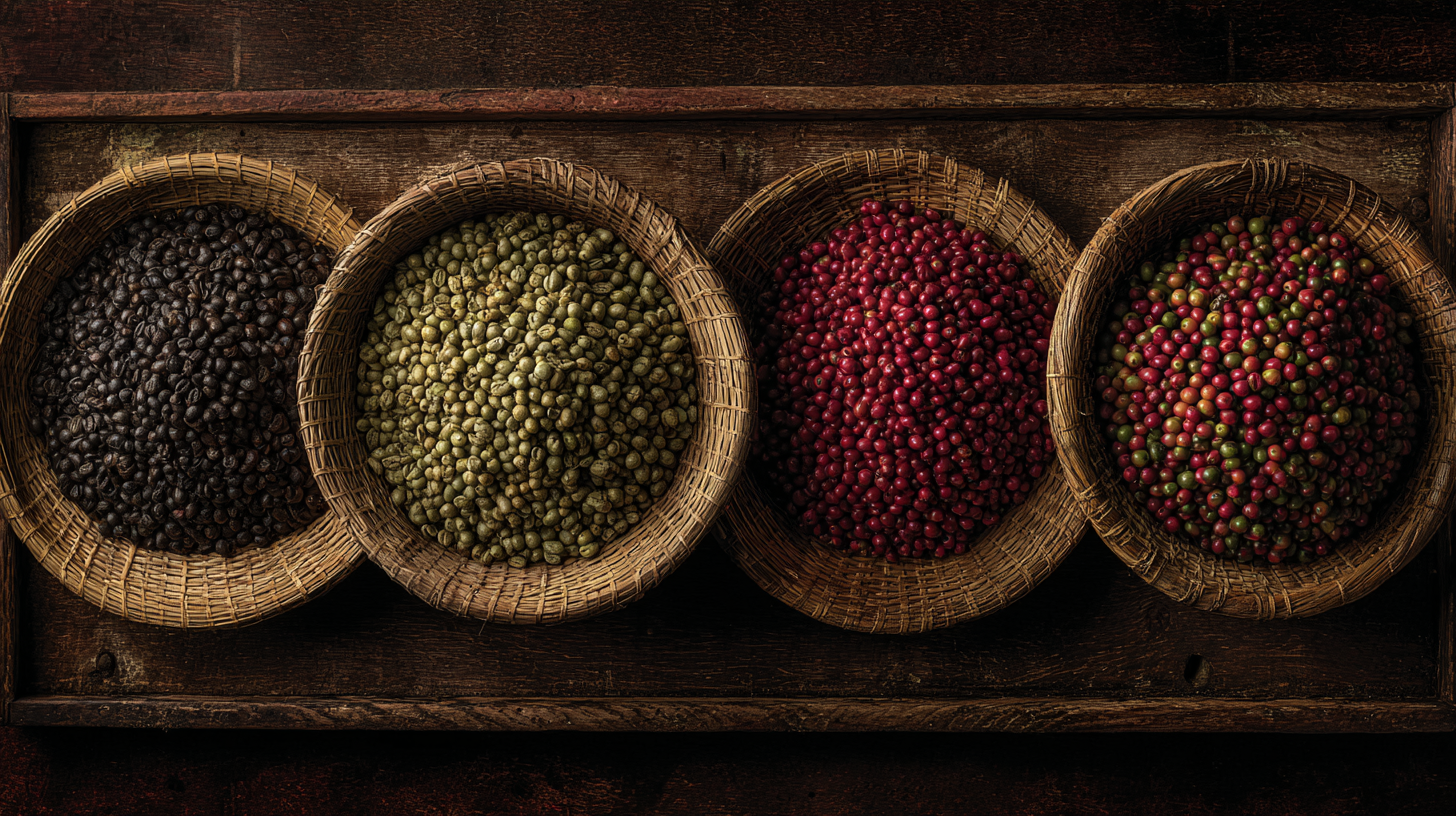
Sumatra produces some of the world’s most iconic coffees. Its beans often taste earthy, smoky, sometimes herbal — a result of both volcanic soil and the traditional wet-hulling method used here. The island’s deep forests, heavy rainfall, and thick humidity imprint themselves on every harvest.
Java, long associated with early global coffee culture, offers smoother and more balanced profiles. Its plantations, some centuries old, are known for clean flavors with hints of caramel, nuts, or mild spice. Java’s identity is tied to its long agricultural heritage and the controlled environments of government-run estates.
Sulawesi brings complexity. Toraja’s highlands produce coffees with layered sweetness, floral scents, and subtle acidity, shaped by cool temperatures and dramatic terrain.
Bali, with its volcanic lakes and Hindu traditions, produces gentle coffees influenced by both altitude and the island’s spirit of ritual, harmony, and terraced agriculture.
Each island’s coffee is a portrait — not only of the land, but of the people who have shaped it over generations. Indonesia is not one coffee origin; it is dozens.
The Human Hands Behind the Harvest
Indonesia’s coffee is defined as much by its people as by its landscapes. The vast majority of the country’s coffee is grown on small family farms rather than large estates. These are not industrial operations; they are communities where cultivation is a way of life, woven into seasons, ceremonies, and traditions.
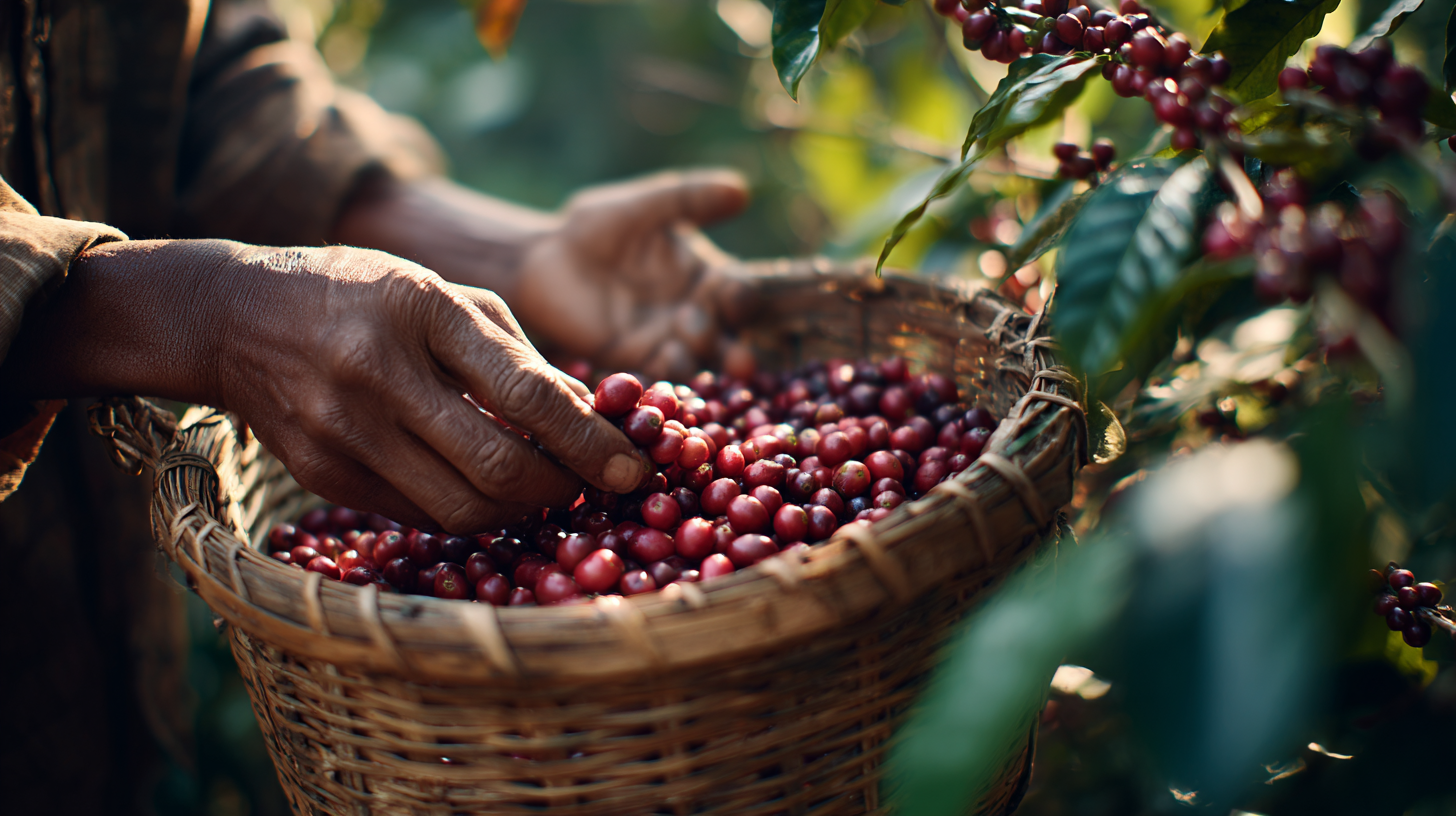
Farmers rise early, walking into the fields with woven baskets slung across their backs. They pick cherries by hand, choosing only those that have ripened to deep red. In many regions, families process beans on their own properties — washing, fermenting, and drying them using techniques passed down through generations. This hands-on approach creates an intimacy between people and product. Every step — from sorting to pulping to drying — is done with care, often involving the entire family. In remote areas, neighbors gather to help one another, sharing labor, meals, and stories as they work. Harvest season becomes a communal event, shaped by teamwork and gratitude.
These human rhythms shape the final flavor as surely as soil and weather do. Indonesian coffee carries the imprint of calloused hands, early mornings, shared knowledge, and the enduring bond between people and land.
Fermentation, Tradition, and Tropical Techniques
Indonesia is known for its unique processing methods, influenced by climate, geography, and generations of experimentation. One of the most famous is wet-hulling, or giling basah, a technique born from necessity. In humid regions, beans cannot dry for long periods without risk of mold, so farmers remove the parchment layer early and allow the beans to dry partially before final processing. The result is unmistakable: deep, earthy flavors with low acidity and a velvety texture.
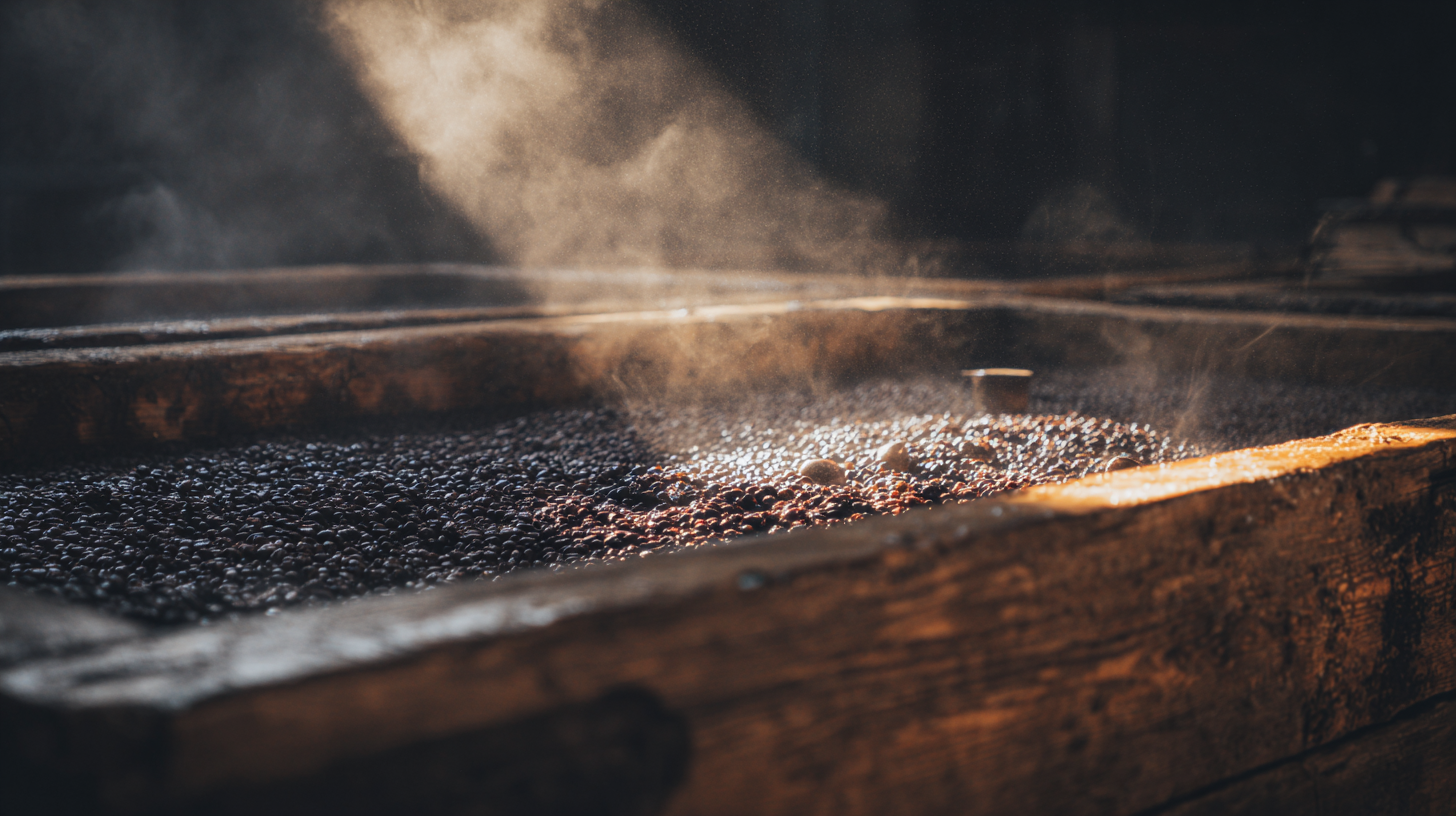
Other islands prefer fully washed or natural drying methods, producing coffees that taste cleaner, fruitier, or more aromatic. Fermentation practices also vary: some farmers ferment cherries overnight in woven baskets; others use clay pots or wooden vats that infuse subtle character into the beans. These methods reflect Indonesia’s adaptability. Instead of forcing the land to conform, farmers develop techniques that respect the archipelago’s humidity, rains, and temperature shifts. Their practices are not industrial solutions but cultural ones — born from generations of observation.
What emerges in the cup is diversity shaped by climate, creativity, and tradition. Indonesian coffee processing is a living craft, constantly evolving yet grounded in centuries of knowledge.
The Culture of “Ngopi”: Indonesia’s Social Ritual
Coffee in Indonesia is more than a stimulant — it is a social current. The word ngopi, meaning “to drink coffee together,” captures a cultural ritual that extends across cities, villages, and islands. Small roadside stalls brew dark, strong coffee that warms the mornings of farmers, drivers, fishermen, and travelers. Urban cafés hum with conversation as students, artists, and workers gather to talk, rest, laugh, or watch the world move by.
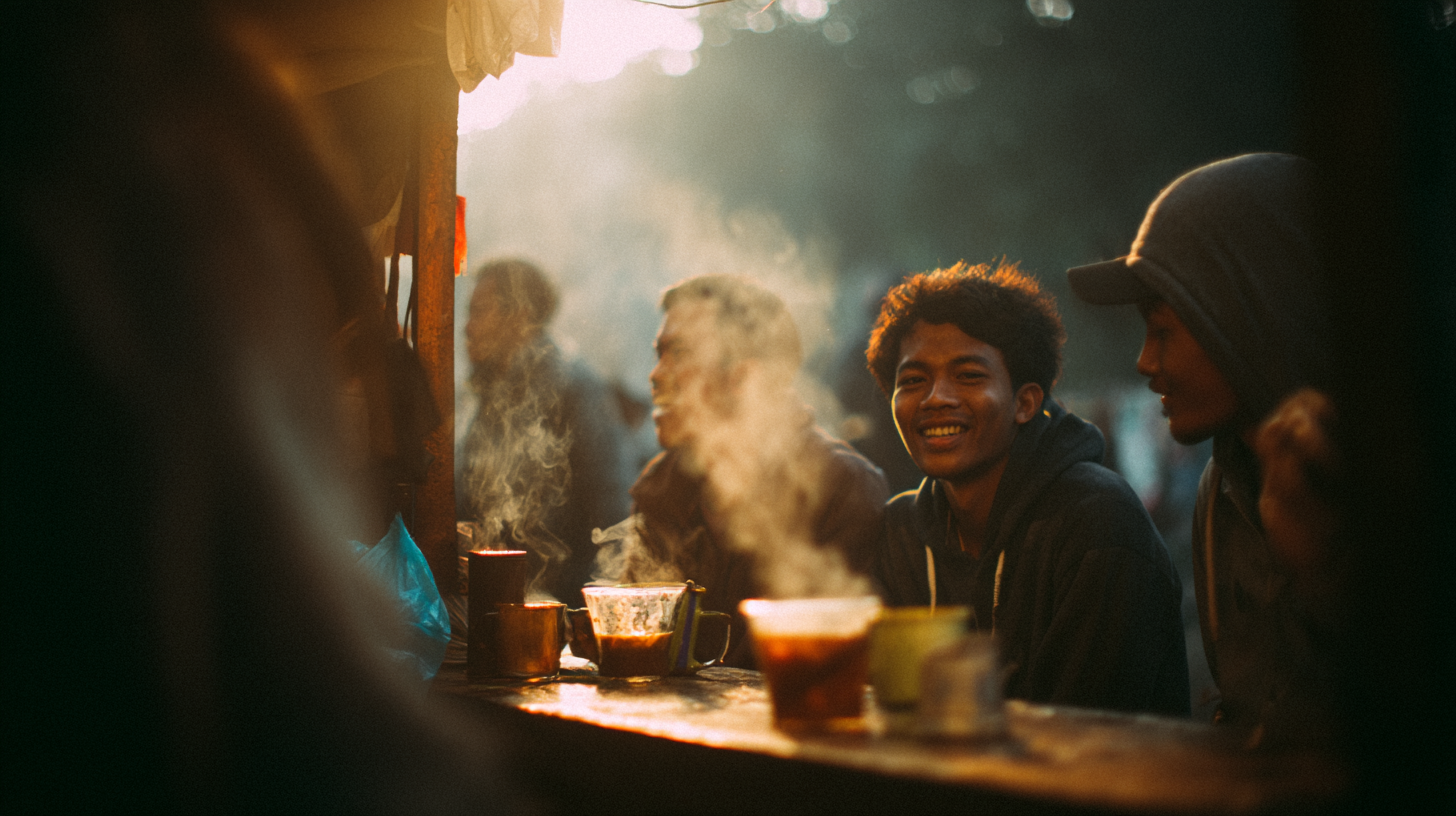
In many households, offering coffee is a gesture of welcome. Visitors are seated, cups are poured, and conversations unfold slowly, unhurried by time. Coffee becomes a bridge — connecting families, neighbors, and strangers in a shared moment of pause. Even island to island, ngopi differs. In Java, it is often sweetened and served with a layer of coffee grounds settling at the bottom of the glass. In Sumatra, it may be brewed thick and almost opaque. In Bali, it appears alongside offerings and incense, woven into rituals of gratitude and hospitality.
Ngopi reveals something essential about Indonesian life: community thrives in moments of simplicity. Coffee is not ceremony — it is everyday intimacy.
Modern Indonesia: Specialty Coffee Rising
In recent years, Indonesia has entered a new era of coffee appreciation. Young farmers are experimenting with varietals once considered rare in the archipelago. Roasters in Jakarta, Surabaya, and Bandung are refining profiles that highlight clarity, fruit, and nuance. Specialty cafés choose beans from single micro-lots, telling stories of farmers, villages, and harvest conditions.

This movement does not replace tradition — it builds upon it. Wet-hulling still defines much of Sumatra’s character, but now exists alongside honey processing, anaerobic fermentation, and experimental drying techniques. Farmers travel across islands to share knowledge, attend workshops, and adopt innovations that honor both modern tastes and ancestral wisdom. At the same time, global recognition is growing. Indonesian beans appear in international competitions, roasters abroad celebrate their complexity, and local baristas push boundaries with new brewing styles.
What emerges is a vibrant harmony between heritage and innovation. Indonesia’s specialty coffee scene reflects the archipelago’s core identity: open to influences, proud of tradition, and endlessly creative.
Conclusion — A Coffee Archipelago with a Thousand Voices
Indonesia’s coffee culture is vast, alive, and deeply intertwined with the land that sustains it. From volcanoes that enrich the soil to forests that shade the cherries, from highland mists to ocean winds, from family farms to bustling city cafés — every part of the archipelago shapes the flavor in the cup. This diversity is not chaotic; it is symphonic. Each island contributes a note, each farmer a rhythm, each tradition a distinct timbre. Together, they create a coffee landscape unlike any other in the world — rich, textured, complex, and profoundly human.
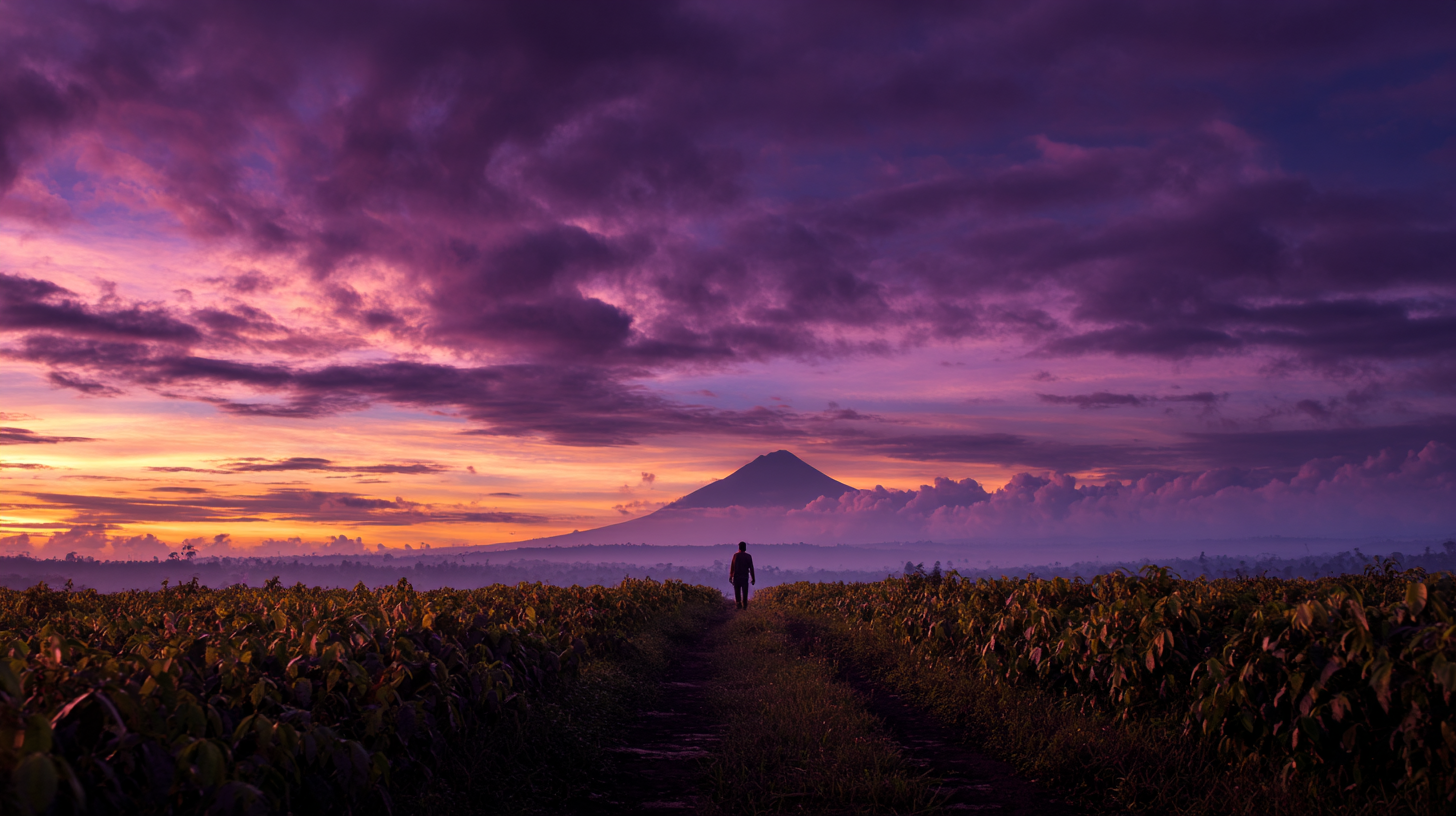
To drink Indonesian coffee is to taste more than a product. It is to experience a meeting of earth and fire, of rain and sunlight, of memory and innovation. It is to witness the archipelago not just through its geography but through its spirit.
Indonesia does not offer one coffee.It offers thousands — each carrying the voice of the land from which it was born.
Indonesian Coffee Board — https://www.iccri.net/
Loved this article
Loved the Indonesian coffee culture
Thanks for sharing ✨♥️♥️♥️
Thanks!
Interesting. Hadn’t thought about coffee coming from Indonesia.
All amazing photos.
Coffee culture isn’t just about fancy drinks; it’s also about atmosphere. The right lighting, music, and comfy seating can make a cup of coffee feel like a mini escape.