
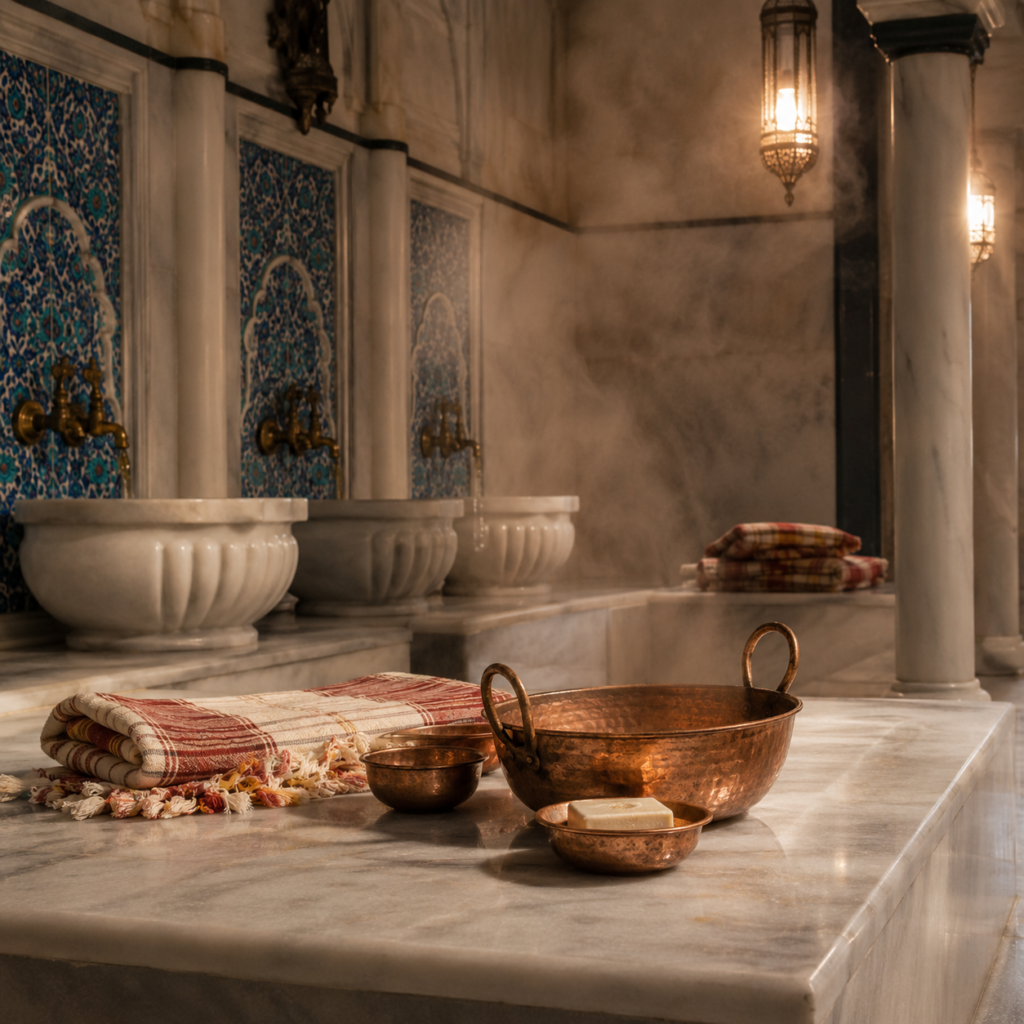
A Turkish hamam is not simply a place to wash. It is a ritual of heat, water, marble, soap, silence, and social tradition. For travelers in Turkey, the hamam experience can feel unfamiliar at first, but that is exactly why it is worth trying. It invites you into a slower rhythm, where cleansing is not rushed and the body is treated with patience, warmth, and care.
The Turkish bath tradition is deeply connected to Ottoman city life, Islamic ideas of purification, Roman and Byzantine bathing culture, and the social habits of everyday communities. Historic hamams were not only practical spaces; they were places to meet, rest, prepare for weddings, mark life transitions, and step away from the noise of the street. Today, a Turkish hamam can be traditional, luxurious, local, tourist-friendly, or spa-like, but the heart of the experience remains the same: heat, water, exfoliation, and renewal.
What Is a Turkish Hamam?
A Turkish hamam is a public bathhouse built around warm rooms, hot marble, steam, washing areas, and rest spaces. The experience usually begins with changing into a thin cotton towel called a pestemal. You then move into a heated marble room, where the body slowly relaxes before washing, scrubbing, and foam cleansing begin.
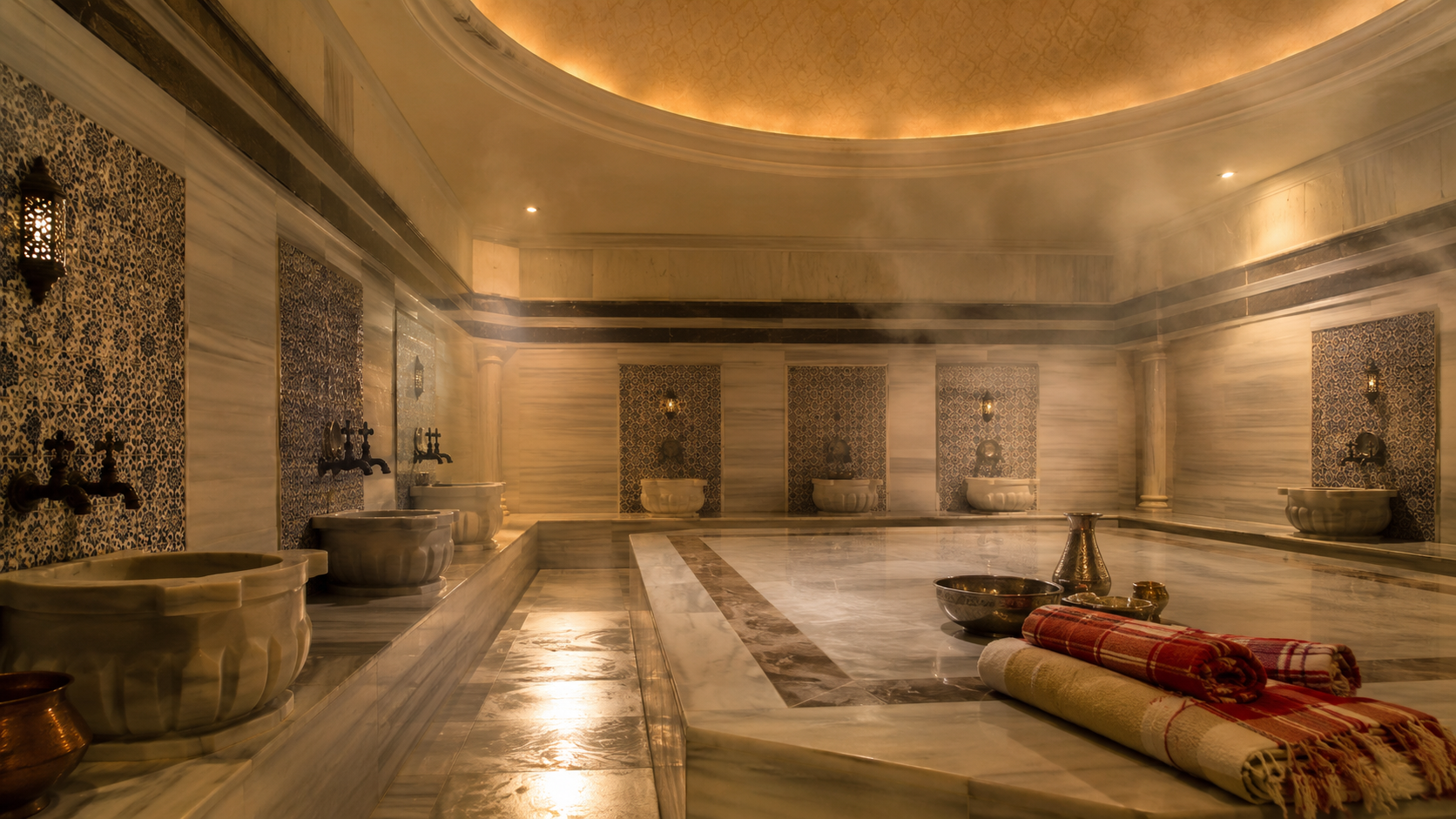
Unlike a modern spa, the hamam is not only about privacy or luxury. Traditionally, it was a shared social space, with separate sections or times for men and women. The ritual could be simple and practical or ceremonial and elaborate. Britannica describes the Turkish bath as a bathing tradition that combines warm air, steam or hot-air immersion, massage, washing, and cooling. That sequence is what gives the hamam its distinctive rhythm.
The Roots of Ottoman Bath Culture
Ottoman bath culture did not appear from nowhere. It grew from older Roman and Byzantine bathing traditions, Islamic practices of cleanliness, and the social structure of Ottoman cities. The Ottomans transformed the bathhouse into a major urban institution, often connected to mosque complexes, charitable foundations, markets, and neighborhoods.
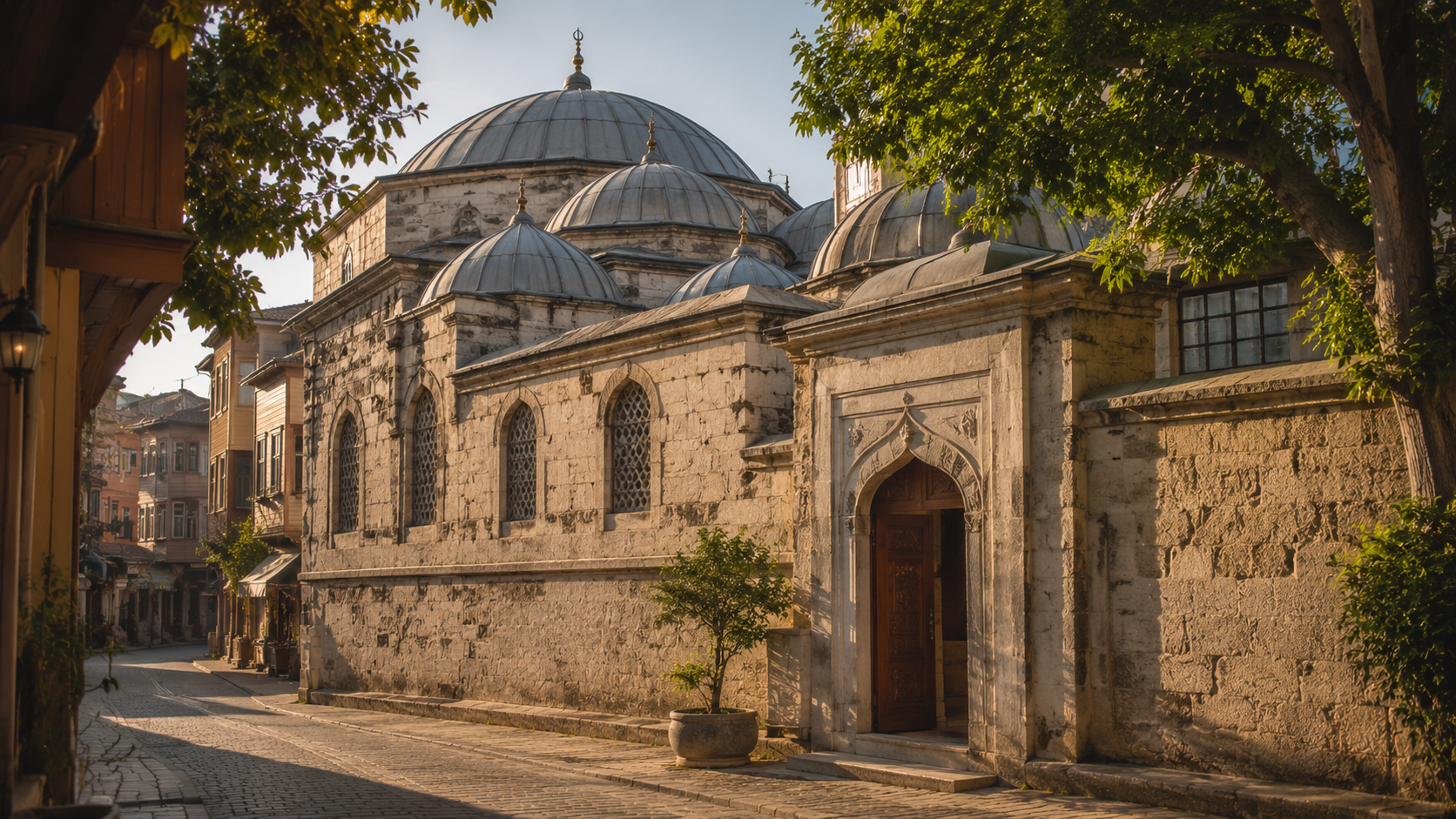
In Ottoman life, the hamam served both body and society. People came to wash, but also to talk, rest, celebrate, and prepare for important events. Bridal hamams, birth rituals, and communal visits made the bathhouse part of the social calendar. This is why the Turkish hamam belongs naturally inside the wider story of Anatolian civilizations. It is not just a spa experience; it is a cultural form shaped by centuries of architecture, religion, urban life, and craft.
The Architecture of Steam and Light
One of the most beautiful parts of a traditional hamam is the architecture. Domed ceilings, small star-shaped glass openings, marble platforms, stone basins, arches, and soft filtered light create an atmosphere unlike any modern bathroom. The space is designed to feel enclosed but not oppressive, warm but not chaotic, public but strangely peaceful.
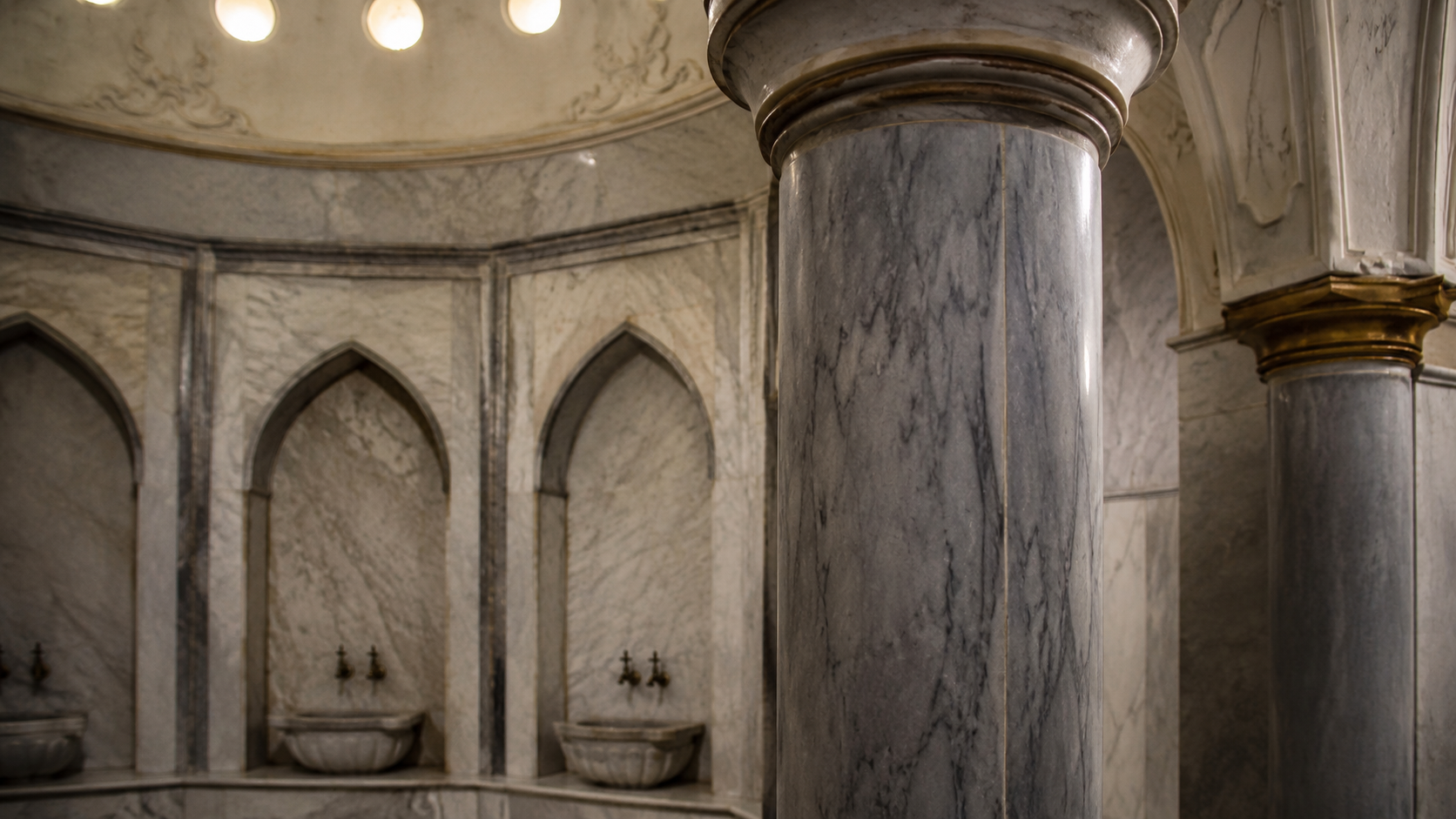
The central heated marble platform, often called the göbek taşı, is where visitors lie down to warm the body before the scrub. Around the room, basins provide water for rinsing. The combination of stone, steam, and quiet sound creates a sensory environment that is difficult to describe until you experience it. A good Istanbul hamam can feel almost cinematic, especially when sunlight falls through the dome and catches the steam.
What Happens During a Hamam Experience?
A classic hamam experience usually follows a clear sequence. First, you change into a pestemal and enter a warm or hot room to relax. This stage is important because the body needs time to soften before the scrub. You sit or lie on warm marble, pour water over yourself, and let the heat do its work.
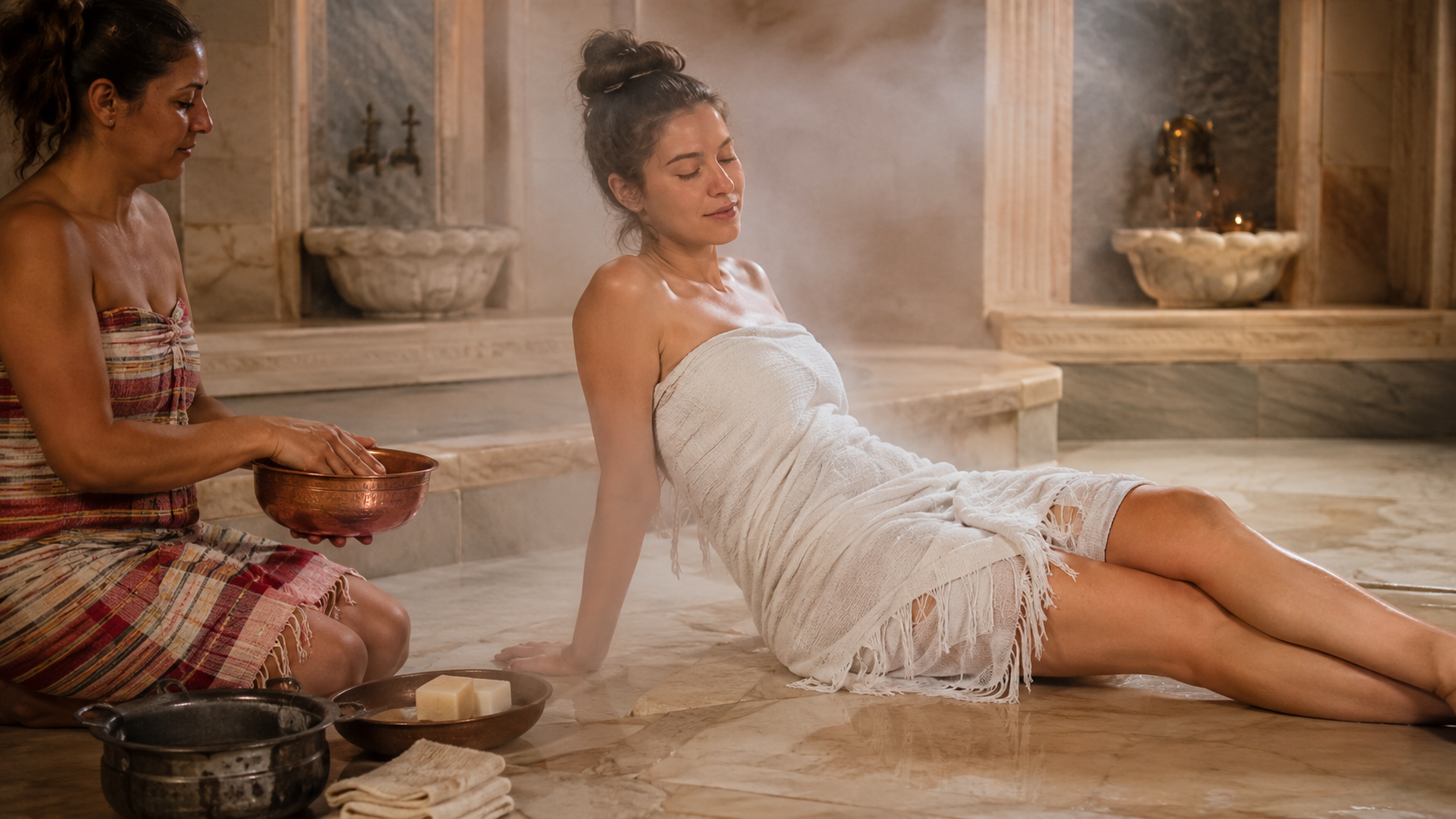
Next comes the kese scrub, one of the most memorable parts of the ritual. An attendant uses a rough mitt to exfoliate the skin, removing dead skin with surprising intensity. After that, many hamams include a foam wash, where you are covered in clouds of soap bubbles and washed with rhythmic movements. Some packages also include an oil massage, but the traditional core is heat, scrub, foam, rinse, and rest.
The Kese Scrub: Intense but Cleansing
The kese scrub can surprise first-time visitors. It is not a gentle spa exfoliation. It can feel firm, direct, and even slightly shocking if you are not expecting it. But for many people, it becomes the most satisfying part of the Turkish hamam because the body feels unusually clean afterward.
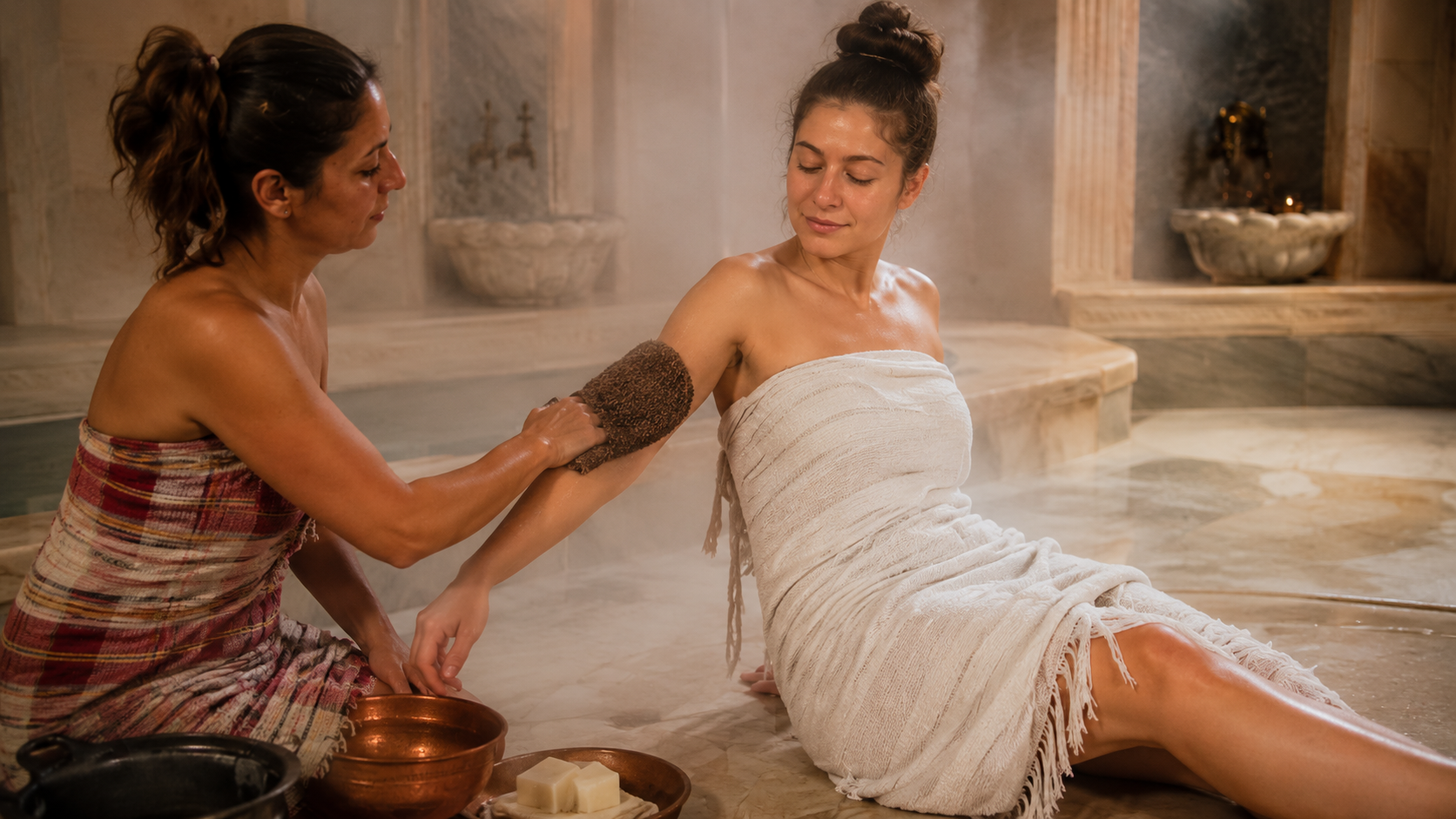
The key is to relax and understand the ritual. If the pressure feels too strong, you can say so. A good attendant will adjust. The scrub is not meant to be painful, but it is meant to be thorough. After the scrub and rinse, the foam wash feels softer and more comforting, creating a contrast between intensity and relaxation.
Foam, Water, and the Feeling of Renewal
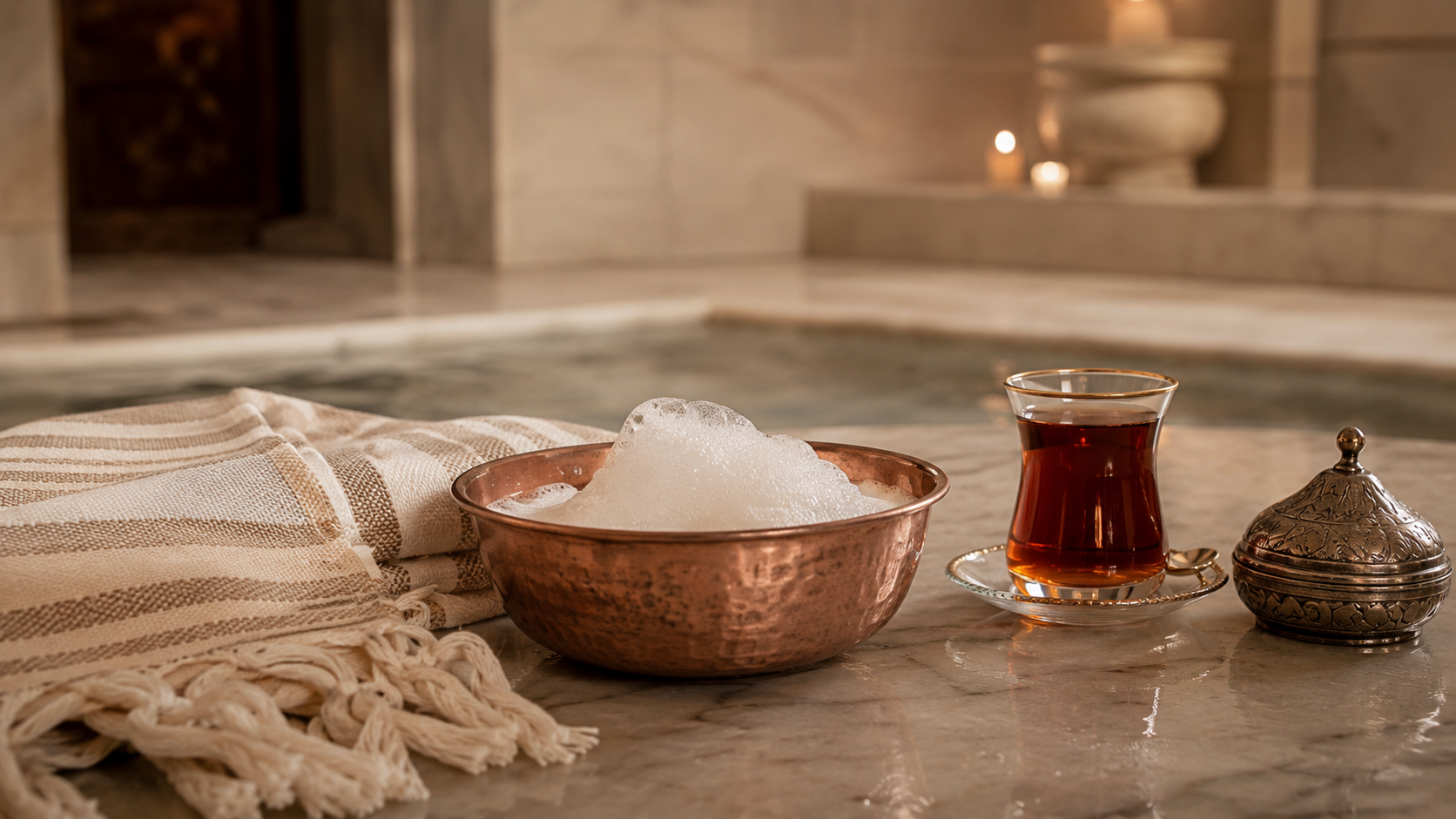
The foam wash is often the most visually memorable part of the hamam experience. A cloth bag is filled with air and soap, then squeezed to create thick bubbles over the body. The foam feels light, warm, and almost theatrical. It softens the mood after the stronger exfoliation stage.
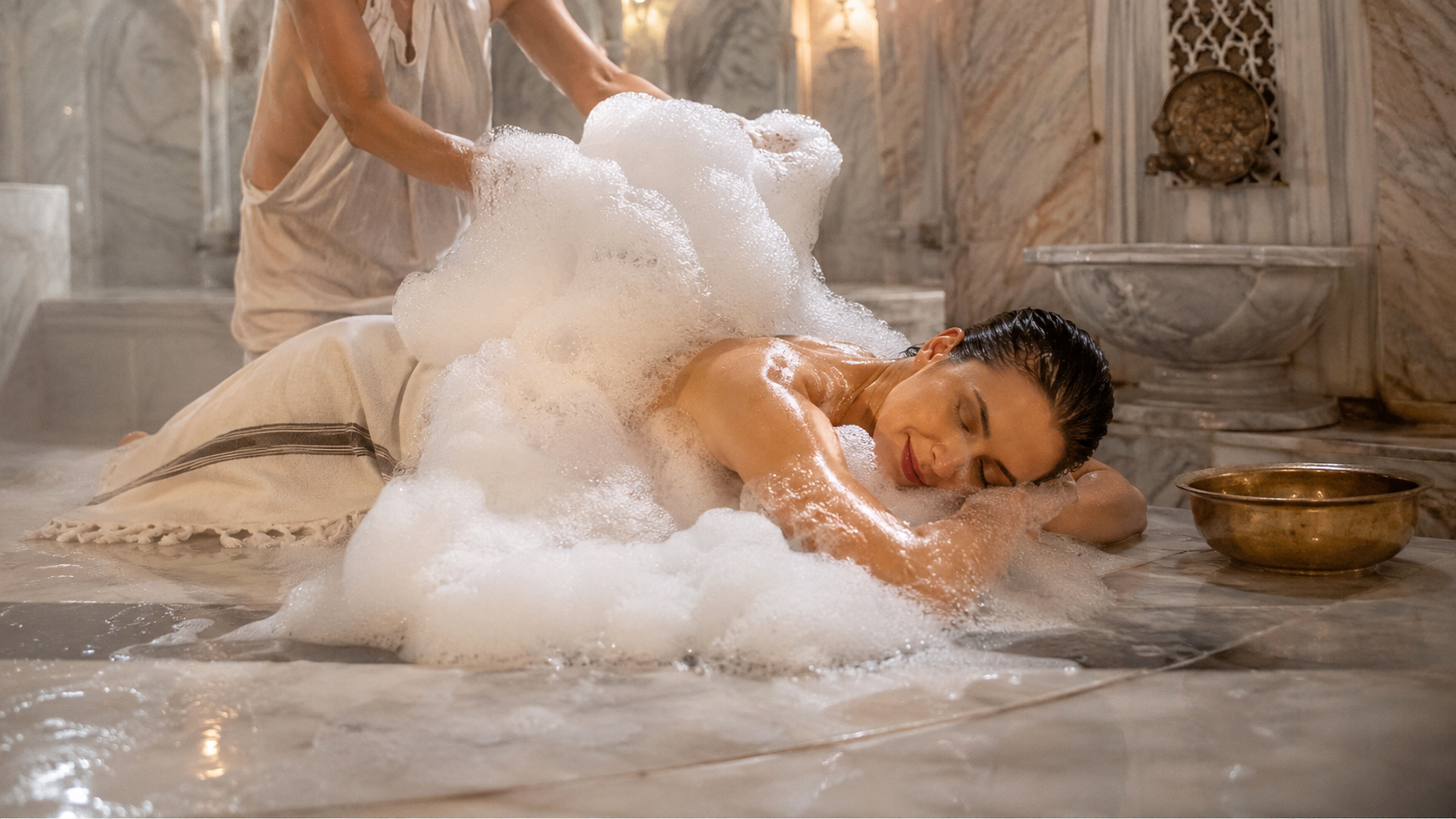
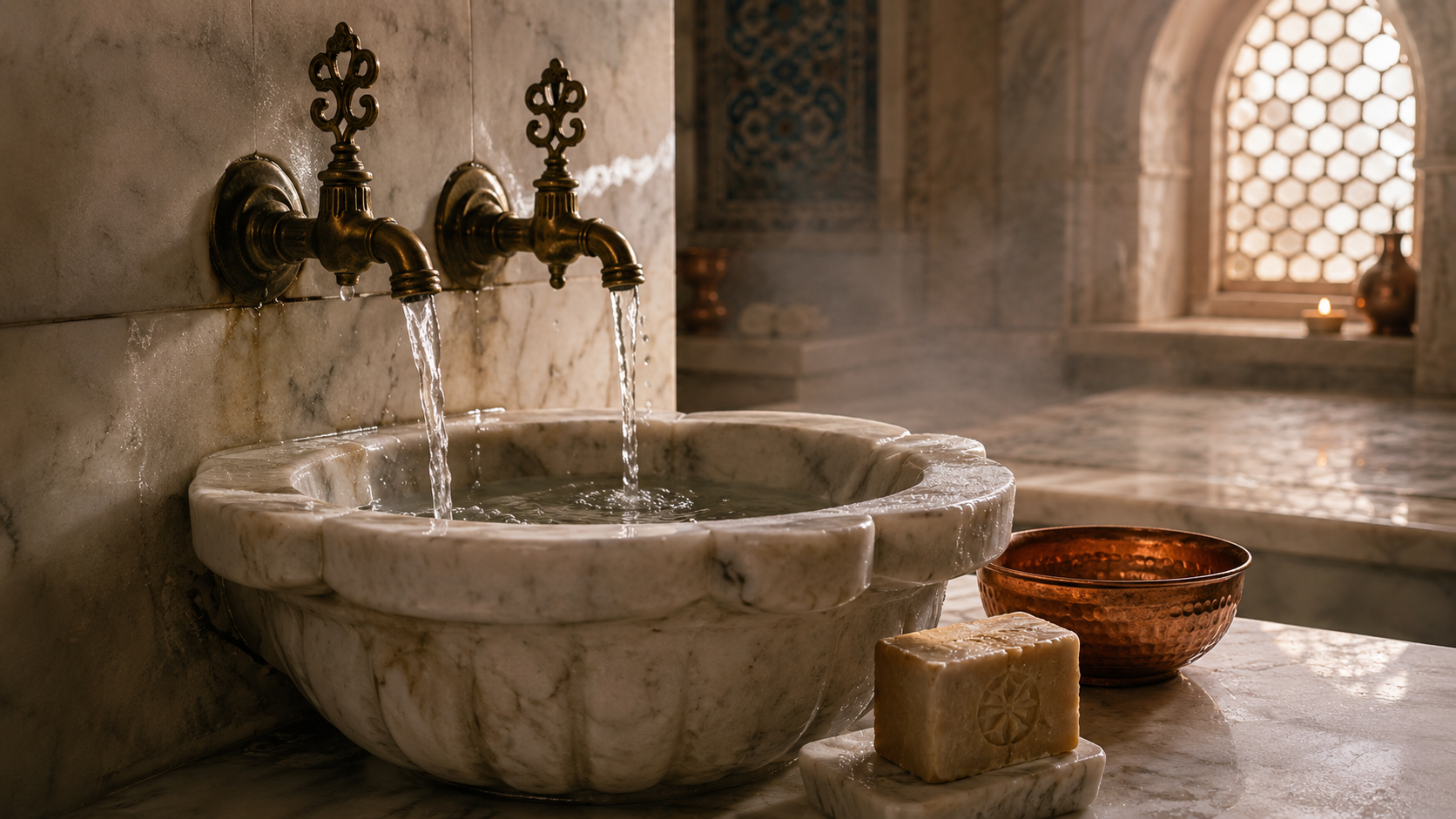
Water is everywhere in the hamam, but it is used with care. Bowls of warm water are poured over the body again and again, creating a simple rhythm of cleansing and release. By the end, many visitors feel lighter, calmer, and strangely reset. The ritual is physical, but it also has an emotional effect: it makes you slow down.
Istanbul Hamam Culture: Historic and Modern Choices
An Istanbul hamam is often the most atmospheric choice for travelers because the city has some of Turkey’s most famous historic bathhouses. Places such as Çemberlitaş Hamamı, Cağaloğlu Hamamı, Süleymaniye Hamamı, and Hürrem Sultan Hamamı are known for their architecture, history, and central locations. Some are more traditional, while others are more luxurious and tourist-oriented.
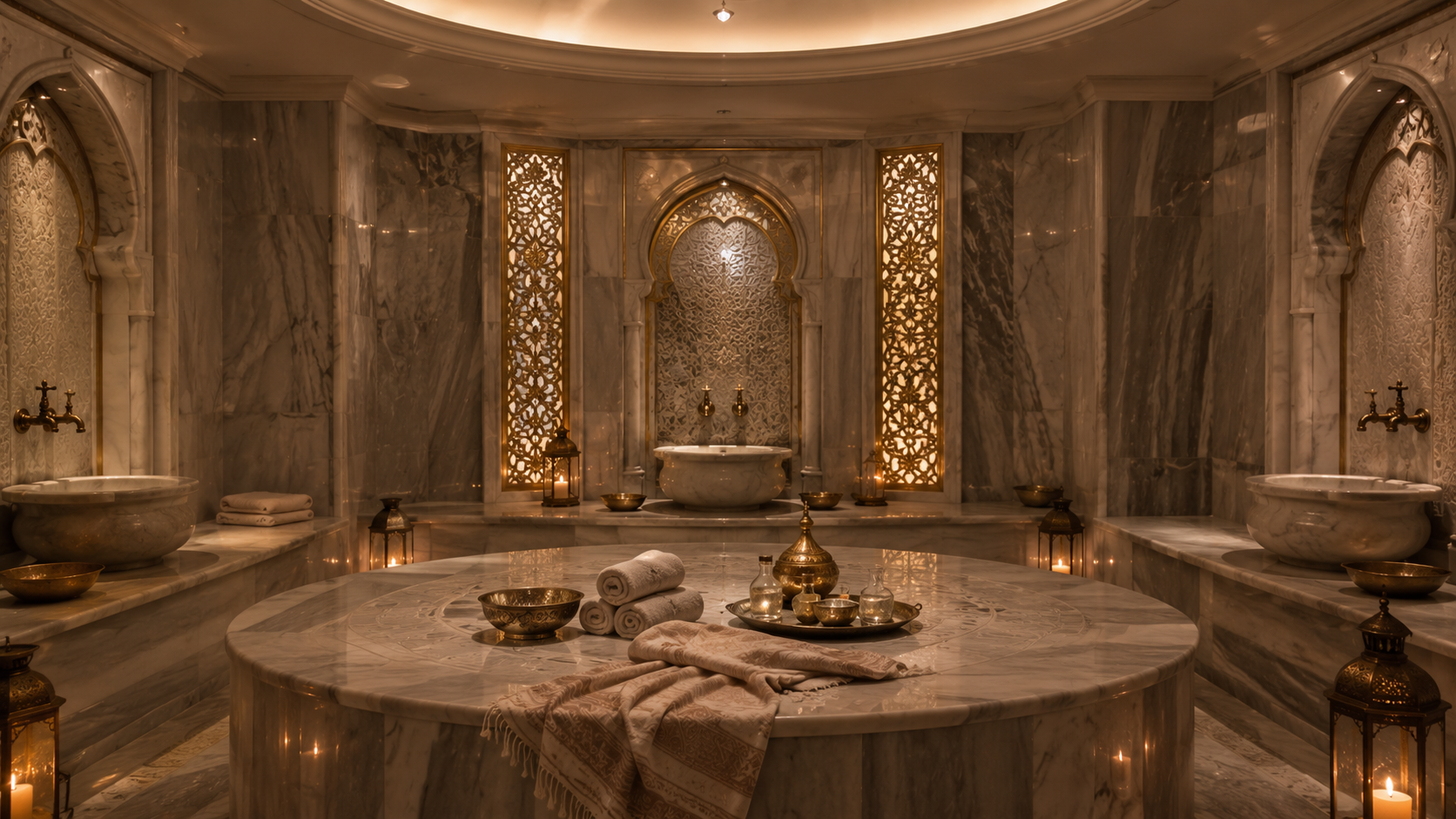
Choosing the right Istanbul hamam depends on what kind of experience you want. A historic hamam may offer atmosphere and architecture, while a hotel spa-style hamam may feel more private and polished. Local neighborhood hamams may be cheaper and more authentic, but they may also require more comfort with local customs and less English-speaking service. None of these options is automatically better. They simply serve different travelers.
Hamam Etiquette for First-Time Visitors
The most common anxiety about visiting a hamam is not knowing what to do. That is normal. Most tourist-friendly hamams explain the process clearly, and attendants are used to first-time visitors. Still, a few basic rules help.
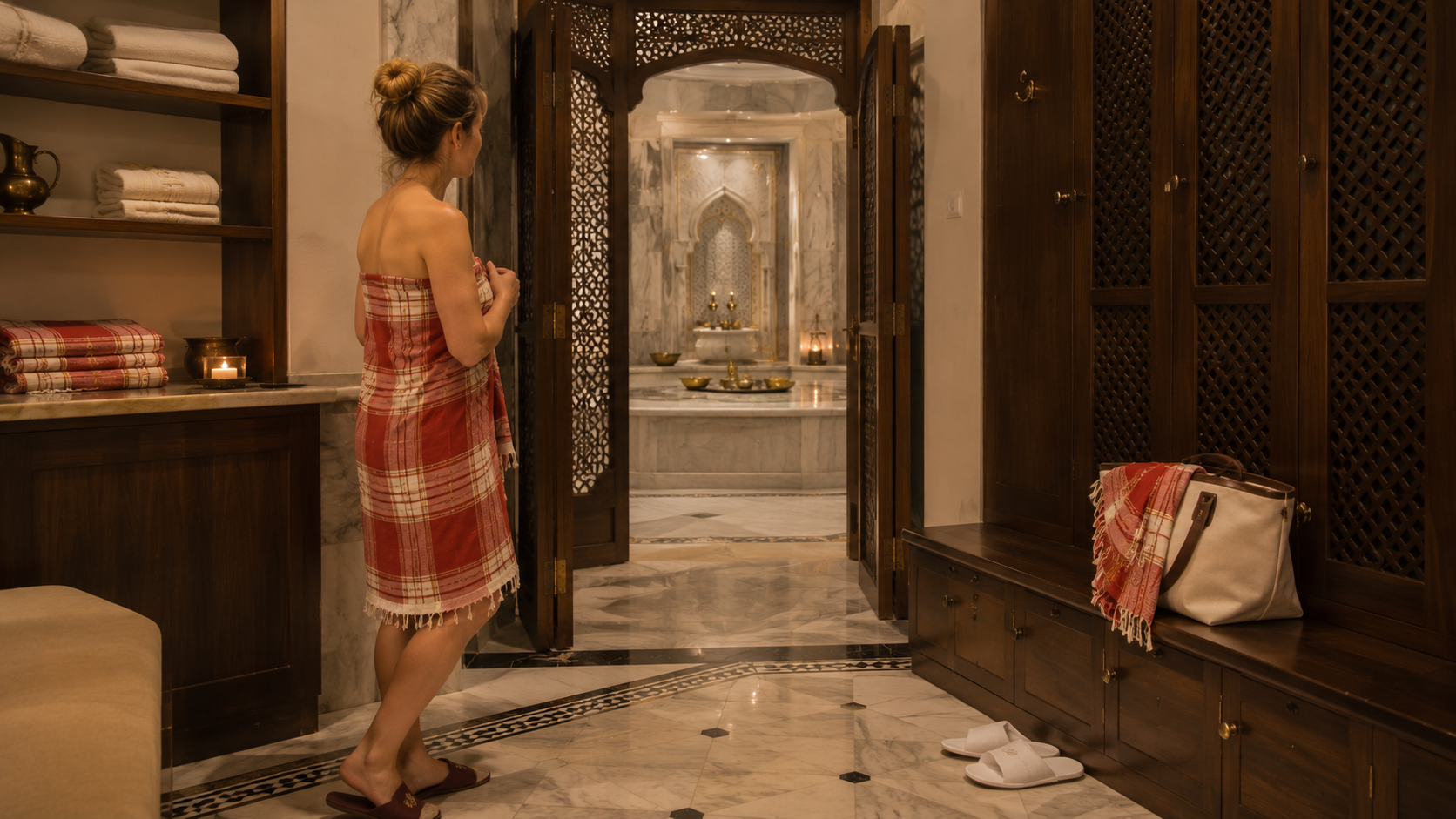
Bring a swimsuit if the hamam requires it or if it makes you more comfortable. In traditional settings, men and women usually have separate sections or separate visiting hours. Wear the pestemal as instructed, respect privacy, speak quietly, and follow the attendant’s guidance. If you have health issues, are pregnant, sensitive to heat, or uncomfortable with strong exfoliation, choose a gentler package and communicate clearly.
What to Bring and What to Expect
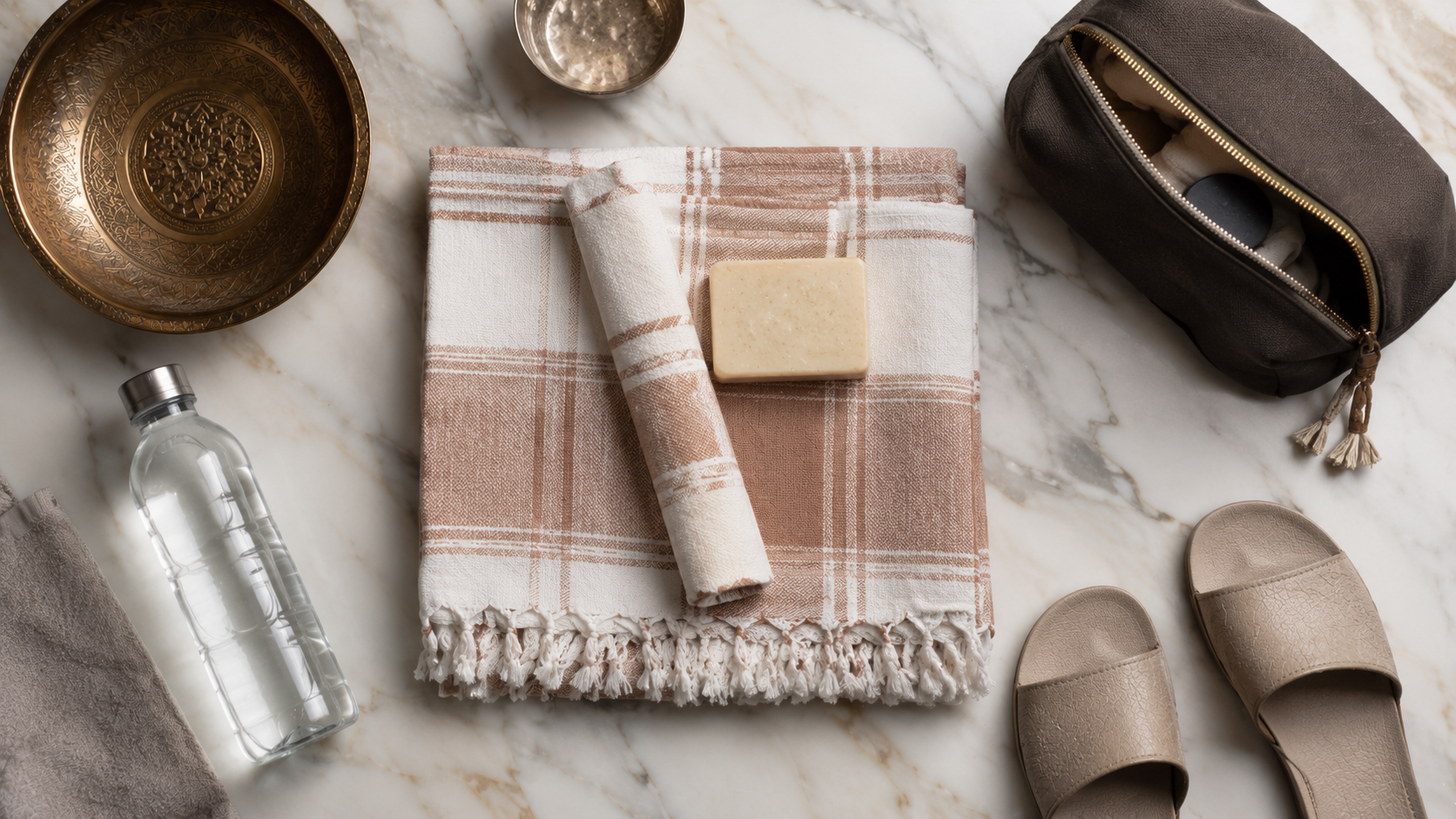
Most hamams provide a towel, pestemal, slippers, soap, and basic changing space, but standards vary. Higher-end hamams often include lockers, toiletries, robes, and drinks afterward. Local hamams may be simpler, so it is useful to bring a small towel, flip-flops, clean underwear, and basic personal items.
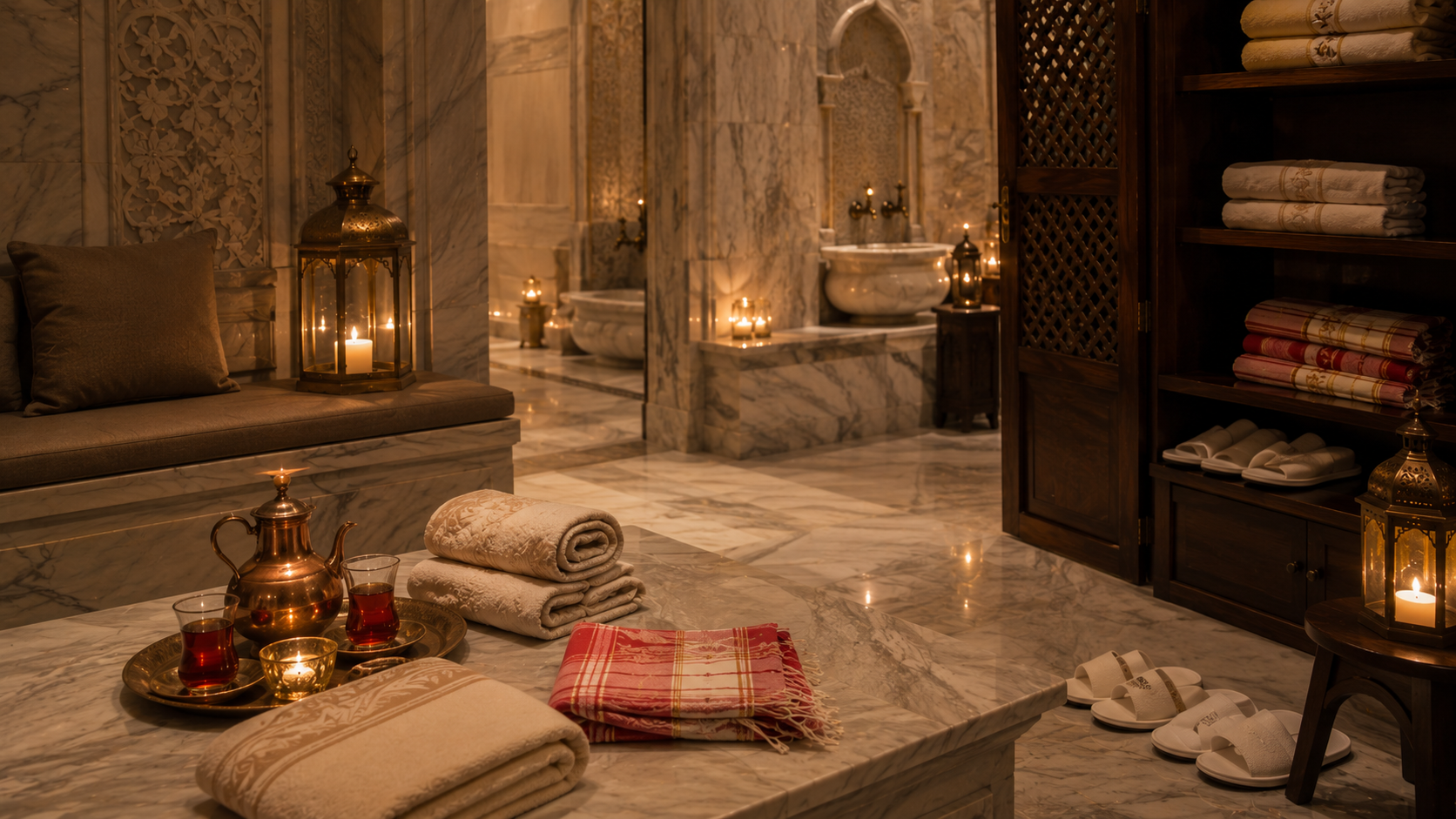
Do not schedule a hamam in a rush. Even a short treatment can take around an hour, while a fuller ritual may take longer. The best part of the Turkish bath tradition is the pause after the washing is done. Sit for a while, drink water or tea, and let the body cool down slowly. Treat the rest as part of the ritual, not an afterthought.
The Hamam as Social Space
Historically, the hamam was not only about hygiene. It was a social space, especially for women, who used bath visits as opportunities to gather, talk, prepare for ceremonies, and maintain community ties. Bridal hamams were once important pre-wedding rituals, filled with music, beauty preparation, family, and symbolic cleansing.
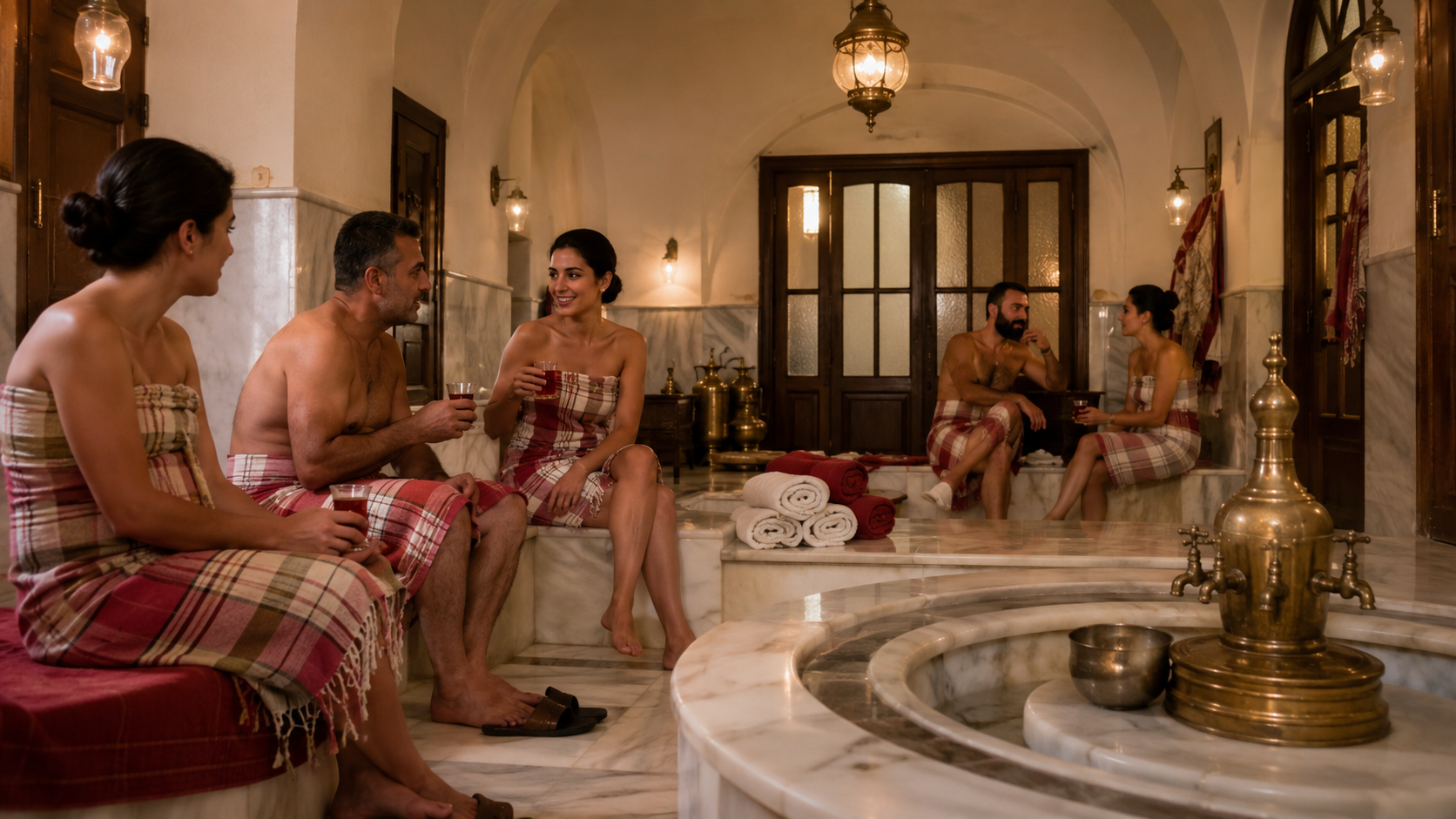
This social dimension is easy to miss if you only visit a luxury tourist hamam. But it is central to the tradition. The hamam was one of the places where private life and public culture met. It offered a rare combination of bodily care, conversation, ritual, and community. That is why the hamam experience feels different from a massage or sauna. It carries cultural memory.
Craft, Textiles, and the Beauty of Hamam Objects
A hamam is also connected to Turkish craft traditions. Pestemal towels, copper bowls, marble basins, wooden clogs, soap, embroidered textiles, and architectural details all belong to the visual world of the bathhouse. These objects are practical, but they are also beautiful.
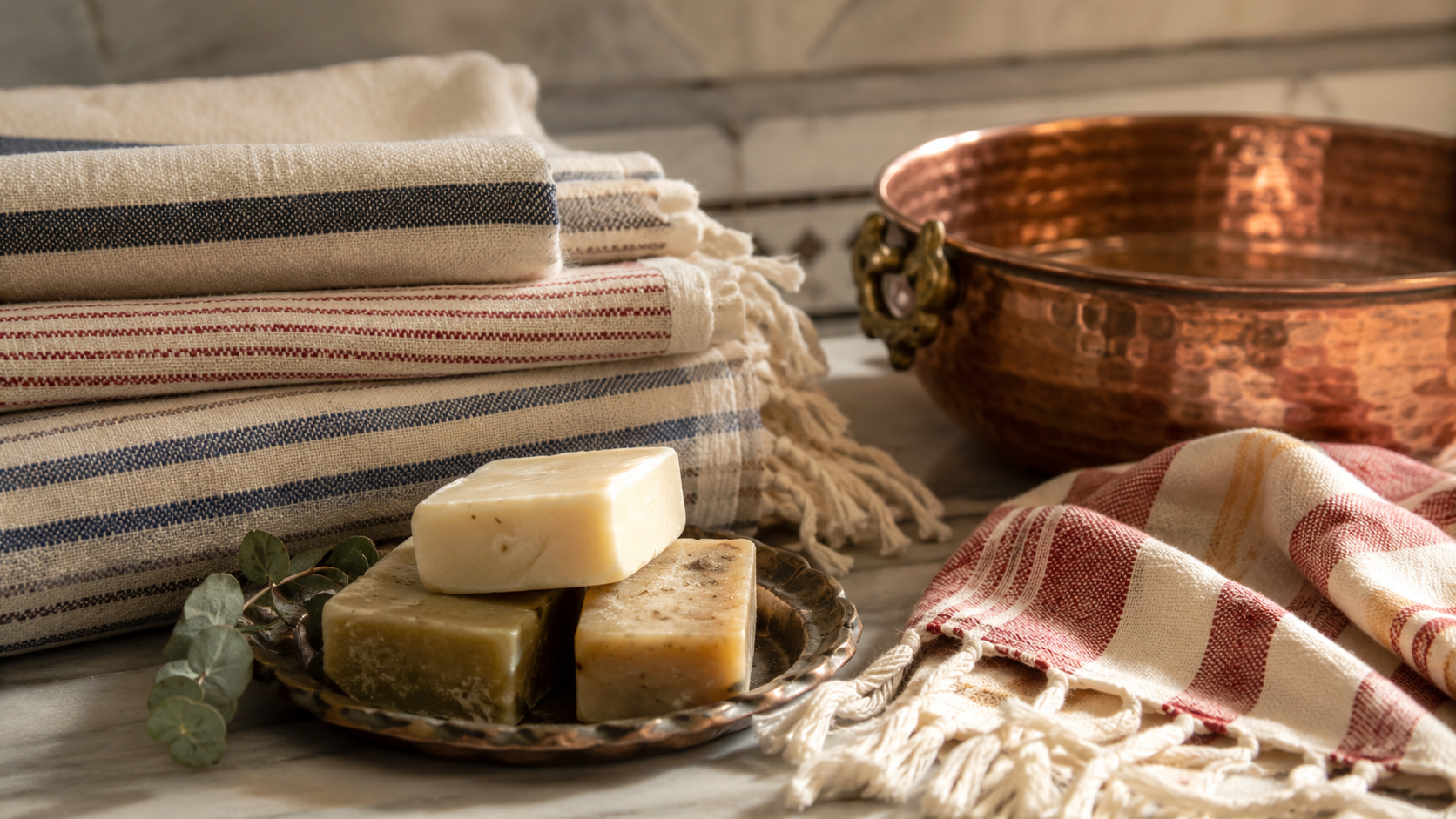
Travelers interested in design and handmade traditions can connect the hamam with Turkish crafts and arts. The same culture that produced carpets, ceramics, calligraphy, and metalwork also shaped the everyday objects of bathing. Even a simple cotton pestemal can become a meaningful souvenir because it belongs to a living ritual rather than a decorative cliché.
Hamam, Food, and the Ritual of Recovery
After a hamam, many people feel hungry, thirsty, and deeply relaxed. This is a good moment to continue the experience through Turkish hospitality. Tea, water, fresh fruit, light sweets, or a simple meal can feel especially satisfying after the heat and scrub.
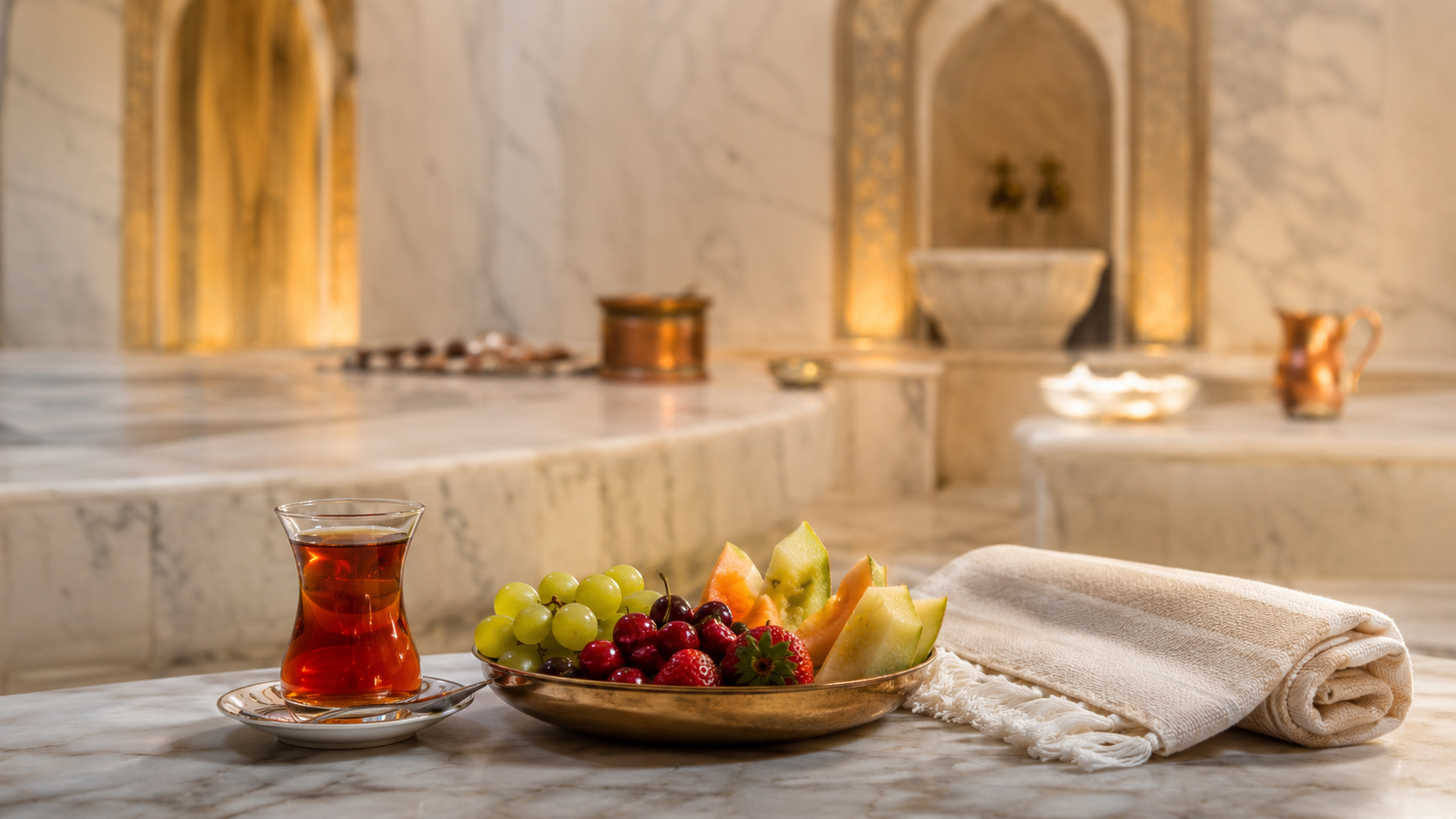
This connection between body care and food is part of the larger rhythm of Turkish travel. A day might include a morning walk through historic streets, a hamam in the afternoon, and a slow dinner afterward. For travelers who want to understand daily pleasure in Turkey, Turkish cuisine and hamam culture belong naturally together. Both are about care, ritual, and taking time.
How to Choose the Right Hamam
The best hamam depends on your comfort level. If it is your first time, a well-reviewed historic or hotel-style hamam may be the easiest choice. These places usually explain the process clearly, offer packages in English, and provide a more predictable environment. They may cost more, but they reduce uncertainty.
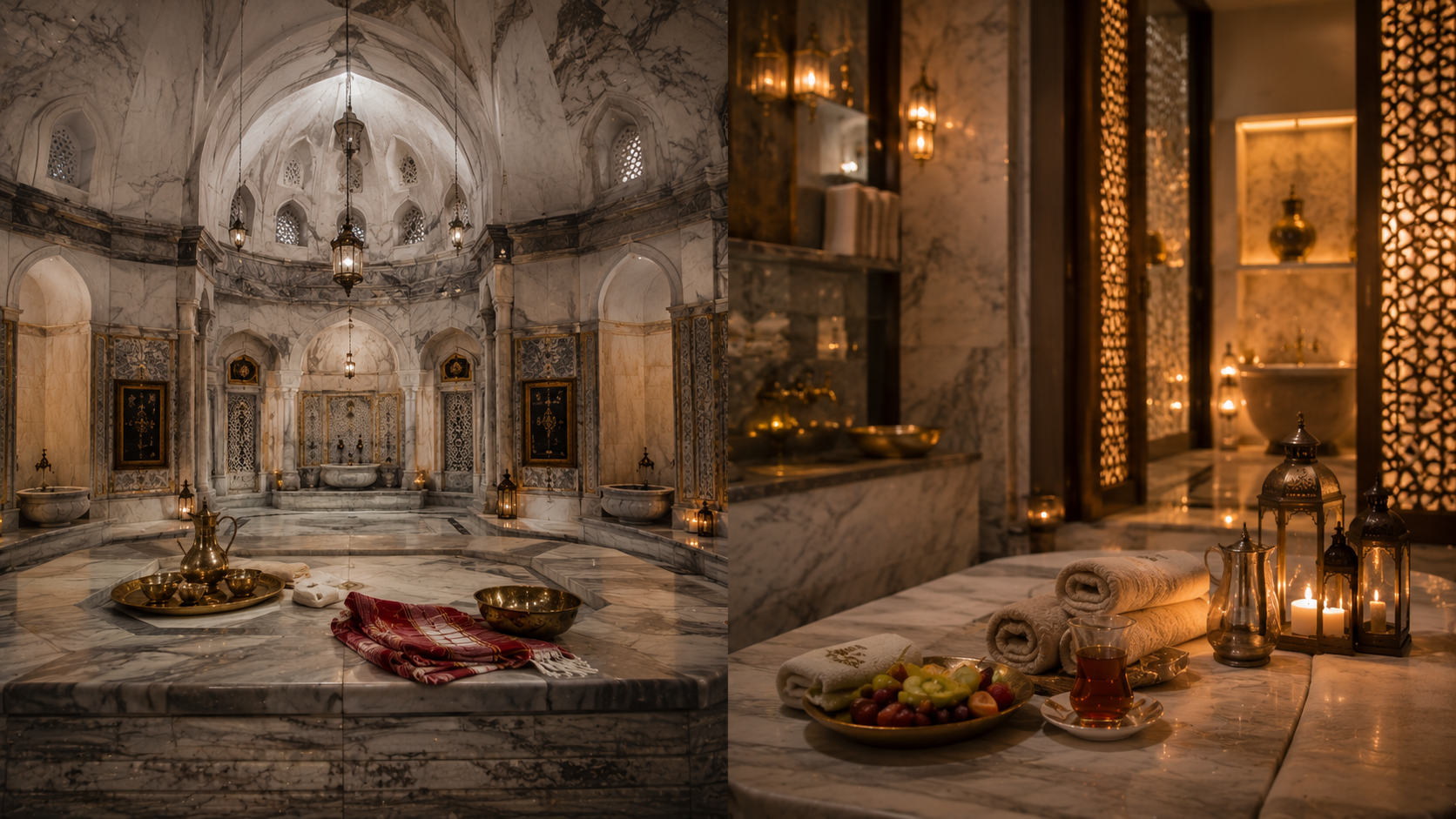
If you want a more local experience, look for neighborhood hamams with good recent reviews. Check whether there are separate men’s and women’s hours, whether swimsuits are expected, and whether the service includes scrub, foam wash, or massage. Avoid choosing only by price. Cleanliness, professionalism, and comfort matter more than saving a small amount of money.
Common Mistakes to Avoid
The first mistake is treating the hamam like a quick attraction. If you rush in and out, you miss the point. The second mistake is expecting every hamam to feel ancient and authentic. Some are historic, some are modern, and some are designed mainly for tourists.
Another mistake is not asking what is included. Some packages include only self-service bathing, while others include scrub, foam wash, and massage. It is better to clarify before entering than to feel confused later. Finally, do not be embarrassed if you do not know the ritual. A hamam is unfamiliar to many visitors, and good attendants are used to guiding people through it.
Why the Turkish Hamam Still Matters
The Turkish hamam still matters because it offers something modern travel often lacks: slowness. It asks you to stop performing, stop rushing, and let the body become part of the journey. In a world where many travel experiences are built around photos and checklists, the hamam is refreshingly physical and present.
It also preserves a cultural tradition that connects architecture, hygiene, spirituality, social life, and hospitality. The hamam is not only about relaxation. It is about continuity. It shows how a practice can survive from older urban life into the modern tourism world while still keeping its essential rhythm.
Conclusion
A Turkish hamam is one of the most memorable cultural experiences in Turkey because it combines history, ritual, architecture, and bodily renewal. The heat, marble, steam, kese scrub, foam wash, and quiet rest all work together to create something deeper than a spa treatment. It is cleansing, but also cultural.
For first-time visitors, the hamam experience may feel unfamiliar at first, but that is part of its value. It opens a door into Ottoman bath culture, Turkish hospitality, traditional craft, and the art of slowing down. To visit a hamam is not only to wash. It is to step into one of Turkey’s most intimate and enduring traditions.