
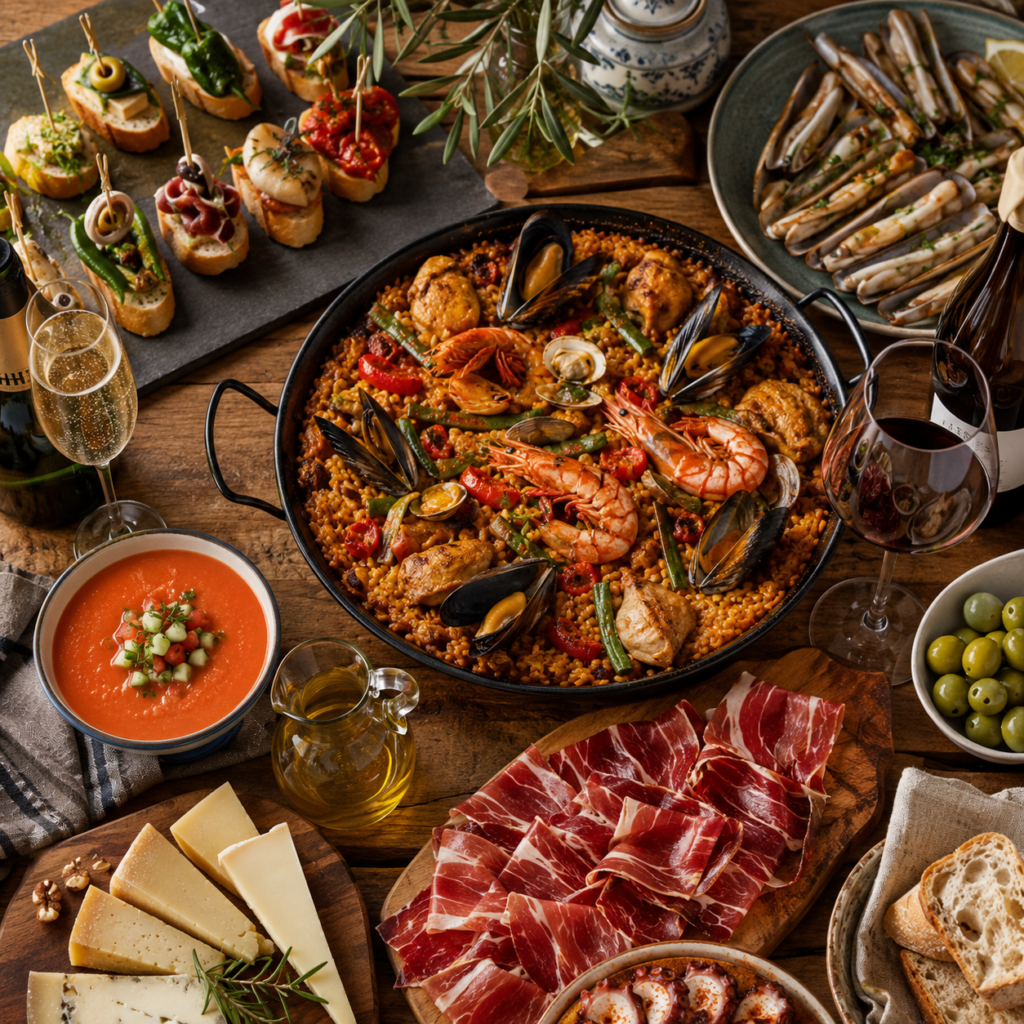
Spanish regional cuisine is one of the best ways to understand the country’s diversity. Spain is not a single flavor, and its food cannot be reduced to paella, tapas, sangria, and churros. Each region has its own climate, ingredients, history, rhythm, and way of eating. The result is a culinary map full of seafood, rice dishes, cured meats, olive oil, stews, pintxos, cheeses, wines, pastries, and dishes that often make the most sense when tasted close to where they were born.
Food in Spain is deeply connected to place. The green north tastes different from dry Castile, the Mediterranean coast cooks differently from the Atlantic, and the islands have their own character entirely. A meal in Galicia, Valencia, Andalusia, the Basque Country, Catalonia, Madrid, or the Canary Islands can feel like entering a different Spain. That is what makes Spanish food so rewarding for travelers: it is regional, social, and full of local pride.
Why Spanish Food Is So Regional
Spain’s geography explains much of its cuisine. Mountains, coastlines, islands, river valleys, plains, and dry interior plateaus all shaped what people grew, caught, preserved, and cooked. Olive oil dominates many southern and Mediterranean kitchens, while butter and dairy appear more strongly in parts of the north. Rice belongs naturally to Valencia and the eastern coast, while seafood defines Galicia and the Atlantic regions.
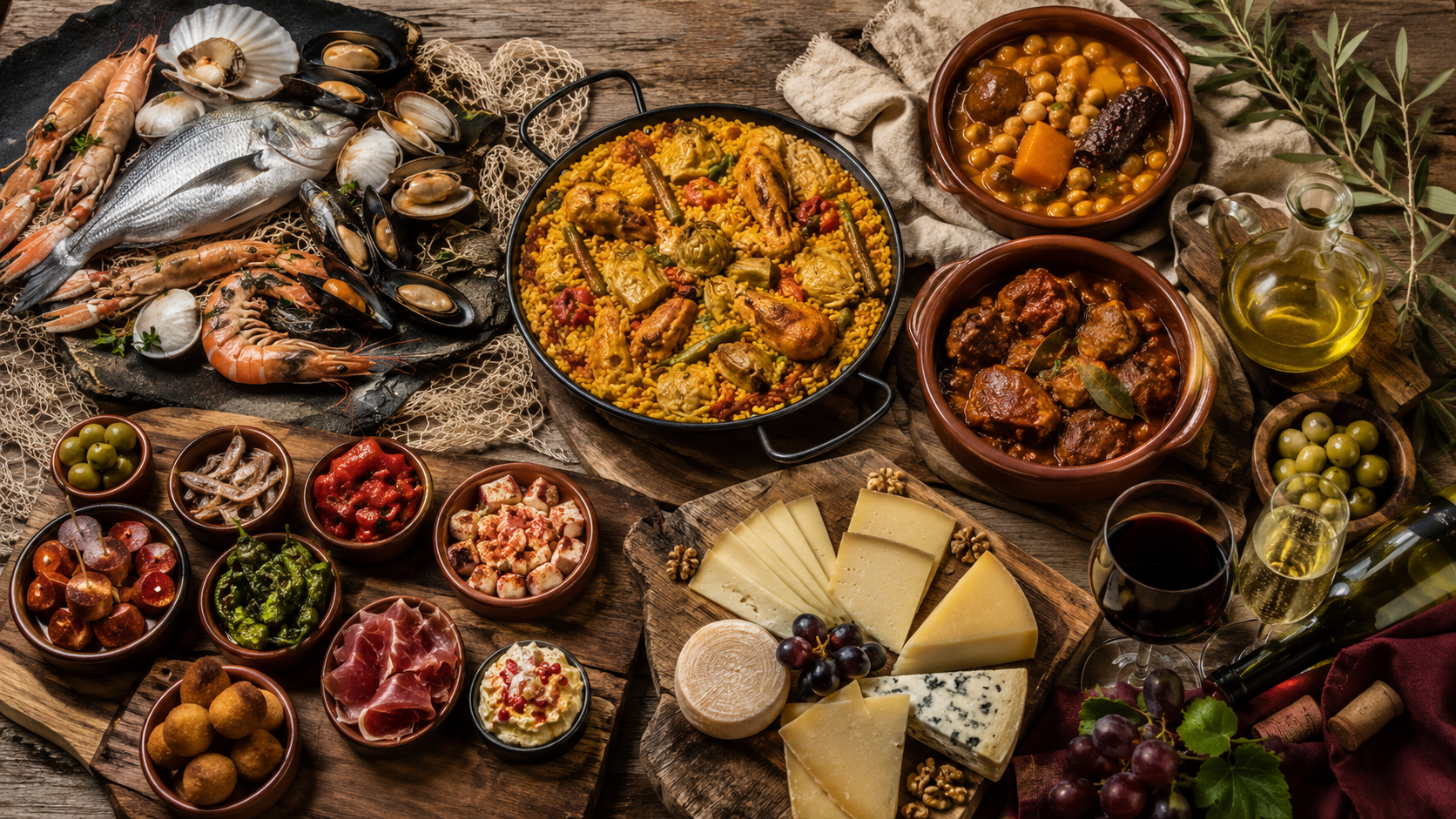
History added even more layers. Roman agriculture, Moorish ingredients, Jewish and Christian traditions, New World foods, local farming, and maritime trade all changed Spanish cooking over time. Tomatoes, potatoes, peppers, and chocolate became essential after arriving from the Americas. Saffron, almonds, citrus, rice, and spices reflect deeper Mediterranean and Islamic influences. The Spanish Ministry of Culture describes Spanish culinary culture as part of the country’s living intangible heritage, shaped by social customs as much as ingredients.
Tapas: Spain’s Social Way of Eating
Tapas are one of the most famous parts of traditional Spanish food, but they are often misunderstood outside Spain. Tapas are not just small plates. They are a way of eating socially, moving between bars, sharing flavors, and turning a simple drink into a small ritual. Depending on the region, tapas may be free with a drink, ordered individually, or treated as a full meal through several shared plates.
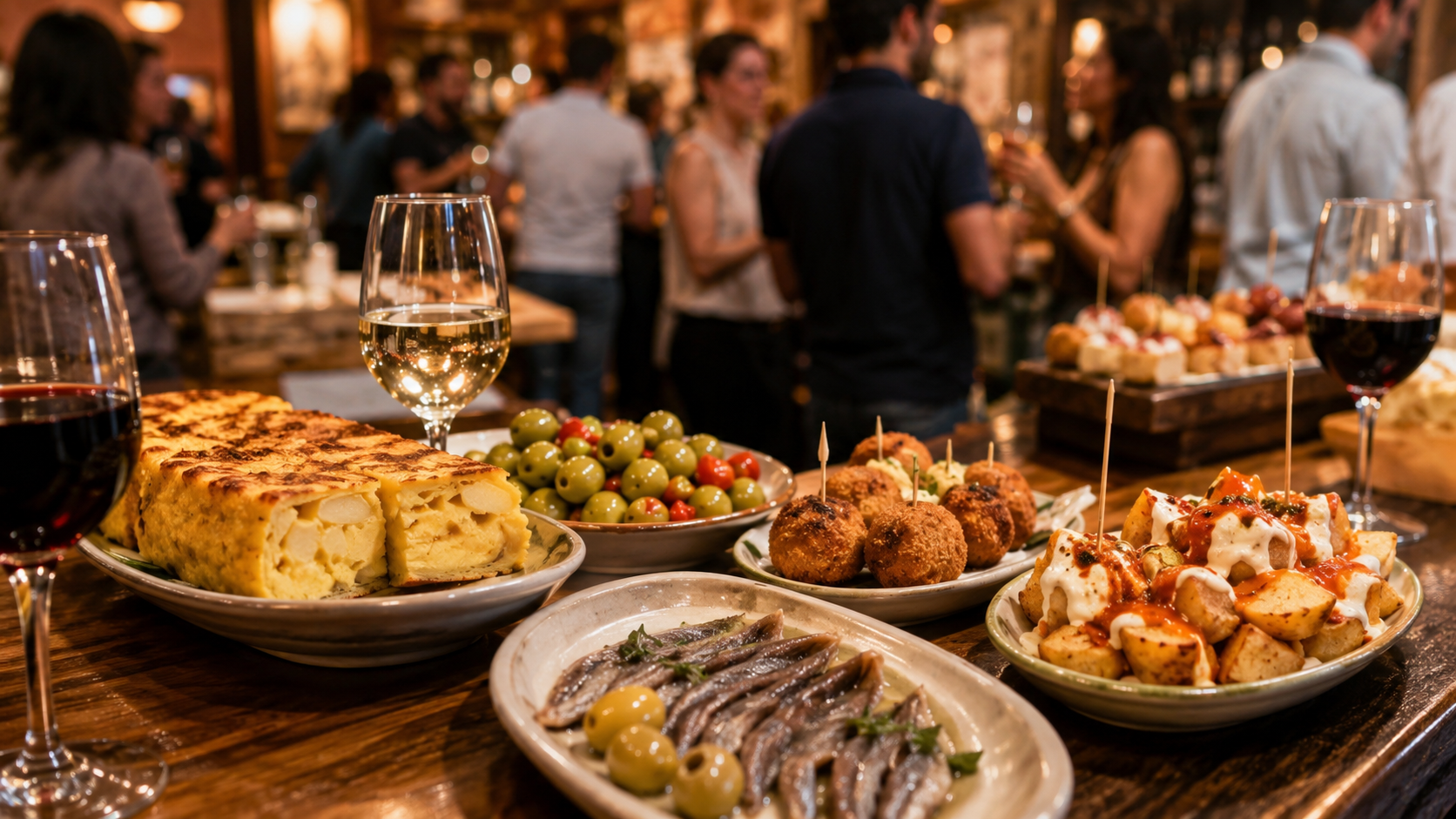
The best tapas are usually simple but memorable: tortilla española, croquetas, jamón, olives, anchovies, patatas bravas, fried fish, mushrooms, peppers, or local cheeses. In some cities, tapas culture is casual and noisy. In others, it becomes almost elegant. What matters is the rhythm: conversation, small bites, another round, and a table that slowly fills with local flavor.
Andalusia: Olive Oil, Gazpacho, Fried Fish, and Tapas Culture
Andalusia gives Spanish regional cuisine some of its brightest and most recognizable flavors. This is the land of olive oil, gazpacho, salmorejo, jamón ibérico, fried fish, sherry, and long evenings built around small plates. The climate matters here. Hot summers make cold soups and fresh dishes feel natural, while the region’s olive groves shape the taste of almost everything.
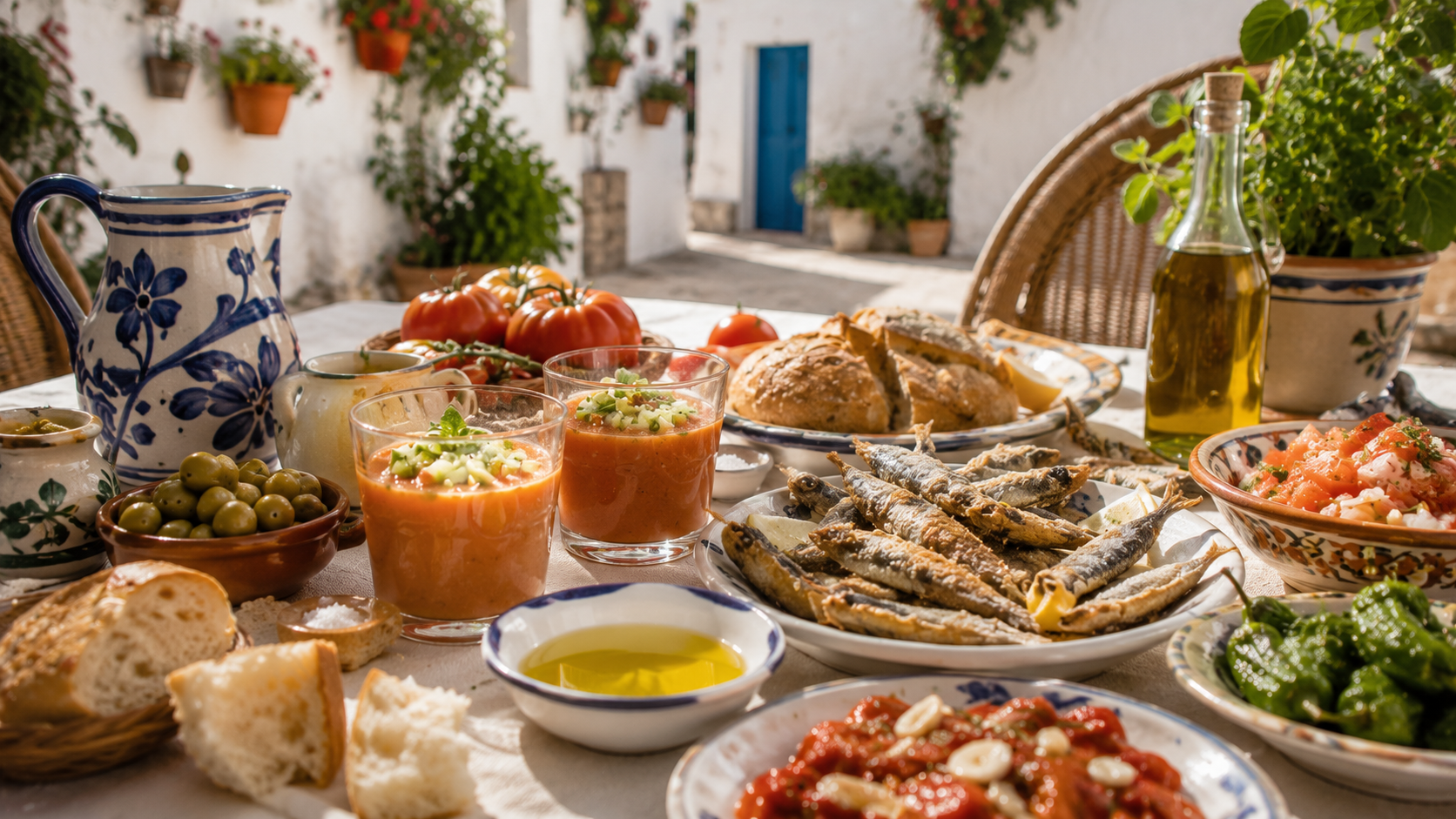
In Seville, Córdoba, Málaga, Cádiz, and Granada, food is inseparable from street life. Andalusian tapas are often direct, generous, and full of character. You might eat fried anchovies near the coast, salmorejo in Córdoba, tortilla and jamón in Seville, or seafood in Cádiz. This food pairs naturally with Spanish festivals, because fairs, religious celebrations, and local fiestas often bring regional dishes into public life.
Valencia: Rice, Citrus, and the Home of Paella
No discussion of Spanish food is complete without paella in Valencia. Paella is often treated internationally as a general Spanish dish, but its roots are Valencian. Traditional Valencian paella is usually made with rice, saffron, vegetables, and meats such as rabbit and chicken, rather than the mixed seafood versions many tourists expect. The dish belongs to the region’s rice fields, especially around the Albufera area.
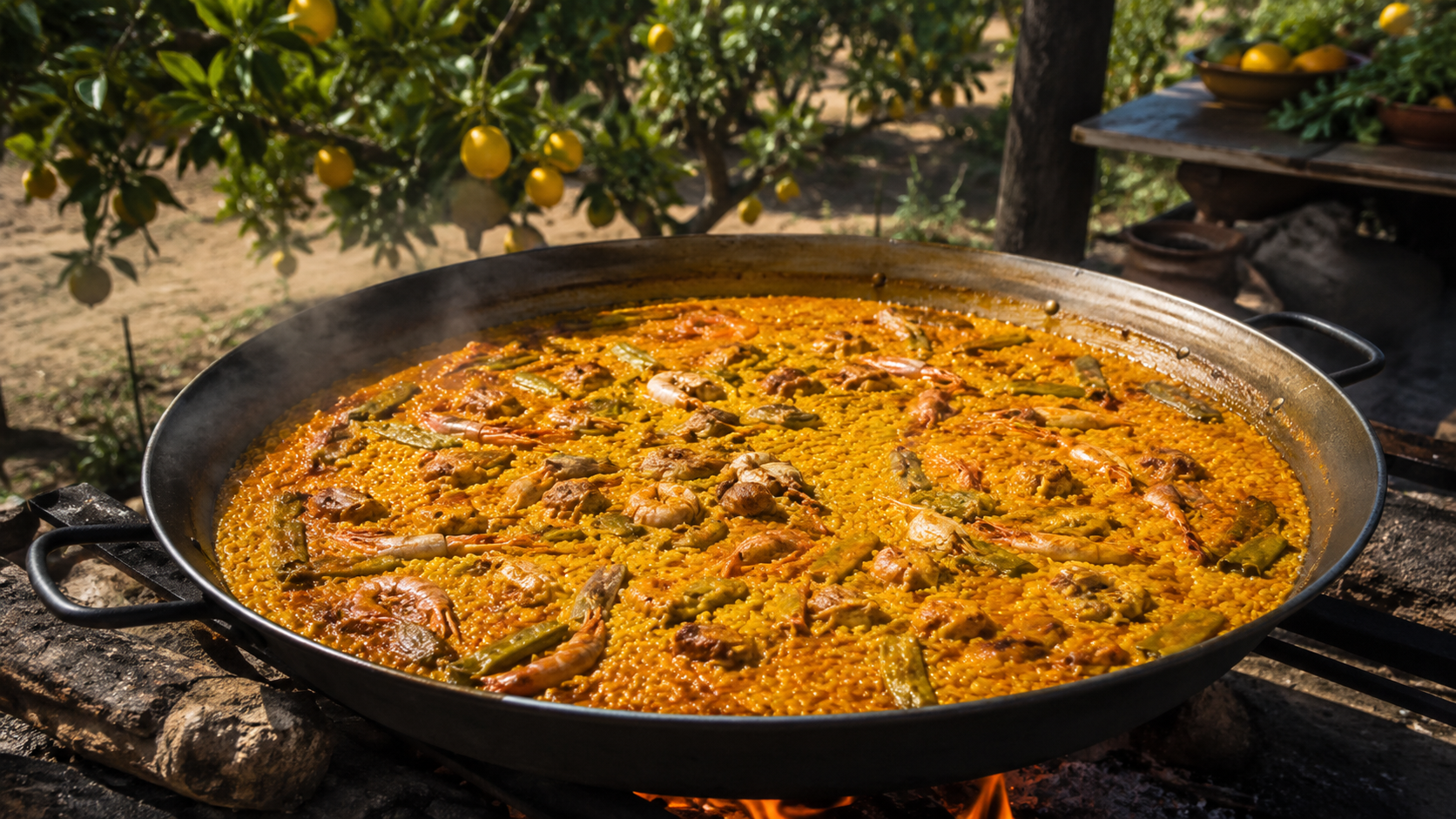
Valencia’s cuisine is not only paella, though rice remains central. Arroz al horno, fideuà, seafood rice dishes, citrus, horchata, and local sweets all help define the region. The Mediterranean setting matters: sea, orchard, rice fields, and sunlight all meet on the plate. For travelers, eating rice in Valencia is not just about trying a famous dish. It is about tasting a landscape.
Catalonia: Sea, Mountains, Markets, and Creative Cooking
Catalonia has one of Spain’s most distinctive food cultures. Its cuisine moves between sea and mountain, known locally as mar i muntanya, combining seafood, meat, vegetables, sauces, and seasonal ingredients in creative ways. Barcelona gives visitors access to markets, tapas bars, bakeries, seafood restaurants, and contemporary dining, but Catalan food extends far beyond the city.
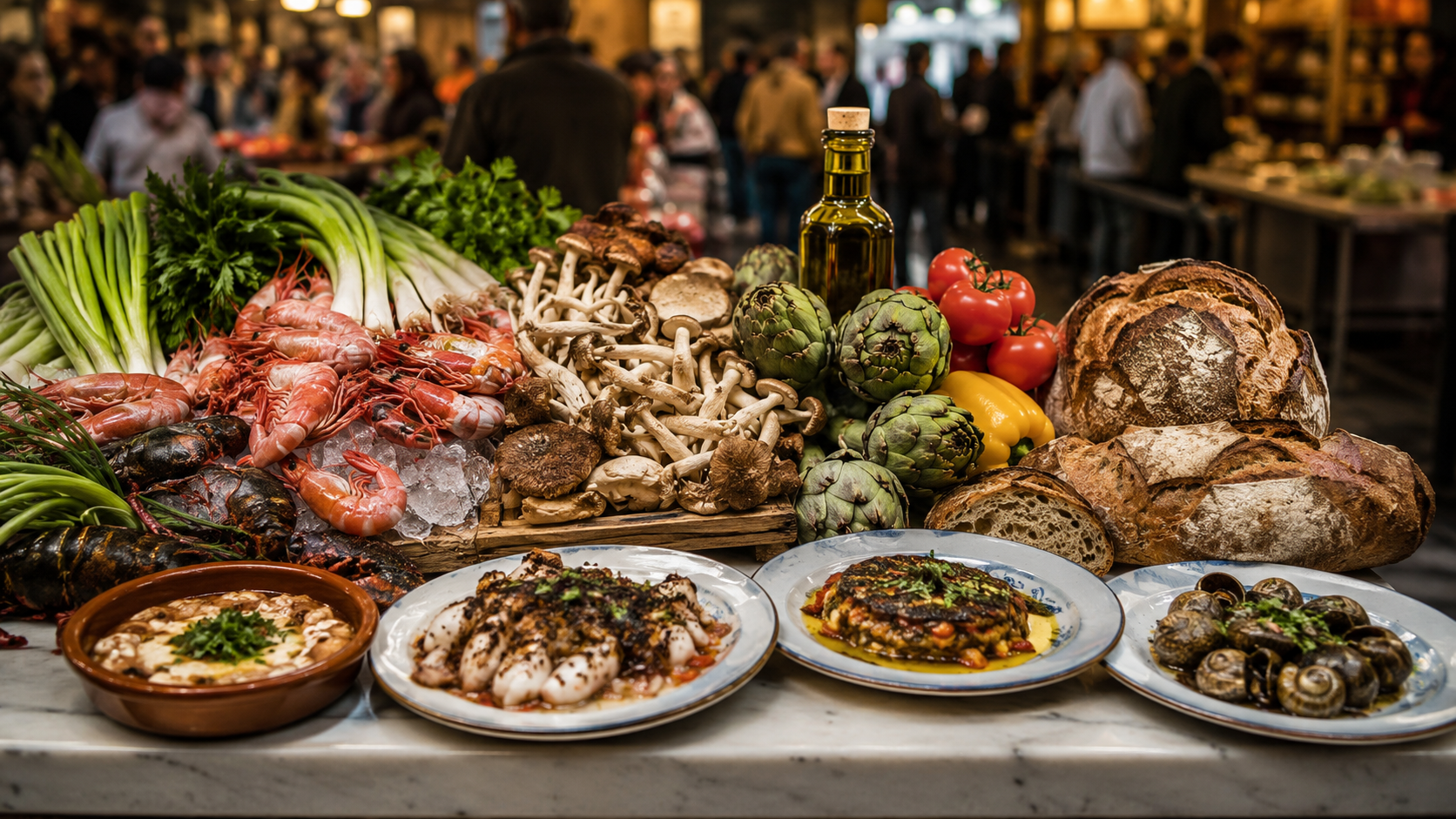
Classic Catalan flavors include pa amb tomàquet, escalivada, suquet de peix, botifarra, crema catalana, calçots, and sauces such as romesco and allioli. The region also has a strong modern culinary identity, shaped by innovation and respect for ingredients. Catalonia shows how Spanish regional cuisine can be traditional and experimental at the same time.
Basque Country: Pintxos, Seafood, and Culinary Precision
The Basque Country is one of Europe’s great food regions. Its cuisine is famous for seafood, grilled meats, cider houses, Michelin-starred restaurants, and above all, Basque pintxos. These small bites, often served on bread or skewered, are displayed across bar counters and eaten with wine, cider, or txakoli. They can be simple, elaborate, rustic, or surprisingly refined.
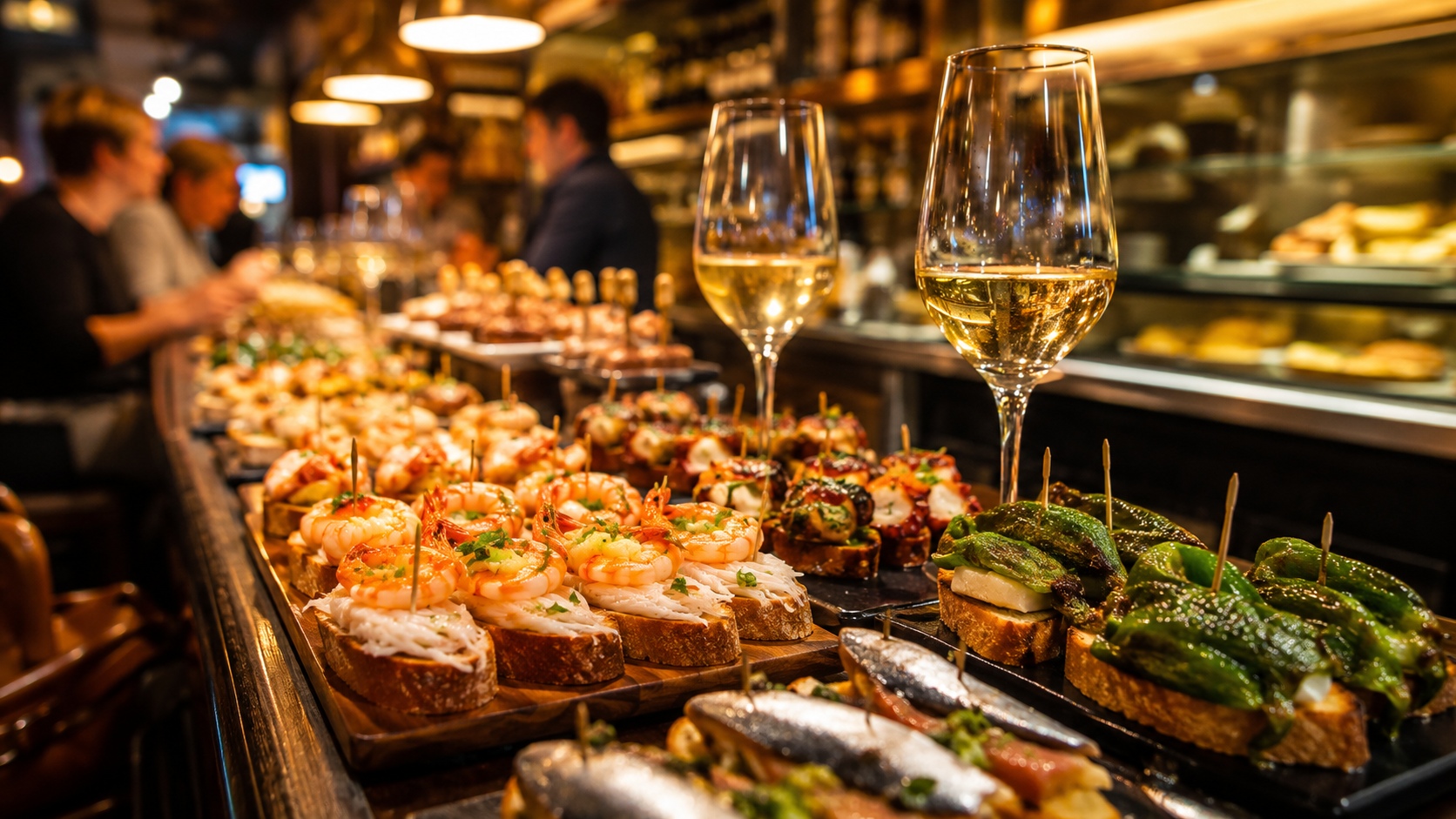
San Sebastián is especially famous for pintxos culture, but Bilbao, Hondarribia, Vitoria-Gasteiz, and smaller towns also offer excellent food experiences. Basque cooking often feels precise and ingredient-focused. A piece of grilled fish, a pepper, a mushroom, or a small pintxo can carry enormous flavor without needing much decoration. This is a region where food is taken seriously, but still enjoyed socially.
Galicia: Seafood, Octopus, and Atlantic Flavor
Galician seafood is among the best in Spain. This northwestern region is shaped by the Atlantic, rugged coastline, rain, green hills, and fishing traditions. Octopus, scallops, clams, mussels, barnacles, hake, empanadas, and hearty soups all belong naturally to Galicia’s table. The food is often direct and ingredient-driven, with less need for heavy sauces.
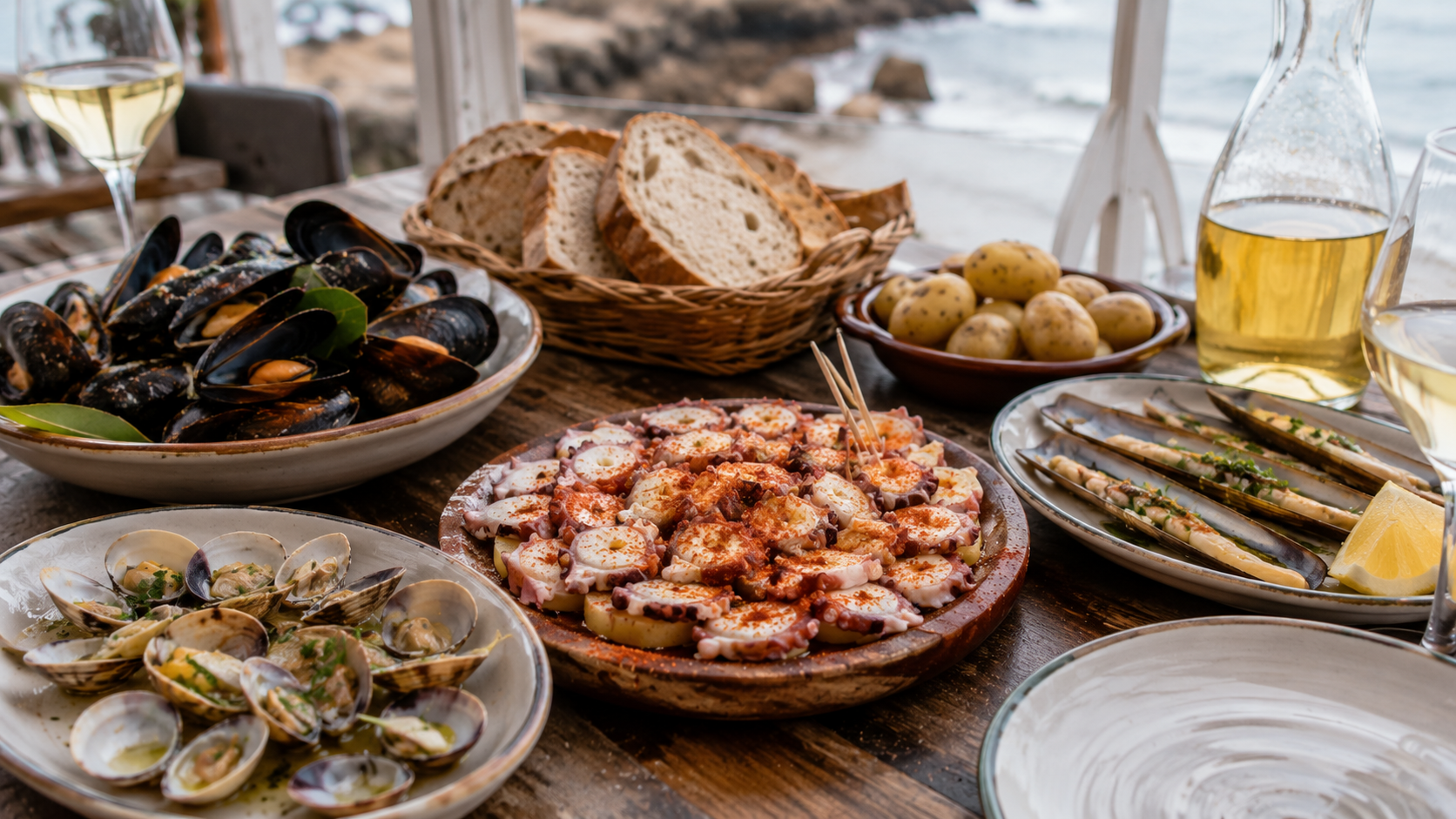
Pulpo a feira, or Galician-style octopus, is one of the region’s most iconic dishes. It is usually served with olive oil, paprika, salt, and potatoes, simple enough to let the octopus speak for itself. Galicia also has excellent cheeses, wines such as Albariño, and sweets like tarta de Santiago. Eating here feels different from Mediterranean Spain. It is cooler, greener, saltier, and deeply Atlantic.
Madrid: A Capital That Eats from Everywhere
Madrid is not a coastal region or a single agricultural identity, but it has its own strong food personality. As Spain’s capital, it gathers flavors from across the country while also keeping traditional dishes of its own. Cocido madrileño, callos, bocadillo de calamares, tortilla, churros con chocolate, and old tavern cooking all shape the city’s culinary identity.
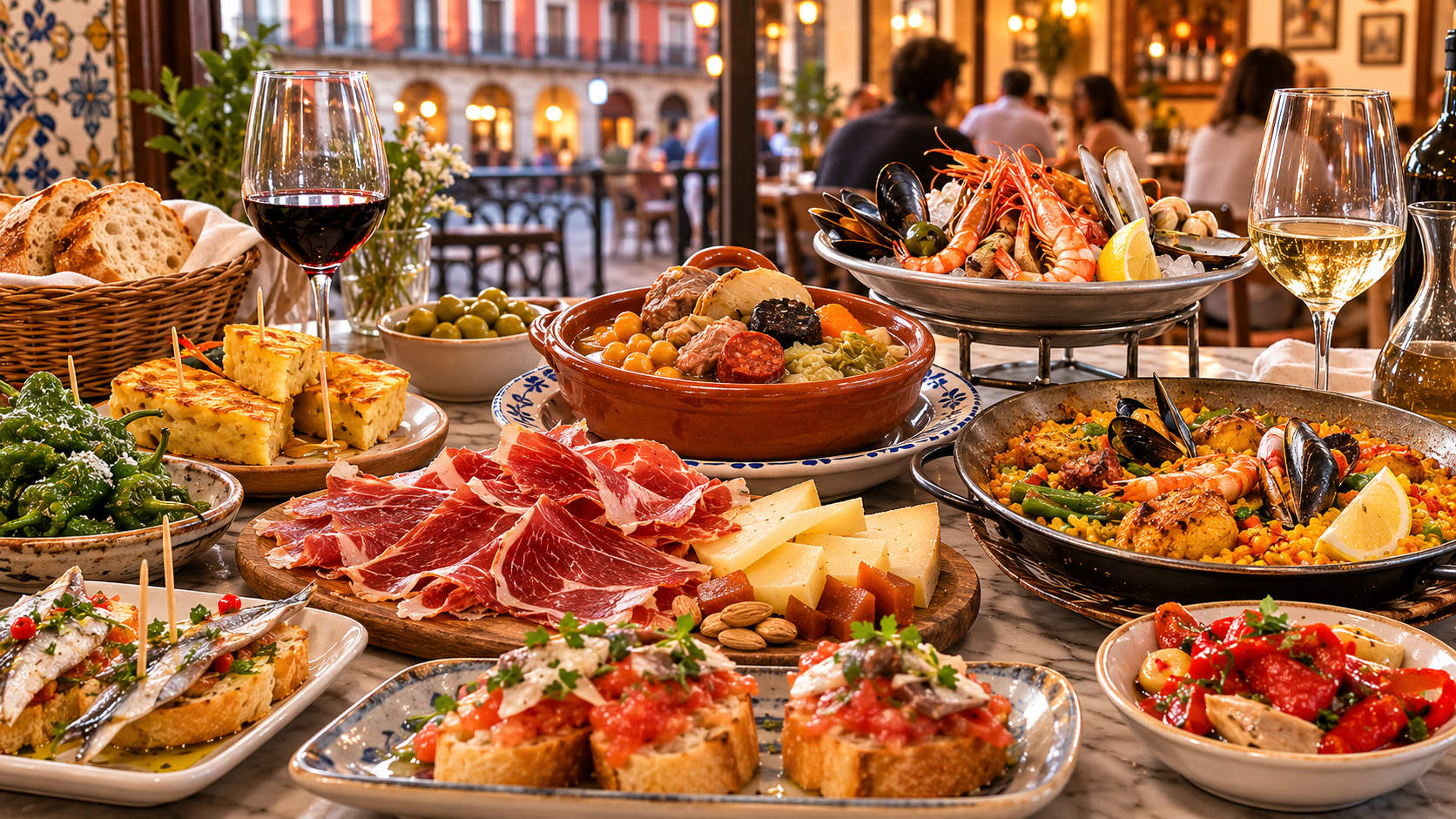
Madrid is also one of the best places to taste Spain in miniature. You can find Galician seafood restaurants, Basque pintxos bars, Andalusian tapas, Castilian roasts, Catalan cooking, and modern Spanish cuisine within the same city. That makes Madrid useful for travelers who want variety, but the city’s traditional taverns are still worth seeking out. They show a hearty, urban side of Spanish food.
Castile: Roasts, Stews, Bread, and Deep Inland Comfort
Castile offers a more inland expression of Spanish regional cuisine. This is the Spain of big skies, stone towns, wheat fields, lamb, pork, legumes, soups, and wood-fired cooking. Roast lamb, suckling pig, garlic soup, lentils, chickpeas, morcilla, and strong cheeses all belong to this world. The food is often hearty because the climate and landscape demand it.
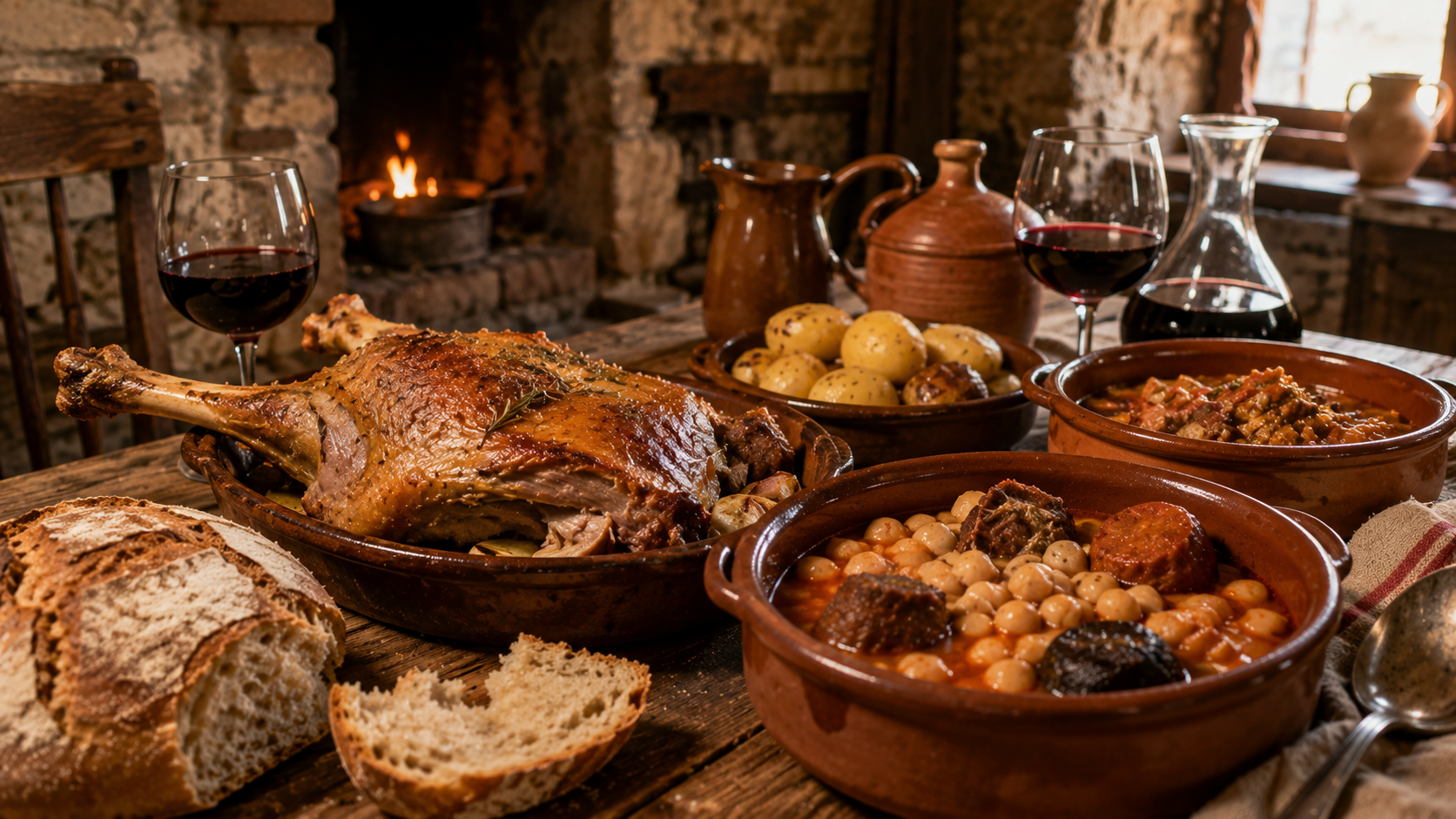
Cities such as Segovia, Salamanca, Burgos, Valladolid, Ávila, and Toledo all have strong food traditions. Castilian cooking may look simpler than coastal cuisine, but it has emotional weight. It is food for cold days, long roads, old inns, and historic towns. If you are traveling through Spain’s interior, this cuisine helps explain the seriousness and silence of the landscape.
The Canary Islands: Mojo, Potatoes, and Atlantic Island Food
The Canary Islands add another voice to Spanish food. Their cuisine reflects volcanic landscapes, Atlantic trade, local agriculture, and island identity. Papas arrugadas, small wrinkled potatoes served with mojo sauce, are one of the most famous dishes. Mojo verde and mojo rojo bring herbs, garlic, peppers, vinegar, and spice to the table.
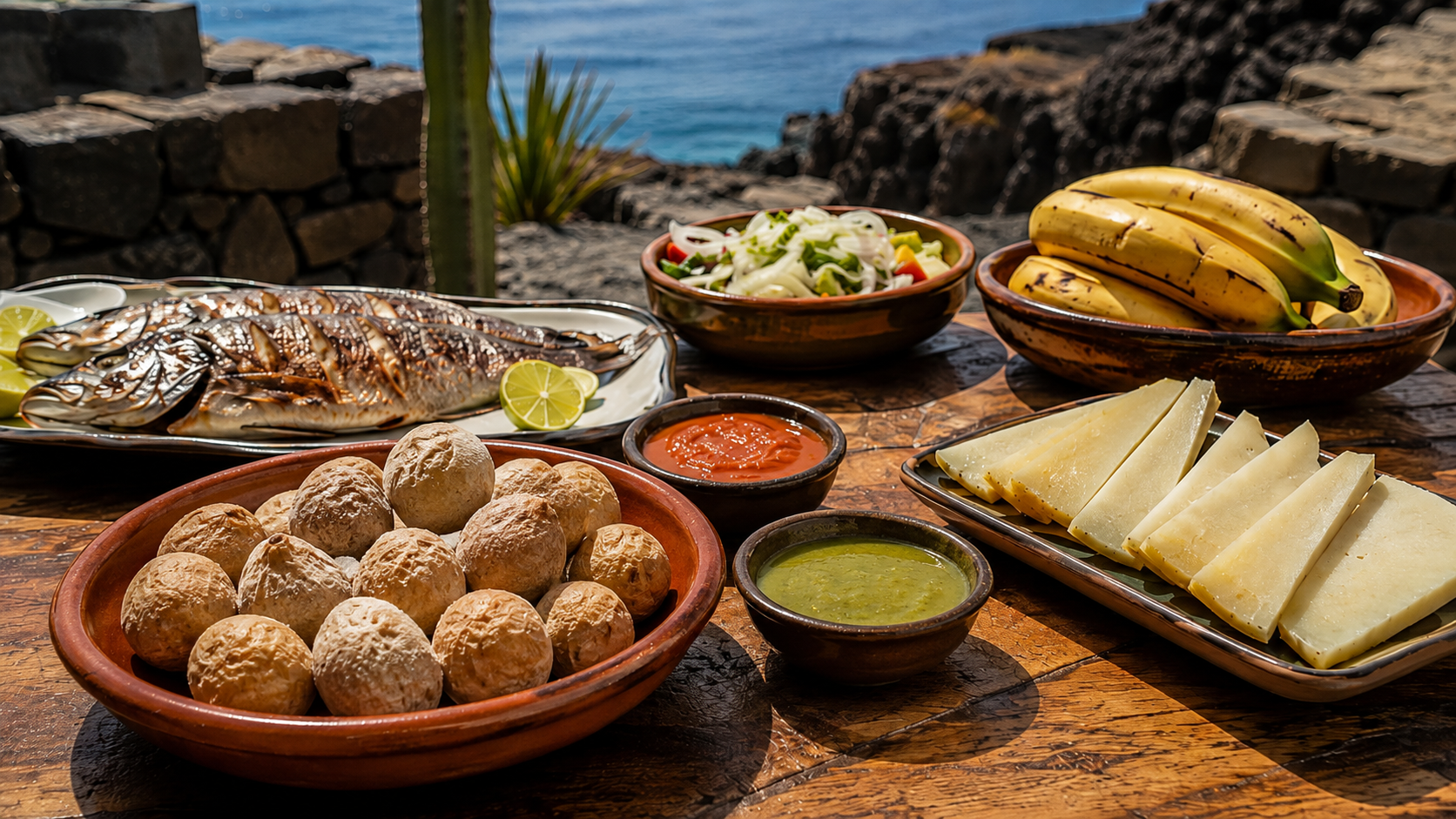
Canarian food also includes fish, goat cheese, gofio, stews, bananas, tropical fruits, and island wines. The flavors feel connected to the islands’ unusual geography. This is why food pairs so well with Spain landscapes. Volcanic soil, ocean winds, dry zones, and green valleys all shape what grows and what people eat.
Spanish Markets and the Pleasure of Ingredients
Markets are one of the best places to understand Spanish food without needing a formal restaurant. Fish, olives, jamón, cheeses, tomatoes, peppers, spices, fruit, bread, wine, and sweets all appear in their regional context. A market in Valencia does not feel like one in Santiago de Compostela, and a Barcelona market does not feel like a small-town Andalusian one.
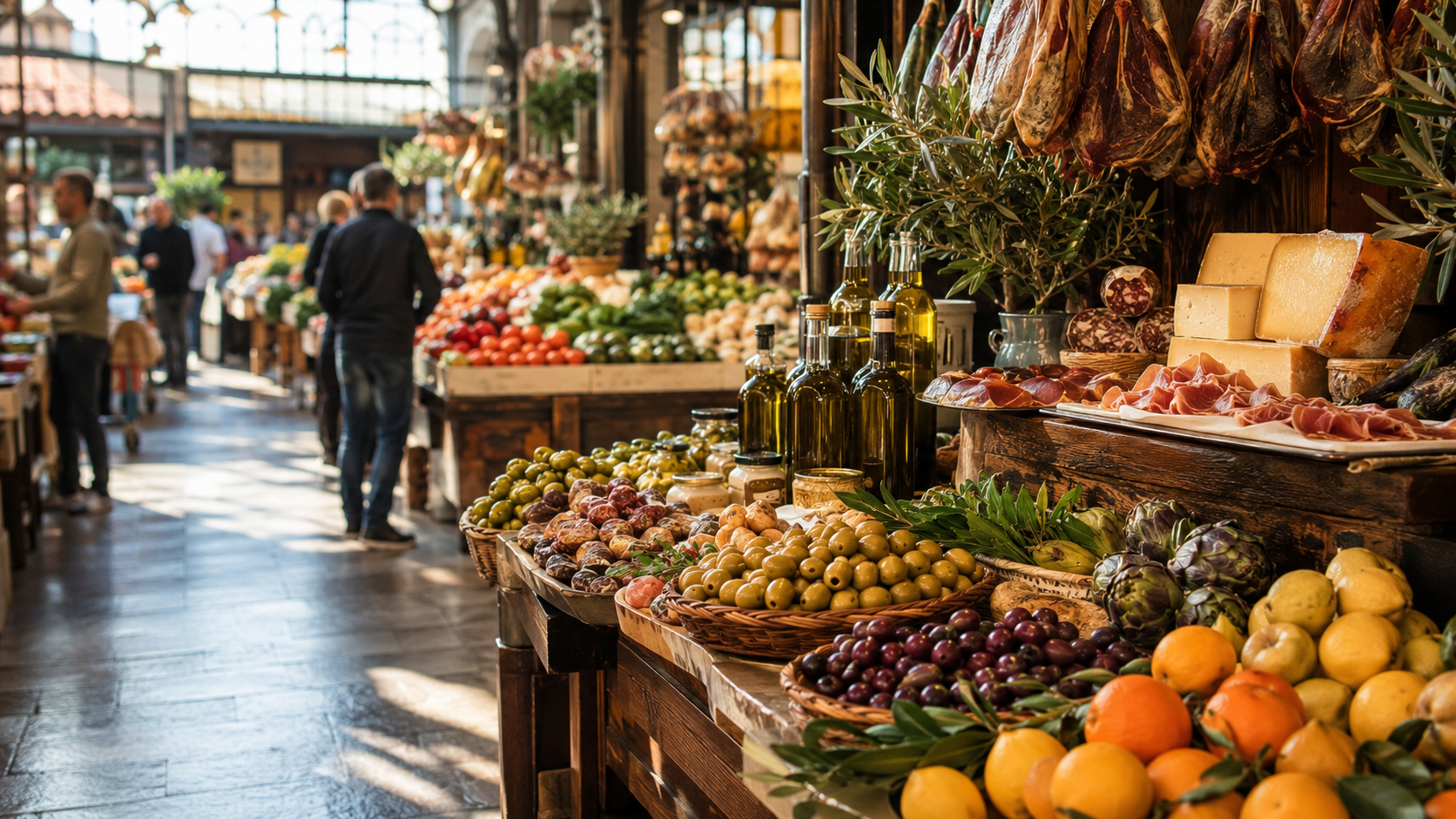
This does not need to become a separate “bazaar-style” topic, but it matters because ingredients are the foundation of Spanish cooking. Markets show what is seasonal, what is local, and what people actually buy. For travelers, they also offer an easy way to taste small things: olives, cheese, fruit, pastries, or a simple tapa at a counter.
Jamón, Cheese, Olive Oil, and the Spanish Pantry
Some Spanish foods cross regional boundaries and become national symbols. Jamón ibérico is one of the most famous, especially when made from acorn-fed Iberian pigs. Olive oil is another essential ingredient, used for cooking, dressing, frying, and finishing dishes. Spain is one of the world’s great olive oil countries, and many meals begin with its flavor even when it is not the obvious star.
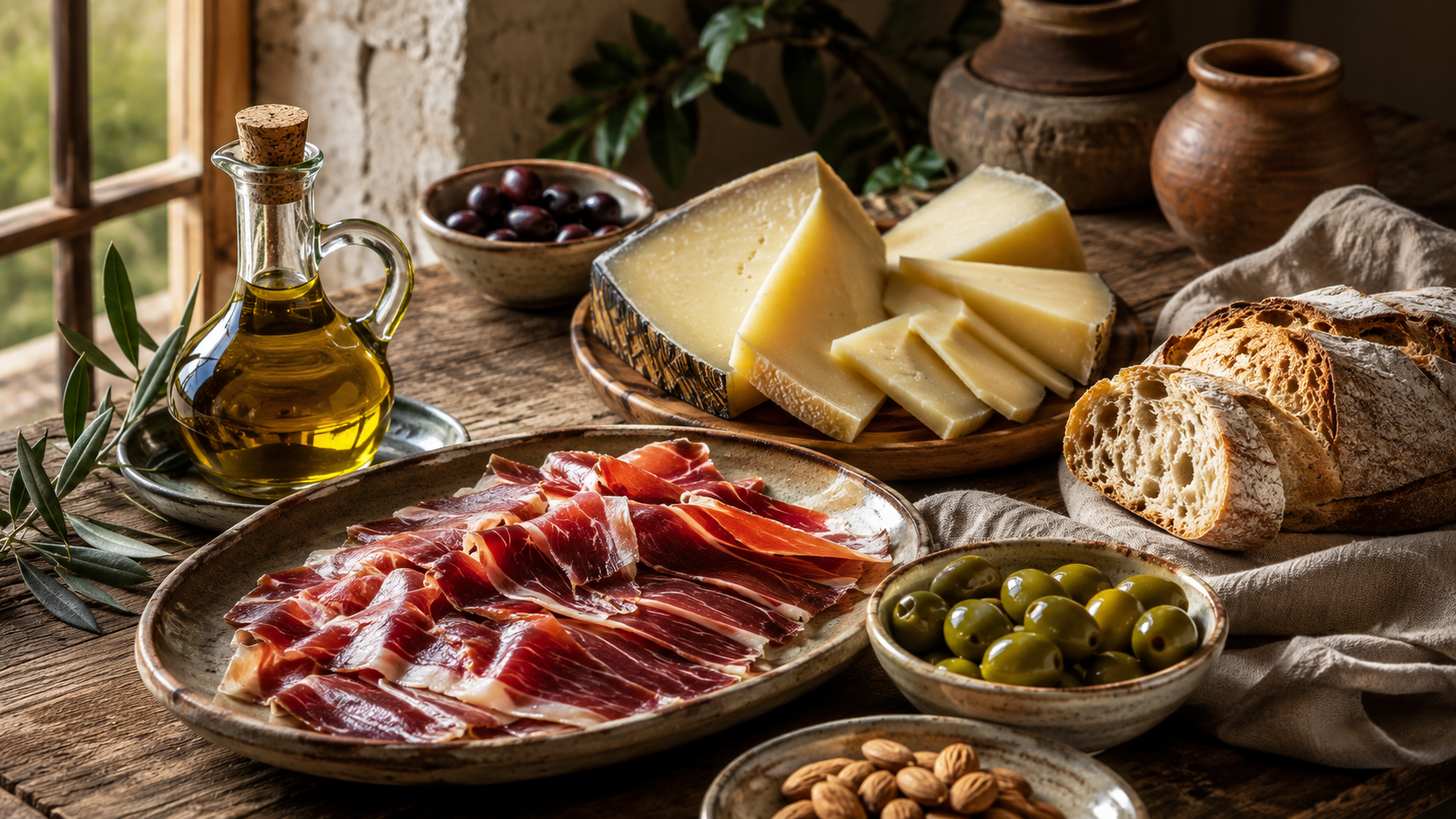
Cheese is also deeply regional. Manchego from La Mancha, Cabrales from Asturias, Idiazabal from the Basque and Navarre regions, Mahón from Menorca, and tetilla from Galicia all show different landscapes and traditions. These pantry foods are not side notes. They are part of the architecture of Spanish eating.
Spanish Desserts and Sweet Traditions
Spanish desserts vary widely by region and occasion. Churros con chocolate are famous, especially for breakfast or late-night comfort. Crema catalana, tarta de Santiago, flan, torrijas, ensaimadas, polvorones, yemas, and almond-based sweets all belong to different culinary traditions. Many sweets are connected to convents, holidays, Moorish influence, or local festivals.
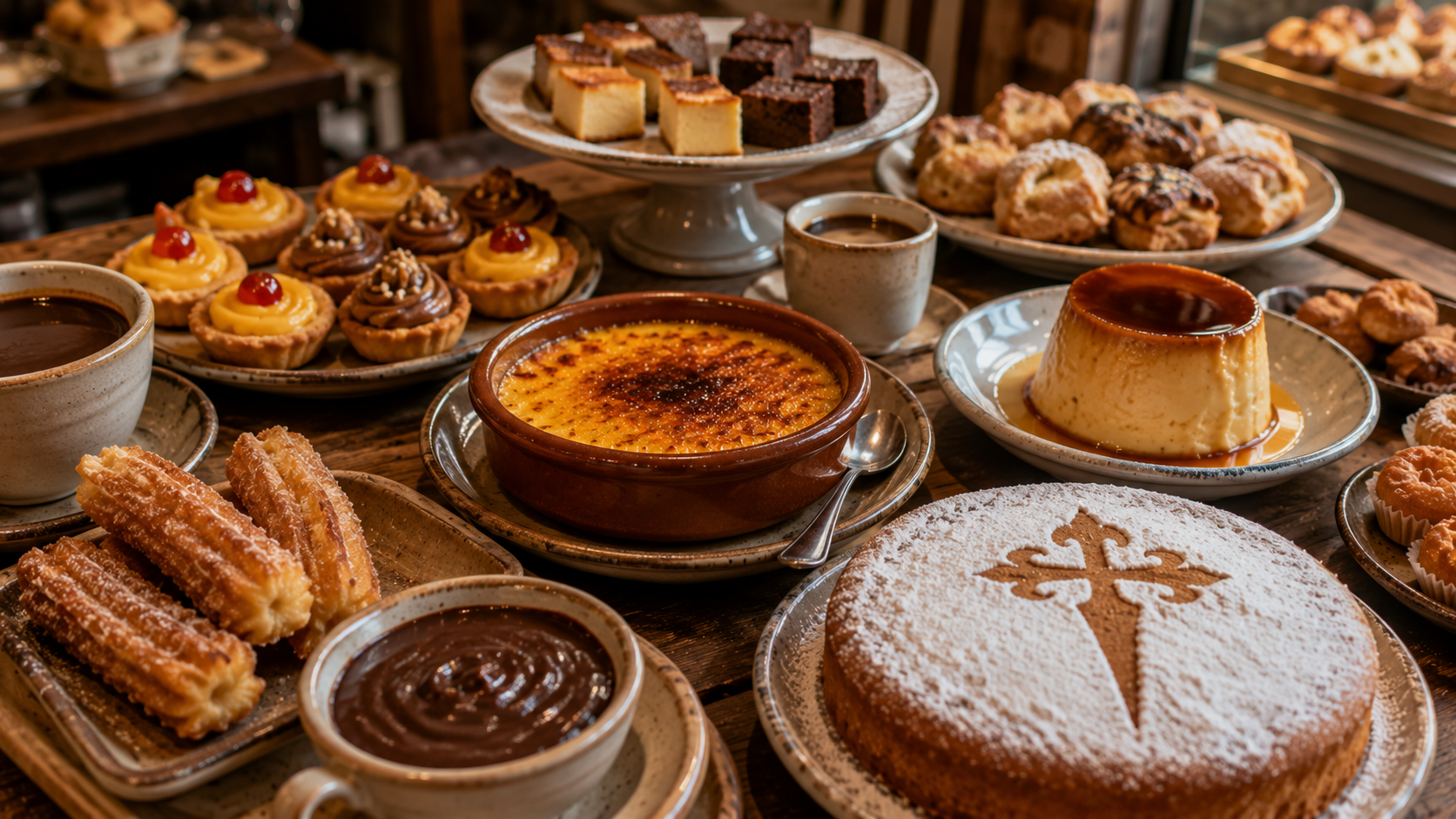
The sweetness of Spain is often tied to ritual. Torrijas appear especially around Holy Week. Turrón is linked to Christmas. Local pastries may be connected to saints’ days, markets, or family traditions. This is another reason food and celebration overlap so naturally in Spain. Dessert is often memory in edible form.
Wine, Cider, and Regional Drinking Culture
Spain’s drinking culture is as regional as its food. Rioja and Ribera del Duero are famous for red wines, while Galicia offers Albariño, Catalonia has cava, Andalusia is known for sherry, and the Basque Country has txakoli and cider traditions. Wine in Spain is not only a luxury product. It is part of meals, landscapes, and local identity.
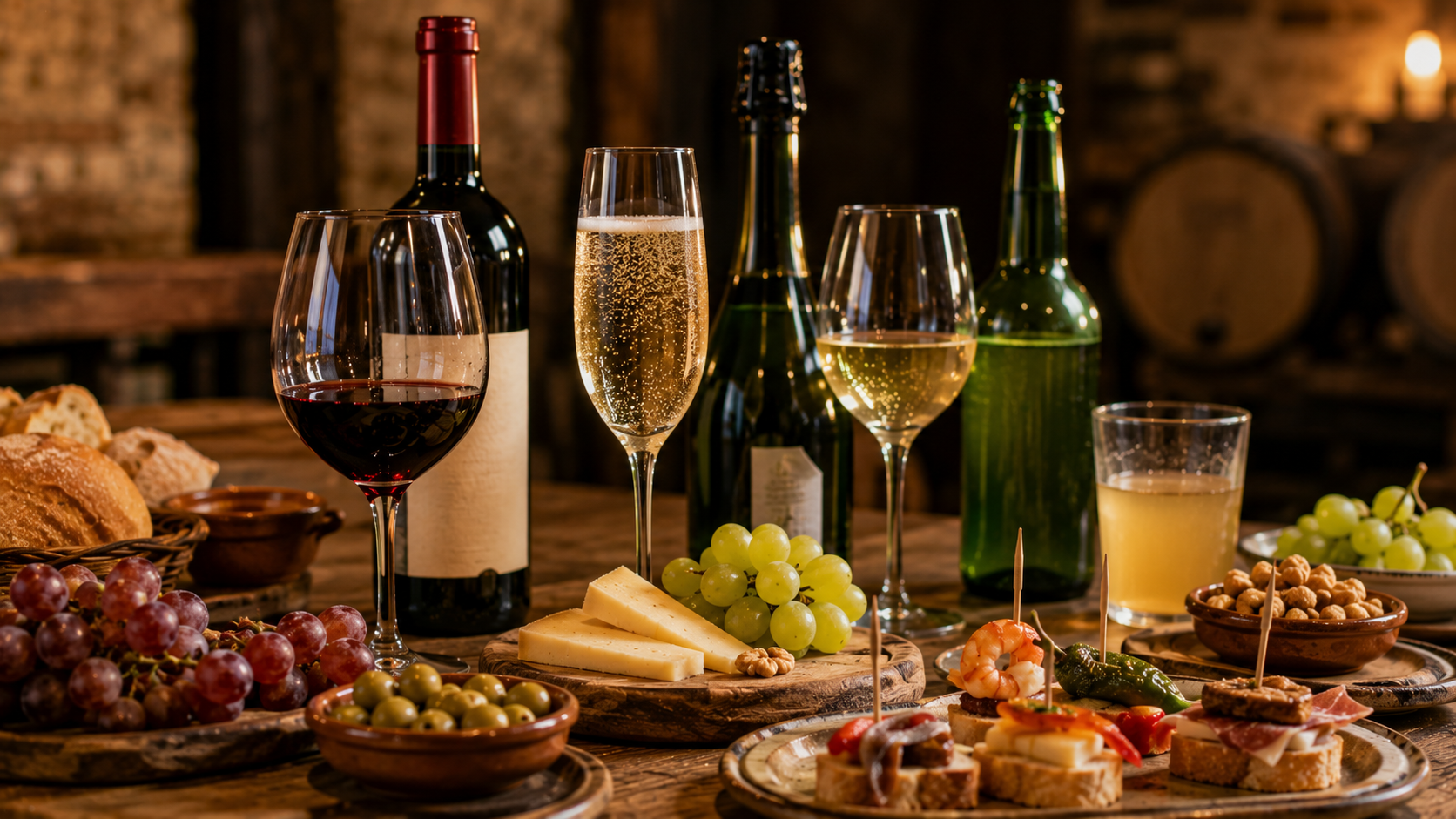
In Asturias and the Basque Country, cider houses create a different kind of food experience, often paired with simple, hearty dishes. In Andalusia, sherry changes the flavor of tapas culture. In Catalonia, cava belongs to celebration and food pairing. Understanding what people drink helps complete the regional food map.
The Mediterranean Diet and Spain’s Food Philosophy
Spanish food is often associated with the Mediterranean diet, but that phrase should not be understood only as a health trend. UNESCO recognizes the Mediterranean diet as intangible cultural heritage, emphasizing not just ingredients, but social practices, knowledge, hospitality, seasonal eating, and community.
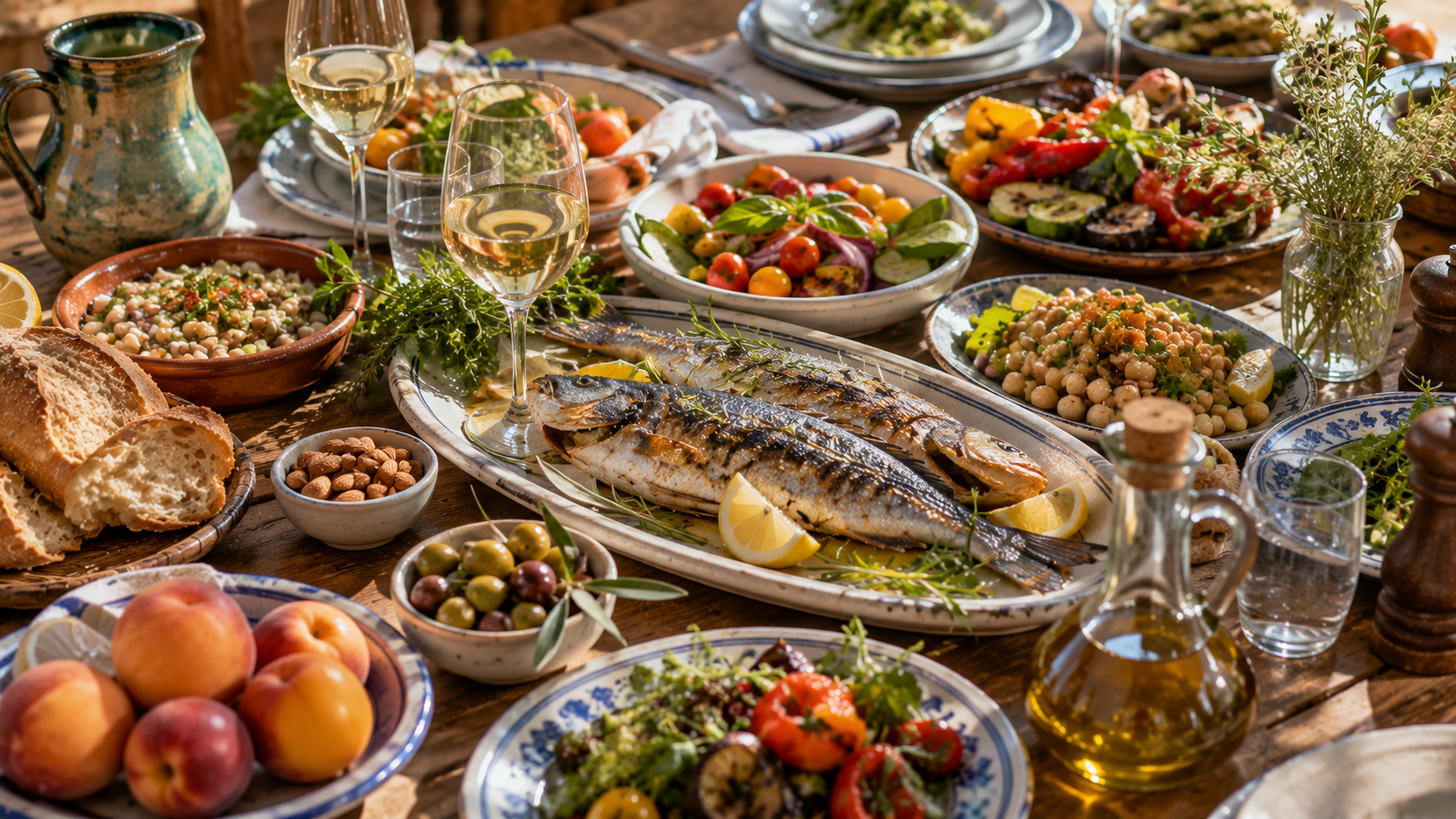
Spain fits this idea beautifully, especially in regions where olive oil, vegetables, legumes, fish, fruit, bread, wine, and shared meals shape daily life. But Spanish cuisine also includes rich roasts, fried foods, sweets, cured meats, and hearty stews. The real lesson is balance and context. Spanish food works best when it is seasonal, social, regional, and connected to place.
What to Eat on a First Food Trip to Spain
For a first culinary trip, start with variety. Try tortilla española, jamón ibérico, gazpacho or salmorejo, croquetas, paella in Valencia, Basque pintxos, Galician seafood, churros with chocolate, manchego cheese, seasonal fruit, and a regional wine. Add local dishes wherever you travel rather than eating the same famous foods everywhere.
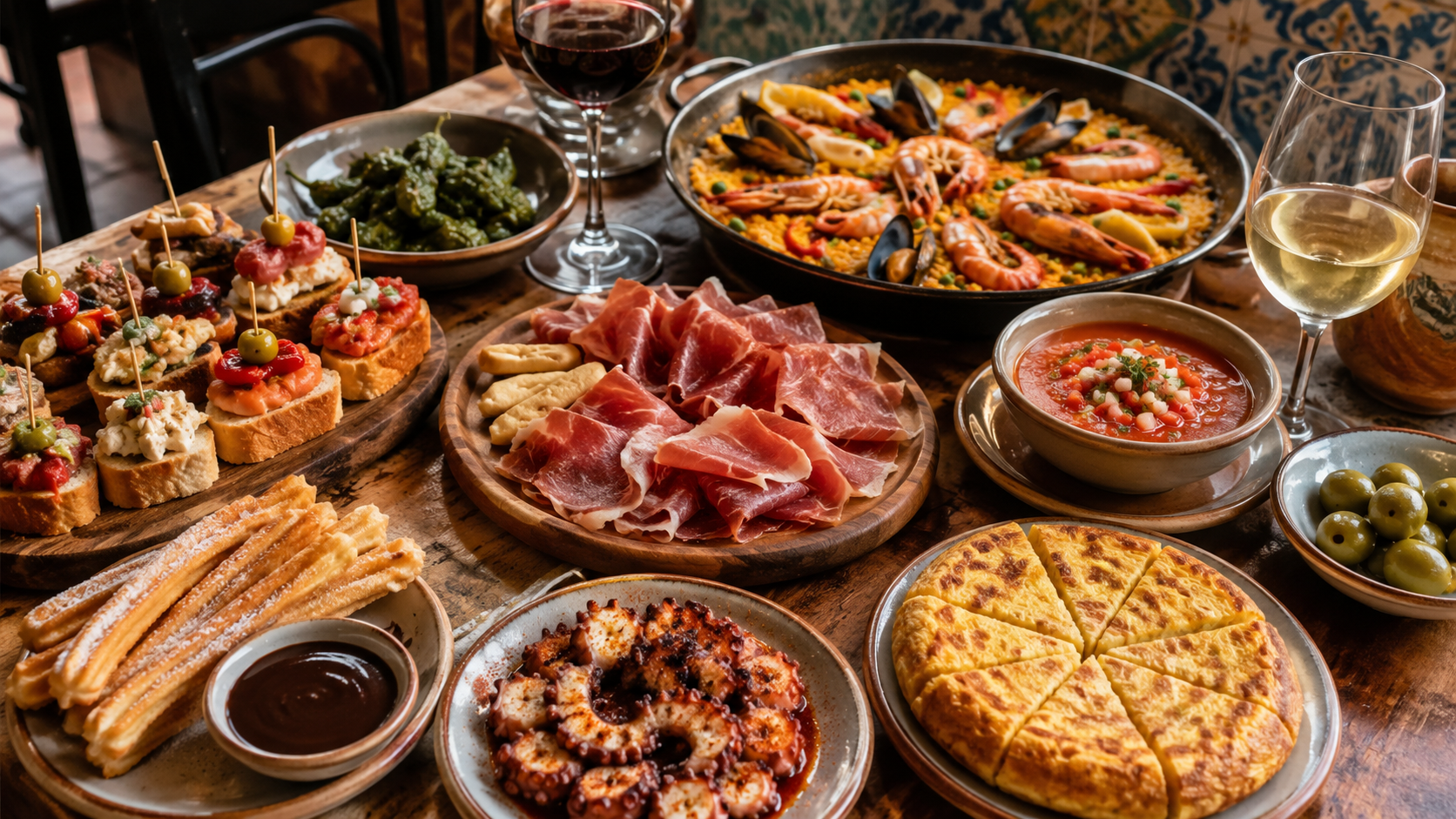
The best rule is simple: eat what belongs where you are. In Valencia, focus on rice. In Galicia, seafood. In the Basque Country, pintxos. In Andalusia, tapas, olive oil, jamón, and cold soups. In Castile, roasts and stews. In Catalonia, market cooking, seafood, sauces, and creative cuisine. Spanish regional cuisine rewards travelers who let the place guide the plate.
Conclusion
Spanish regional cuisine is one of the richest ways to experience Spain because it reveals the country’s geography, history, and local identities through food. Valencia gives you rice, Galicia gives you the Atlantic, Andalusia gives you olive oil and tapas, the Basque Country gives you pintxos, Castile gives you roasts and stews, Catalonia gives you sea-and-mountain creativity, and the Canary Islands give you volcanic island flavor.
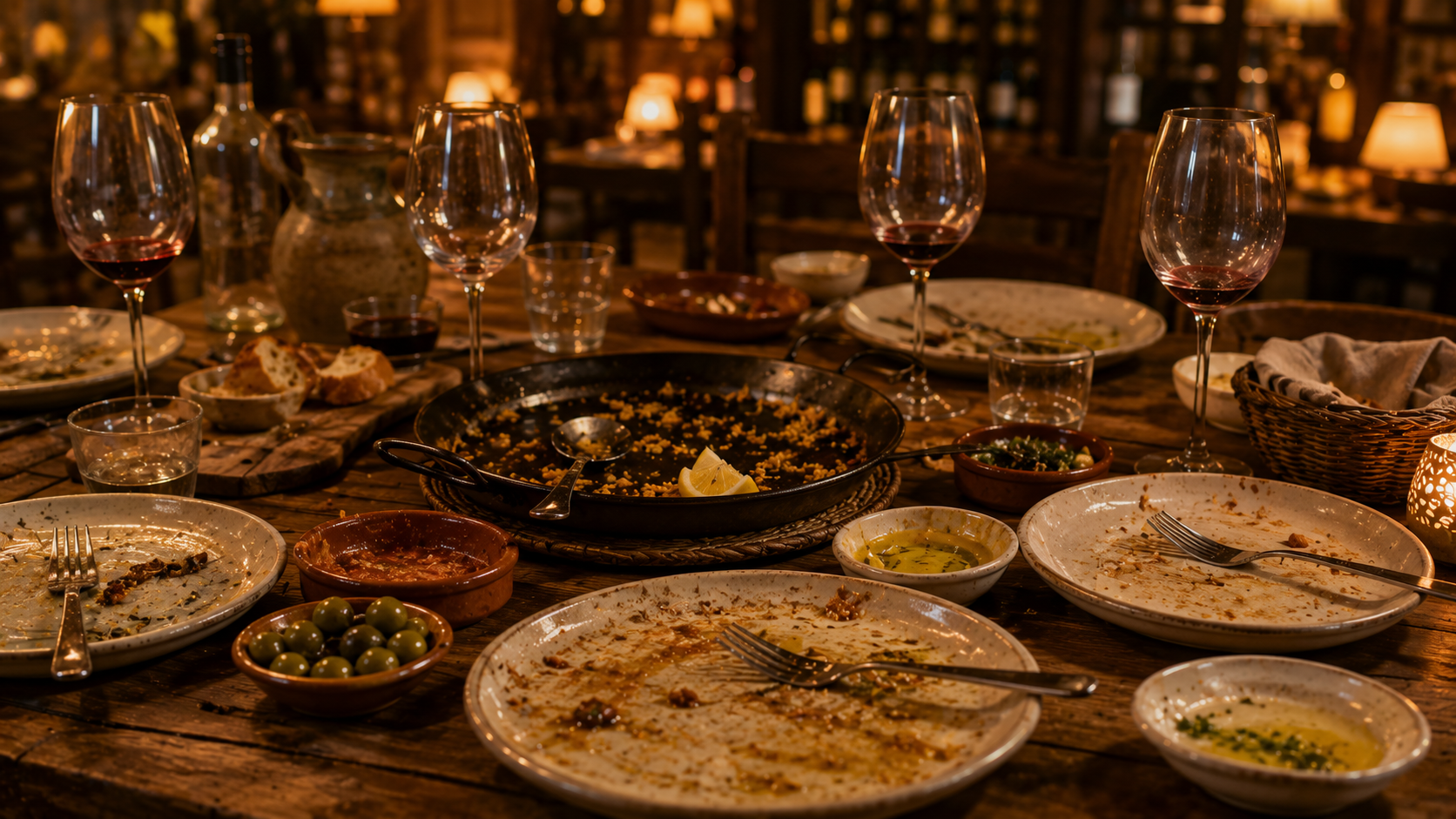
To eat well in Spain, do not chase only the most famous dishes. Follow the regions. Notice the landscape, listen to local recommendations, visit markets, try seasonal ingredients, and let meals become part of the journey. Spain is not one cuisine. It is a table of many voices, and every region adds its own accent.