
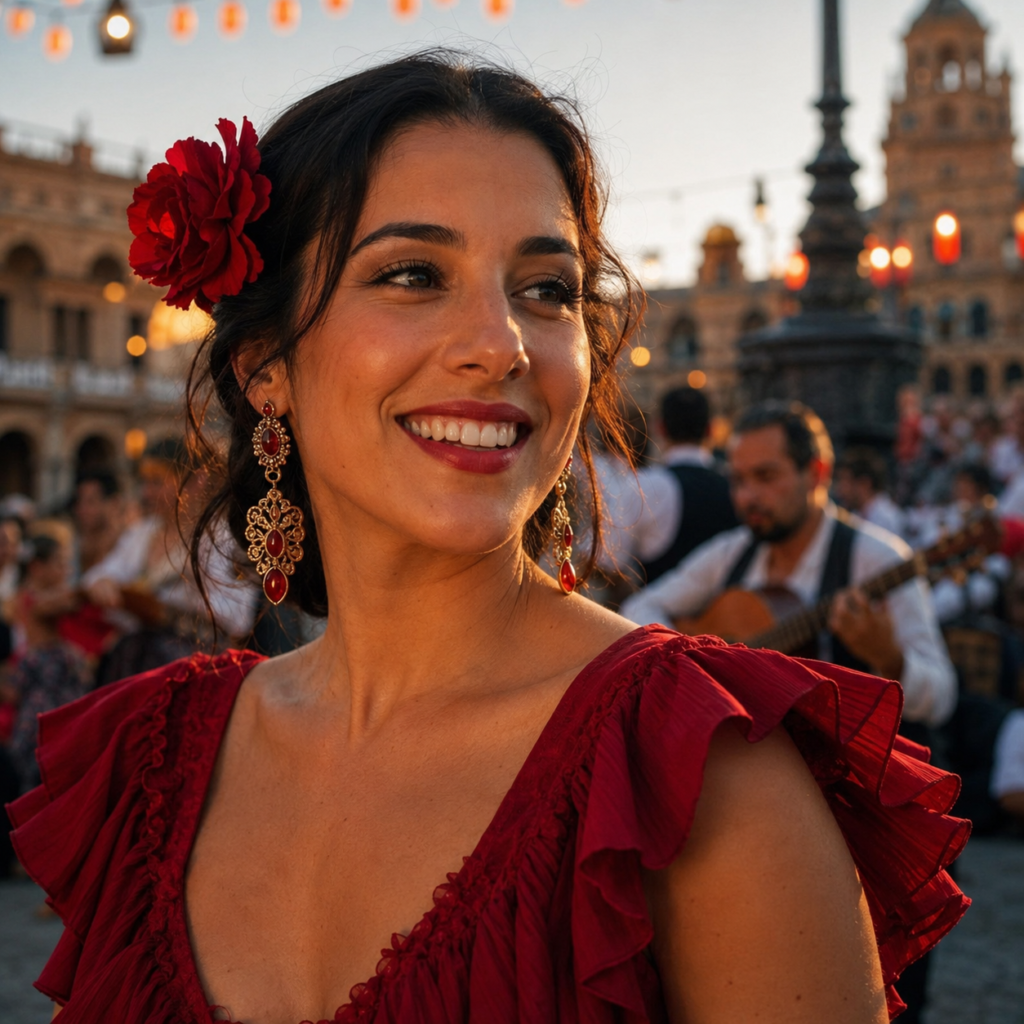
Spanish festivals are not quiet background events. They take over streets, reshape cities, fill nights with music, turn food into ritual, and transform local identity into public theater. In Spain, a festival is rarely just entertainment. It can be religious, playful, satirical, musical, historical, communal, chaotic, or deeply emotional, sometimes all at once.
What makes Spanish festivals so memorable is their intensity. A silent Holy Week procession can feel as powerful as a street full of fireworks. A flamenco dress at a spring fair can say as much about regional pride as a museum exhibit. A tomato fight in a small town can become world-famous, while a local village fiesta may remain deeply meaningful to the people who return every year. To understand Spain, you need to understand how it celebrates.
Why Festivals Matter So Much in Spain
Spain’s festival culture is rooted in religion, agriculture, local patron saints, seasonal rhythms, regional identity, and centuries of public tradition. Many celebrations began as religious or civic events, but over time they became larger cultural expressions. Today, they often combine faith, music, food, costume, fireworks, performance, family gatherings, and tourism.
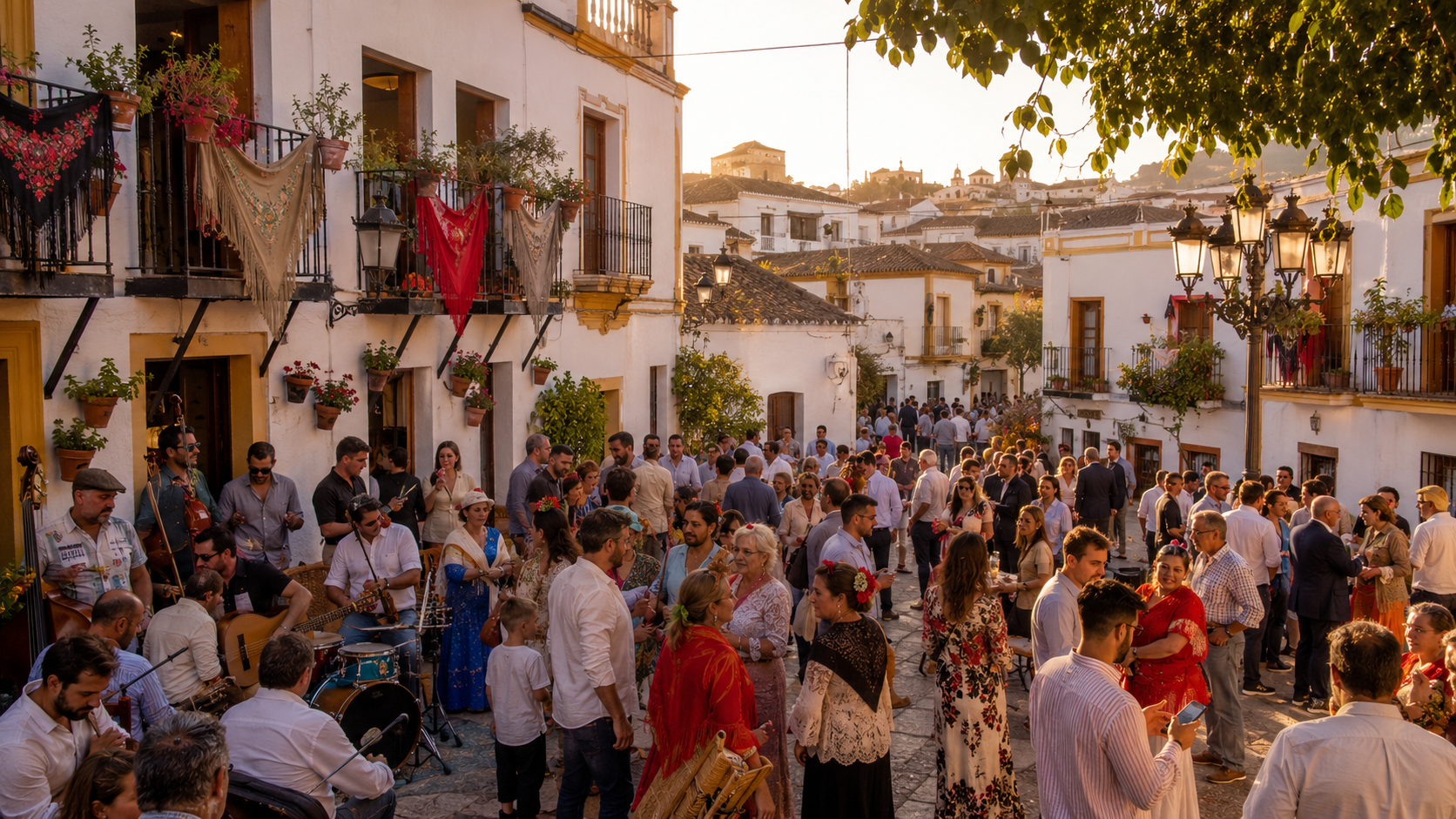
This is why Spanish festivals feel different from simple events on a calendar. They belong to place. Semana Santa in Seville does not feel the same as Semana Santa in Valladolid. Carnival in Cádiz does not feel the same as Carnival in Tenerife. A local fiesta in Galicia, Andalusia, Catalonia, or Valencia carries its own accent, humor, food, songs, and symbols. Spain celebrates through regions, not only as one nation.
Semana Santa Spain: Silence, Processions, and Sacred Drama
Semana Santa Spain is one of the country’s most powerful religious traditions. During Holy Week, processions move through streets with floats, candles, music, penitents, religious images, and crowds that often stand in deep silence. In cities such as Seville, Málaga, Valladolid, Zamora, Granada, and Toledo, the atmosphere can be overwhelming even for visitors who are not religious.
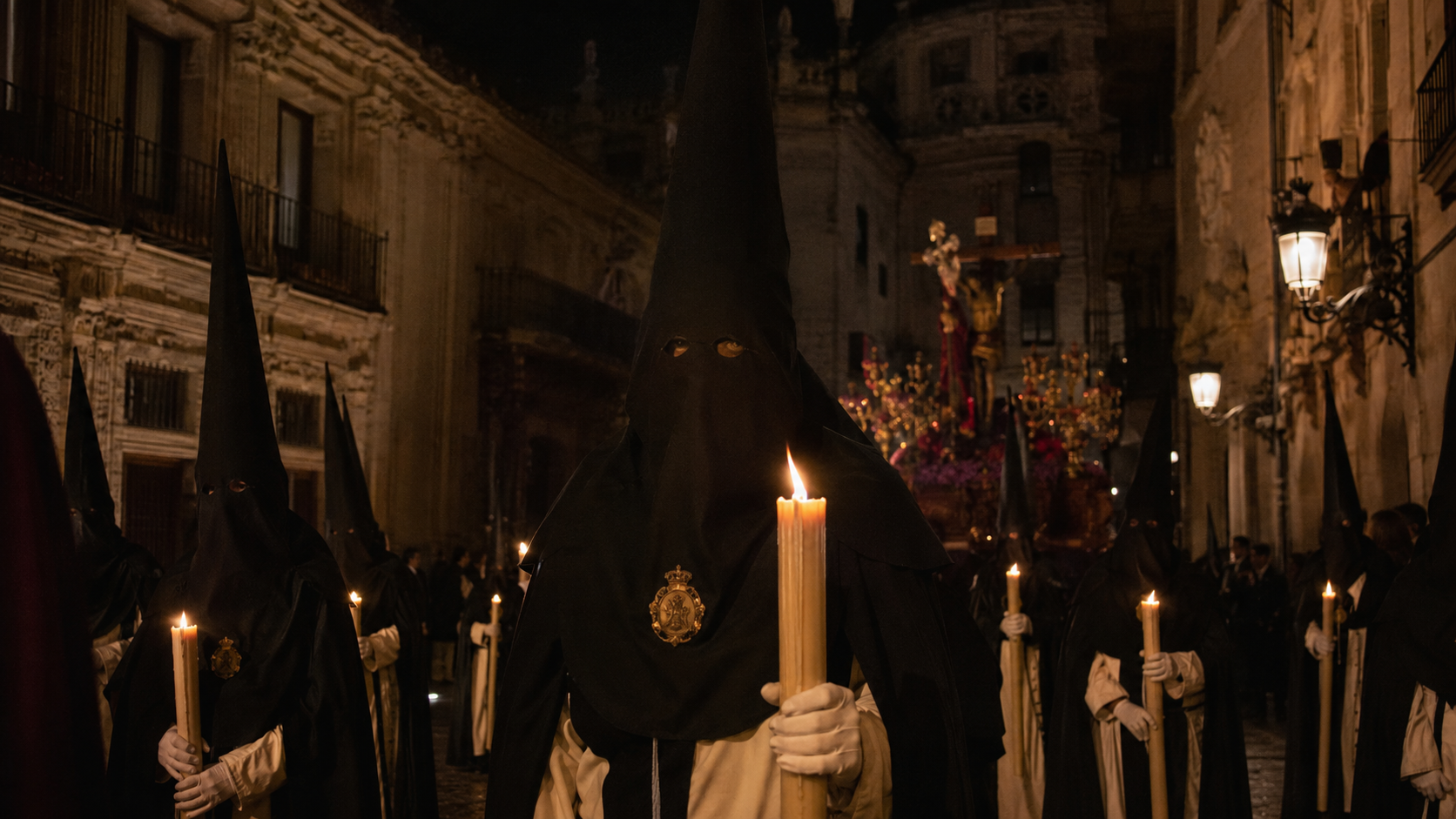
The emotional force of Semana Santa comes from contrast. The streets may be packed, but the mood can feel solemn. Drums, brass bands, incense, candlelight, and the slow movement of pasos create a sense of sacred theater. This is not a performance invented for tourists. It is a living tradition shaped by brotherhoods, families, neighborhoods, and local devotion.
Seville and the Weight of Holy Week
Seville is one of the most famous places to experience Semana Santa, but it is also one of the most intense. Processions can last for hours, and some continue late into the night or early morning. Locals often know exactly where to stand, when to move, and which brotherhoods carry the deepest emotional meaning.
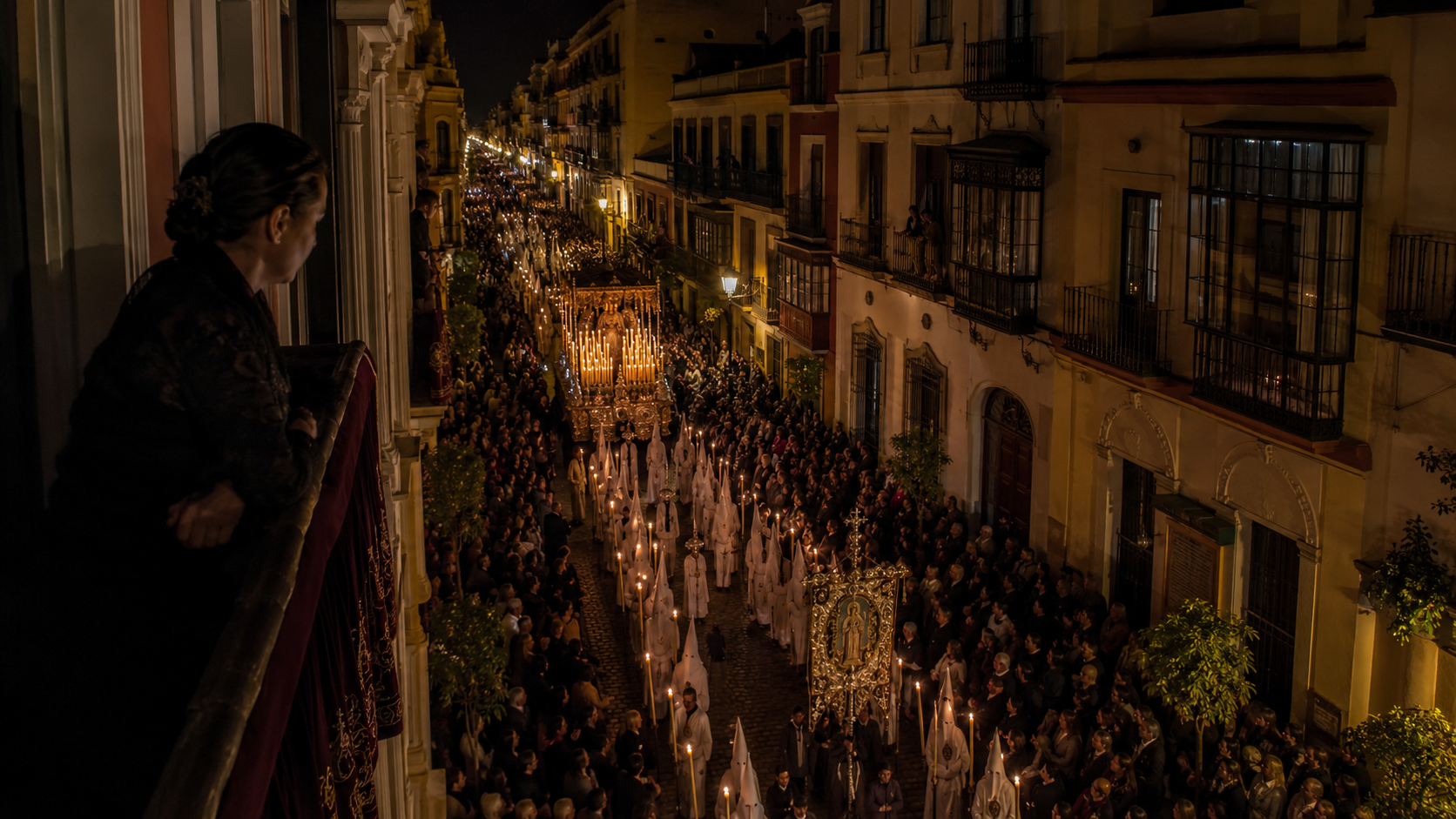
For travelers, the best approach is patience and respect. Do not push through crowds, block processions, or treat religious images like casual entertainment. Watch quietly, learn a little before you go, and understand that this is both public culture and private faith. The beauty of Semana Santa lies not only in what you see, but in the seriousness with which people carry it forward.
Feria de Abril: Seville’s Spring Explosion
If Semana Santa shows Seville in solemn devotion, the Feria de Abril shows the city in color, music, movement, and social performance. Held after Holy Week, the April Fair fills Seville with flamenco dresses, horses, carriages, lights, dancing, food, and casetas, the decorated tents where families, associations, and groups gather.
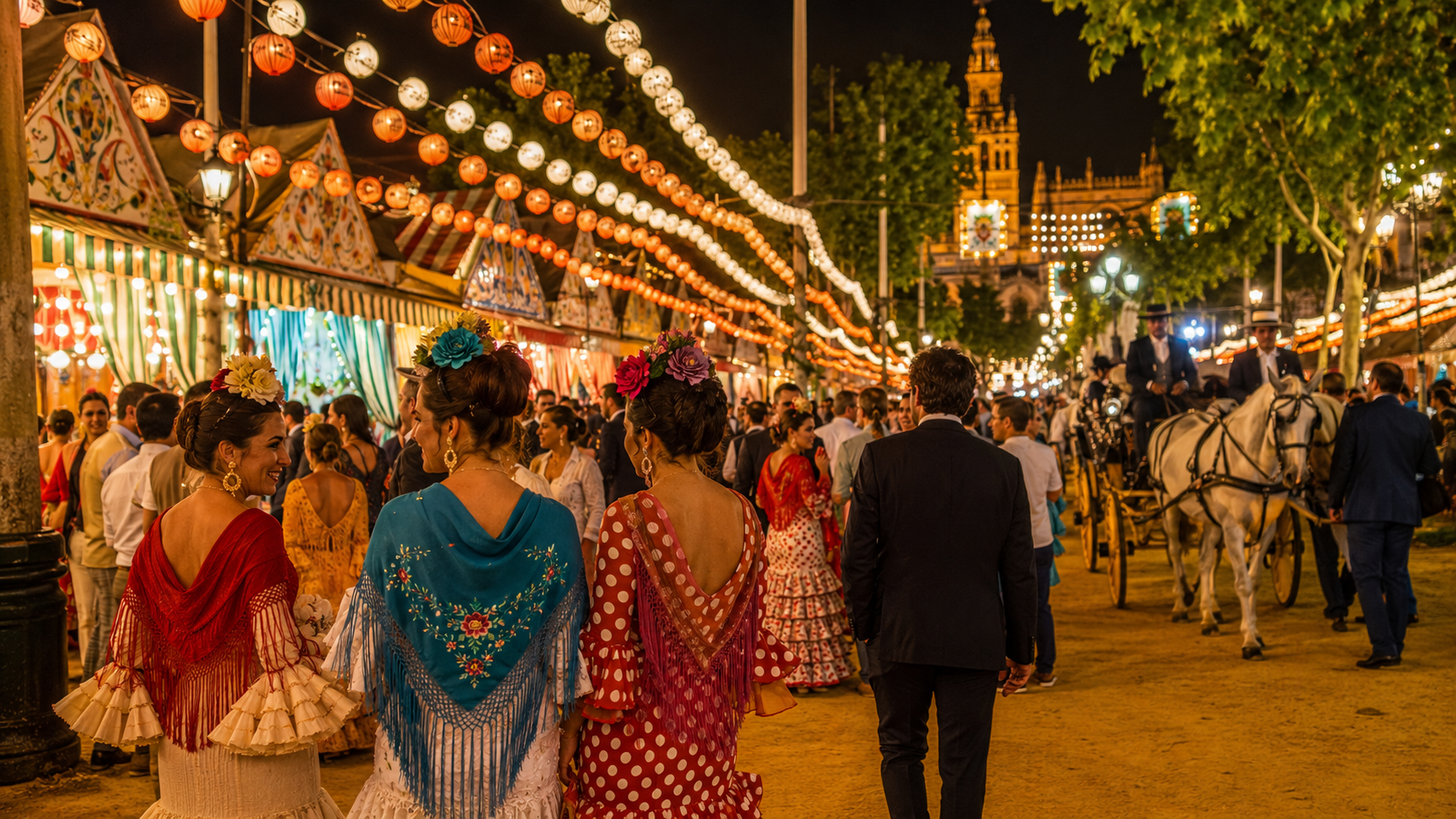
Feria de Abril is joyful, but it is also highly coded. Dress, etiquette, invitations, dancing, and social networks all matter. For visitors, public casetas and fairground spaces make it possible to enjoy the atmosphere, but it helps to know that much of the fair is built around local relationships. This is one reason the festival feels both open and intimate. It is a city celebrating itself.
Flamenco, Dress, and Andalusian Identity
Feria de Abril is closely connected to Andalusian identity. Flamenco-style dresses, sevillanas dancing, guitar, clapping, and rhythmic movement all shape the mood. It is not the same as watching a formal flamenco performance, but the connection is clear: music and body language become part of public celebration.
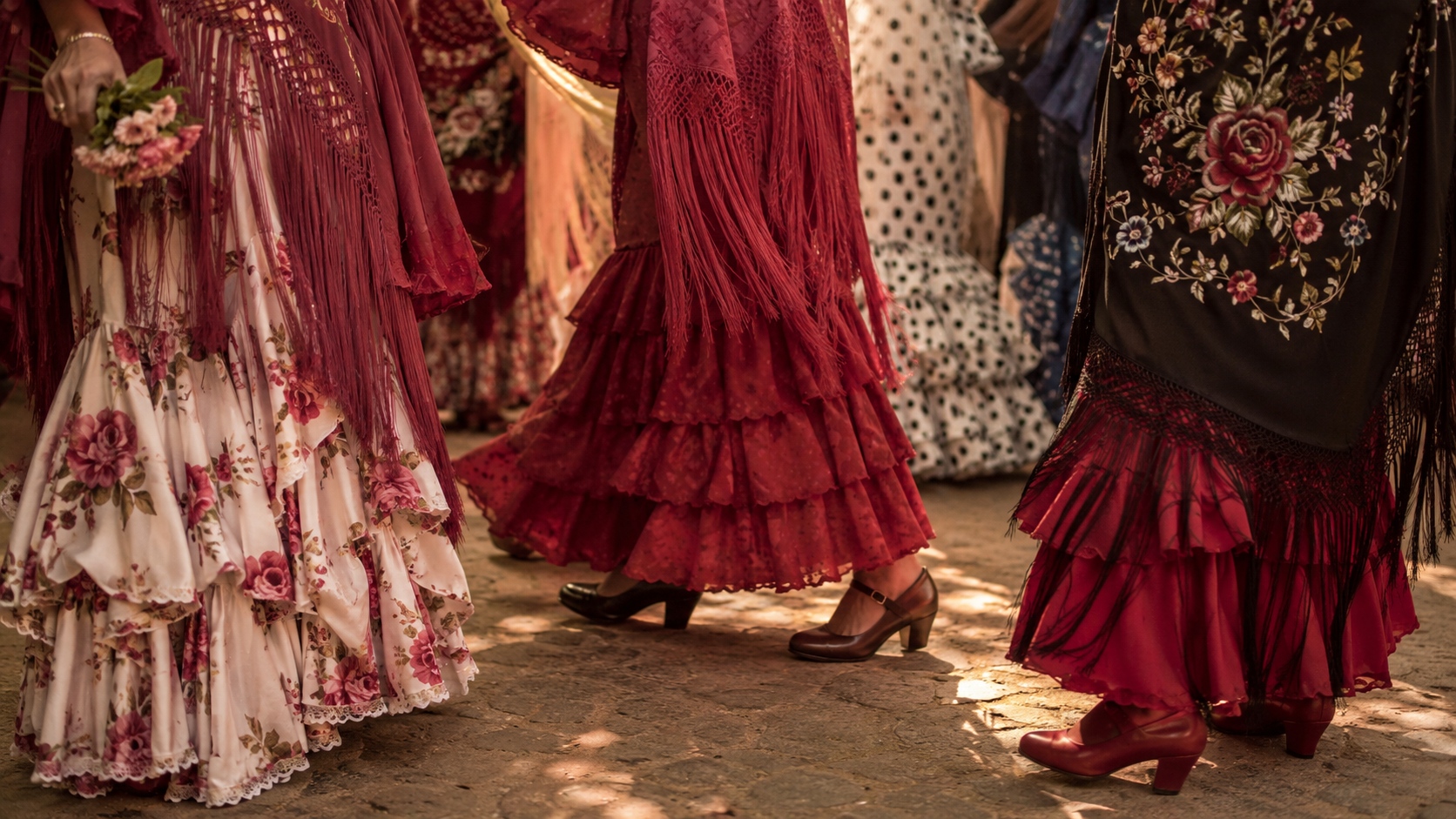
Travelers who want to understand this side of Spain more deeply can pair the fair with a real flamenco experience in Spain. The stage and the fairground are different worlds, but both reveal how rhythm, pride, beauty, and social energy move through Andalusian culture.
Las Fallas Valencia: Fire, Satire, and Renewal
Las Fallas in Valencia is one of the most spectacular Spanish festivals. Huge sculptural figures, known as fallas, are built across the city, often full of satire, humor, politics, fantasy, and local commentary. The festival ends with fire, when most of these sculptures are burned in a dramatic ritual of destruction and renewal.
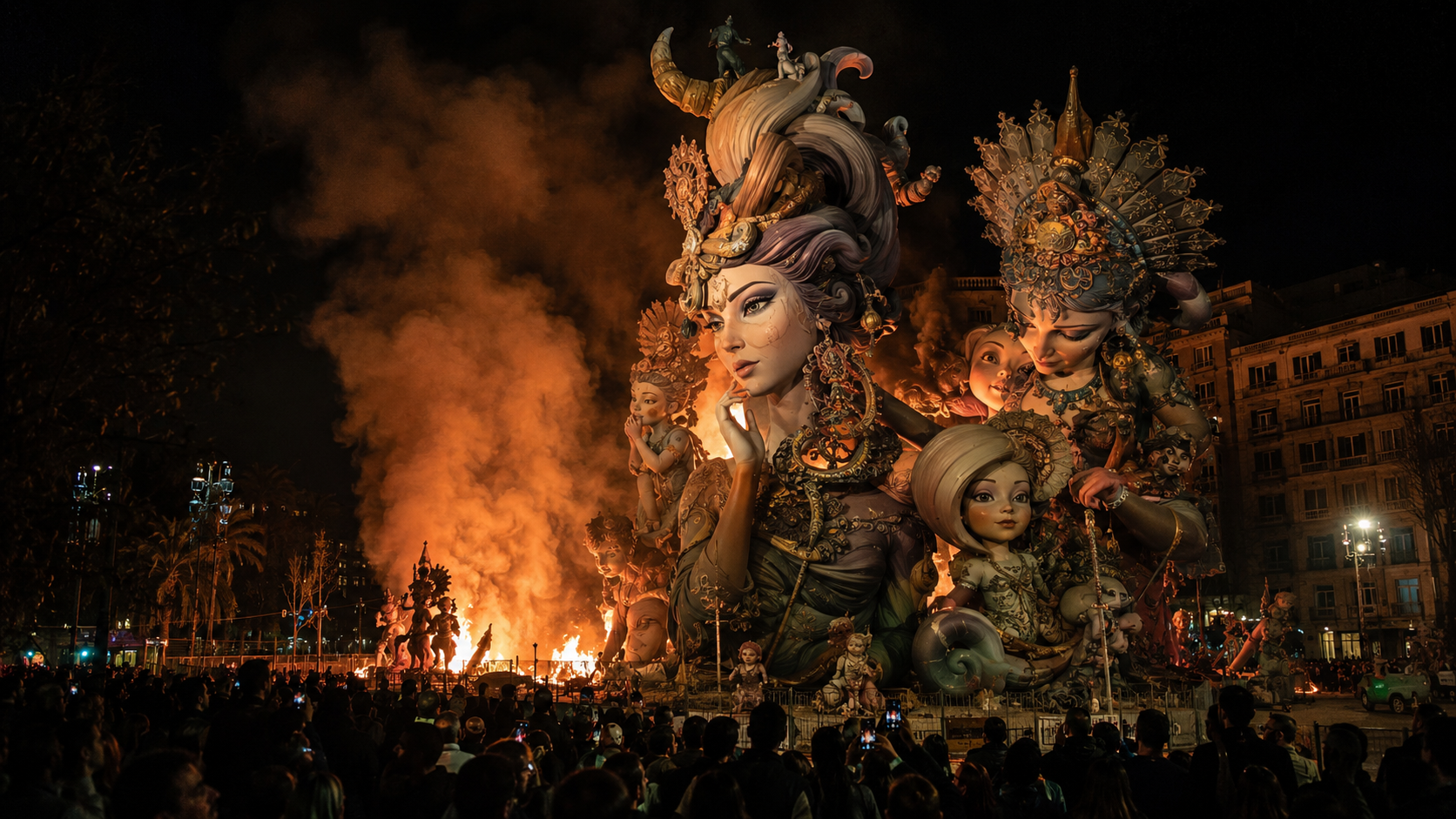
UNESCO recognizes Las Fallas as Intangible Cultural Heritage, highlighting its creativity, community participation, and festive practices. What makes Las Fallas so compelling is that it combines art and impermanence. Months of work are created to be burned. The message is clear: celebration can be beautiful because it does not last forever.
Fireworks, Mascletà, and the Sound of Valencia
Las Fallas is not only visual. It is also loud. The mascletà, a daytime firecracker display, is less about colorful fireworks and more about rhythm, force, and vibration. The sound builds until it becomes physical, something you feel in your chest rather than simply hear.
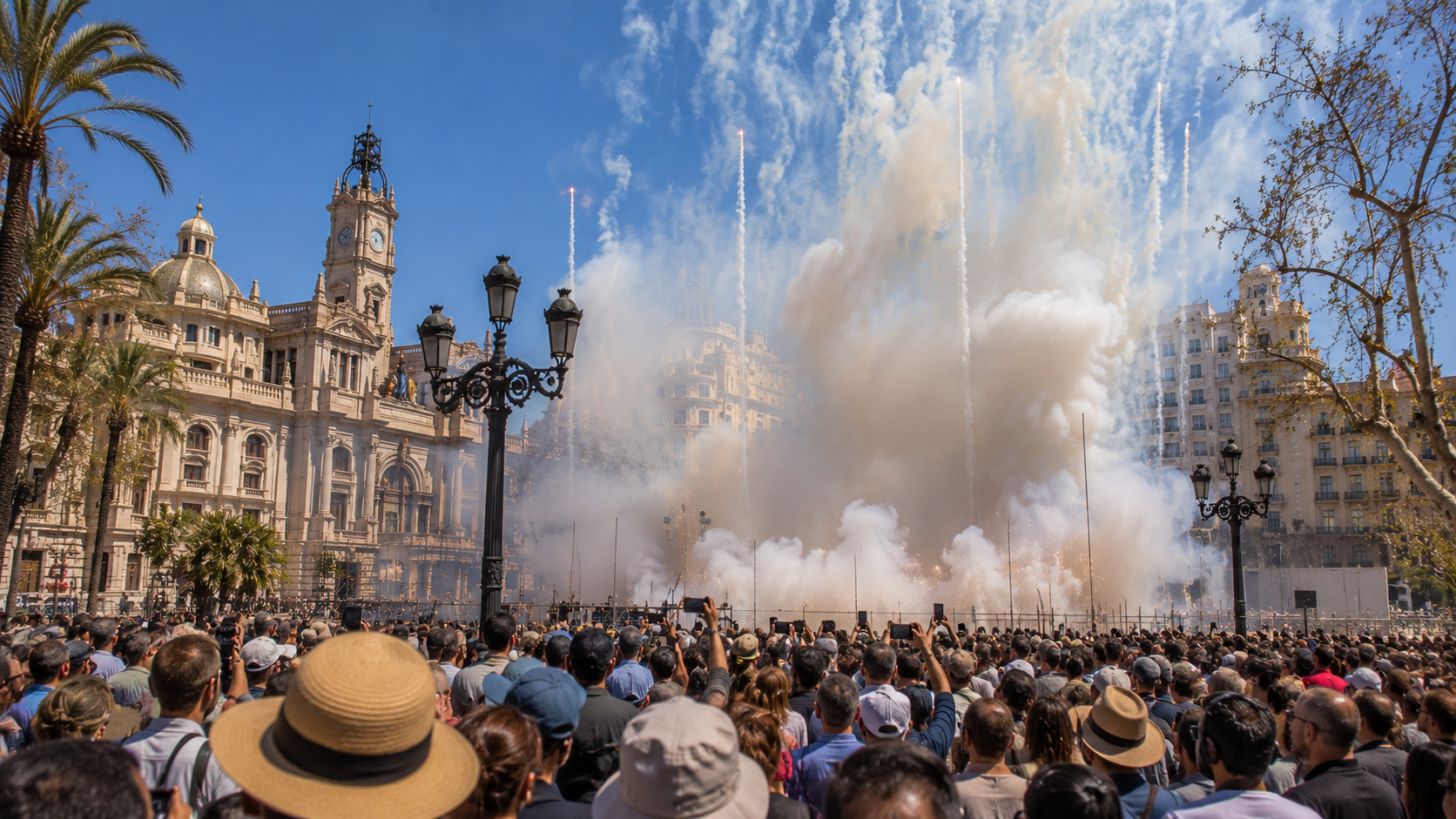
For first-time visitors, this can be shocking, but it is central to the festival’s identity. Valencia during Las Fallas is a city of smoke, sound, sculpture, flowers, food, crowds, and flame. It is not a gentle festival. It is explosive in the literal and cultural sense. That intensity is exactly why it remains unforgettable.
San Fermin Festival: Pamplona’s Famous and Controversial Celebration
The San Fermin festival in Pamplona is one of Spain’s most internationally famous events, largely because of the running of the bulls. Every July, the city fills with people dressed in white and red, and the streets become the setting for one of the most recognizable festival images in the world.
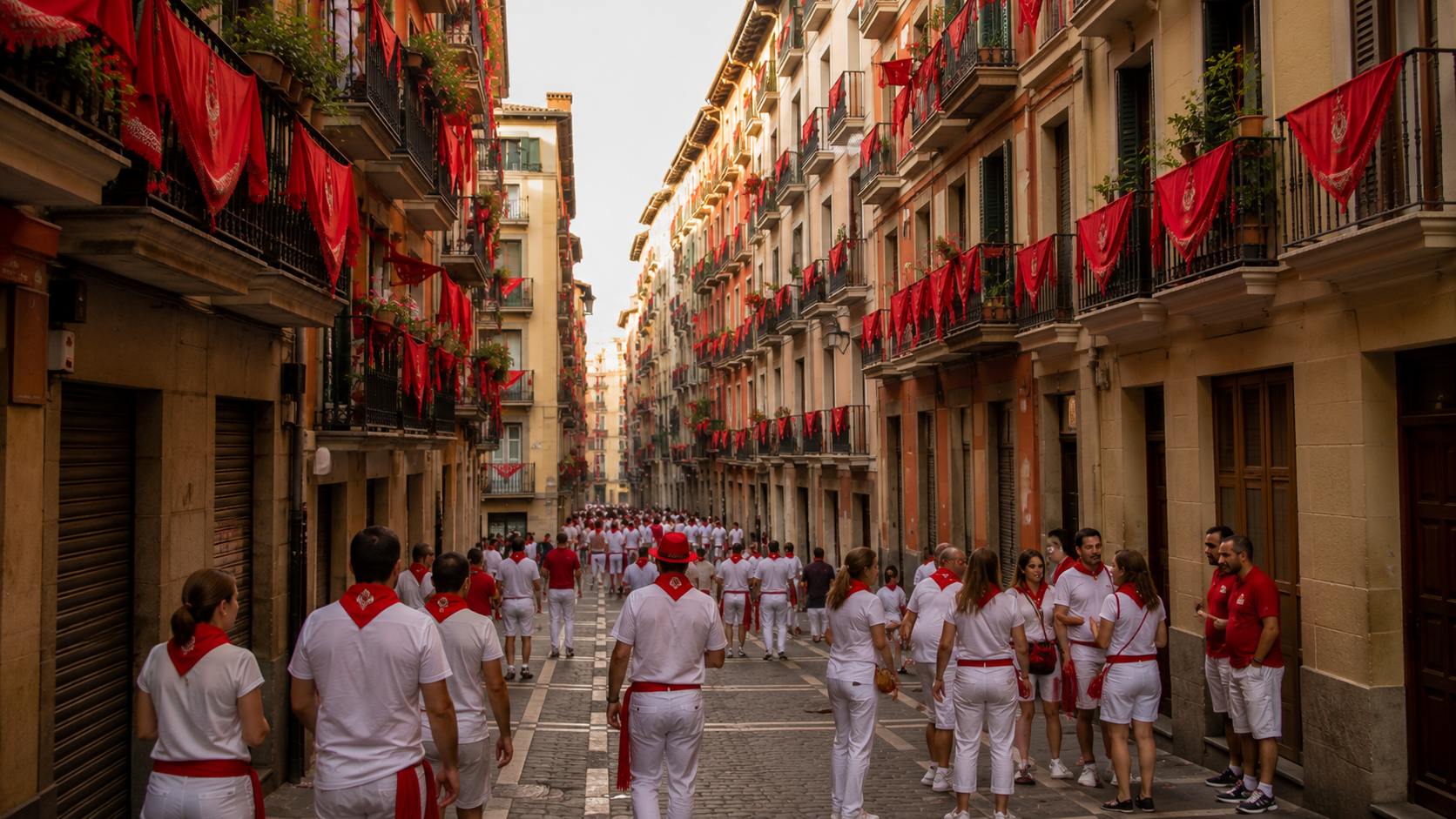
But San Fermín is more than the encierro. It includes music, religious traditions, fireworks, parades, giants and big-head figures, street gatherings, and a powerful sense of local identity. At the same time, it is also controversial because of animal welfare concerns and the dangers of the bull runs. Travelers should not treat it as a simple thrill activity. If you attend, understand the risks, respect local rules, and think carefully about what kind of participation feels right to you.
La Tomatina: Playful Chaos in Buñol
La Tomatina is Spain at its most absurd and joyful. Held in Buñol, near Valencia, this festival is built around a massive tomato fight. It began as a local event and grew into an internationally known celebration. Today, visitors come from around the world to throw tomatoes, laugh, get soaked in red pulp, and join a strange kind of communal mess.
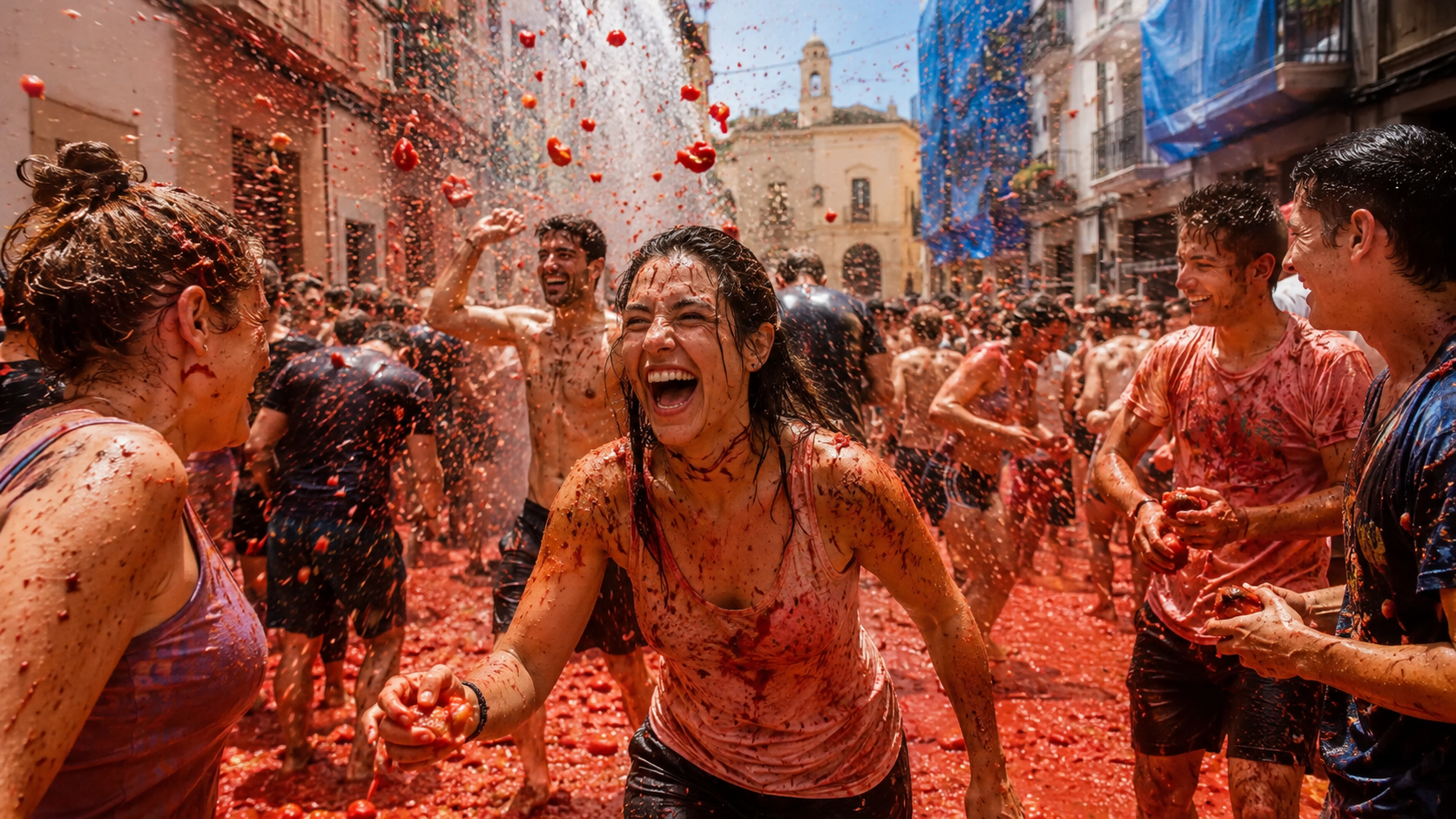
La Tomatina is not spiritually deep in the way Semana Santa is, and it is not artistically elaborate like Las Fallas. Its charm is different. It is playful, physical, ridiculous, and temporary. For one short burst of time, order disappears and everyone becomes part of the same red chaos. That simplicity is why La Tomatina remains one of the most recognizable Spanish festivals.
Carnival in Cádiz and Tenerife
Carnival reveals Spain’s comic and theatrical side. Cádiz is famous for satire, music, costumes, and witty groups that perform songs full of social and political humor. The city’s carnival feels sharp, verbal, and deeply local. It belongs to a culture that loves wordplay, mockery, rhythm, and public performance.
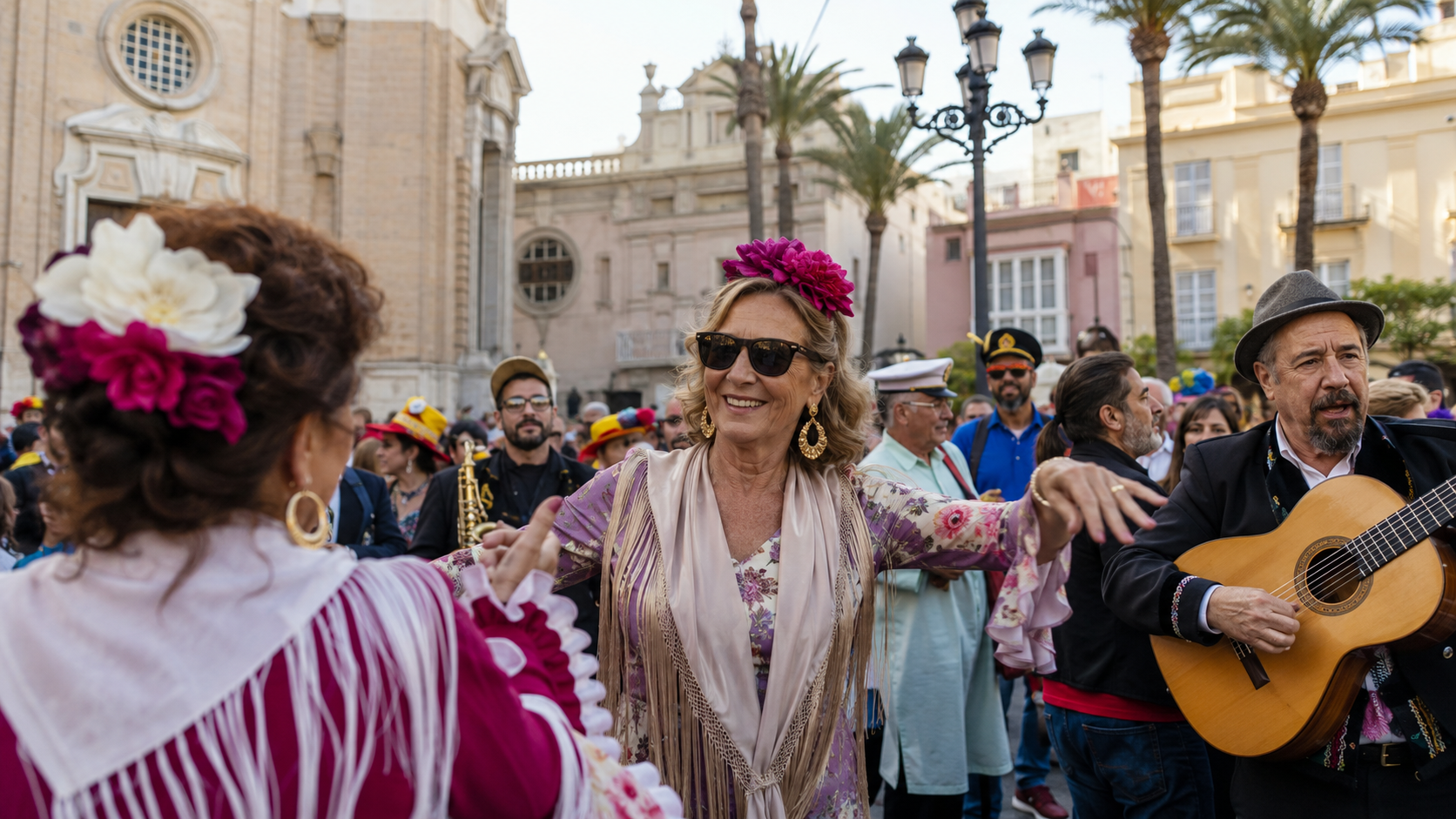
Tenerife, especially Santa Cruz de Tenerife, offers a very different carnival mood: large-scale parades, elaborate costumes, music, dancing, and a strong Atlantic energy. Together, Cádiz and Tenerife show how one festival tradition can take very different forms depending on place. Spanish festival culture is not uniform. It mutates beautifully from region to region.
Food and Festivals in Spain
Food is never far from celebration in Spain. Festivals bring local dishes, sweets, drinks, market stalls, family meals, and late-night eating into the streets. During Semana Santa, traditional sweets such as torrijas appear in many regions. At fairs, tapas, fried fish, jamón, churros, wine, and regional specialties help turn celebration into a full sensory experience.
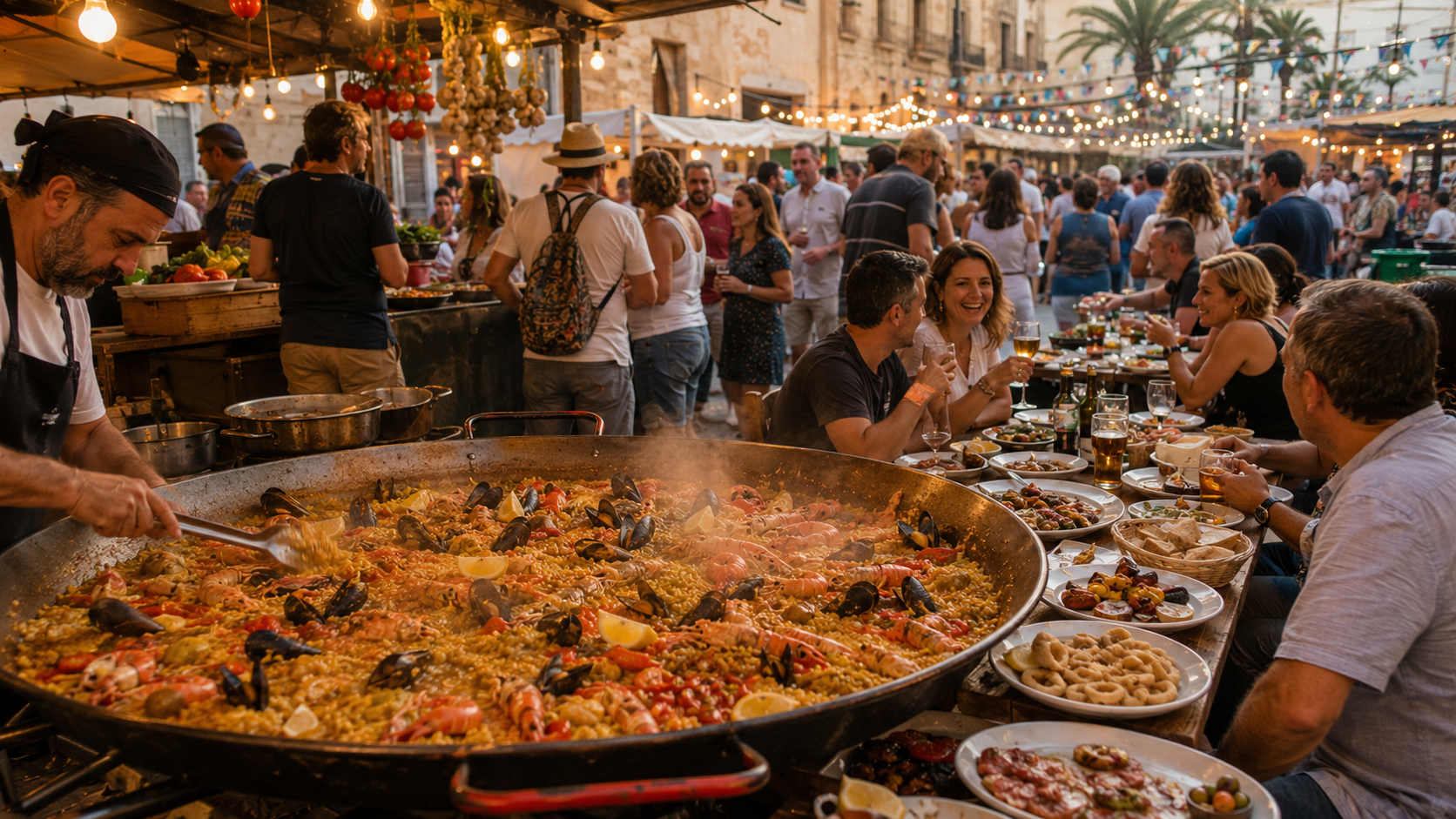
This is why Spanish festivals connect naturally with Spanish regional cuisine. Food gives festivals their local flavor. A celebration in Andalusia tastes different from one in Galicia, Valencia, Catalonia, or the Basque Country. If you want to understand a fiesta, pay attention to what people eat before, during, and after it.
Language, Songs, and Local Voices
Festivals are also full of language. Songs, chants, prayers, jokes, announcements, local names, and regional expressions all shape the atmosphere. In multilingual Spain, celebrations may involve Spanish, Catalan, Galician, Basque, or local dialects depending on the region.
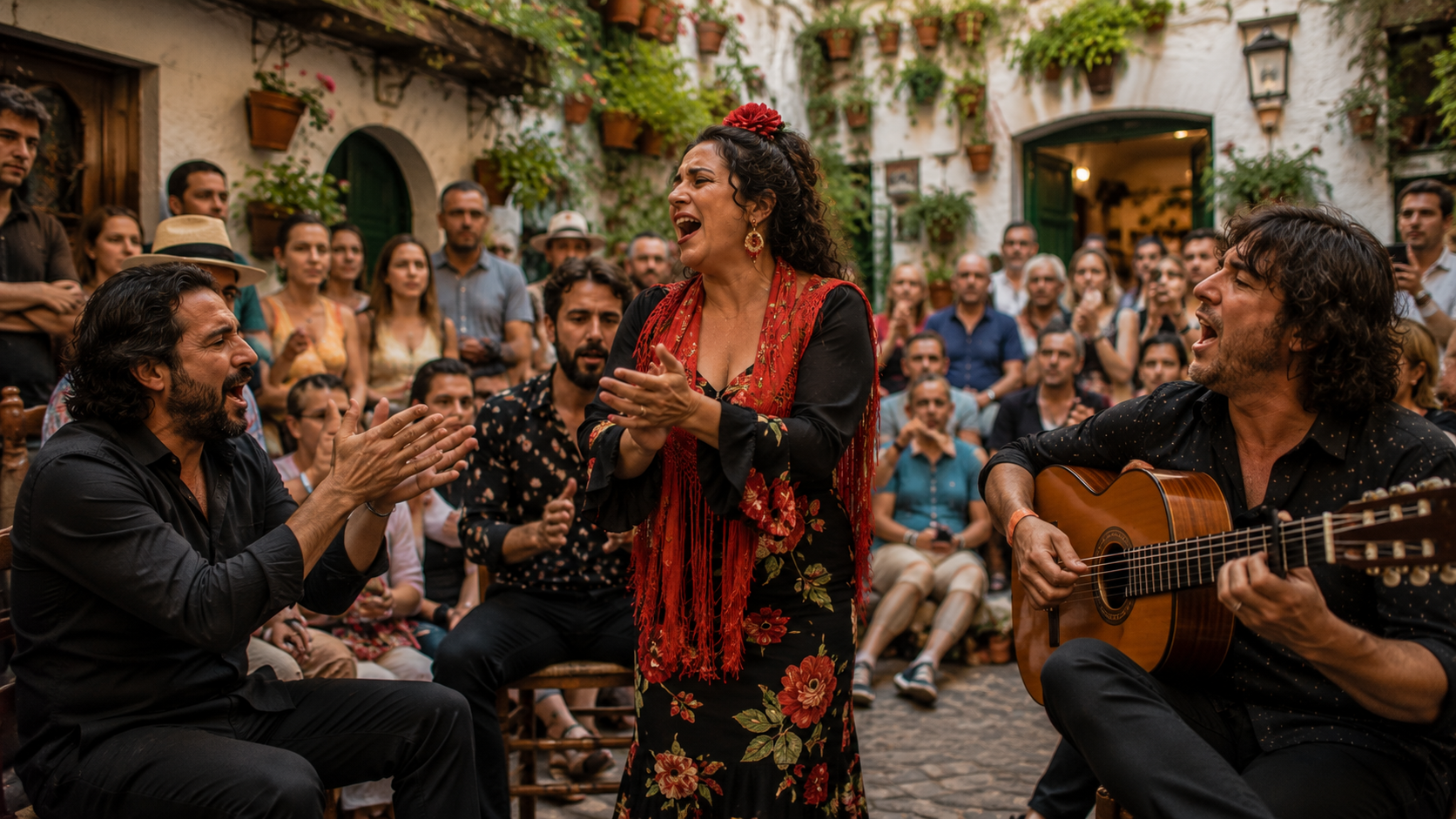
This connection makes festivals a living extension of Spanish language and literature. A festival is not only seen; it is heard. The words people shout, sing, whisper, or repeat each year carry memory. Even if you do not understand everything, listening carefully helps you feel the place more deeply.
How to Attend Spanish Festivals Respectfully
Spanish festivals can be intense, crowded, and emotional, so preparation matters. Book accommodation early for famous events such as Semana Santa in Seville, Las Fallas in Valencia, San Fermín in Pamplona, or La Tomatina in Buñol. Check official dates every year, because some festivals move according to the religious calendar.
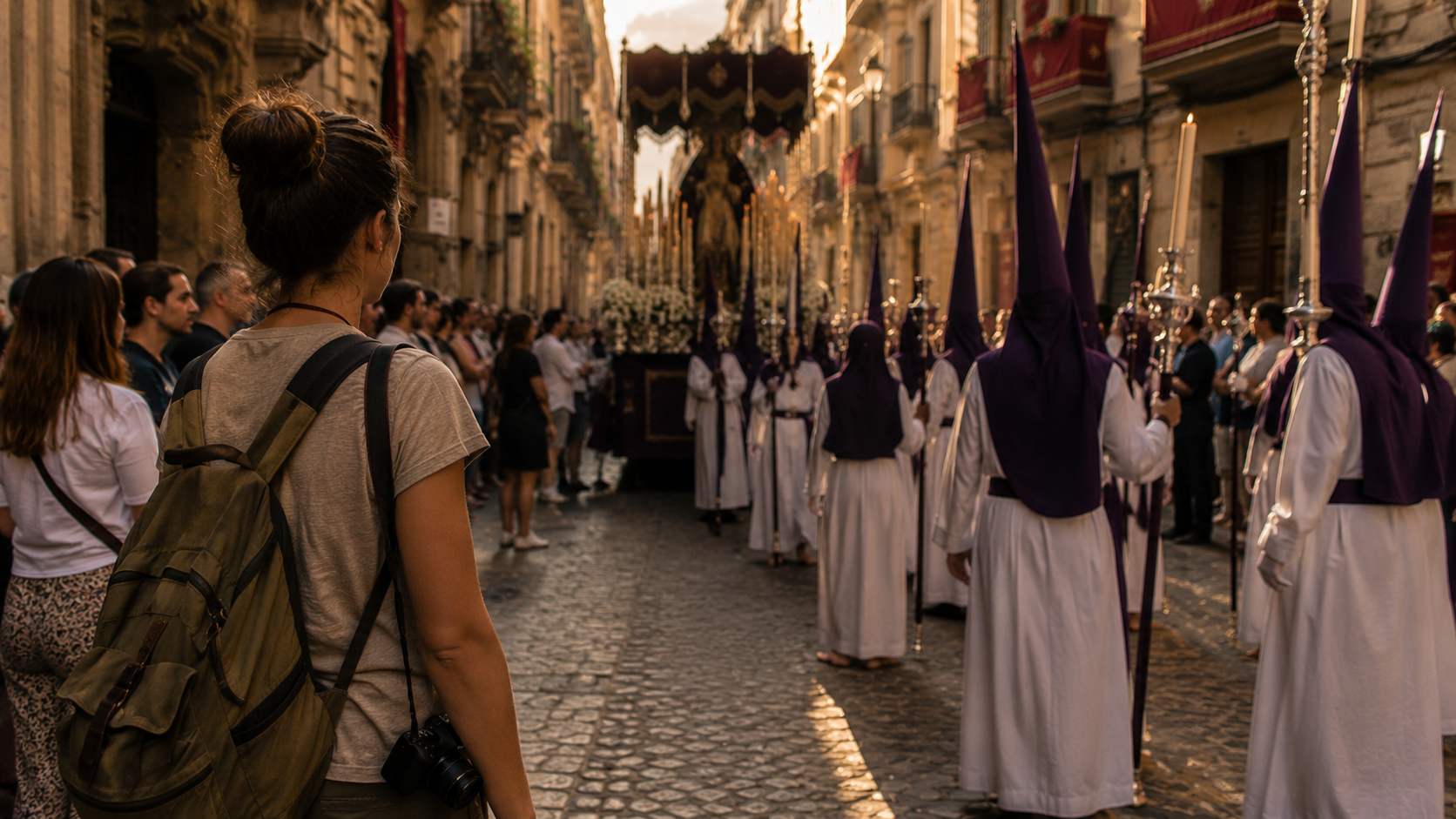
Respect is just as important as planning. Do not treat religious events like costume shows. Do not push into processions for photos. Be careful with alcohol, crowds, and local rules. If a festival involves animals, such as San Fermín, understand the ethical debate before deciding how to engage. A good traveler does not only consume tradition. They try to understand it.
Which Spanish Festival Should You Choose?
The best festival depends on what kind of Spain you want to feel. Choose Semana Santa if you want solemnity, faith, music, candlelight, and ritual. Choose Feria de Abril if you want color, dress, dance, social energy, and Andalusian identity. Choose Las Fallas if you want fire, satire, sculpture, and noise. Choose La Tomatina if you want pure playful chaos.
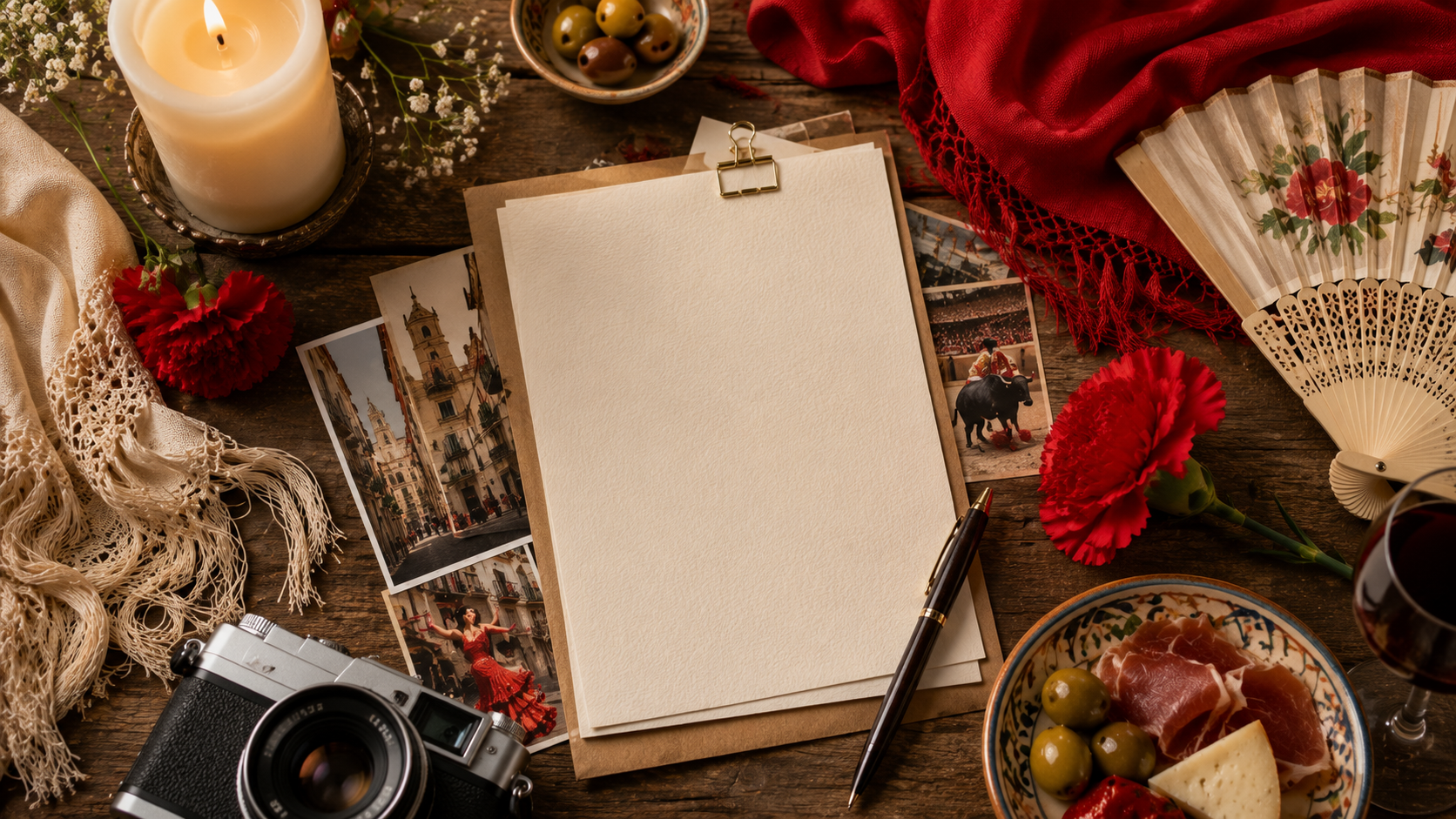
For something more local, look beyond the famous names. Patron saint festivals, harvest celebrations, village fiestas, pilgrimages, music events, and regional traditions can be just as memorable. Sometimes the best Spanish festival is not the biggest one, but the one where you feel the strongest connection to place.
Conclusion
Spanish festivals are one of the best ways to understand the country because they reveal Spain in motion. Faith, fire, food, music, satire, costume, language, local pride, and collective memory all come together in the streets. From Semana Santa Spain to Feria de Abril, from Las Fallas to the San Fermin festival and La Tomatina, each celebration shows a different emotional register of Spanish life.
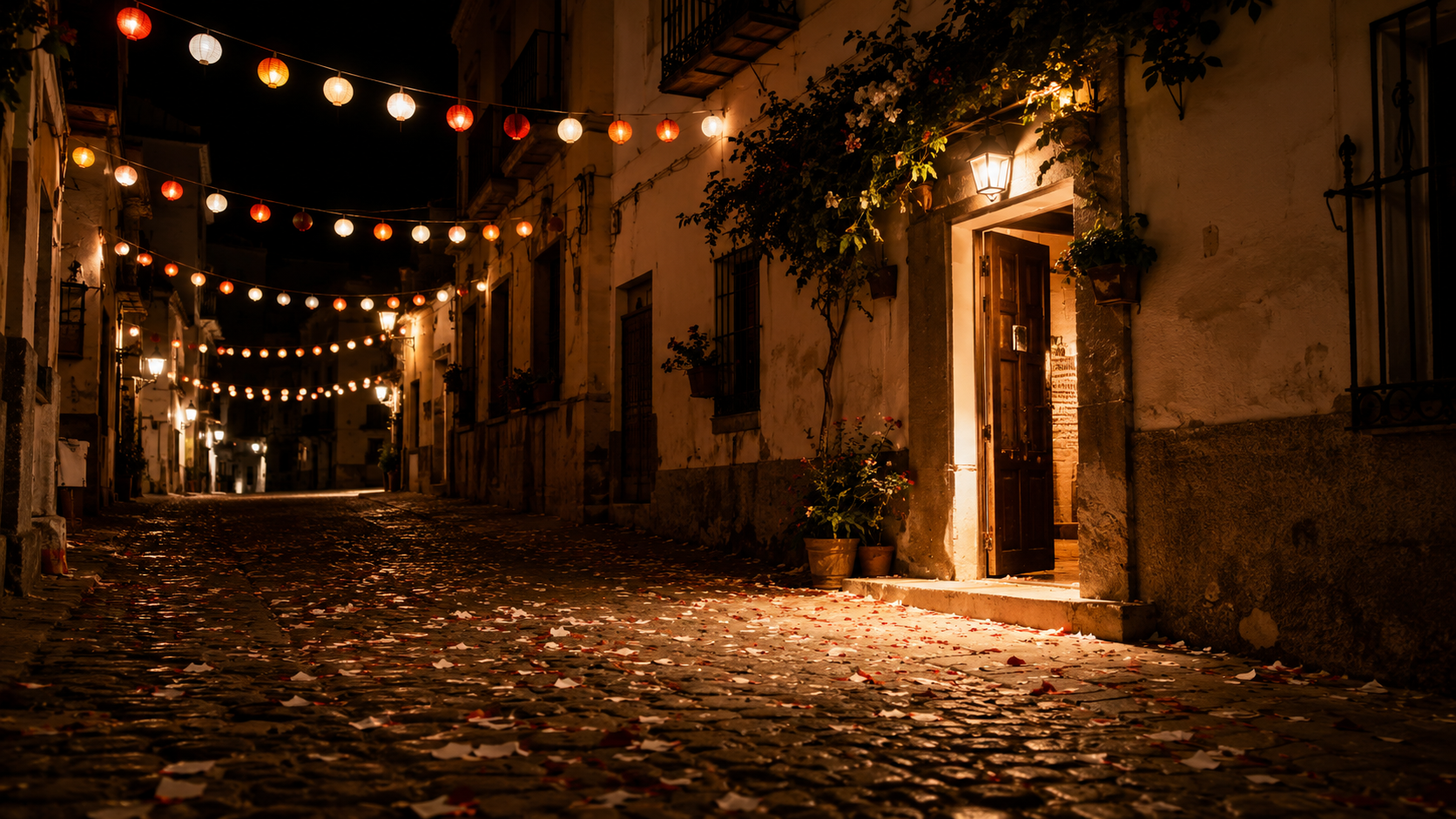
What makes these traditions powerful is not only their color or fame. It is the way they belong to communities. They are repeated, argued over, prepared for, passed down, modernized, and lived. To travel through Spain during a festival is to see culture step out of buildings and take over the street. And for a few hours or a few days, the country does not simply explain itself. It performs itself.