
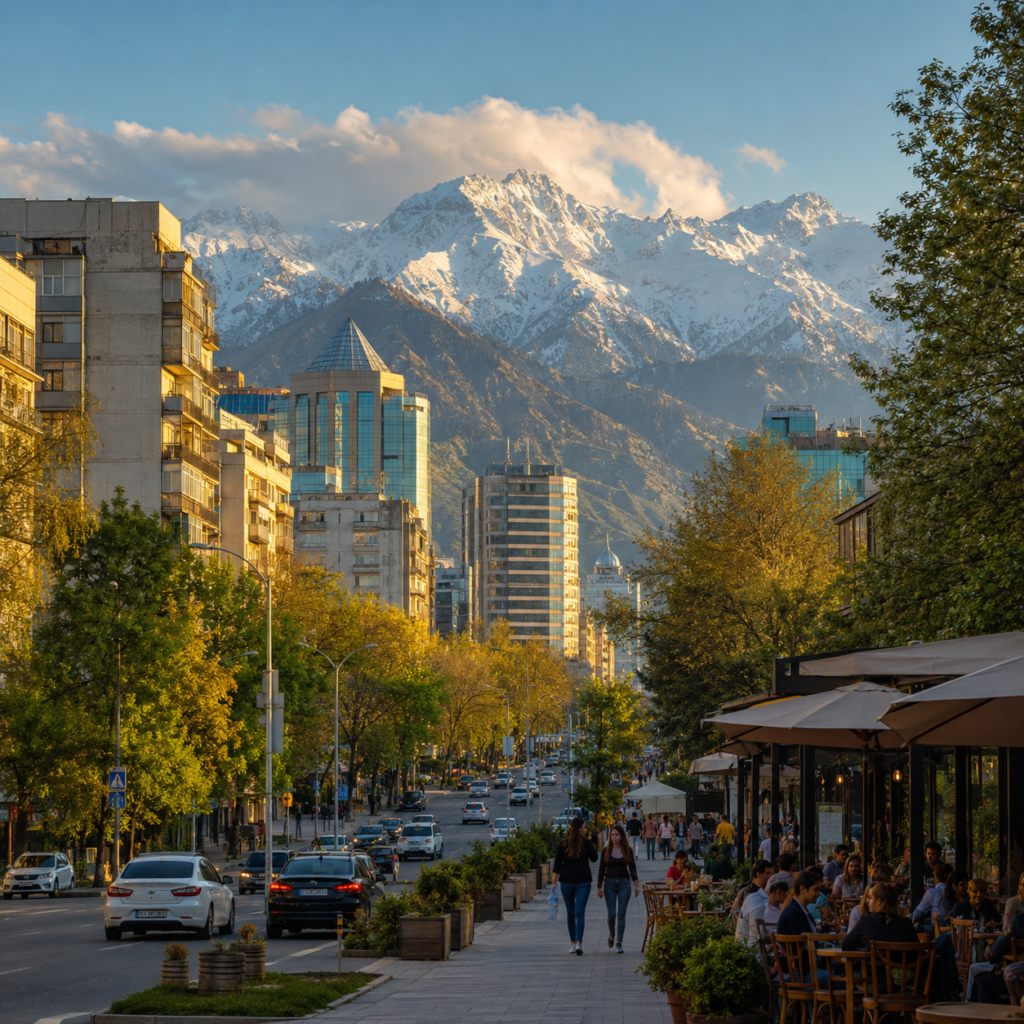
Almaty is one of the most rewarding cities in Central Asia because it does not fit into one simple travel category. It is urban, but never far from the mountains. It feels modern, but its streets still carry traces of Soviet planning, Silk Road memory, nomadic culture, and old market life. For many travelers, Almaty Kazakhstan becomes the place where the country suddenly feels more personal: not only vast landscapes and history, but cafes, parks, bazaars, music, food, and everyday rhythm.
This Almaty travel guide is not only about checking off attractions. The city works best when you treat it as a layered experience. Start with the historic center, follow the smell of bread and dried fruit into the bazaar, look up at the mountains from wide streets, and let the city’s contrasts do their work. Almaty is polished in some places, chaotic in others, and that mix is exactly what makes it memorable.
Why Almaty Is the Best First Stop in Kazakhstan
Almaty was Kazakhstan’s capital until 1997, and it remains the country’s cultural and commercial heart. Astana may be the political capital, but Almaty often feels like the city where Kazakhstan’s personality is easiest to meet. It has theaters, museums, markets, restaurants, leafy avenues, student neighborhoods, and a mountain backdrop that constantly changes the mood of the skyline.
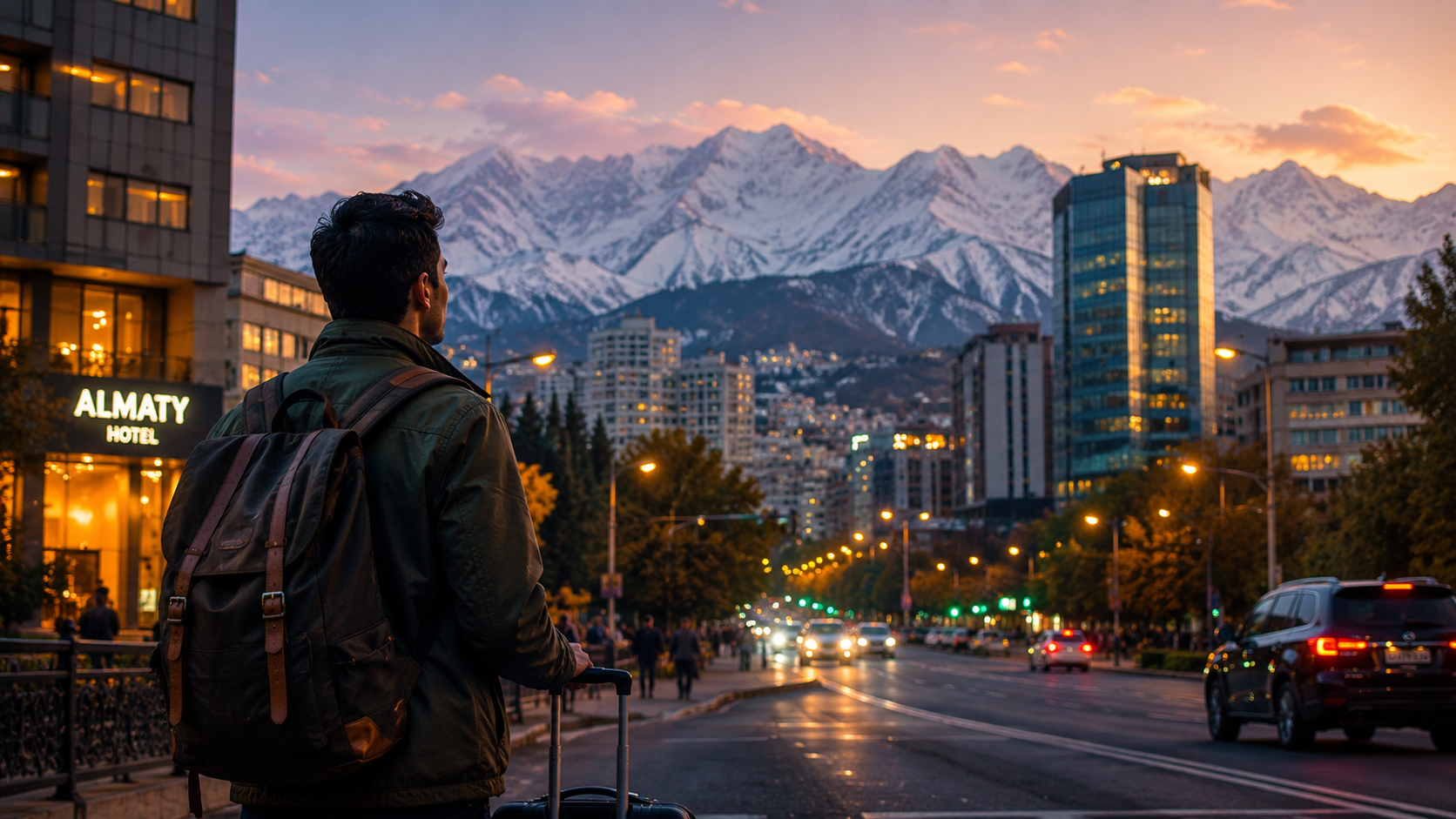
For first-time visitors, Almaty is also practical. It has strong flight connections, a good range of hotels, and enough variety to fill several days without rushing. The official Visit Almaty tourism site presents the city as a four-season destination with culture, gastronomy, mountain routes, and urban experiences. That combination is exactly why Almaty deserves its own article instead of being folded into a general Kazakhstan outdoor guide.
The City Between Mountains and Streets
One of the first things travelers notice is how close the mountains feel. Even when you are walking through the city center, the Trans-Ili Alatau range rises in the distance, giving Almaty a dramatic sense of place. The mountains are part of the city’s identity, but they do not need to dominate the whole article. Here, they work best as a backdrop to culture, food, and city life.
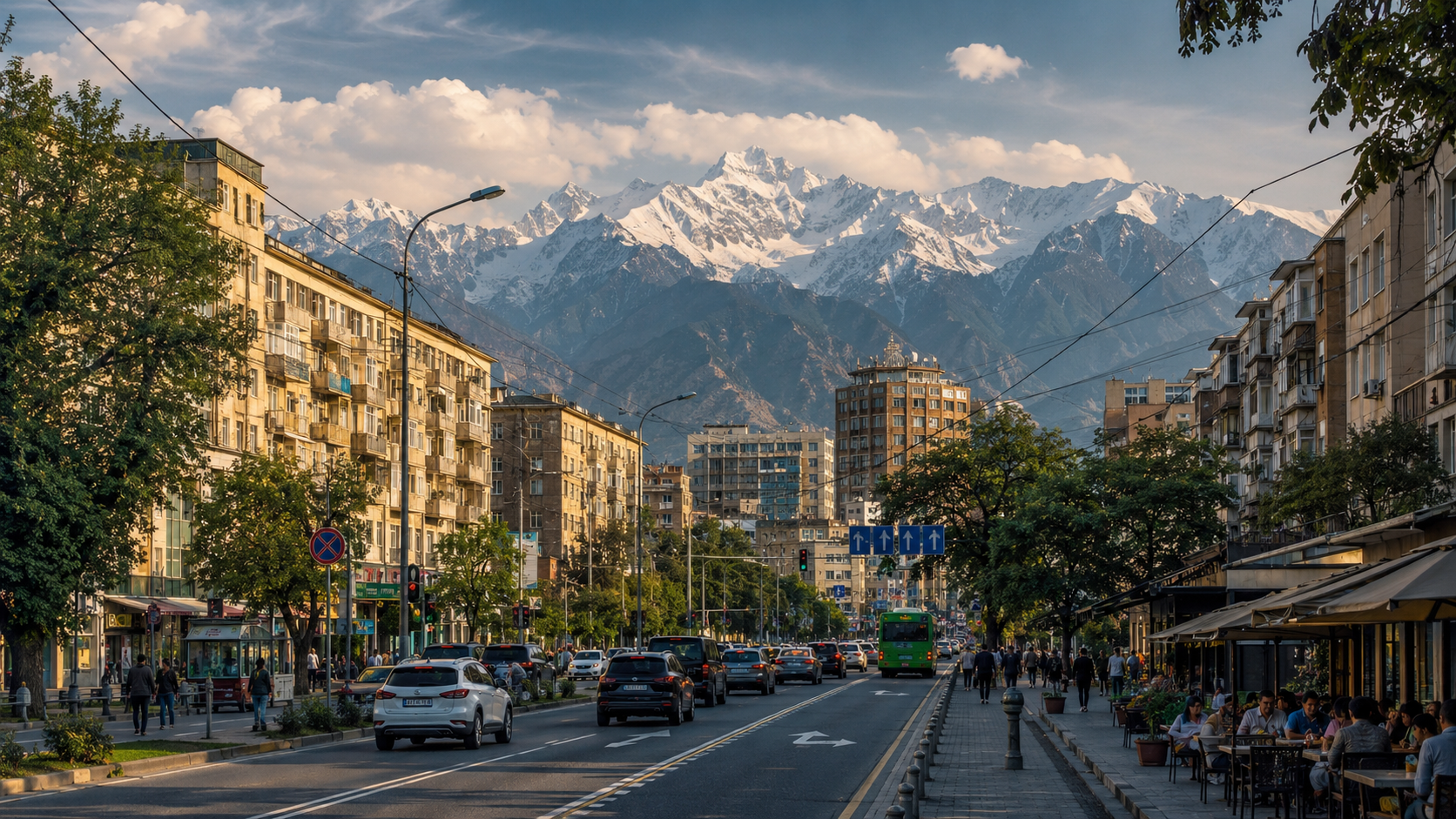
This balance is what makes Almaty different from many urban destinations. You can spend the morning in a museum or market, take a cable car for panoramic views in the afternoon, and end the day in a modern restaurant or wine bar. The city does not force travelers to choose between nature and culture. It blends them in a way that feels very Kazakhstan.
Panfilov Park and Ascension Cathedral
Panfilov Park is one of the easiest places to begin exploring Almaty. It is central, walkable, and full of local life, with families, students, tourists, and older residents all moving through the same green space. The park is also home to the Ascension Cathedral, often called Zenkov Cathedral, one of the city’s most recognizable landmarks.
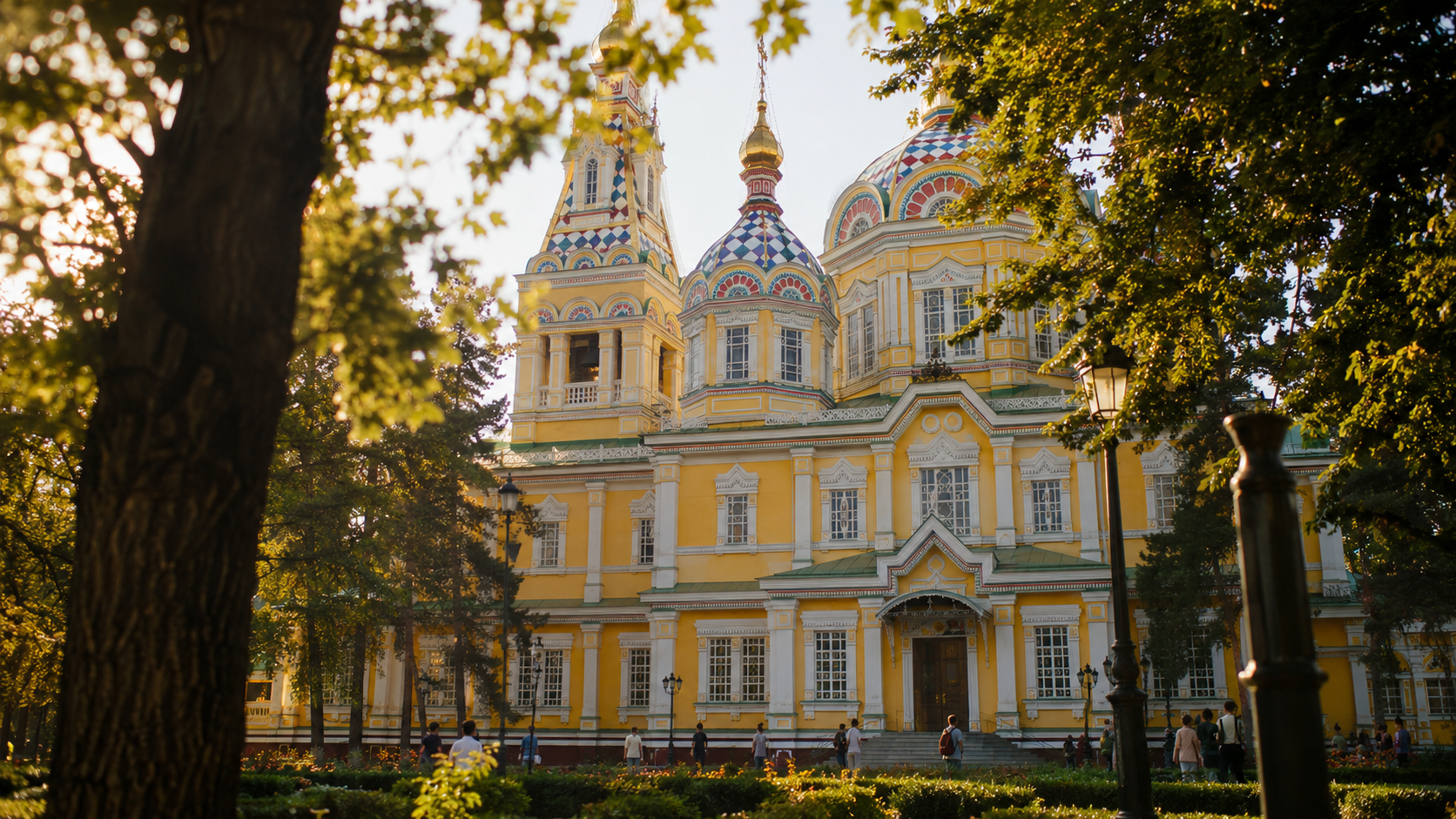
The cathedral’s colorful wooden structure gives the park a strong visual identity. It is beautiful, but it is also an active religious site, so visitors should approach it respectfully. Around the park, you begin to feel Almaty’s layered character: Orthodox architecture, Soviet memorials, everyday leisure, and modern city movement all sit close together. For anyone looking for things to do in Almaty, this area is an easy and meaningful first stop.
Green Bazaar Almaty: The City Through Food
If you want to understand Almaty quickly, go to the market. Green Bazaar Almaty is one of the city’s most sensory places, full of dried fruits, nuts, spices, bread, dairy, meat, sweets, and local snacks. It is not just a shopping stop; it is a living food map of the city and the wider region.
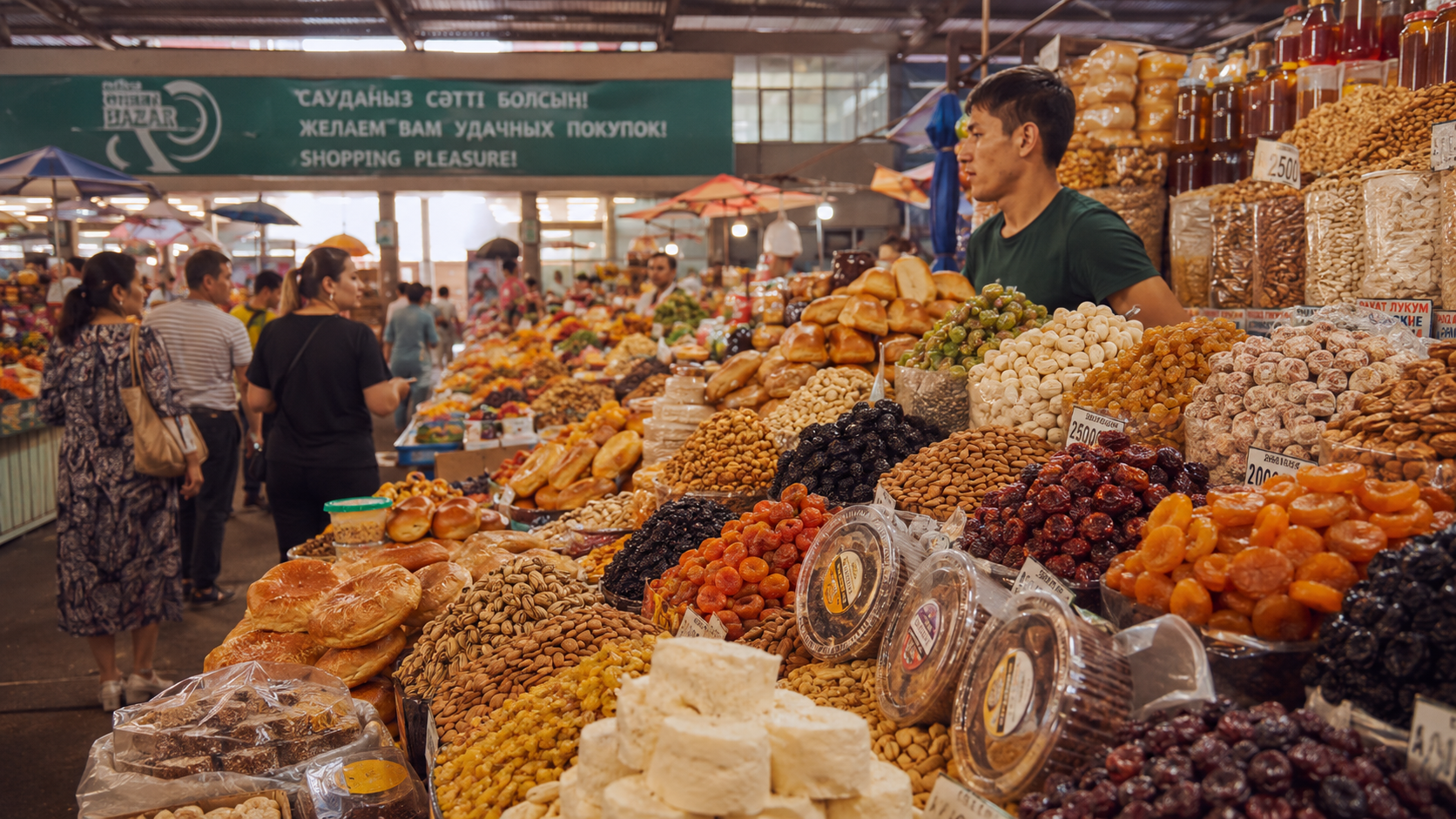
The bazaar connects naturally with Kazakhstan’s culinary identity. You may find kazy, kurt, baursak, fresh produce, tea, honey, and dried fruit that reflect both nomadic traditions and Silk Road exchange. It is a perfect companion to a deeper look at Kazakh cuisine, because the market shows how food traditions survive in everyday urban life. For travelers, this is one of the most memorable places to taste the city without needing a formal restaurant.
Almaty’s Cafe Culture and Modern Food Scene
Almaty is also a surprisingly good city for cafes and modern dining. You can find traditional Kazakh restaurants, Central Asian food, Korean influences, Georgian places, stylish coffee shops, bakeries, wine bars, and contemporary kitchens that reinterpret local ingredients. This makes the city feel young and outward-looking, while still rooted in regional flavors.
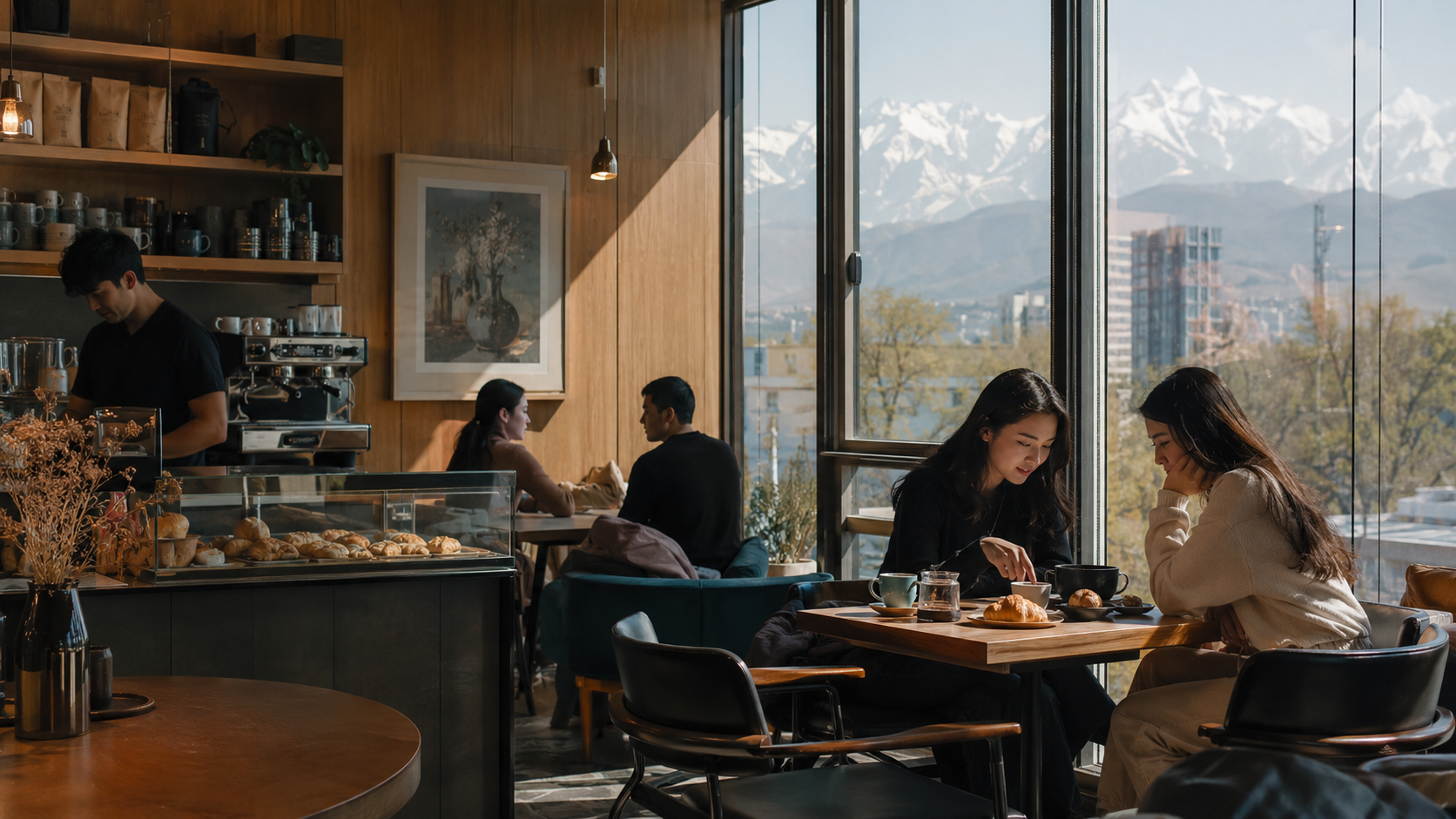
The best way to experience this side of Almaty is to mix old and new. Try a traditional meal one day, then a modern cafe or creative restaurant the next. The contrast helps you understand how the city is changing. Almaty does not present culture as something locked in the past. It turns it into something people eat, redesign, debate, and share.
Kok-Tobe Almaty: The City from Above
Kok-Tobe Almaty is one of the most popular viewpoints in the city, and for good reason. A short cable car ride takes visitors above the streets, opening up views of the urban grid, mountain slopes, and wide horizon. It is touristy, yes, but it is also genuinely useful for understanding the city’s geography.
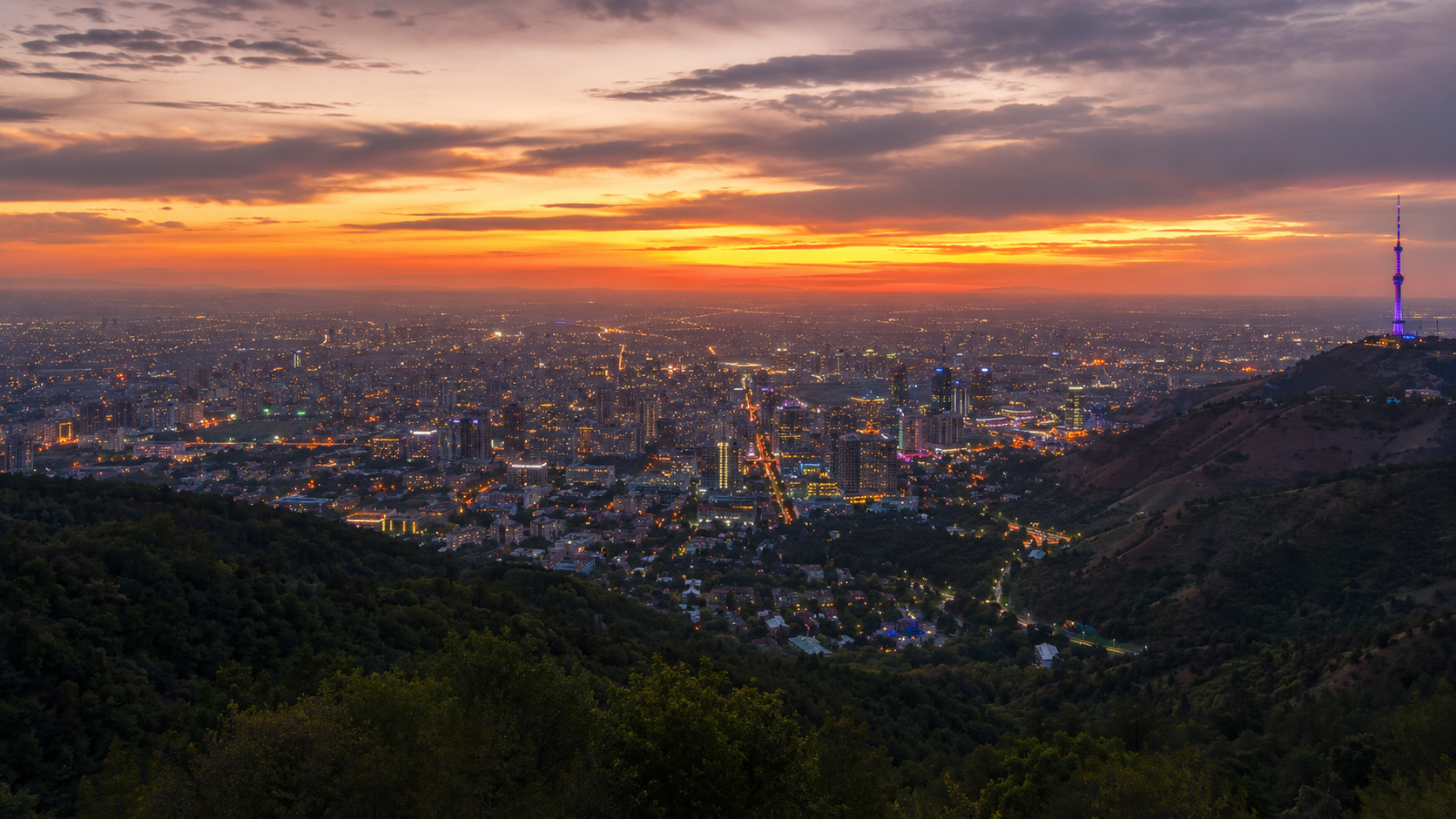
From above, Almaty makes more sense. You see how the city sits between foothills and plains, how the mountains frame daily life, and why the skyline feels so distinctive. Kok-Tobe works especially well near sunset, when the light softens and the city begins to glow. It is not the deepest cultural experience in Almaty, but it is one of the easiest ways to feel the scale of the place.
Soviet Layers and Modern Kazakhstan
Almaty still carries visible traces of its Soviet past. Wide avenues, apartment blocks, monuments, public squares, and institutional buildings all tell part of the story. Some travelers overlook this layer, but it is important because it helps explain the city’s 20th-century identity.
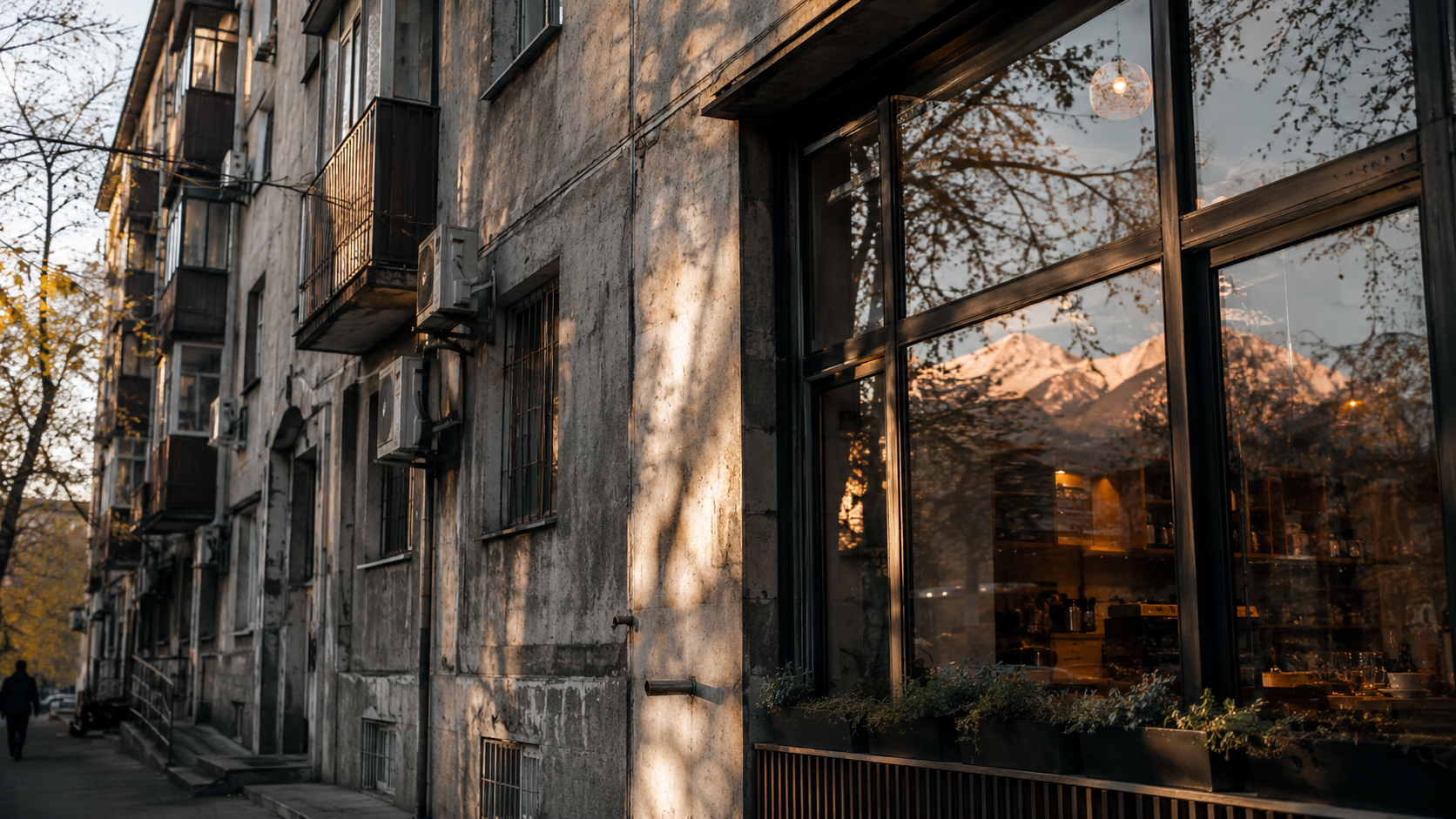
At the same time, Almaty is not stuck in that period. New cafes, galleries, hotels, creative spaces, and restaurants show a city constantly updating itself. This tension between Soviet structure and contemporary energy gives Almaty its texture. It is not a postcard-perfect old city, and that is part of its appeal. It feels lived-in, evolving, and real.
Museums, Art, and Local Culture
For travelers interested in culture, Almaty has enough museums and creative spaces to justify a slower stay. The Central State Museum is a useful place to learn about Kazakhstan’s history, archaeology, ethnography, and national identity. Art museums and galleries add another layer, showing both traditional influences and modern creative expression.
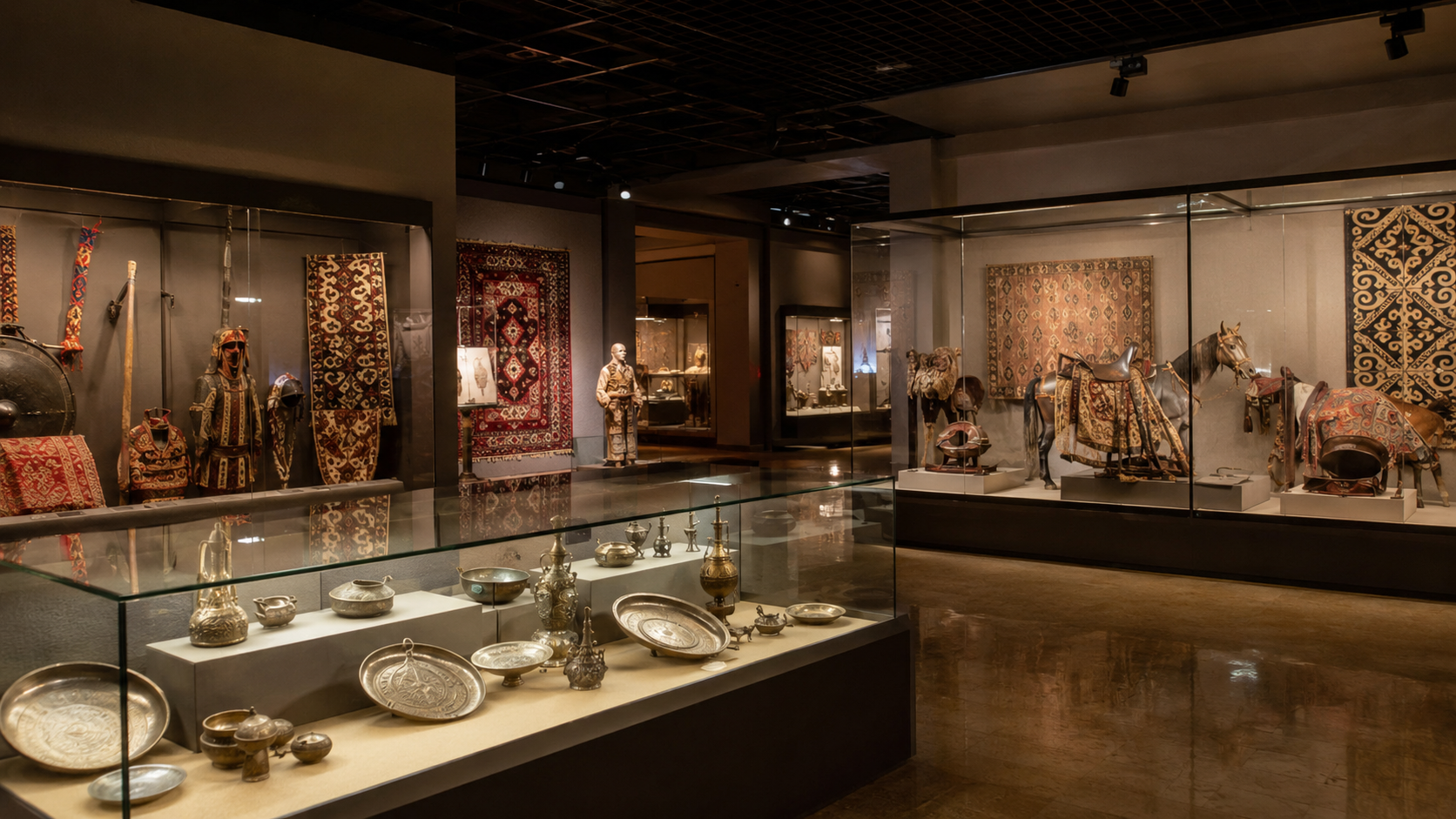
This cultural side matters because many visitors come to Kazakhstan expecting landscapes first. Almaty gently changes that expectation. It shows that Kazakhstan is not only steppe, mountains, and vast distances, but also urban culture, design, music, literature, and contemporary identity. A strong Almaty travel guide should make room for that human side.
The Silk Road Connection
Almaty is not usually marketed as dramatically as ancient Silk Road cities such as Turkestan or Taraz, but it still belongs to the wider story of exchange across the region. Markets, food, migration, trade, and cultural mixture all connect the city to older routes and regional movement. The Silk Road was not only about famous monuments; it was also about everyday encounters.
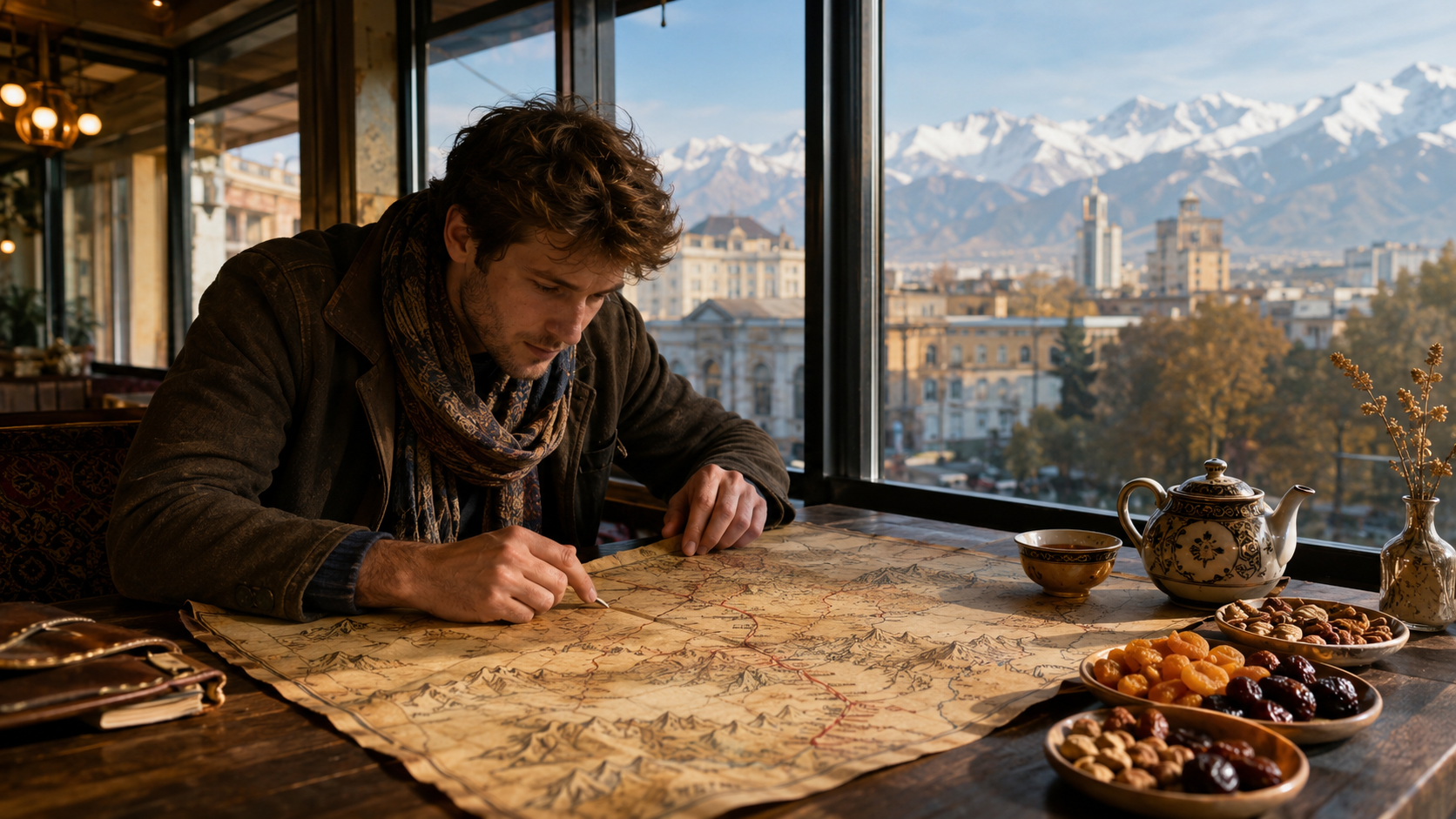
For travelers who want to go deeper into this historical layer, Almaty can be the modern beginning of a wider route. From here, the story can continue toward Silk Road cities in Kazakhstan, where Turkestan and Taraz reveal older urban and spiritual chapters. This makes Almaty a useful bridge between modern Kazakhstan and the country’s deeper historical geography.
Easy Escapes from Almaty: Mountains, Lakes, and Fresh Air
Almaty is famous for access to nature, but this article does not need to become another outdoor adventure guide. The better approach is to mention nature as part of the city experience, not the whole focus. Medeu, Shymbulak, Big Almaty Lake, and nearby mountain routes can be included as optional day trips, especially for travelers staying more than two or three days.
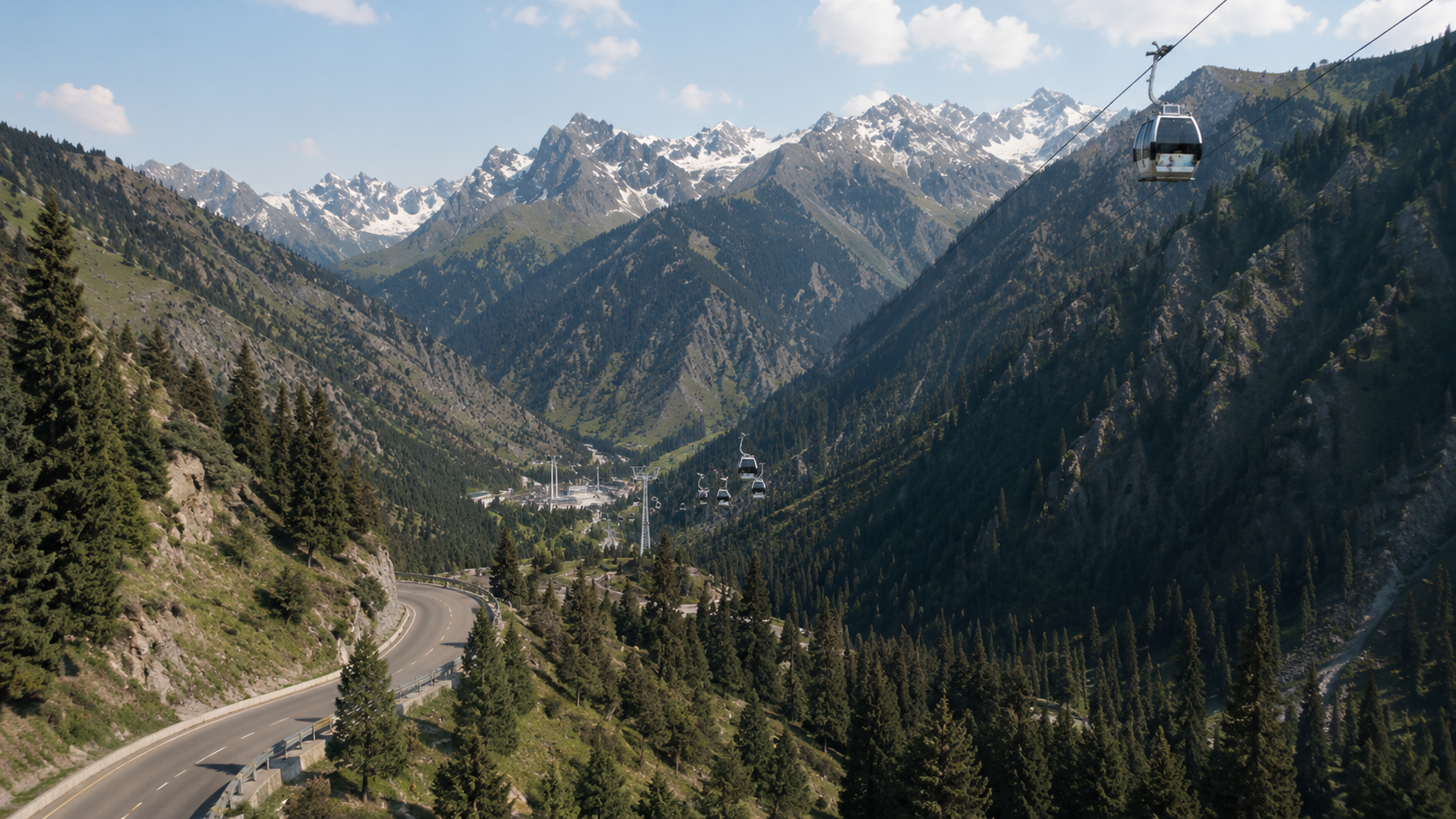
The key is balance. A visitor can enjoy the mountain setting without making the trip only about hiking or skiing. Almaty’s strength is that it lets you combine city life with easy escapes. That is more interesting than another generic list of trails and canyons. It also keeps this article from competing too directly with broader nature content like Kazakhstan wildlife.
Best Time to Visit Almaty
Spring and autumn are especially pleasant times to visit Almaty. The weather is usually more comfortable for walking, the city feels active, and the mountain views can be beautiful when the air is clear. Spring brings freshness and blossoms, while autumn adds golden tones to parks and streets.
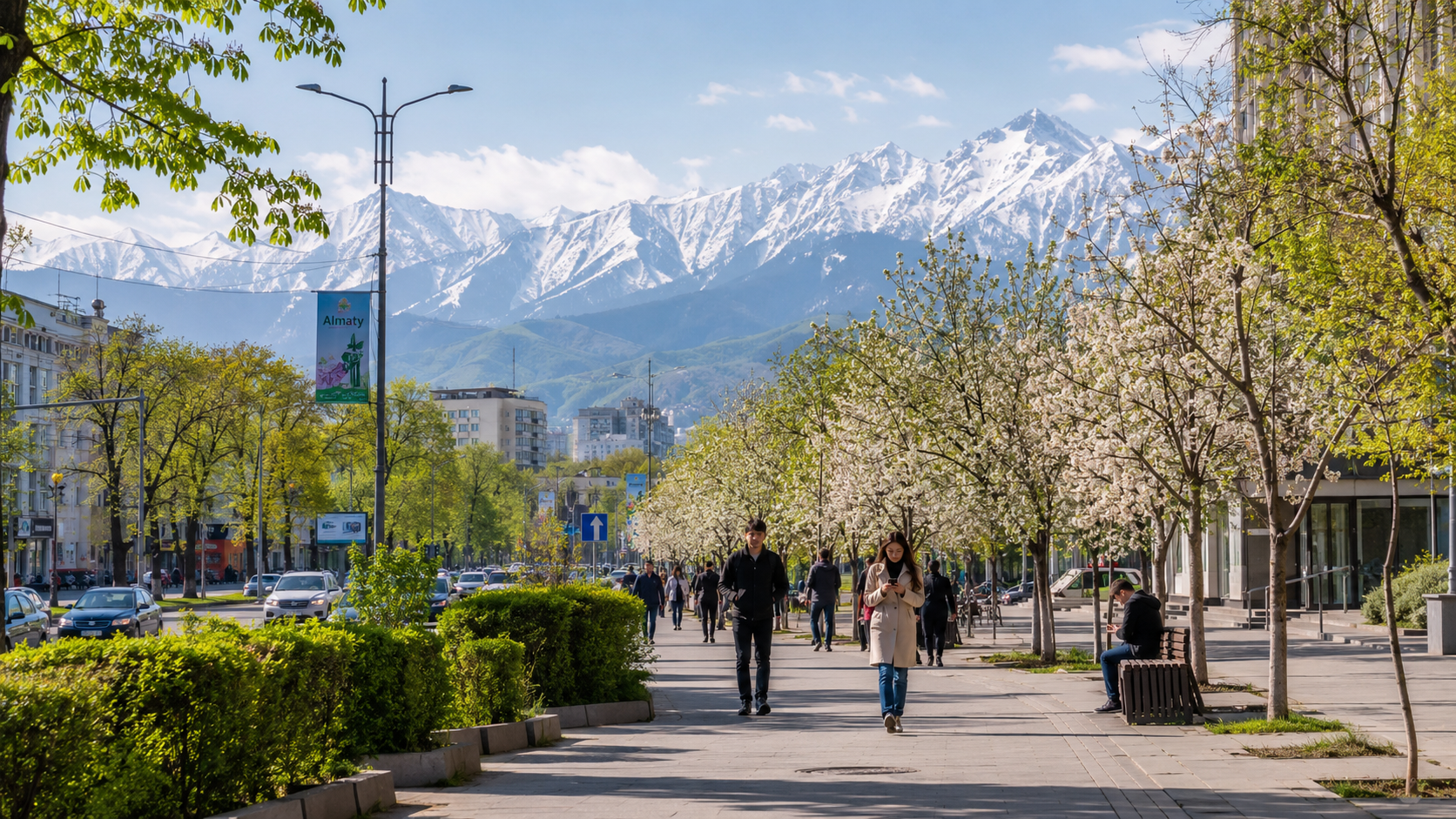
Summer can be lively, with outdoor cafes, events, and long days, although it may feel hot at times. Winter gives the city a different character, especially because nearby mountain areas become popular for skiing and snow views. This makes Almaty a flexible destination, but the best season depends on whether travelers want city walks, food, culture, mountain scenery, or winter atmosphere.
How Many Days Do You Need in Almaty?
A quick visit can work in two days, but three or four days is much better. With two days, travelers can see Panfilov Park, Ascension Cathedral, Green Bazaar, Kok-Tobe, a museum, and a few restaurants. With three or four days, the city opens up more naturally, allowing time for cafes, neighborhoods, viewpoints, and one nearby excursion.
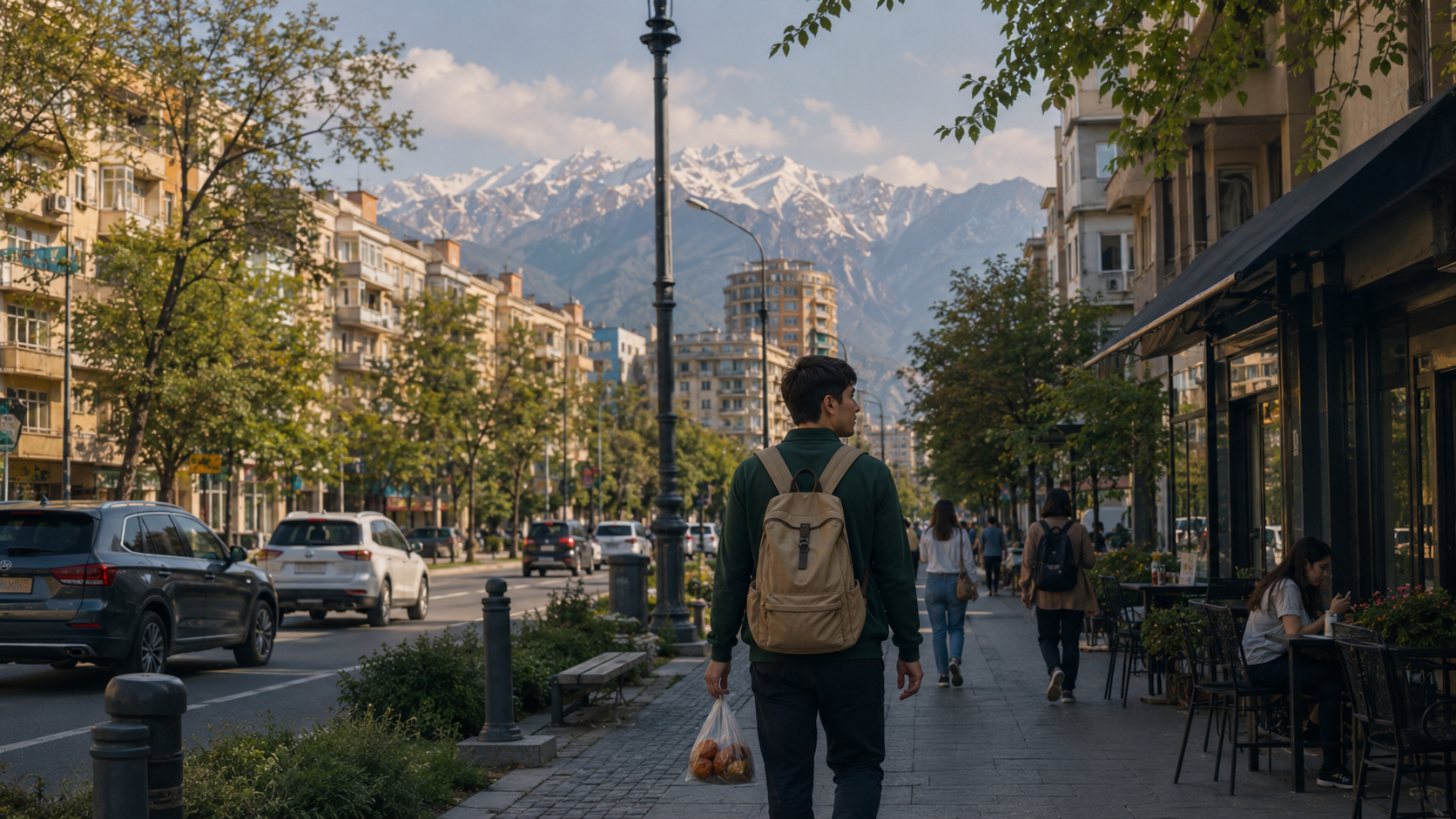
Almaty rewards a slightly slower pace. It is not the kind of city where every attraction must be rushed through. The best memories often come from small moments: tea after a market visit, mountain views between buildings, a long walk down a leafy street, or a conversation with someone who tells you where to eat next.
Practical Travel Tips for Almaty
Almaty is generally easier to navigate than many travelers expect. Ride-hailing apps are useful, the metro can help with some central routes, and many major sights are relatively straightforward to reach. Still, distances can be larger than they look on a map, so it is worth planning neighborhoods together rather than crossing the city repeatedly.
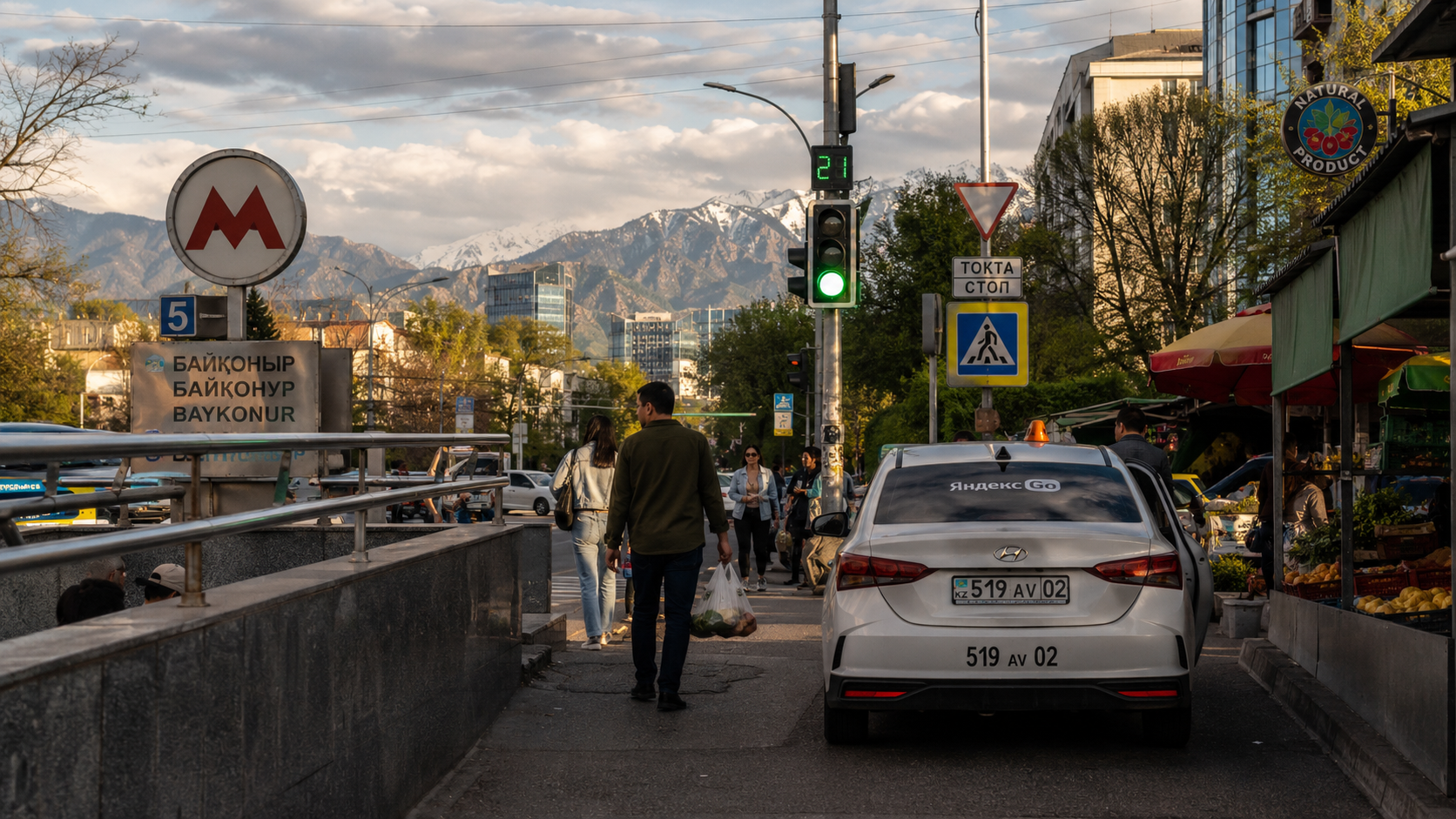
Travelers should also bring a little flexibility. English may be spoken in hotels and some tourist-facing places, but not everywhere. A translation app helps, and a few basic Russian or Kazakh phrases can make interactions warmer. Cash can still be useful in markets and smaller places, even though cards are common in many urban settings.
Conclusion
Almaty is one of the best places to begin understanding Kazakhstan because it brings together so many sides of the country. It has mountain views without being only a mountain destination, history without feeling like an open-air museum, and food culture that connects markets, restaurants, nomadic traditions, and modern creativity. This is what makes Almaty Kazakhstan feel so alive.
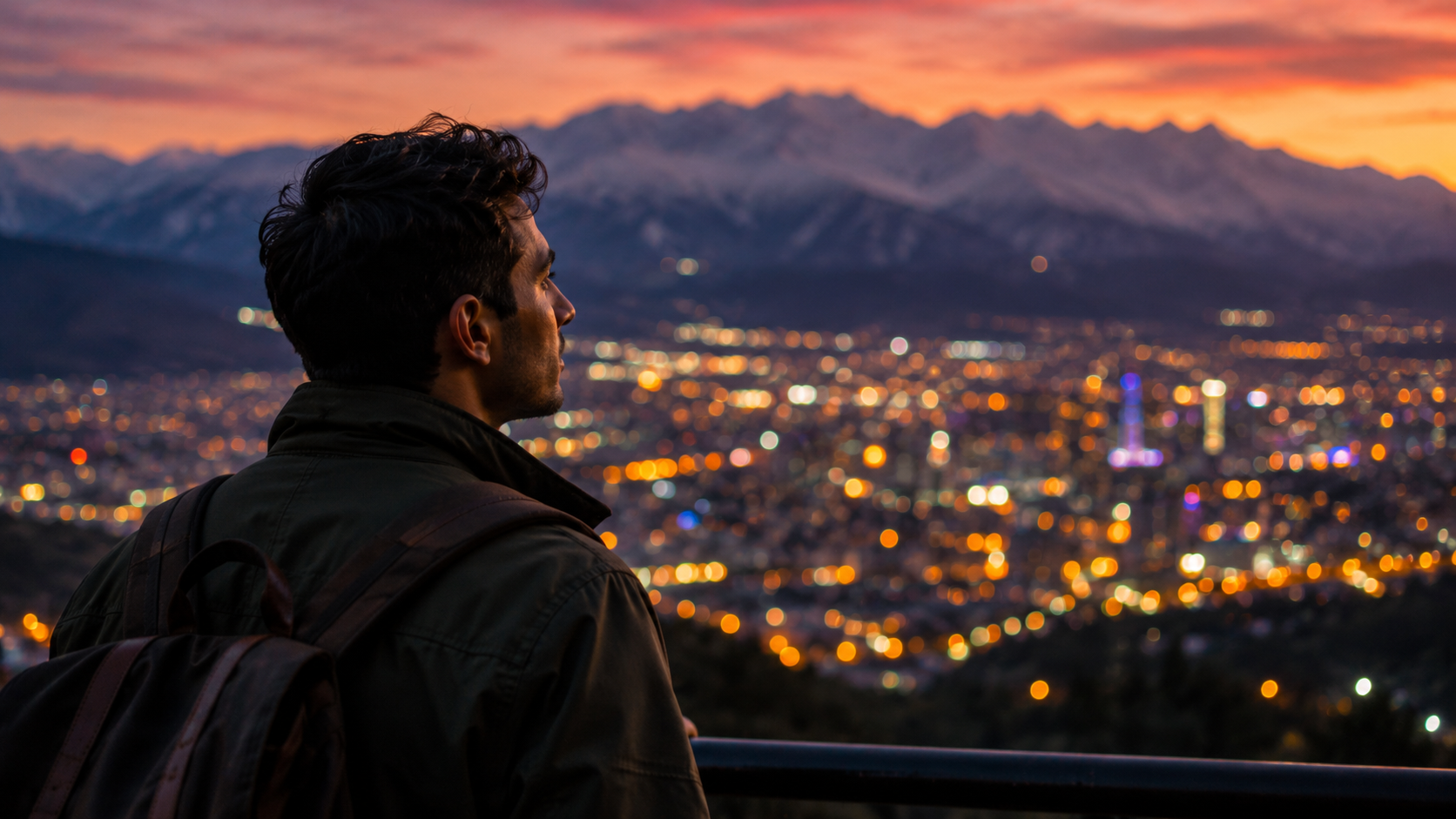
As a replacement for a generic outdoor article, an Almaty travel guide is much stronger. It gives readers a clear destination, useful travel ideas, cultural context, food experiences, and internal links to the wider Kazakhstan cluster. For travelers, Almaty is not just a stopover. It is the city where Kazakhstan starts to feel layered, human, and surprisingly easy to love.