
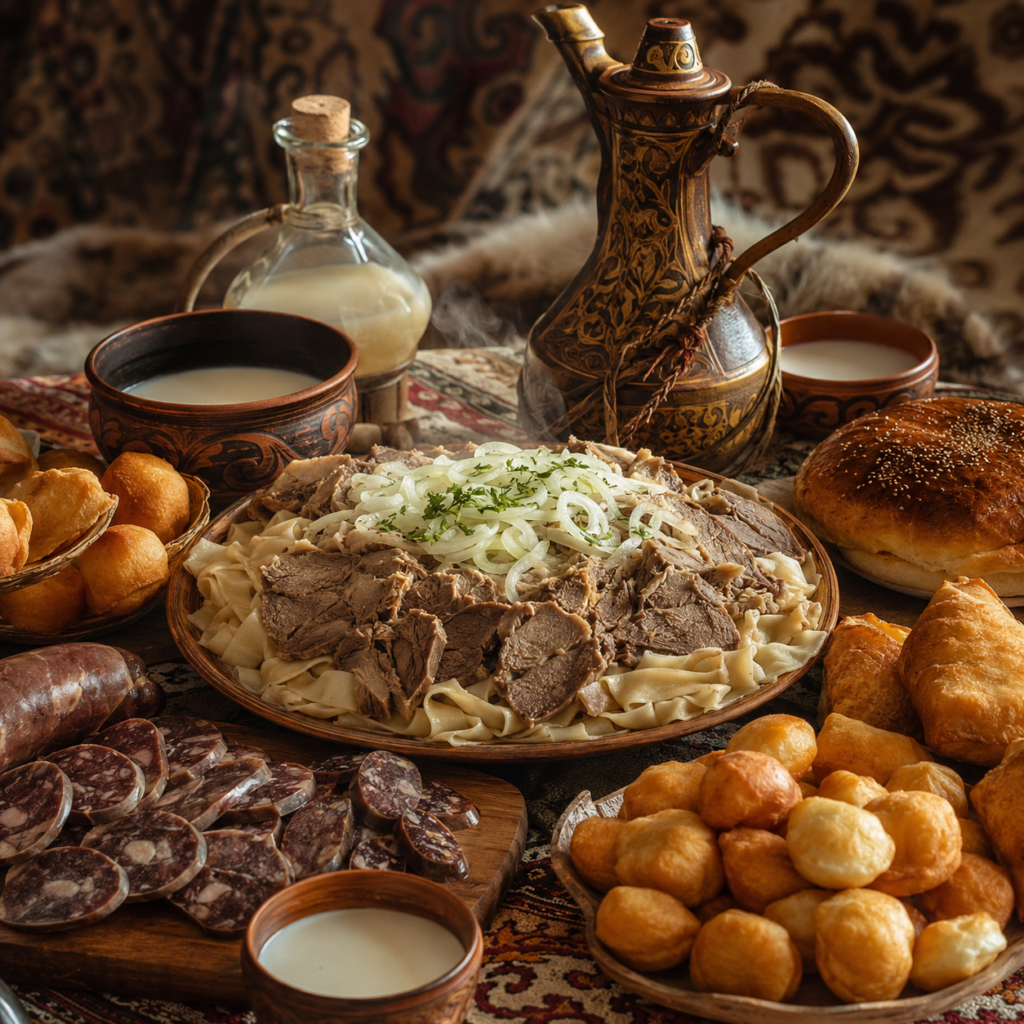
Kazakh cuisine is one of the most direct ways to understand Kazakhstan. It is hearty, generous, and deeply connected to the landscapes that shaped the country: open steppe, mountain pastures, long winters, and historic caravan routes. At first glance, many dishes may seem simple, built around meat, dairy, bread, and broth. But behind that simplicity is a food culture shaped by survival, movement, hospitality, and family rituals.
For travelers, traditional Kazakh food offers more than a list of dishes to try. It tells a story about nomadic life, seasonal rhythms, and the importance of sharing a table. A bowl of broth, a piece of fried bread, or a plate of hand-cut noodles can say as much about Kazakhstan as a museum or monument. To taste the country properly, you need to look beyond restaurant menus and understand the traditions behind the meal.
Why Kazakh Food Is So Closely Tied to the Steppe
The steppe shaped the way people lived, moved, cooked, and preserved food. For centuries, nomadic families needed meals that were nourishing, practical, and suited to a mobile lifestyle. Meat and dairy became central because horses, sheep, camels, and cattle were not just sources of food, but part of daily life, transport, trade, and identity.
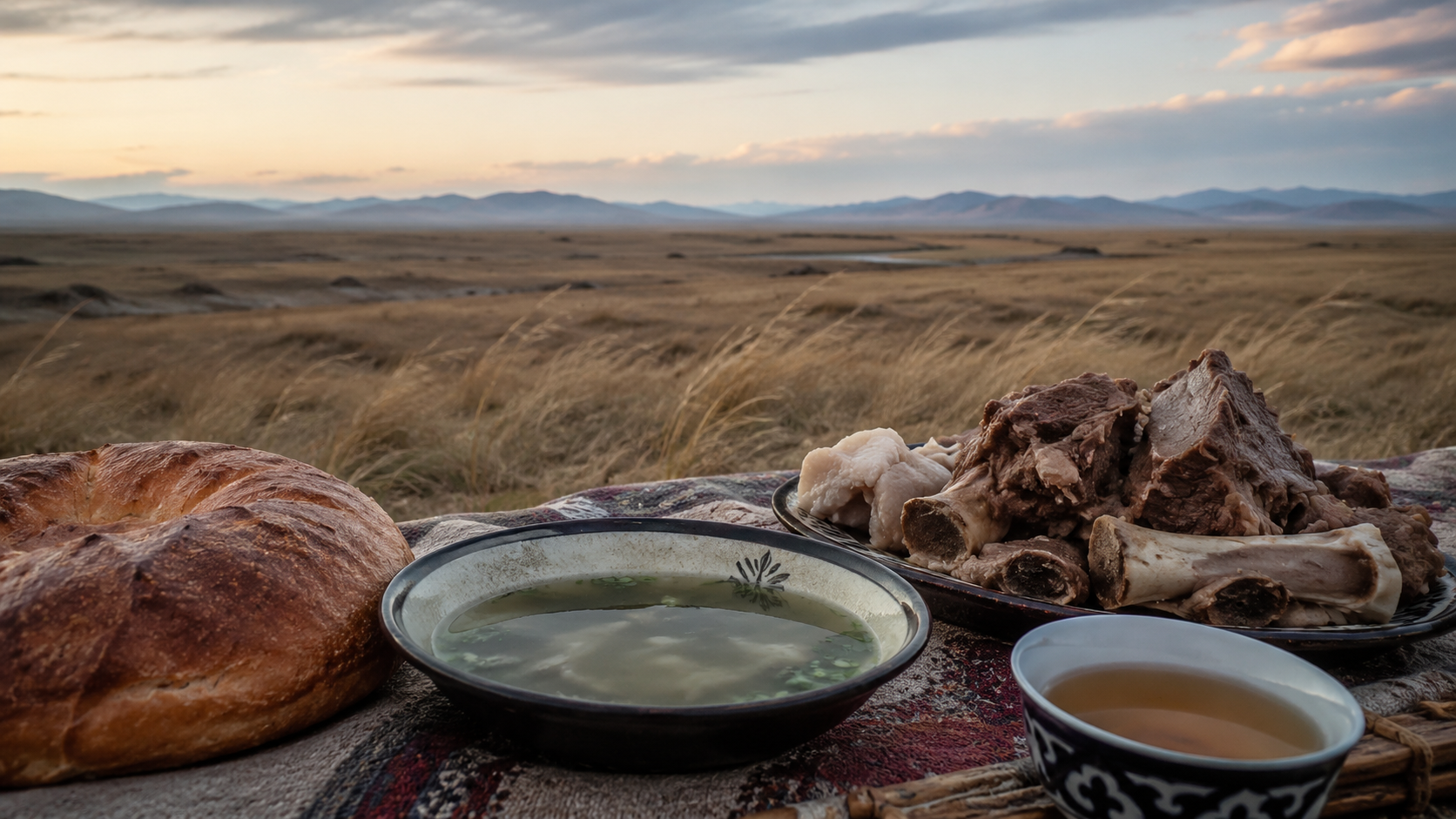
This is why Kazakh cuisine often feels rich and sustaining. It was never designed to be delicate or decorative in the modern restaurant sense. It was made to feed families, welcome guests, and provide energy in a demanding environment. Even today, many classic dishes carry that same spirit: generous portions, slow cooking, deep flavors, and a strong sense of occasion.
Beshbarmak: The Dish That Defines Kazakh Hospitality
No introduction to Kazakh cuisine is complete without beshbarmak. Often considered the national dish of Kazakhstan, beshbarmak is usually made with boiled meat served over wide sheets of dough or noodles, with onions and a flavorful broth. The name is commonly translated as “five fingers,” referring to the traditional way of eating the dish by hand.
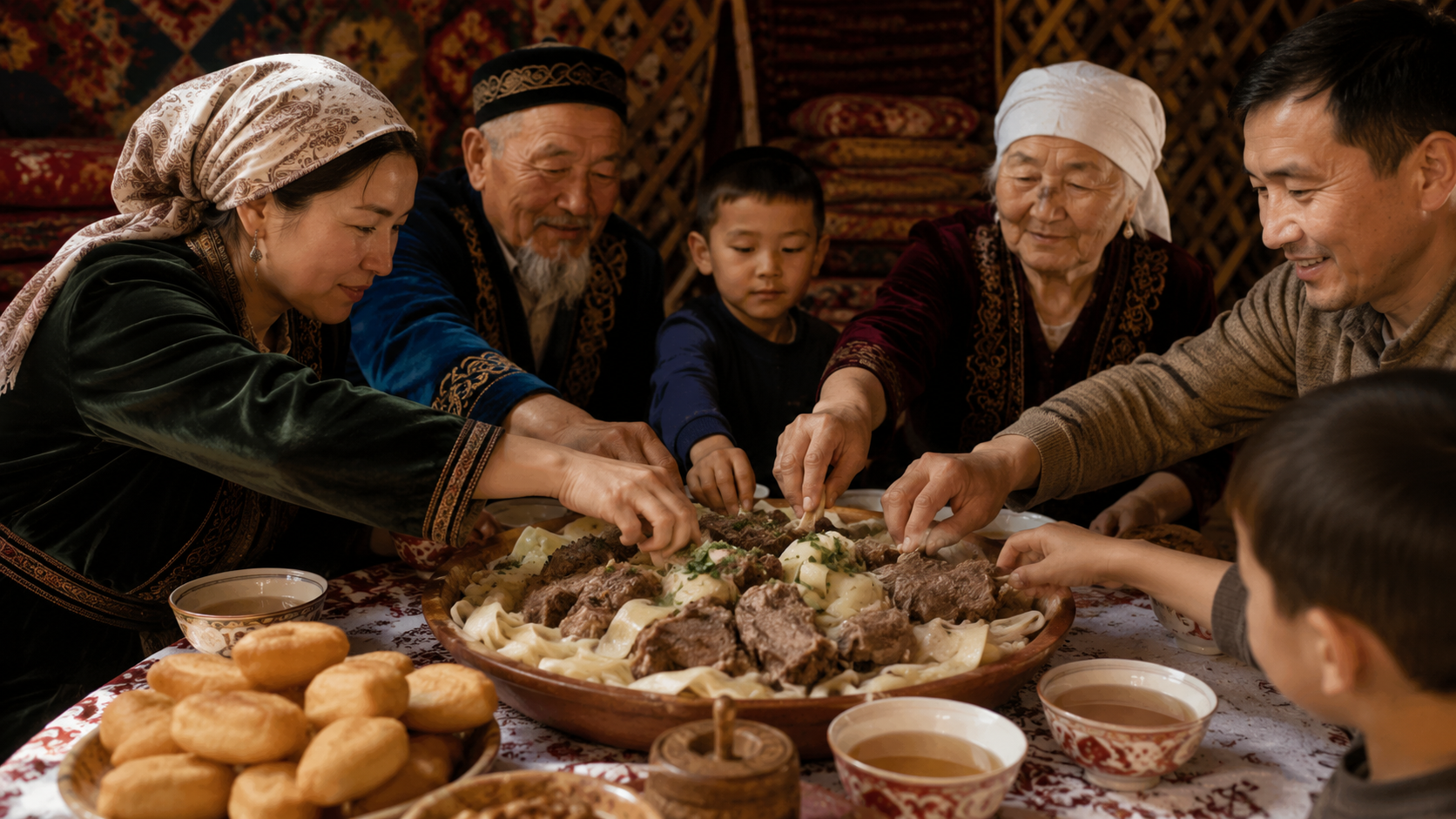
But beshbarmak is more than a plate of meat and noodles. It is a communal dish, often served at family gatherings, celebrations, and important occasions. The order of serving, the way the meat is shared, and the presence of broth all reflect a culture where food is tied to respect and hospitality. For travelers, it is one of the best dishes to try if you want to understand Kazakhstan food culture through one meal.
Kazy, Shuzhuk, and the Role of Horse Meat
Horse meat has an important place in traditional Kazakh food, and visitors may encounter it in dishes such as kazy and shuzhuk. Kazy is a sausage made from horse meat, often served sliced as part of a larger meal or celebration table. Shuzhuk is another type of horse meat sausage, usually smoked or dried, with a rich and distinctive flavor.
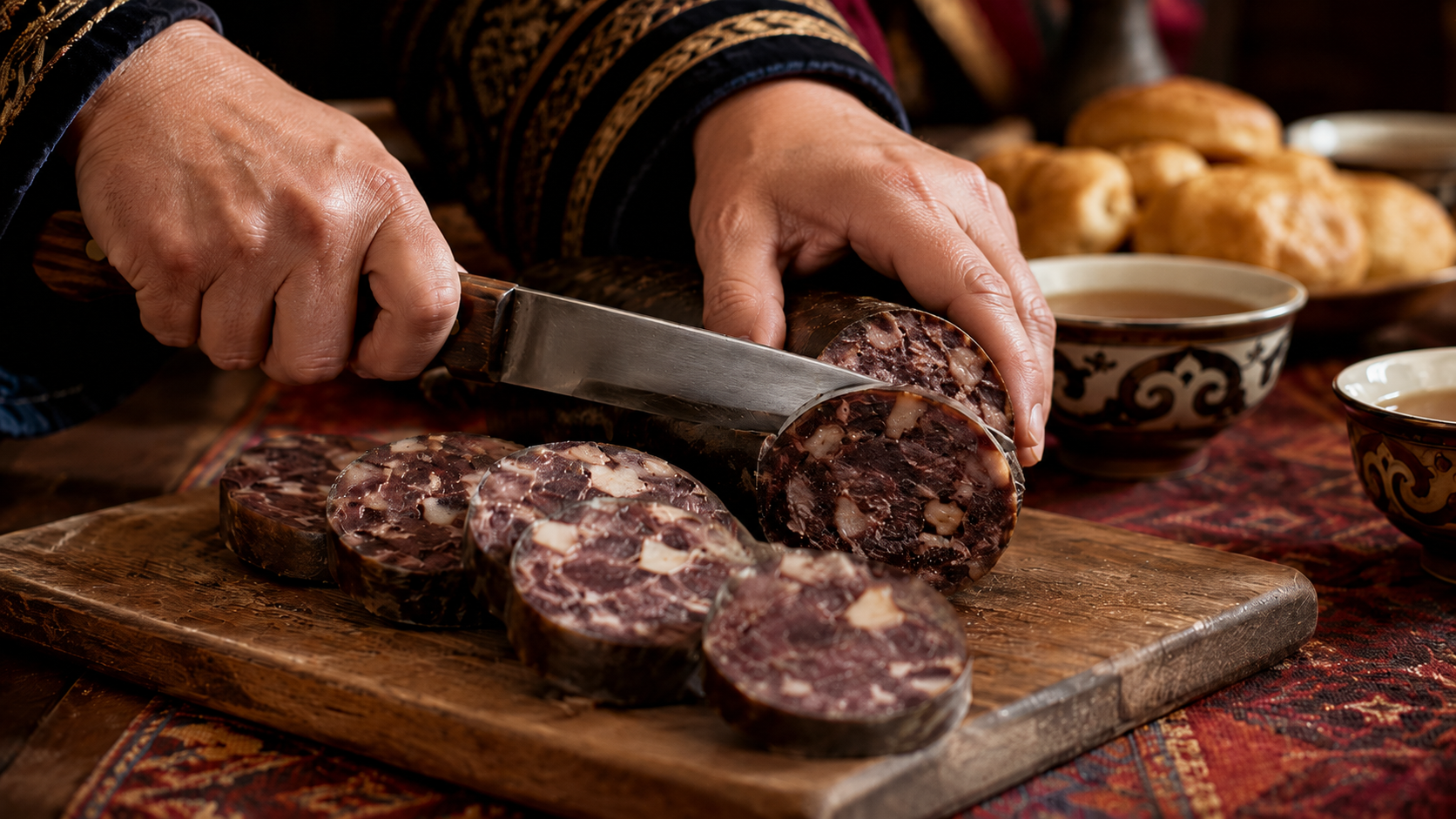
For some travelers, horse meat may feel unfamiliar, but in Kazakhstan it is connected to history, status, and pastoral life. Horses were central to movement across the steppe, and their role in cuisine reflects that long relationship. Trying these dishes is not just about taste; it is about understanding a different food tradition on its own terms.
Kumis: Fermented Mare’s Milk and Nomadic Heritage
Kumis is one of the most distinctive drinks in Kazakhstan. Made from fermented mare’s milk, it has a sour, lightly fizzy taste and a small natural alcohol content. For first-time visitors, the flavor can be surprising, but it is one of the clearest links between food and nomadic heritage.
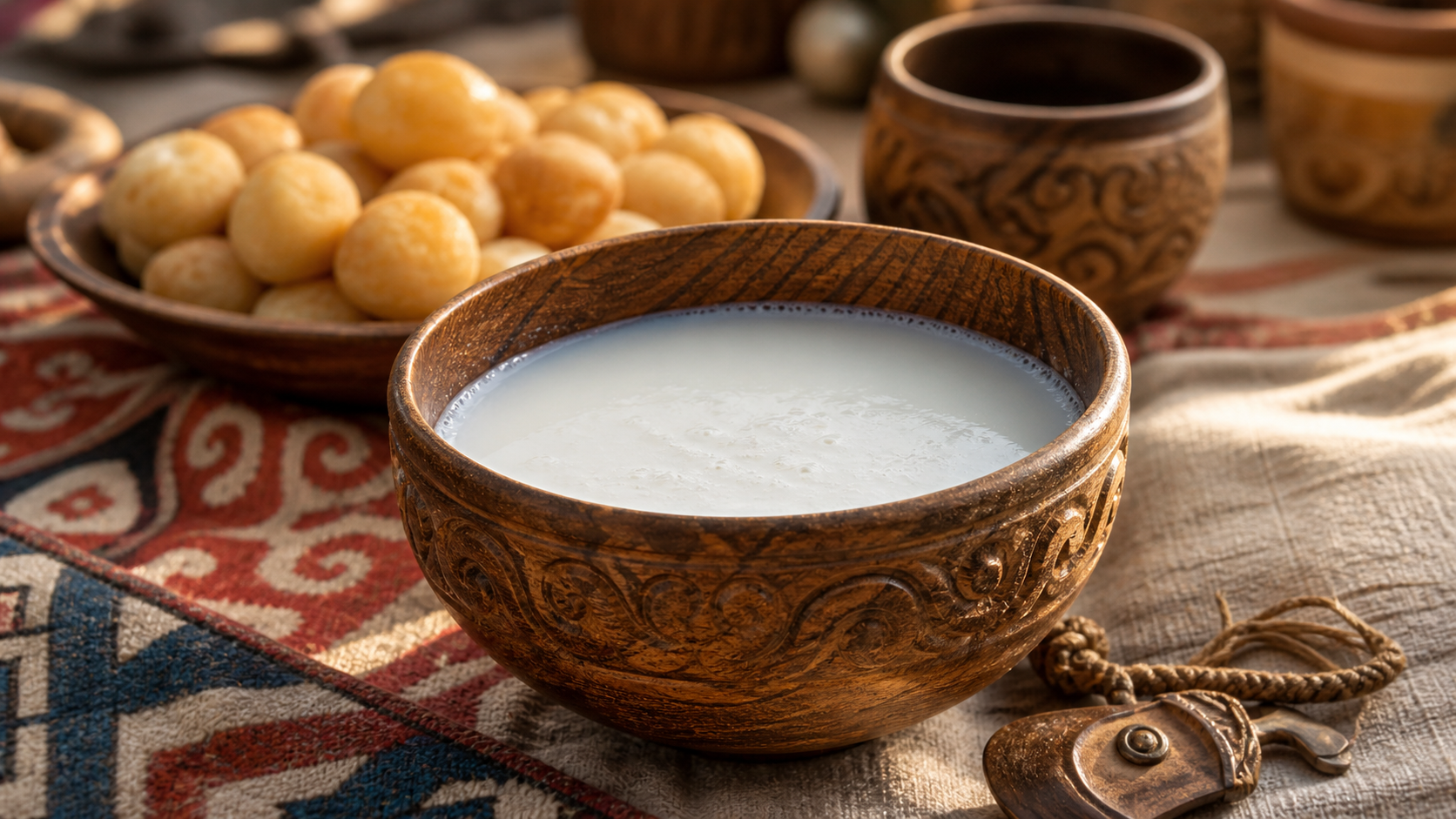
Traditionally, kumis was valued not only as a drink, but also as a seasonal source of nourishment. It belongs to a wider culture of fermented dairy products across the steppe. The Slow Food Foundation describes traditional kumis as fermented mare’s milk with a sour taste and natural fermentation process. For curious travelers, tasting it is one of those small experiences that makes a trip feel more rooted in place.
Shubat, Ayran, and the World of Fermented Dairy
Kumis may be the most famous fermented drink, but it is not the only one worth knowing. Shubat, made from fermented camel milk, is especially associated with regions where camel herding is part of local life. It has a thicker texture and a sharper taste than many visitors expect, but it is deeply connected to the food traditions of arid and steppe areas.
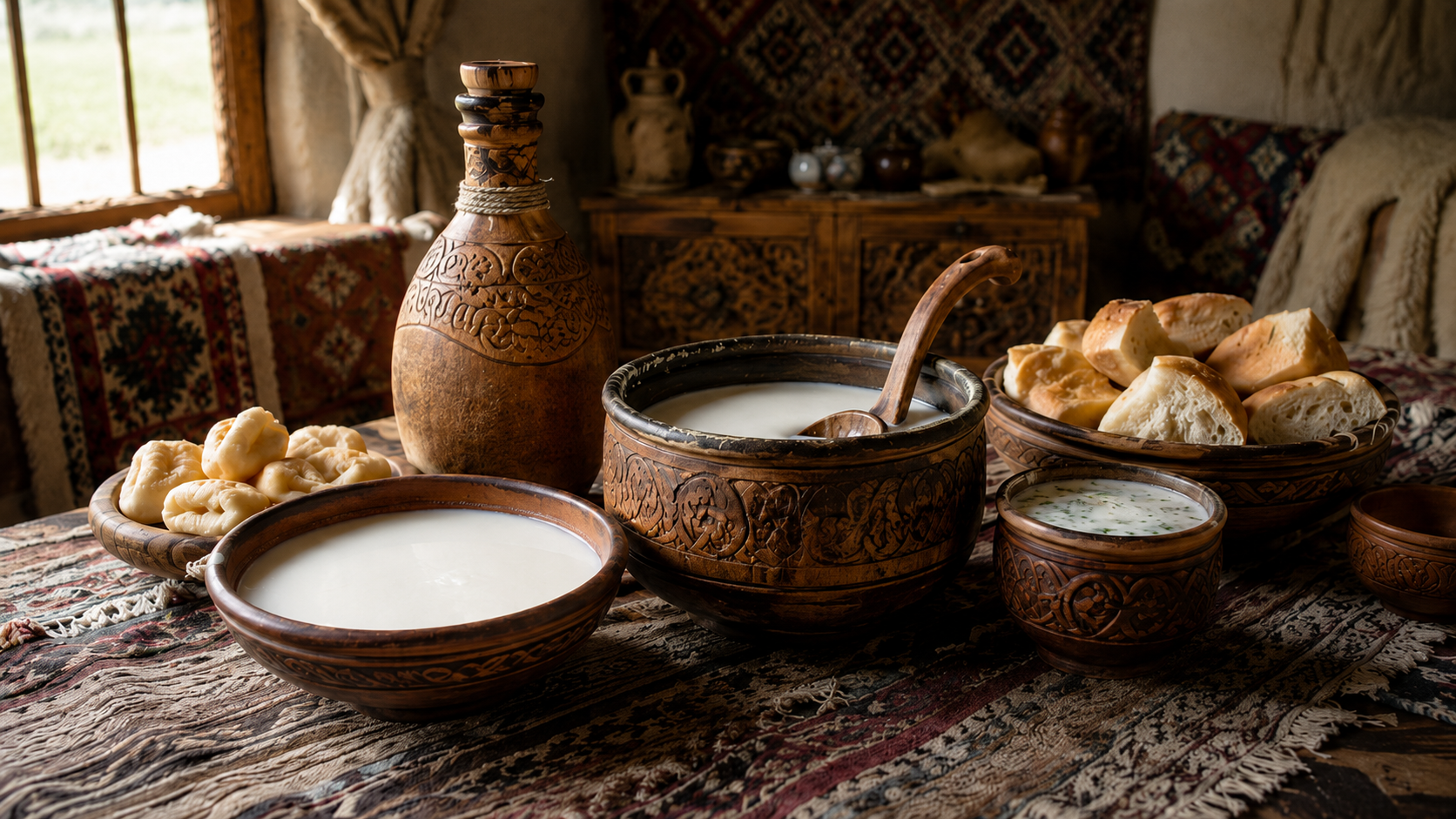
Ayran, a yogurt-based drink, is more familiar to many travelers and easier to enjoy on a first tasting. It is refreshing, salty, and often served with heavy meals. Together, these drinks show how important dairy is in Kazakhstan food culture. Fermentation was practical, but it also created flavors that remain central to the country’s table today.
Baursak: The Fried Bread Everyone Remembers
Baursak is one of the most loved foods in Kazakhstan, and it often becomes a favorite for travelers. These small pieces of fried dough are soft, golden, slightly chewy, and usually served in generous bowls. They may appear at family meals, celebrations, roadside stops, and restaurant tables.
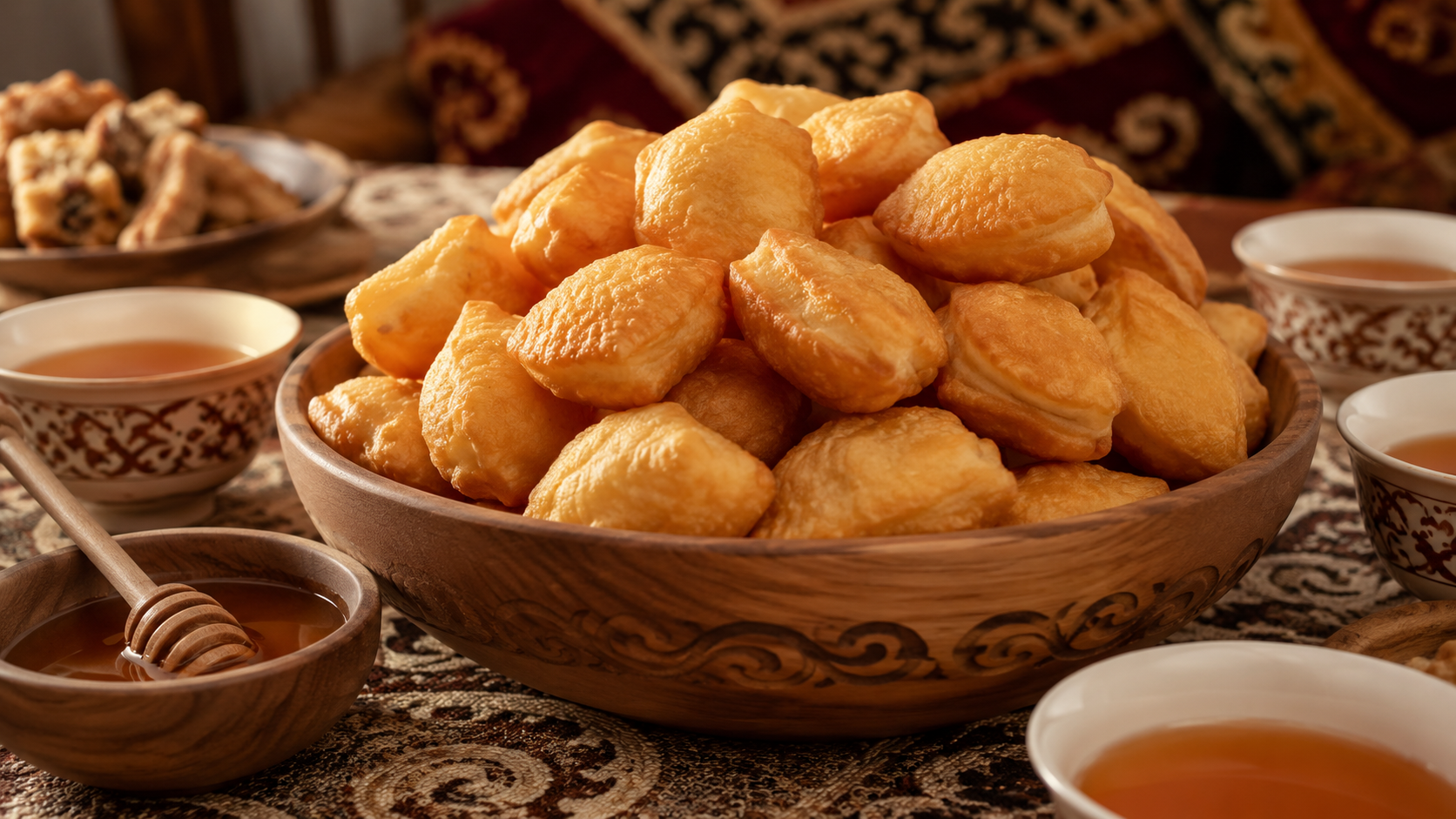
Part of the charm of baursak is its simplicity. It works with tea, soup, meat, honey, jam, or just on its own. In many homes, it also carries emotional meaning because it is associated with warmth, family, and welcome. If beshbarmak represents the ceremonial side of Kazakh cuisine, baursak represents everyday generosity.
Tea Culture and the Art of Welcoming Guests
Tea is everywhere in Kazakhstan, and it plays a much bigger role than many travelers expect. A guest is often offered tea almost immediately, and refusing too quickly can feel abrupt in a traditional setting. The table may include sweets, dried fruit, nuts, baursak, cream, jam, or small snacks depending on the household and region.
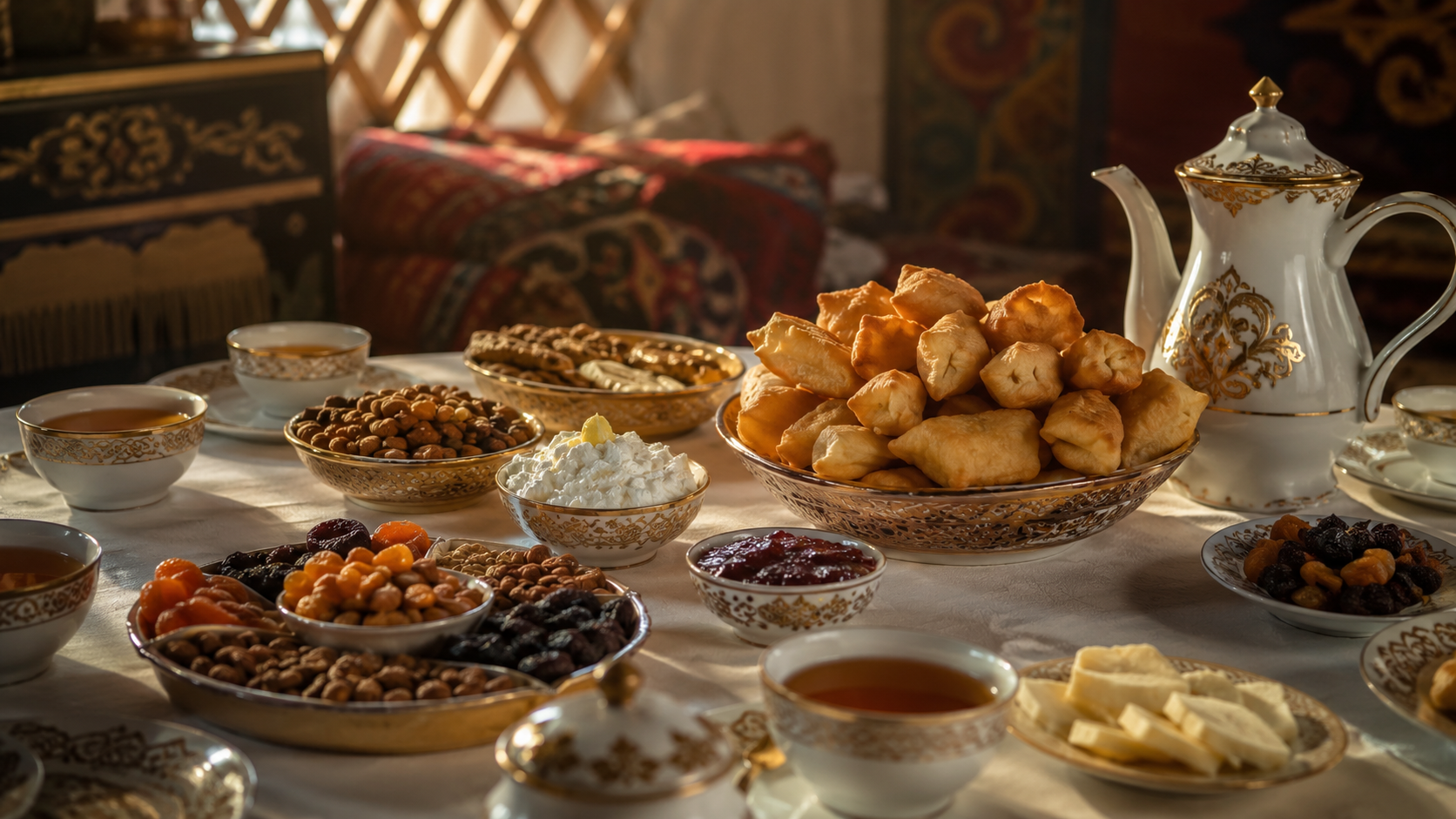
This tea culture is one of the softest and most human parts of Kazakh hospitality. It slows everything down. Conversations stretch, plates are refilled, and the meal becomes less about eating quickly and more about being present. For visitors, accepting tea is often the easiest way to feel the warmth of local culture.
Kuyrdak: A Rustic Dish with Deep Flavor
Kuyrdak is a traditional fried or stewed dish usually made with meat and offal, often cooked with onions and sometimes potatoes. It is rich, savory, and deeply satisfying, especially in colder weather. While it may not be as internationally famous as beshbarmak, it is an important dish for understanding the rustic side of Kazakh cooking.
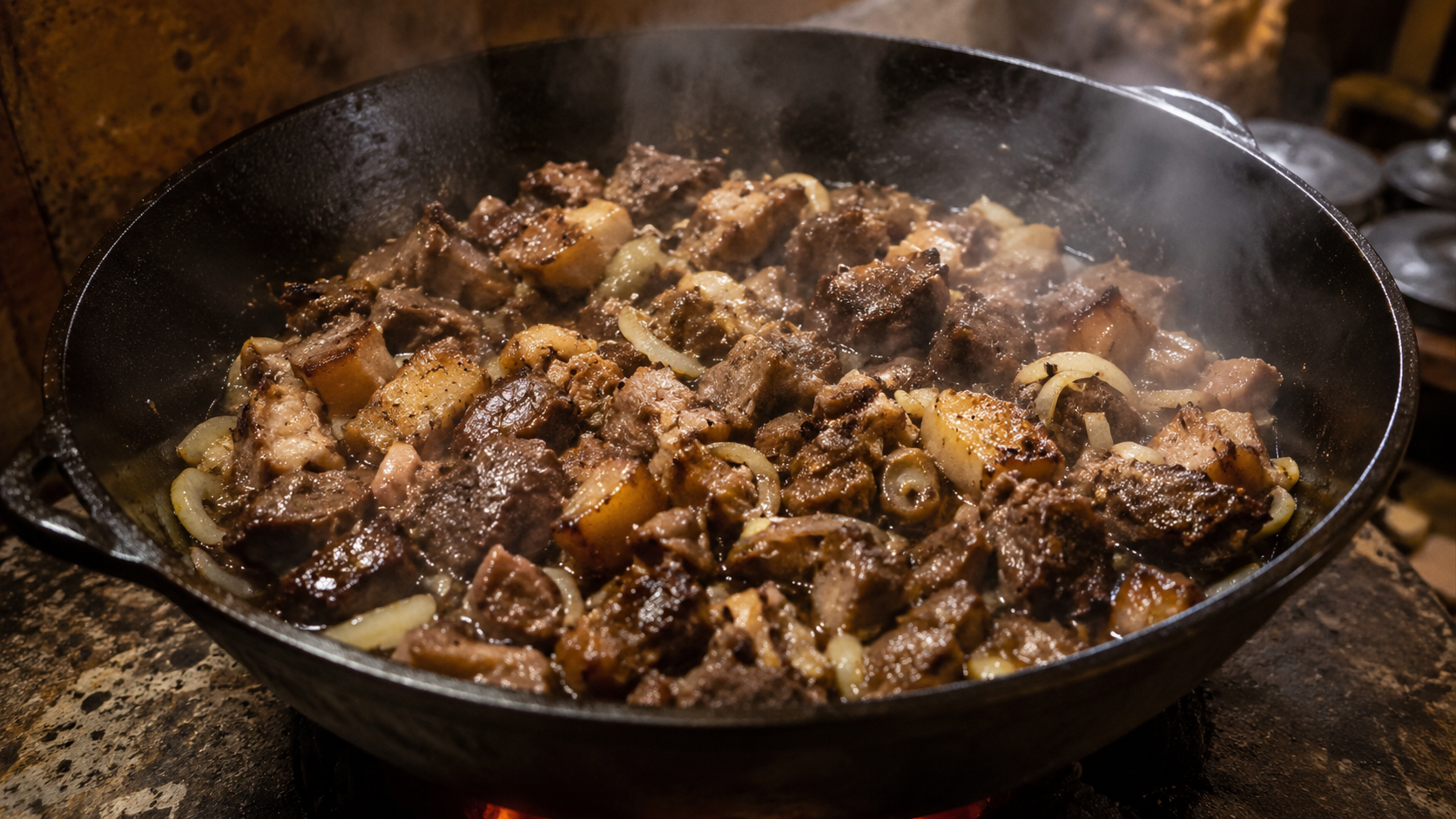
This is not a dish designed for visual elegance. Its appeal comes from depth, heat, and comfort. Kuyrdak reflects a practical food tradition where nothing valuable was wasted, and where strong flavors came from simple ingredients cooked well. Travelers who enjoy hearty local dishes should put it on their list.
Nauryz Kozhe: A Dish of Renewal
Nauryz Kozhe is closely connected with Nauryz, the spring holiday celebrated across Kazakhstan and much of Central Asia. It is usually made with seven symbolic ingredients, which may include water, meat, salt, grains, dairy, and other elements depending on family tradition. The dish represents renewal, abundance, and the beginning of a new season.
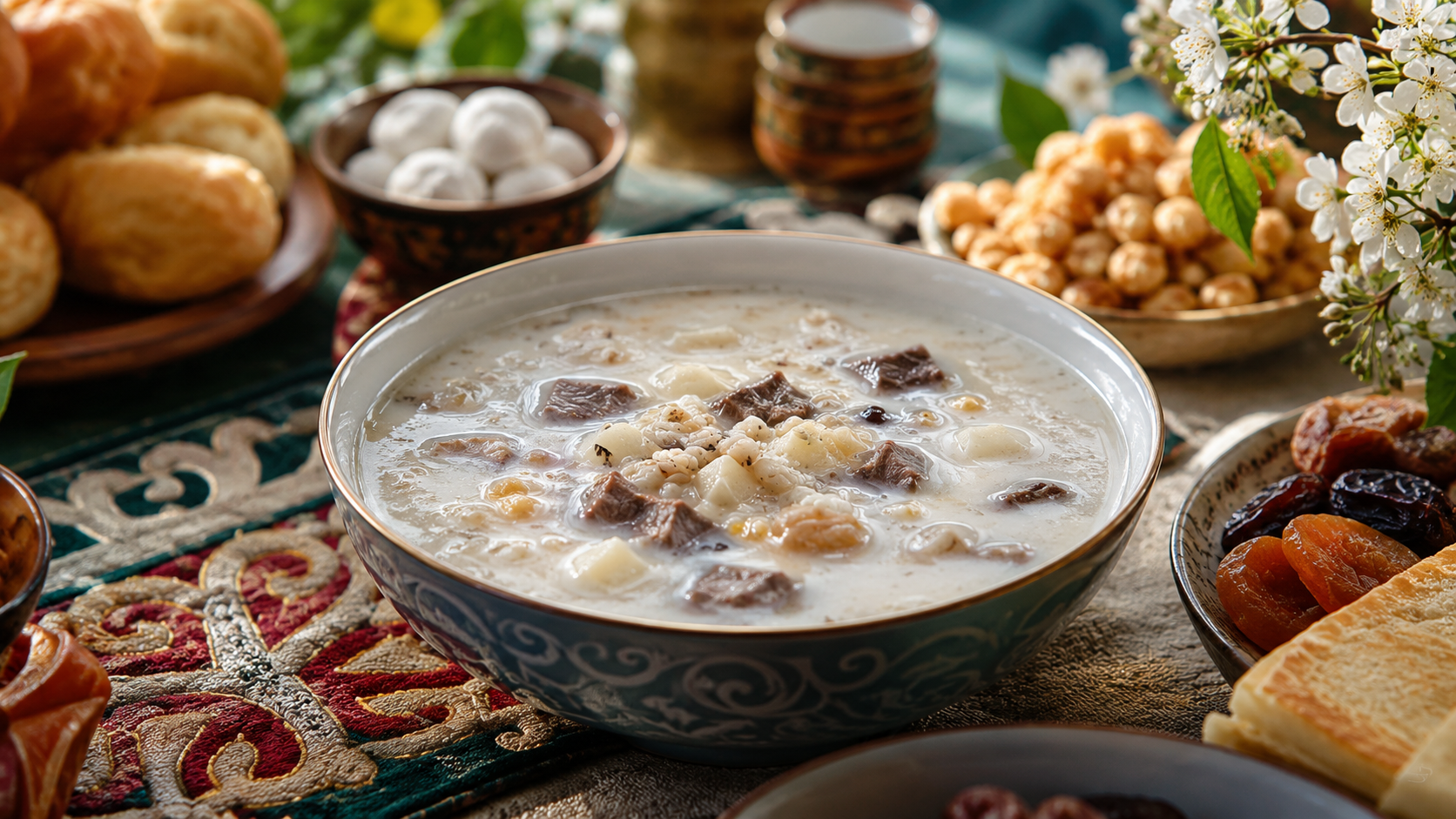
For travelers visiting during Nauryz, this dish offers a special window into Kazakh culture. It is not just food, but ritual and symbolism in a bowl. The taste can vary from household to household, which is part of its beauty. It reminds visitors that traditional Kazakh food is not fixed in one restaurant version; it lives through families, regions, and seasonal celebrations.
Silk Road Influences on Kazakh Cuisine
Kazakhstan’s cuisine is also shaped by trade, migration, and cultural exchange. The country’s historic position along Silk Road routes brought influences from neighboring Central Asian cultures and beyond. This is why travelers may find dishes such as lagman, manty, samsa, and plov alongside older nomadic foods.
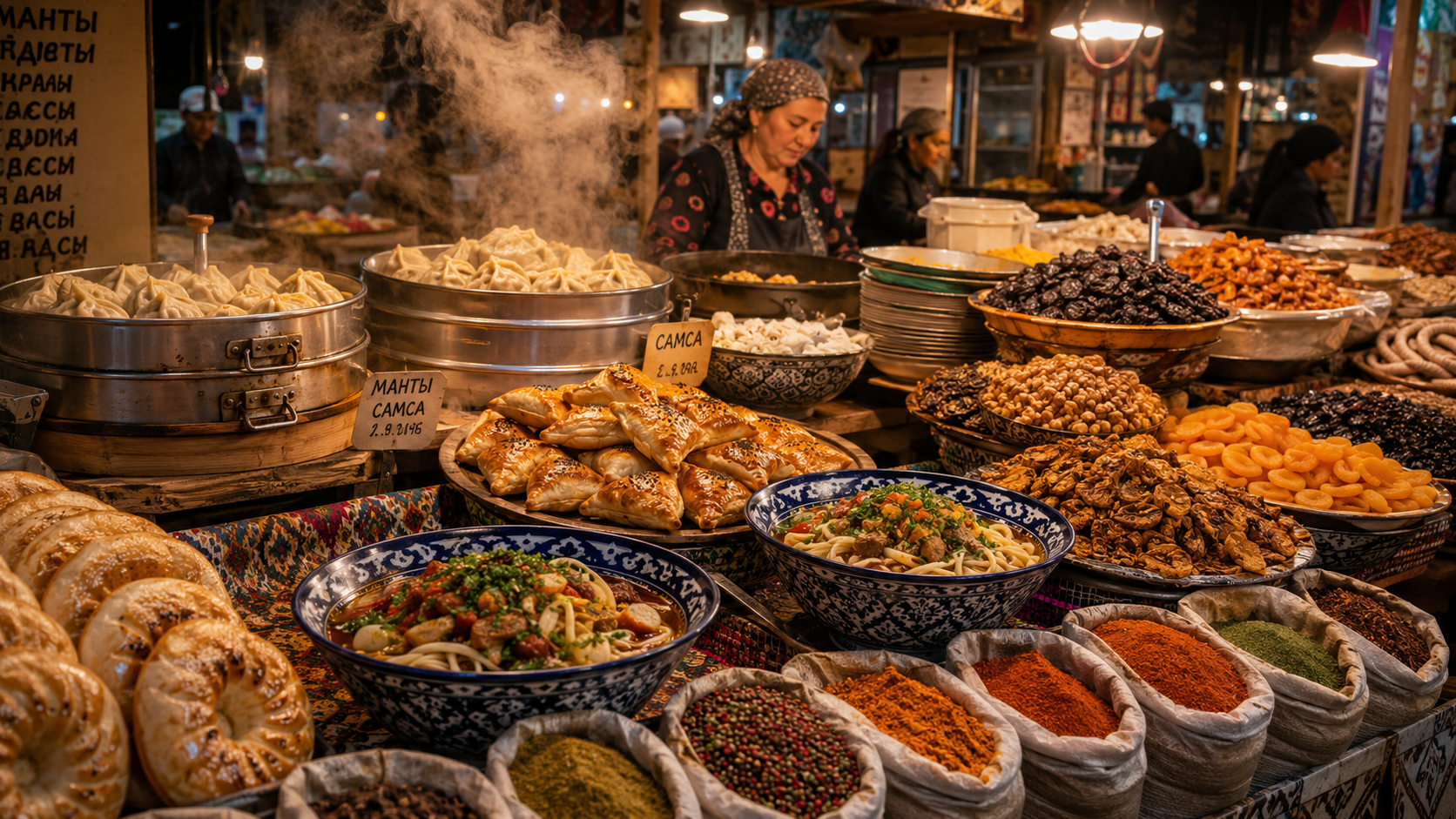
This blend is especially visible in cities and southern regions, where markets and restaurants often reflect a mix of Kazakh, Uzbek, Uyghur, Russian, and broader Central Asian flavors. If you are interested in how food connects with history, it pairs naturally with a journey through the Silk Road cities of Turkestan and Taraz. The same routes that moved goods and ideas also helped shape what people cooked and ate.
What to Eat in Kazakhstan as a First-Time Visitor
If it is your first trip, start with the classics but leave room for surprises. Try beshbarmak for the cultural experience, baursak for comfort, shashlik for an easy grilled meal, and kumis if you want something truly distinctive. Add kazy or shuzhuk if you are open to traditional horse meat dishes, and look for manty or lagman to experience the Central Asian side of the menu.
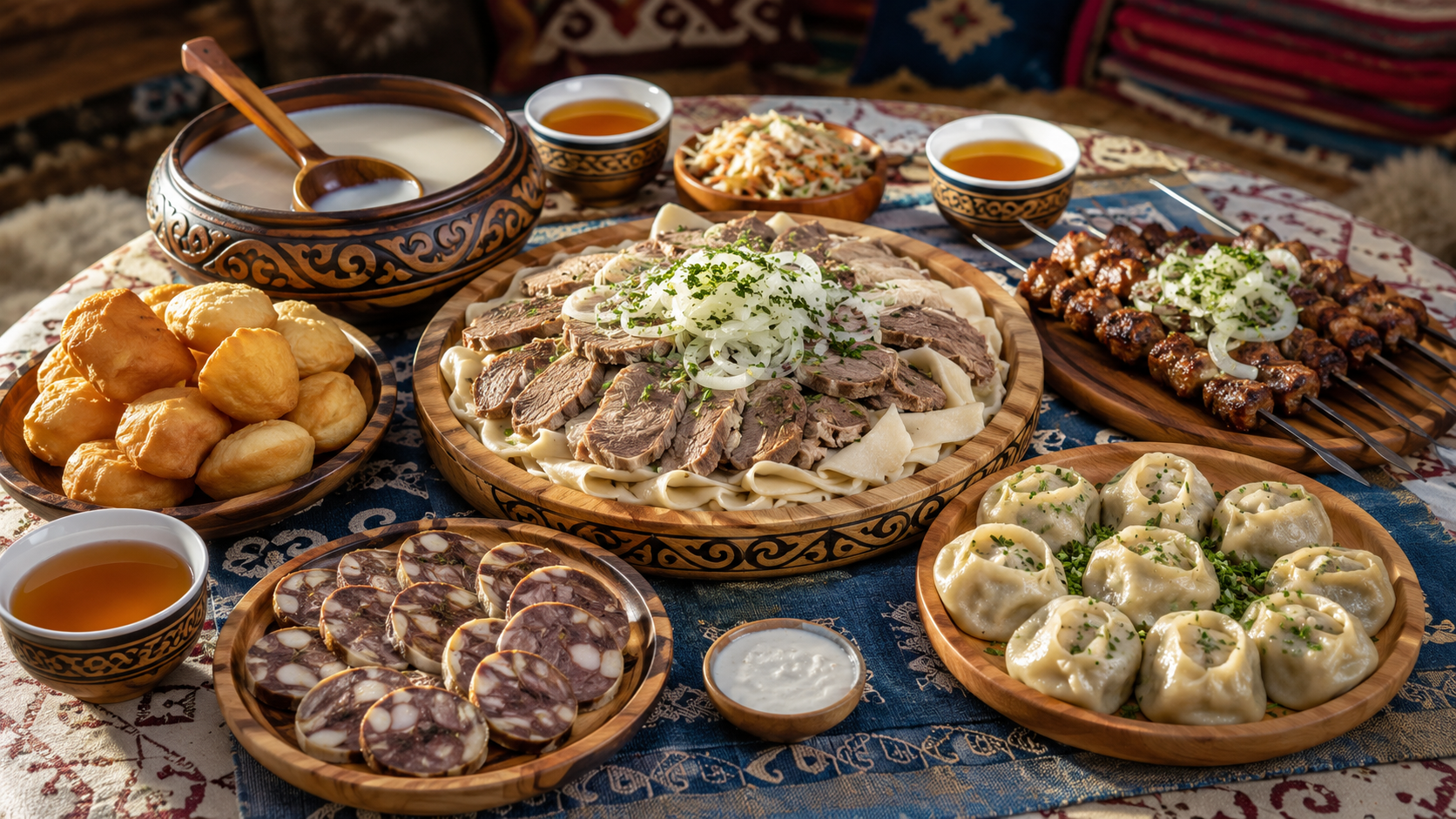
Markets are also worth exploring. They reveal the everyday side of Kazakhstan’s food scene: dried fruits, nuts, dairy snacks, breads, spices, pickles, sweets, and fresh produce. A restaurant can introduce you to the famous dishes, but a market shows how people actually shop, snack, and build meals. That contrast makes the culinary experience feel more complete.
Modern Dining in Almaty and Astana
Kazakh food is not frozen in the past. In cities like Almaty and Astana, traditional dishes are being reinterpreted in modern restaurants, cafes, and stylish dining rooms. Some places serve classic beshbarmak and kazy in a polished setting, while others experiment with presentation, lighter textures, local ingredients, and contemporary Central Asian menus.
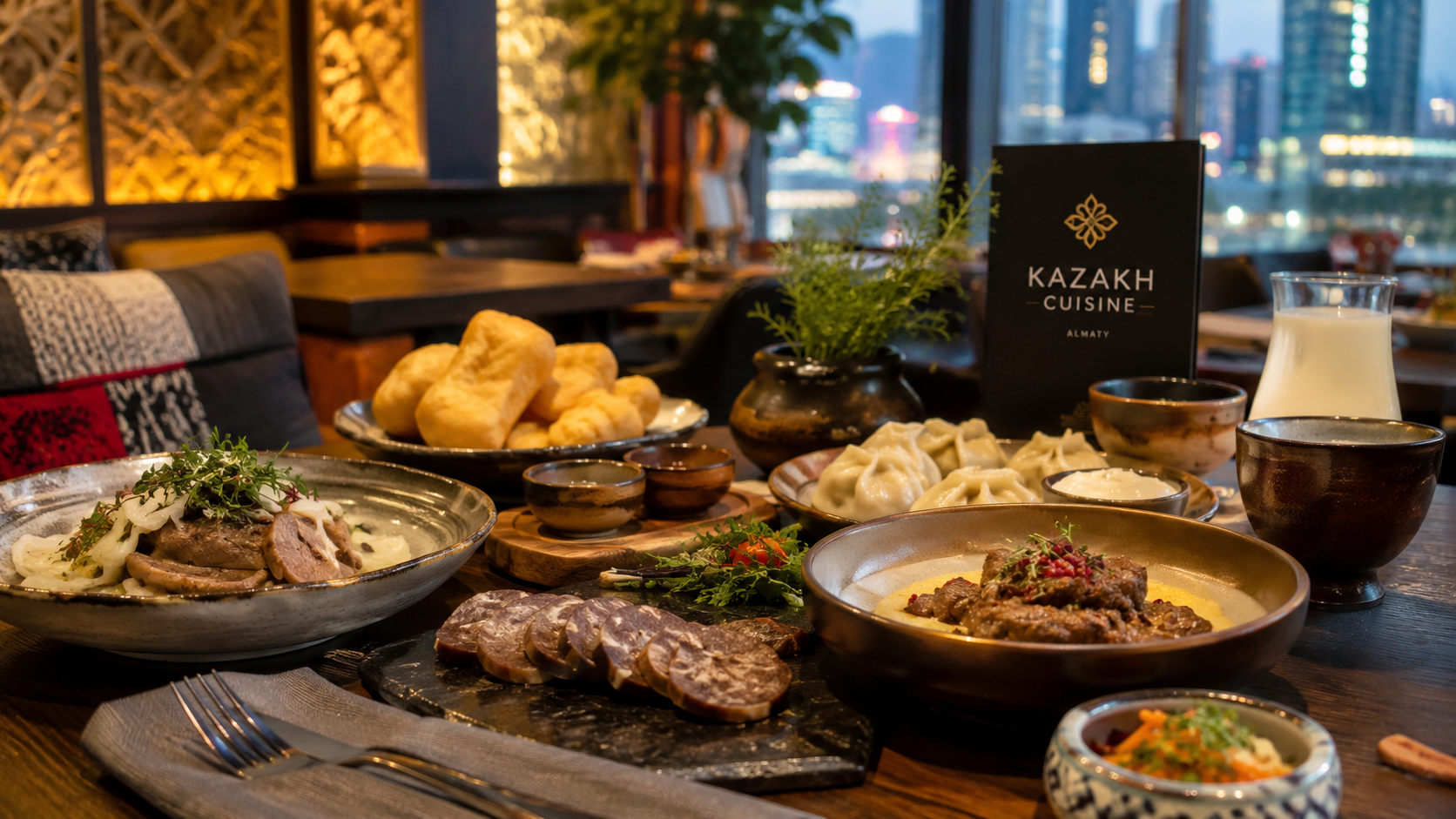
This modern side matters because it shows that Kazakhstan food culture is still evolving. Younger chefs and restaurant owners are finding ways to respect tradition without simply copying it. For travelers, that means you can experience both sides: a rustic, home-style meal and a refined urban version of the same culinary identity.
Food, Landscape, and the Feeling of Place
One of the most interesting things about eating in Kazakhstan is how strongly the food connects to the land. Meat, dairy, bread, and tea all make more sense when you think about the steppe, mountain pastures, and long-distance travel. Even the simplicity of many dishes begins to feel expressive rather than plain.
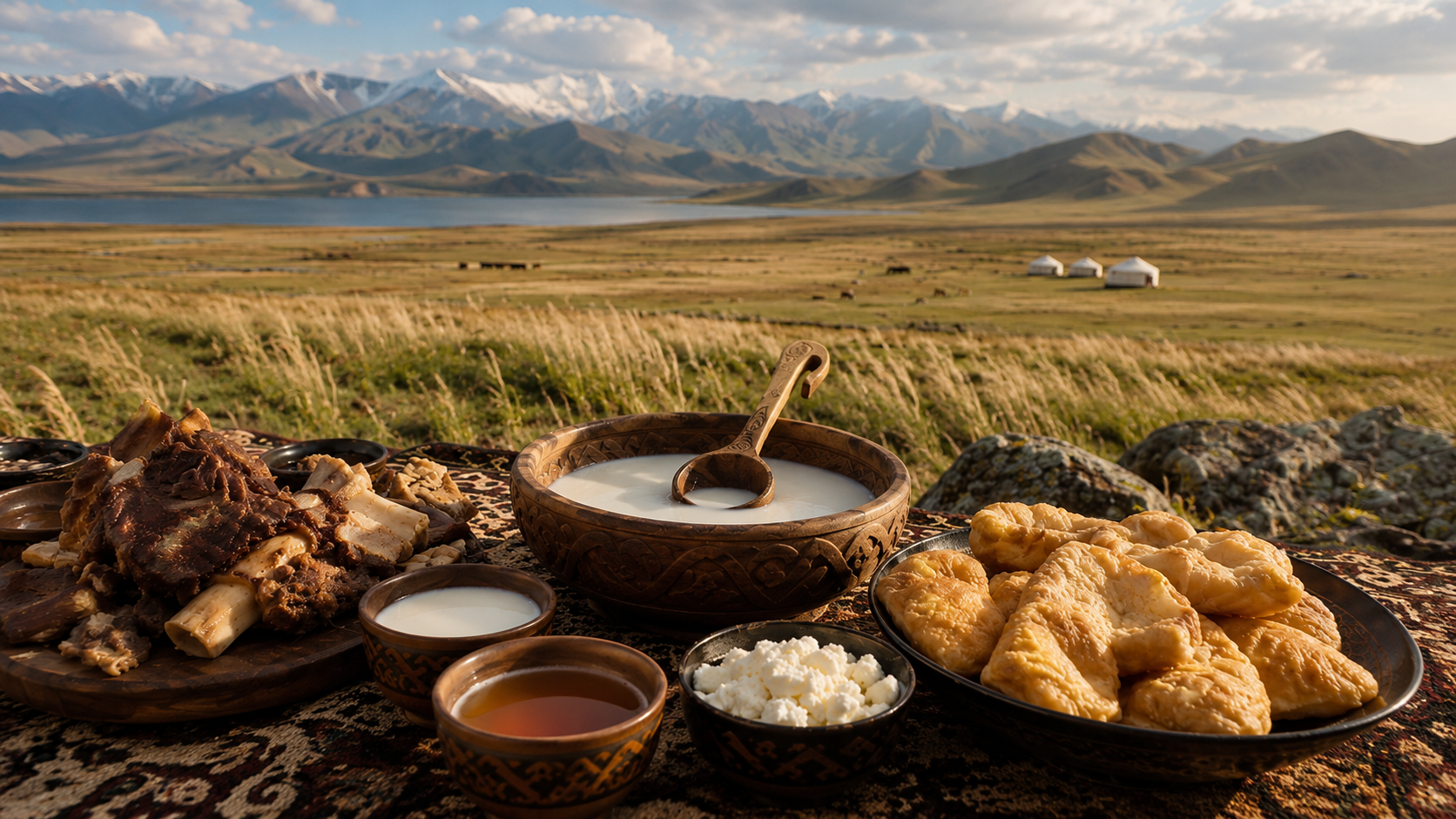
This connection between food and landscape is also why cuisine pairs well with nature-focused travel. After exploring the country’s open spaces, mountains, and reserves, the table feels like another chapter of the same story. A journey through Kazakhstan wildlife reveals the ecosystems, while the food reveals how people learned to live with those landscapes.
Conclusion
Kazakh cuisine is generous, hearty, and deeply rooted in nomadic tradition. Its most famous dishes, from beshbarmak to kumis, are not only about flavor, but also about hospitality, history, and adaptation to the steppe. For travelers, the best approach is to taste slowly, ask questions, and understand the meaning behind the meal.
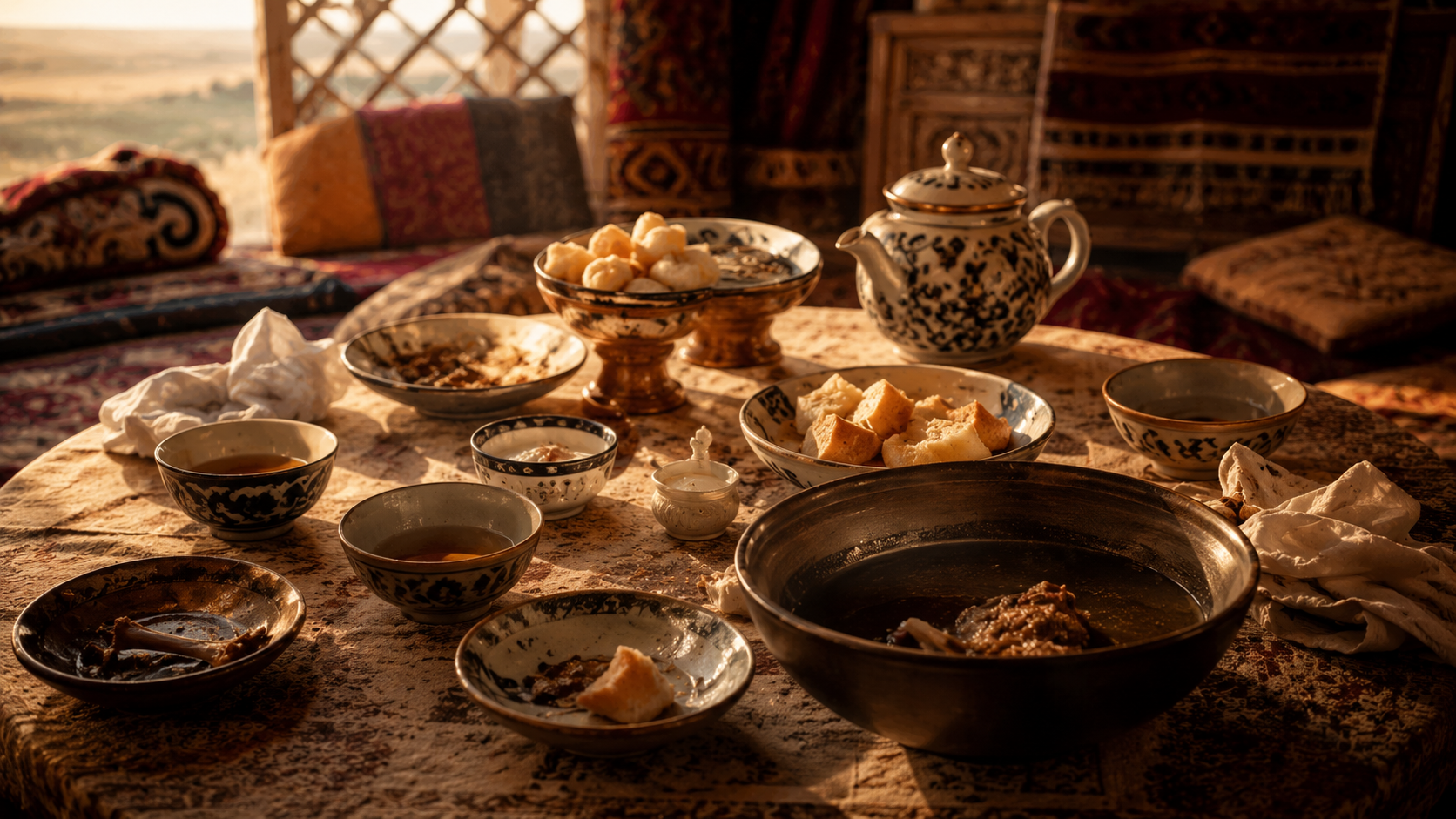
What makes traditional Kazakh food memorable is not just the ingredients. It is the way food brings people together, honors guests, and keeps old customs alive in a changing country. Whether you are sharing tea, trying baursak, tasting fermented dairy, or sitting down to a plate of beshbarmak, you are experiencing one of the warmest entrances into Kazakhstan’s culture.