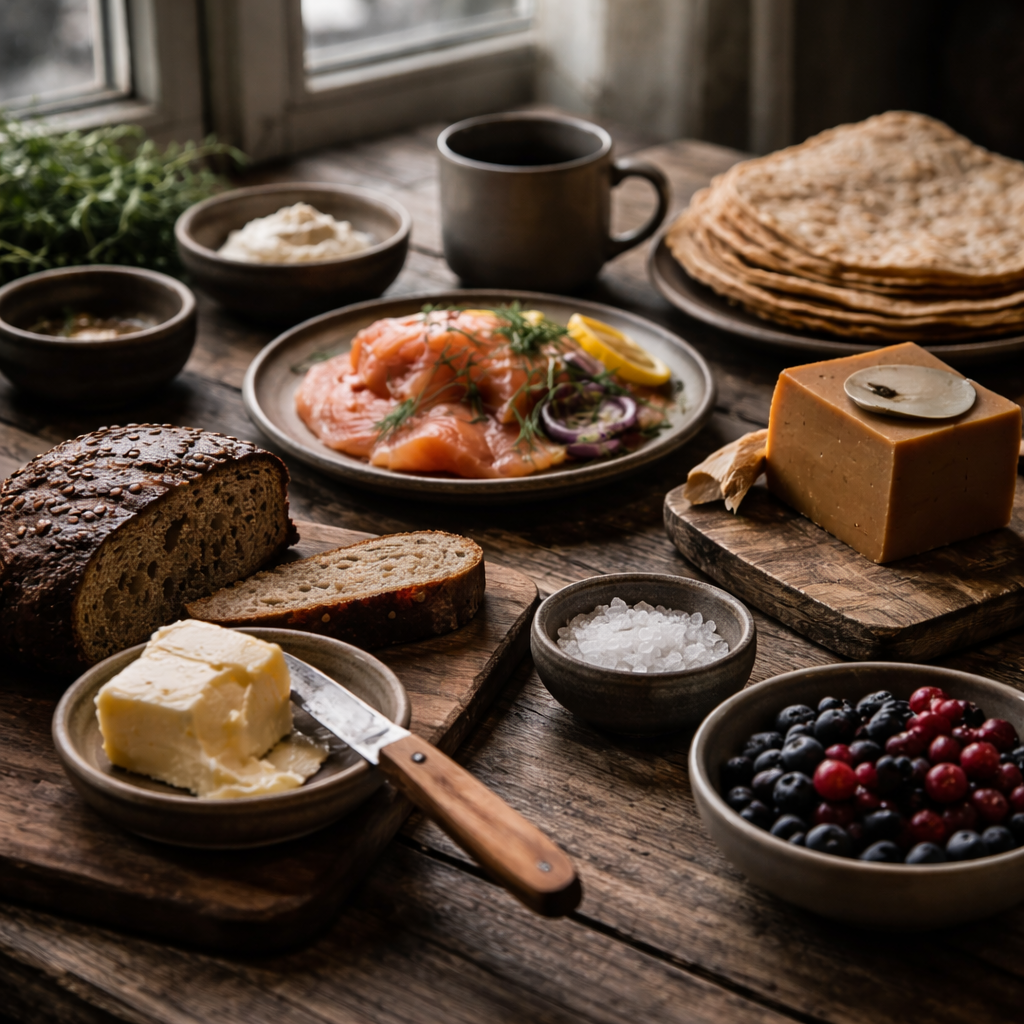
Norwegian cuisine is often described as simple, but that simplicity hides a rich story of climate, geography, and cultural memory. A good Norwegian food guide is not just about naming a few unusual dishes, but about understanding how people cooked, preserved, and shared food in a country shaped by long winters, short growing seasons, and a close relationship with both mountains and sea. The flavors of Norway are rooted in necessity, but they have evolved into something far more expressive than survival alone. For travelers, that makes Norwegian food one of the most revealing ways to understand the country.
Part of what makes this cuisine so interesting is that it does not always try to impress in obvious ways. Instead, it relies on strong ingredients, preservation techniques, seasonal rhythms, and recipes that often reflect local history more than restaurant trends. That gives the food a strong sense of place. For readers wondering what to eat in Norway, the answer is best found through dishes that reveal how the country lived, not just what it served.
This is also why Norway food culture deserves more attention than it usually gets. It may not be as internationally famous as some European cuisines, but it carries a distinct identity built from fish, dairy, bread, meat, berries, and traditional methods of preparing food for difficult seasons. Once you begin looking at Norwegian cuisine through that lens, it becomes much more layered and memorable.
Why Norwegian Food Tastes the Way It Does
To understand traditional Norwegian food, it helps to begin with the environment. Norway’s climate historically made fresh ingredients seasonal and limited, especially outside the warmer months. That meant people relied heavily on drying, fermenting, curing, salting, smoking, and storing food in ways that could last through winter. These methods were practical first, but over time they became part of the country’s culinary identity.
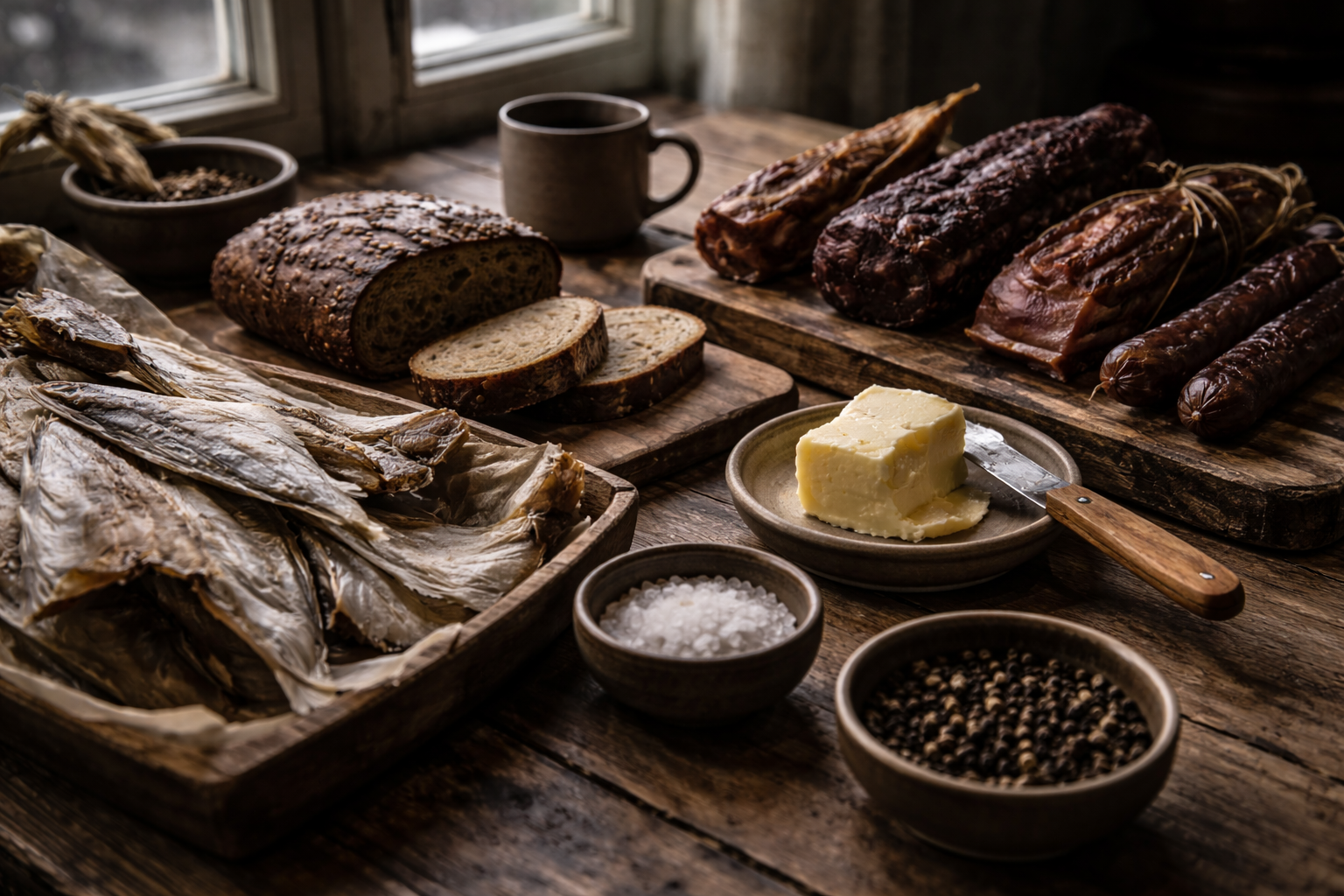
That background explains why some Norwegian dishes can feel unusual to first-time visitors. Flavors may be stronger, textures more unexpected, and preservation methods more visible than in cuisines built around year-round abundance. Yet this is also what gives the food its integrity. A thoughtful Norwegian food guide should not smooth over those differences, but help readers appreciate them as part of a much deeper culinary logic.
For travelers, this makes Norwegian cuisine especially interesting because the food often feels inseparable from the landscape. The dishes are shaped by cold, distance, storage, and seasonality in ways that still make sense once you experience the country itself. In other words, the food tastes the way the place feels: clean, resilient, restrained, and quietly intense.
Lutefisk and the Legacy of Preservation
Few dishes are more closely tied to discussions of traditional Norwegian food than lutefisk. Made from dried fish that is rehydrated and processed through a traditional method involving lye, it is one of the clearest examples of how preservation shaped the Norwegian table. To an outsider, it may seem unusual or even intimidating, but its existence reflects a long history of making food last in a difficult climate. Lutefisk is not just a curiosity; it is a record of culinary adaptation.
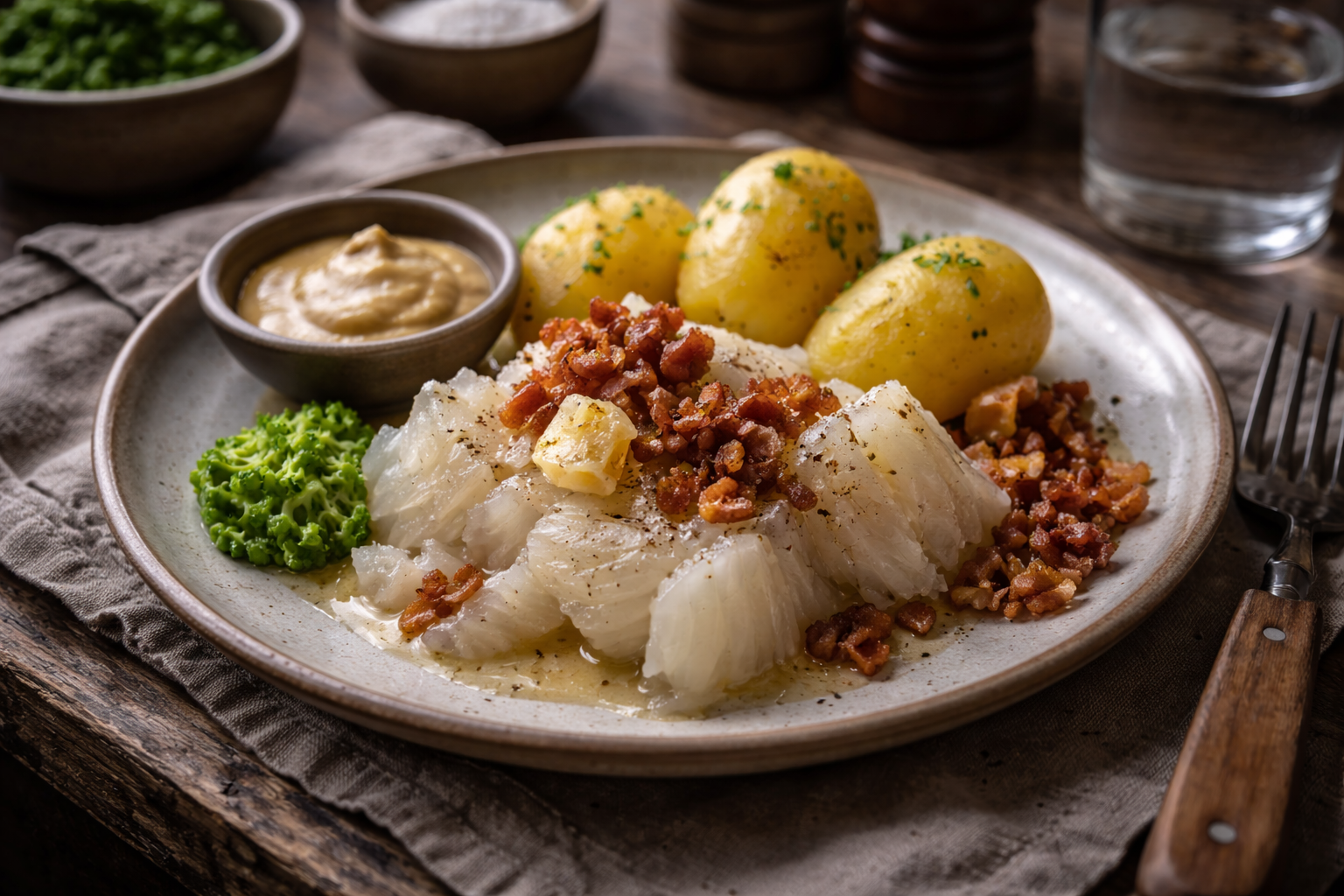
Trying lutefisk is often described as an adventure, but the dish becomes much more interesting when approached with context rather than shock value. Its texture, flavor, and ritual preparation all tell us something about how Norwegian households once worked and how preservation became part of celebration as well as necessity. For anyone asking what to eat in Norway, lutefisk may not be the easiest place to start, but it is certainly one of the most culturally revealing dishes.
Lefse and the Comfort Side of Norwegian Cuisine
Not all Norwegian food is intense or challenging. Lefse, the soft traditional flatbread often served with butter, sugar, and sometimes cinnamon, reveals a gentler and more comforting side of Norway food culture. It is the kind of food that feels tied to family kitchens, hospitality, and everyday pleasure rather than preservation and endurance alone. That balance matters, because it reminds readers that Norwegian cuisine is not built only on bold or difficult flavors.
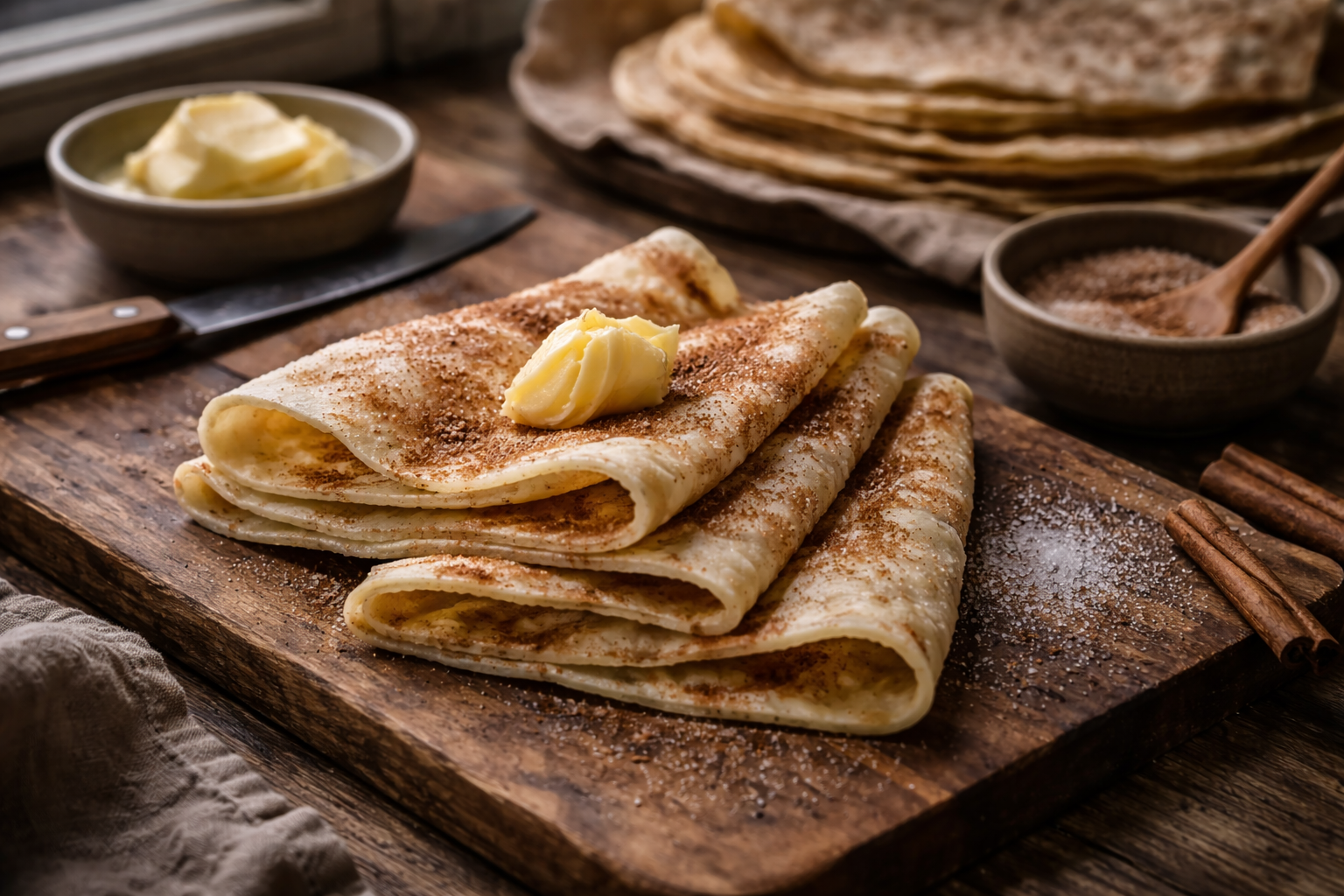
Lefse also helps broaden the emotional tone of a Norwegian food guide. Instead of focusing only on the dishes that surprise outsiders, it adds warmth and familiarity to the picture. A cuisine becomes more human when it includes comfort foods, sweet rituals, and homemade staples, and lefse does exactly that. It is a quiet dish, but an important one.
Rakfisk and the Taste of Tradition
Rakfisk is one of those foods that immediately signals a cuisine with strong local confidence. As a fermented fish dish, it often carries an intimidating reputation, especially because of its smell, but it remains an important part of traditional Norwegian food. Like lutefisk, it reflects preservation practices shaped by environment and history. But unlike dishes adapted for broad international appeal, rakfisk still retains a powerful sense of local identity.
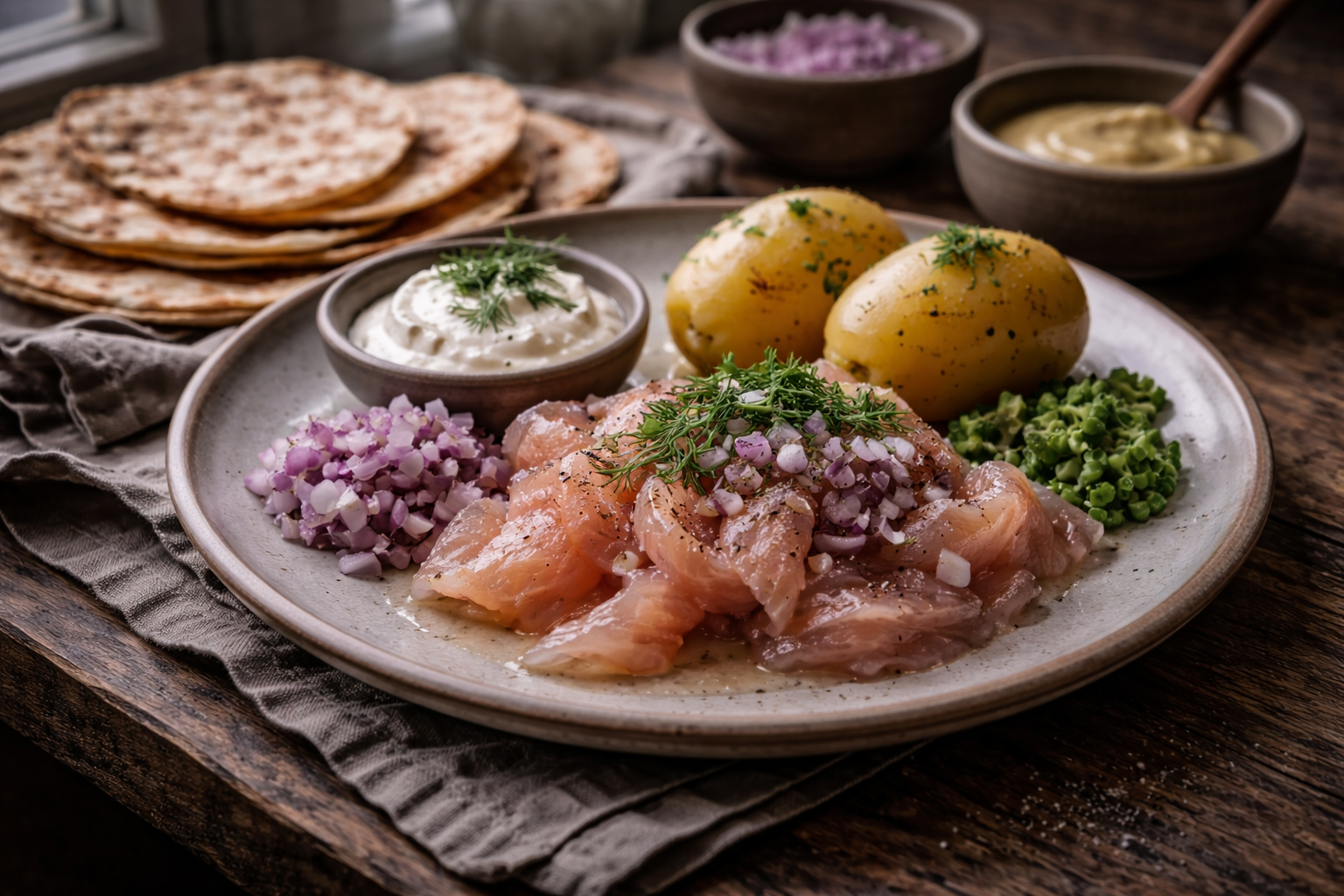
For travelers, rakfisk can be a useful reminder that the best way to approach Norwegian cuisine is with curiosity rather than expectation. Not every dish is designed to be instantly accessible, and that is part of what makes the food culture feel authentic. A serious Norwegian food guide should make room for foods that challenge as well as comfort. Rakfisk belongs in that category because it says something real about taste, memory, and tradition in Norway.
Norwegian Delicacies Beyond the Famous Dishes
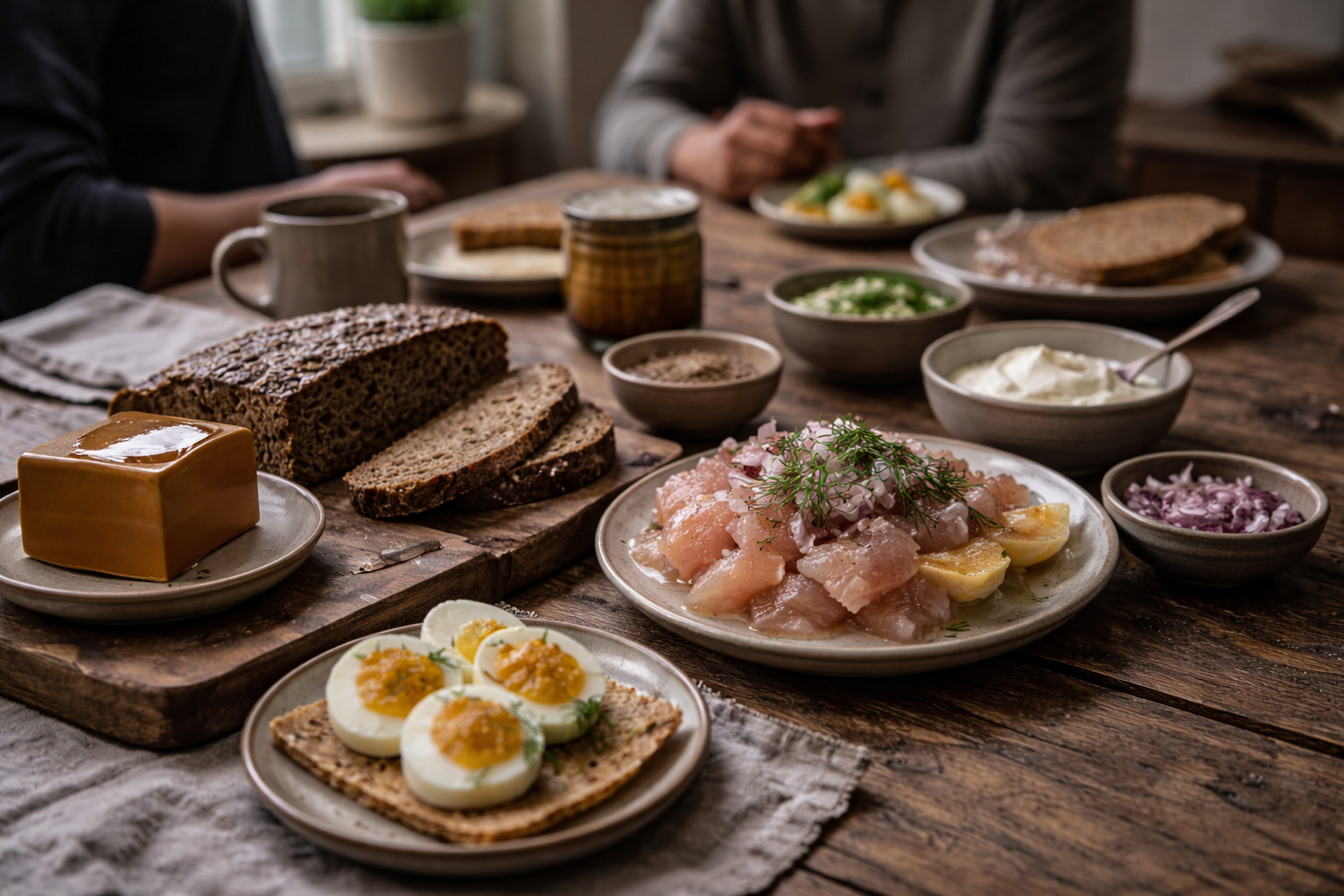
A common mistake in travel writing is reducing a national cuisine to only its most unusual dishes. But Norway offers far more than lutefisk and rakfisk, and that is where the article becomes more useful and more complete. Many Norwegian delicacies are less dramatic but just as important: brunost, krumkake, pinnekjøtt, klippfisk, cured meats, waffles, berry desserts, and festive breads all add depth to the culinary picture. Together, they show that Norwegian cuisine is much broader than outsiders often assume.
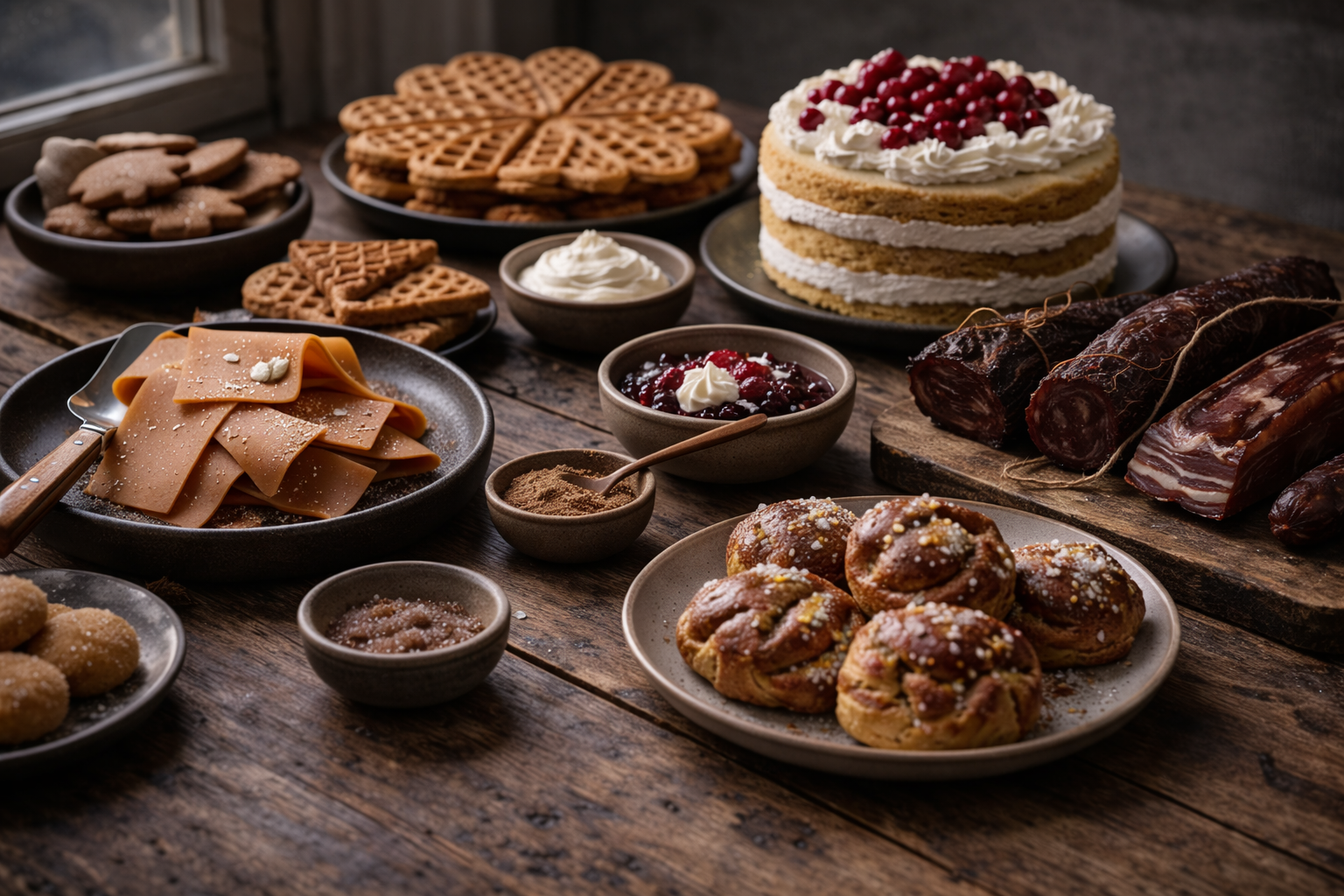
This is also where a better answer to what to eat in Norway starts to emerge. Travelers do not need to seek out only the strongest or strangest dishes to understand local food. Some of the most memorable experiences may come from a sweet brown cheese, a holiday meat dish, or a simple baked treat served with coffee. These foods may not dominate international conversations, but they are essential to the everyday and festive life of the country.
Using Norwegian delicacies as a supporting key also helps this article stand apart from the coastal piece. The emphasis here is on the wider national food identity, not on seafood specifically. That makes the page more distinct both editorially and from an SEO standpoint.
How Climate Shaped the Norwegian Table
One of the strongest ways to make sense of Norwegian cuisine is to think about climate first. Food had to last. Ingredients had to travel, store well, or survive long winters. That meant many dishes developed from practical techniques rather than from luxury or abundance. In this sense, Norway food culture is deeply tied to endurance and resourcefulness.
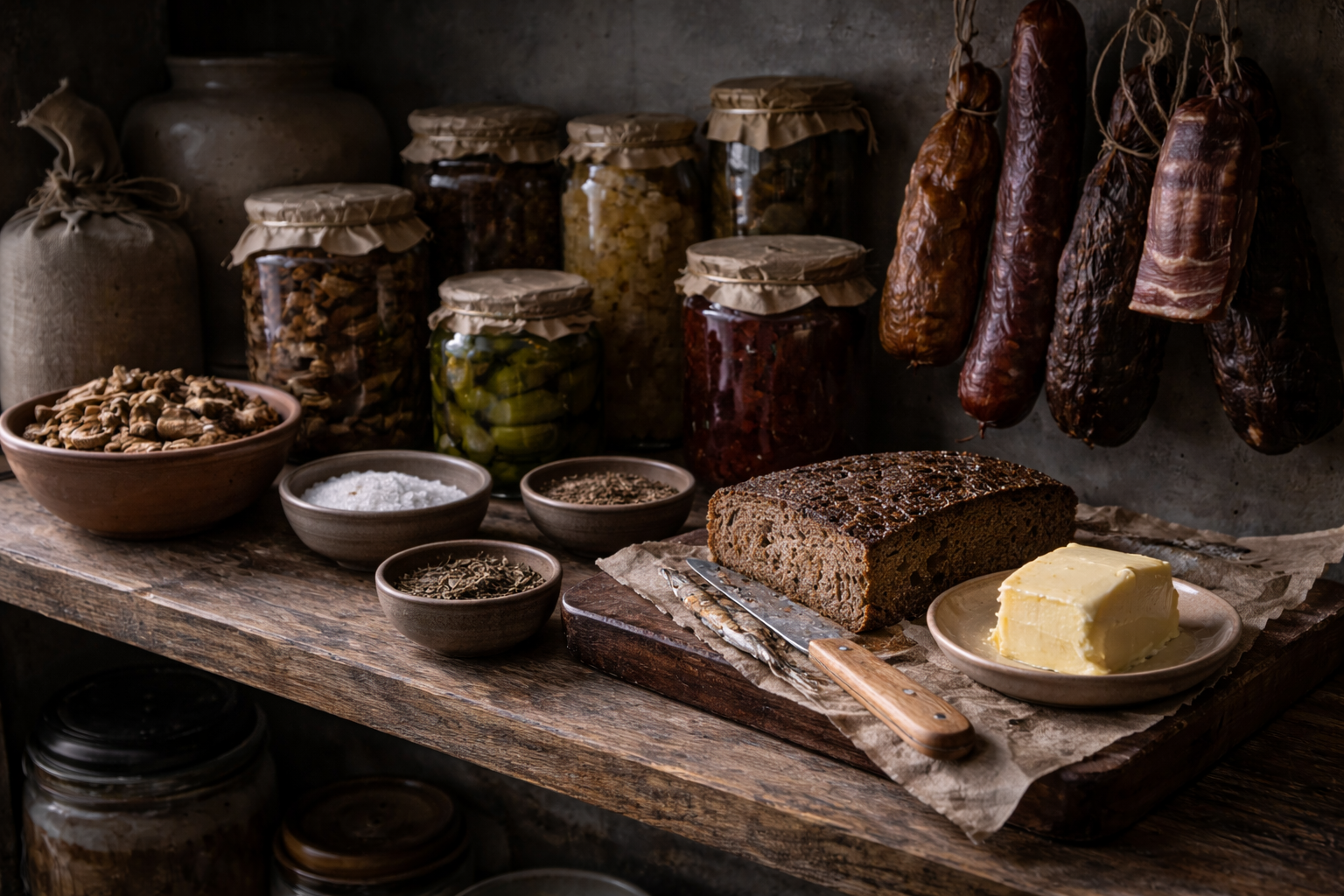
But that does not make it joyless. In fact, many of the country’s most beloved dishes feel special precisely because they emerged from limitation and then became part of ritual and celebration. Holiday foods, baked sweets, preserved specialties, and comforting flatbreads all reflect the same basic truth: Norwegian cuisine transformed necessity into tradition. A strong Norwegian food guide should help readers see that transformation, because it is one of the most distinctive things about the national table.
Food as a Way Into Norwegian Culture
Food is one of the easiest ways for travelers to move beyond scenery and into cultural experience. In Norway, this is especially true because the cuisine is so closely tied to local conditions and long historical habits. A dish is rarely just a dish. It often reflects where people lived, what they could store, what they celebrated, and how they adapted to the environment around them. That makes food one of the most direct paths into understanding the country.
Readers who want to connect cuisine to place more broadly can continue with this guide to Norwegian coastal life, where the maritime setting behind part of the national table becomes even more visible. That internal link fits naturally here because food and landscape in Norway are so closely connected. Together, the two articles reinforce each other without repeating the same keyword focus.
For a broader official overview, the Visit Norway food and drink guide is a useful external reference. It supports the larger idea that Norwegian cuisine is best understood not as a novelty list, but as a reflection of history, region, and seasonal life.
Conclusion
A strong Norwegian food guide should do more than point to a few famous dishes. It should show how food in Norway reflects climate, preservation, comfort, celebration, and cultural continuity. From the intensity of lutefisk and rakfisk to the warmth of lefse and the wider world of Norwegian delicacies, the cuisine reveals a country that turned necessity into tradition and tradition into identity. For travelers wondering what to eat in Norway, the best answer is not just a list of foods, but an invitation to taste the country’s history one dish at a time.