
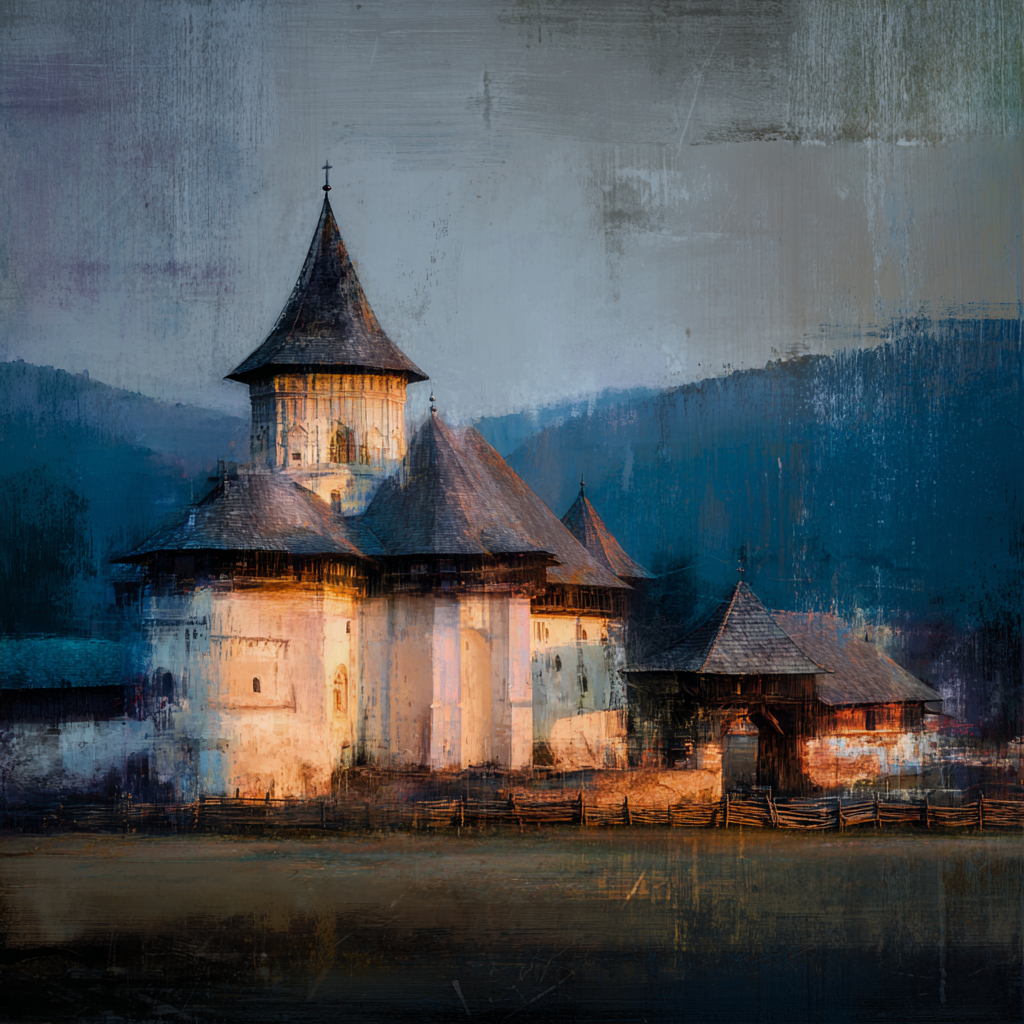
Romania’s artistic identity is far richer than many travelers expect. The country is often introduced through castles, legends, medieval towns, and mountain landscapes, but its visual culture deserves a much larger place in the story. A deeper look at Romanian art and culture reveals a country shaped by sacred frescoes, rural craftsmanship, modern sculpture, folk symbolism, urban galleries, and creative traditions that move between faith, memory, and reinvention. It is not one artistic story, but many layers of expression living side by side.
What makes Romania especially interesting is the contrast between old and new. In northern Moldavia, the Painted Monasteries of Bucovina turn religious buildings into vivid visual narratives. In traditional villages, woodcarving, textiles, painted eggs, and domestic decoration reveal the artistic intelligence of rural life. In the work of Constantin Brancusi, Romanian inheritance becomes part of the global language of modern sculpture. In Bucharest, Cluj-Napoca, Timisoara, and other cities, contemporary artists continue to question identity, history, and place through new forms.
This range gives Romanian art and culture a depth that is easy to underestimate. It is not only about museum collections or famous names. It is about the way images, materials, architecture, and symbols have helped communities explain the world around them. Romania’s art often feels powerful because it remains connected to land, ritual, faith, and historical memory. That connection gives the country’s cultural heritage a very distinctive atmosphere.
Why Romania’s Artistic Heritage Feels So Layered
Romania sits at a cultural crossroads, and that position has shaped its art for centuries. Orthodox Christianity, Byzantine influence, rural traditions, Central European architecture, Ottoman proximity, modern nationalism, and twentieth-century artistic experimentation all left visible traces. This mixture gives the country a layered cultural identity rather than a single dominant style. The result is art that often feels both local and connected to wider European traditions.
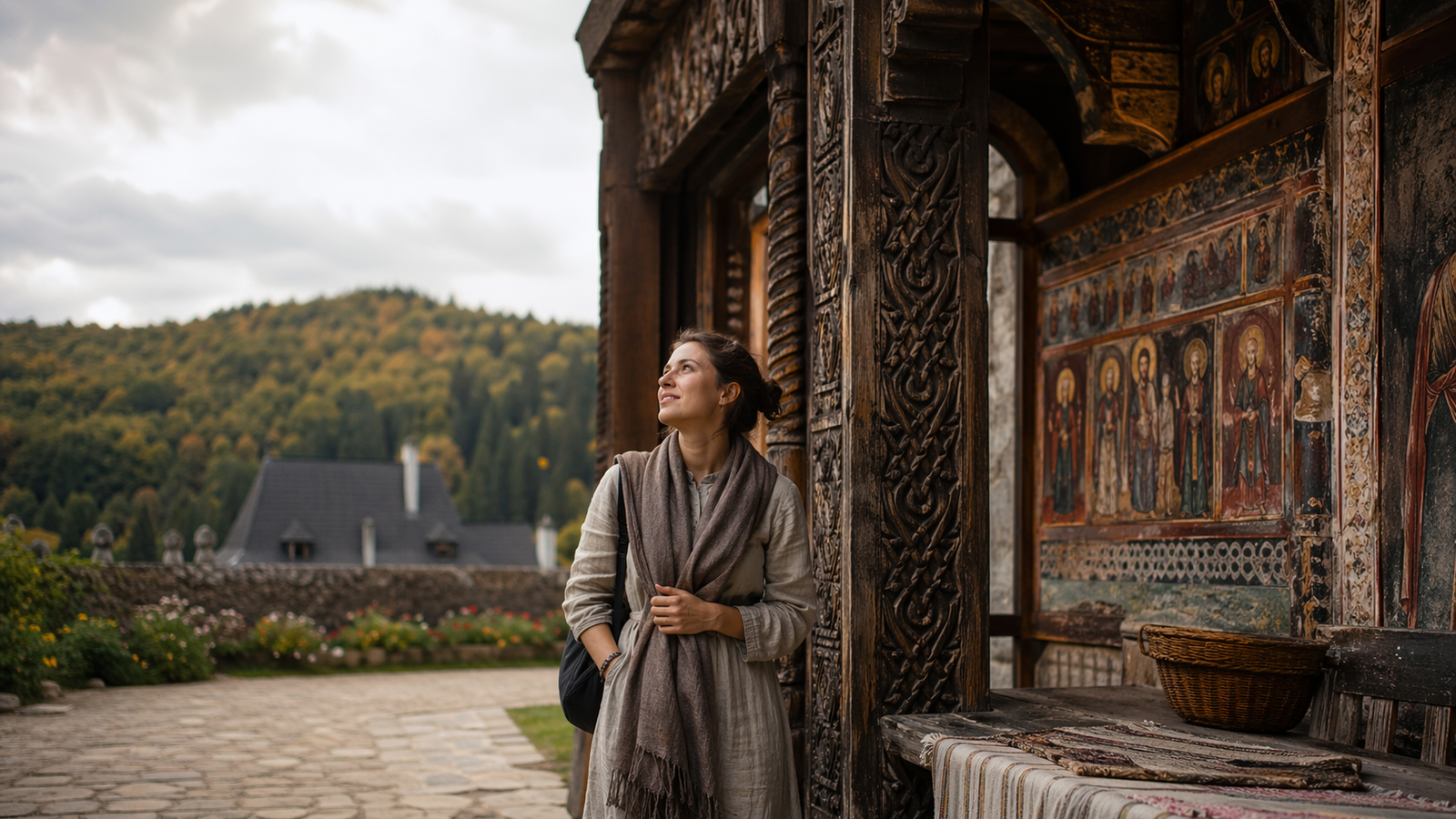
A church fresco in Bucovina, a carved wooden gate in Maramures, a Saxon town facade in Transylvania, and a Brancusi sculpture may seem very different at first. Yet each one reflects a Romanian concern with symbolism, material, place, and memory. The forms change, but the deeper artistic instinct often remains connected to meaning rather than decoration alone. This is what makes Romanian art and culture so rewarding to explore slowly.
For travelers, that means Romania offers more than a standard cultural itinerary. Instead of moving only between large museums and major monuments, visitors can experience art in villages, monasteries, public spaces, workshops, churches, and urban galleries. The country’s creativity often appears where architecture, daily life, and landscape meet. That makes the artistic journey feel unusually grounded.
The Painted Monasteries of Bucovina as Sacred Storytelling
The Painted Monasteries of Bucovina are among Romania’s most extraordinary cultural treasures. Located in the hills of northern Moldavia, these monasteries are famous for exterior frescoes that cover their walls with biblical scenes, saints, symbolic imagery, and dramatic religious narratives. They are not simply decorated churches. They are complete visual worlds, where architecture becomes a surface for storytelling, devotion, and collective memory.
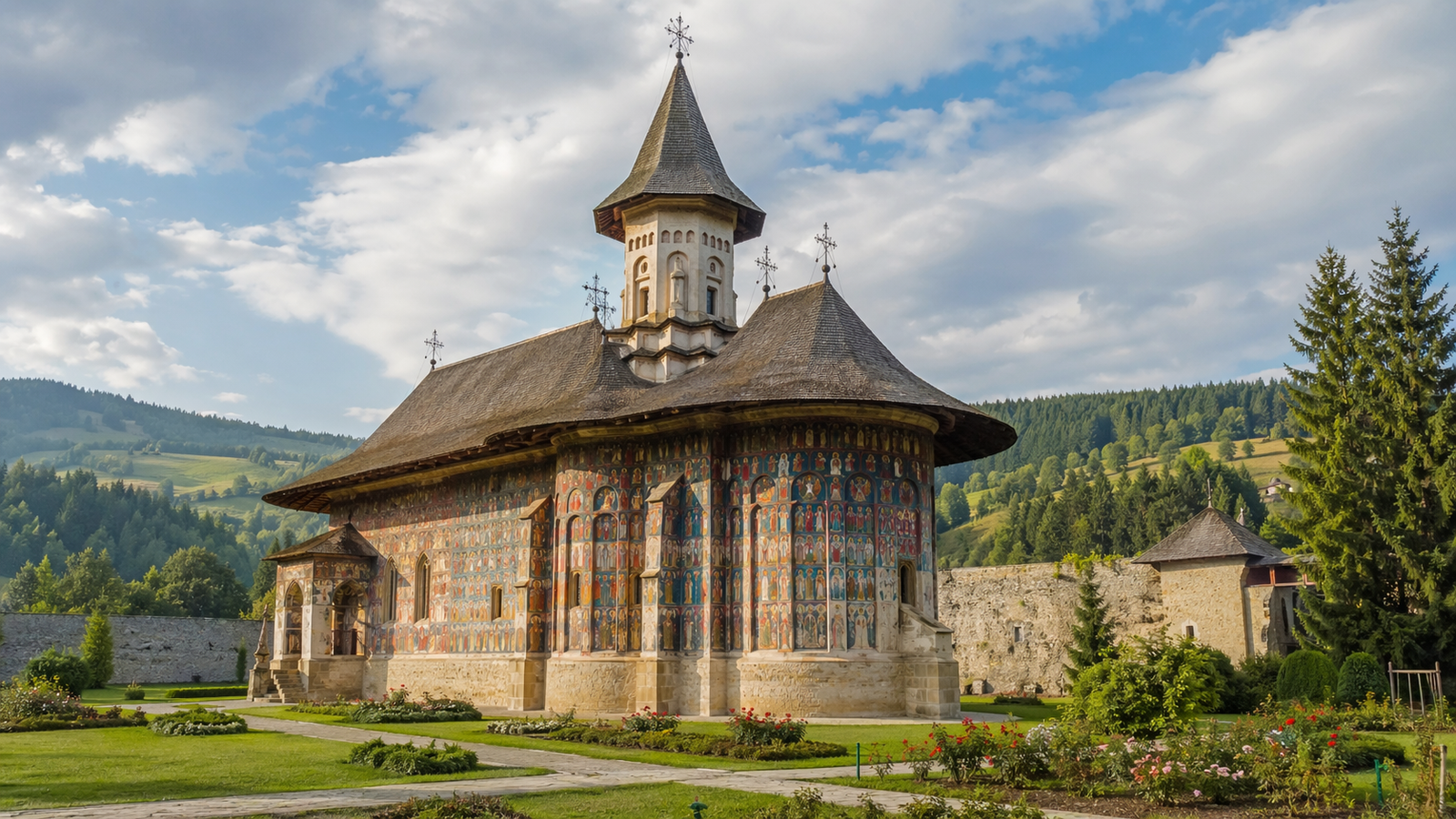
Their importance lies in how directly they connect art with spiritual life. In a time when many people could not read, images became a powerful language. Frescoes explained religious stories, moral lessons, divine order, and human destiny in a way that could be seen and remembered. The church walls functioned almost like open books, visible to villagers, pilgrims, and travelers. This makes the monasteries one of the clearest examples of how art once served as education, worship, and public communication at the same time.
The Painted Monasteries of Bucovina also show how Romanian sacred art became part of the landscape. The frescoes are not hidden inside dark interiors only. Many of the most famous paintings cover the outside walls, exposed to light, weather, and the surrounding countryside. That outdoor quality makes the experience especially memorable. The viewer does not encounter the art as something separated from the world, but as something living within it.
For opening arrangements, transport and a one- or two-day visit plan, see our guide to the painted monasteries of Bucovina.
Byzantine Art in Romania and the Power of Visual Faith
The monasteries of Bucovina are deeply connected to Byzantine art in Romania, but they also have a distinct regional personality. Their compositions, iconographic structure, and religious themes belong to the Orthodox visual tradition, yet their colors, scale, and placement give them a uniquely Moldavian character. This balance between inherited artistic language and local expression is one of the reasons the monasteries remain so compelling.
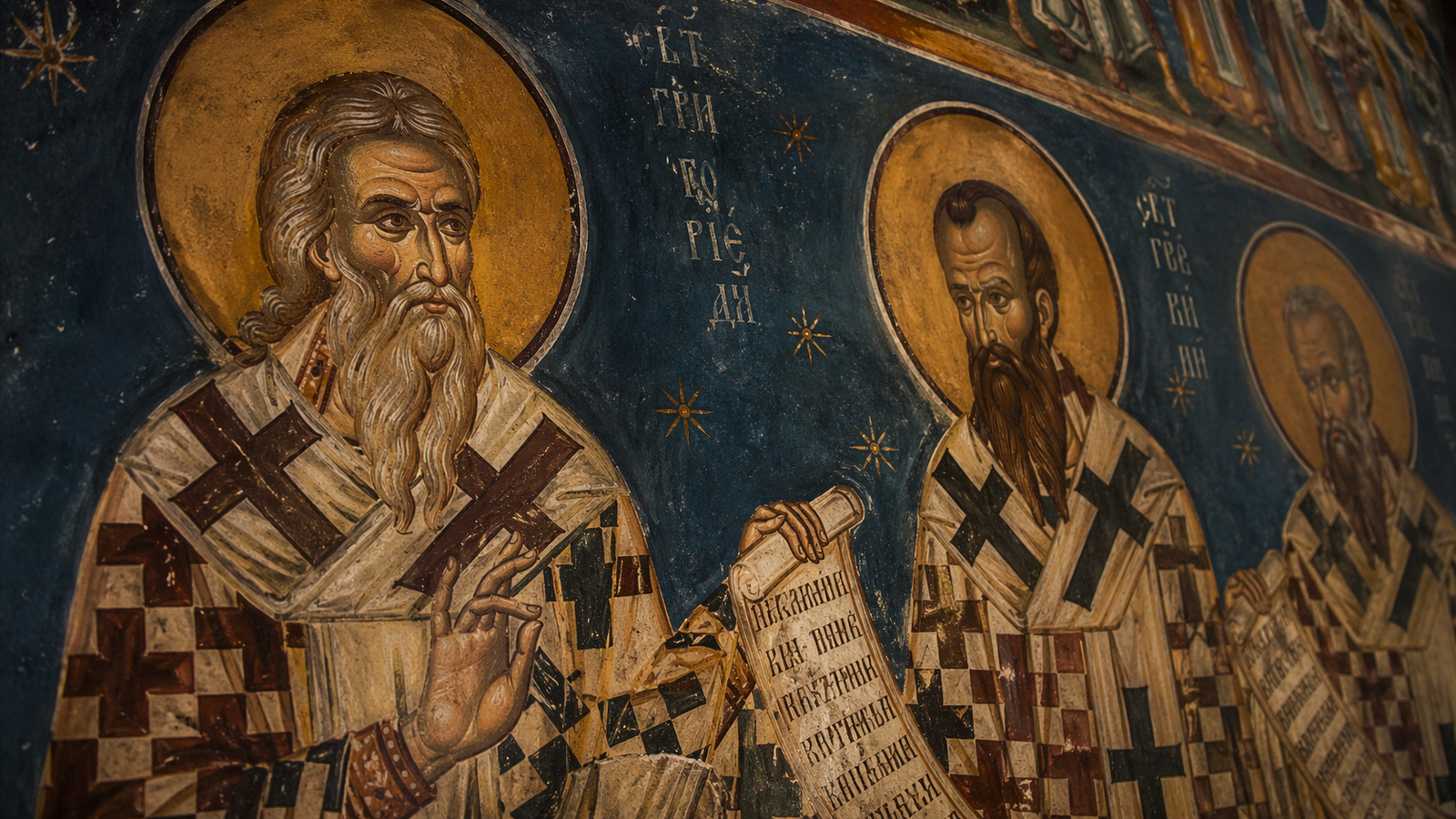
UNESCO recognizes the Churches of Moldavia as World Heritage sites, describing them as important monuments with outstanding exterior mural paintings inspired by Byzantine art. The official UNESCO overview of the Churches of Moldavia is a useful reference because it confirms the global significance of these sites. They are not simply beautiful regional landmarks, but part of a wider history of sacred art and architecture.
What makes Byzantine art in Romania powerful is its ability to combine order and emotion. The frescoes follow religious systems and symbolic arrangements, but they are also full of faces, gestures, color, movement, and drama. Even visitors who do not know the theological background can feel the intensity of the scenes. The art communicates through rhythm and image before it asks for explanation.
Voronet, Sucevita, Moldovita, and the Language of Color
Among the painted monasteries, Voronet is perhaps the most famous. It is closely associated with the intense shade known as Voronet blue, a color that has become one of the most recognizable visual signatures of Romanian sacred art. The monastery’s Last Judgment fresco is especially striking, turning religious teaching into a vast and dramatic visual composition. Figures, symbols, movement, and color work together to create an image that feels both instructive and unforgettable.
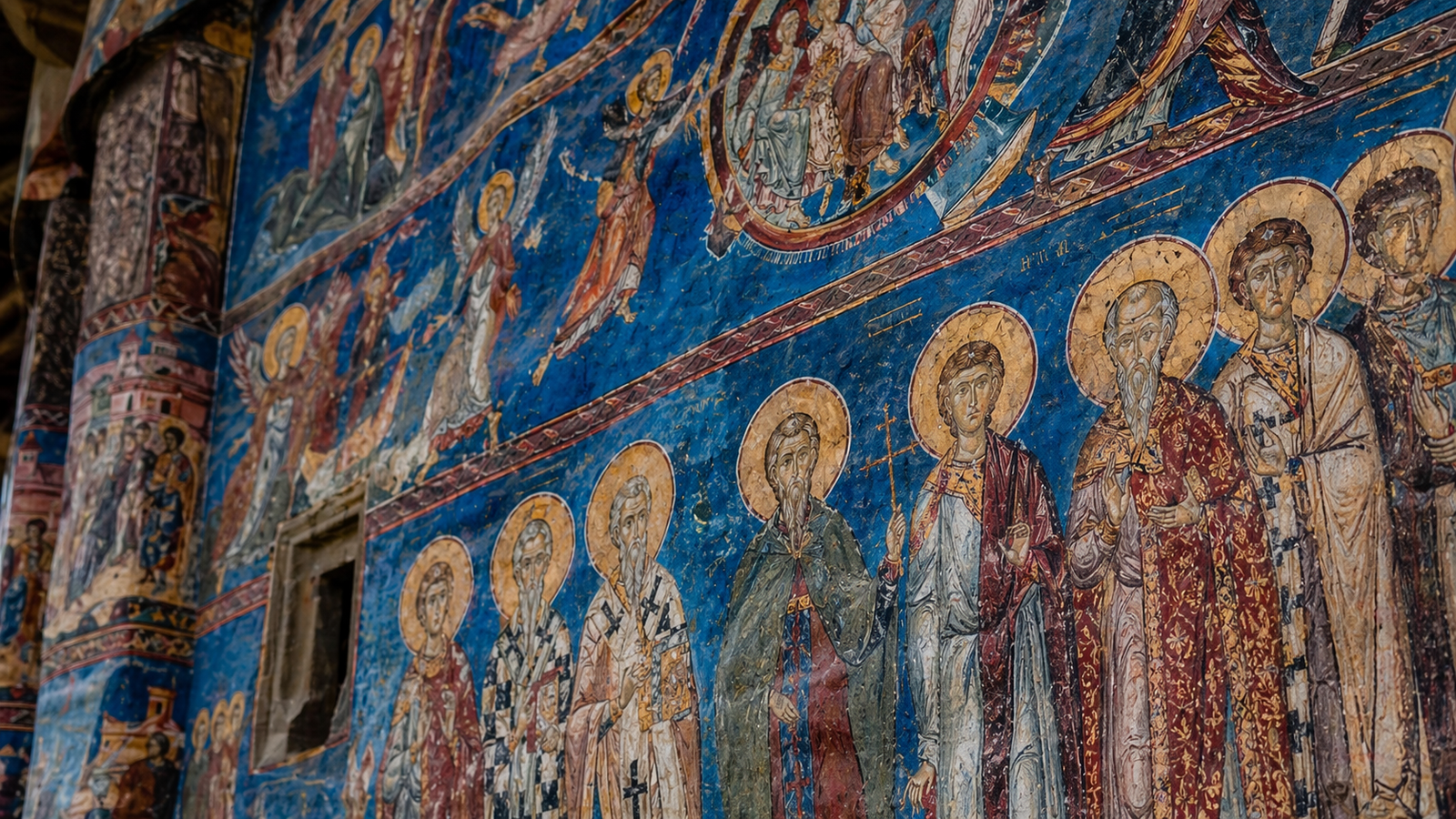
Sucevita offers a different but equally rich experience. Its walls are filled with complex fresco cycles, and its setting gives the monastery a fortified and contemplative quality. Moldovita and Humor add further variety, showing that the painted monastery tradition was not limited to one masterpiece or one visual formula. Each site contributes something distinct to the larger story of the Painted Monasteries of Bucovina.
Together, these monasteries reveal the sophistication of Romanian art and culture in a way that feels immediate to travelers. The art is old, but it does not feel distant. Its colors still speak, its stories still unfold, and its placement in the countryside gives it emotional warmth. Bucovina is a rewarding starting point for exploring Romania’s visual heritage.
Rural Craft and the Everyday Art of Romania
Romania’s art is not confined to churches and famous names. Some of its most meaningful creative traditions appear in rural life, where practical objects often carry strong visual identity. Wooden gates, woven textiles, embroidered clothing, painted eggs, pottery, carved household objects, and decorated interiors all show how beauty entered everyday life. This is an essential part of Romanian art and culture, because it connects creativity with use, ritual, and community.
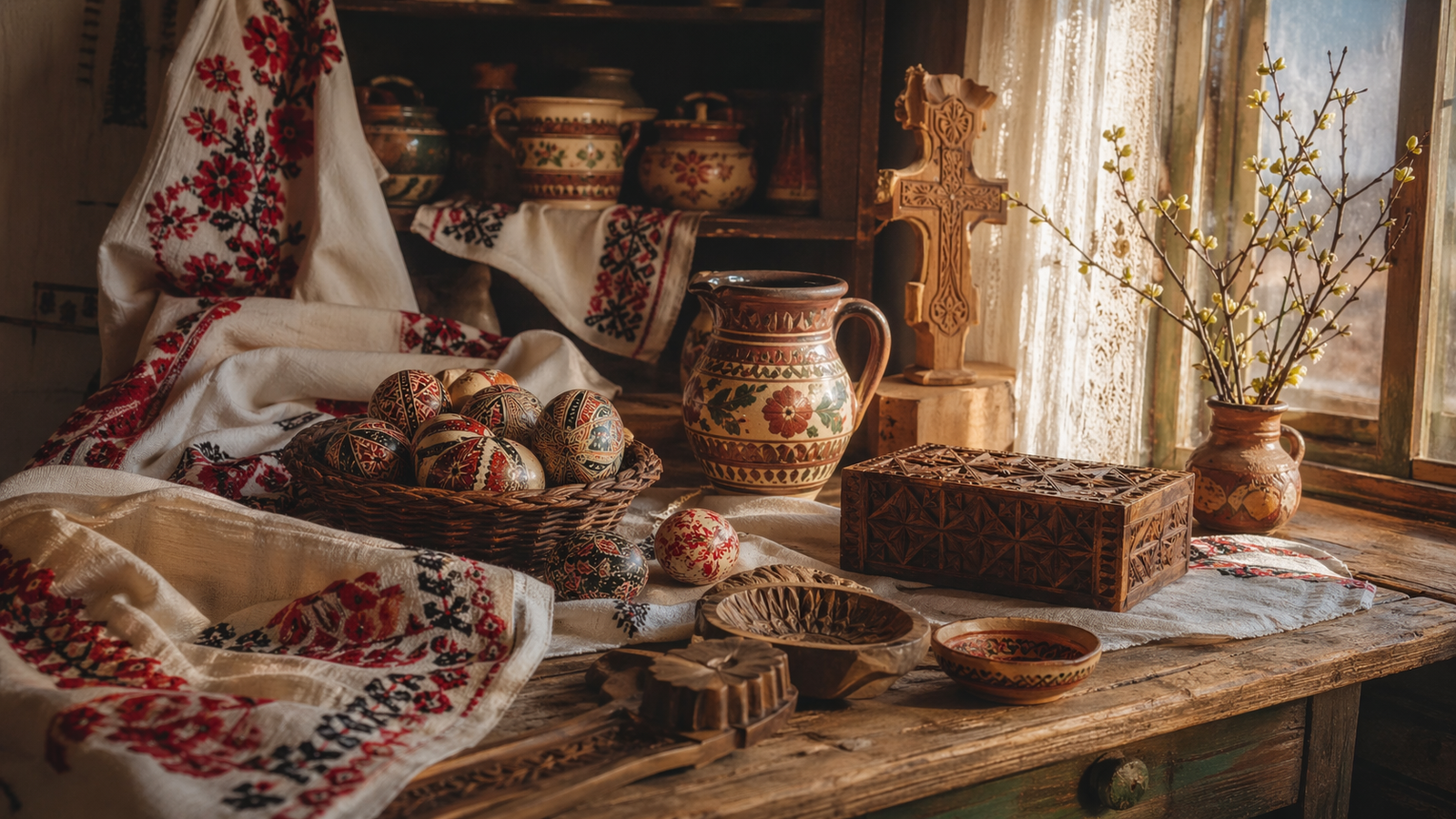
In many traditional regions, craft was never simply decorative. A carved gate could signal status, protection, family identity, or spiritual symbolism. A textile could carry regional patterns and inherited techniques. Painted eggs, especially associated with Easter traditions, combined patience, symbolism, and extraordinary visual precision. These forms of expression may be smaller in scale than a monastery wall, but they are no less important to understanding Romania’s artistic imagination.
Readers interested in this rural cultural layer can continue with our guide to traditional Romanian villages. Village architecture, craft, and local customs are part of the same wider cultural story. Romania’s art often becomes most powerful when seen in relation to the places and communities that produced it.
Constantin Brancusi and Romania’s Modern Artistic Voice
No serious discussion of Romanian art and culture feels complete without Constantin Brancusi, one of the most influential sculptors of the modern era. Born in Romania and later active in Paris, Brancusi helped transform modern sculpture by stripping forms down to their essential shapes. His work rejected unnecessary detail and searched for purity, rhythm, and symbolic force. In doing so, he changed how modern art could represent movement, love, flight, spirituality, and human connection.
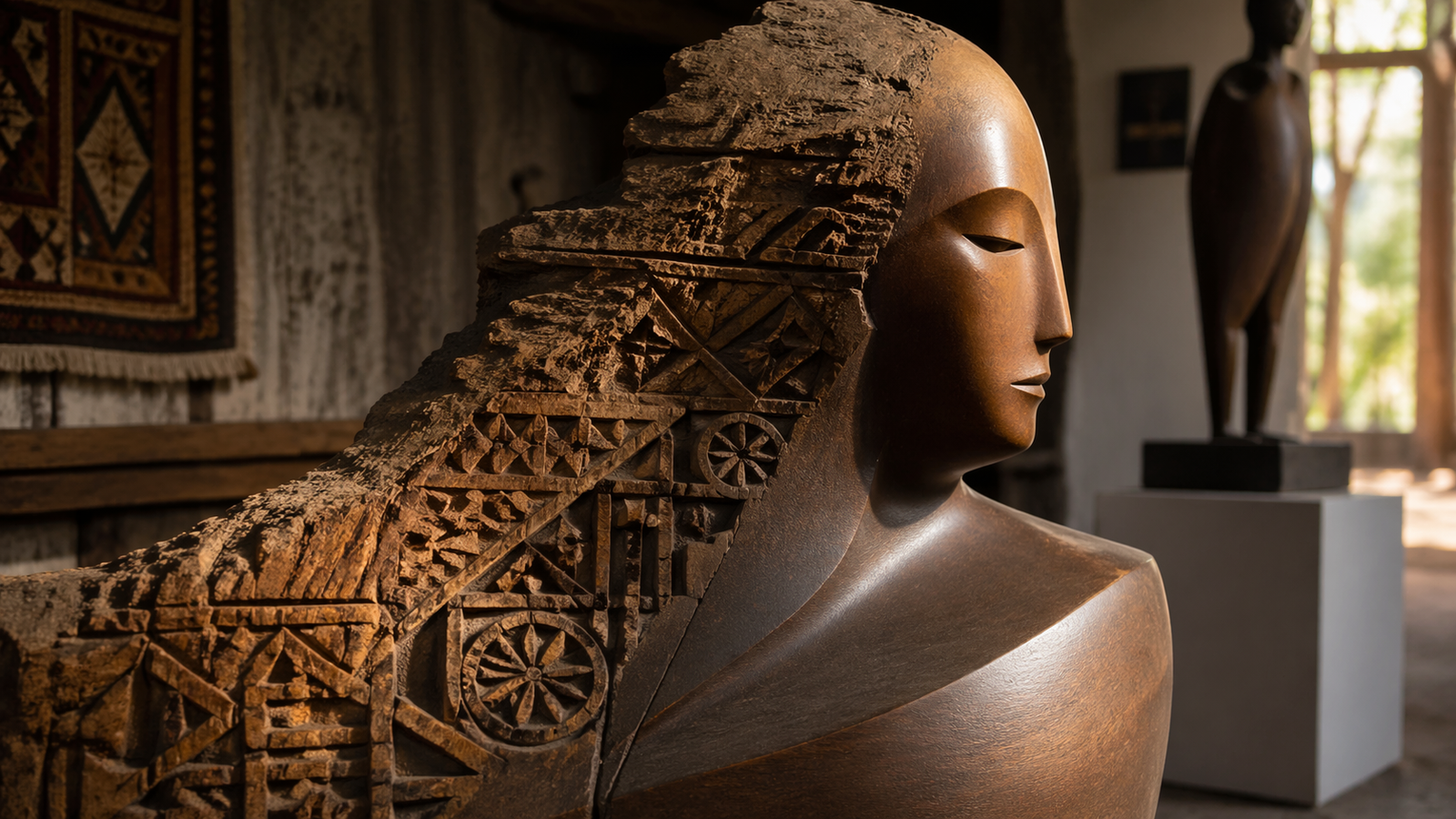
At first glance, Brancusi’s polished forms may seem far removed from Bucovina’s painted monastery walls. Yet there is a deeper connection. Both traditions are concerned with essence and meaning. Both use visual form to point beyond the surface. Brancusi’s sculptures often feel abstract and universal, but they also carry traces of Romanian folk carving, rural memory, and respect for natural materials. His work stands between local inheritance and international modernism.
Works such as The Endless Column, The Kiss, and Bird in Space show how Constantin Brancusi gave sculpture a new language. The Endless Column, especially, has strong symbolic resonance. It suggests ascent, continuity, sacrifice, and infinity through repeated simplified forms. This is modern art, but it is not empty formalism. It carries emotional and spiritual weight, which connects it to older Romanian traditions in a subtle but meaningful way.
From Folk Memory to Modern Form
Brancusi matters because he proves that Romanian artistic identity is not limited to heritage preservation. It also helped shape global modern art. His work shows how a creator can carry local memory into an international artistic conversation without simply illustrating folklore. He did not reproduce rural motifs directly in a literal way. Instead, he absorbed their logic: simplicity, material honesty, symbolic compression, and respect for form.
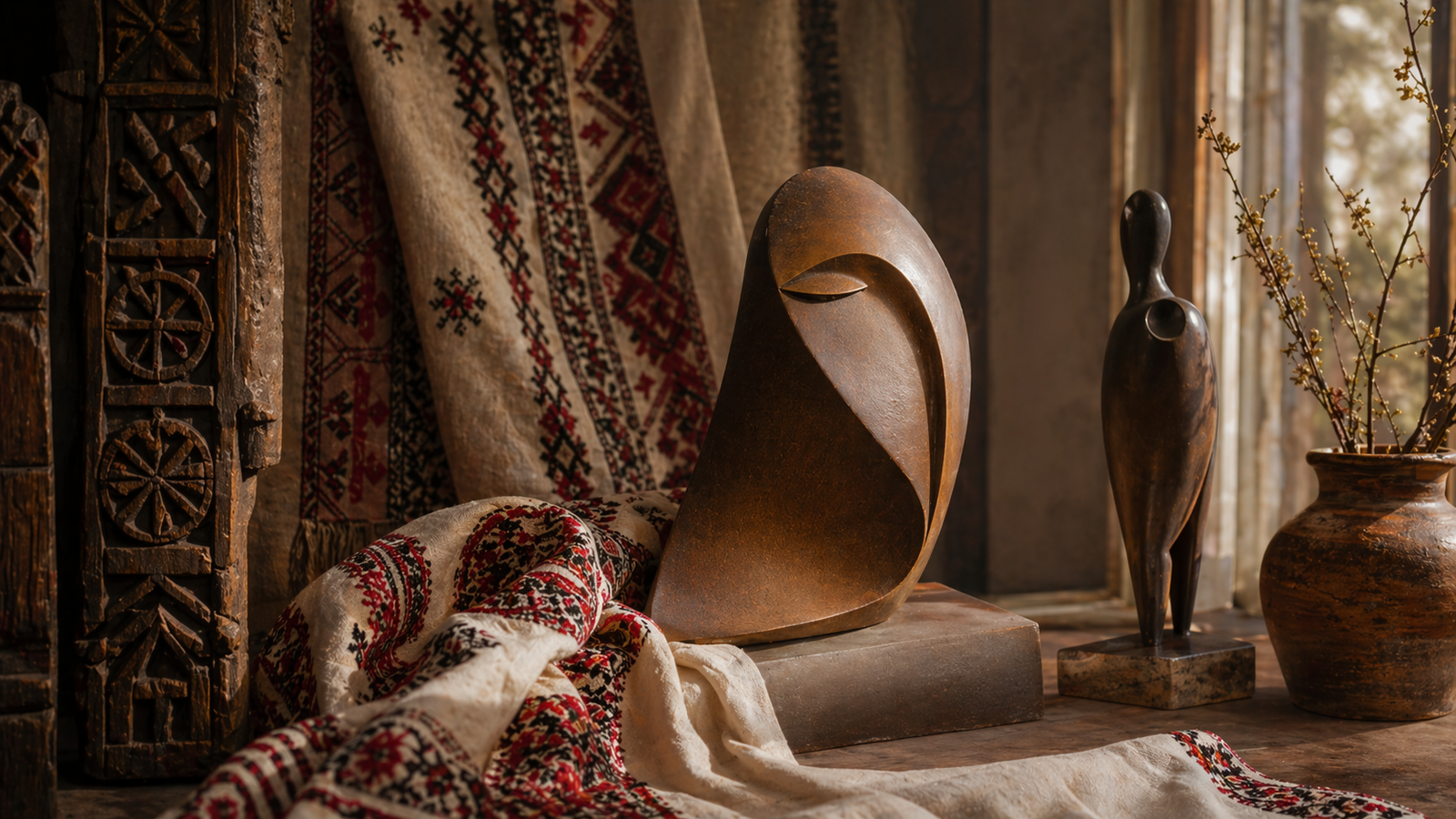
This makes Constantin Brancusi a bridge between Romania’s artistic traditions and modern sculpture. The painted monasteries show Romania’s sacred medieval imagination. Rural craft shows creativity embedded in everyday life. Brancusi shows how those deeper instincts could be transformed into modern sculpture. Through him, Romania enters the broader story of twentieth-century artistic revolution.
For travelers, this widens the cultural route. A trip focused on Romanian art can move from Bucovina’s frescoes to traditional villages, then toward Brancusi’s legacy and the modern museums or public spaces where his influence is felt. That progression gives the country’s art story shape and movement.
Contemporary Art in Romania Today
The story of Romanian art and culture does not end with monasteries, folk craft, or modern sculpture. Today, contemporary art in Romania is active, diverse, and increasingly visible. Bucharest has museums, galleries, independent spaces, and creative communities that engage with both local and international conversations. Cluj-Napoca has become especially known for its contemporary art scene, while Timisoara, Iasi, and other cities add their own energy to the country’s cultural landscape.
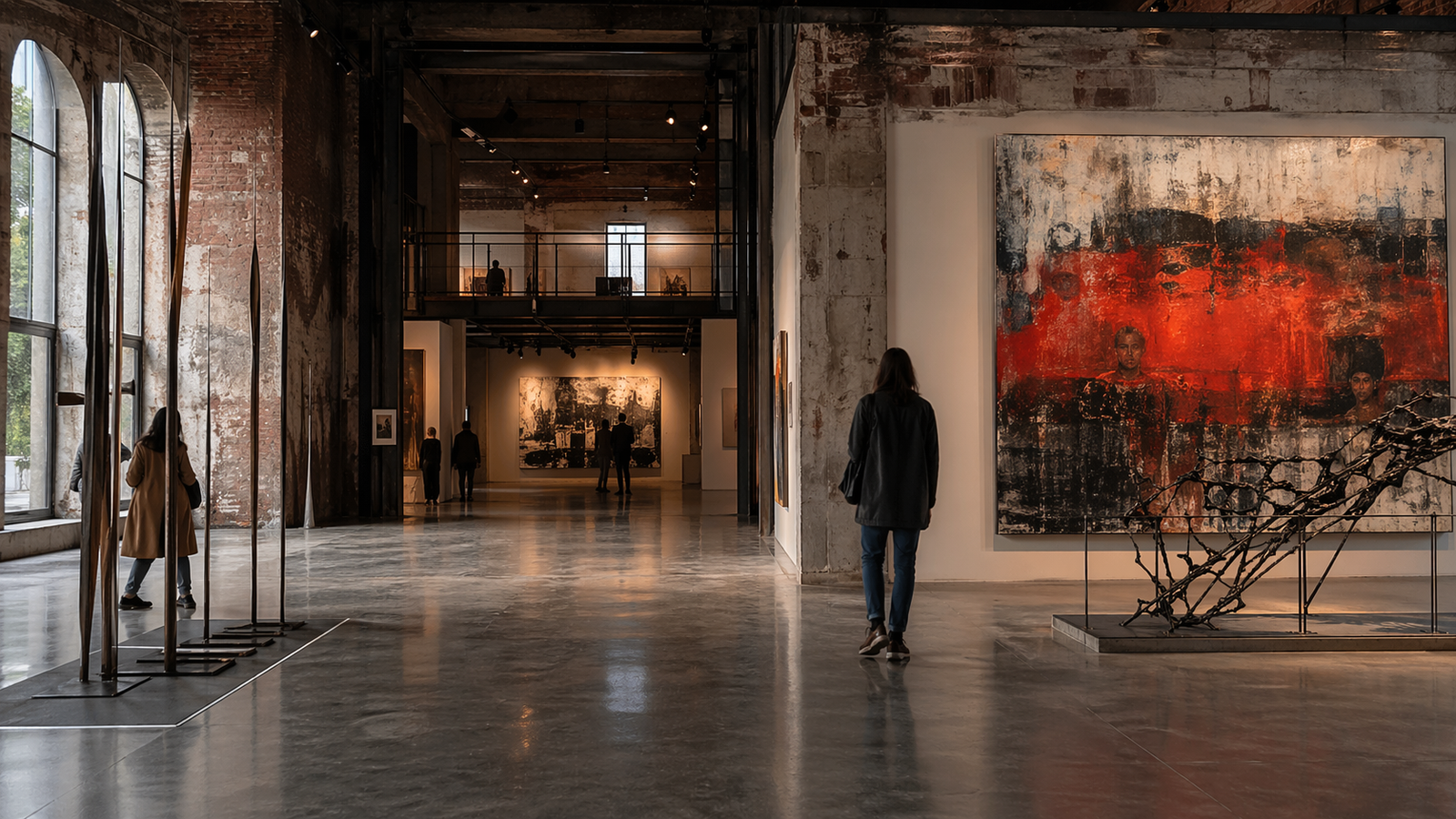
What makes contemporary art in Romania interesting is its relationship with history. Many artists work with themes of memory, political transition, urban change, identity, migration, social tension, and the legacy of the communist period. Others explore abstraction, photography, digital media, installation, performance, or conceptual forms. The scene is not defined by one style, which is exactly what makes it feel alive.
This modern creative energy helps prevent Romania from being seen only as a country of old churches and rural traditions. Those older layers matter enormously, but contemporary artists show that Romanian culture continues to question, reinterpret, and reinvent itself. The result is a cultural landscape where sacred art, folk memory, modern sculpture, and current experimentation can all belong to the same national story.
Bucharest, Cluj, and the Urban Creative Scene
Bucharest is one of the best places to experience the urban side of Romanian creativity. The city’s architecture already tells a complicated story of monarchy, modernism, communist planning, and post-communist reinvention. Its art spaces reflect that same complexity. Museums, galleries, murals, design studios, and independent cultural venues all contribute to a scene that feels layered and restless.
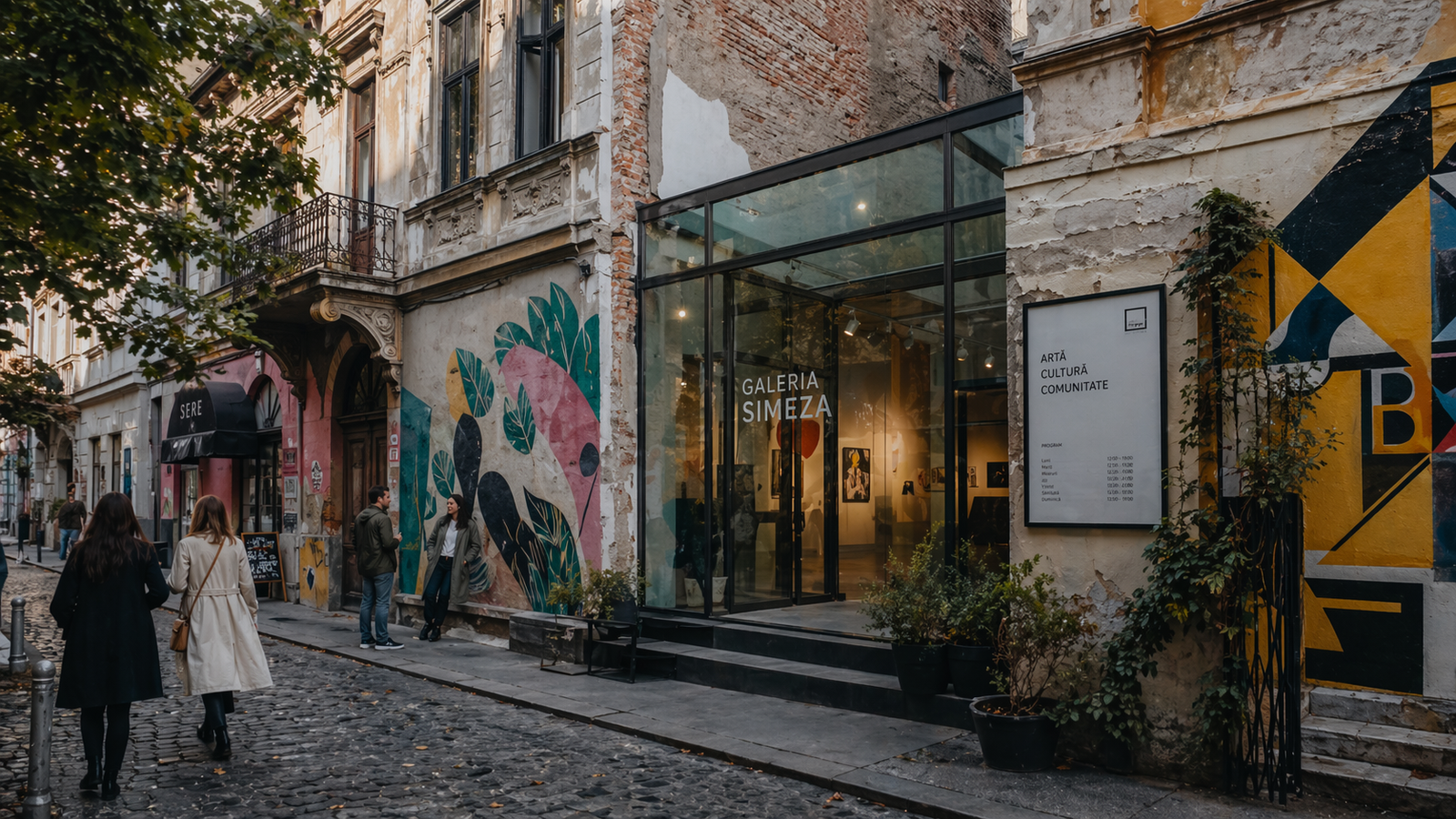
Cluj-Napoca has developed a particularly strong reputation in contemporary art circles. Its galleries and artist communities have helped bring international attention to contemporary art in Romania, especially through painting, conceptual work, and experimental practices. The city’s creative identity feels different from Bucharest’s, often more concentrated and closely tied to artistic networks. A visit to Cluj adds another perspective on Romania’s contemporary creative life.
Timisoara and Iasi also matter because they show that Romania’s cultural energy is not confined to the capital. Each city has its own relationship with history, architecture, education, and artistic production. This gives travelers more ways to encounter Romanian creativity beyond the best-known landmarks.
Conclusion
Romanian art and culture is best understood as a layered journey through faith, color, craft, material, memory, and reinvention. The Painted Monasteries of Bucovina reveal the power of sacred storytelling, while Byzantine art in Romania explains the deeper visual tradition behind them. Rural crafts show how creativity lived in everyday objects and village spaces. Constantin Brancusi connects Romania to the global development of modern sculpture, and contemporary art in Romania proves that the country’s creative life is still evolving.
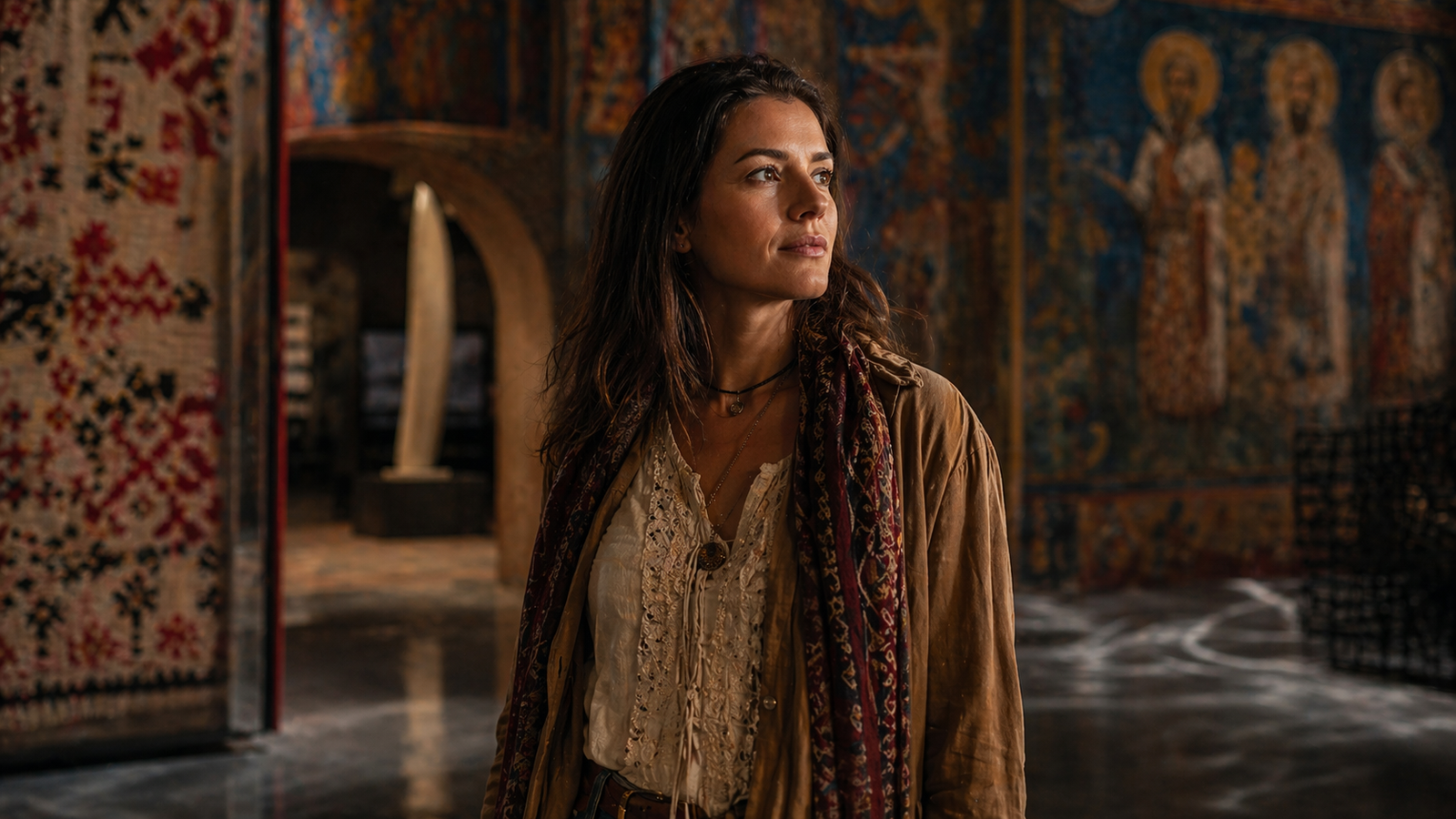
For travelers looking beyond the obvious landmarks, Romania offers an artistic heritage that is quieter than some, but far richer than many expect. Its art is not only something to view in museums. It is painted on monastery walls, carved into gates, woven into textiles, shaped into sculpture, and reimagined in modern galleries. That is what makes Romania such a rewarding cultural destination: its creativity lives across centuries, regions, and forms.
To decide where these cultural experiences fit into your journey, compare the regions in our guide to things to do in Romania.