
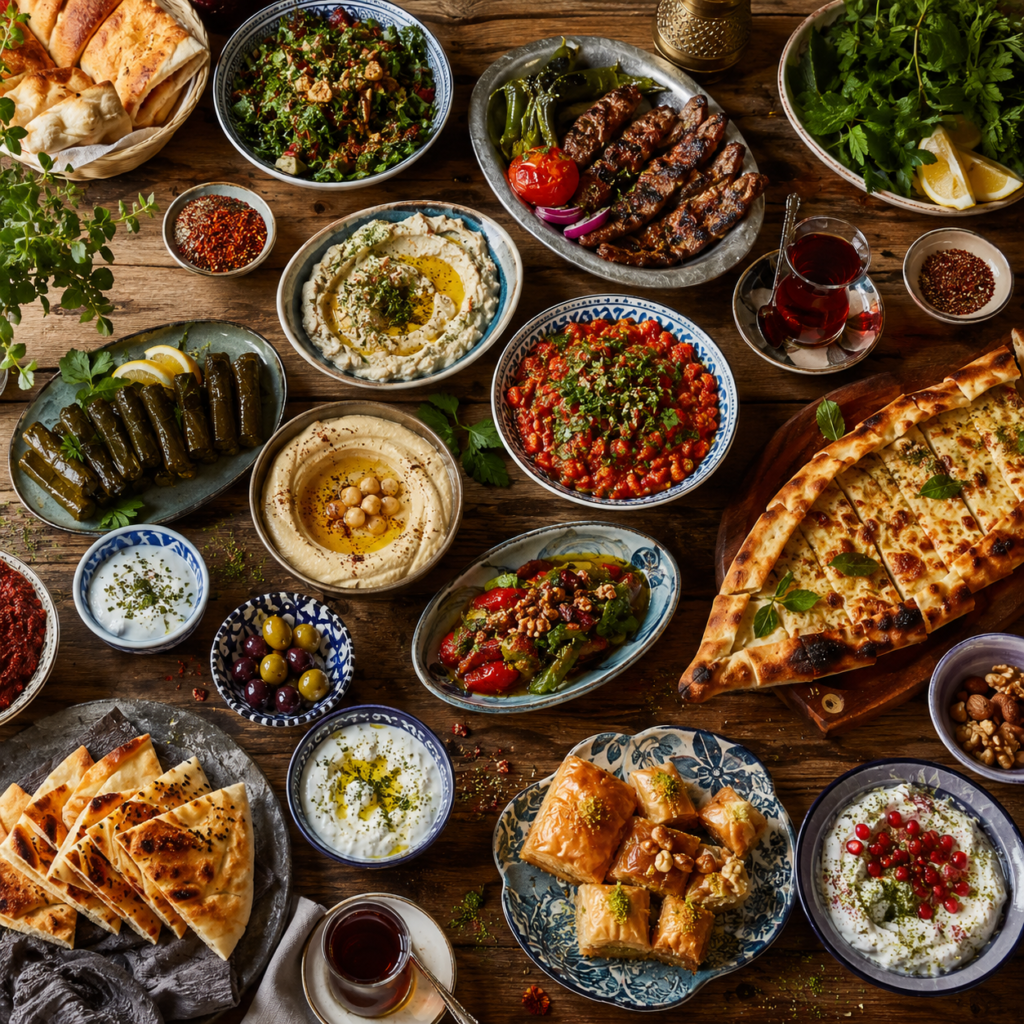
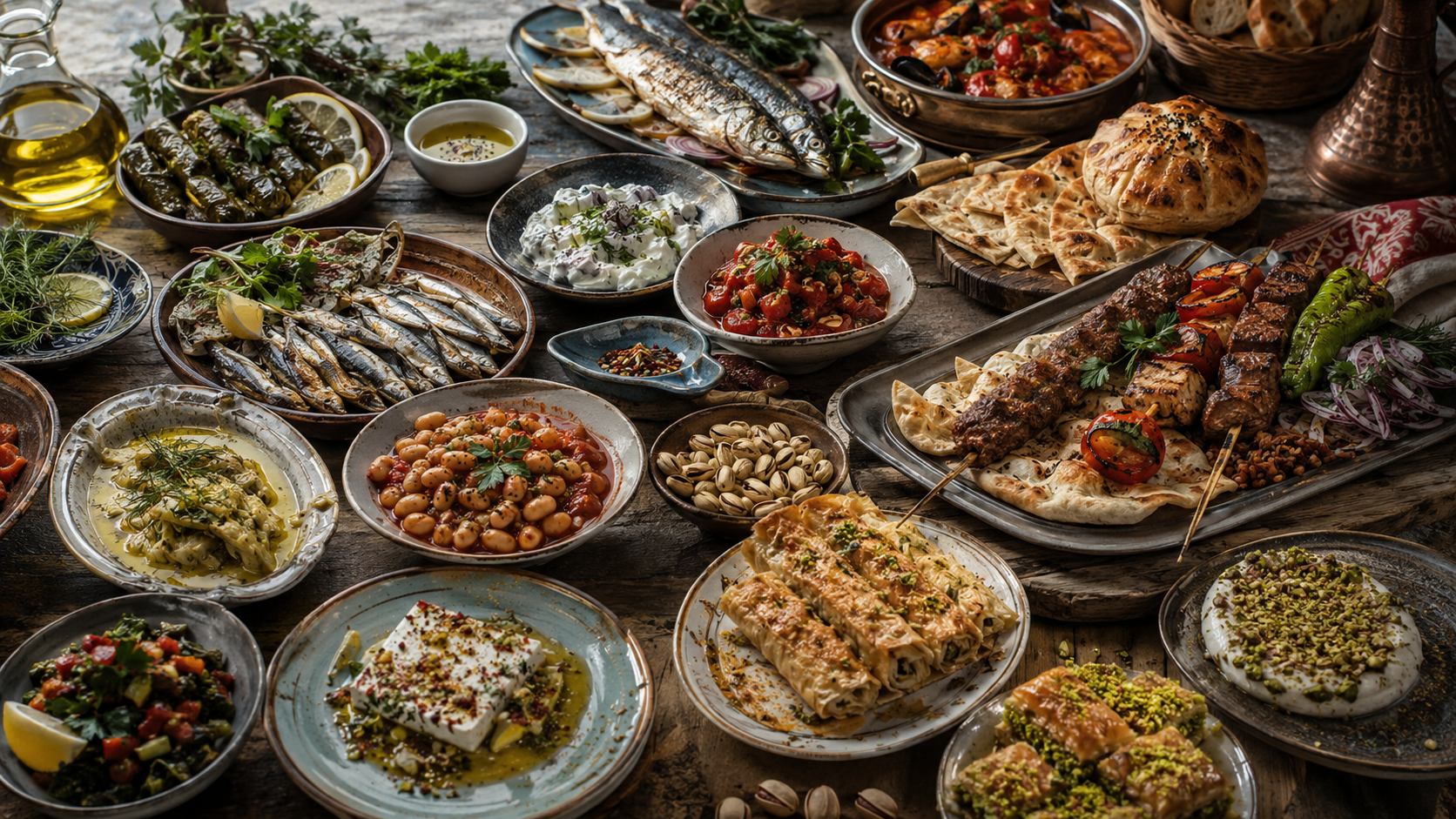
Turkish cuisine is one of the richest food cultures in the world because it was shaped by geography, empire, migration, trade, agriculture, and everyday hospitality. It belongs to the Mediterranean, the Balkans, the Middle East, Central Asia, the Black Sea, and Anatolia all at once. That mixture gives Turkish food its depth: grilled meats, olive oil dishes, fresh herbs, yogurt, breads, seafood, pastries, soups, sweets, tea, coffee, and long shared meals.
For travelers, traditional Turkish food is not only something to taste between sightseeing stops. It is one of the best ways to understand the country. A Turkish breakfast reveals family-style abundance. A bazaar shows regional ingredients and daily rhythms. A kebab tells a story about fire, meat, and place. A cup of Turkish coffee turns a drink into ritual. To eat well in Turkey is to move through history, landscape, and hospitality at the same time.
Why Turkish Cuisine Feels So Diverse
Turkey’s food culture is diverse because the country itself is diverse. Coastal regions have fish, olive oil, herbs, and vegetables. Central Anatolia has wheat, flatbreads, pastries, stews, and hearty dishes. The southeast is known for spices, kebabs, pistachios, and deep flavors. The Black Sea region brings corn, anchovies, tea, hazelnuts, and green mountain produce into the mix.
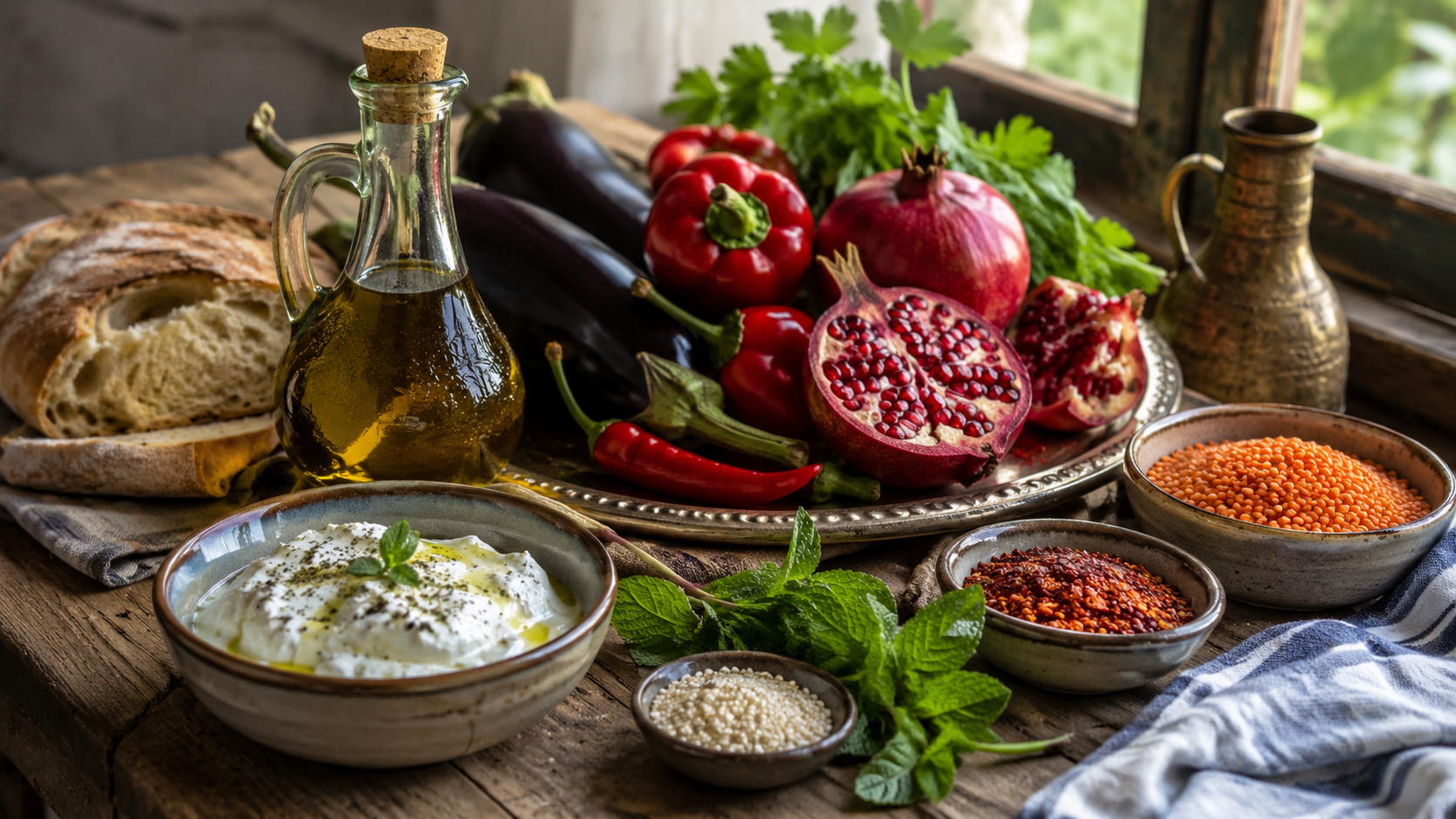
The Turkish Ministry of Culture and Tourism describes Turkish culinary culture as a combination of foods, preparation methods, eating practices, utensils, beliefs, and traditions shaped by Anatolia and many historical influences. That is the right way to think about it. Turkish cuisine is not just a list of dishes. It is a whole system of cooking, serving, sharing, and remembering.
Turkish Breakfast: A Slow Start to the Day
A proper Turkish breakfast is one of the great pleasures of traveling in Turkey. It is usually not a single plate, but a table of small dishes: cheese, olives, tomatoes, cucumbers, eggs, honey, butter, jam, bread, pastries, herbs, and endless tea. In some places, breakfast may also include menemen, a soft egg dish cooked with tomatoes and peppers, or sucuklu yumurta, eggs with spicy sausage.
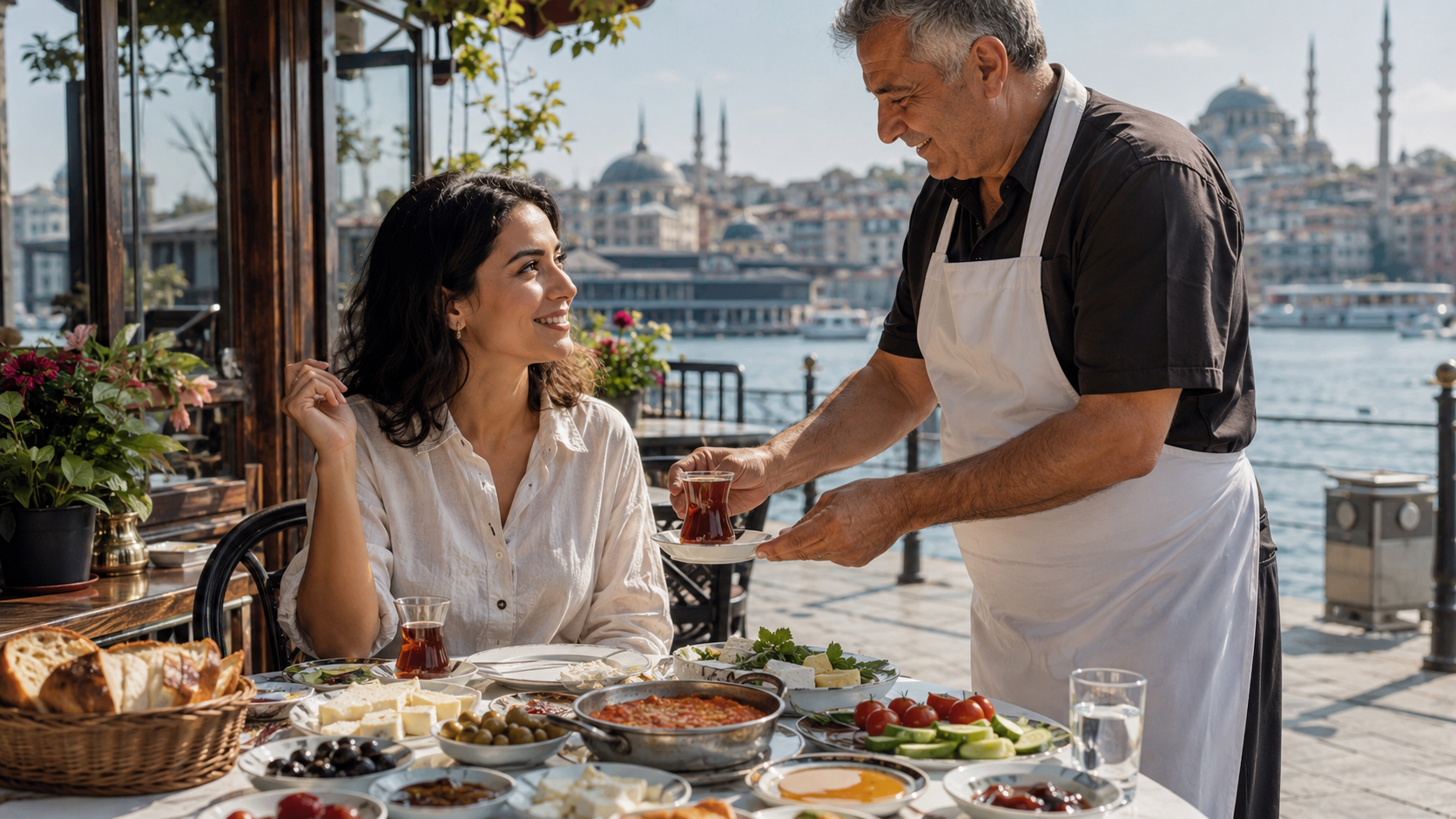
The beauty of Turkish breakfast is its generosity. It encourages conversation and lingering rather than rushing. In cities like Istanbul, Van, Izmir, and Antalya, breakfast can become a full travel experience in itself. A good breakfast table also introduces the logic of Turkish cuisine: variety, sharing, freshness, bread, tea, and the pleasure of small tastes gathered together.
Bread, Yufka, and the Foundation of the Table
Bread is central to Turkish food culture. It appears with breakfast, soups, grilled meats, meze, stews, and street food. Fresh bread is not a side detail; it is part of how the meal works. It carries sauces, balances salt and spice, and turns simple ingredients into something satisfying.
Flatbreads such as yufka and lavaş are especially important in many regions. They connect everyday eating with older traditions of village baking, family cooperation, and shared meals. UNESCO recognizes the flatbread making and sharing culture, including yufka, as a tradition practiced in several countries, including Türkiye. For travelers, even a simple piece of warm bread can reveal how deeply food is tied to community.
Meze: Small Plates with Big Personality
Meze is one of the best introductions to Turkish cuisine because it turns a meal into a conversation. These small dishes may include haydari, ezme, hummus, stuffed grape leaves, eggplant salads, white cheese, olives, yogurt dishes, seafood starters, beans, herbs, and seasonal vegetables. The exact selection changes by region and restaurant style.
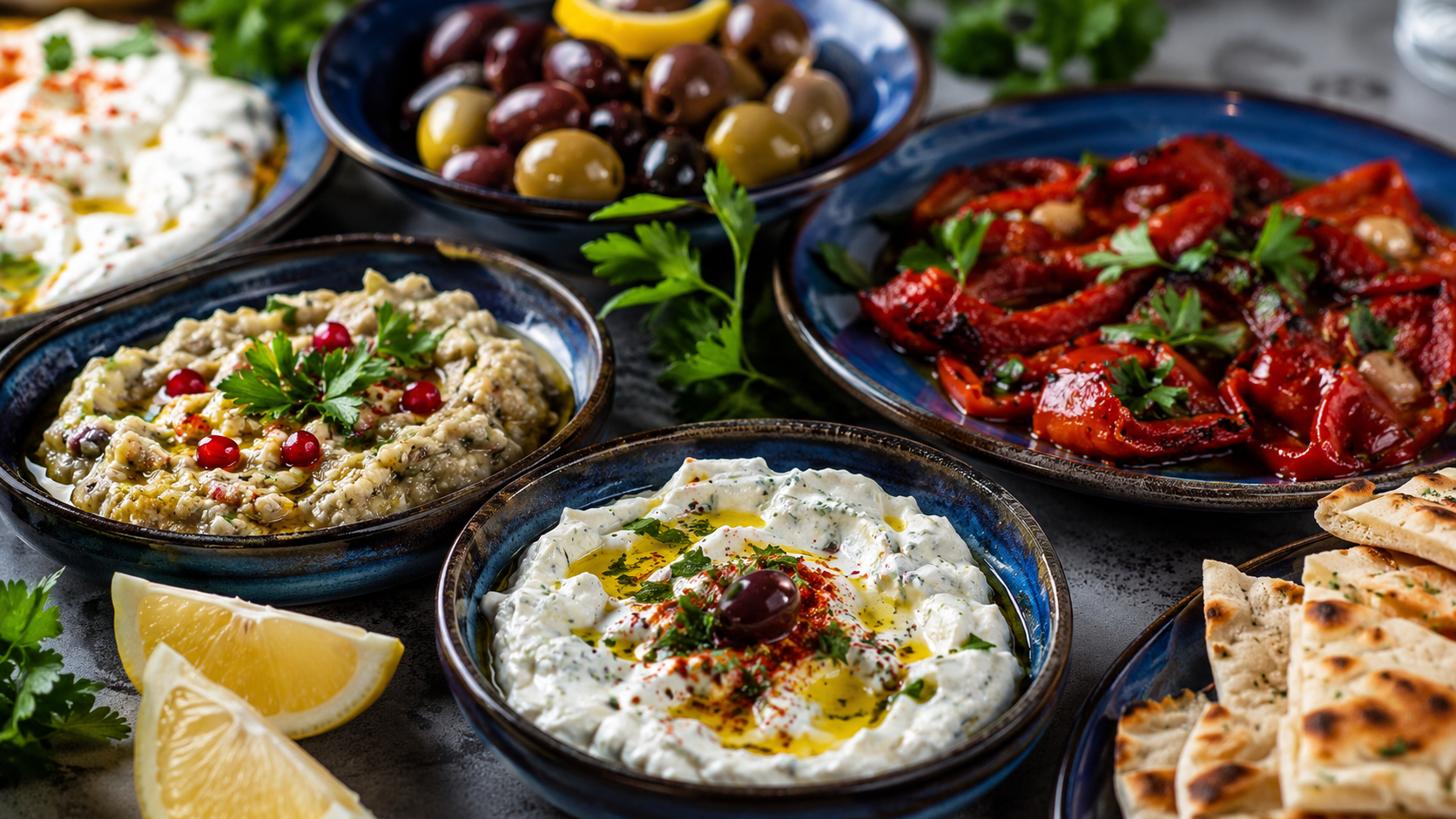
What makes meze special is not only the flavor, but the rhythm. Plates arrive slowly, people share, and the meal becomes social before the main dish even appears. Meze culture is especially strong along the Aegean and Mediterranean coasts, where olive oil, herbs, vegetables, and seafood shape the table. It is a softer, slower side of traditional Turkish food, and it pairs beautifully with long evenings.
Soups, Yogurt, and Comfort Food
Turkish soups are often simple, comforting, and deeply rooted in daily life. Lentil soup, yogurt-based soups, tripe soup, tarhana, and chicken soups all appear in different contexts. Some are breakfast-friendly, some are late-night comfort food, and others belong to home cooking rather than restaurant menus.
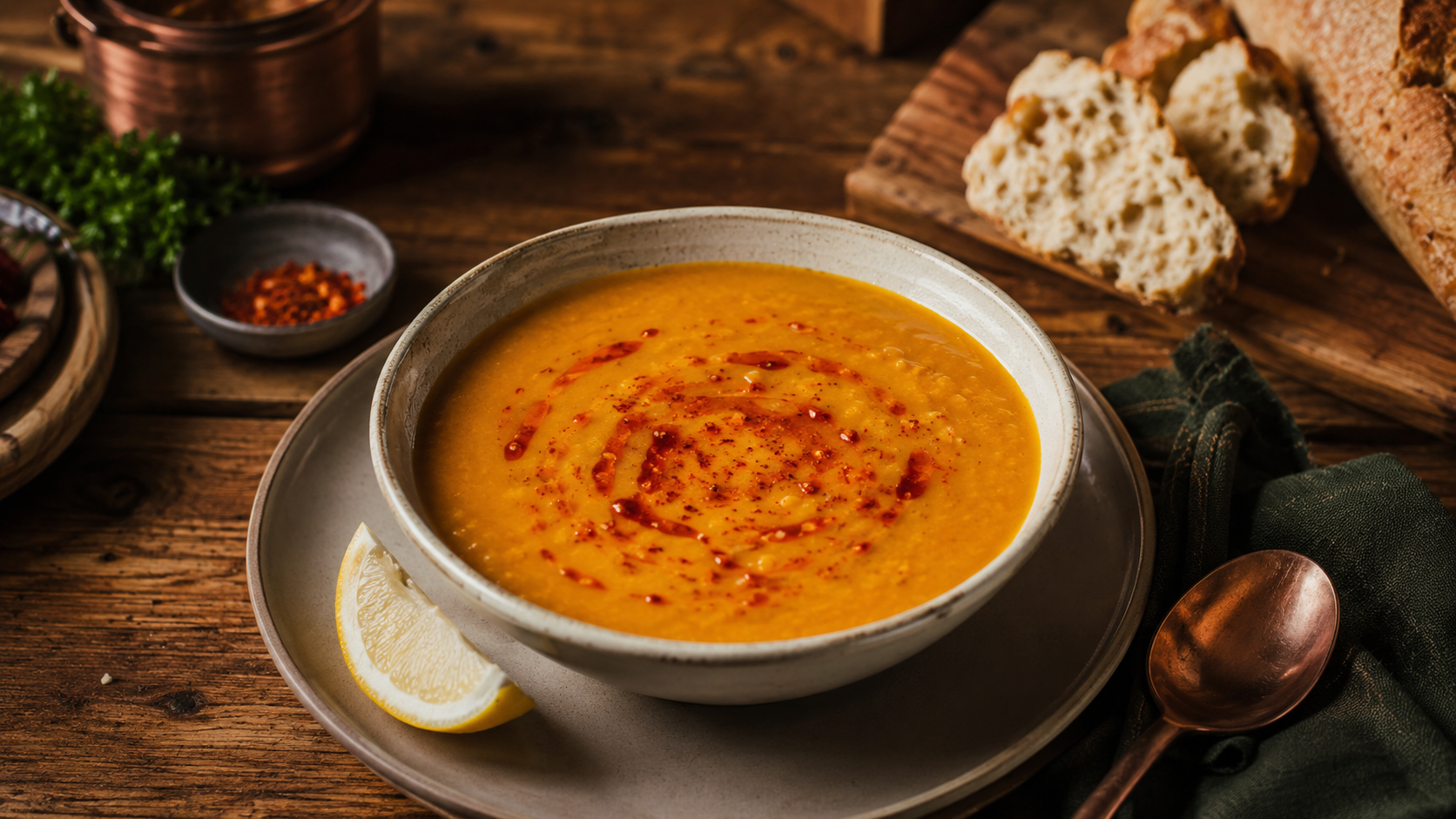
Yogurt also plays a major role in Turkish cuisine. It appears as a side, sauce, drink, soup base, and cooling balance for spicy or rich dishes. Ayran, a salty yogurt drink, is especially common with grilled meats and fast meals. These everyday foods may not look dramatic, but they show how Turkish cooking balances richness, acidity, heat, and freshness.
Kebabs: Fire, Region, and Technique
Kebabs are among the most famous Turkish dishes, but the category is much wider than many travelers expect. Adana kebab is spicy and intense, Urfa kebab is usually milder, shish kebab is grilled on skewers, and döner is cooked on a vertical rotisserie. Each style has its own texture, seasoning, and regional identity.
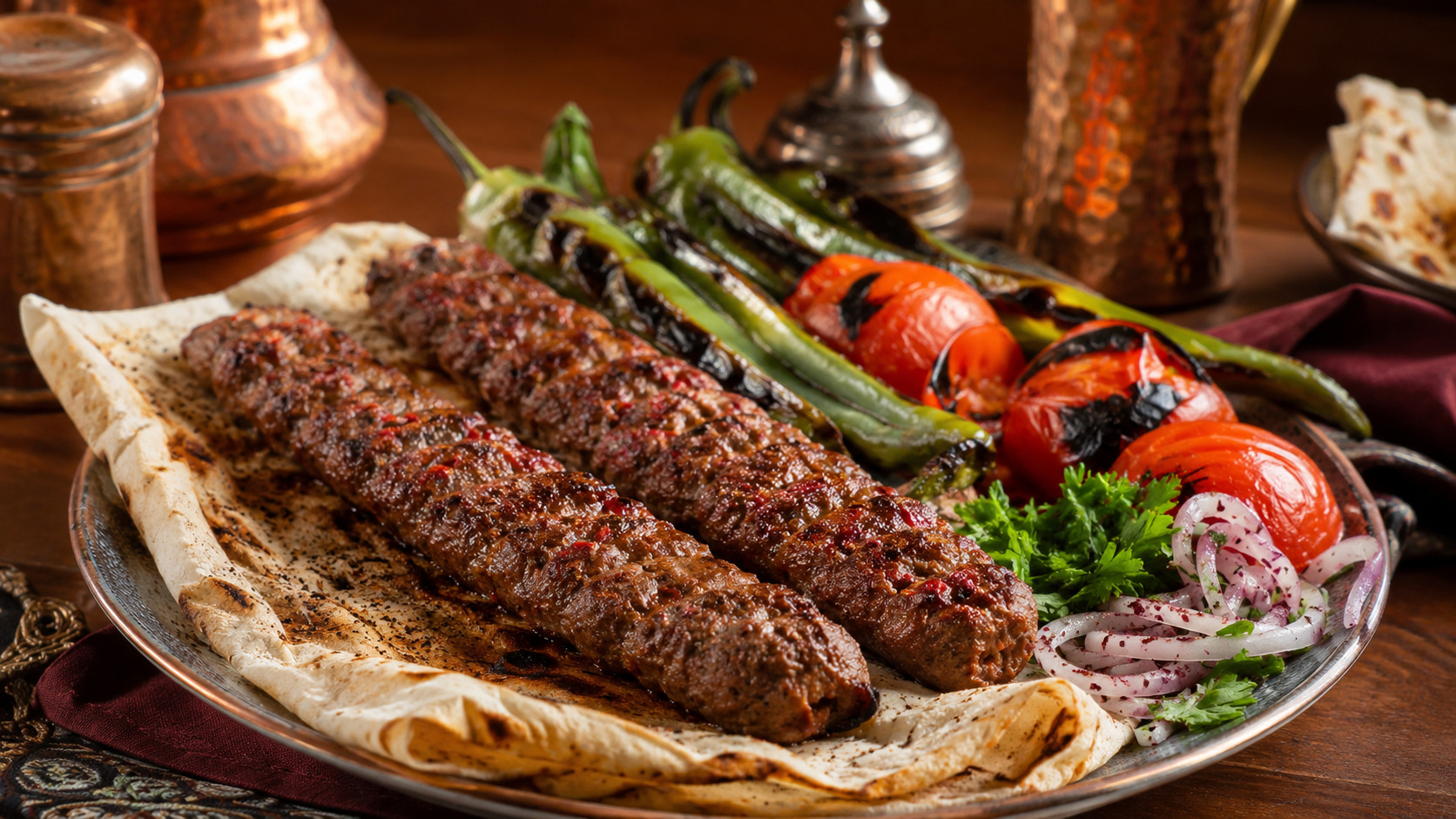
The southeast of Turkey, especially cities like Gaziantep, Şanlıurfa, and Adana, is one of the best regions for meat-focused food. Here, kebab is not just fast food. It is technique, ingredient quality, fire control, and local pride. A good kebab should be juicy, balanced, and served with bread, grilled vegetables, herbs, onions, and sometimes sumac. It is simple in appearance, but serious in execution.
Turkish Street Food: Fast, Local, and Full of Character
Turkish street food is one of the easiest ways to eat well without sitting down for a long meal. Simit, a sesame-crusted bread ring, is a classic snack with tea. Balık ekmek, a fish sandwich, is strongly associated with Istanbul’s waterfront. Döner, lahmacun, börek, gözleme, midye dolma, roasted chestnuts, and corn all belong to the everyday food landscape.
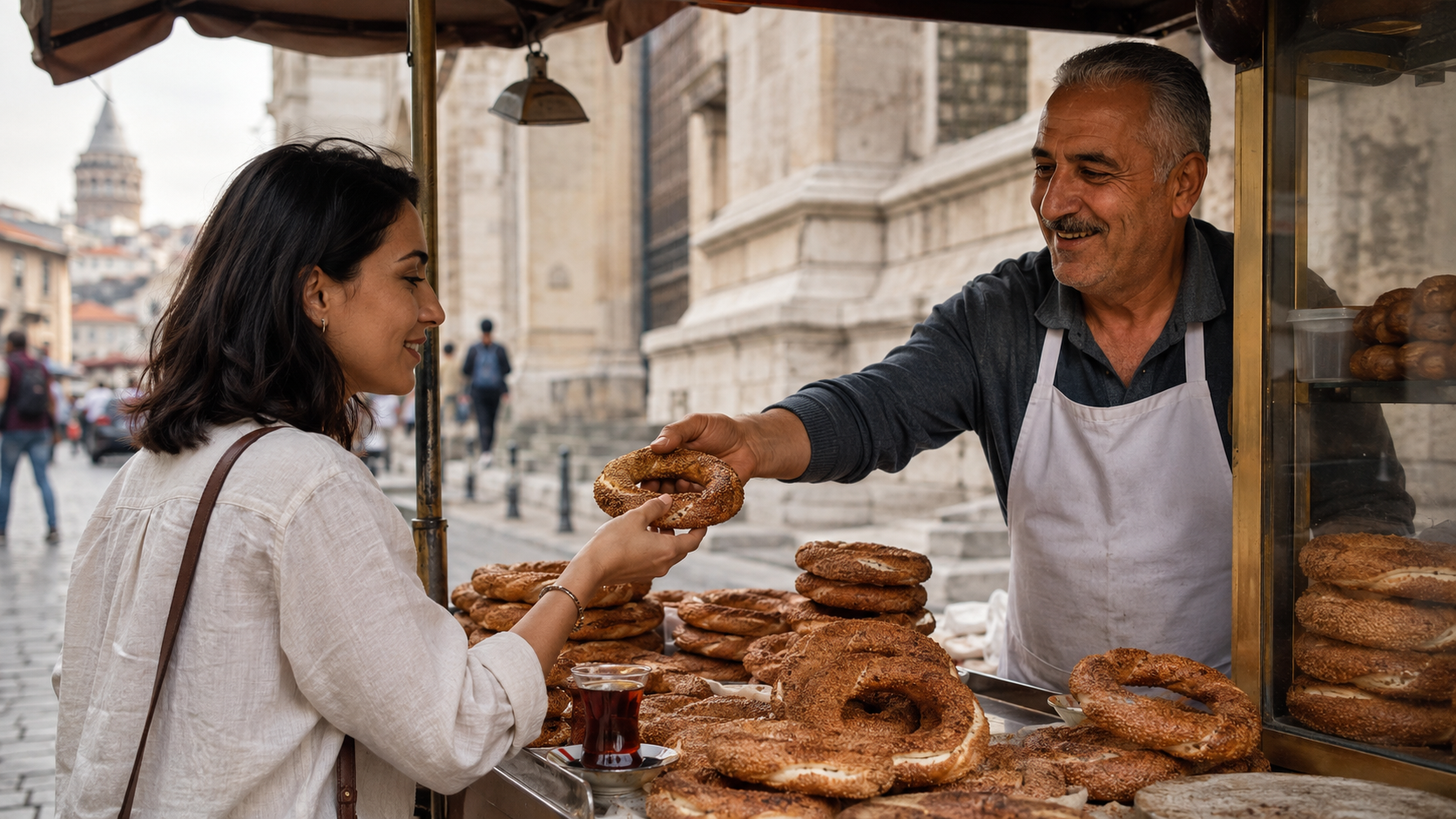
The best Turkish street food is often connected to place. Eating balık ekmek near the water feels different from eating it in a shopping mall. Buying simit from a street cart gives a different experience than ordering it at a cafe. Street food helps travelers feel the rhythm of Turkish cities: quick, warm, practical, and full of small rituals.
Aegean and Mediterranean Flavors
The Aegean and Mediterranean regions show a lighter side of Turkish cuisine. Olive oil dishes, wild greens, herbs, seafood, artichokes, zucchini flowers, beans, eggplant, citrus, and fresh vegetables are common here. Meals may feel less meat-heavy and more seasonal, especially in coastal towns.
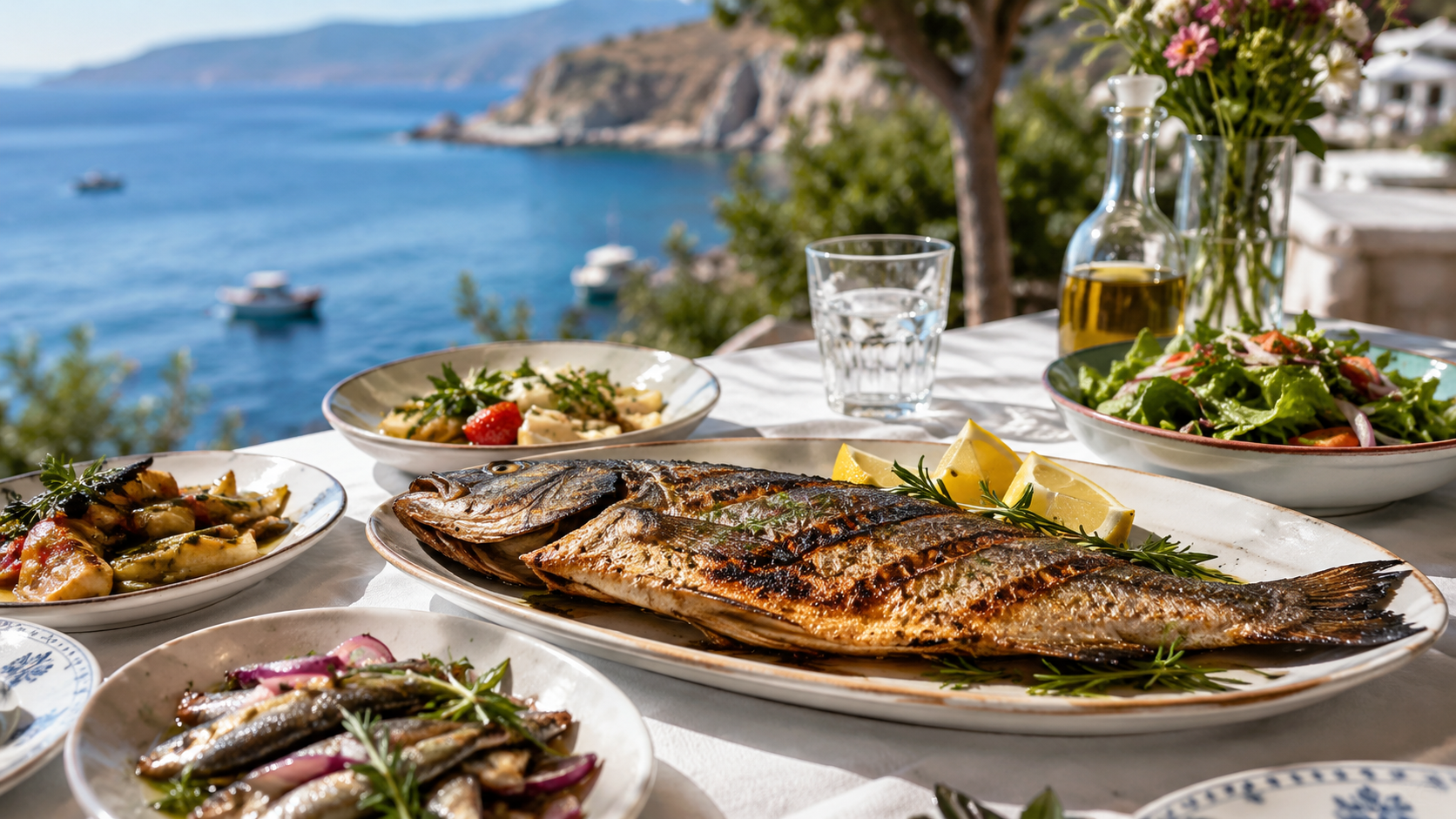
This region is ideal for travelers who want fresh, relaxed food. A simple table of meze, grilled fish, salad, bread, olive oil vegetables, and fruit can be more memorable than a complicated meal. The Aegean style shows that Turkish food is not only kebabs and pastries. It can also be green, bright, herbal, and deeply tied to the sea.
Black Sea Cuisine: Tea, Corn, Anchovies, and Mountains
The Black Sea region has a completely different food identity. Its climate is green and wet, and its cuisine reflects that. Cornbread, hamsi, or anchovies, collard greens, beans, butter, cheese, tea, and hazelnuts all play important roles. The food can feel rustic, hearty, and connected to mountain life.
Tea is especially important in the eastern Black Sea region, where tea plantations shape the landscape around Rize and nearby areas. Drinking tea in Turkey is not limited to this region, of course, but the Black Sea gives the country much of its tea culture. This is a reminder that food and landscape are always connected. Regional cuisine often begins with climate.
Central Anatolia and the Heart of Comfort Cooking
Central Anatolia offers a more inland, hearty style of food. Wheat, dough, meat, yogurt, butter, legumes, and preserved ingredients are important. Dishes such as mantı, small dumplings served with yogurt and sauce, are deeply comforting and widely loved. Börek, pide, soups, stews, and slow-cooked dishes also belong naturally to this world.
This region connects strongly with the broader history of Anatolia. Trade routes, rural life, winter conditions, and home cooking all shaped what people ate. If you want to understand the cultural depth behind the table, Turkish food pairs naturally with the story of Anatolian civilizations. Food is one of the ways history remains present in ordinary life.
Southeastern Turkey: Spice, Pistachios, and Deep Flavor
Southeastern Turkey is one of the country’s great food regions. Gaziantep, Şanlıurfa, Mardin, and nearby areas are known for kebabs, spices, pistachios, lahmacun, baklava, stuffed vegetables, soups, and rich regional specialties. The flavors are deeper, warmer, and often more intense than in western coastal regions.
Gaziantep is especially famous for gastronomy, and many travelers consider it one of the best food cities in Turkey. Pistachios, baklava, kebabs, and regional dishes are treated with real seriousness. This part of the country shows how Turkish cuisine changes when it meets Mesopotamian, Arab, Kurdish, and Anatolian influences. It is a region where food feels ancient, proud, and highly local.
Turkish Desserts: Baklava, Künefe, Lokum, and Beyond
Turkish desserts are famous for good reason. Baklava, with its layers of pastry, nuts, and syrup, is the most iconic. Künefe, made with shredded pastry, melted cheese, syrup, and often pistachios, is rich and unforgettable when served hot. Lokum, or Turkish delight, is softer and more delicate, with flavors such as rose, pistachio, lemon, or pomegranate.
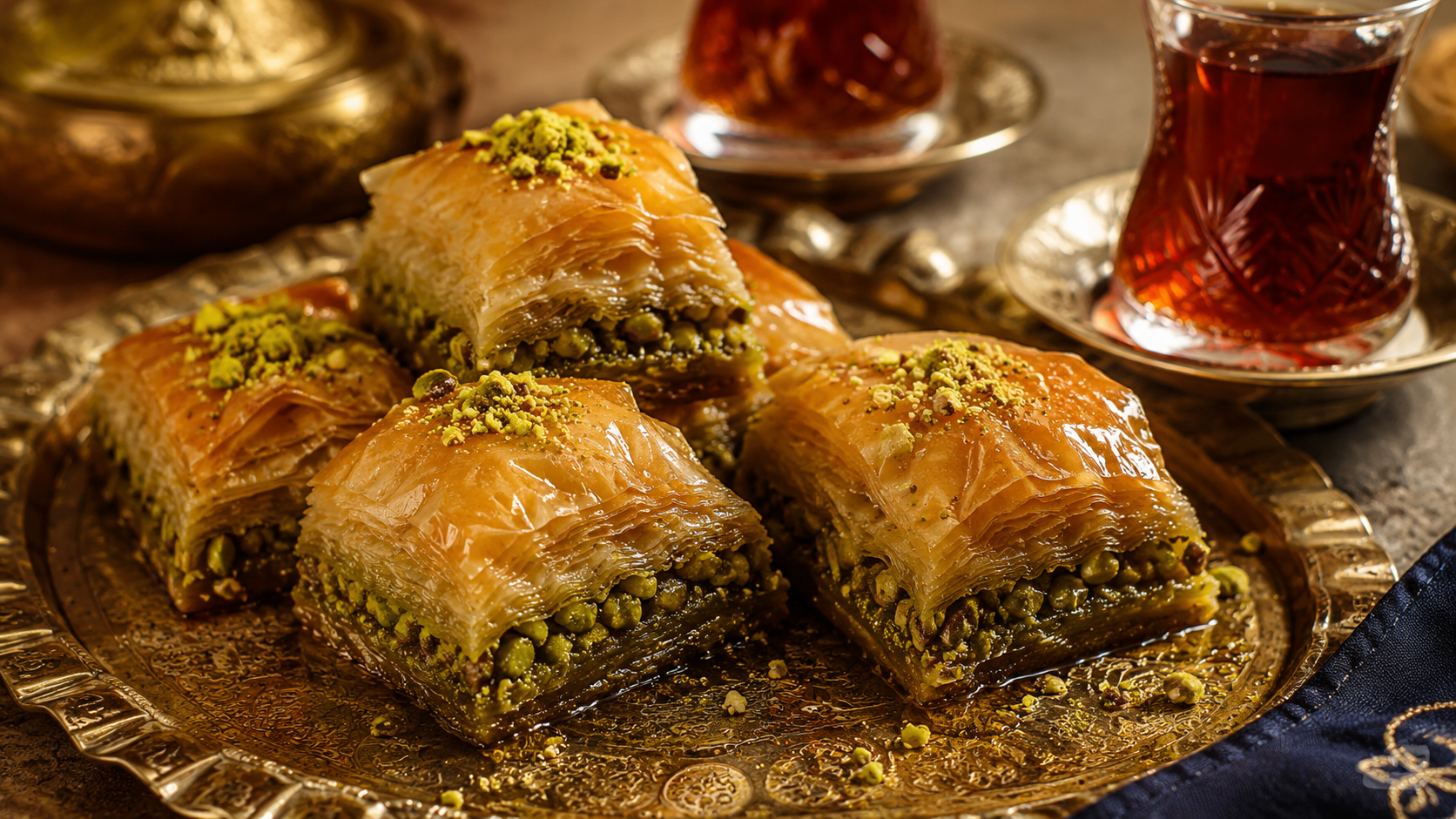
But Turkish desserts go beyond the famous names. Sütlaç, a rice pudding often baked on top, is gentle and comforting. Kazandibi has a caramelized surface and creamy texture. Helva, aşure, and regional sweets all add variety. Turkish desserts can be very sweet, but they are also tied to hospitality, celebration, religious holidays, family visits, and coffee culture.
Turkish Coffee and Tea Culture
Turkish coffee is small, strong, slow, and deeply cultural. It is brewed in a cezve, served in small cups, and often accompanied by water and something sweet. UNESCO recognizes Turkish coffee culture and tradition as intangible cultural heritage, noting its preparation methods and social meaning.
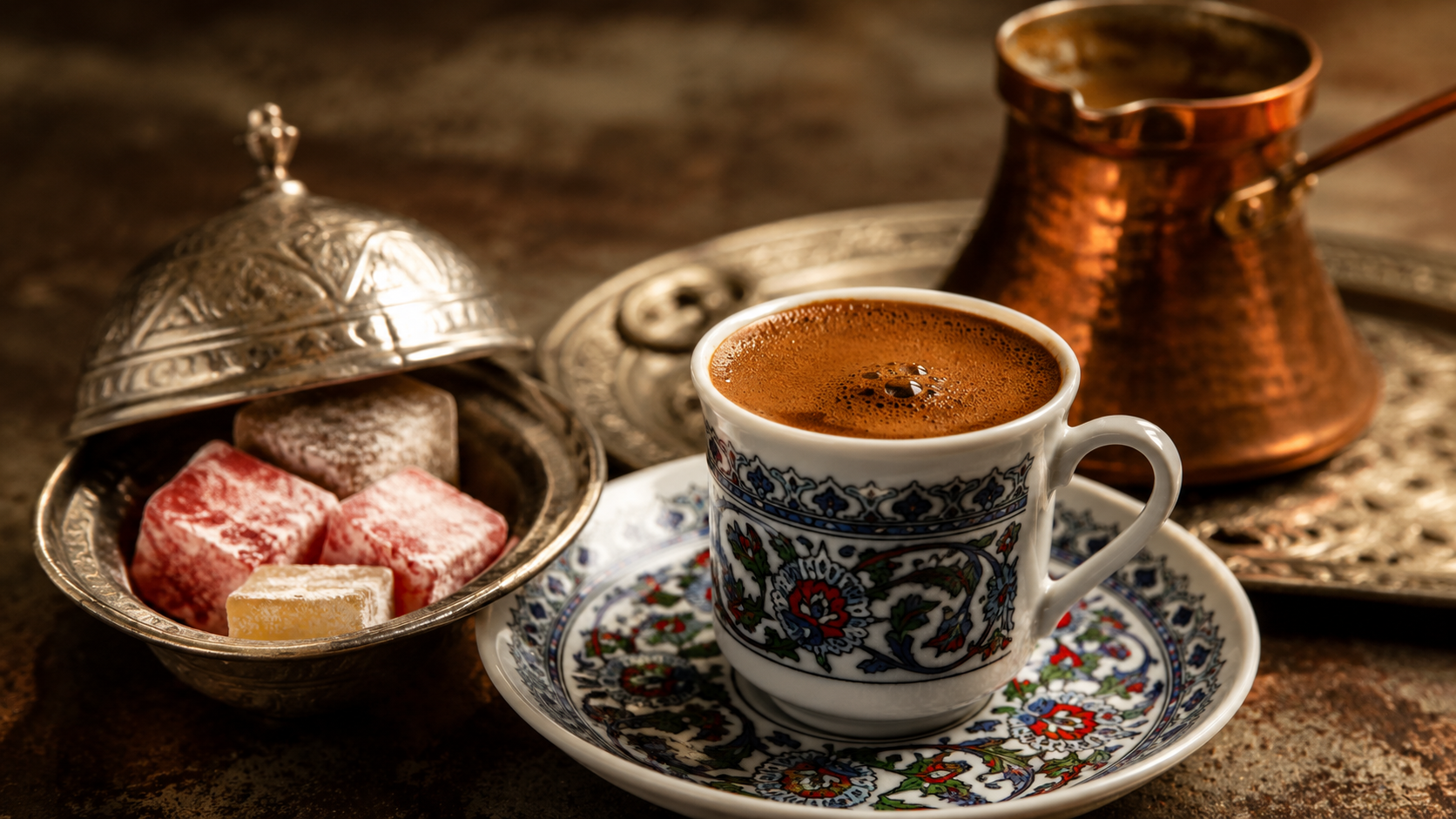
Tea, however, is the everyday drink of Turkey. Served in tulip-shaped glasses, it appears at breakfast, in shops, after meals, at ferry terminals, in markets, and during conversations. Coffee may feel ceremonial, but tea is the daily heartbeat. Together, they show how Turkish hospitality works: a drink is rarely just a drink. It is an invitation to pause.
Food, Hospitality, and Turkish Daily Life
One of the most important things to understand about Turkish cuisine is that it is social. Food is offered, shared, insisted upon, and used to welcome people. A meal is often about more than hunger. It is about care, respect, and connection.
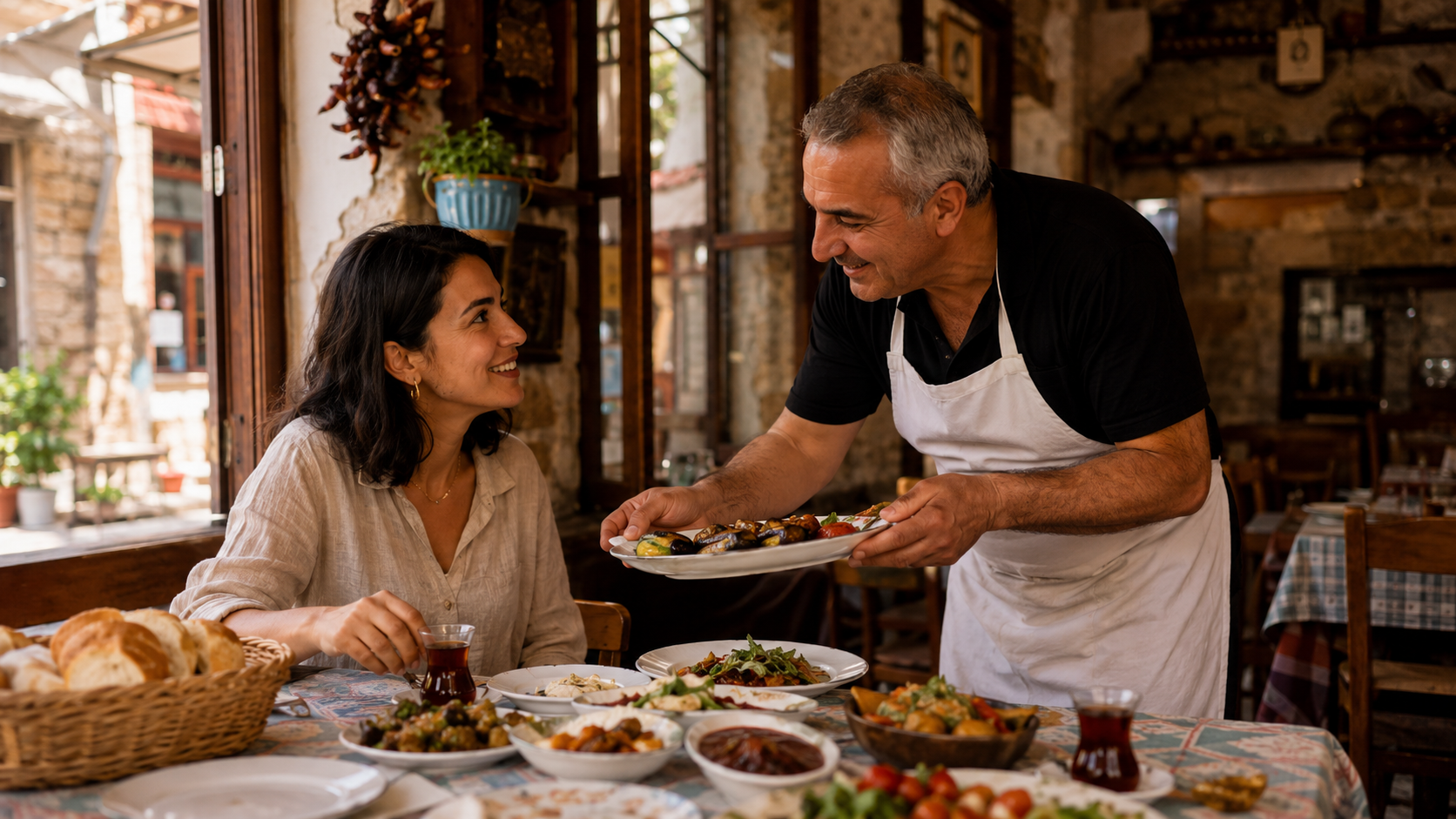
This is why Turkish food experiences often feel generous. Portions can be abundant, tables can fill quickly, and hosts may encourage guests to eat more. Even in restaurants, there is often a sense of warmth around the table. Turkish hospitality is not a performance for tourists. It is woven into daily life, family culture, and regional pride.
Pairing Food with Other Turkish Traditions
Food connects naturally with other Turkish experiences. A day in Istanbul might include a morning market, a historic mosque, lunch near the Bosphorus, a late afternoon hamam, and dinner with meze. A trip through Cappadocia might combine valley walks with pottery workshops and local dishes. A coastal route might bring seafood, olive oil vegetables, and village breakfasts.
This is why food should not be treated as separate from culture. It belongs with craft, architecture, markets, and rituals. After a Turkish hamam, even a simple tea or light meal can feel like part of the same slow cultural rhythm. The best travel days in Turkey often connect food with place, not just taste.
What to Eat in Turkey as a First-Time Visitor
For a first visit, start with variety. Try a full Turkish breakfast, a bowl of lentil soup, a few meze dishes, fresh bread, grilled kebab, lahmacun, börek, gözleme, simit, Turkish coffee, tea, baklava, and künefe. Add seafood if you are on the coast, mantı if you want comfort food, and regional specialties whenever possible.
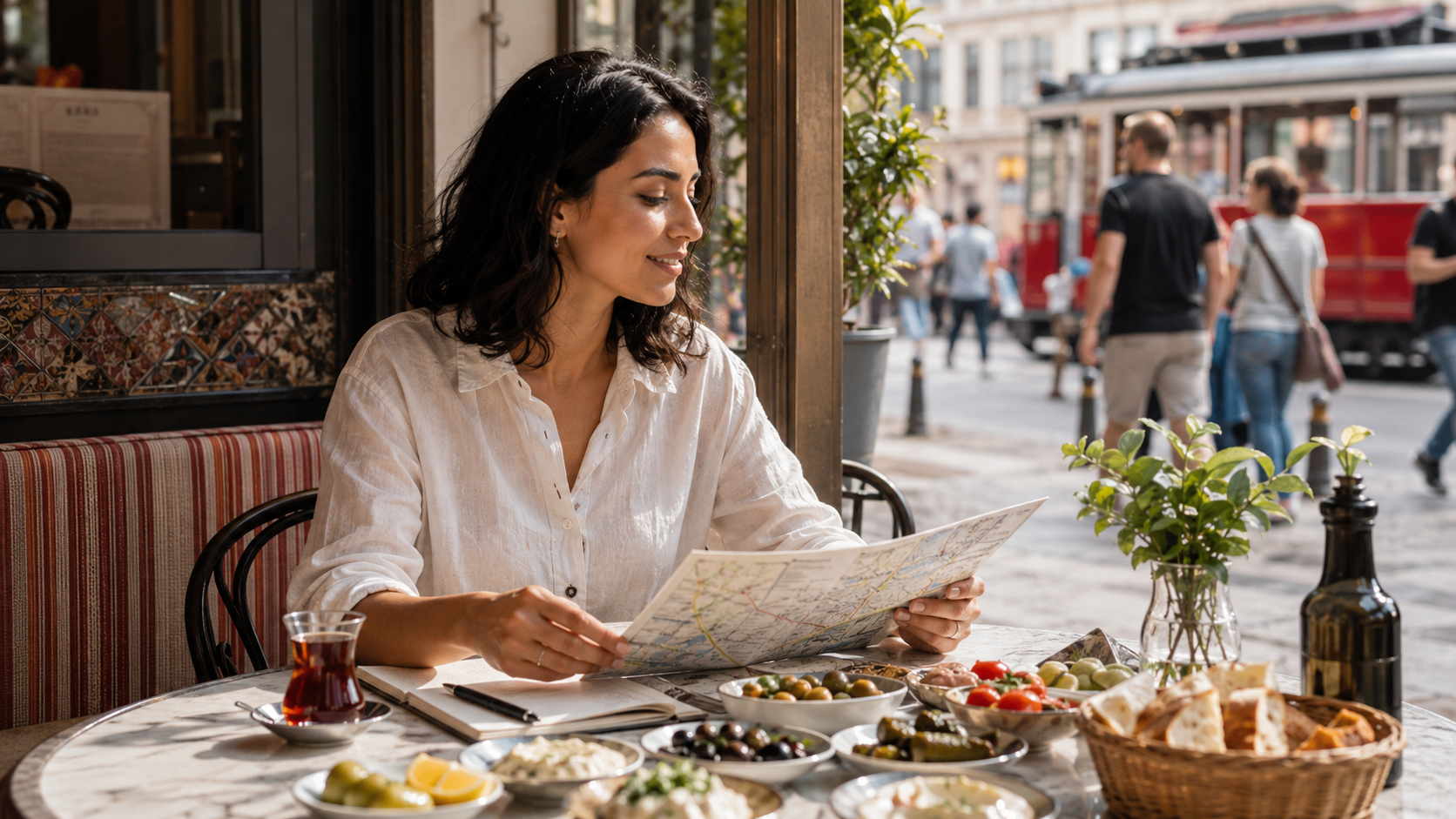
Do not rely only on famous tourist dishes. Ask what is local. Look for seasonal vegetables, neighborhood bakeries, market stalls, and small restaurants filled with local people. Turkish cuisine rewards curiosity. The more you move beyond the obvious, the more the country opens up through food.
Conclusion
Turkish cuisine is rich because it is both historical and alive. It carries Ottoman palace influence, Anatolian home cooking, regional agriculture, street food energy, Mediterranean freshness, southeastern spice, Black Sea comfort, and daily hospitality. It is not one flavor, but many regional voices sharing the same table.
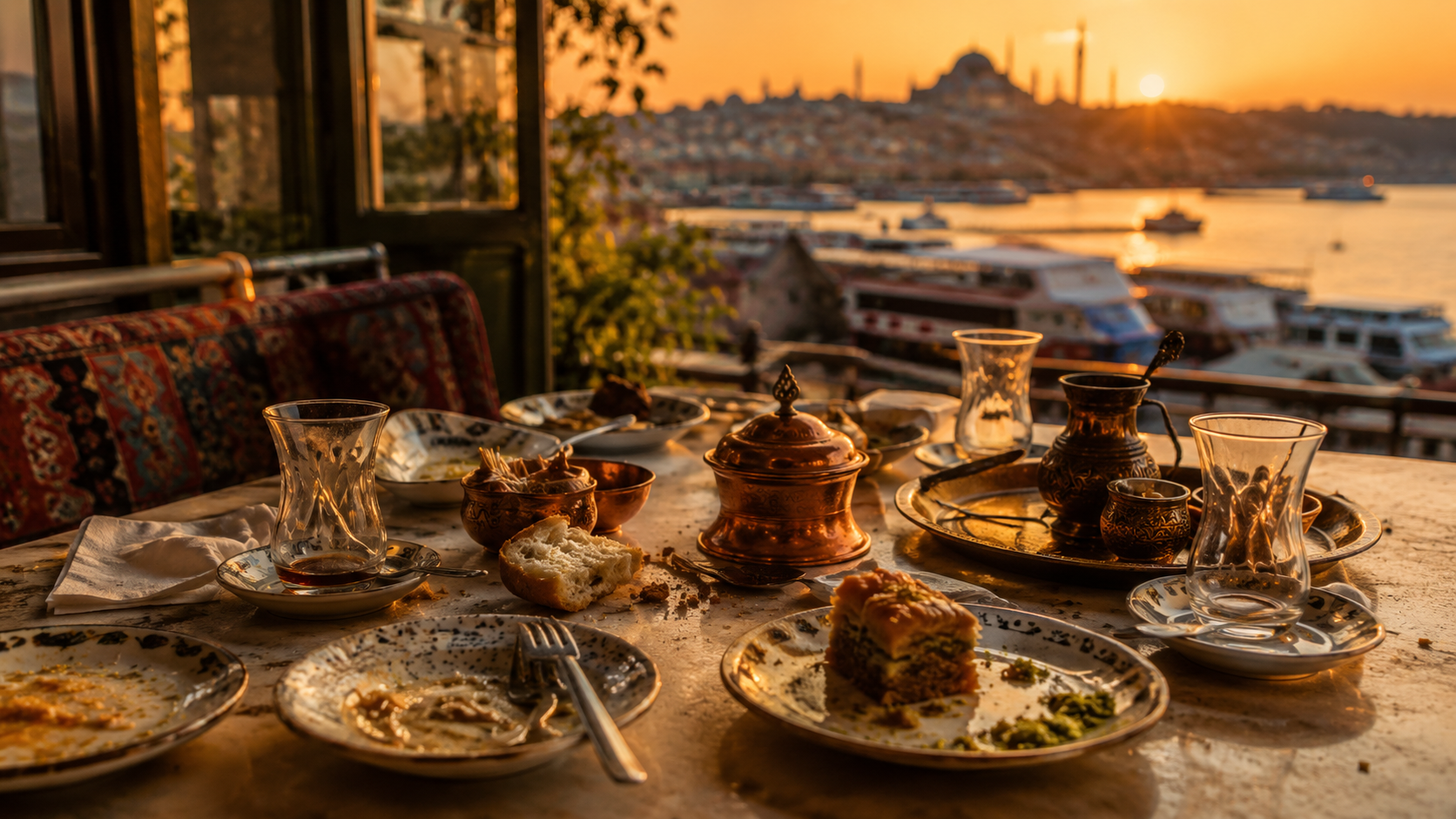
For travelers, traditional Turkish food is one of the best ways to understand the country. A breakfast table, a bazaar, a cup of coffee, a plate of meze, a hot künefe, or a simple piece of bread can reveal more than a guidebook paragraph. To eat in Turkey is to experience culture through generosity, memory, and the pleasure of slowing down.