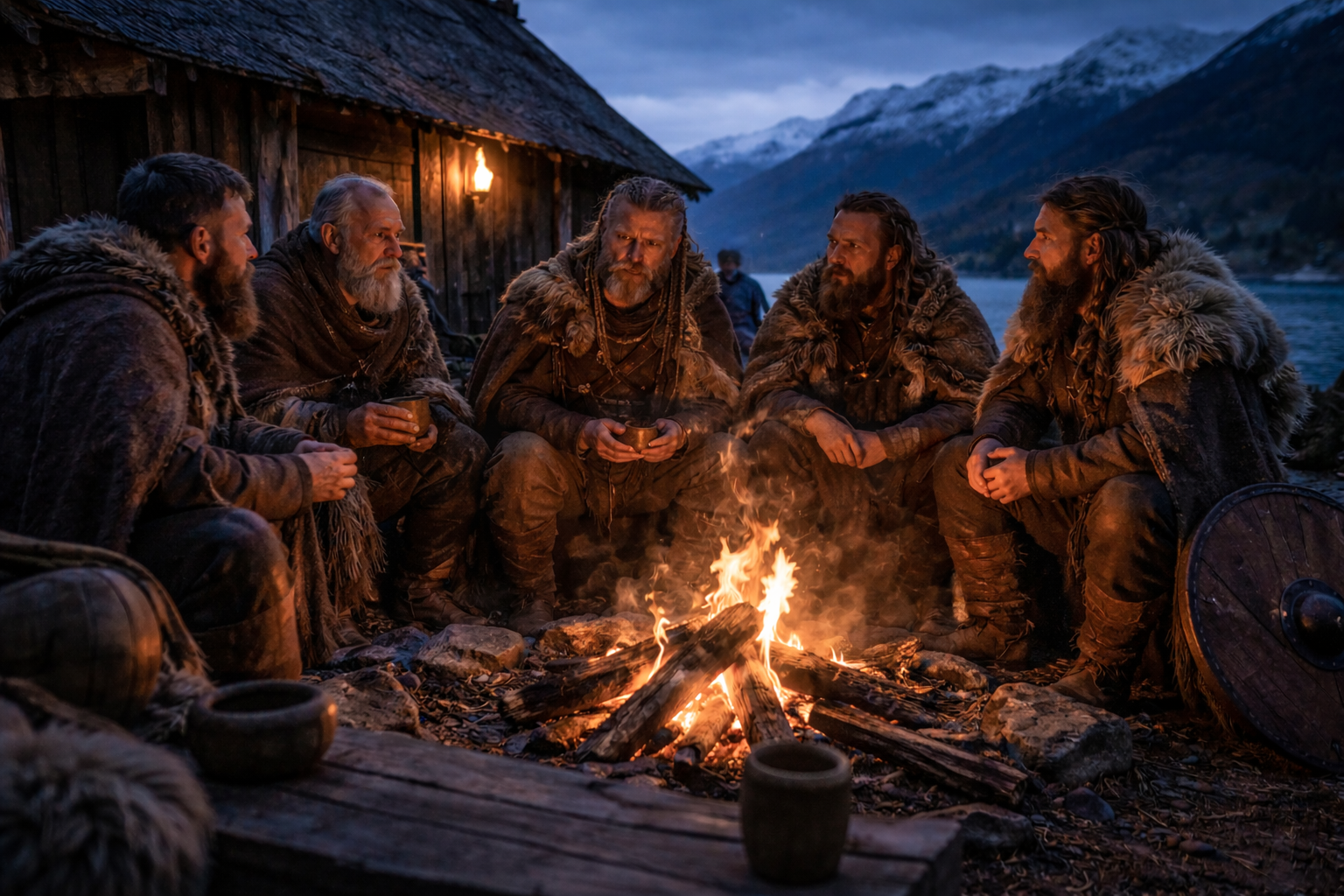

The Viking Age has a powerful hold on the imagination, but in Norway it feels less like distant legend and more like a living layer of the landscape. Ships, burial finds, reconstructed longhouses, royal sites, and museum collections all help turn myth into something tangible. For travelers who want more than a surface-level encounter with swords and sagas, Viking history in Norway offers a way to explore how seafaring culture shaped identity, power, and memory across the country. It is one of the richest historical themes Norway has to offer.
What makes this journey especially compelling is that the Viking story in Norway is not confined to one city or one museum. It appears in the capital, in the fjord region, on the western coast, and in the far north, where reconstructions and archaeological finds bring the era into sharper focus. This gives the topic a satisfying geographic spread and makes it ideal for travelers who like to connect history with place. Instead of one isolated attraction, Viking history in Norway unfolds as a broader cultural route.
There is also an important difference between Viking history as tourism and Viking history as heritage. The most meaningful experiences are not the most theatrical ones, but the ones that show how ships were built, how longhouses were organized, how royal centers developed, and how travel and trade defined the Viking world. That deeper perspective is what makes the subject worth exploring in Norway itself. Here, the Viking Age feels grounded in real objects, real geography, and real historical continuity.
Why Norway Is One of the Best Places to Explore the Viking Age
Norway offers a particularly strong entry point into the Viking world because the landscape itself helps explain the culture. Long coastlines, fjords, islands, and maritime routes shaped the conditions in which Viking travel, trade, and power became possible. The sea was not incidental to Viking life; it was central to it. That means exploring Viking history in Norway also helps travelers understand the geography that made the era possible in the first place.
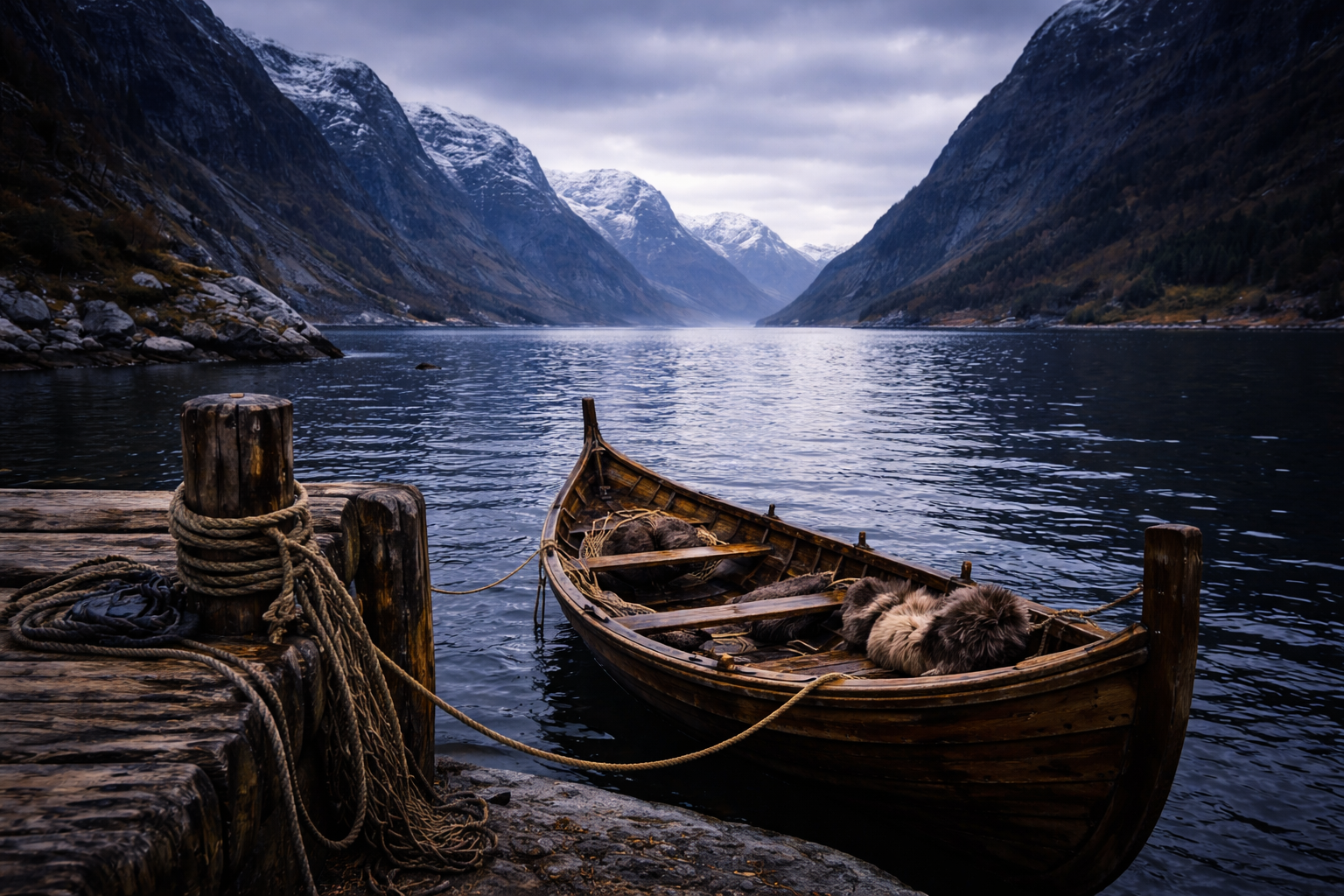
The country also benefits from having multiple types of Viking-related experiences. Some places focus on archaeology and preserved artifacts, while others offer reconstructed settlements or living-history environments that make everyday life easier to imagine. This variation keeps the topic from becoming repetitive. It also means different types of travelers can connect with it, whether they prefer museums, landscapes, architecture, or immersive experiences.
Most importantly, Norway allows visitors to move from myth to material evidence. So much of popular Viking culture is filtered through modern fantasy, but Norway gives you the chance to stand in front of actual ships, burial objects, reconstructed halls, and historically meaningful sites. That shift from story to substance is what makes the journey so satisfying. It turns curiosity into understanding.
Viking Ship Museum Oslo and the Power of Real Artifacts
For many travelers, the most immediate gateway into Viking history in Norway begins in the capital. The Viking Ship Museum Oslo has long been associated with some of the most extraordinary Viking finds in the world, especially the ships excavated from burial mounds in the Oslofjord region. Few experiences are as effective at making the Viking Age feel real as standing before vessels that were not imagined later, but actually built, used, and buried more than a thousand years ago. Ships like these carry emotional weight because they combine craftsmanship, ceremony, and travel in one form.
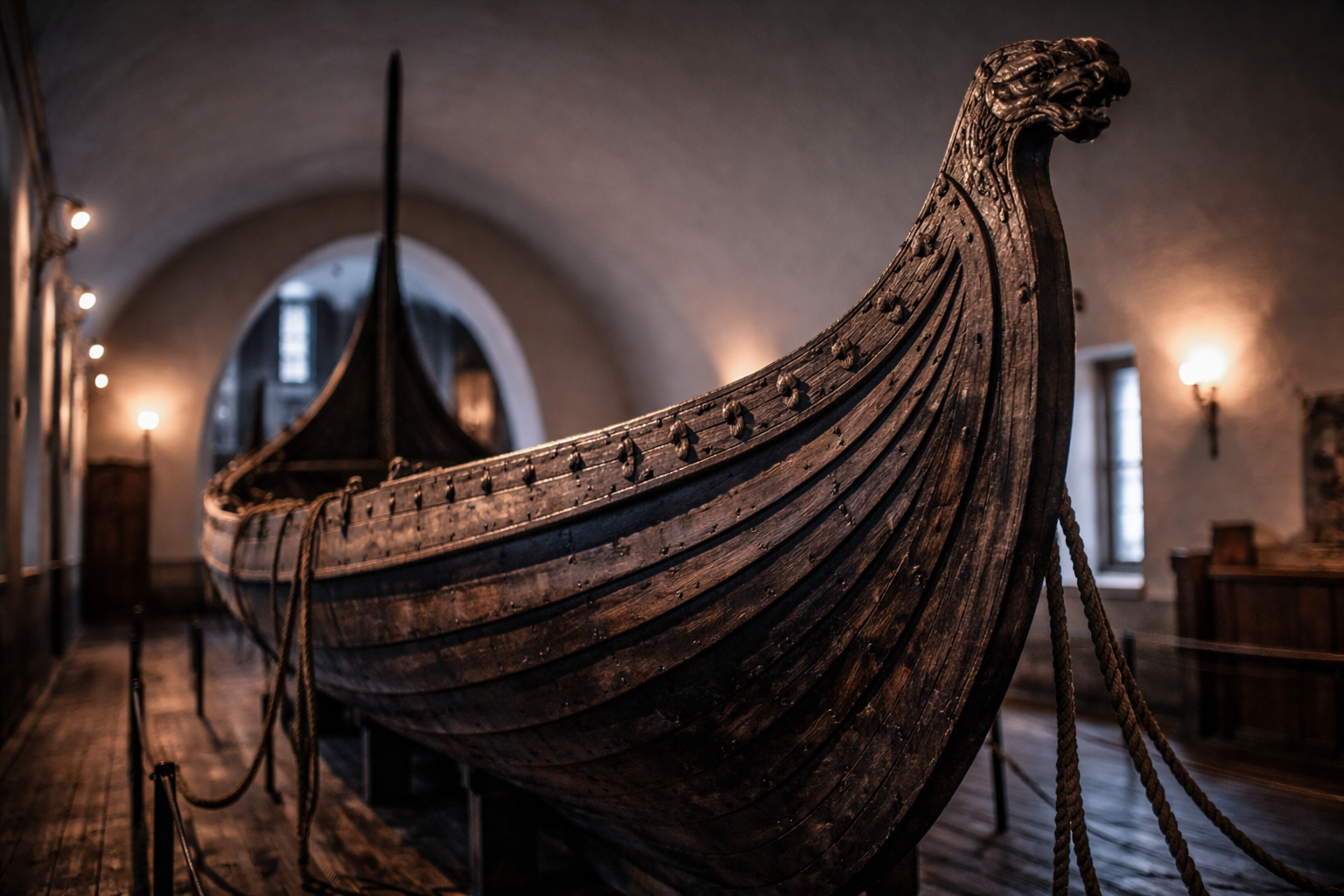
The importance of the Viking Ship Museum Oslo lies not only in the fame of its collections, but in what the ships reveal about the people who built them. These were not crude raiders drifting through legend, but skilled shipbuilders and navigators with sophisticated design knowledge and a culture deeply connected to mobility and status. The burial context adds another layer, showing how ships were tied to prestige, ritual, and ideas of the afterlife. It is one of the strongest examples of how Viking history in Norway becomes more powerful when encountered through real objects.
Oslo also works well as a starting point because it frames the Viking story within a larger national context. Visitors can move from ship history into broader conversations about Norwegian identity, early state formation, and cultural memory. This helps the Viking theme feel connected rather than isolated. It becomes not just a chapter in the past, but part of a larger historical continuum.
Avaldsnes Norway and the Early Royal Coast
If Oslo gives visitors the material evidence of Viking ships, Avaldsnes Norway provides one of the strongest site-based connections to Viking-era power. Located on the west coast, Avaldsnes is often described as one of Norway’s oldest royal seats, and the setting helps explain why. Control of coastal routes mattered deeply in the Viking Age, and places like this were strategic, political, and symbolic all at once. That makes Avaldsnes more than an interesting stop; it is a place where the structure of early rule becomes easier to imagine.
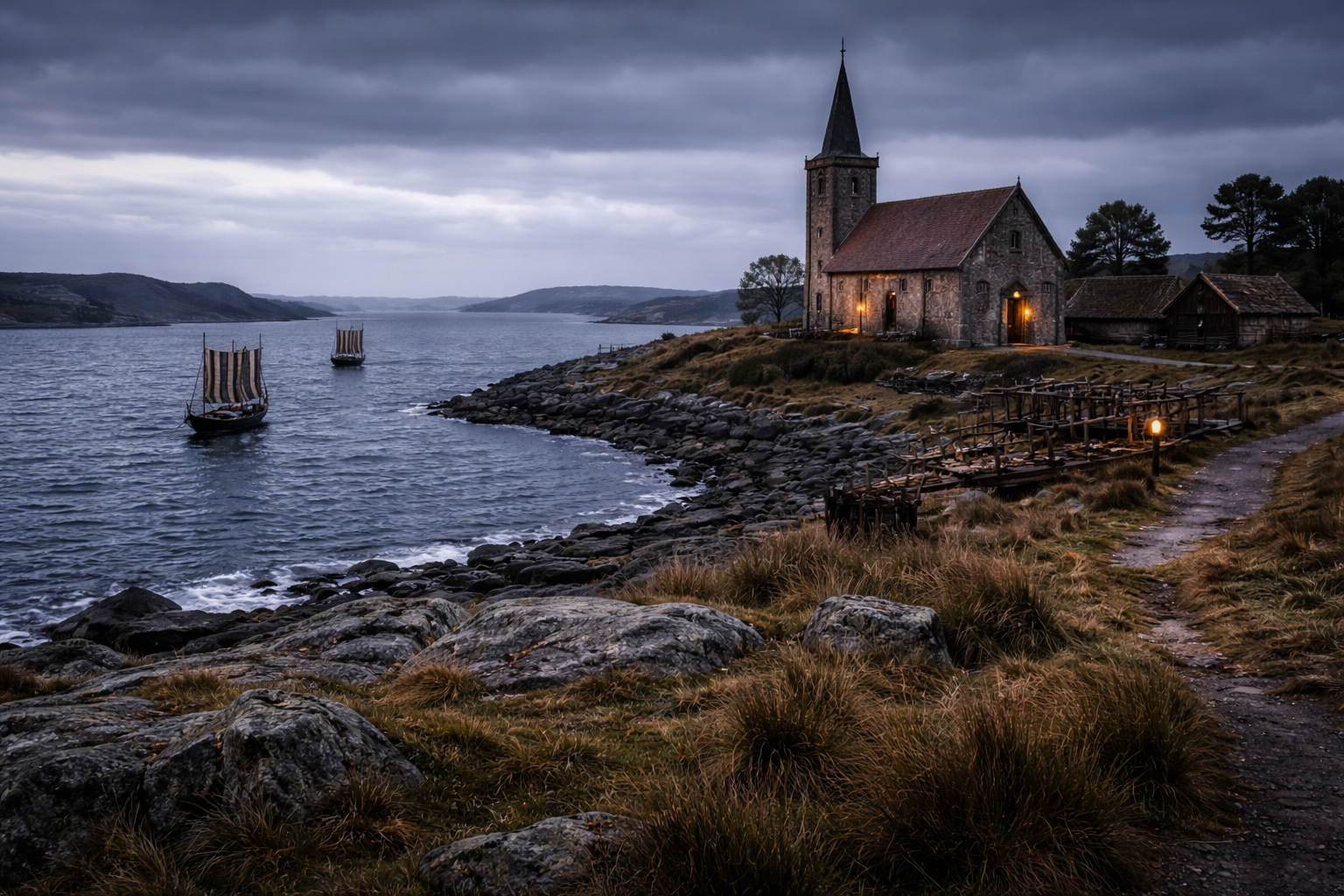
The appeal of Avaldsnes Norway lies in its ability to connect political history with lived experience. Museums and reconstructed environments in the area make it possible to move beyond abstract dates and think about rulers, seafaring networks, local authority, and the routines of settlement life. The Viking Farm and related experiences are especially useful here because they provide a grounded sense of space, scale, and domestic reality. For readers interested in Viking history in Norway, Avaldsnes adds something crucial: context for how Viking society was organized, not just how it is remembered.
It also helps that the west coast setting feels appropriate to the story. This is not history removed from geography, but history embedded in shoreline, route, and maritime logic. Standing in such a place makes the Viking world feel less like myth and more like a coherent social landscape. That is one reason Avaldsnes deserves a central place in the article.
Lofotr Viking Museum and the World of the Longhouse
In northern Norway, the Lofotr Viking Museum offers one of the most immersive and atmospheric ways to approach the Viking past. Located in the Lofoten region, it is best known for the full-scale reconstruction of a monumental longhouse based on archaeological discoveries. This kind of reconstruction matters because it helps visitors imagine Viking life not only as movement and conquest, but as household, hierarchy, and everyday structure. It shifts the focus from ships alone to the social world behind them.
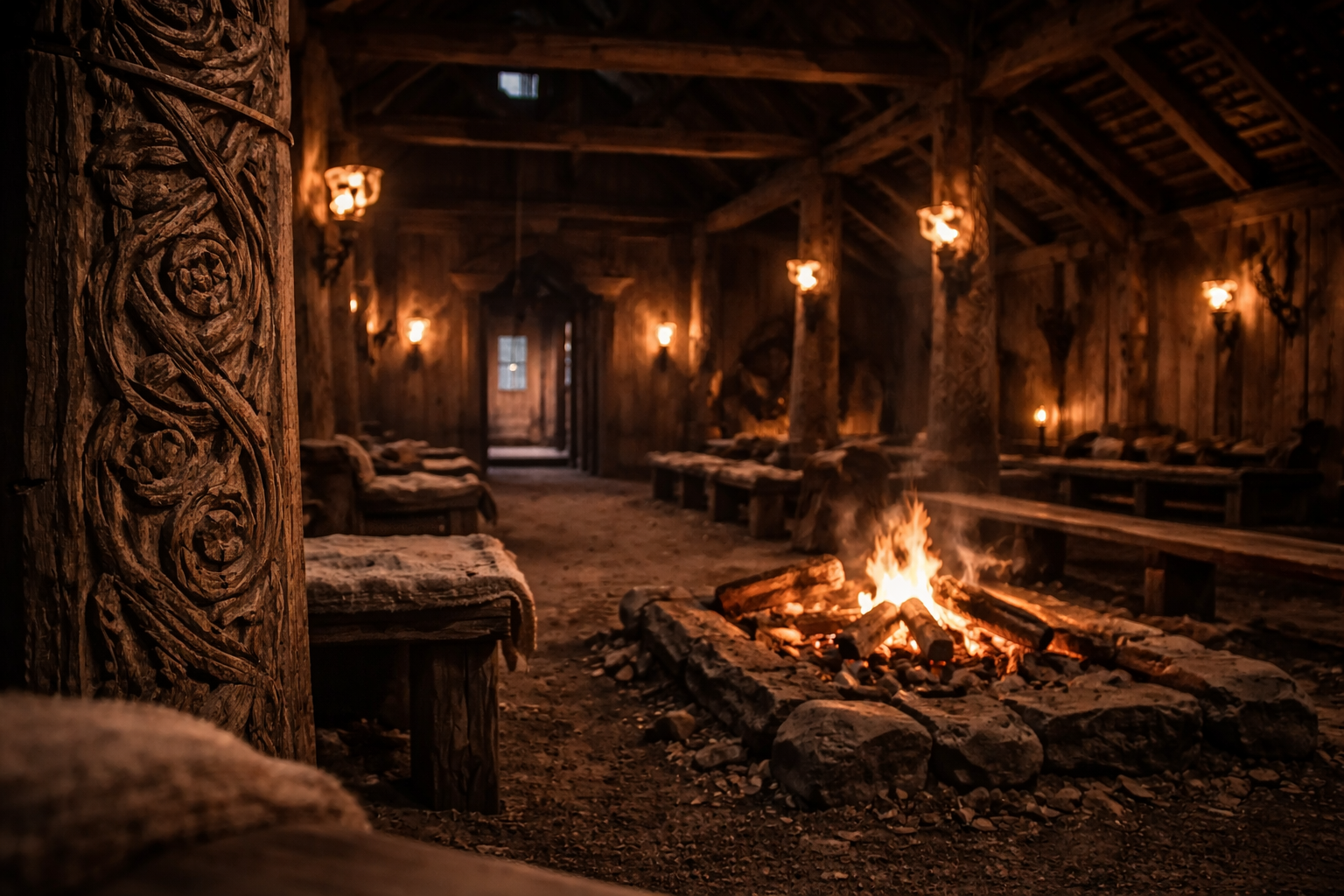
The Lofotr Viking Museum is especially effective because it combines archaeological legitimacy with spatial experience. Reading about a longhouse is one thing, but walking through a reconstructed structure changes your understanding of scale, layout, and communal life. Suddenly the Viking Age stops being a series of names and events and becomes a world of timber, firelight, domestic order, and regional power. This gives Viking history in Norway much greater texture.
The Lofoten setting also adds something visually and emotionally important. Northern landscapes already carry a sense of exposure, resilience, and historical distance, and that mood strengthens the museum experience. A reconstructed hall set in such a landscape feels more convincing because the environment supports the narrative. For travelers, this makes the Lofotr Viking Museum one of the most memorable and complete Viking sites in the country.
Gudvangen Viking Village and Living-History Atmosphere
Some travelers connect most strongly with history through objects and archaeology, while others need atmosphere and movement to make the past feel vivid. That is where Gudvangen Viking Village comes in. Located in Norway’s fjord region, it offers a more immersive encounter with Viking culture through reconstructed buildings, crafts, activities, and seasonal events. While such spaces are necessarily interpretive, they can still play an important role in making Viking history in Norway feel accessible and human.
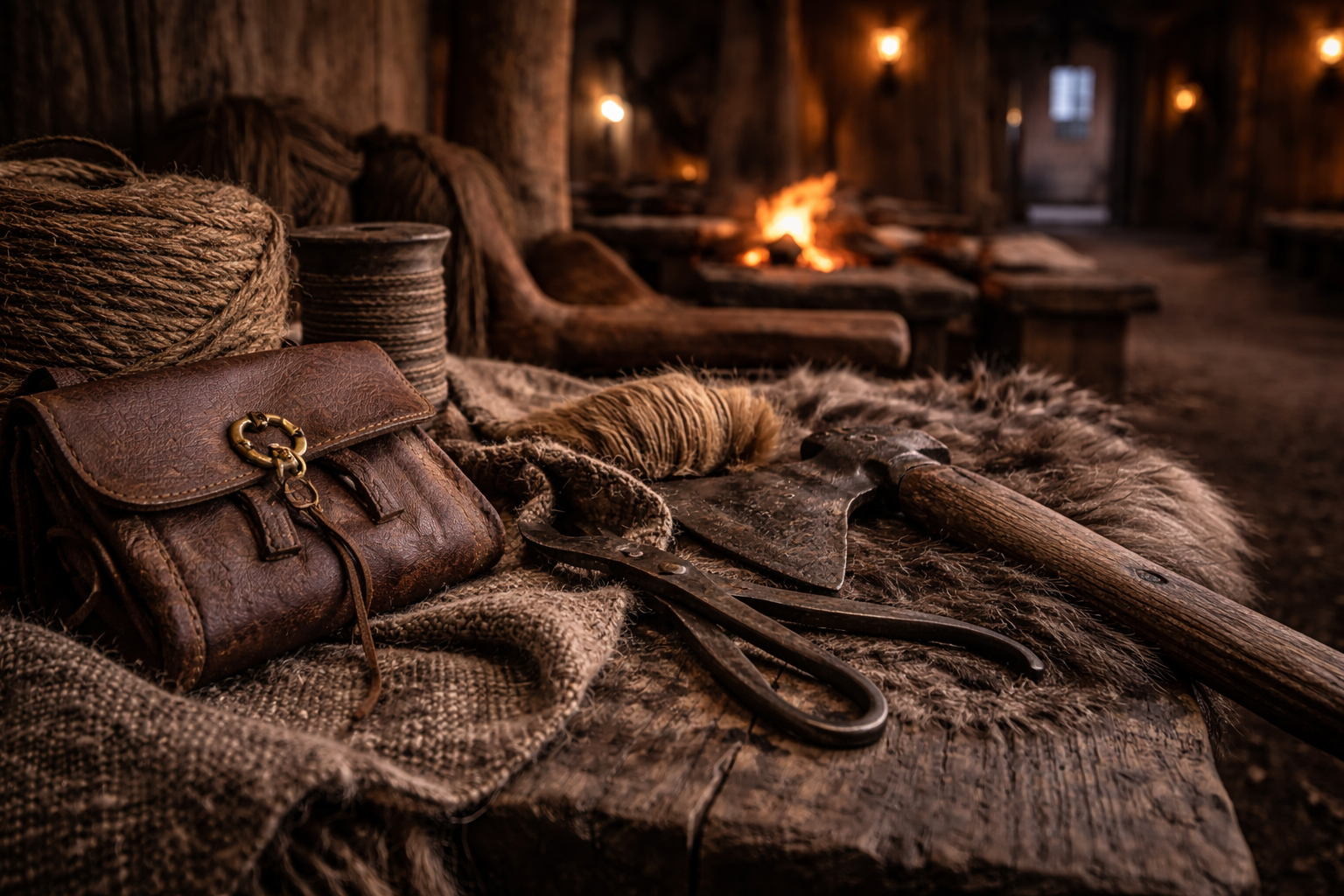
The value of Gudvangen Viking Village is that it helps bridge the gap between museum history and lived imagination. Seeing craftspeople, structures, tools, and public events in a setting designed around Viking-era themes gives visitors a stronger feel for texture and rhythm. It becomes easier to picture not just what Vikings built or sailed in, but how they may have inhabited space and community. This kind of interpretation works especially well for families and travelers who want a more sensory experience of the past.
Gudvangen also benefits from being located in a dramatic natural setting. The fjord landscape adds emotional weight to the visit and reinforces the connection between Viking life and the geography of Norway. History here does not feel detached from the environment. Instead, the surroundings help complete the story.
Viking Heritage Is Only One Part of the North
While Viking heritage is one of Norway’s most recognizable cultural narratives, it should not be treated as the only story of the north. Norway’s cultural landscape is broader and more layered than the Viking frame alone, especially in northern regions where Indigenous history remains essential. Readers who want to place the Viking narrative within a wider understanding of Norway’s heritage can continue with this guide to the Sámi people and their traditions. That internal link fits naturally here because it prevents the article from reducing Norway’s identity to one historical era.
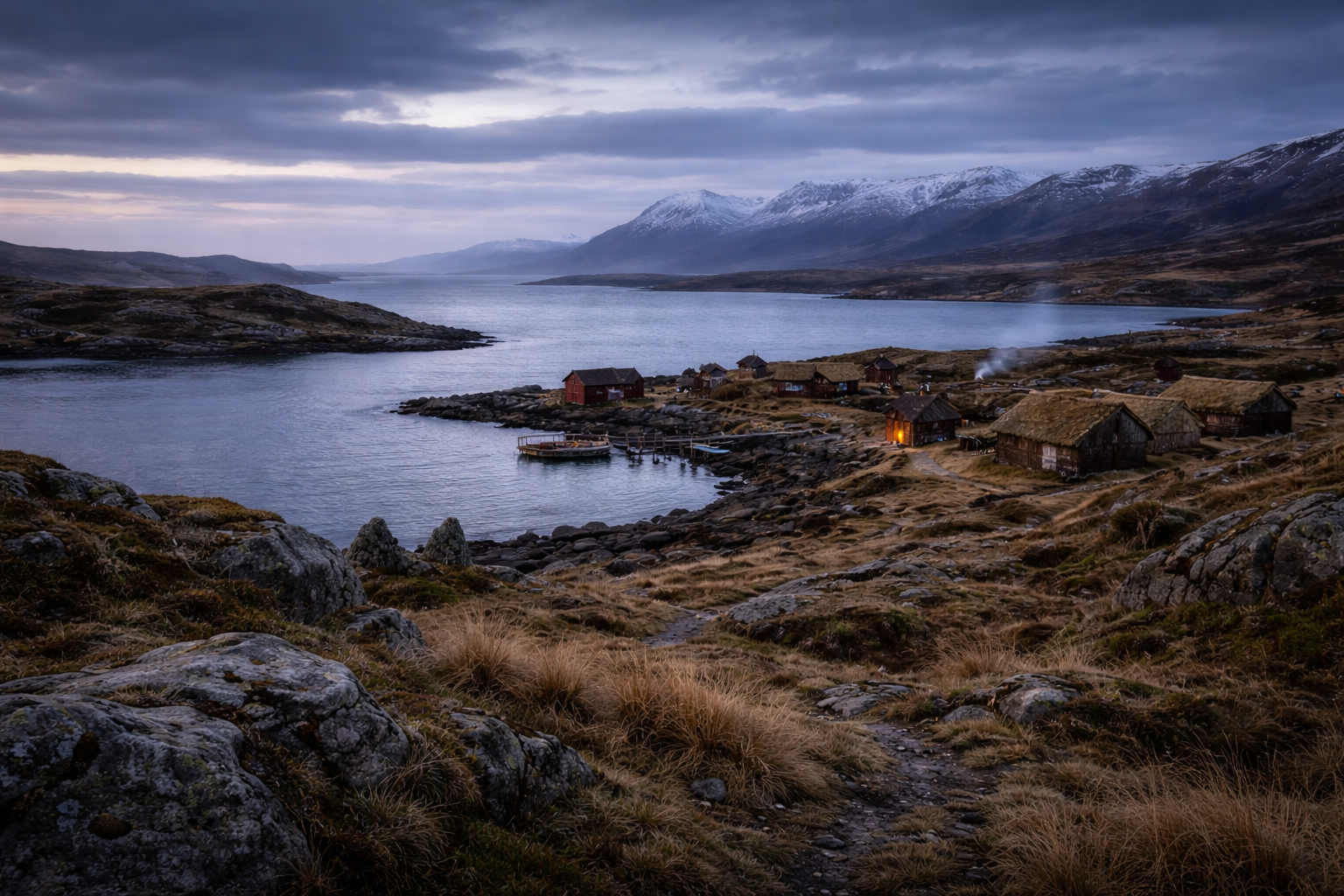
This broader framing actually strengthens the Viking article rather than distracting from it. It shows that cultural travel in Norway is richest when travelers understand how multiple historical narratives coexist. The Viking Age matters enormously, but it gains depth when seen alongside other traditions, communities, and regional identities. That makes the whole piece feel more mature and better grounded.
How to Think About the Viking Past as a Traveler
The strongest way to approach Viking history in Norway is not as a fantasy theme, but as a lens through which to understand mobility, power, craftsmanship, and memory. Ships, halls, and royal sites all point toward a society that was highly skilled, outward-looking, and deeply shaped by the sea. The more concrete the encounter, the stronger it becomes. That is why a combination of museums, reconstructed environments, and historical landscapes works so well.
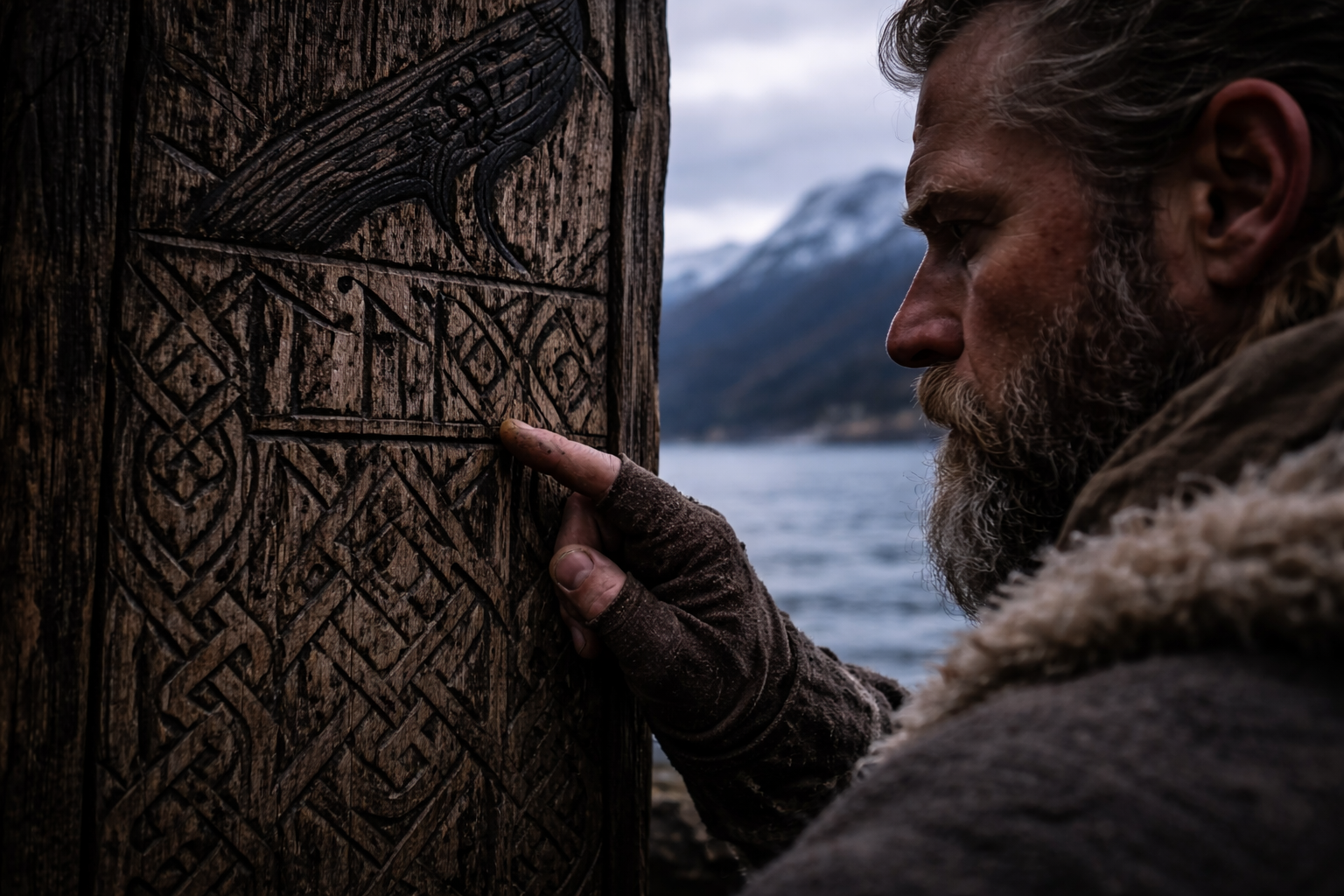
For readers who want a broader official overview, the Visit Norway Viking guide is a useful external reference. It supports the idea that Viking-related travel in Norway works best when it combines specific sites with a larger cultural perspective. The story becomes much more compelling when it is attached to real places and real evidence rather than just to popular mythology.
Conclusion
Exploring Viking history in Norway is most rewarding when it moves beyond clichés and into places where the past still feels material and immediate. From the ships associated with the Viking Ship Museum Oslo to the royal context of Avaldsnes Norway, the reconstructed power of the Lofotr Viking Museum, and the immersive atmosphere of Gudvangen Viking Village, Norway offers multiple ways to enter the Viking world with depth and context. These places do more than retell a famous era. They show how seafaring culture, political ambition, and everyday life combined to shape one of the most enduring historical legacies in Scandinavia. For travelers drawn to history with real texture, Norway is one of the best places to begin.