
The meal allowance is a planning estimate, not a fixed restaurant tariff. Paid-attraction prices are published by the Palace of Parliament, Romanian Athenaeum, Village Museum, Ceaușescu Mansion and Therme.
You do not need to visit every place in the table. Choose one or two substantial indoor visits and leave enough time to enjoy the streets between them.
Use this map to locate the places in this guide. Blue markers show central sights, green markers cover northern Bucharest, and orange marks Therme outside the city. The groups help with planning; they are not a fixed route or a checklist to complete.
Open the map legend to show or hide each group. For timed visits, confirm the exact entrance in your booking rather than relying only on the attraction marker.
1. Explore Old Town Beyond the Bar Streets
Old Town is a useful starting point because several short stops fit into one walk. Begin around Lipscani, then explore the surrounding streets rather than following a rigid checklist.
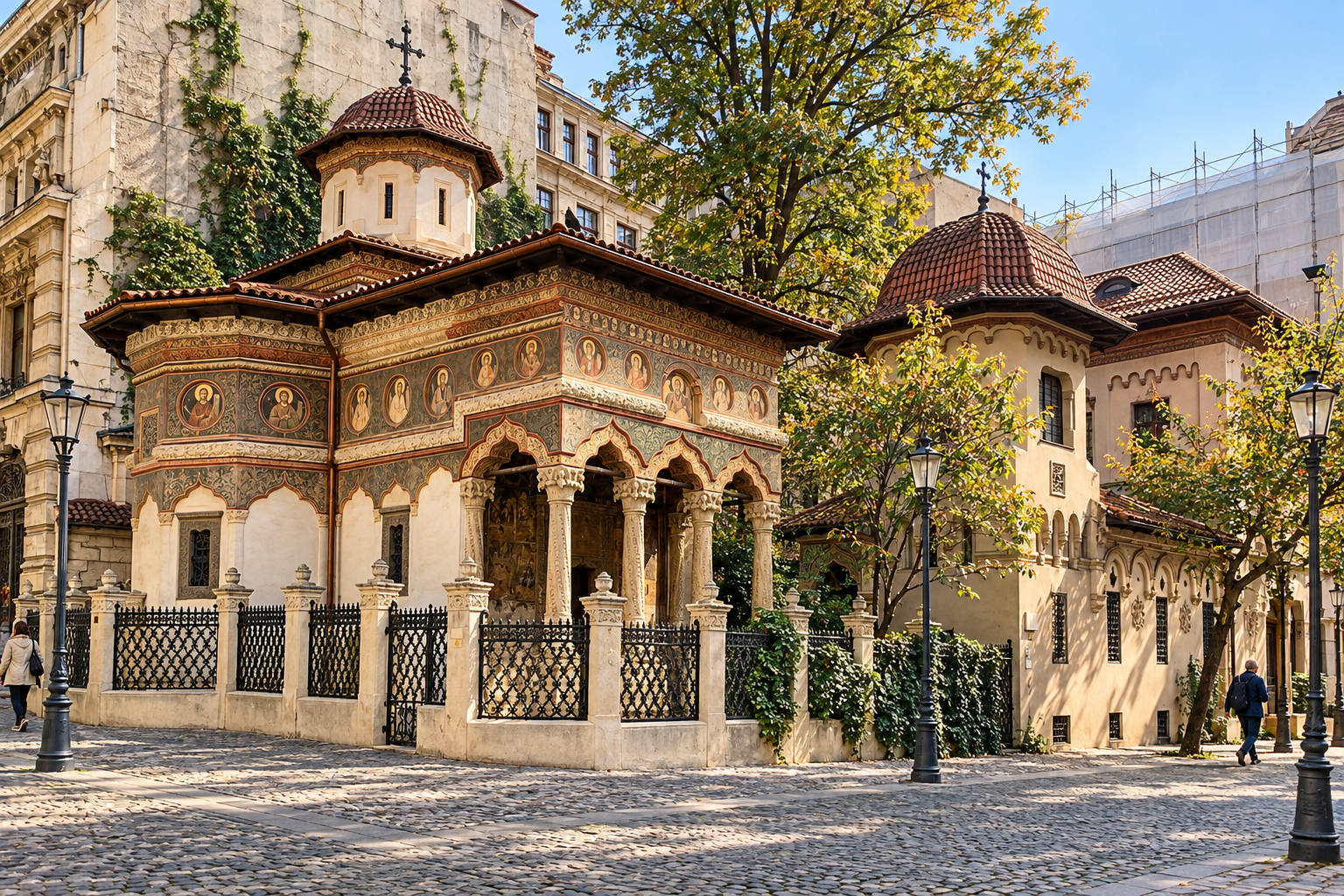
Make time for Stavropoleos Monastery. Its church, courtyard and surrounding gallery offer a quieter stop, but this remains a working religious site. Dress respectfully and avoid interrupting services. Check the monastery’s visitor information before going.
Nearby, Cărturești Carusel occupies a restored building at 55 Lipscani. It works well as a short bookshop stop rather than a separate excursion. Browse the shelves and keep stairways clear when taking photographs. The bookseller’s introduction to Carusel explains the building’s transformation.
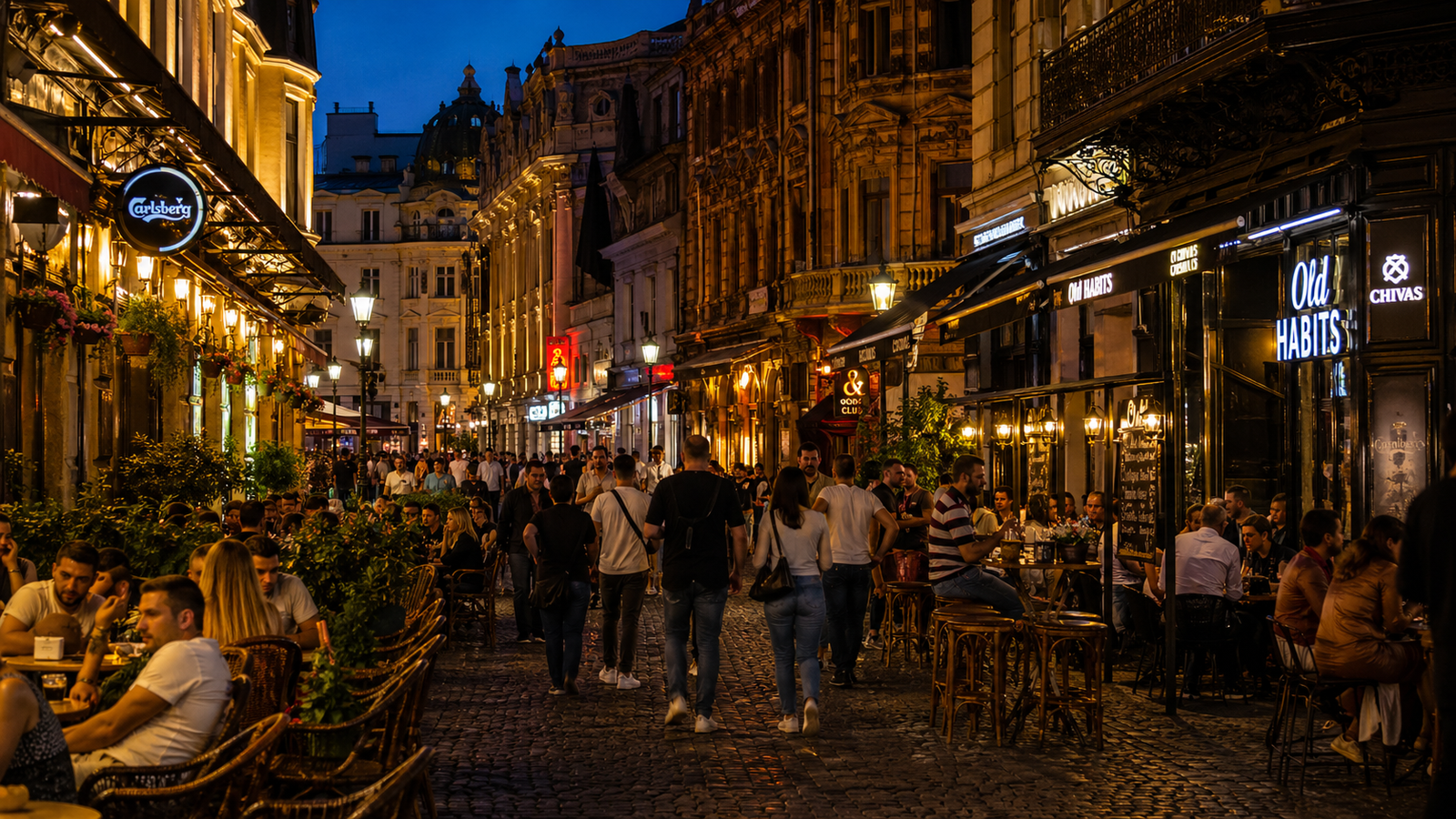
For your itinerary, allow one to two hours including a coffee break. If nightlife is not your priority, use this area as the beginning of your day rather than the whole evening’s plan.
2. Visit the Palace of Parliament
The Palace of Parliament is the attraction to organise before filling the rest of your schedule. Its scale is impressive from outside, but an interior tour is the more substantial experience.
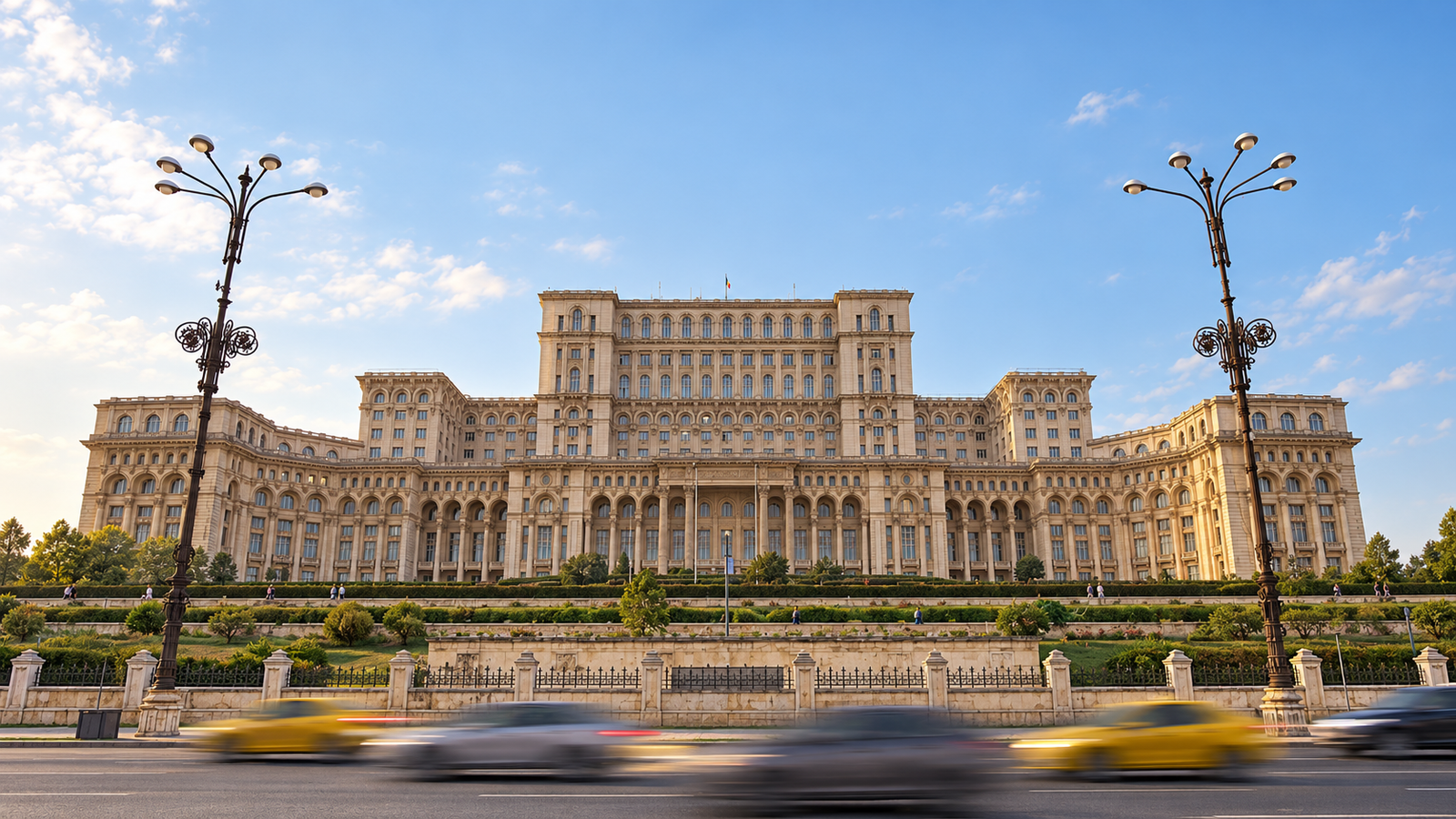
The standard adult tour costs 85 RON. The official visitor service instructs parties of one to nine people to book by telephone 24 hours in advance. Larger groups have a separate reservation process.
Bring your original passport or an accepted national identity card; a driving licence is not sufficient. Arrive at least 15 minutes early for formalities and security.
Use the visitor entrance specified in your reservation, rather than assuming that the nearest side of the building is the correct entrance. Confirm availability and requirements through the official Parliament visitor service.
Our planning recommendation is to leave a generous gap before your next booking. A tightly timed museum reservation immediately afterwards adds unnecessary pressure.
3. Walk Along Calea Victoriei
Calea Victoriei is the most useful walking link in this itinerary. It connects architectural stops with the area around Revolution Square and the Romanian Athenaeum.
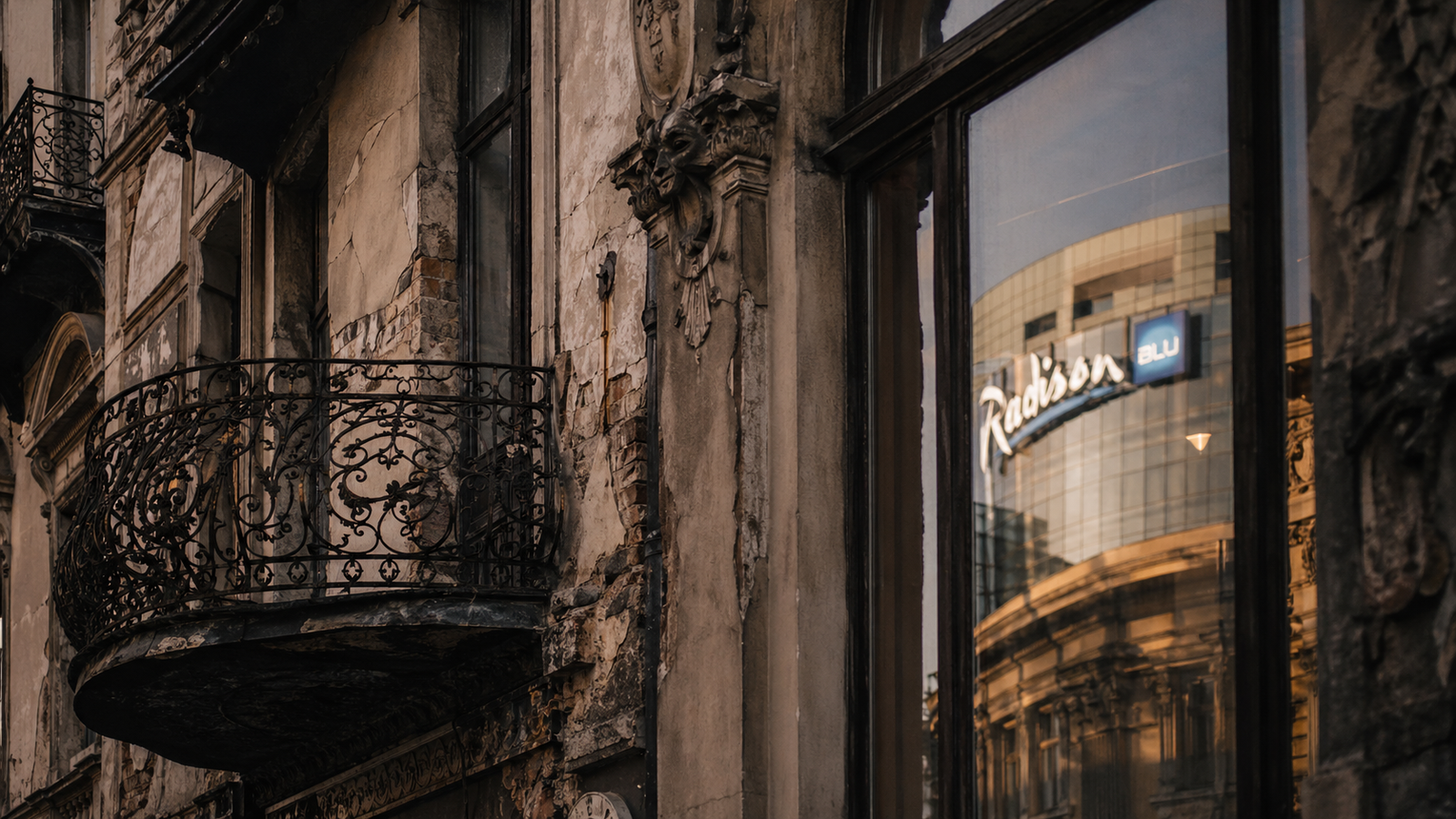
For a manageable first visit, walk north from the Old Town end rather than attempting the entire boulevard. Look out for the CEC Palace façade and allow time for occasional detours.
Treat this as a walking experience, not a promise that every notable building is open to visitors. Romania Tourism’s Bucharest guide provides background on the boulevard and its landmarks.
Allow 45–90 minutes without a museum visit. If you plan to enter the Athenaeum or National Museum of Art, add that time separately.
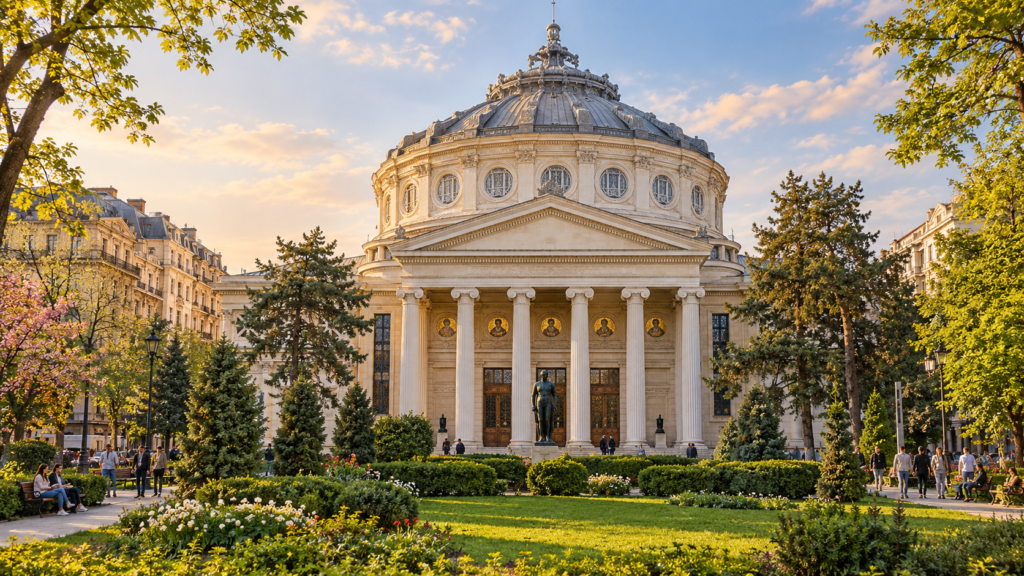
4. Step Inside the Romanian Athenaeum
The Romanian Athenaeum is a good choice when you want a distinctive interior without committing to several hours in a museum.
A sightseeing ticket costs 15 RON, but visiting hours change with rehearsals and performances. Check the monthly schedule rather than assuming you can enter at any point during the day. The official information also specifies cash-only payment at the Musicians Entrance on Benjamin Franklin Street. See the Athenaeum visiting arrangements.
Alternatively, make a concert your evening activity. A concert ticket is separate from sightseeing admission; availability and prices depend on the performance.
If attending a concert matters to you, choose the performance first and build dinner plans around it. The George Enescu Philharmonic programme lists upcoming events.
5. Pause at Revolution Square
Revolution Square adds context to the buildings you have been seeing. It is associated with the events of December 1989 and the collapse of Ceaușescu’s rule.
This is a short outdoor stop rather than a separate half-day attraction. Combine it with Calea Victoriei, the Athenaeum or the National Museum of Art, all in the same central area. Historical background.
If twentieth-century history is your main interest, consider a specialist walking tour. Look for an itinerary that explains events and locations, rather than choosing purely by the number of stops advertised.
6. Choose a Gallery at the National Museum of Art
The National Museum of Art of Romania, often shortened to MNAR, is a sensible option for an art-focused afternoon.
Choose the gallery or exhibition you actually want to see before buying a ticket. Admission options differ, so do not assume that one ticket covers every space.
The main museum’s published schedule is Wednesday to Friday, 10:00–18:00, and Saturday to Sunday, 11:00–19:00. It is closed on Mondays and Tuesdays. Ordinary unguided visits do not require a reservation; guided visits have separate arrangements. Check the official museum ticket and opening information.
For a short city break, we suggest choosing one collection and giving it proper attention. Trying to cover every gallery can consume the afternoon you intended to spend exploring outside.
7. Visit the Dimitrie Gusti Village Museum
The Village Museum offers a change of pace from central Bucharest: an open-air introduction to traditional buildings and rural life.
Standard adult admission is 40 RON. However, Monday and Tuesday visits have an important limitation: many building interiors are closed, and the museum publishes a 50% reduction on the full ticket price for those days. An unguided visit does not normally require a reservation. Check the museum’s admission conditions.
Allow around two hours and wear shoes suitable for walking outdoors. Choose a reasonably dry day if your schedule is flexible.
This is a useful introduction, but not a substitute for visiting inhabited villages elsewhere in Romania. For ideas beyond the capital, explore our guide to traditional Romanian villages.
8. Walk in King Michael I Park
King Michael I Park, also widely known as Herăstrău, pairs naturally with the Village Museum in northern Bucharest.
Use it as an unhurried walk rather than another attraction to complete. You do not need to circle the entire lake: choose a section that fits your energy and onward plans. The park is included in Romania Tourism’s overview of Bucharest’s parks.
For a two-day visit, this is a good place to leave some unscheduled time. If you also want to visit Ceaușescu Mansion, plan the museum booking first and keep the park walk flexible.
9. Take a Break in Cișmigiu Gardens
Cișmigiu is the more convenient choice when you want a park break without heading to the northern part of the city.
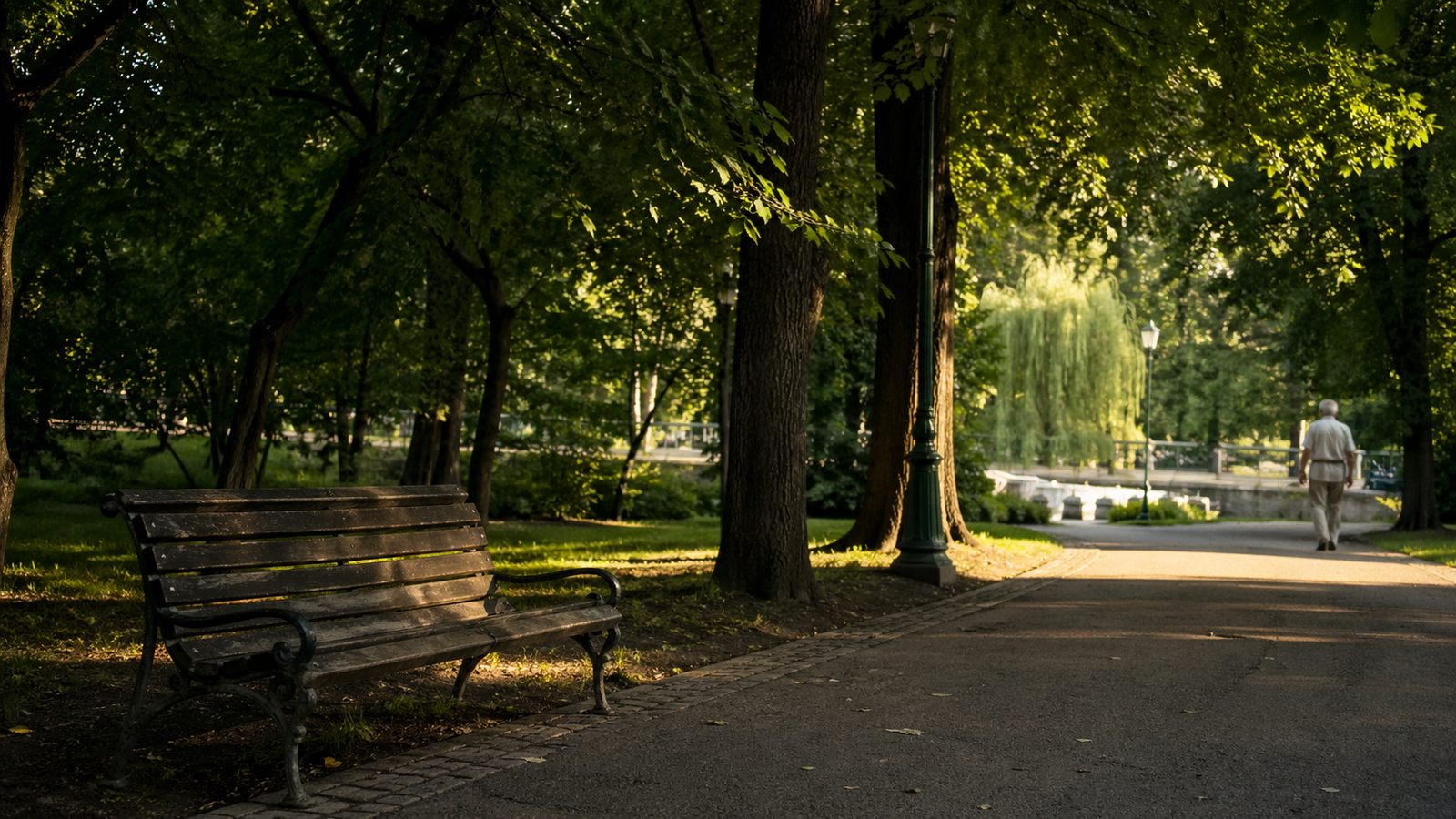
It fits well after a central museum visit or between sightseeing and dinner. Allow half an hour to an hour, depending on how much walking you have already done. Bucharest parks information.
There is no need to visit both Cișmigiu and King Michael I Park simply to complete a list. Choose Cișmigiu for convenience; choose King Michael I Park when you are already visiting the Village Museum.
10. Make Time for a Romanian Meal
Food deserves a place in the itinerary, not just whatever remains between attractions.
For a first meal, consider sarmale, a bowl of ciorbă or mici. Choose dishes according to your appetite: a soup, substantial main course and dessert can be more food than expected.
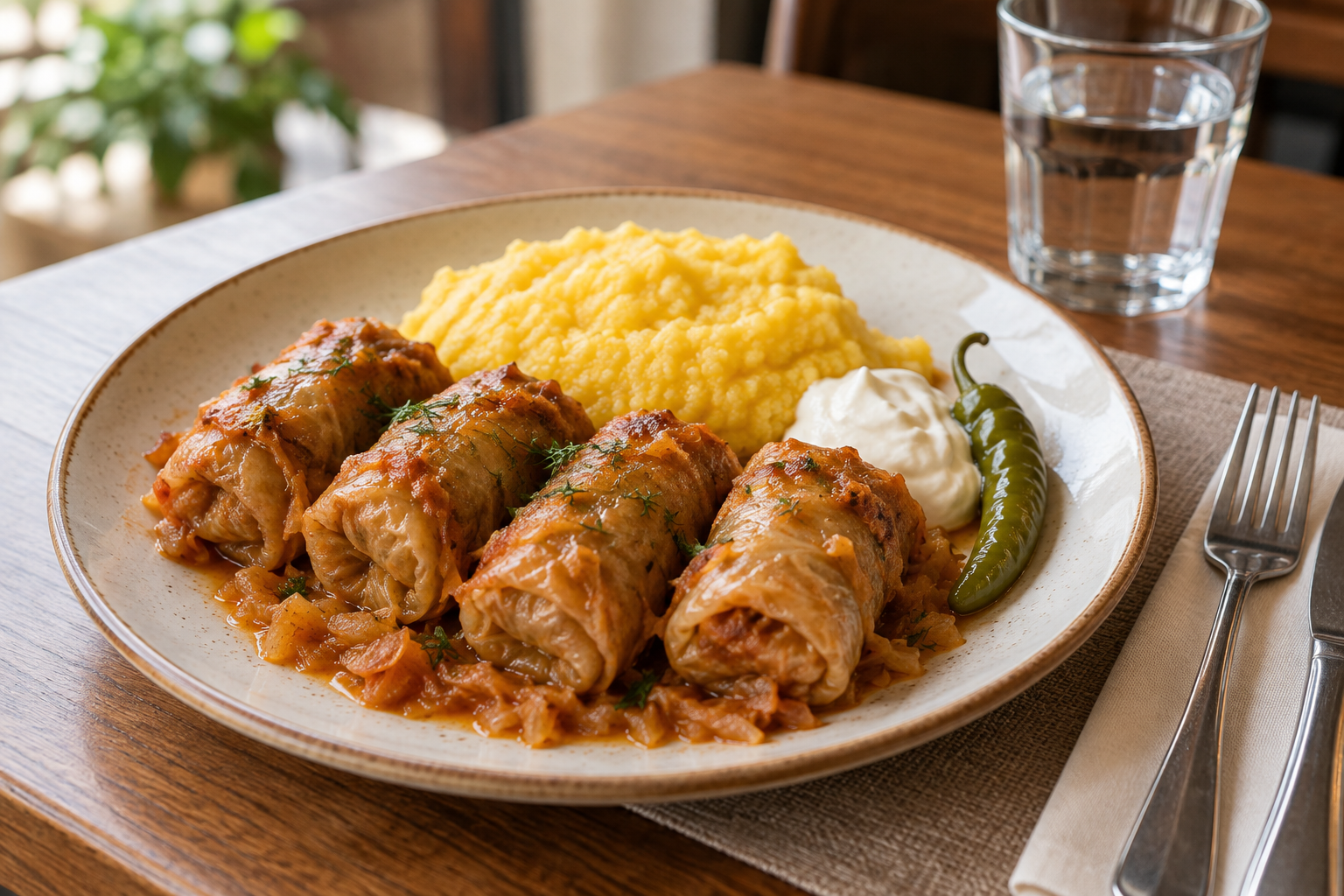
As a working allowance, budget 60–120 RON per person for a main course and a drink at a sit-down restaurant, with higher spending possible at prominent venues. For a concrete reference, Caru’ cu Bere’s published menu lists its sarmale dish at 76.50 RON, before drinks. This is one restaurant’s price, not a citywide average. Check the restaurant menu.
Our traditional Romanian food guide explains the dishes and helps you decide what to order.
If choosing a restaurant for its historic interior, reserve a table instead of relying on walking in at your preferred time.
11. Tour Ceaușescu Mansion
Ceaușescu Mansion offers a more domestic perspective than the Palace of Parliament. Choose it if you are interested in how political power translated into private living space.
The published standard guided ticket is 85 RON, or 115 RON with the documentary option. Visits are guided, and advance booking is required. The mansion is normally open Tuesday to Sunday and closed on Mondays and Romanian public holidays.
Photography and filming are prohibited. The operator also states that the building is not currently wheelchair-accessible. Check the official visiting details and the final ticket selection before paying.
You do not have to visit both this mansion and Parliament. For a varied two-day trip, choose the one that interests you more and use the remaining time for art, food or the Village Museum.
12. Set Aside Half a Day for Therme
Therme is an optional extension, not a stop on a central walking route. It is located in Balotești, outside Bucharest, so include the journey when deciding whether it fits.
For a specific price comparison, a three-hour adult ticket for The Palm costs 102 RON Monday–Thursday, or 117 RON Friday–Sunday and during the listed holiday periods. Other zones and longer stays have different prices. Towels, food and transport can add to the total. Check Therme’s admission prices.
The operator lists bus 442 as a public-transport connection, with stops including Henri Coandă Airport. Consult the official transport information for your visit.
Check age restrictions for the selected zone if travelling with children. Do not assume that every family member can enter every area.
We would prioritise Therme on a third day, or as a deliberate replacement for city sightseeing—not squeeze it between two central attractions.
A Practical Bucharest Itinerary for One or Two Days
The simplest approach is to keep central sights together, then use a separate day for northern Bucharest.
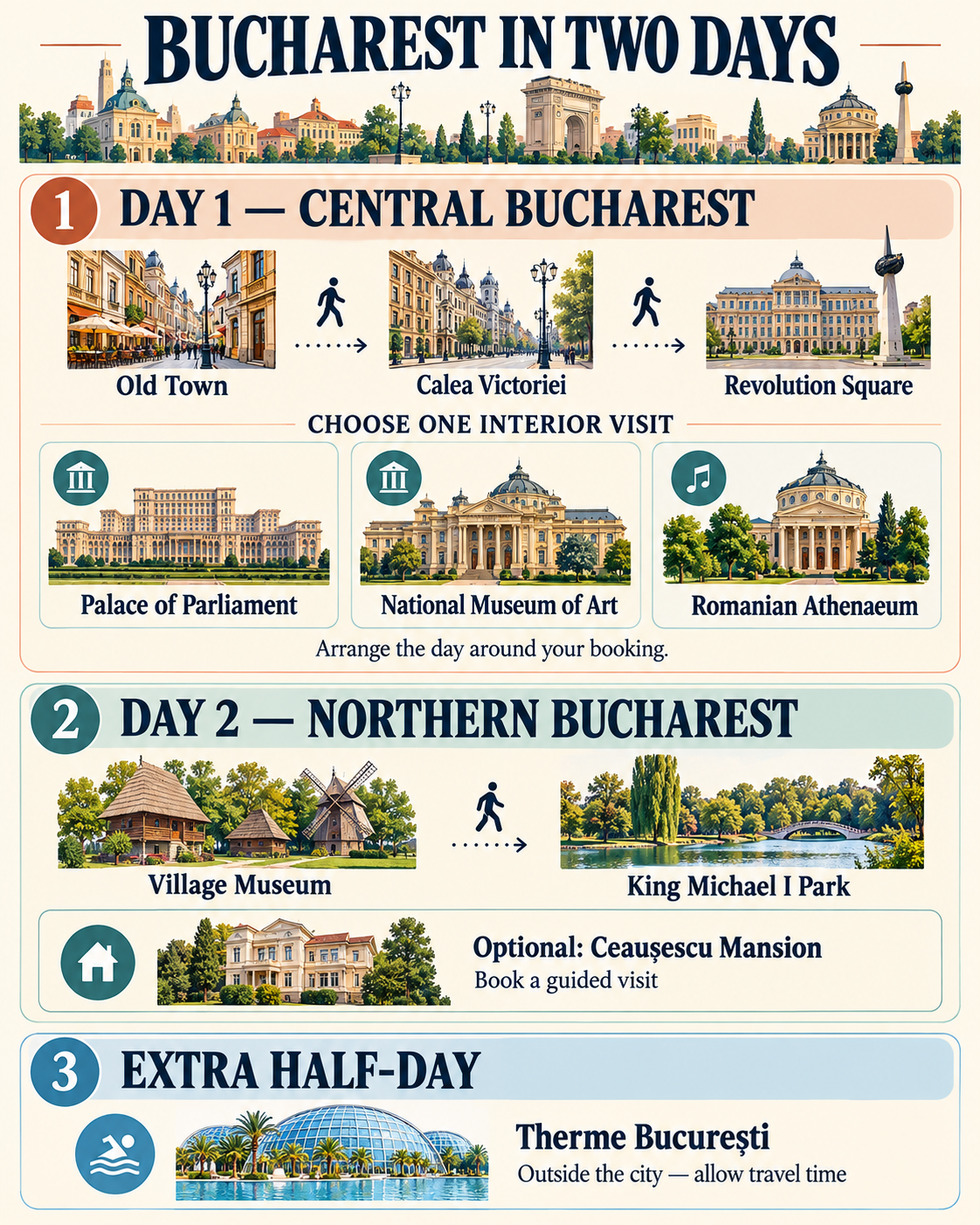
One Day: Focus on the Centre
Start in Old Town with Stavropoleos and Cărturești Carusel. Continue towards Calea Victoriei, stopping for lunch along the way.
In the afternoon, choose one substantial visit:
- Palace of Parliament, if you have reserved a tour.
- National Museum of Art, if its collections interest you and it is open.
- Romanian Athenaeum, if the visiting schedule fits.
Finish with Revolution Square or a shorter central walk, depending on the location of your afternoon activity.
Do not attempt all three interiors simply because they appear on the same list. Your booking time should determine the order.
Two Days: Add Northern Bucharest
Use the first day for Old Town and the central attractions.
On the second day, visit the Village Museum and take a walk in King Michael I Park. Add Ceaușescu Mansion only if you want another guided historical visit and can secure a suitable time.
If the Village Museum falls on a Monday or Tuesday, decide whether the restricted interior access suits you. Alternatively, swap days or choose a different attraction.
For an evening, consider a Romanian dinner or an Athenaeum performance. Neither requires adding another sightseeing district to an already busy day.
Three Days: Choose an Extension
A third day gives you room for Therme, another museum or a trip beyond Bucharest.
If castles are your priority, use our Romania castles guide to compare locations and practical requirements. Treat a castle excursion as a separate day, not as an extra stop after central sightseeing.
If you are continuing towards the mountains, our Romanian Carpathians guide can help you decide where to go next.
Free Things to Do in Bucharest
A useful low-cost day does not require entering every landmark.
Combine an Old Town walk with Calea Victoriei and Revolution Square, then choose Cișmigiu for a break. These outdoor stops can form the structure of your day, with a paid attraction added only if it interests you.
Remember the distinction between a free outdoor visit and free interior admission. Seeing the Parliament building from outside does not include a tour, and viewing the Athenaeum façade does not include its concert hall.
Also check the terms of anything advertised as a “free walking tour”: these commonly operate on a tips-based model rather than having no expected cost.
What Should You Book Before Arriving?
Prioritise the experiences that depend on a particular time:
- Palace of Parliament: follow the official reservation process.
- Ceaușescu Mansion: select an available guided visit.
- Athenaeum concert: buy for the performance you want.
- A particular restaurant: reserve if the venue is an important part of your plans.
Keep outdoor walks flexible. They are useful around bookings, weather changes and days when you need a slower pace.
For museums, check the closing day before choosing your route. A weekend itinerary cannot always be copied directly onto a Monday or Tuesday.
Getting Between the Main Areas
Walk between the central stops where practical, then use public transport or a car service for longer transfers.
The main planning distinction is geographical:
- Central area: Old Town, Calea Victoriei, Revolution Square, the Athenaeum and MNAR.
- Northern area: Village Museum, King Michael I Park and Ceaușescu Mansion.
- Outside the city: Therme.
Do not interpret these groups as single compact sites. Check the actual entrance and walking distance before departure, especially for Parliament and large parks.
For current public-transport tickets, consult Metrorex. Check what your chosen ticket includes rather than assuming that metro, surface transport and airport travel are interchangeable.