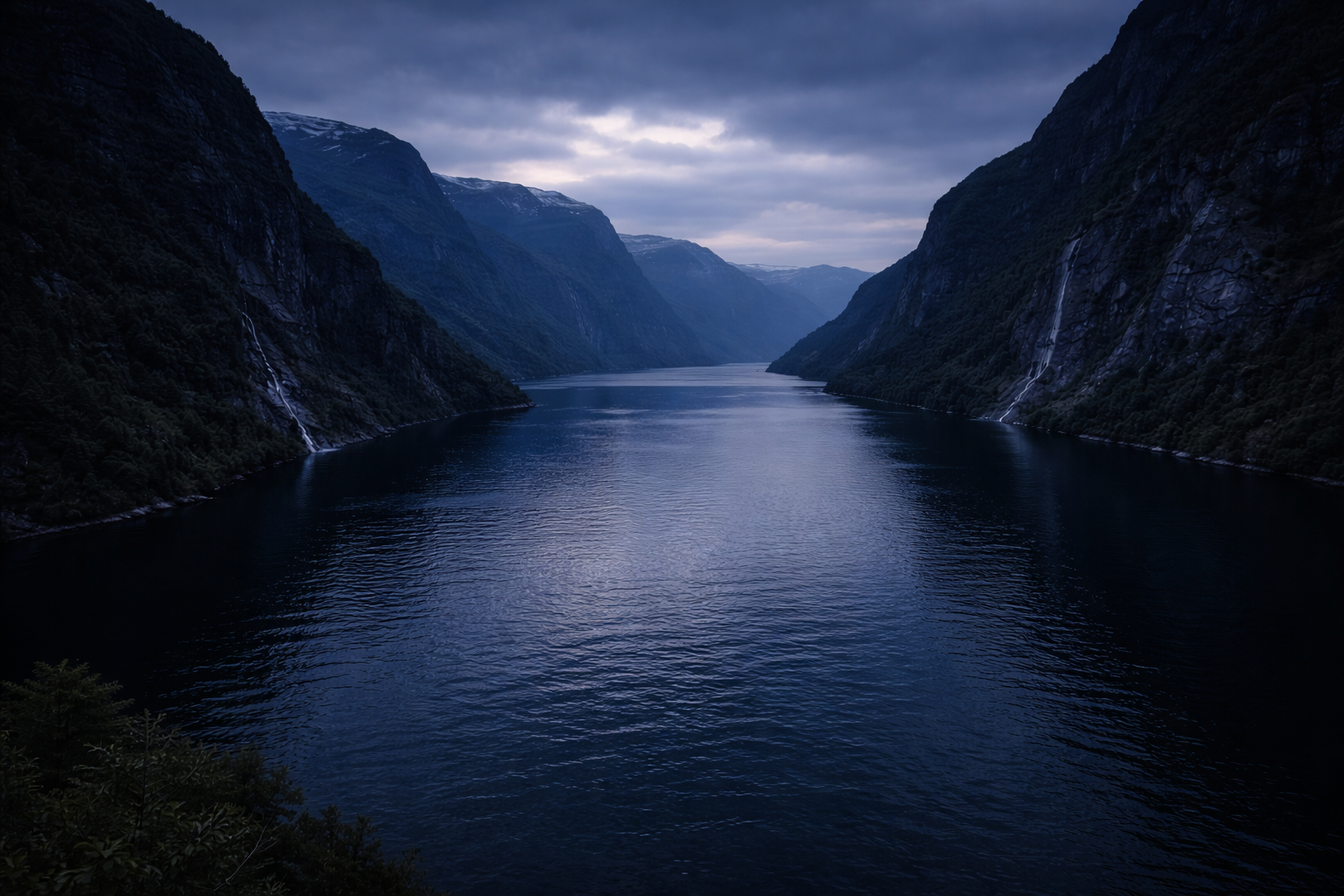
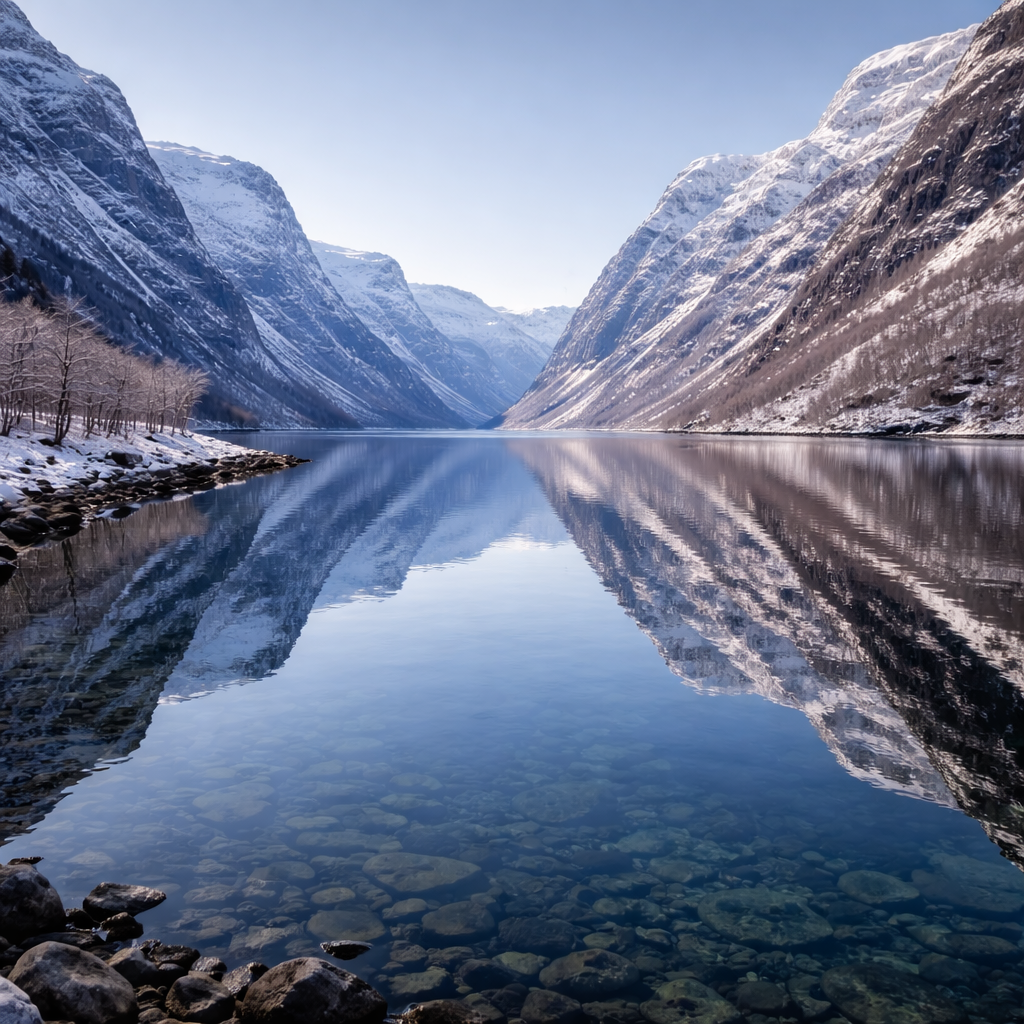
Few landscapes in Europe feel as overwhelming and unforgettable as the fjords of Norway. Their steep cliffs, calm deep waters, waterfalls, and shifting northern light create a sense of scale that is difficult to capture in photographs alone. For travelers planning a nature-focused journey, the magic of Norway fjords lies not only in their beauty, but in the way they shape the entire experience of the country. They are not just scenic backdrops, but living landscapes that define movement, atmosphere, and perspective.
What makes the fjord experience so powerful is that it is never one-dimensional. A fjord can be admired from the water, from a mountain trail, from a panoramic road, or from a viewpoint high above the cliffs. Each angle reveals something different, whether that is the silence of the water, the verticality of the terrain, or the feeling of isolation and openness that makes western Norway so distinctive. This is why Norway fjords remain one of the strongest reasons travelers fall in love with the country.
Rather than treating the fjords as a checklist of famous names, it makes more sense to think of them as a whole travel experience. The most memorable journeys are often those that combine landscapes, motion, and atmosphere: a ferry crossing, a lookout point, a winding drive, or a hike that suddenly opens into a sweeping view. That broader perspective is what turns a fjord trip into something much more meaningful than simple sightseeing.
Why Norway’s Fjords Feel So Extraordinary
The fjords are one of Norway’s defining natural features because they combine geological drama with remarkable calm. Formed by glaciers over thousands of years, they cut deeply into the landscape and create corridors of water framed by towering rock walls and mountain peaks. This gives them a visual intensity that feels almost cinematic, yet the water itself is often strikingly still. That contrast between force and calm is a large part of what makes Norway fjords so memorable.
There is also an emotional quality to the fjords that goes beyond beauty. They create a sense of remoteness without necessarily feeling inaccessible, and they invite a slower way of traveling that suits Norway particularly well. Instead of rushing from one attraction to another, travelers often find themselves pausing, looking, and absorbing the scale of what is in front of them. That slower pace is one of the greatest gifts of a fjord journey.
Geirangerfjord Norway: The Iconic Fjord Experience
If one fjord has become the visual symbol of the country, it is Geirangerfjord Norway. This UNESCO-listed landscape is famous for its dramatic cliffs, deep blue water, and waterfalls descending from impossible heights. It is one of those places that manages to feel instantly recognizable and genuinely awe-inspiring at the same time. Even travelers who arrive with high expectations usually find that the real setting exceeds the image they had in mind.
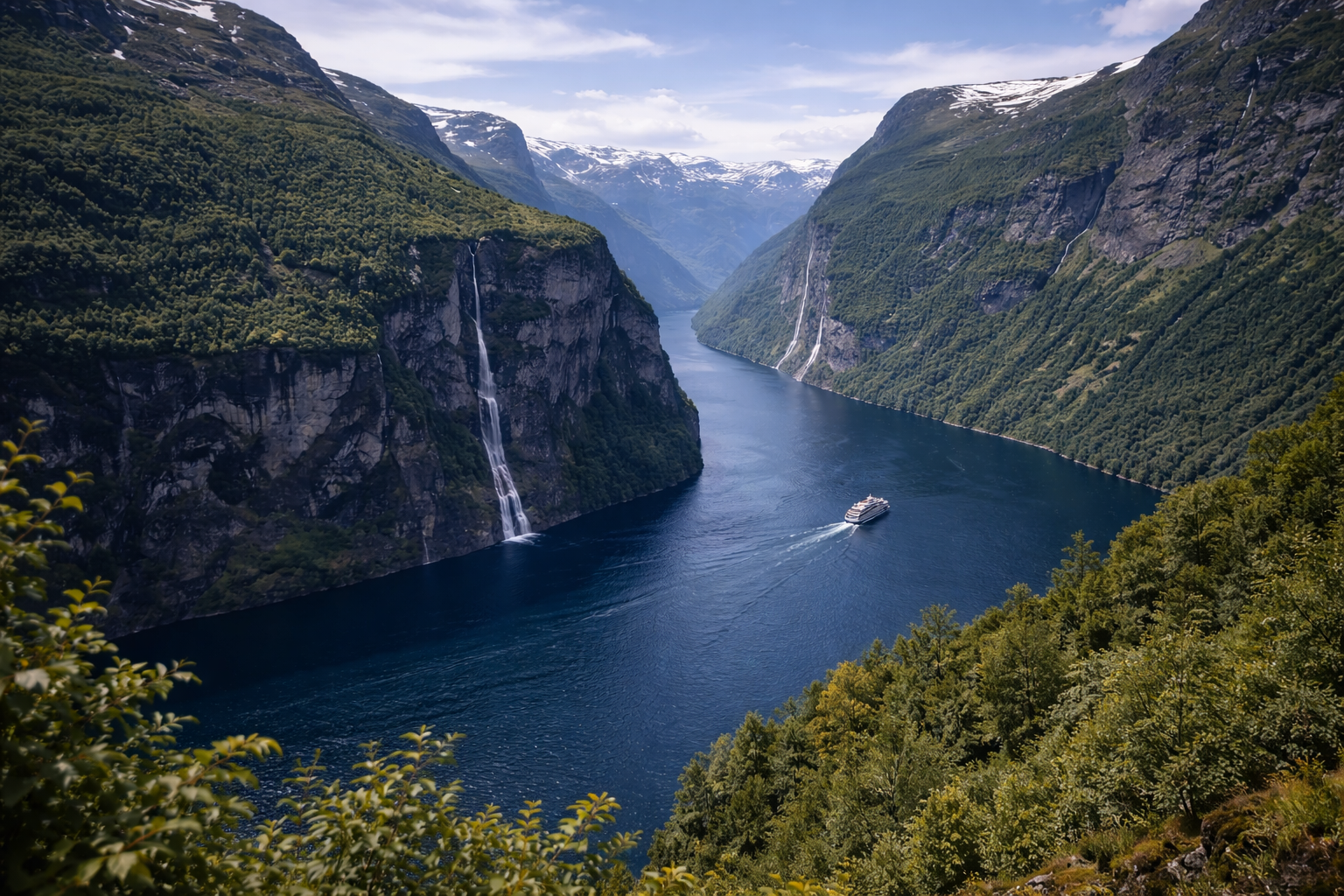
What makes Geirangerfjord Norway so compelling is the concentration of drama within a relatively compact area. The famous waterfalls, the narrow shape of the fjord, and the elevated viewpoints all work together to create one of the most powerful scenic experiences in the country. It is not simply beautiful in a general sense. It feels sculpted for contrast, scale, and emotional impact. That is why it remains one of the essential stops in any serious exploration of Norway fjords.
Nærøyfjord and the Quiet Power of Narrow Landscapes
If Geirangerfjord impresses with grandeur, Nærøyfjord offers a slightly different but equally unforgettable experience. It is narrower, more intimate, and in some ways even more dramatic because of how tightly the cliffs seem to close around the water. The effect is less expansive and more immersive, as if the landscape is drawing you inward rather than simply showing itself from a distance. This gives Nærøyfjord a strong sense of atmosphere.
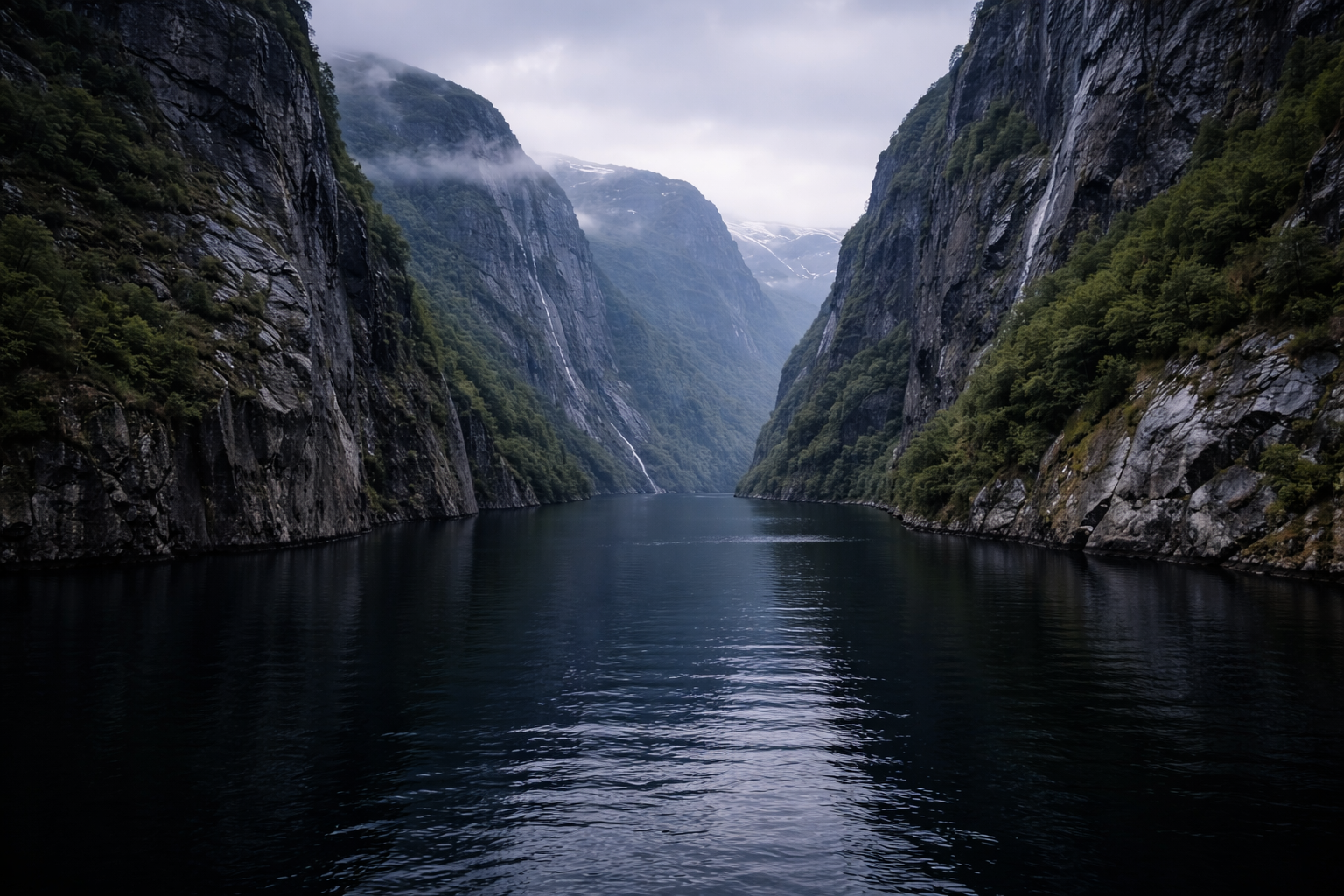
That atmosphere is one of the reasons so many travelers find it so memorable. The quiet, the vertical walls, and the feeling of moving through a narrow natural passage all create a different emotional tone from the broader fjord views elsewhere. It is a reminder that Norway fjords are not all variations of the same scenery, but landscapes with distinct moods and identities. In a well-balanced itinerary, Nærøyfjord adds depth and contrast.
Fjord Cruises in Norway: Seeing the Landscape From the Water
One of the best ways to understand the scale of the fjords is from the water itself. Fjord cruises in Norway allow travelers to experience the landscape from the perspective that makes the cliffs feel tallest and the surrounding mountains most dramatic. Seen from a boat, the fjords become less like static viewpoints and more like spaces you move through, which makes the journey feel immersive rather than observational. This changes the experience completely.
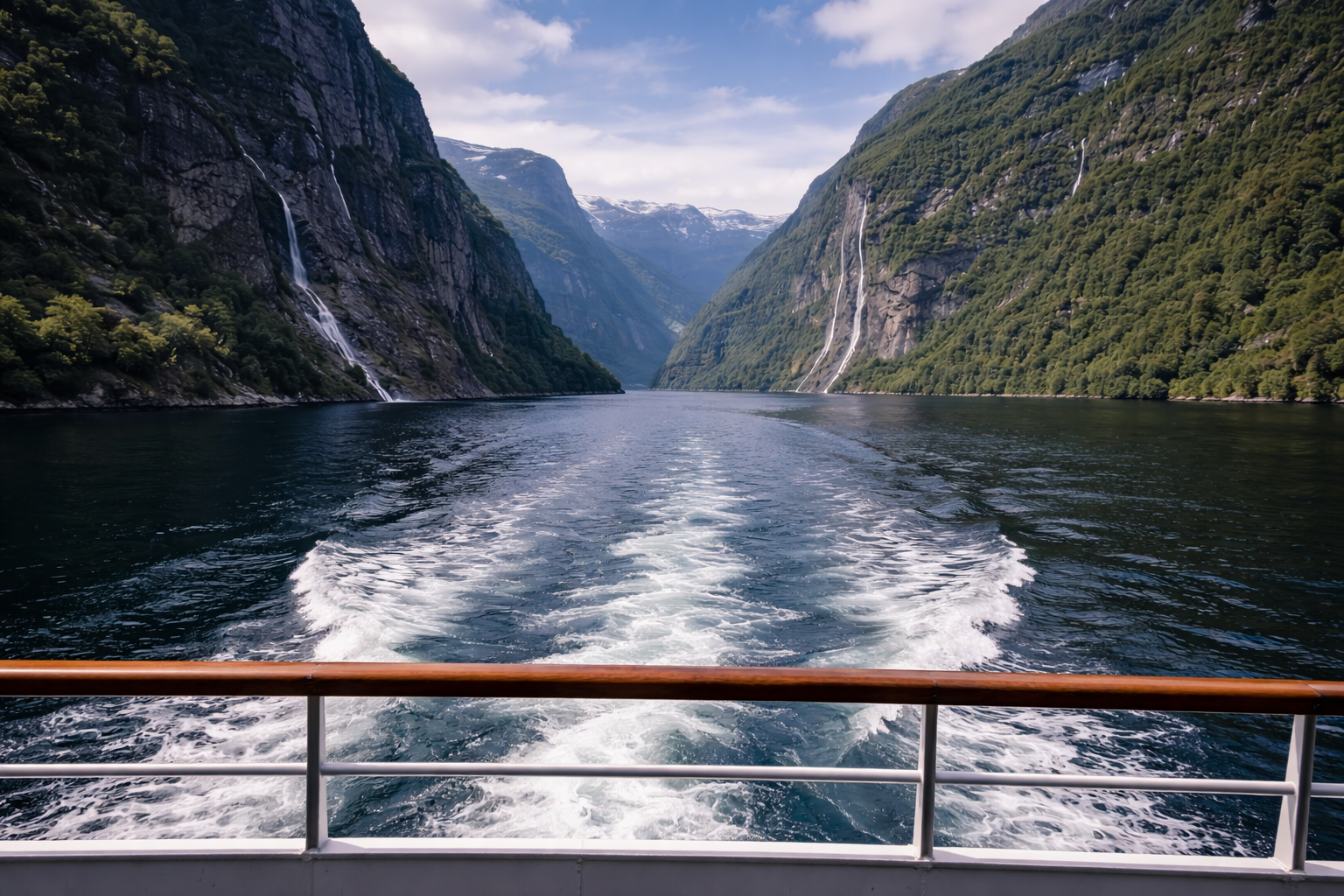
Another advantage of fjord cruises in Norway is that they reveal how the landscape works as a whole. Waterfalls, mountain farms, isolated stretches of shoreline, and layers of rock become easier to understand when they unfold gradually from the water. The movement adds rhythm to the scenery, and that rhythm is part of what makes fjord travel so rewarding. Instead of one perfect photo moment, you get a continuous sequence of shifting perspectives.
Scenic Roads and Viewpoints That Transform the Journey
Not every unforgettable fjord experience happens on the water. Some of the most dramatic moments come from the road, where winding mountain routes and elevated viewpoints suddenly reveal the full sweep of the landscape below. Norway is especially strong at this kind of travel because the routes themselves often feel like part of the attraction. The road is not merely a connection between destinations, but an active part of the scenic experience.
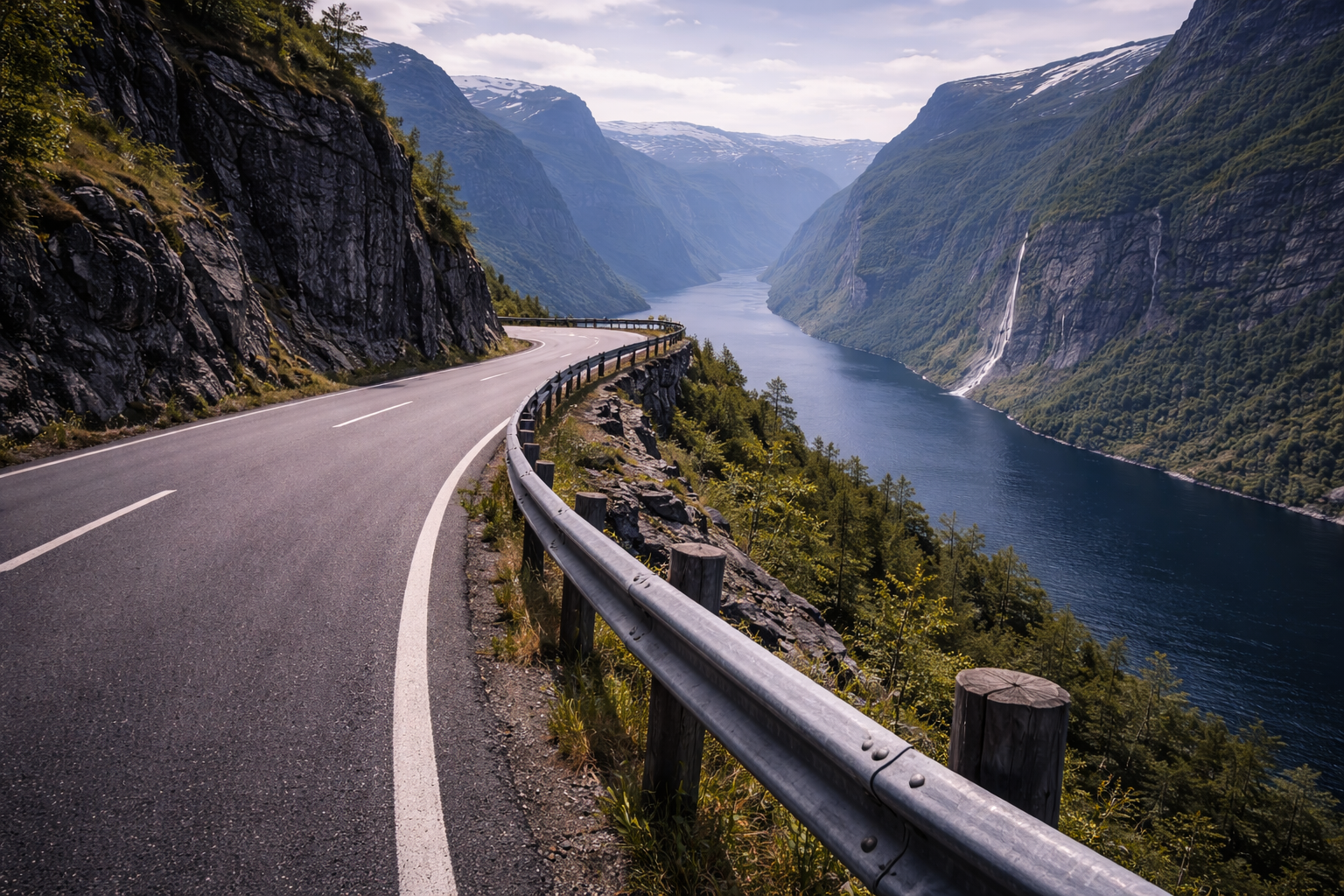
This is one of the strongest replacements for the older coastal-villages angle. A fjord article becomes much more distinct when it focuses on how travelers actually encounter the landscape. Driving through western Norway, stopping at panoramic platforms, and watching the fjord open below you creates a very different feeling from visiting coastal settlements. It keeps the article centered on the fjords themselves, which is the stronger editorial direction here.
Hiking Norwegian Fjords: The Landscape From Above
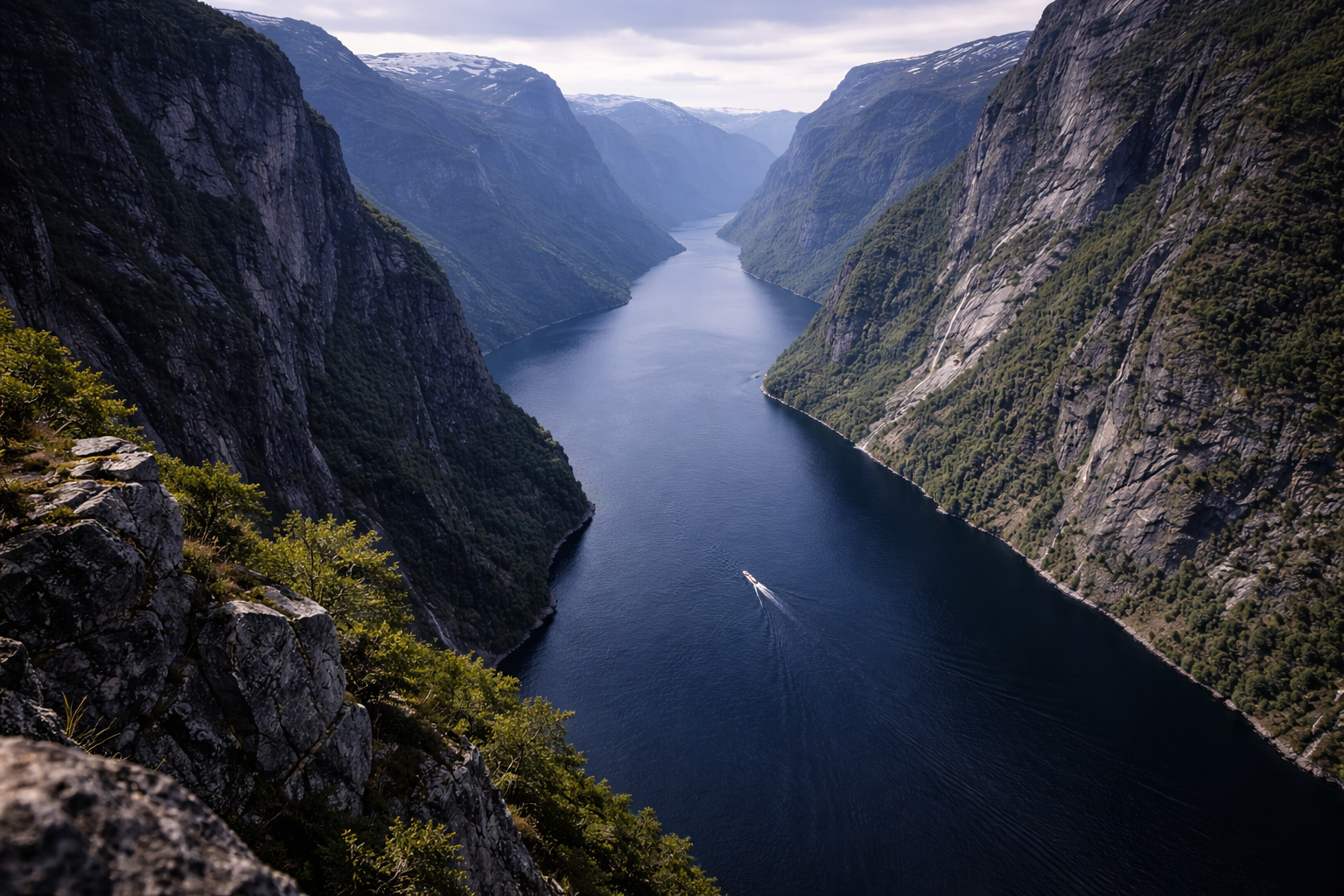
For travelers who want a more active encounter with the landscape, hiking Norwegian fjords offers one of the most rewarding experiences in the country. A trail above the water often reveals what photographs cannot fully show: the extraordinary depth of the fjord, the sharp drop of the cliffs, and the way tiny boats below emphasize the immense scale of the setting. This bird’s-eye perspective transforms the fjords from beautiful scenery into something almost abstract in its grandeur.

The appeal of hiking Norwegian fjords is also emotional. Reaching a high viewpoint creates a stronger sense of arrival and connection than simply pulling over at a roadside stop. The landscape feels earned, and the view becomes more memorable because it is tied to movement and effort. For many travelers, this is where the fjords leave their deepest impression.
Waterfalls, Weather, and the Drama of the Region
One of the most distinctive features of fjord country is how dynamic it feels. Waterfalls drop from steep mountainsides, clouds move quickly across the peaks, and changing weather can transform the same view in a matter of minutes. This gives western Norway a sense of movement that keeps the scenery from ever feeling static. Even on a short trip, the landscape can present itself in several different moods.
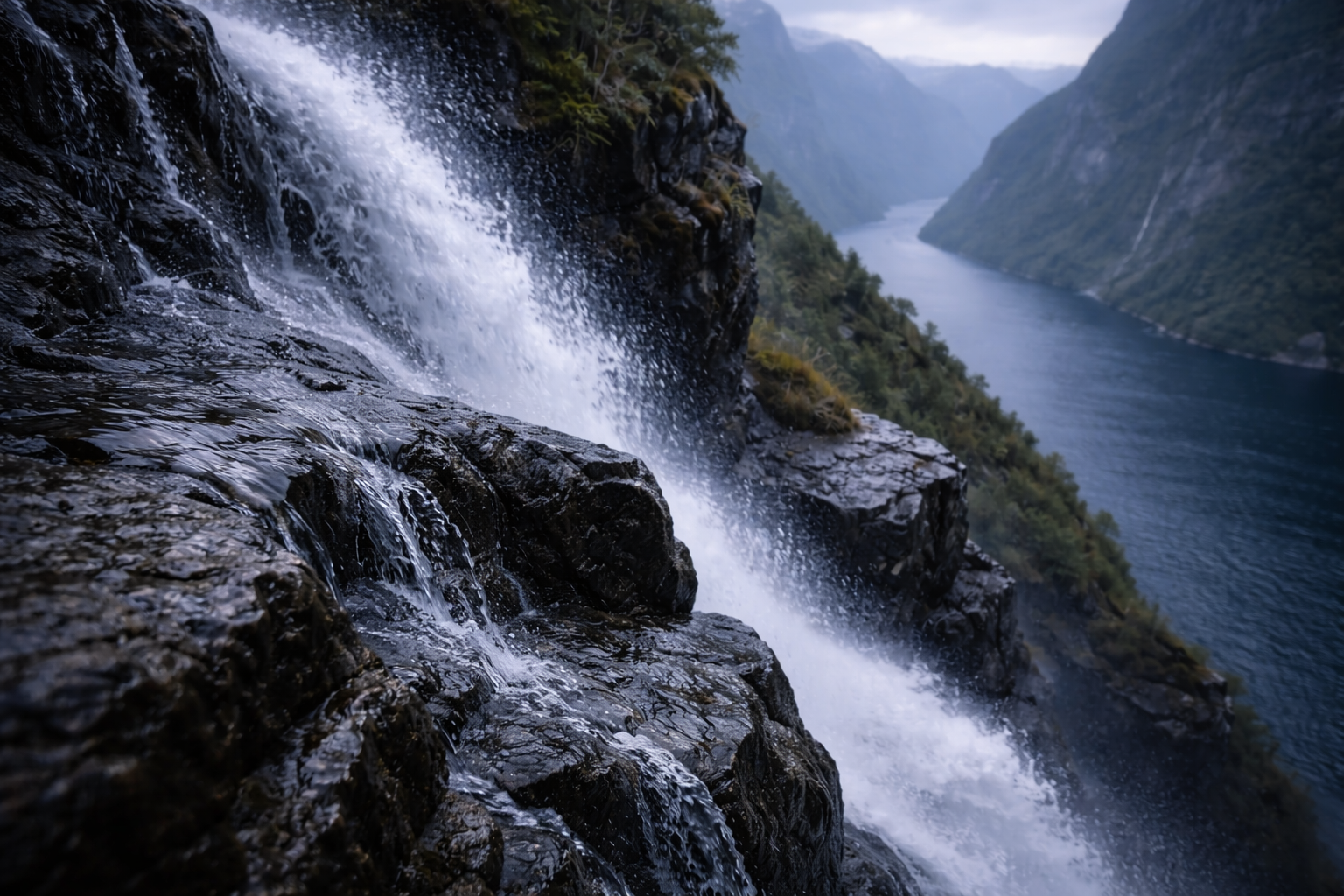
Waterfalls are especially important because they add texture and motion to the fjord environment. They remind travelers that this is not a quiet postcard landscape, but a place shaped by water in multiple forms: glacial history, rivers, rainfall, and vertical cascades. That richness makes Norway fjords feel more alive and layered than simple mountain-and-water scenery. It is one reason so many travelers remember the region as dramatic rather than merely beautiful.
When to Visit the Fjords
The fjords can be impressive at different times of year, but the experience changes with the season. Summer offers longer days, easier access, greener slopes, and more reliable transport, which makes it the most popular time for first-time visitors. Spring can be especially beautiful as waterfalls become more powerful and the landscape feels fresh and dynamic after winter. Early autumn adds quieter roads and softer colors, which can make the trip feel more reflective.
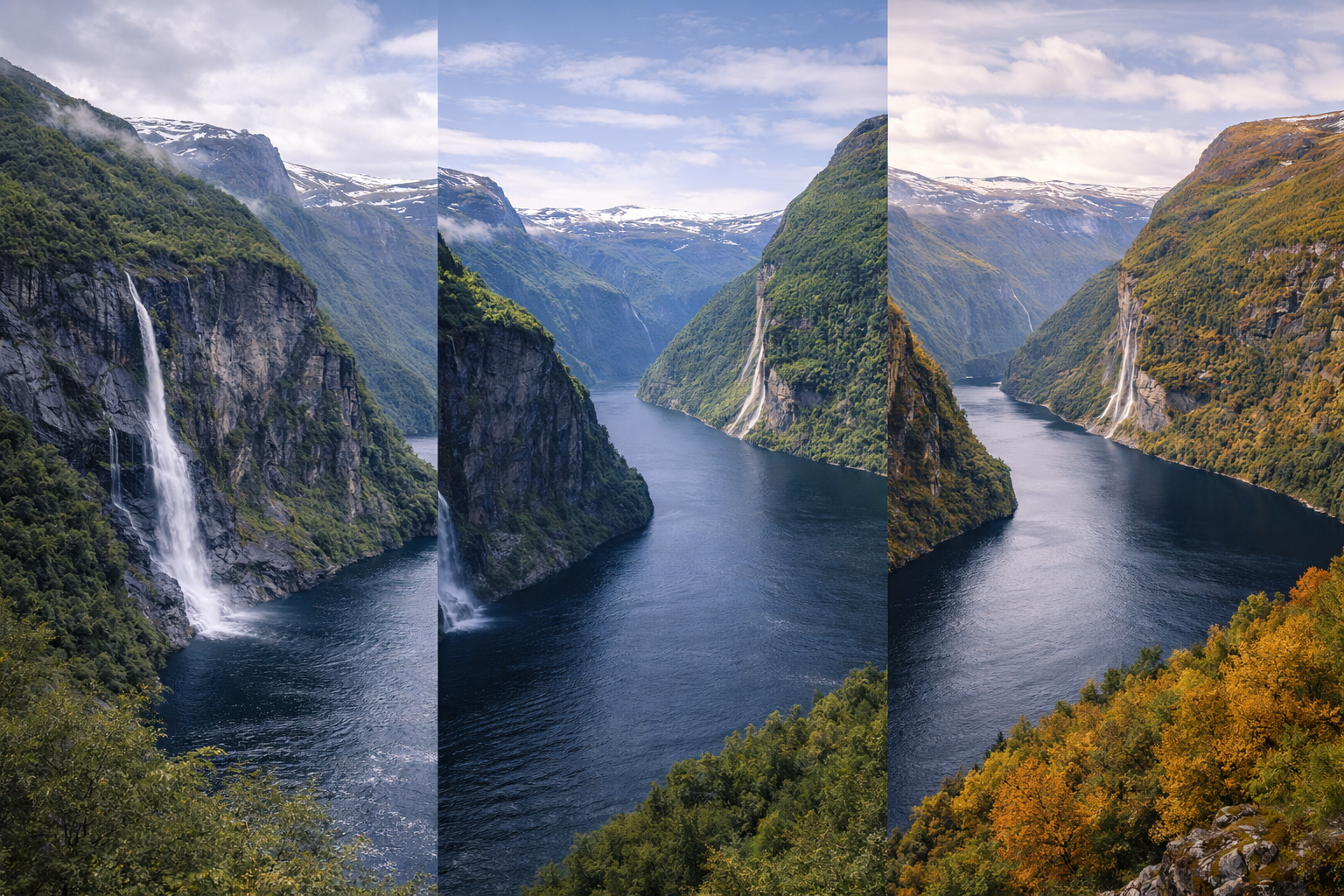
This seasonal variation is worth emphasizing because it helps travelers picture the kind of fjord experience they want. Some may prefer classic summer cruises and hikes, while others will value fewer crowds and a moodier atmosphere. In either case, the appeal of Norway fjords remains strong because the landscapes are inherently dramatic. The season changes the tone, but rarely diminishes the impact.
Beyond the Fjords: Where to Go Next
A fjord journey often opens the door to other sides of Norway rather than standing alone as a self-contained theme. Travelers who find themselves drawn to the maritime atmosphere beyond the cliffs and mountain walls can continue with our guide to Norwegian coastal towns, where the focus shifts from fjord landscapes to harbors, fishing culture, and life shaped directly by the sea. That internal link works naturally here because it separates two related but distinct travel experiences.
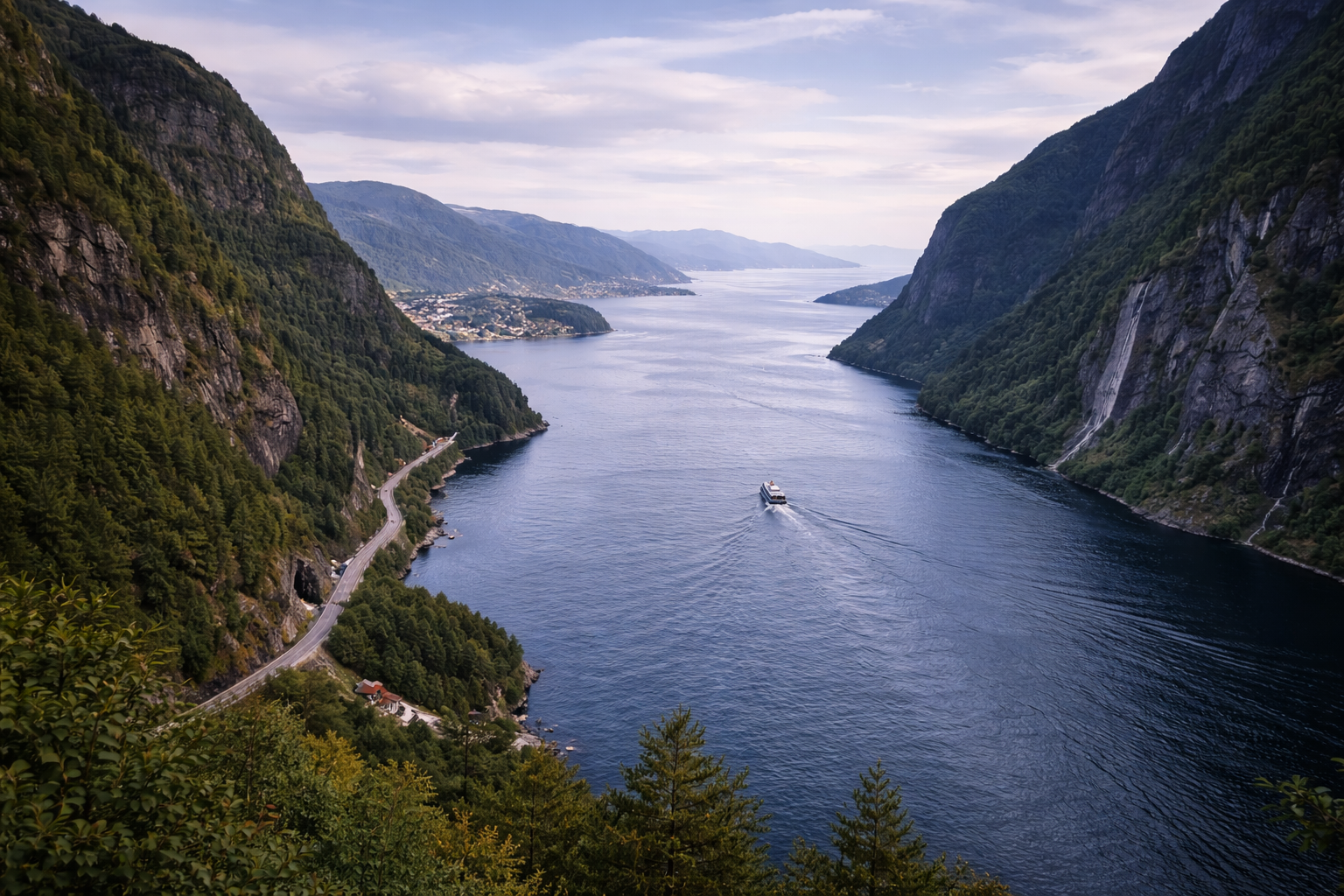
For a broader official overview of the region, Visit Norway’s guide to Fjord Norway is a useful external reference. It supports the wider idea that the fjords are best approached as a layered region rather than a single sight. That perspective makes the article stronger and gives the reader a more complete sense of what western Norway can offer.
Conclusion
The power of Norway fjords lies in more than their visual beauty. They offer a full travel experience built around scale, silence, motion, and perspective, whether you encounter them from a boat, a scenic road, or a mountain trail. From the iconic drama of Geirangerfjord Norway to the narrower intensity of Nærøyfjord, and from unforgettable fjord cruises in Norway to the exhilaration of hiking Norwegian fjords, the region delivers some of the most striking landscapes in Europe. By focusing on how the fjords are experienced rather than on nearby villages, this journey becomes more immersive, more distinct, and far more memorable.