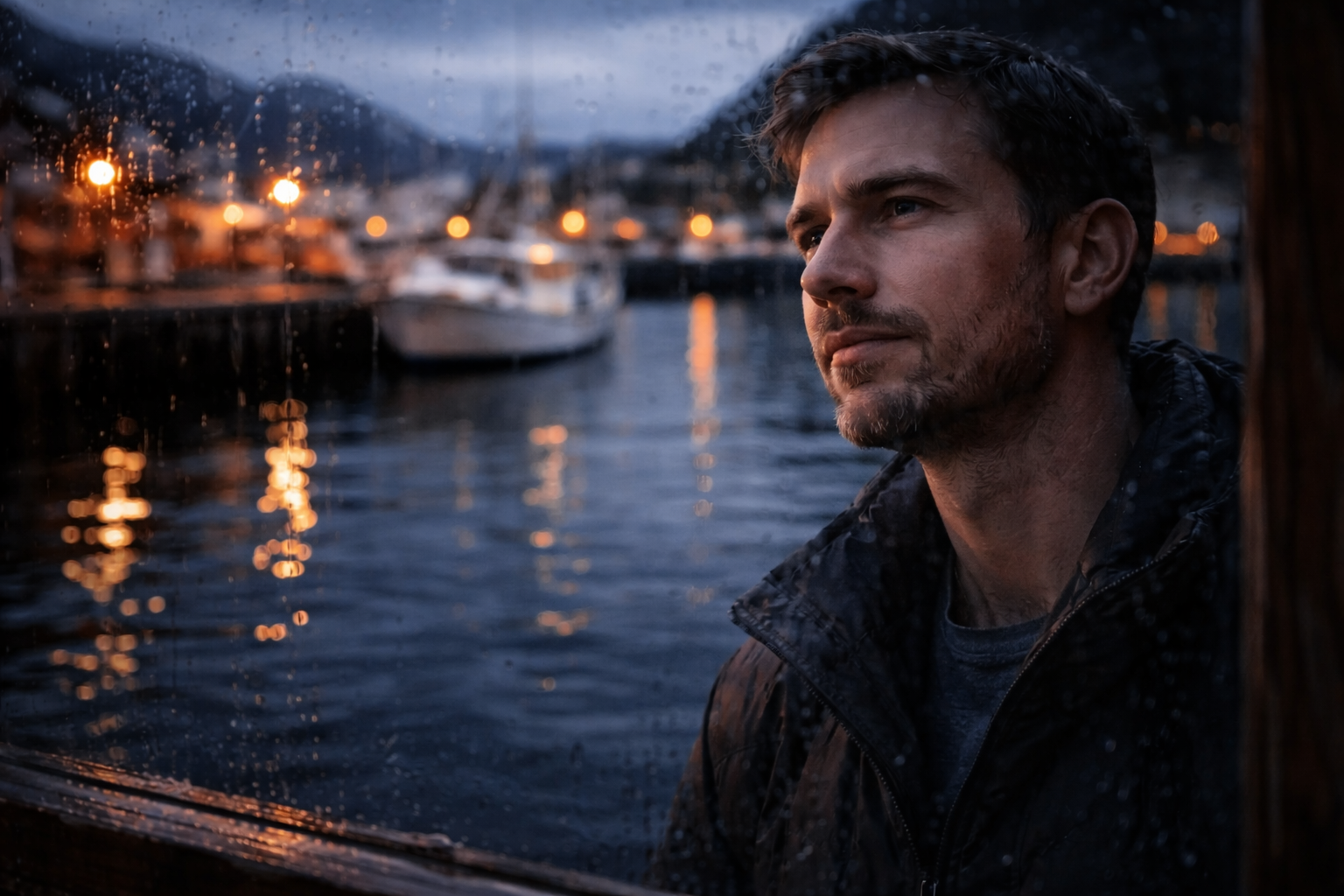
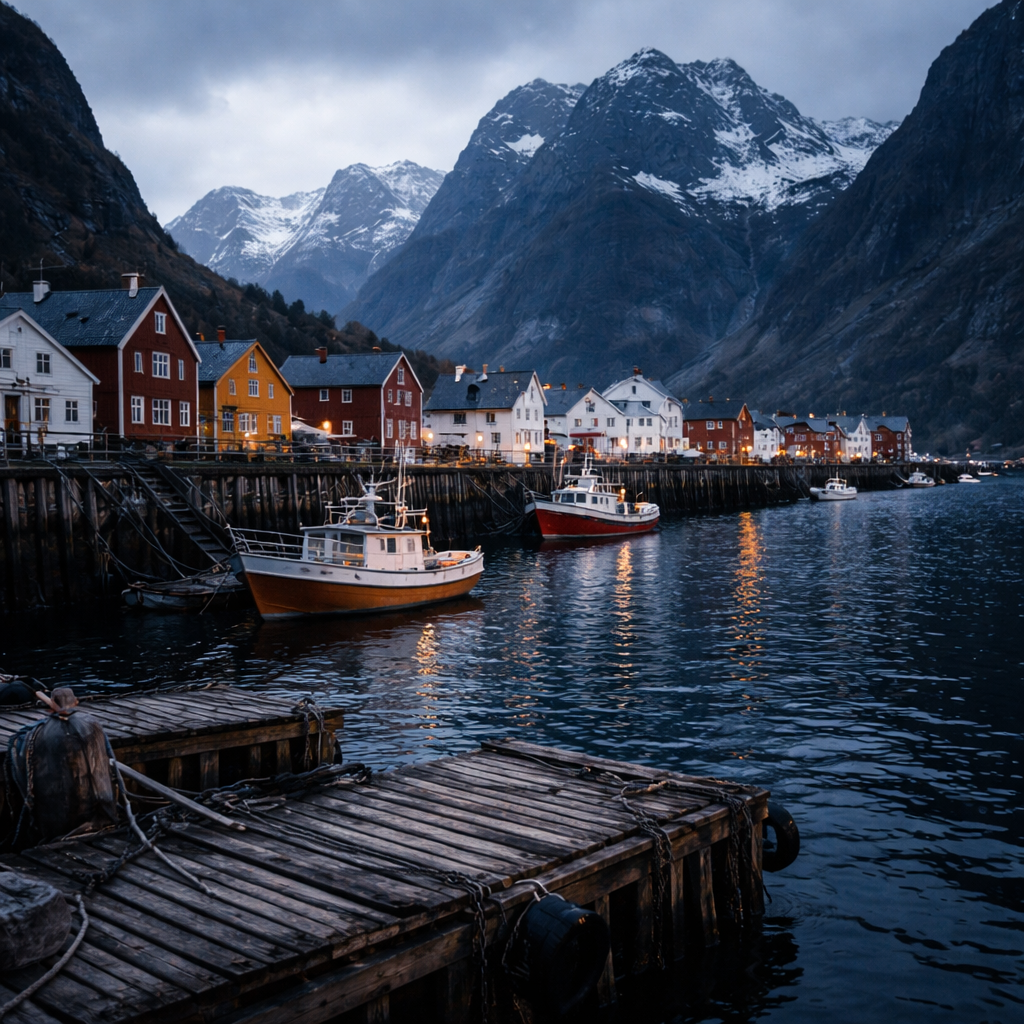
There are destinations that impress because they are dramatic, and there are destinations that linger because they feel deeply inhabited. Coastal Norway manages to do both at once. The cliffs, fjords, islands, and harbors are visually unforgettable, yet the real power of the journey lies in something quieter: the sense that life here has been shaped, day after day, by the sea. For travelers who want more than beautiful views, exploring Norwegian coastal towns offers a way to experience Norway through atmosphere, routine, food, and local identity rather than through scenery alone.
That is what makes the coast so distinctive. The water is not just a backdrop for photographs, but a force that has influenced trade, architecture, livelihood, and even the emotional tone of daily life. Fishing boats, weathered docks, narrow harbors, and houses built to face the wind all tell the same story in different ways. A journey through coastal Norway feels less like visiting a series of attractions and more like entering a landscape where nature and human life are still closely bound together. In that sense, Norway coastal travel is not simply about where you go, but about how the coast teaches you to look more slowly.
This is also why the coastal experience is so different from a conventional city itinerary. Instead of moving from museum to landmark to restaurant, you begin to notice subtler things: the quality of the light over the water, the silence between ferry arrivals, the color of fishing cabins against grey skies, or the way a harbor remains active even when the village around it seems still. These small details create a much stronger memory than a checklist of sights. They turn Norwegian coastal towns into places that feel not only scenic, but meaningful.
Why Coastal Norway Feels So Different
Norway’s geography explains a great deal about its character. The coastline is long, broken, and intricate, shaped by fjords, islands, exposed headlands, and communities built wherever sea and land allowed people to survive. This physical setting has never been neutral. It has determined how people moved, what they ate, how they traded, and how settlements were organized. Even now, modern travelers can still sense that the coast developed in response to forces larger than convenience.
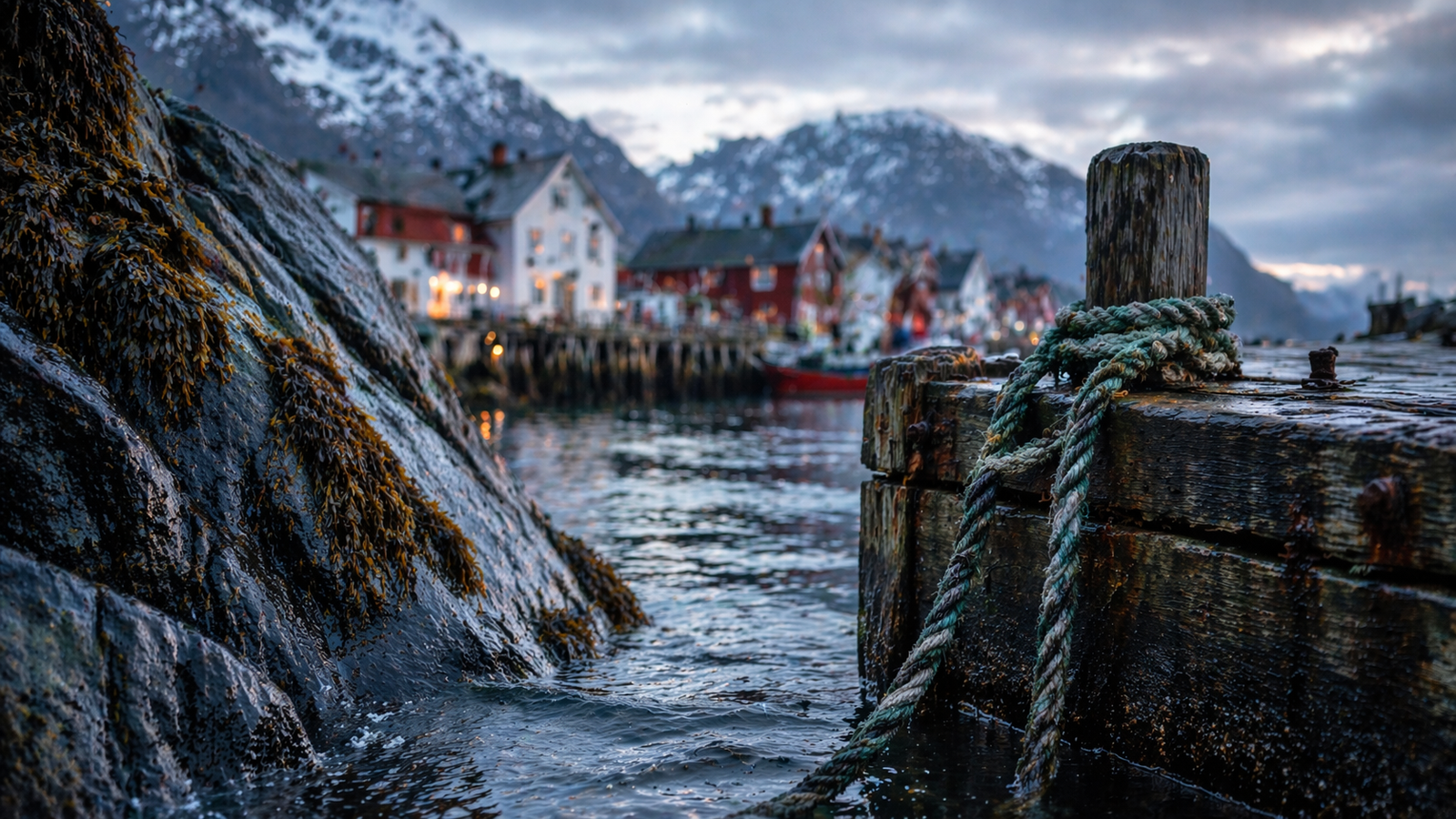
That is part of what makes Norway coastal travel so compelling. The environment never feels decorative. It feels active, demanding, and formative. In many places, the harbor is still the center of life, not a polished waterfront built mainly for visitors. Boats are not just symbols of local charm but tools of work and continuity. The coast has aesthetic appeal, of course, but it also has functional depth, and that depth is what gives the journey emotional weight.
There is also a psychological dimension to coastal Norway that many travelers notice quickly. The changing weather, the open water, and the sense of exposure all create a mood that feels more reflective than hectic. You become aware of distance, of silence, and of small gestures of human adaptation against a larger landscape. This is why so many people find Norwegian coastal towns moving in a way that is hard to explain purely through travel language. They do not just look beautiful; they feel honest.
Bergen Norway: A Maritime City With a Long Memory
Among the best-known Norwegian coastal towns, Bergen Norway is often the most natural place to begin. The city introduces travelers to the maritime world of the country without losing the energy and cultural range of an urban destination. Its historic waterfront, surrounding mountains, and close relationship to the fjords make it both visually striking and symbolically important. Bergen feels like a place where trade, weather, and seafaring history are still present in the structure of the city itself.
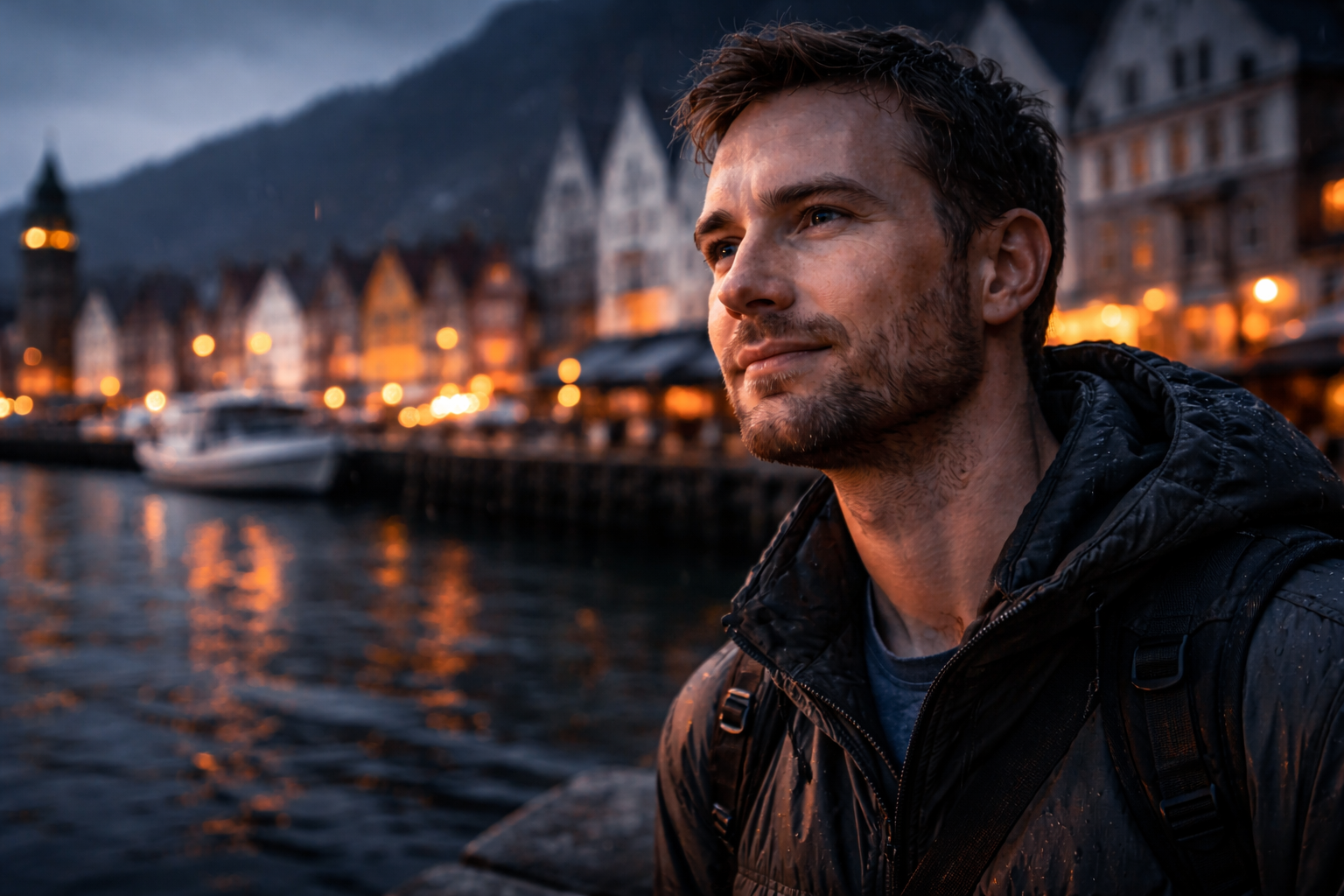
What makes Bergen Norway especially strong as a starting point is that it does not reduce coastal Norway to postcard imagery. Yes, it is colorful and photogenic, but it is also a place of memory, movement, and working identity. The harbor tells the story of exchange and maritime connection, while the city’s atmosphere reflects a long life lived between rain, mountains, and sea. For readers interested in Norwegian coastal towns, Bergen provides both an introduction and a framework for understanding what comes next.
It also helps that Bergen balances the practical and the poetic. Visitors can experience a historic port, local food culture, and the surrounding landscape within the same compact setting. This creates exactly the kind of layered travel experience that coastal Norway does so well. You are not forced to separate urban culture from natural scenery, because the city itself exists in dialogue with both. That is one of the reasons Norway coastal travel feels richer than many scenic routes elsewhere in Europe.
Small Harbors and the Slower Pulse of the Coast
While Bergen is important, the emotional center of the coast often lies in much smaller places. Norway’s lesser-known villages and harbor towns reveal a rhythm of life that is quieter, more local, and often more revealing than larger destinations. In these places, the sea feels even closer, and the scale of everyday life becomes part of the experience. A small quay, a cluster of houses, or a handful of boats can sometimes say more about the Norwegian coast than any major attraction.
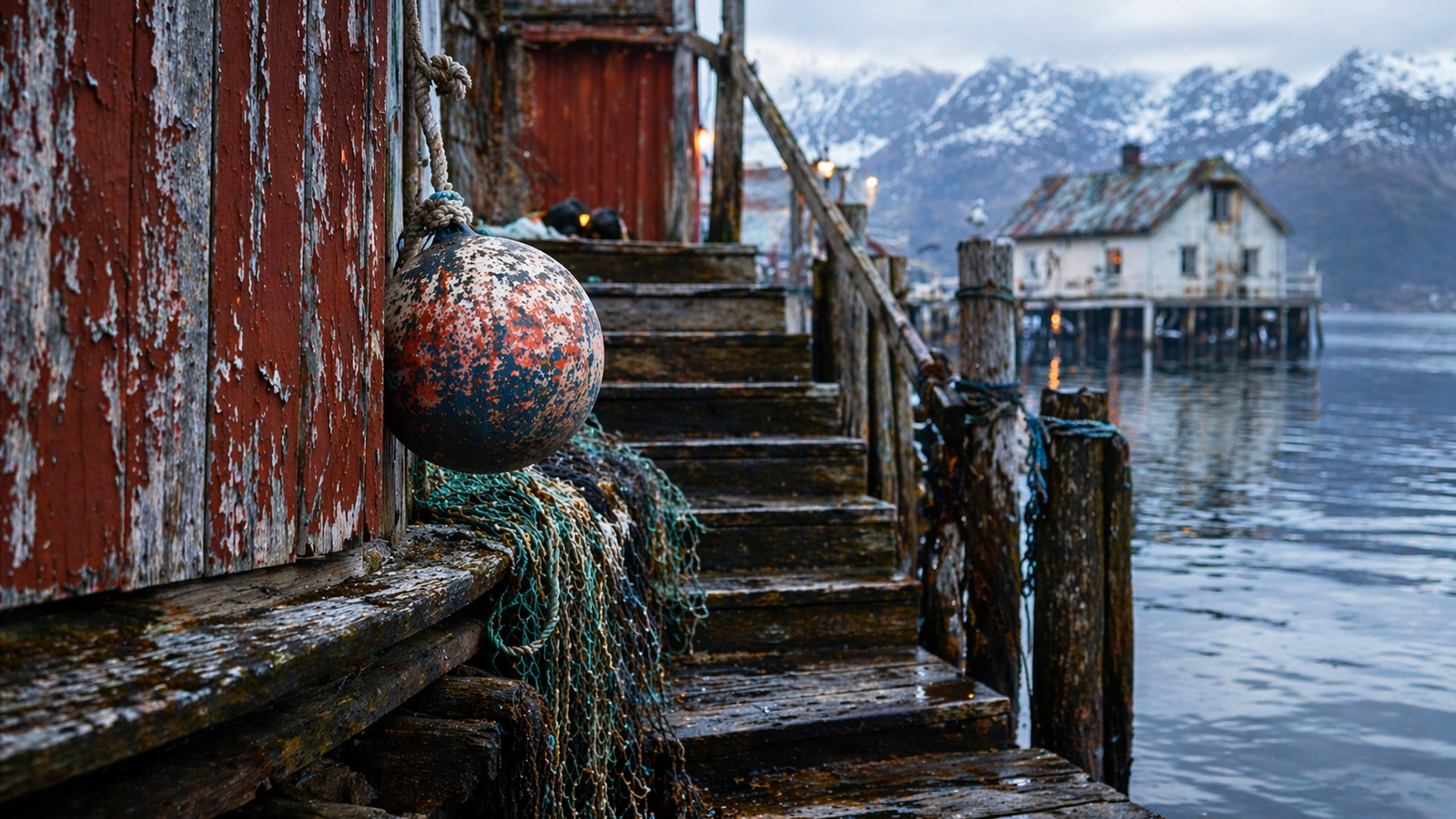
This is where the slower pulse of travel begins to matter. In many Norwegian coastal towns, there is no need to rush, because the meaning of the place reveals itself through atmosphere rather than spectacle. You notice the practical shapes of buildings, the closeness of homes to the water, the traces of weather on wood and paint, and the simple fact that these settlements were built around endurance. That sense of lived coastal reality is what makes the journey feel authentic rather than merely picturesque.
For travelers used to faster itineraries, this can be one of the most surprising pleasures of the coast. The experience asks you to observe more than consume. It rewards patience, curiosity, and attention to ordinary details. That is a large part of why Norway coastal travel stays with people so strongly. The coast invites a slower form of seeing, and in return it offers a deeper kind of memory.
Lofoten Fishing Villages and the Power of Working Beauty
If there is one image that has come to define northern coastal Norway, it is the world of the Lofoten fishing villages. Red and white rorbuer stand beside dark water, backed by steep mountains that seem almost too dramatic to be real. Yet the beauty of Lofoten is not empty or theatrical. These villages emerged from a fishing economy, a seasonal rhythm, and a difficult environment that demanded resilience and skill. Their visual charm is inseparable from the work and history that produced it.
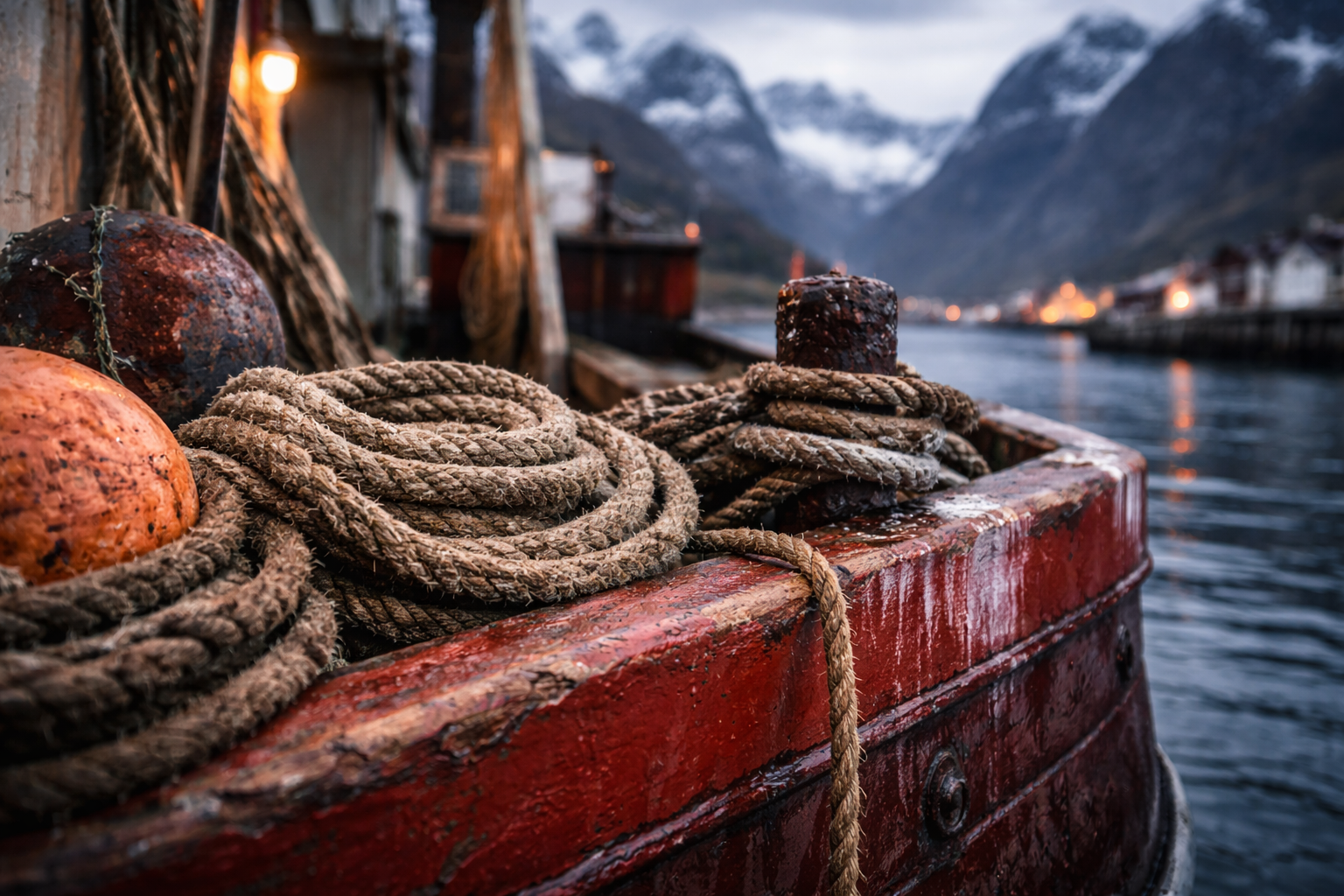
The Lofoten fishing villages are powerful precisely because they still feel connected to function. The cabins, drying racks, small harbors, and boat culture all point back to a way of life built around cod fishing and marine survival. Even when visitors arrive searching for beauty, they quickly sense something more grounded underneath the aesthetics. That gives the experience depth. The villages are not simply pretty; they are carriers of maritime memory.
This also makes them essential to any article about Norwegian coastal towns. They show that the most memorable places on the coast are not necessarily the biggest or most polished, but the ones where natural drama and human adaptation remain visibly intertwined. Lofoten is often photographed as if it were an abstract dream, but on the ground it feels concrete, textured, and historical. That tension between beauty and labor is part of what makes it unforgettable.
Rorbuer, Dried Fish, and the Material Culture of the Coast
To understand coastal Norway more deeply, it helps to look beyond the scenery and pay attention to its material culture. Few symbols are more recognizable than the rorbuer, the traditional fishermen’s cabins that still define the look of many northern settlements. These structures were not designed as lifestyle objects or romantic retreats. They were built to support work, shelter fishermen, and function in harsh conditions. Today they carry both practical history and strong visual identity.
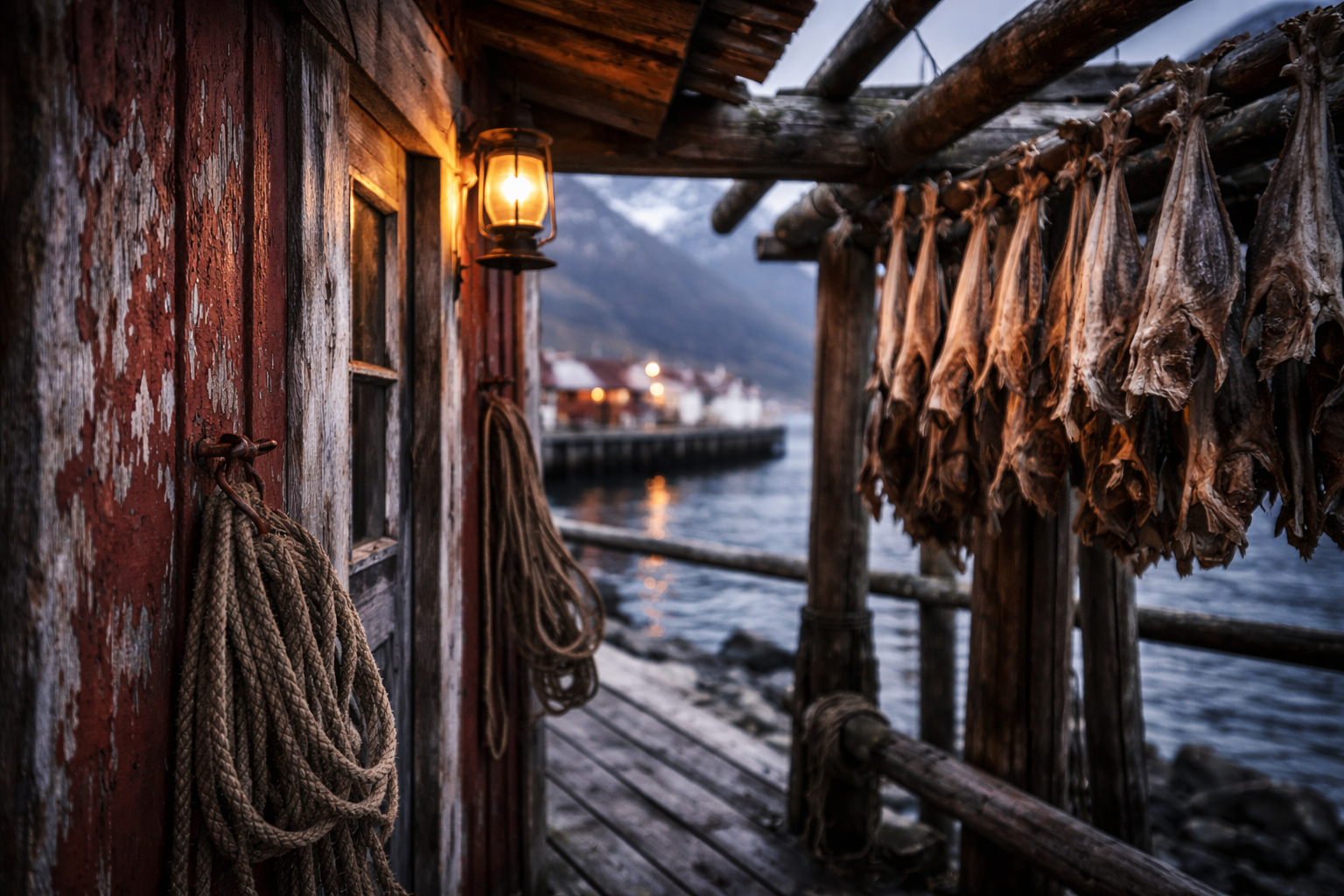
The same is true of fish-drying traditions, which remain one of the most distinctive expressions of maritime life in northern Norway. Seeing racks of drying fish or hearing about the seasonal rhythm of cod production changes the way a coastal village looks to a visitor. Suddenly the harbor is not just charming, but economically and culturally legible. The coast becomes a working archive of habits, techniques, and adaptations passed from one generation to the next.
This level of detail matters because it prevents Norway coastal travel from slipping into generic scenic writing. The more specific the coastal story becomes, the more interesting it is. Rorbuer, drying fish, docks, nets, and marine routines all bring human texture into the landscape. They turn Lofoten fishing villages and other small communities into places with tangible cultural identity rather than just visual appeal.
Norwegian Seafood and the Coastal Table
One of the most direct ways to understand the coast is through food. Norwegian seafood is not just a culinary category, but part of the lived relationship between communities and the sea around them. Fish, shellfish, crab, and other marine ingredients are central to local menus because they emerge naturally from the environment and from long traditions of coastal livelihood. This makes eating along the coast one of the most meaningful ways to connect with place.
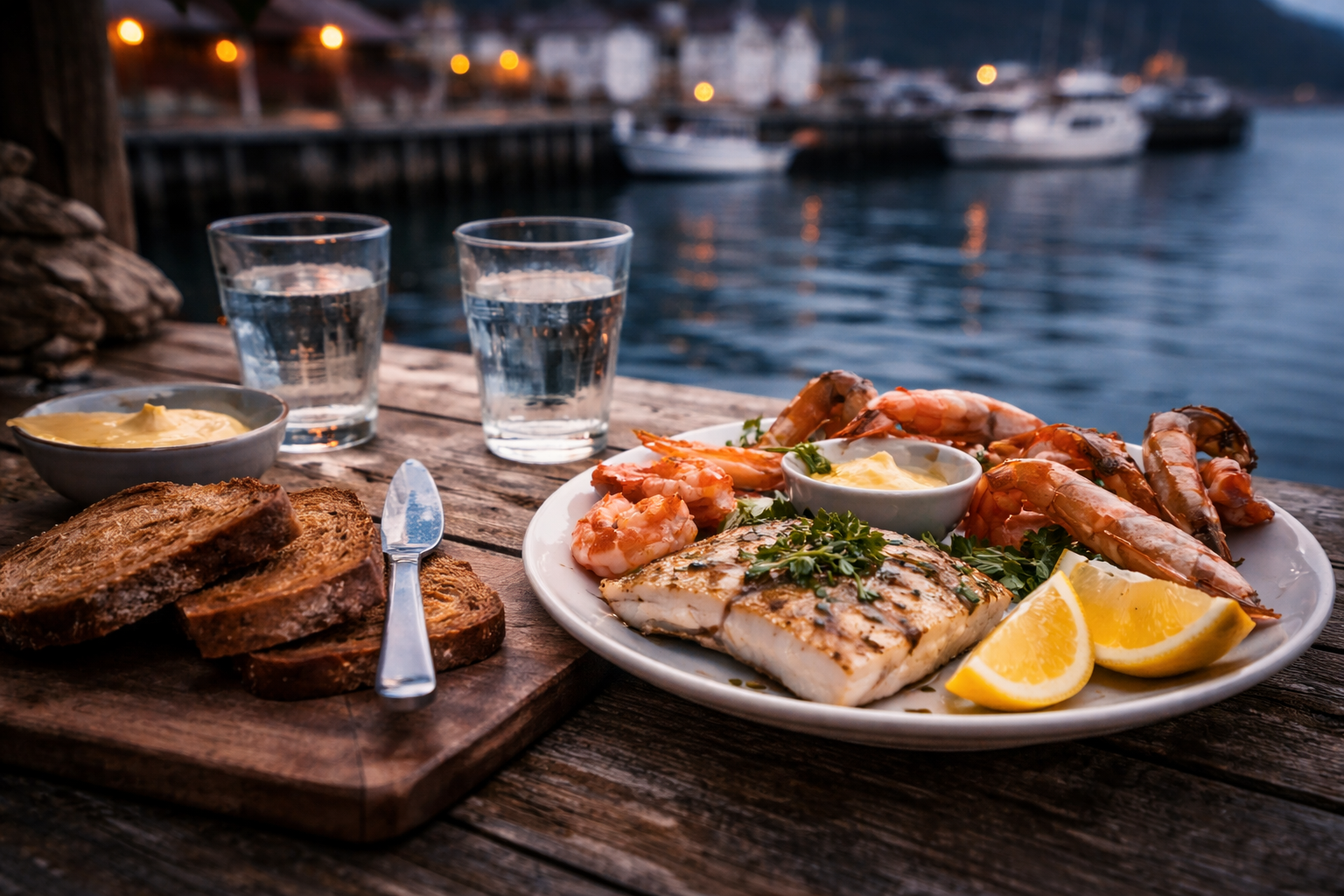
Part of the appeal of Norwegian seafood is its immediacy. In a harbor town, the meal often feels inseparable from the setting: the boats, the salt air, the cold water, and the local routines that brought the ingredients there in the first place. Food becomes a continuation of the landscape rather than a separate travel category. This gives the dining experience a sense of honesty and specificity that many travelers find especially memorable.
It also broadens the appeal of Norwegian coastal towns. Even readers who are not focused on architecture or village history can connect with coastal identity through the table. Seafood markets, dockside meals, and simple regional dishes all make the coast feel tangible. For a travel article, this is especially useful because it turns atmosphere into something the reader can imagine physically experiencing.
Light, Weather, and the Emotional Tone of the Coast
There is another dimension to coastal Norway that deserves more attention: the emotional effect of light and weather. The coast is not static. Cloud cover shifts quickly, water reflects changing tones, and entire villages can seem transformed depending on the hour. In summer, the long northern light creates an almost suspended feeling of time, while colder seasons bring a more introspective, elemental mood. These atmospheric shifts are central to the identity of Norwegian coastal towns.
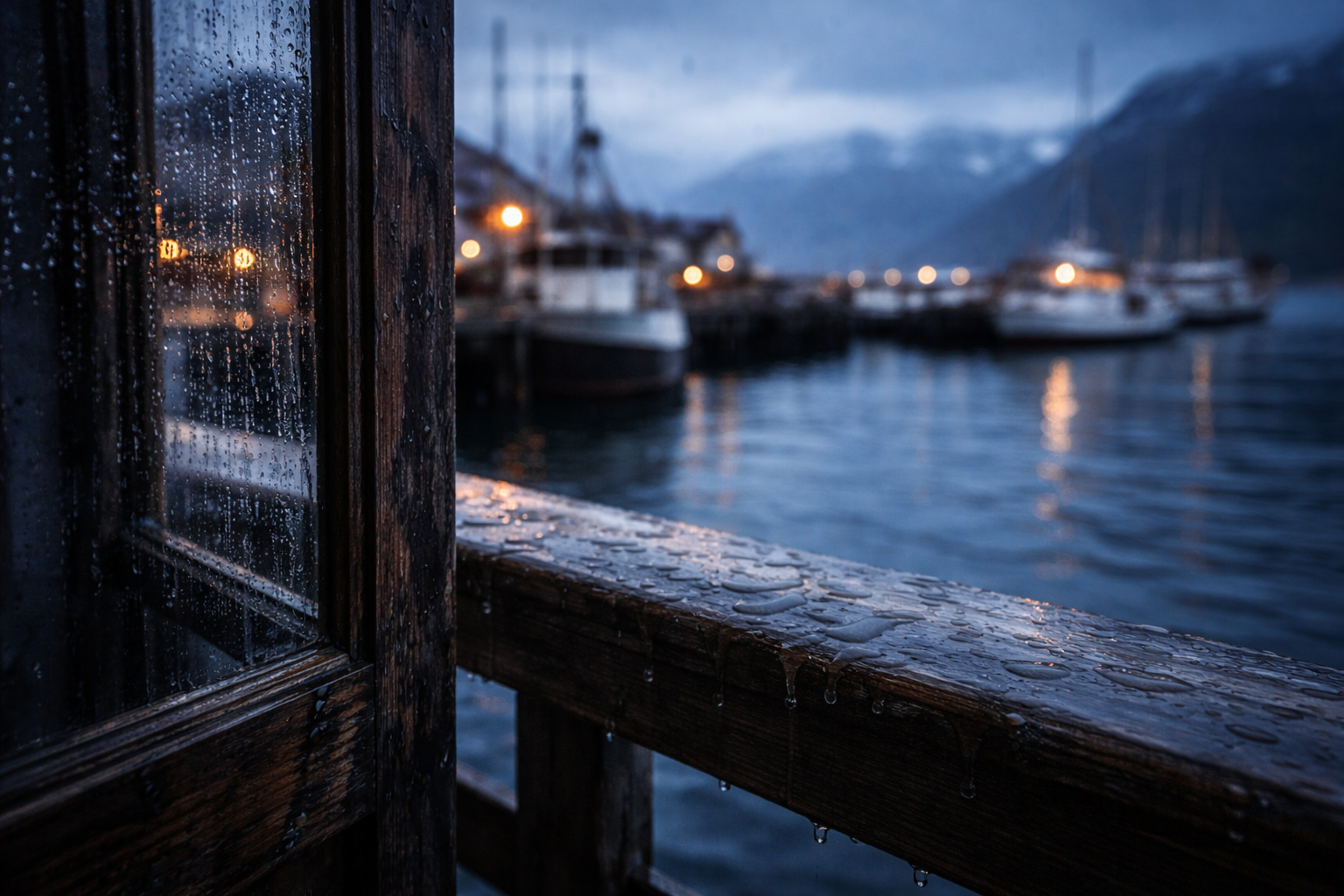
This matters because many travelers fall in love with the coast not because of one specific landmark, but because of the way the environment feels. A harbor at dusk, a rainy morning in Bergen, or a pale northern evening in Lofoten can leave a stronger impression than any formal sightseeing stop. The emotional tone of the journey becomes part of the destination. This is one reason Norway coastal travel often feels so personal and memorable.
It also explains why the coast rewards slower travel. If you move too quickly, you miss the subtle shifts that make these places special. The weather is not an inconvenience to overcome, but part of the experience itself. Wind, mist, light, and water all deepen the atmosphere and give the coast its unmistakable mood. That mood is one of Norway’s greatest travel assets.
The Northern Cultural Layer
The farther north you go, the more the coastal experience opens onto larger questions of identity and belonging. Northern Norway is not only a landscape of villages and fishing routes, but also part of a broader cultural region with its own traditions, histories, and perspectives. This gives the coast another layer of meaning beyond scenery and maritime life. It reminds travelers that the north is not empty wilderness, but a lived cultural space.
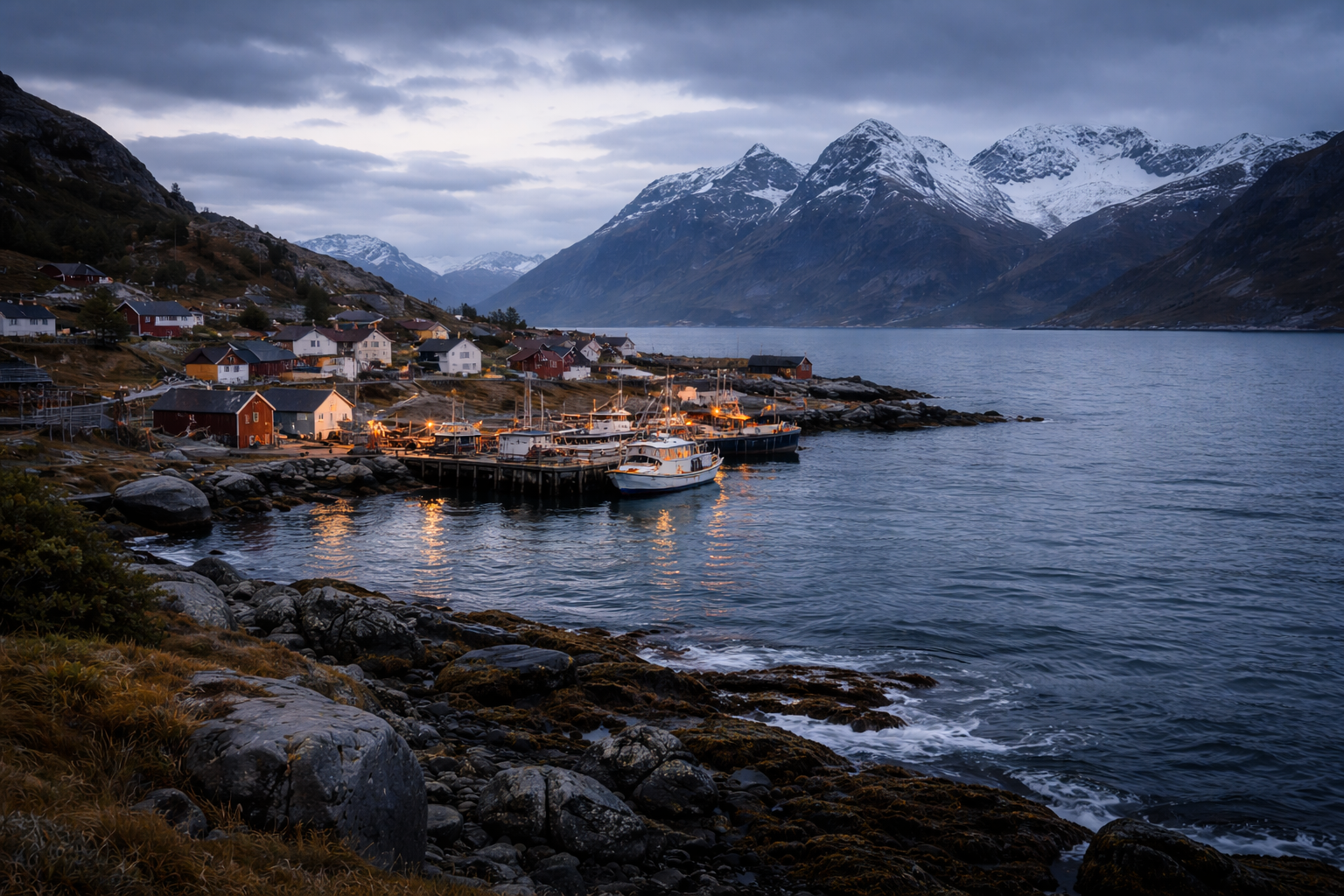
That is why it makes sense to connect this coastal article to a deeper northern perspective. Readers who want to understand more than the visual and maritime side of the region can continue with this guide to the Sámi people and their traditions. That internal link fits naturally here, because the coastline in the north is part of a wider cultural story that deserves attention. It makes the whole article feel more grounded and less superficial.
More Than a Scenic Route
The strongest reason to travel coastal Norway is that it offers more than a sequence of beautiful viewpoints. It reveals how nature shapes work, how weather shapes mood, and how small communities preserve identity through everyday structures and routines. That is what elevates Norway coastal travel beyond a conventional sightseeing itinerary. The coast is not only something to admire, but something to understand.
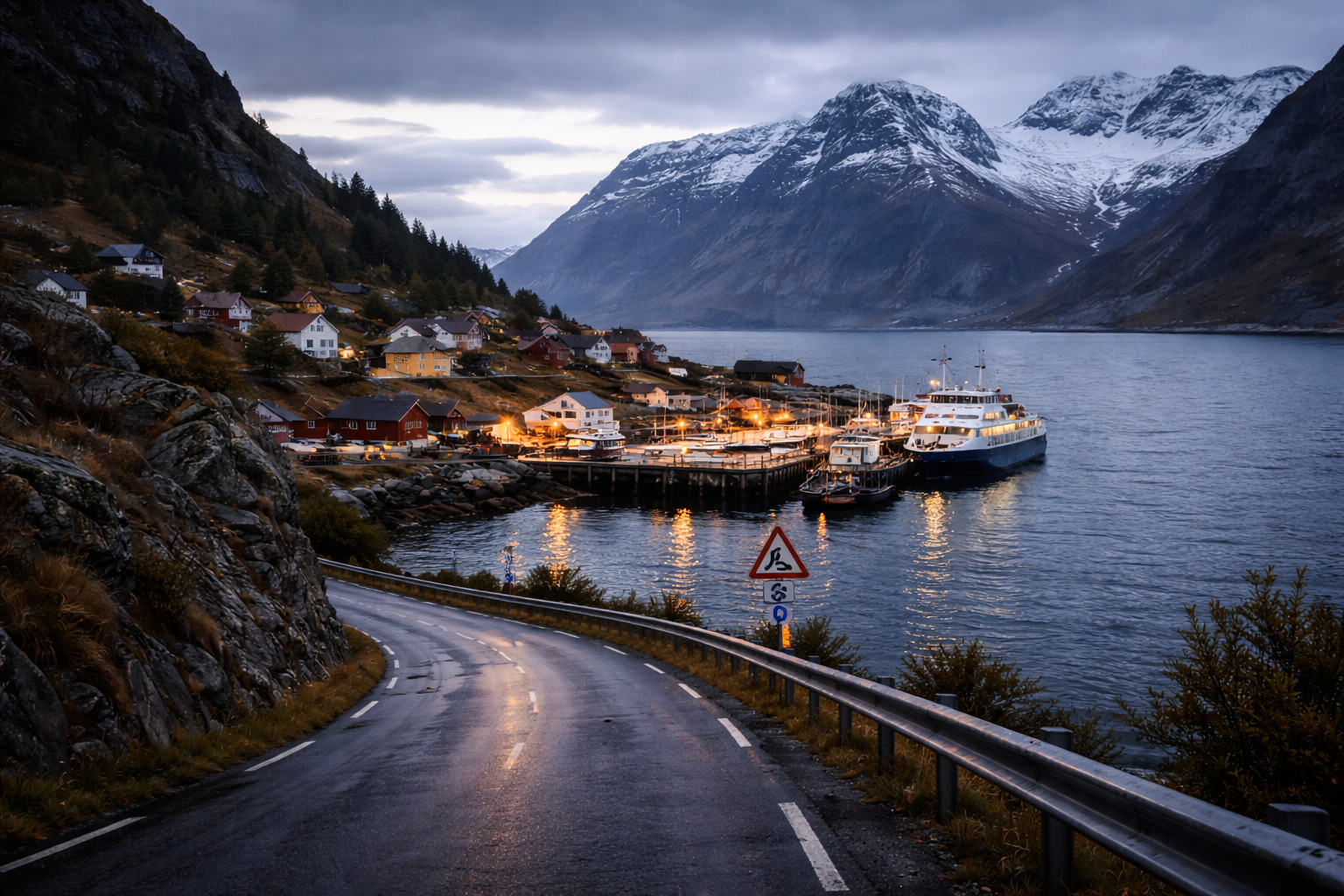
For readers who want a broader official overview of the region, the Visit Norway guide to Fjord Norway is a helpful external reference. It supports the wider idea that Norwegian coastal towns are best appreciated as part of a larger maritime and fjord-based landscape. But the most meaningful part of the journey often comes from the smaller, more lived-in experiences that formal guides cannot fully capture.
Conclusion
The beauty of Norwegian coastal towns lies not only in their harbors, fjords, and cabins, but in the way they reveal a whole way of life shaped by the sea. From the maritime memory of Bergen Norway to the striking atmosphere of the Lofoten fishing villages, from the immediacy of Norwegian seafood to the shifting light and deeper cultural layers of the north, the coast offers far more than scenic drama alone. It gives travelers a rhythm, a mood, and a perspective that feel unmistakably Norwegian. That is what makes Norway coastal travel so memorable long after the journey ends.