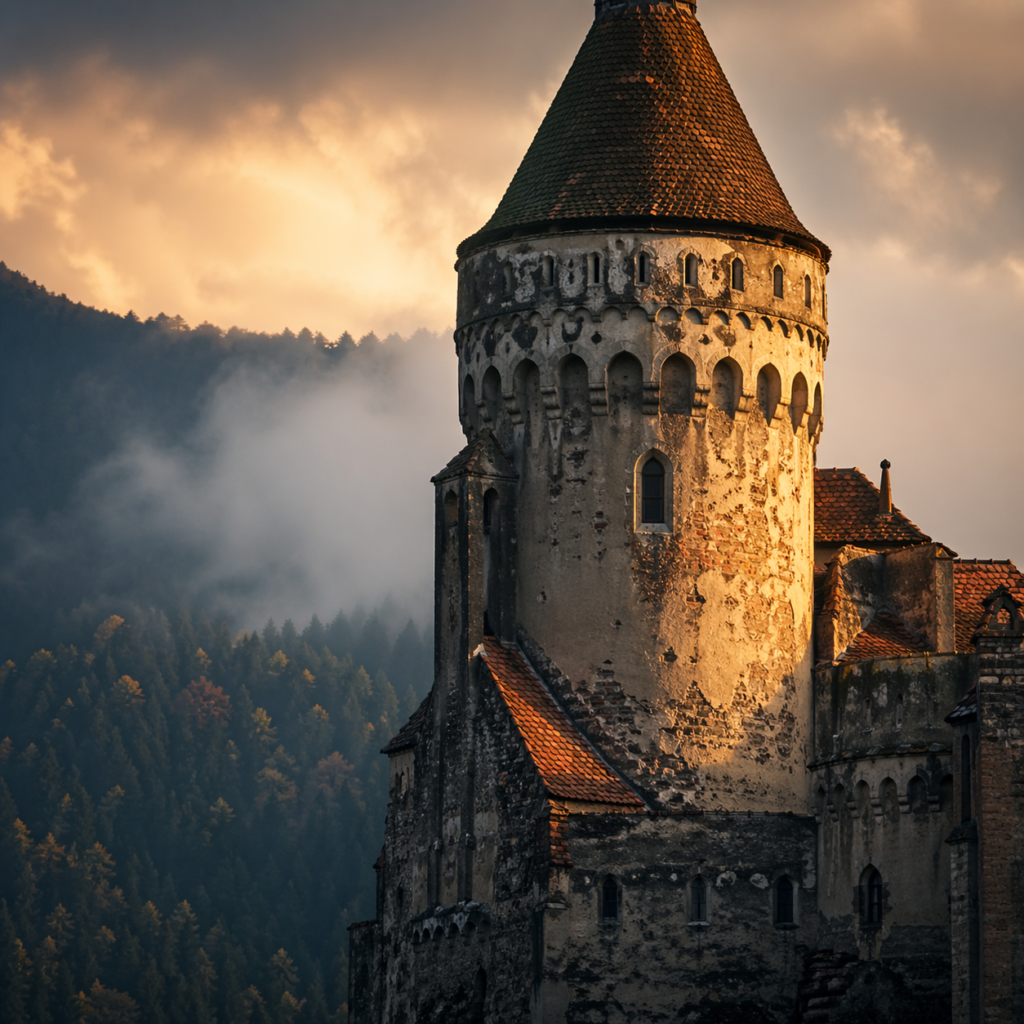
Close-up of a Romanian castle tower in dramatic evening light.

Romania Castles: A Journey Through Royal Ambition, Medieval Power, and Legendary Architecture

Romania is often introduced through the shadow of Dracula, but its castles tell a much wider and richer story. Across the country, fortresses, royal residences, and mountain strongholds reveal different chapters of national identity: medieval defense, dynastic ambition, romantic architecture, borderland politics, and the desire to shape a modern European kingdom. A journey through Romania castles is therefore not simply a tour of beautiful buildings. It is a way to understand how power, imagination, and history left their marks on the landscape.

What makes these castles especially compelling is their variety. Some feel theatrical and mysterious, perched above forests or mountain roads. Others are refined, elegant, and clearly tied to royal taste and European design. Some were built to defend, while others were designed to impress, host, and symbolize national confidence. Together, they show that Romania castles are not one story repeated in different locations, but a collection of distinct historical personalities.

This is also why the article should not lean too heavily on the vampire angle. Dracula may be the door many visitors walk through, but Romania’s castle heritage becomes far more interesting once the focus widens. The strongest route through these sites is not just myth, but contrast: Gothic drama, royal luxury, medieval engineering, and the changing ways Romania has imagined itself across time.

Why Romania’s Castles Feel So Distinctive

The first thing that separates Romania’s castles from many other European castle routes is atmosphere. These buildings rarely feel detached from their surroundings. They are set against mountains, forests, valleys, historic towns, and old roads that strengthen the sense of place around them. A castle visit in Romania often feels like part of a larger landscape rather than a self-contained museum stop.

Romania castles: Different moods of Romanian castle architecture shown in one atmospheric composition.

Another reason Romania castles stand out is the way they sit between East and West. Their architecture and history often reflect influences from Central Europe, the Balkans, the Ottoman frontier, local noble families, and modern royal ambitions. This gives them a layered identity that is difficult to reduce to one style or period. Romania’s castle heritage is compelling because it feels like a meeting point of cultures, borders, and eras.

For travelers, that means each major castle offers a different mood. One may feel romantic and symbolic, another severe and medieval, another luxurious and deeply connected to state-building. This variety keeps a castle itinerary from becoming repetitive and gives the article a much stronger editorial shape.

Peles Castle Romania: Royal Elegance in the Carpathians

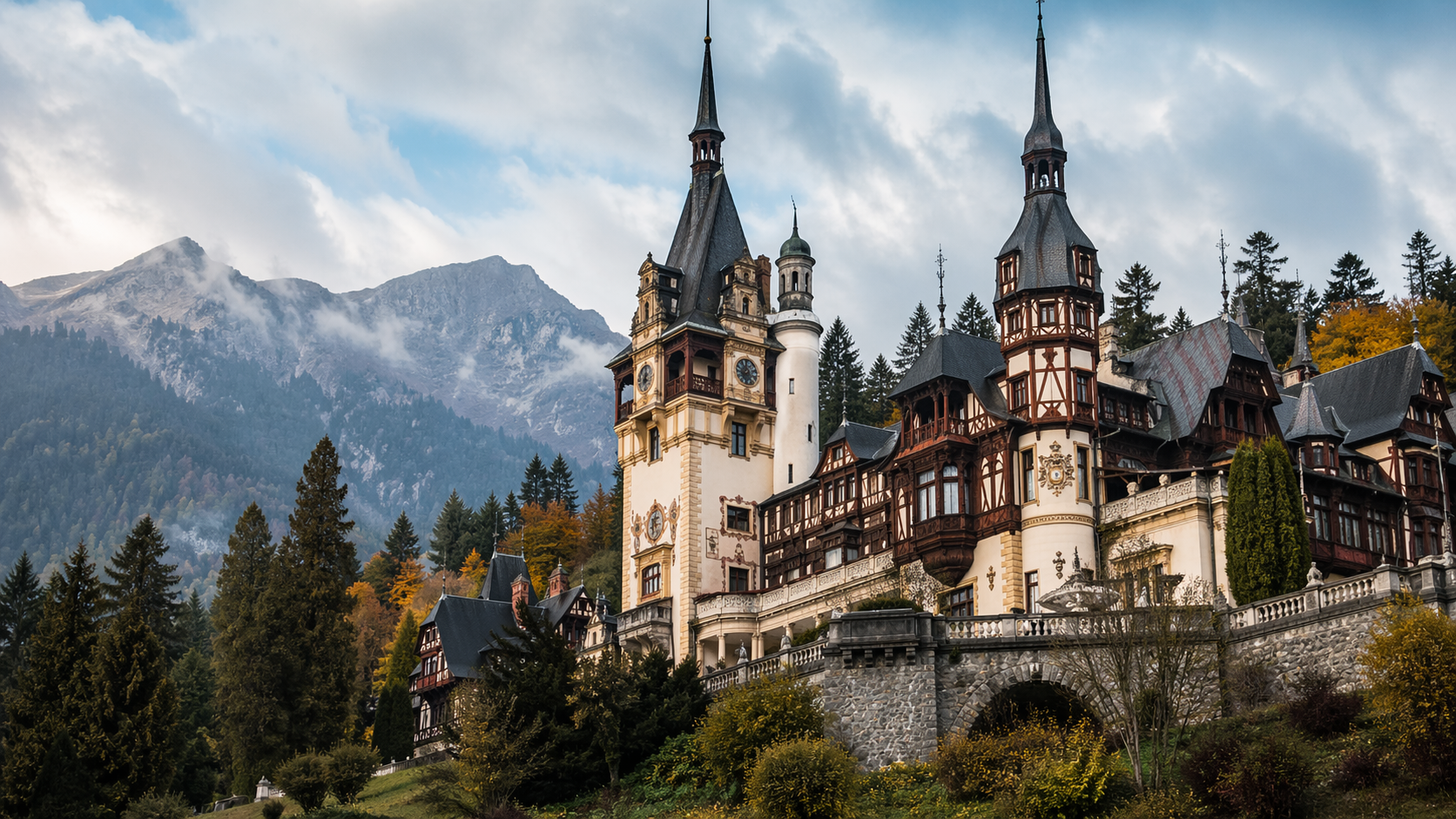
If one castle best represents Romania’s royal imagination, it is Peles Castle Romania. Located in Sinaia, at the edge of the Carpathian Mountains, Peles feels different from a medieval fortress. It was not built primarily as a defensive stronghold, but as a royal residence and a statement of cultural ambition. Its towers, carved wood, decorative interiors, and mountain setting make it one of the most refined and visually memorable castles in the country.

Peles Castle in Sinaia with ornate towers and forested Carpathian backdrop.

The importance of Peles Castle Romania lies in its connection to Romanian royal history. Built under King Carol I, the castle reflects a period when Romania was defining itself as a modern European kingdom. Its architecture draws from European styles, but its location gives it a distinctly Romanian atmosphere. The result is a castle that feels both international and deeply rooted in the mountain landscape around Sinaia.

According to the official Peles National Museum, Peles Castle was built at the initiative of Romania’s first king, Carol I, and remains one of the country’s major royal landmarks. That makes it a useful external reference for readers who want practical and historical context. For the article, Peles is important because it shifts the focus beyond legends and shows Romania as a country of royal refinement, cultural ambition, and architectural sophistication.

Bran Castle: Myth, Tourism, and Real History

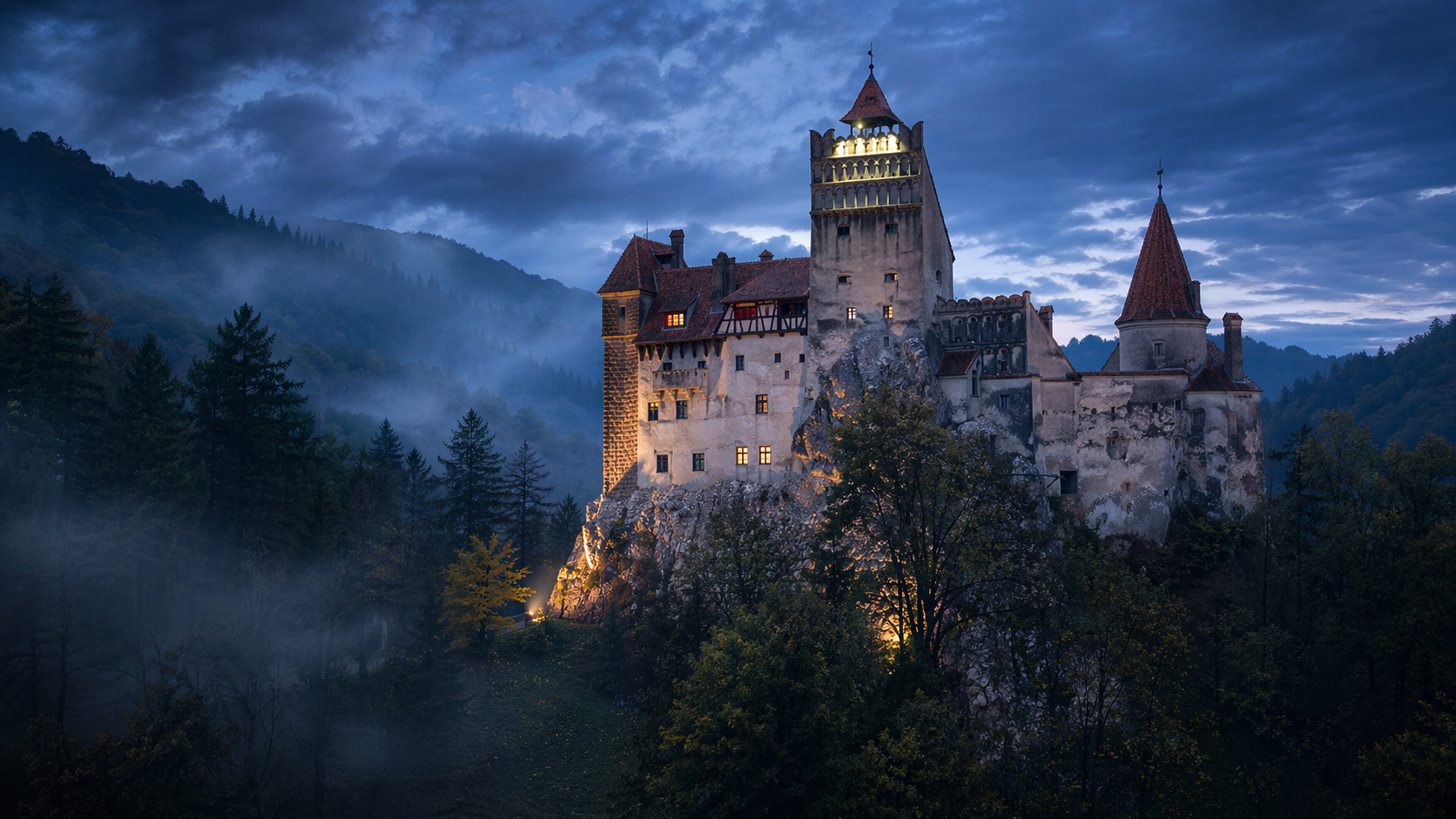
No article about Romania castles can avoid Bran Castle, but it should be handled with balance. The castle is famous internationally because of its association with Dracula, yet its real value is not limited to vampire mythology. Its dramatic setting near the border between Transylvania and Wallachia, its medieval structure, and its role in regional history all make it worth attention even without the fictional overlay. The myth made Bran famous, but the place itself has enough presence to stand on its own.

Bran Castle above dark forest at blue hour with mist behind.

What makes Bran Castle so interesting is the tension between story and history. Visitors often arrive expecting Dracula, but they encounter a real fortress shaped by borderland geography, political function, and later cultural reinterpretation. That gap between expectation and reality can actually make the visit more rewarding. It shows how a historical site can become a symbol far larger than its original purpose.

Because we already covered the deeper mythic side in the Transylvania article, this castle section should stay focused on architecture and travel experience. Readers who want the folklore layer can continue with our guide to Transylvania’s myths and legends. That internal link keeps this article clean while still connecting the cluster naturally.

Corvin Castle: Gothic Drama and Medieval Power

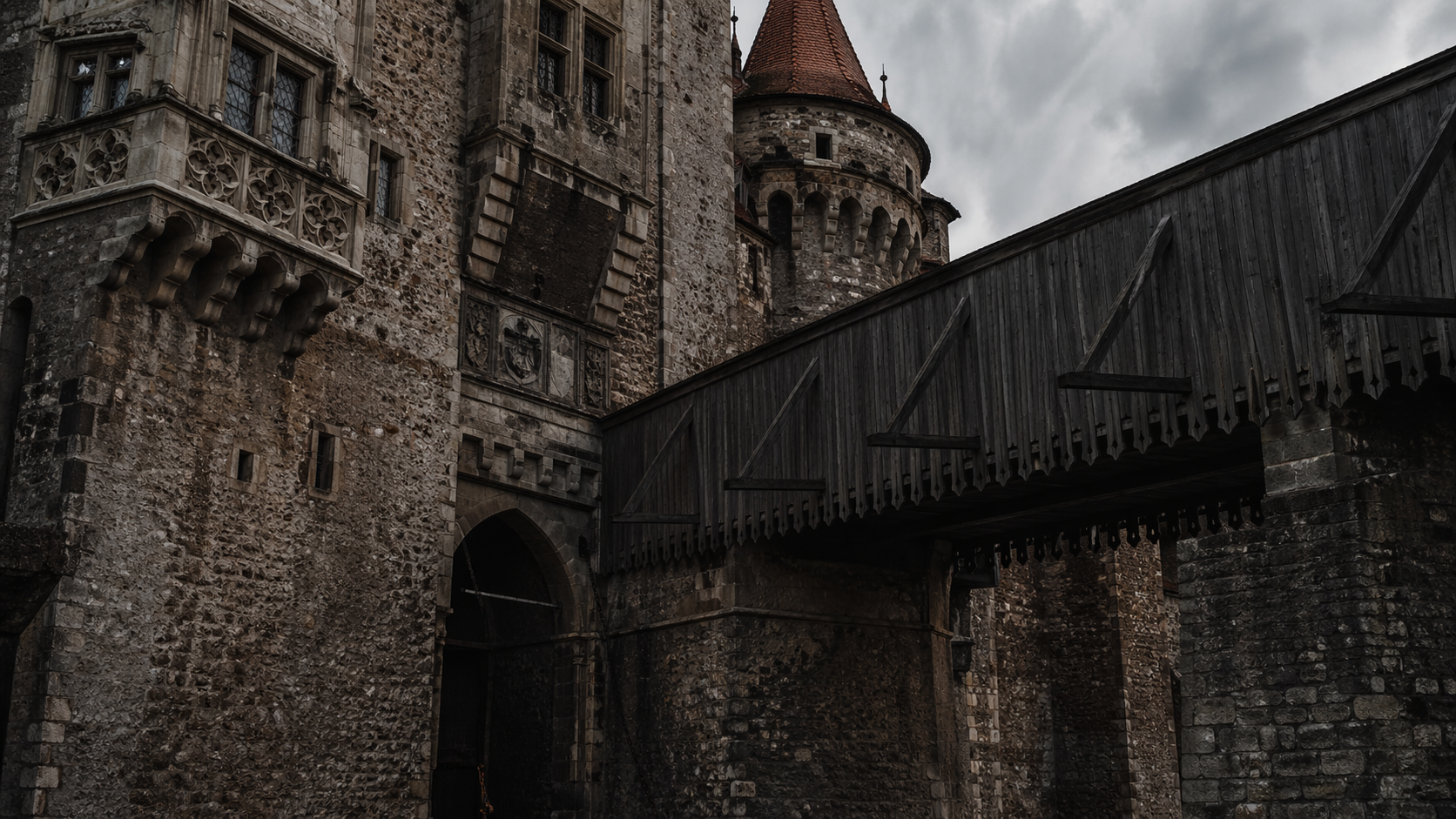
If Peles represents royal elegance and Bran represents the pull of myth, Corvin Castle brings the strongest sense of medieval drama. Located in Hunedoara, it is one of the most visually striking castles in Romania, with towers, stone walls, a dramatic bridge, and a silhouette that feels almost cinematic. It is the kind of castle that immediately satisfies the imagination, but its appeal is not only visual. It carries a heavier, more martial atmosphere than the refined world of Peles.

Close-up of Corvin Castle bridge and tower in dark medieval atmosphere.

Corvin Castle is especially useful in this article because it broadens the range of Romanian castle heritage. It does not feel like a royal residence or a tourist myth machine. It feels like a fortress shaped by medieval power, noble ambition, and defensive architecture. That gives the article a stronger historical backbone and prevents the castle route from becoming too focused on one region or one story.

For travelers, Corvin Castle often becomes one of the most memorable stops because of its intensity. The architecture creates a sense of scale and shadow, while the setting reinforces the impression of a building designed to dominate rather than simply decorate. It adds exactly the kind of Gothic weight that readers expect from a great castle journey.

Romanian Royal History Beyond the Fairy-Tale Image

One of the best ways to make this article stronger is to treat castles as expressions of Romanian royal history, not only as scenic attractions. Peles, in particular, shows how architecture became a tool of identity. It was built not just to house royalty, but to communicate taste, legitimacy, and Romania’s place in a changing Europe. That gives the castle a political and cultural meaning beyond its beauty.

Romanian royal history expressed through refined ceremonial castle architecture.

This matters because castle travel can easily become superficial if every site is described only as “beautiful” or “mysterious.” The more interesting question is what each building was trying to project. A royal residence projects continuity and refinement. A medieval fortress projects control and protection. A border castle projects authority in a contested landscape. When seen this way, Romania castles become documents of power as much as destinations.

For readers, that framing adds depth without making the article too academic. It helps them understand why the castles look and feel so different from one another. Each one belongs to a different historical need and a different version of Romania’s past.

Castles and Landscape: Why Setting Matters So Much

Romania’s castles are especially powerful because their settings often intensify their meaning. Peles would not feel the same without Sinaia’s mountain air and forested backdrop. Bran would lose much of its atmosphere without the mountain corridor and Transylvanian associations around it. Corvin Castle gains force from its dramatic stone presence and the sense of medieval gravity that surrounds it. In Romania, architecture and landscape frequently work together.

Castle silhouette against mountain mist and evening sky in Romania.

This relationship is one of the strongest reasons Romania castles remain so memorable. The buildings are not isolated from the country’s wider travel identity. They connect naturally to mountains, old towns, roads, and regional culture. That makes castle travel feel more immersive than simply moving from one monument to the next.

The landscape also helps explain why these sites photograph so well and remain so emotionally resonant. A castle in Romania is often not just a structure, but a scene. The approach, the surrounding terrain, and the sense of arrival all contribute to the final impression.

How to Build a Castle Route Through Romania

A good castle route should balance mood and geography. Many travelers begin with Peles Castle Romania because it is relatively accessible from Bucharest and pairs naturally with Sinaia and the Prahova Valley. From there, Bran Castle can be added as part of a wider Transylvania itinerary, especially for readers interested in the connection between architecture, myth, and mountain scenery. Corvin Castle requires a more deliberate detour, but it rewards the effort with one of the country’s most dramatic medieval experiences.

Traveler on a Romania castle itinerary at a scenic stop between destinations.

This kind of route works well because each stop offers a different tone. Peles is elegant and royal, Bran is symbolic and atmospheric, and Corvin is bold and Gothic. Together, they create a satisfying arc through Romania castles without repeating the same experience. That makes the itinerary feel richer and more intentional.

Travelers should also leave room for the places around the castles. Sinaia, Brasov, Transylvania’s old towns, and the mountain roads between destinations add context and pleasure to the journey. The castles are the anchors, but the spaces between them often become part of the memory.

Conclusion

A journey through Romania castles is much more than a search for Dracula scenery. It is a route through royal ambition, medieval strength, architectural imagination, and landscapes that make history feel unusually vivid. From the refined world of Peles Castle Romania and the symbolic pull of Bran Castle to the Gothic force of Corvin Castle and the broader story of Romanian royal history, these sites reveal a country whose past is both dramatic and surprisingly varied. For travelers who want history with atmosphere, Romania’s castles are among the most rewarding places to begin.

Romania castles: Glowing castle window above dark stone walls in night mist.

Leave a Comment

Your email address will not be published. Required fields are marked *