
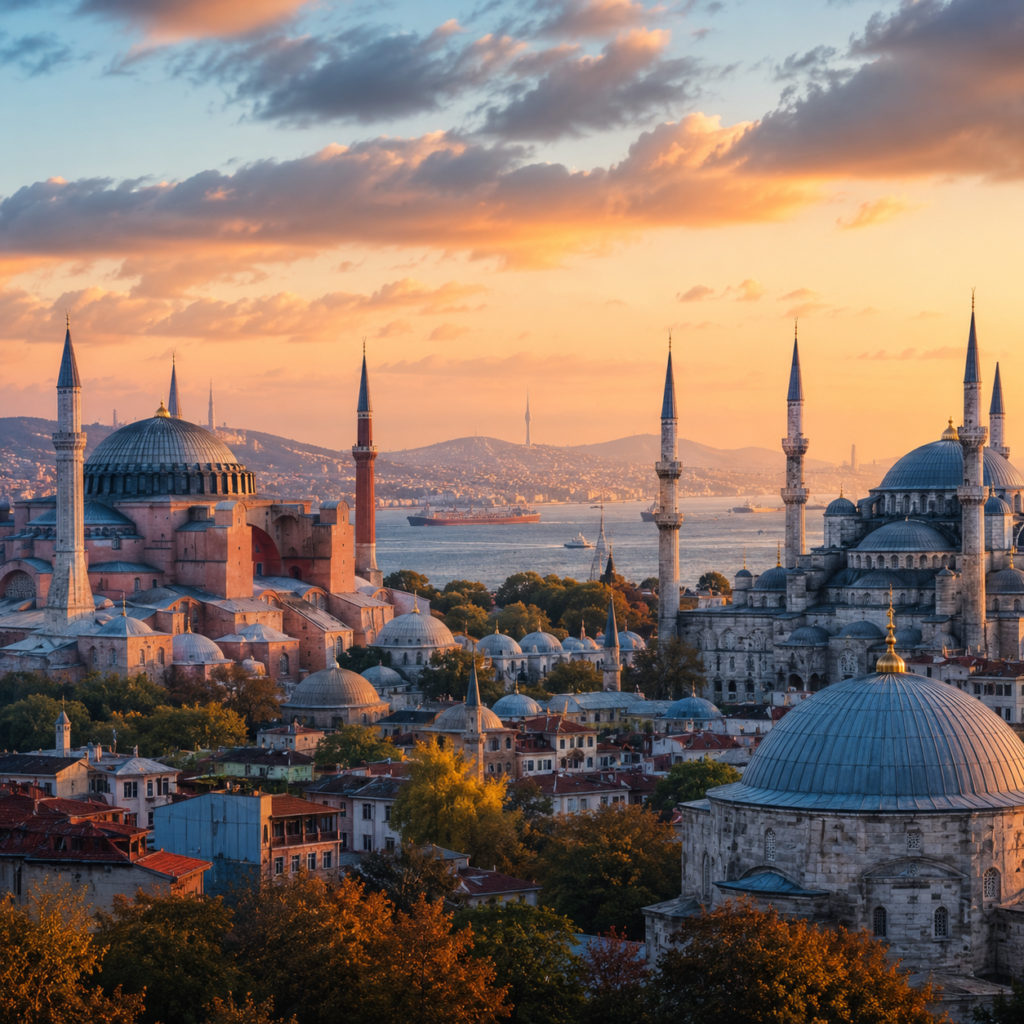
Turkey is filled with ancient ruins, but its most memorable landmarks are not limited to archaeology. Some stand as imperial mosques, some as palaces on the Bosphorus, some as medieval fortresses, old trading towns, monasteries, towers, bridges, and stone neighborhoods that still shape daily life. The best Turkey landmarks do more than decorate a travel itinerary. They reveal how power, faith, trade, craftsmanship, and urban life changed across centuries.
This article takes a different route from a classic ancient-civilizations journey. Instead of focusing mainly on Ephesus, Cappadocia, or the deepest layers of ancient Anatolia, it looks at architectural and cultural landmarks that travelers can experience as living heritage. For a broader route through Hittites, Romans, Byzantines, and early Christian landscapes, the deeper historical background fits naturally with Anatolian civilizations. Here, the focus is on places where Turkey’s historic identity still feels visible in streets, skylines, courtyards, domes, markets, and stone.
Why Turkey’s Landmarks Feel So Layered
Turkey’s landmarks feel different because the country was shaped by many kinds of power. Empires ruled from here, trade routes crossed it, religions transformed it, and local communities adapted foreign influences into something distinctly their own. A mosque in Edirne, a palace in Istanbul, a monastery in the Black Sea mountains, and an old Ottoman town in Safranbolu may seem unrelated at first. Together, they show how wide Turkey’s cultural geography really is.
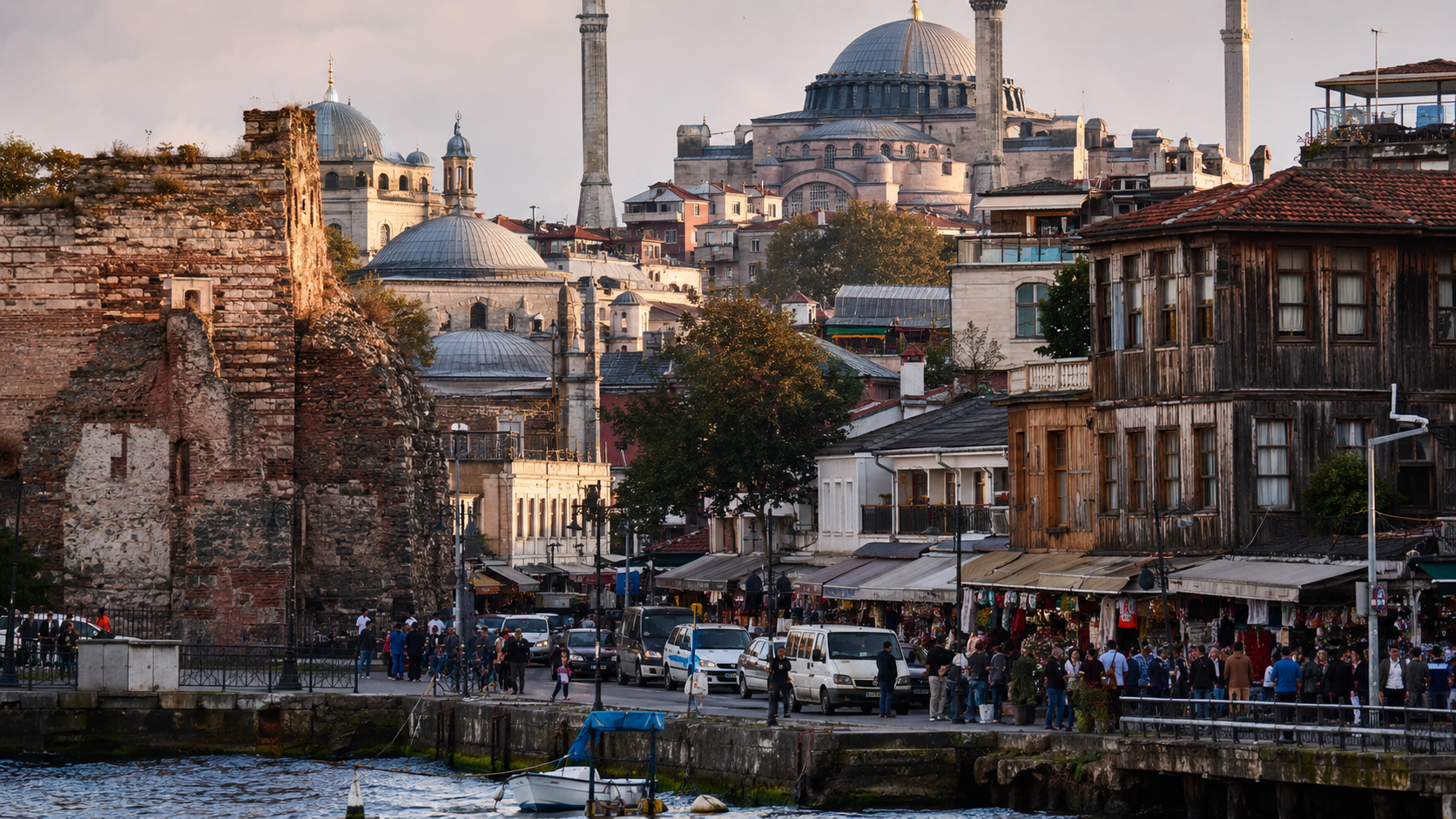
The strongest historic sites in Turkey are often not isolated monuments. They belong to larger settings: a waterfront, a bazaar district, a hillside, a pilgrimage route, a trade road, or an old neighborhood. That context matters. A landmark is not only the building itself, but the life around it: the call to prayer, the smell of bread, the sound of copperwork, the rhythm of ferry traffic, or the quiet of a stone courtyard.
Hagia Sophia: Istanbul’s Most Powerful Symbol
No list of Istanbul landmarks can ignore Hagia Sophia. It began as a Byzantine cathedral, later became an Ottoman mosque, then a museum, and today functions again as a mosque. That layered identity makes it one of the most symbolically charged buildings in the world. It is not only impressive because of its dome, mosaics, scale, or age. It is powerful because it has stood at the center of religious and political change for nearly 1,500 years.
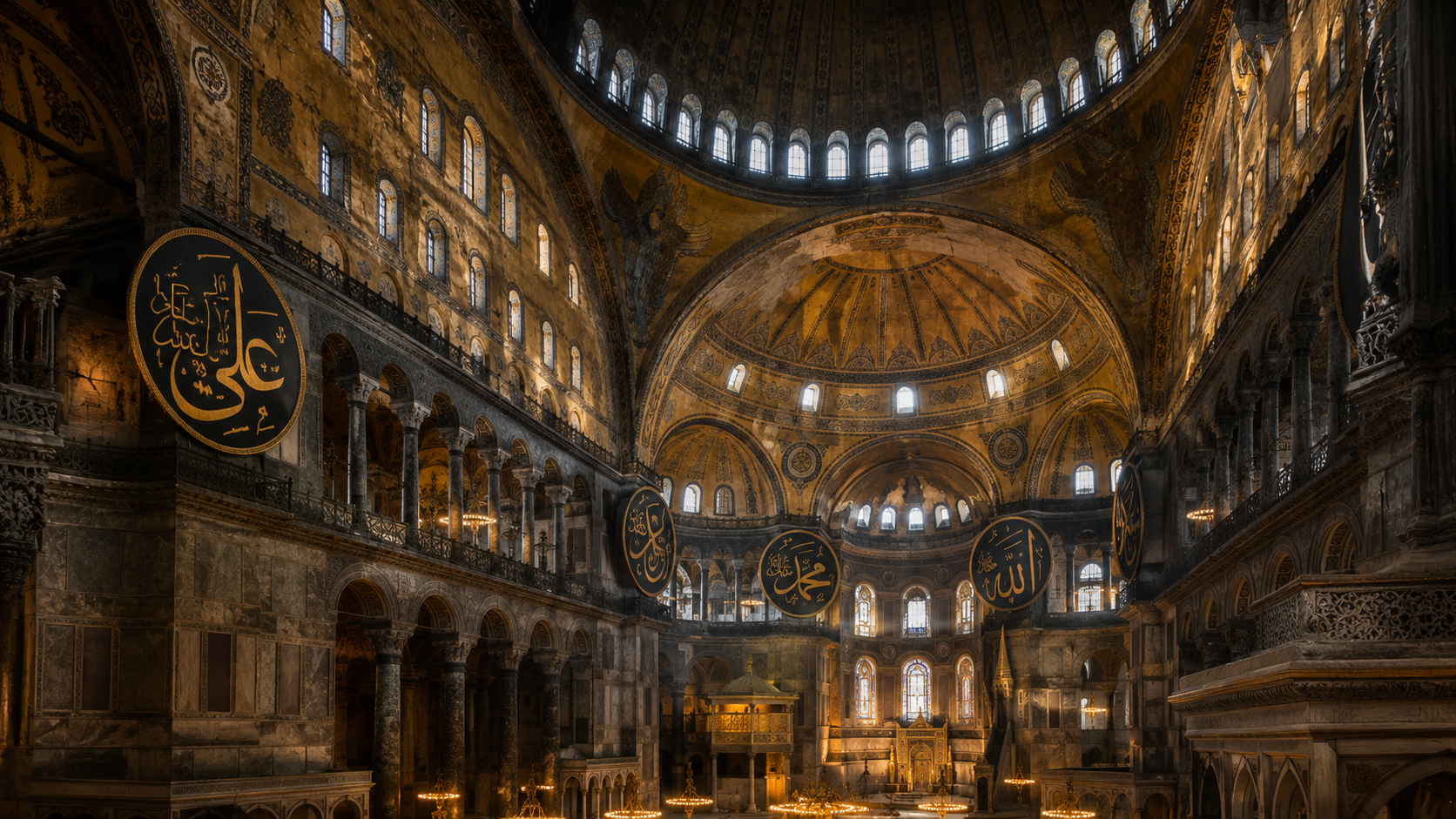
For travelers, Hagia Sophia is best approached with patience. It is not a simple “photo stop.” Its meaning has shifted across empires, faiths, and modern debates. UNESCO includes Hagia Sophia within the Historic Areas of Istanbul, recognizing the city’s extraordinary cultural layers. Standing inside or near it, you can feel why Istanbul is not just another historic city. It is a place where civilizations did not disappear cleanly, but remained visible inside one another.
The Blue Mosque and the Ottoman Skyline
Across from Hagia Sophia stands the Sultan Ahmed Mosque, widely known as the Blue Mosque. Its cascading domes and six minarets help define Istanbul’s skyline. Inside, the atmosphere is shaped by tilework, light, calligraphy, and proportion. It is grand, but not cold. The building shows how Ottoman architecture could create both imperial presence and spiritual softness.
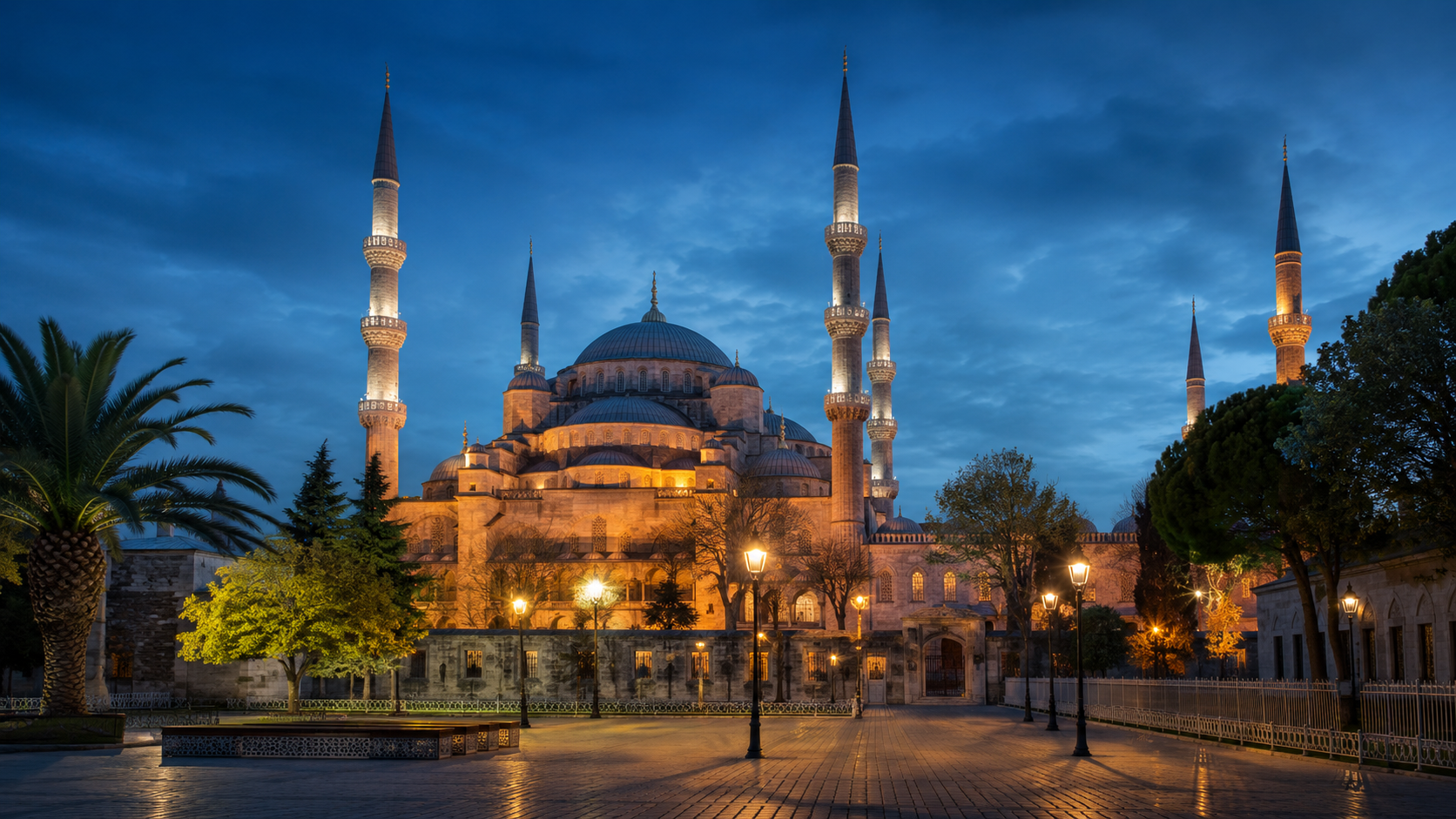
The Blue Mosque also works beautifully as part of the Sultanahmet area. Nearby, travelers can walk between Byzantine, Ottoman, and modern layers within minutes. This is the kind of place where Turkey landmarks make the most sense: not as isolated attractions, but as a dense urban conversation. Hagia Sophia, the Blue Mosque, the Hippodrome, Topkapi Palace, and the old streets around them all speak to different chapters of Istanbul’s story.
Topkapi Palace: Power, Ritual, and Imperial Life
Topkapi Palace is one of the best places to understand Ottoman court culture. It was not only a royal residence, but an administrative center, ceremonial space, treasury, and symbolic heart of empire. Its courtyards, gates, pavilions, kitchens, gardens, and views over the Bosphorus reveal a world where politics and ritual were deeply connected.
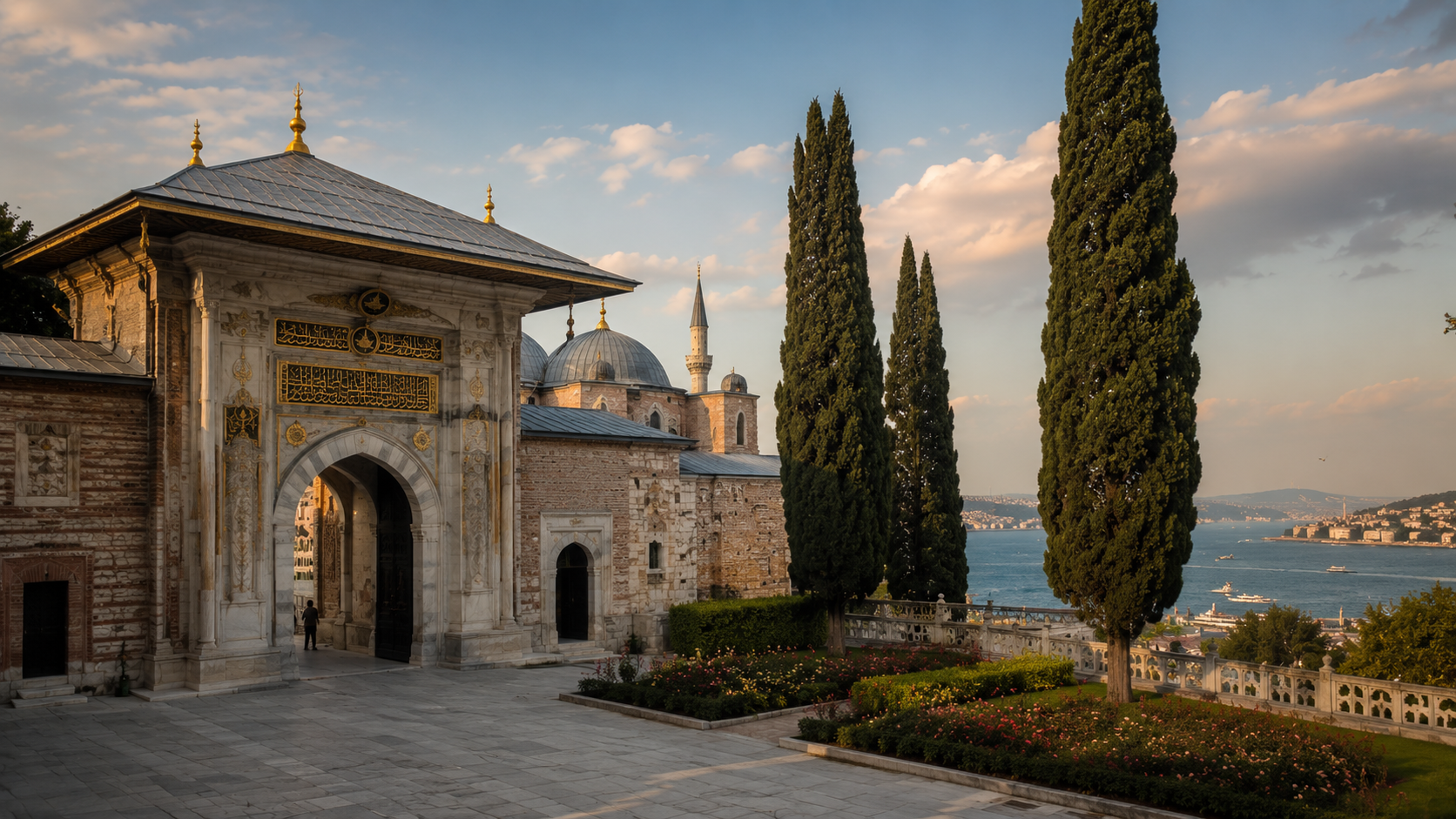
Unlike some European palaces built around a single grand facade, Topkapi unfolds gradually. You pass through layers of access, each one more private and controlled than the last. This makes the palace feel less like one building and more like an imperial city within the city. For travelers interested in Ottoman architecture and daily court life, Topkapi gives historical texture that a simple skyline view cannot provide.
Dolmabahce Palace: Ottoman Grandeur Meets Europe
Dolmabahce Palace tells a later story. Built in the 19th century, it shows the Ottoman Empire looking toward European styles while still holding onto imperial identity. Its waterfront setting, grand halls, chandeliers, staircases, and ceremonial rooms feel very different from Topkapi. Where Topkapi is layered and inward-looking, Dolmabahce is theatrical and outward-facing.
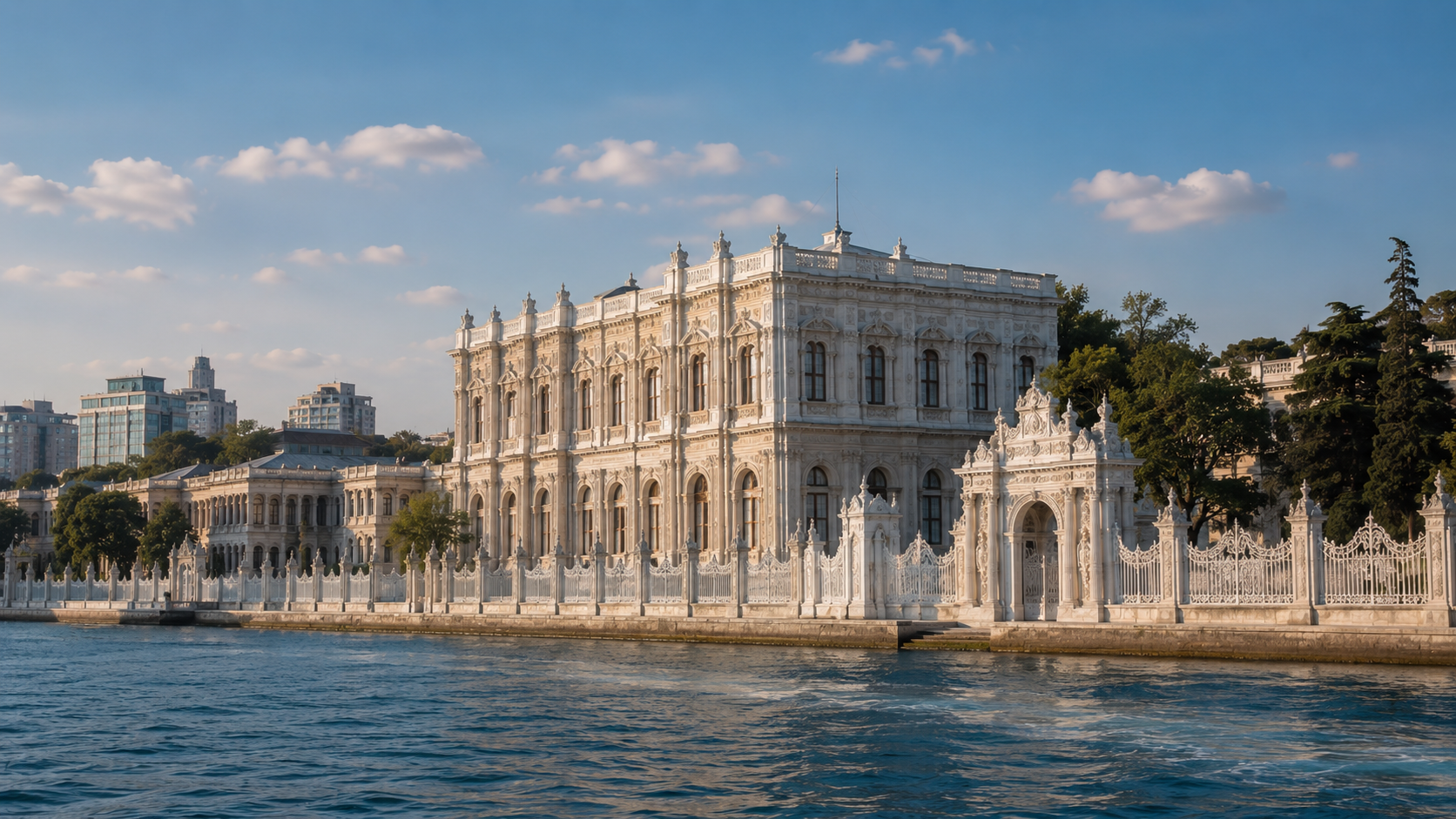
This contrast is important. Ottoman history was not static. The empire changed, modernized, borrowed, and struggled to redefine itself in a world increasingly shaped by European power. Dolmabahce captures that tension beautifully. It is one of the most useful historic sites in Turkey for understanding the late Ottoman period, when tradition and modernization stood side by side.
Suleymaniye Mosque: Balance, Silence, and Genius
The Suleymaniye Mosque is one of Istanbul’s great masterpieces. Designed by the architect Mimar Sinan for Sultan Suleiman the Magnificent, it combines imperial scale with remarkable calm. The complex once included schools, kitchens, charitable institutions, and social services, reminding visitors that major Ottoman mosques were not only prayer spaces. They were centers of urban life.
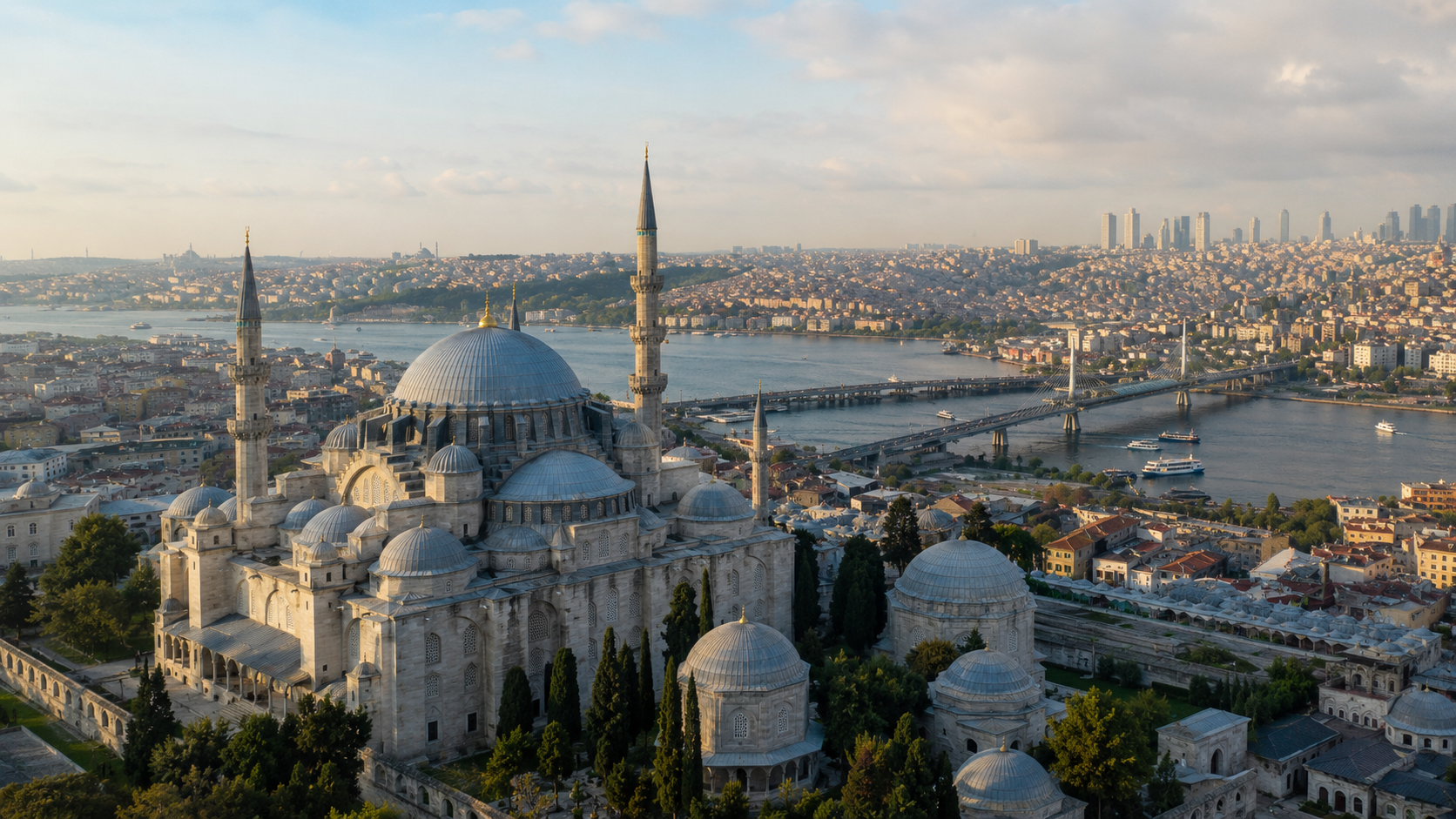
What makes Suleymaniye special is its balance. The building feels confident without being overwhelming. Its courtyard, interior space, domes, and hilltop location create a sense of order and serenity. If the Blue Mosque is often more famous among first-time visitors, Suleymaniye may feel deeper and more reflective. It is one of the finest examples of Ottoman architecture in Istanbul.
Selimiye Mosque Edirne: Sinan’s Masterpiece
Edirne was once an Ottoman capital before Istanbul, and the Selimiye Mosque is its crown jewel. Also designed by Mimar Sinan, it is often considered one of his greatest achievements. The mosque’s dome, minarets, proportions, and interior harmony show Ottoman architecture at its most refined.
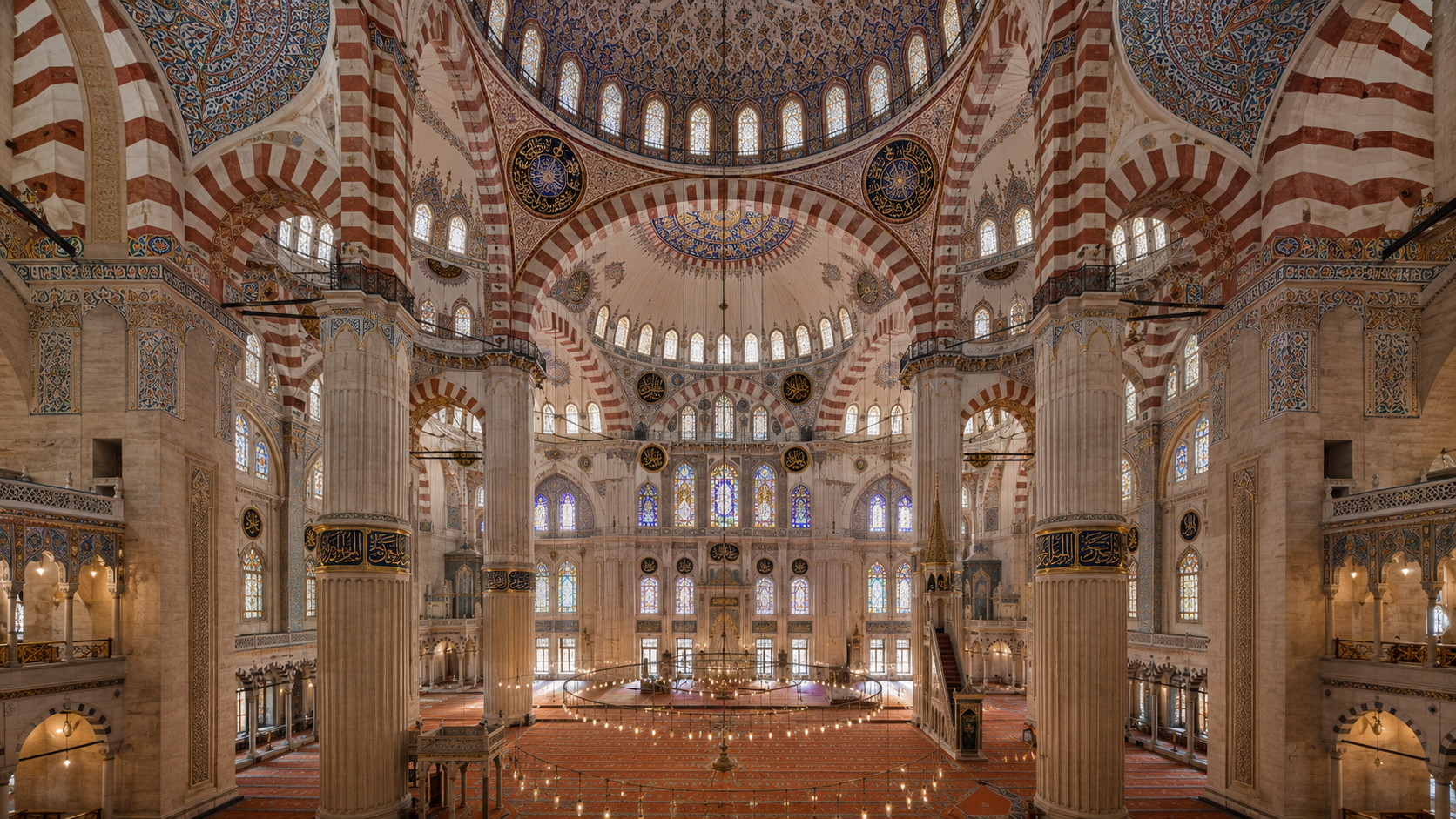
The Selimiye Mosque Edirne is recognized by UNESCO as a World Heritage Site, and for good reason. It demonstrates how architecture can express confidence, faith, geometry, and artistic discipline at once. Edirne itself is worth more attention than it often receives. For travelers who want to move beyond Istanbul, Selimiye offers a powerful reason to include the city in a cultural itinerary.
The Grand Bazaar: A Landmark of Trade and Movement
The Grand Bazaar is not a quiet monument. It is alive, crowded, commercial, and sometimes overwhelming. That is exactly why it matters. Covered markets were central to Ottoman urban life, and the Grand Bazaar remains one of the clearest places to feel the connection between trade, craft, and city identity.
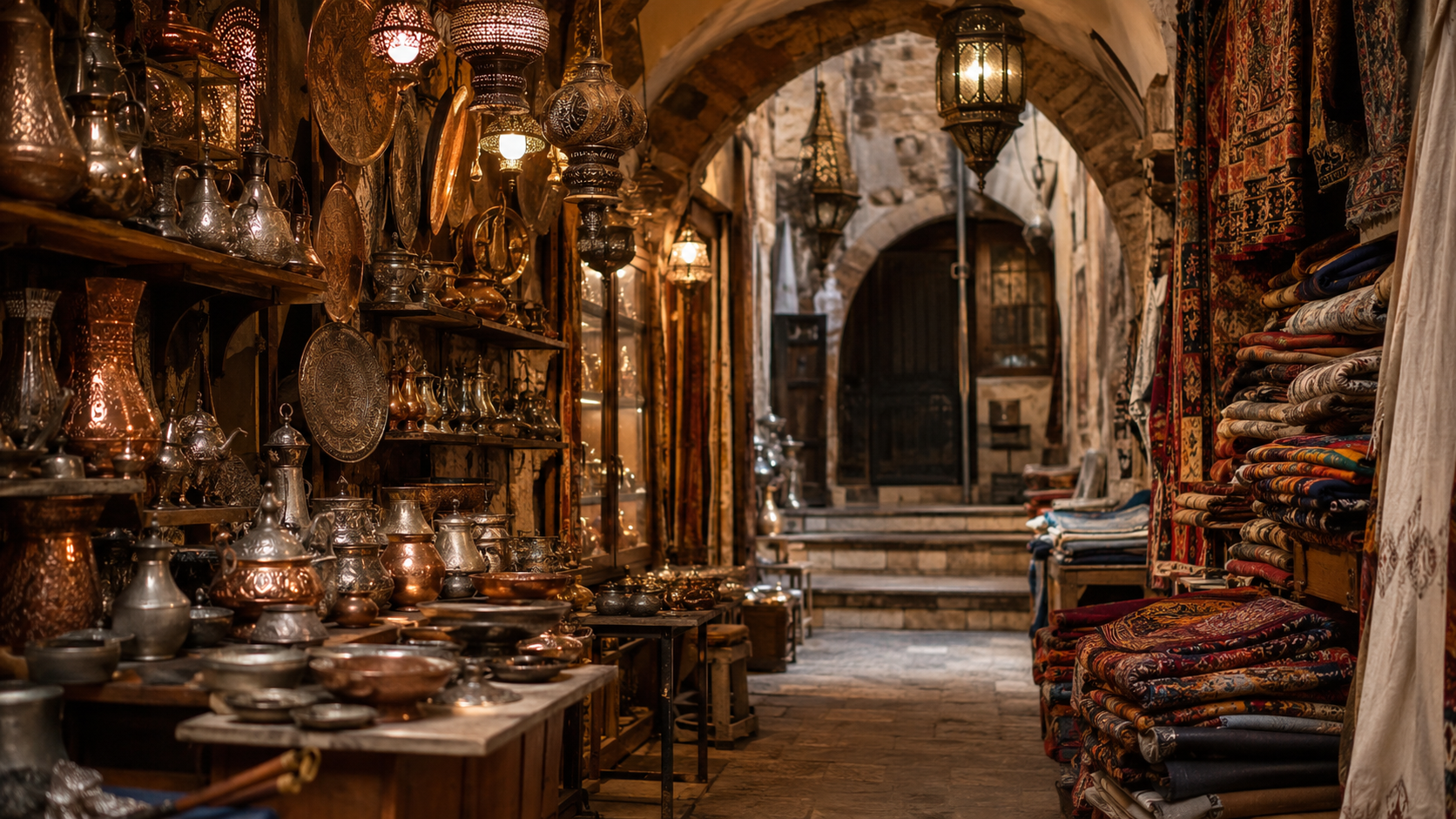
This landmark belongs as much to sound and movement as to architecture. Lamps, carpets, ceramics, gold, textiles, leather, tea glasses, and voices all create its atmosphere. To understand the bazaar more deeply, it pairs naturally with bazaars and shopping in Turkey and Turkish crafts and arts. A marketplace can be as historically meaningful as a palace when it preserves old patterns of exchange.
Galata Tower and the City from Above
Galata Tower offers a different way to understand Istanbul: through perspective. Rising above the Galata district, it gives visitors a view across the Golden Horn, the Bosphorus, the historic peninsula, and the city’s layered skyline. The tower has been associated with Genoese, Byzantine, and Ottoman chapters of the city’s past, making it more than a viewpoint.
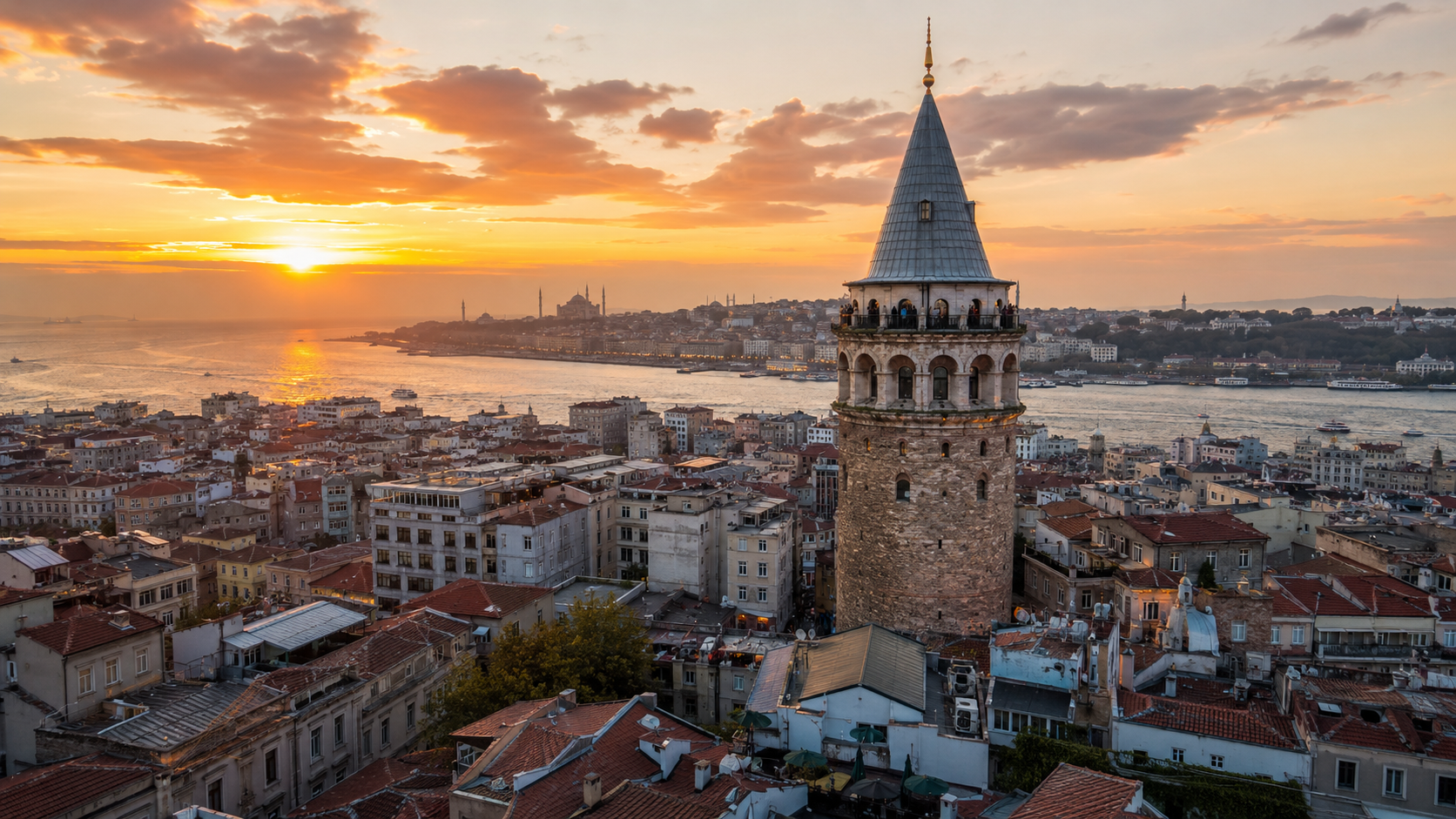
From above, Istanbul becomes easier to read. You can see how water divides and connects the city, how domes and minarets shape the old skyline, and how modern neighborhoods press against historic districts. Galata Tower works well because it turns geography into understanding. It reminds travelers that many Turkey landmarks are powerful not only up close, but in relation to the landscapes around them.
Safranbolu: An Ottoman Town Preserved in Wood and Stone
Safranbolu is one of the best-preserved Ottoman towns in Turkey. Its old houses, narrow streets, courtyards, caravanserai, mosque, bathhouse, and market areas create a complete urban atmosphere rather than a single monument. This makes it especially valuable for travelers who want to understand how architecture shaped everyday life.
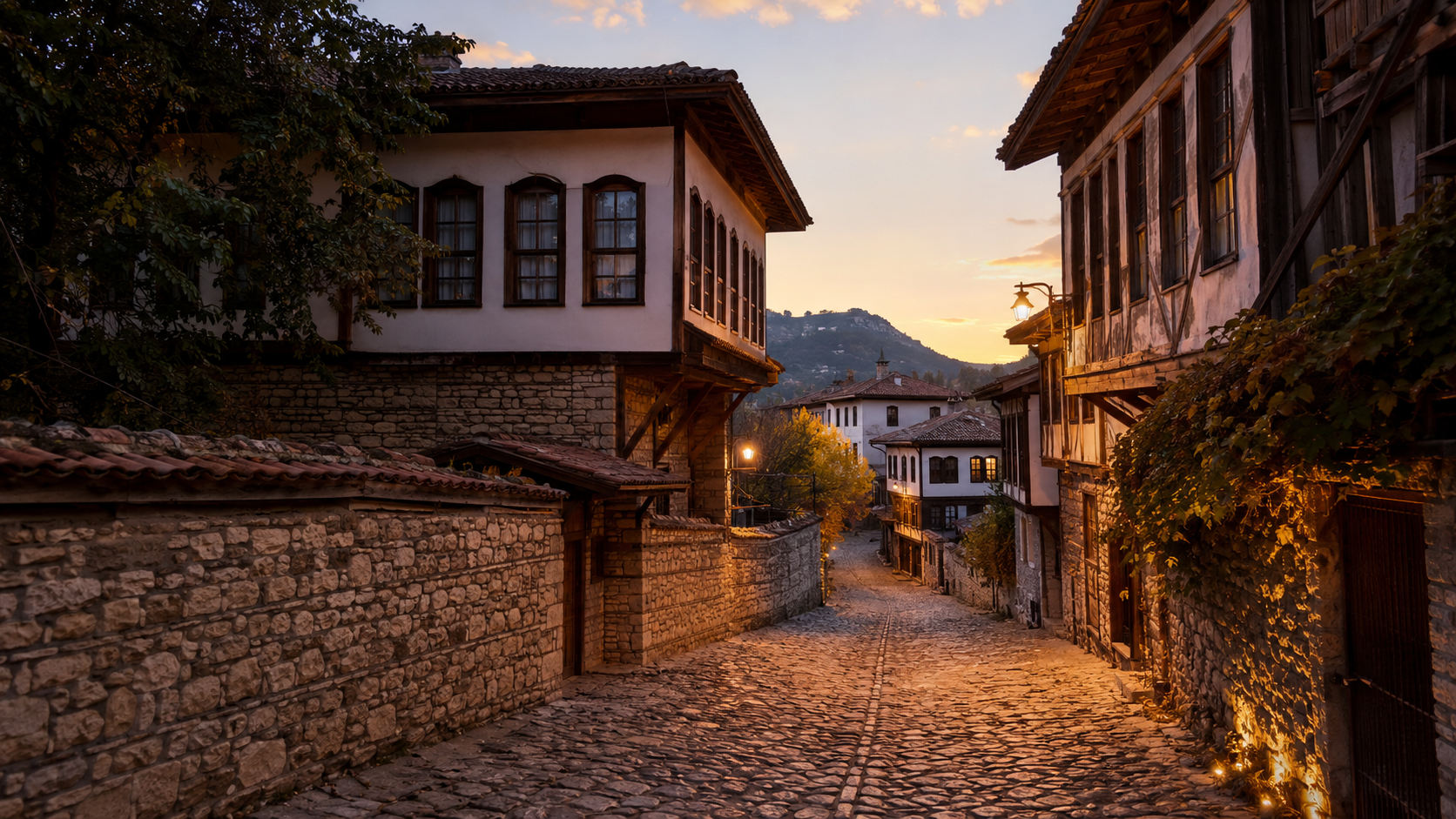
UNESCO recognizes the City of Safranbolu for its well-preserved Ottoman urban fabric. The town’s beauty is not dramatic in the same way as Istanbul’s skyline. It is quieter, more domestic, and more human in scale. Wooden houses with projecting upper floors, stone lanes, and traditional layouts show how families, trade, privacy, and climate influenced design.
Sumela Monastery: Faith on a Mountain Cliff
Sumela Monastery, located in the mountains of northeastern Turkey, is one of the country’s most striking religious landmarks. Built into a cliffside in the Pontic Mountains, it seems almost suspended between rock and forest. Its setting is as important as its architecture. Without the mountain, mist, and vertical drama, the monastery would not have the same emotional force.
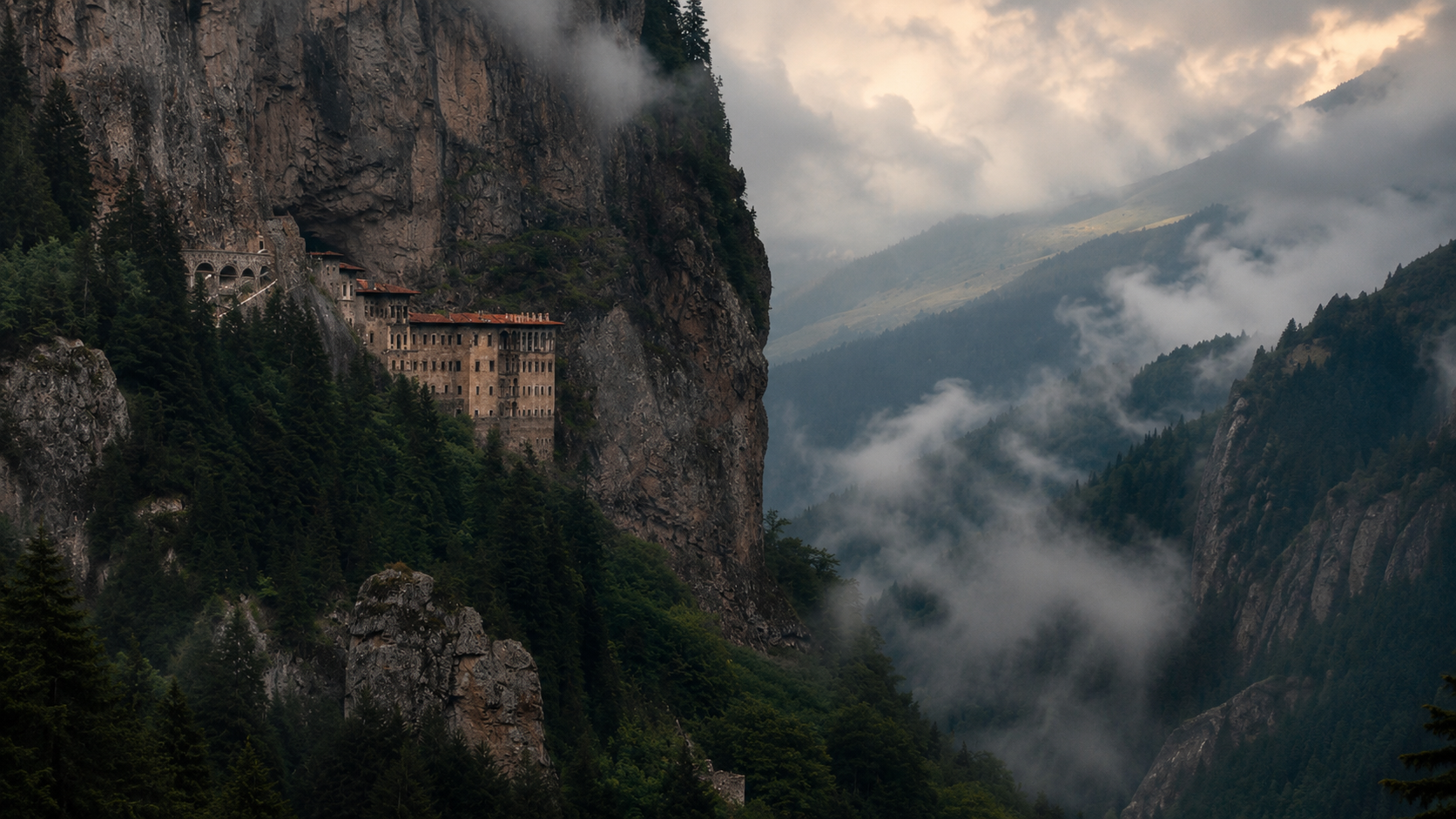
Sumela reflects the Christian heritage of the Black Sea region and adds a very different note to the Turkey landmarks story. It is not Ottoman, not Islamic, not Mediterranean, and not imperial in the usual sense. It belongs to a landscape of forests, cliffs, pilgrimage, and isolation. For travelers interested in the link between scenery and sacred architecture, this site pairs beautifully with Turkey’s natural wonders.
Ani Ruins: A Medieval City on the Borderlands
Ani, near Turkey’s border with Armenia, is one of the most haunting historic sites in Turkey. Once a powerful medieval city, it now stands as a landscape of churches, walls, towers, and open grassland. Ani feels different from the crowded landmarks of Istanbul. It is quiet, windswept, and spacious, with a sense of lost grandeur.
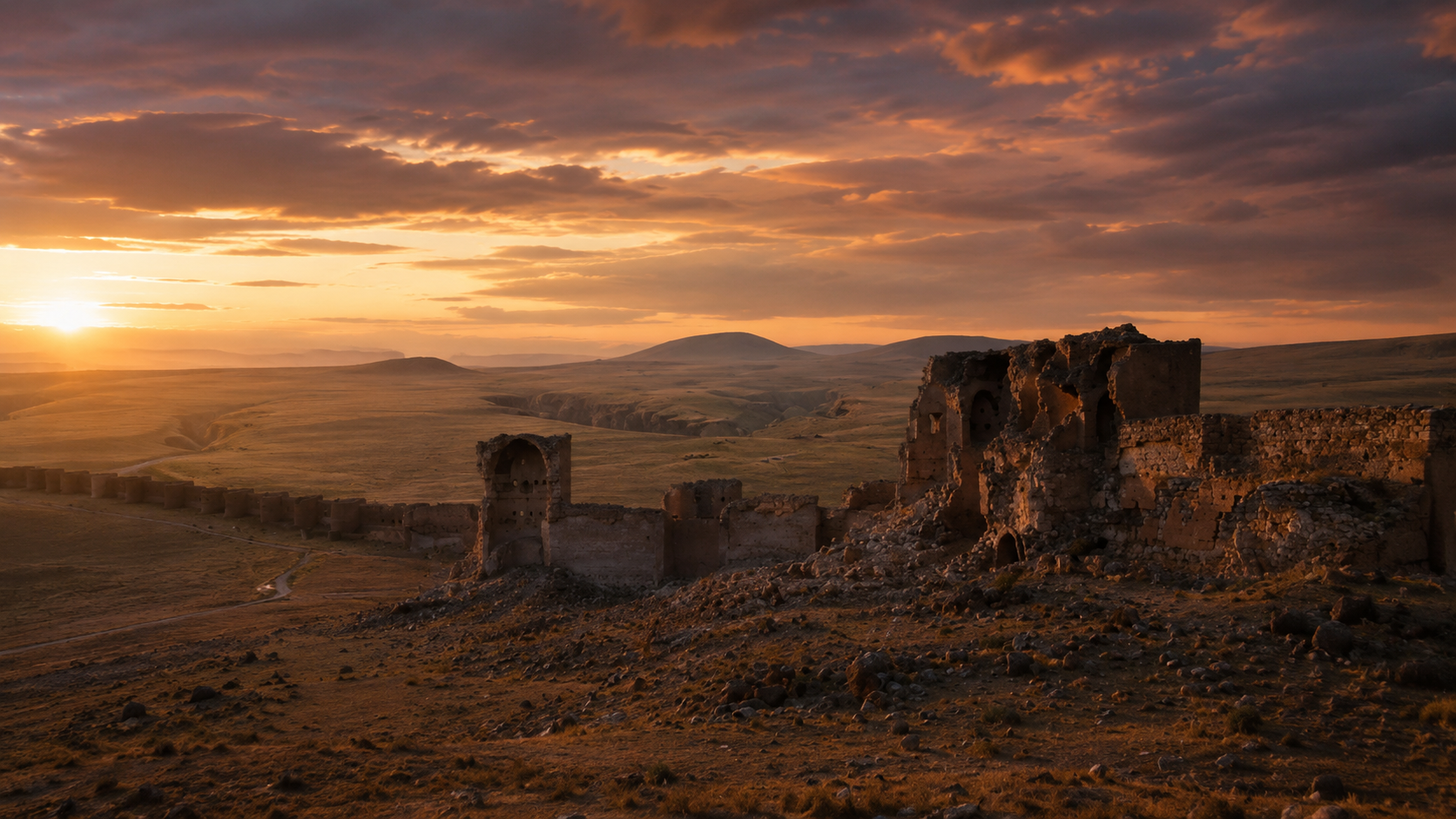
The Archaeological Site of Ani is recognized by UNESCO for its medieval urban remains and cultural significance. Its location on historic trade routes made it a meeting point of Armenian, Byzantine, Georgian, Seljuk, and other influences. Ani is useful in this article because it expands the idea of Turkish heritage beyond the familiar Ottoman and Istanbul-centered story. It shows the borderland complexity of eastern Anatolia.
Bodrum Castle: Stone, Sea, and Coastal History
Bodrum Castle gives the Turkish coast a strong historical anchor. Built by the Knights Hospitaller, it stands above the harbor and connects the Aegean landscape with medieval maritime history. Its towers, walls, sea views, and museum setting make it one of the most atmospheric coastal landmarks in Turkey.
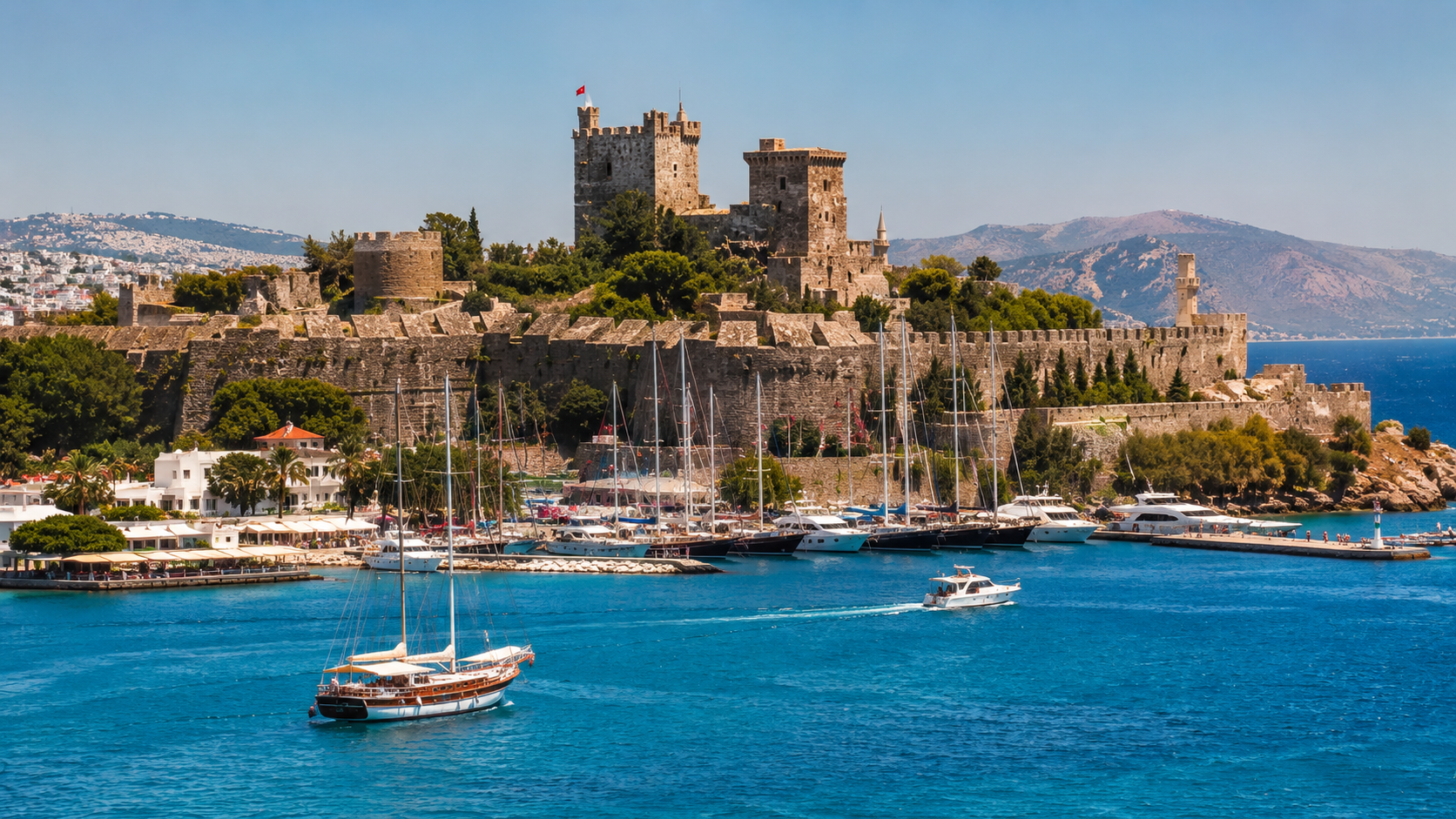
The castle also shows how Turkey’s coastline was shaped by more than beaches. Ports, fortifications, sea routes, naval power, and cultural exchange all mattered. Bodrum today is known for leisure, nightlife, and the blue coast, but the castle reminds visitors that the Aegean has long been a strategic and cultural frontier.
Mardin: Stone Architecture and Mesopotamian Views
Mardin is one of Turkey’s most visually distinctive cities. Its honey-colored stone houses, narrow lanes, terraces, mosques, churches, and views over the Mesopotamian plain create an atmosphere unlike Istanbul or the Aegean coast. The city’s architecture seems to grow from the hillside, shaped by climate, geography, and cultural mixture.
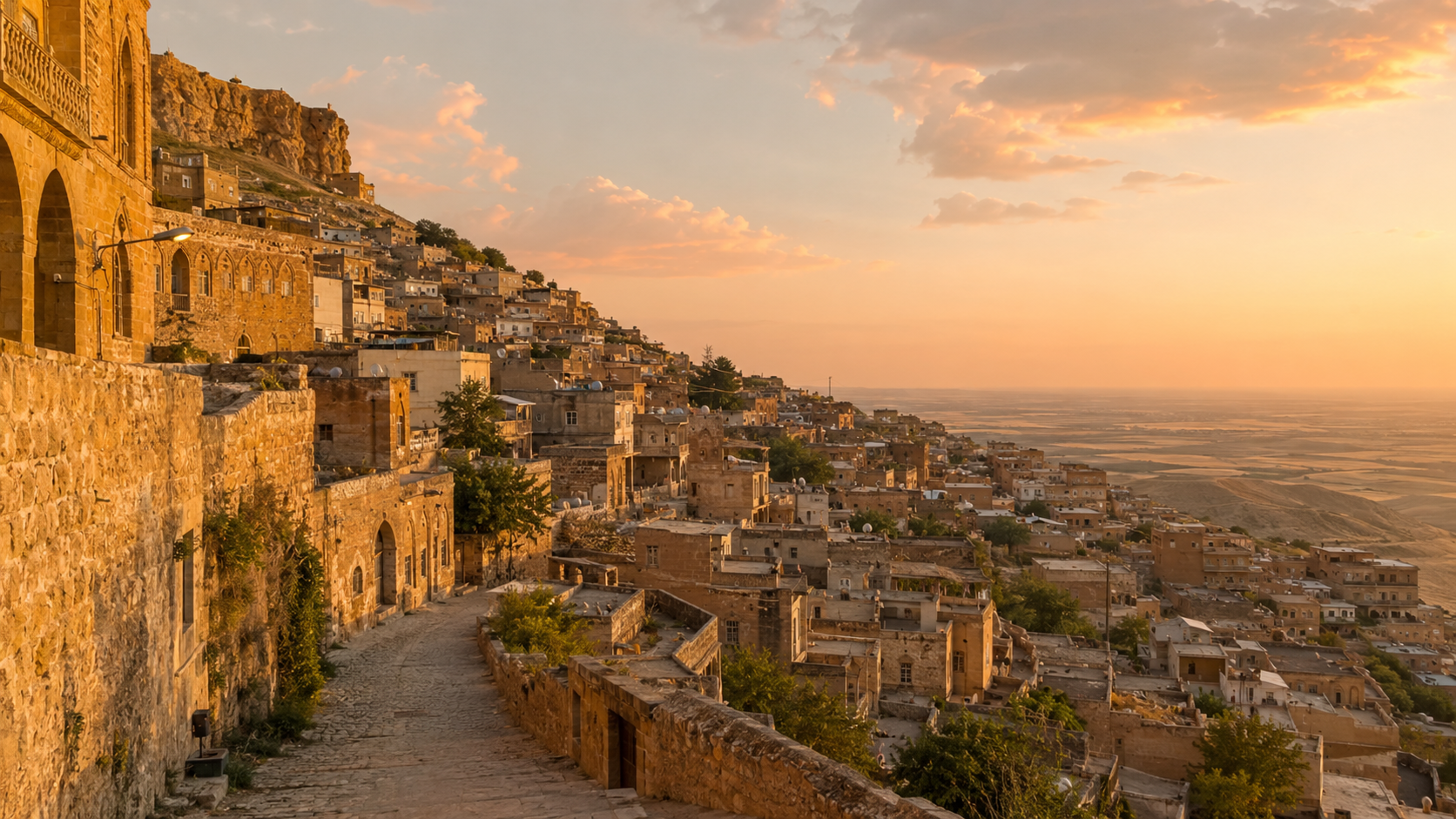
Mardin is especially valuable because it reveals Turkey’s southeastern character. Arab, Kurdish, Syriac Christian, Islamic, and Mesopotamian influences all contribute to the city’s identity. It is not a single monument but a whole urban landscape. For travelers, Mardin proves that the most meaningful Turkey landmarks are sometimes entire cities rather than individual buildings.
Bridges, Aqueducts, and Everyday Engineering
Not every landmark needs to be a palace or mosque. Bridges, aqueducts, city walls, fountains, and old roads also tell important stories. They show how people moved, how cities received water, how trade was organized, and how empires maintained daily life. Infrastructure can be just as revealing as ceremonial architecture.
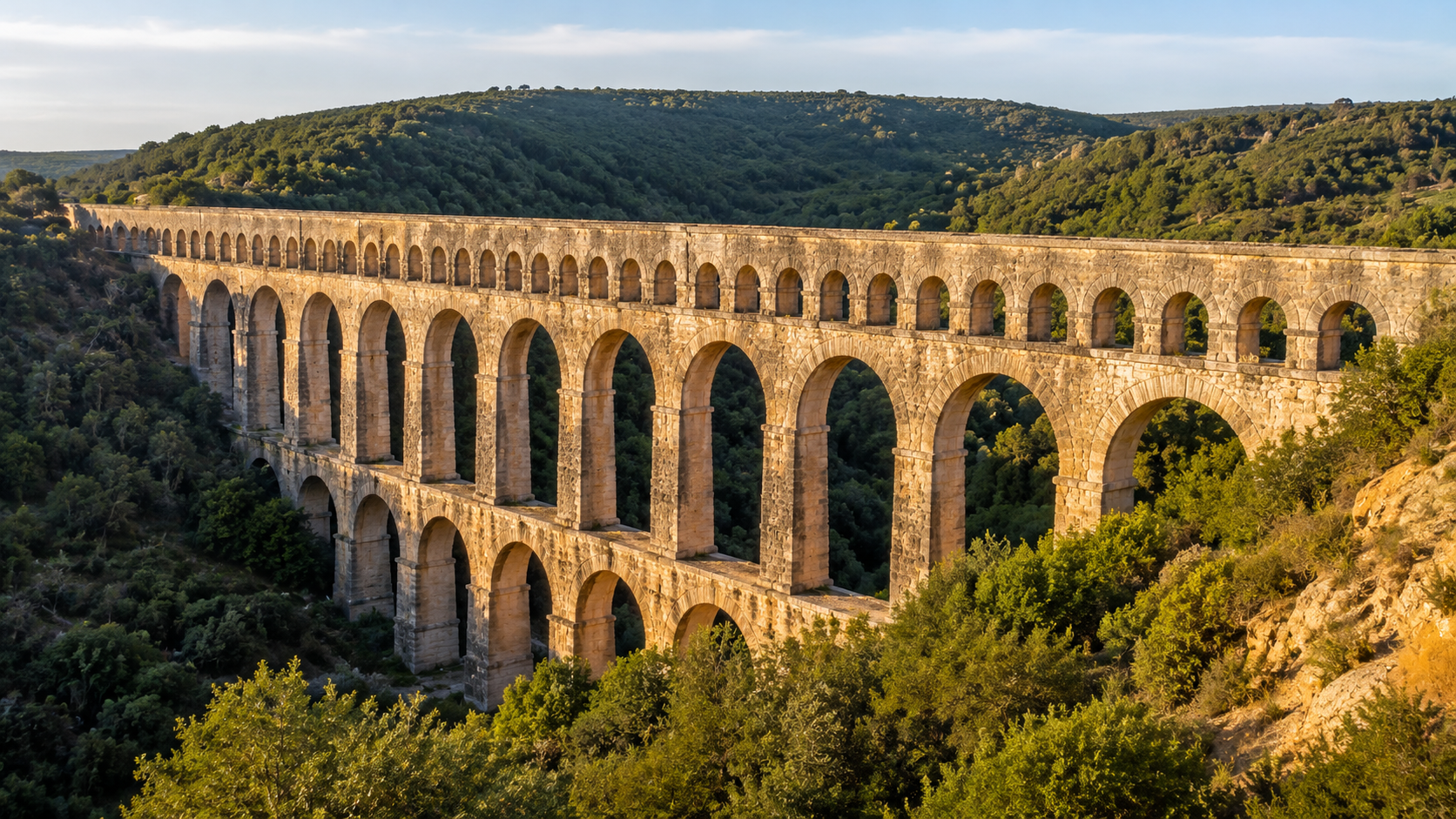
In Istanbul, aqueducts and walls remind travelers that the city depended on engineering as much as imperial ambition. Across Anatolia, stone bridges and caravan routes point to older patterns of movement. These structures may not always be the headline attractions, but they help complete the picture. They make history feel practical, not only decorative.
How to Plan a Landmark-Focused Trip in Turkey
A strong landmark-focused trip can begin in Istanbul with Hagia Sophia, the Blue Mosque, Topkapi Palace, Suleymaniye, Dolmabahce, the Grand Bazaar, and Galata Tower. From there, travelers can add Edirne for Selimiye Mosque, Safranbolu for Ottoman town life, or the Black Sea region for Sumela Monastery. Those with more time can continue east toward Ani and Mardin.
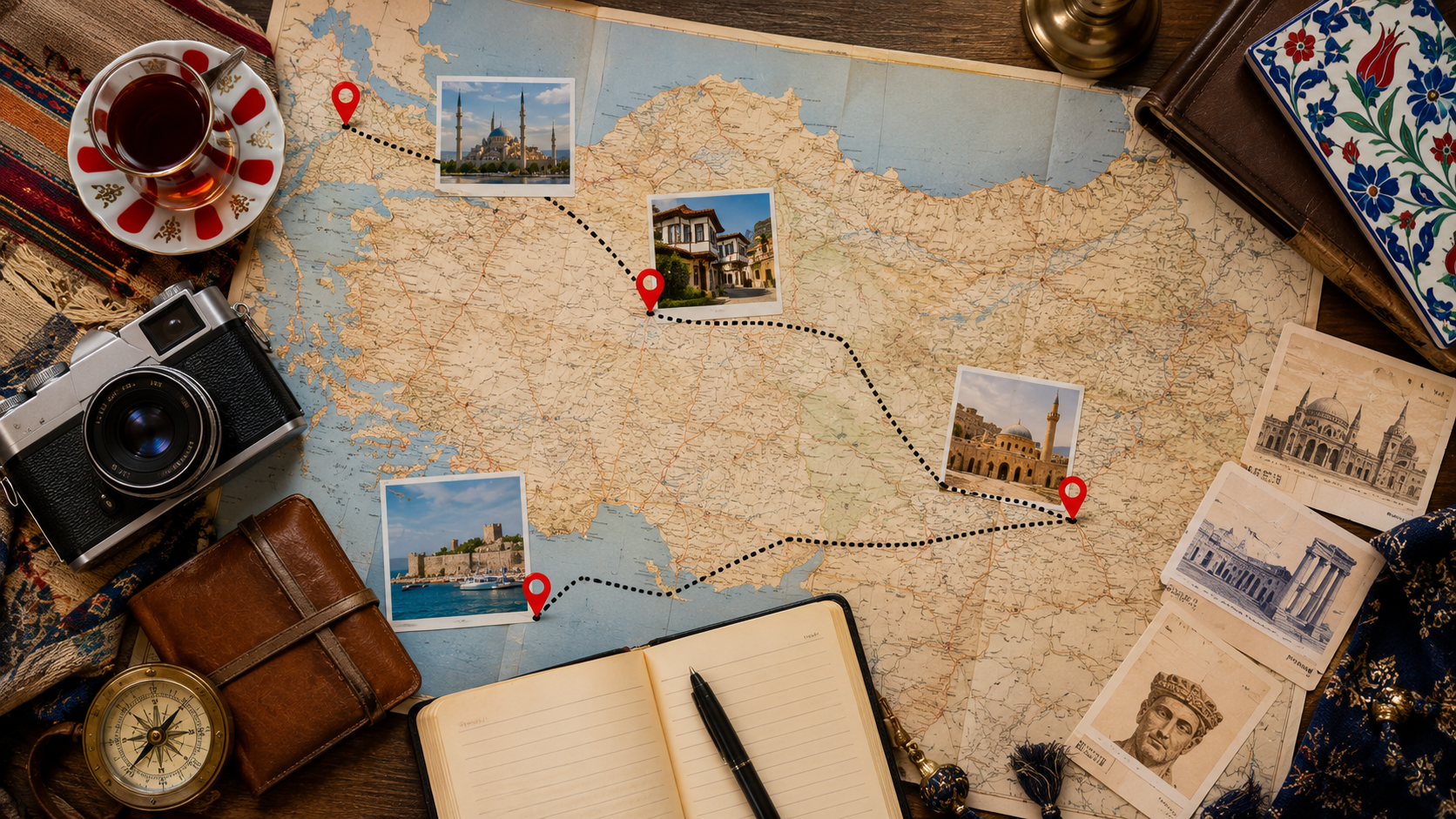
The key is not to chase every famous place in one trip. Turkey is too large and too layered for that. Choose a theme: Ottoman architecture, Istanbul landmarks, old trading towns, sacred buildings, fortresses, or borderland heritage. A focused route will feel richer than a rushed checklist.
Conclusion
Turkey landmarks are powerful because they show history as something built, lived, reused, and reinterpreted. Hagia Sophia, the Blue Mosque, Topkapi Palace, Selimiye Mosque, Safranbolu, Sumela Monastery, Ani, Bodrum Castle, and Mardin all reveal different sides of the country. Together, they show Turkey not as one culture or one era, but as a layered world of empire, faith, trade, craft, and memory.
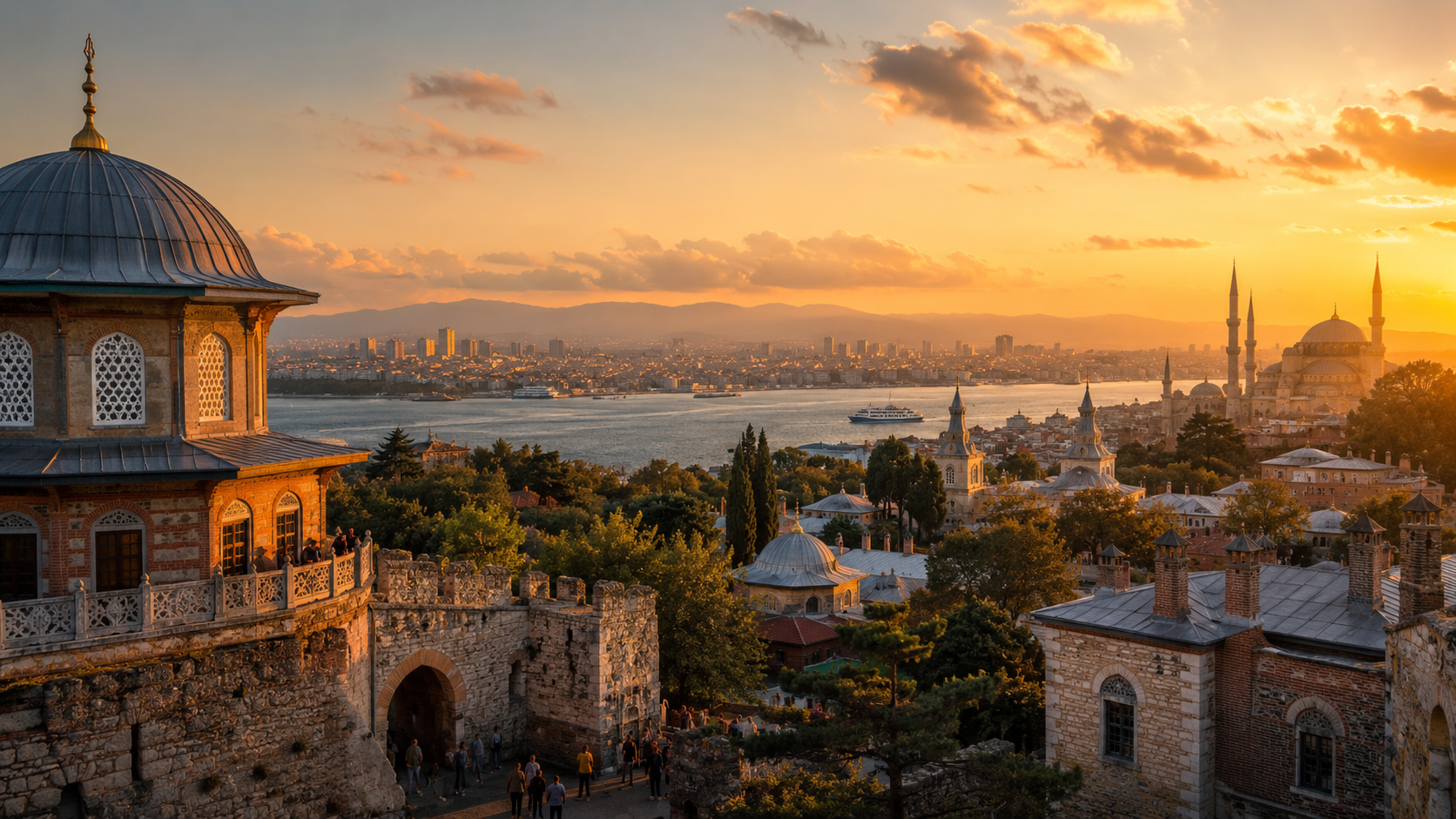
By shifting the focus away from the same ancient ruins and toward architectural and living heritage, this route gives travelers a fresh way to understand Turkey. The country’s greatest landmarks are not only places to photograph. They are places where stone, water, wood, markets, domes, streets, and landscapes continue to tell the story of a civilization shaped by movement and change.