
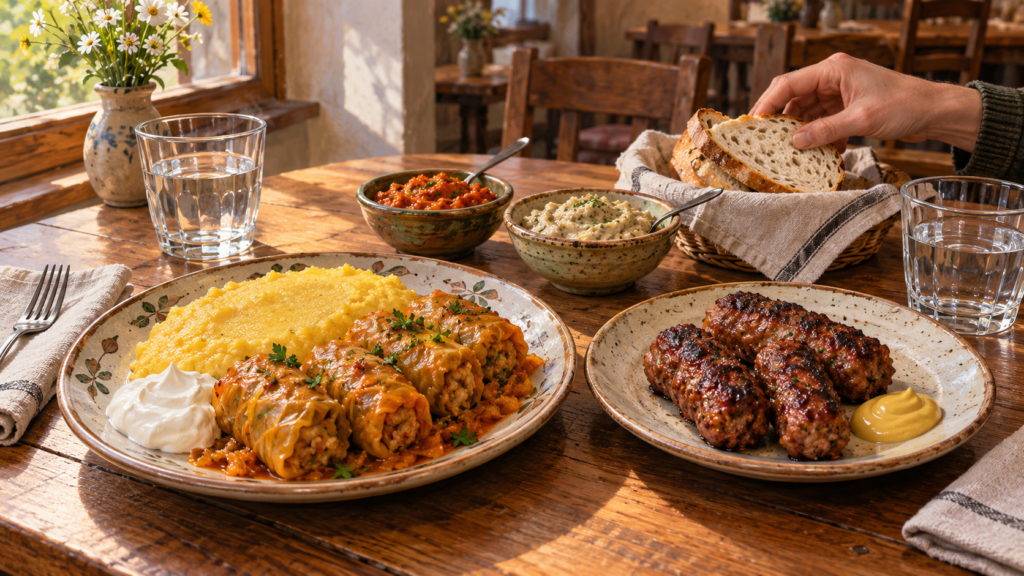
Traditional Romanian food illustration with sarmale, mici, polenta and vegetable spreads on a shared table.

Traditional Romanian Food: Dishes to Try in Romania

Traditional Romanian food is easier to explore when you know what you are ordering. A bowl of ciorbă can make a satisfying lunch, a plate of sarmale may already include polenta, and a serving of papanași can be substantial enough to share.

For a first visit, start with sarmale, mici, a soup of your choice and papanași. Then add vegetable spreads, cheese dishes or regional specialities as you travel.

This guide explains what to eat in Romania, where to look for it and how to read menus without confusing a single item with a complete meal. Prices are in Romanian lei, shown as RON on menus and payment screens.

Traditional Romanian Food at a Glance

Use this table to build a shortlist rather than trying to order everything at one meal.

Food What to expect Where to look What to check
Sarmale
Stuffed cabbage rolls, usually with meat and rice
Traditional restaurants
Whether polenta and sour cream are included
Mici / mititei
Grilled skinless sausages
Grills and Romanian restaurants
Price per piece versus a complete plate
Ciorbă
A family of soups, often sour
Lunch menus and traditional restaurants
Meat, tripe, cream and separately charged extras
Mămăligă with cheese
Polenta served with dairy accompaniments
Traditional restaurants and guesthouses
Whether it is a side or a main dish
Bulz
A substantial polenta-and-cheese dish
Mountain and Transylvanian menus
Some versions include smoked pork and egg
Tochitură
A rich meat dish with regional variations
Traditional restaurants
Meat mixture, offal and included sides
Zacuscă
A cooked vegetable spread
Starter menus and shops
Ingredients and whether bread is included
Salată de vinete
An aubergine spread rather than a leafy salad
Starter menus
Whether the version contains mayonnaise
Covrigi
Pretzel-style bakery snacks
Bakeries and street-facing counters
Plain, cheese-topped or filled versions
Papanași
Cheese-based dessert, commonly served fried with cream and jam
Traditional restaurants
Number of pieces and serving size

Romanian cooking shares ingredients and traditions with neighbouring cuisines. The useful question for a visitor is not whether a dish exists nowhere else, but which version is on the menu and whether you would enjoy it. Romania Tourism’s food overview introduces the country’s culinary influences and specialities.
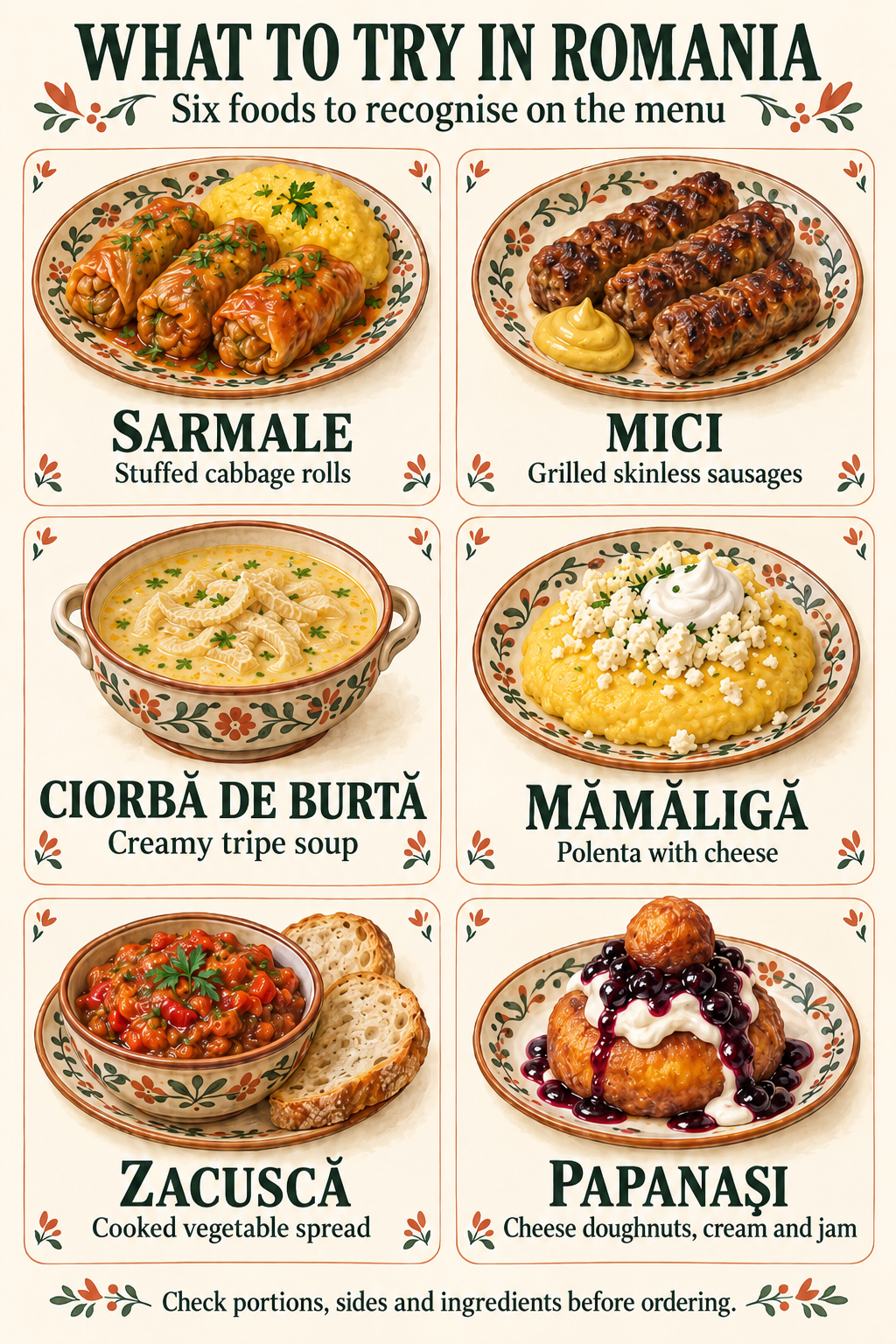
Six Romanian foods to recognise on a menu: sarmale, mici, ciorbă de burtă, mămăligă, zacuscă and papanași.

1. Sarmale: A Good First Traditional Meal

Sarmale are cabbage rolls commonly filled with minced meat and rice. Expect a savoury, substantial dish rather than a light vegetable starter.

Order them when you want a straightforward introduction to Romanian cooking. Before adding anything else, check the accompaniments: polenta and sour cream may already be part of the plate.

There are meat-free versions, but the name sarmale alone does not mean vegetarian.

Ordering tip: ask how many rolls are included and whether the listed weight includes the sides. Comparing prices without comparing portions can be misleading.

2. Mici: Check Whether the Price Is Per Piece

Mici, also called mititei, are grilled skinless sausages. They are a useful choice when you want grilled food without committing to a large mixed platter.

The important distinction is how they are sold. One menu may price individual pieces; another may offer several with potatoes and mustard.

For example, the published Caru’ cu Bere menu lists three mici with fries and mustard for 56.50 RON. That is a complete restaurant plate, not a price for one sausage. Caru’ cu Bere food menu.

Ordering tip: confirm the meat mixture if you avoid pork or another particular meat. Do not assume that all mici use the same ingredients.

3. Ciorbă: Choose the Soup, Not Just the Category

Ciorbă is a useful word to recognise, but it does not identify one fixed dish. Read the words that follow it.

Two examples worth distinguishing are:

  • Ciorbă de burtă: tripe soup.
  • Ciorbă de afumătură: soup with smoked meat.

If you dislike offal, knowing the word burtă prevents an unexpected order. At La Copac in Bucharest, the published menu lists tripe soup and a smoked-meat soup with tarragon at 32 RON each. La Copac menu.

Ordering tip: check whether bread, sour cream and a hot pepper cost extra. You can decide whether to add a main course after seeing the size of the soup.
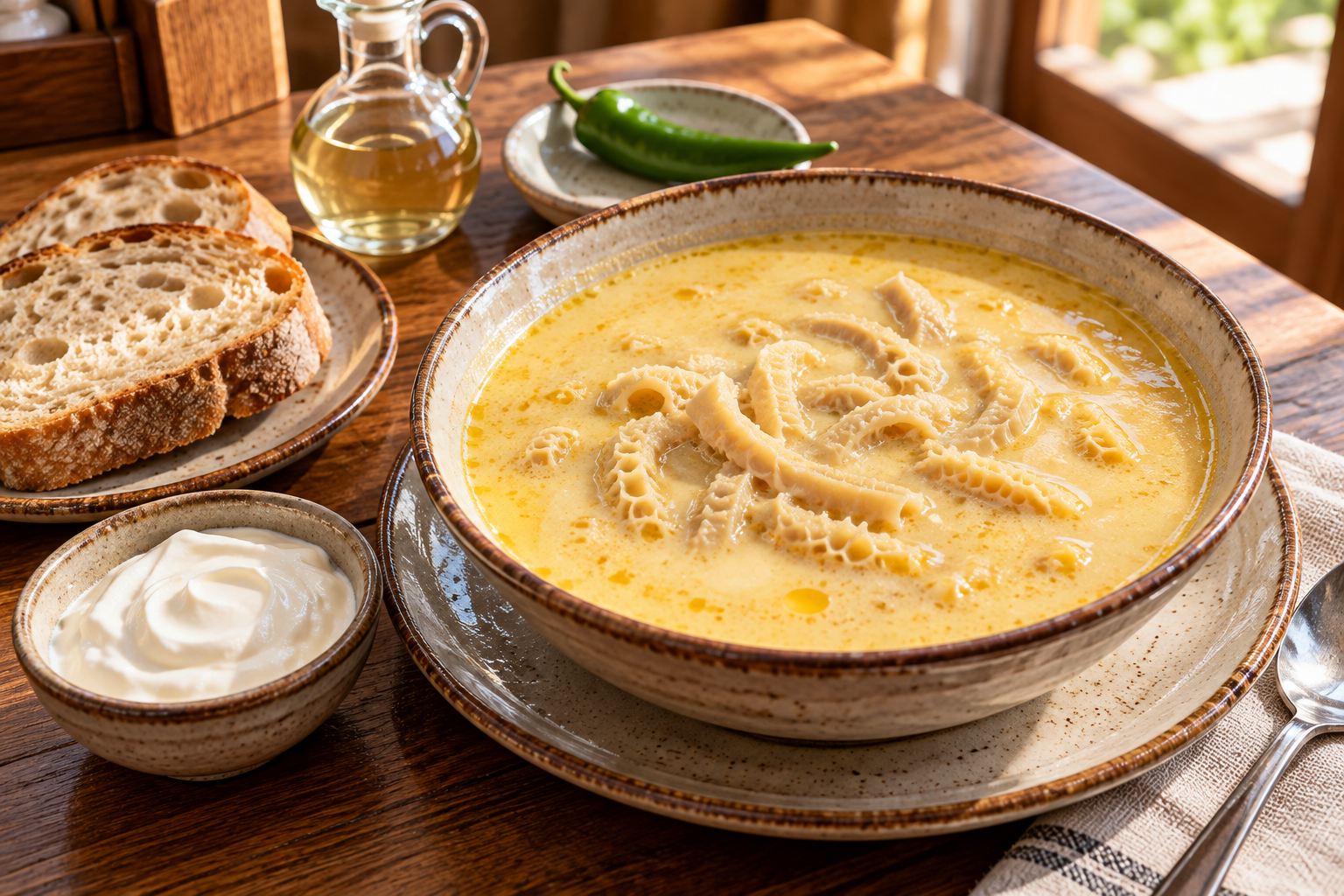
Illustration of Romanian ciorbă de burtă with tripe strips, bread and condiments served separately.

4. Mămăligă and Bulz: More Than a Side Dish

Mămăligă is polenta. On some menus it accompanies meat; on others, cheese and sour cream turn it into a meal.

Bulz is another option built around polenta and cheese, but do not assume it is meat-free. Some restaurant versions add smoked pork and egg.

A published Sergiana menu illustrates the difference: polenta with cheese and sour cream is listed at 38 RON, while its bulz with cheese, smoked pork and egg is 52 RON. These are menu examples, not national averages; confirm the current restaurant menu before ordering. Sergiana menu listing.

Ordering tip: if you have already chosen a main served with polenta, you probably do not need another portion alongside it.

5. Tochitură: For a Substantial Lunch or Dinner

Tochitură is a rich meat dish whose composition varies. It may arrive with polenta, cheese and a fried egg, making it a full meal rather than something that needs several additional sides.

Check the description carefully if you avoid offal. The Sergiana version, for example, lists pork, chicken liver and smoked sausage among its ingredients. Sergiana menu listing.

Ordering tip: choose this when you want a substantial main course. If you also want soup and dessert, consider sharing starters rather than ordering three full courses automatically.

6. Zacuscă and Salată de Vinete: Start with Vegetable Spreads

Zacuscă is a cooked vegetable spread, often featuring aubergines and peppers. Salată de vinete is an aubergine spread: despite the word salată, it is not a bowl of salad leaves.

These are useful alternatives when you do not want every meal to revolve around grilled meat.

Ask about the particular preparation. Salată de vinete may contain mayonnaise, while a mixed starter platter can include fish or meat alongside vegetable dishes.

Ordering tip: two people can choose a spread to share, then order different mains. Check whether bread is included before adding another basket.

7. Covrigi: An Easy Snack Between Visits

Covrigi are pretzel-style baked snacks sold at bakery counters. Plain versions and filled products are different purchases, so compare the labels rather than assuming everything on display costs the same.

LUCA’s product selection, for example, includes seed-topped covrigi as well as cheese and sweet-filled options. Its website also provides a location finder. LUCA bakery.

Where they fit into a trip: a quick stop before a train, between museums or while walking around a city.

Ordering tip: buy one first if you are unsure about a filling. A bakery stop is an easy way to try something without committing to a sit-down meal.
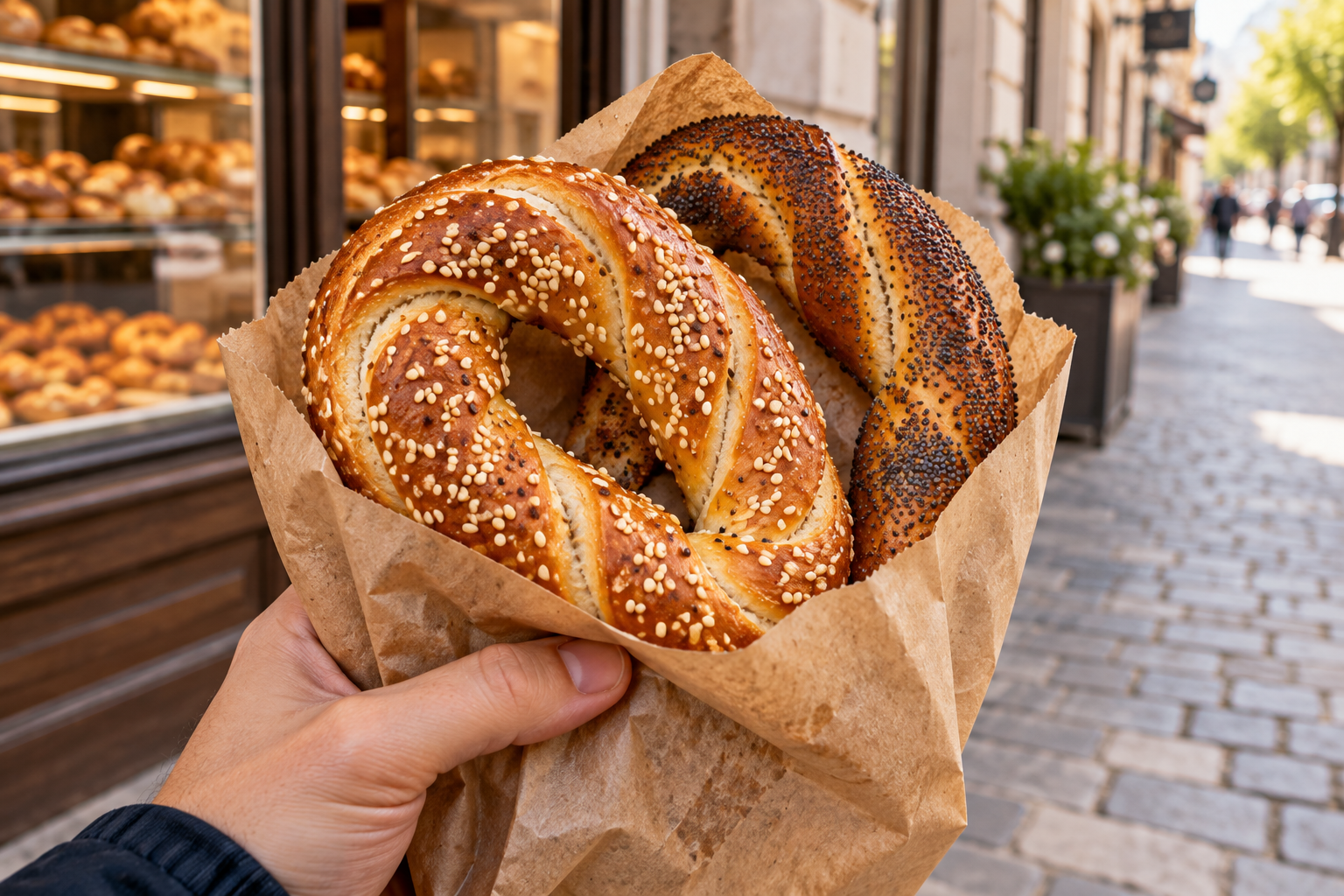
Illustration of sesame and poppy-seed covrigi in a paper bag outside a bakery.

8. Papanași: Leave Room for Dessert

Papanași are a cheese-based dessert. The familiar fried restaurant version comes with sour cream and fruit preserve, combining a rich base with a tangy topping.

Check how many pieces make up a serving before ordering one portion per person. Sharing can be a sensible choice after a substantial main.

La Copac lists papanași with sour cream and jam at 42 RON in its published menu. La Copac menu.

Ordering tip: ask about the serving size when ordering your main, so you can leave room rather than discovering the dessert menu too late.
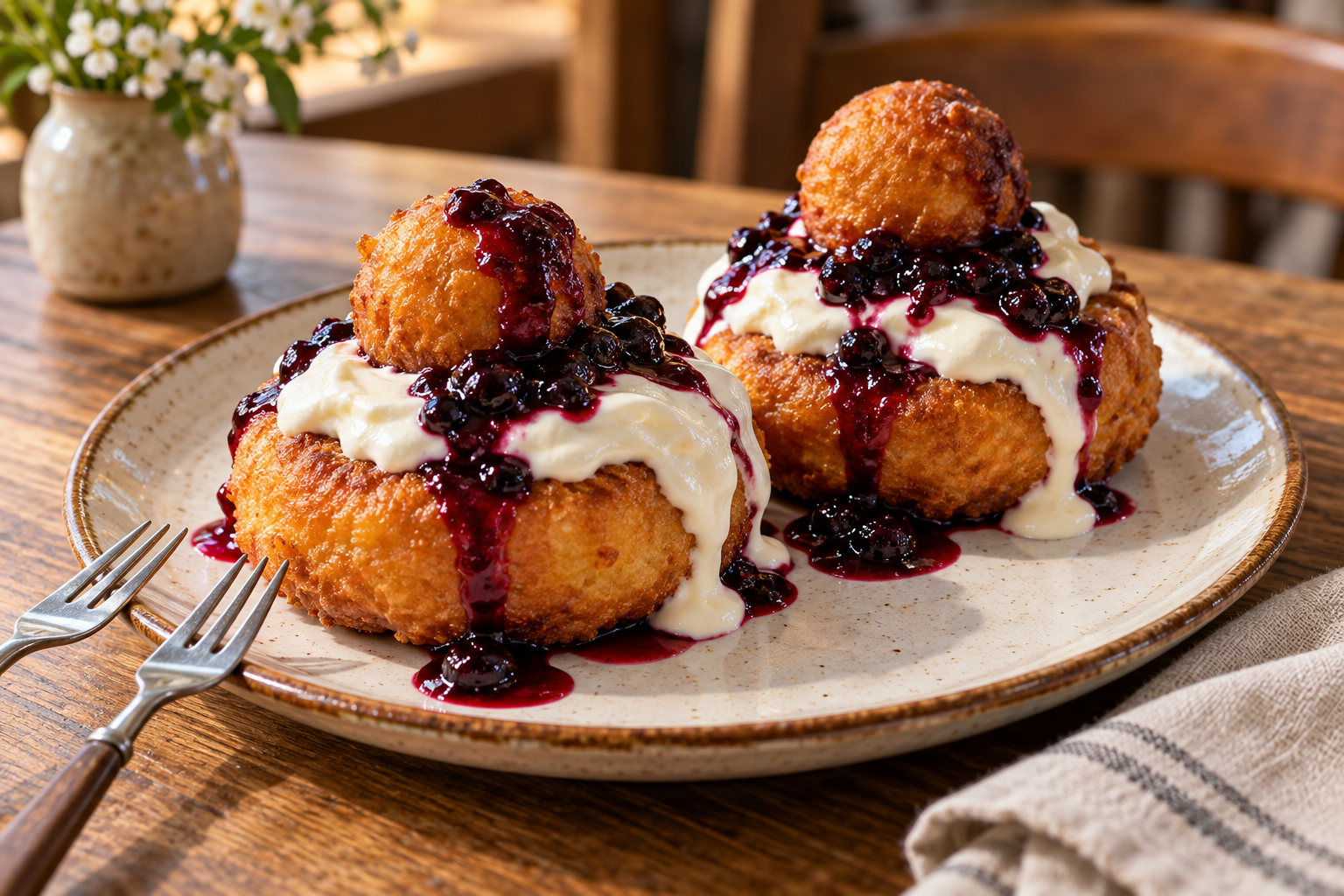
Illustration of Romanian papanași topped with sour cream and berry preserve.

What to Look for as You Travel

You do not need to visit a different region for every dish. Instead, use regional menus to add variety to the trip you already have planned.

Bucharest: Compare Several Styles in One City

Bucharest is a practical place to begin with a traditional restaurant, a bakery stop and a second meal somewhere with a shorter or more contemporary menu.

La Copac and Caru’ cu Bere provide published menus you can use to understand dishes and compare costs. They are research starting points, not a ranking of the country’s best restaurants.

Plan meals around your sightseeing using our Bucharest travel guide, rather than crossing the city solely to tick off another dish.

Transylvania: Look Beyond Grilled Meat

In Transylvania, look for soups with tarragon, local cheeses, smoked meats and potato bread. These give you more variety than ordering a mixed grill at every stop. Romania Tourism’s Transylvania guide.

For a castle trip, schedule a proper lunch break between visits. Our Romania Castles Guide helps you choose stops without turning the day into a rush between attractions.

Mountain and Village Stays: Ask About Meals Before Booking

If you want to eat at your accommodation, ask whether dinner is available, whether you need to reserve it and what the price includes.

Do not assume that a rural guesthouse operates a walk-in restaurant. Confirm dietary requirements before arrival, particularly if you will not have a car.

Our traditional Romanian villages guide can help you choose where a rural stay fits into your itinerary.

Food Prices in Romania: What Should You Budget?

A useful food budget needs to distinguish a snack from a restaurant meal.

The following are planning allowances, not measured national averages or fixed restaurant prices. They are intended for casual sightseeing trips; premium restaurants, alcohol and large sharing platters can take the bill above these ranges.

Purchase Suggested allowance What to check
Simple bakery snack
3–15 RON
Plain item versus a larger filled pastry
Restaurant soup
25–45 RON
Bread, cream and other extras
Traditional main course
40–85 RON
Whether the garnish is included
Restaurant dessert
25–45 RON
Portion size and number of pieces
Main course and a non-alcoholic drink
55–110 RON
Drink size and separately ordered sides
Soup, main and non-alcoholic drink
80–155 RON
Whether you actually want two full courses

Planning allowances prepared in September 2026. Check the menu displayed by the restaurant before ordering.

For a concrete comparison, the online menus reviewed for this guide list:

Restaurant and dish Published price
La Copac: tripe soup
32 RON
La Copac: pork with polenta
48 RON
La Copac: papanași
42 RON
Caru’ cu Bere: sarmale with accompaniments
76.50 RON
Caru’ cu Bere: three mici with fries and mustard
56.50 RON

Sources: La Copac and Caru’ cu Bere. Online menus can lag behind restaurant prices; the linked Caru’ cu Bere PDF is dated 2025.

Building a Daily Food Budget

For a day with a light breakfast or bakery stop, a simpler lunch and a sit-down dinner, 120–200 RON per person is a reasonable starting allowance to test against your chosen menus.

This is a suggested budget, not a claim about average spending. Breakfast included in your accommodation can reduce it; multiple courses, extra café stops and alcohol can increase it.

For example, allocating 20 RON to breakfast, 40 RON to lunch and 90 RON to dinner gives a 150 RON food budget, before additional drinks or snacks.

How to Order Without Unexpected Extras

A low-looking main-course price is not always the price of the complete meal you have in mind.

Before ordering, check:

  1. The unit: is the price per piece, portion or 100 grams?
  2. The garnish: does the main include potatoes, polenta or vegetables?
  3. The serving size: is a platter intended for one person or several?
  4. The extras: are bread, sauces and sour cream charged separately?
  5. The ingredients: does the dish contain a meat, dairy product or other ingredient you avoid?

Useful menu words include:

Romanian Meaning
Porție
Portion
Bucată / buc.
Piece
Garnitură
Side dish
Smântână
Sour cream
Ardei iute
Hot pepper
Murături
Pickles
Pâine
Bread
Fără carne
Without meat

When comparing two restaurants, compare the contents of the plate as well as the headline price.

Vegetarian and Vegan Choices

Vegetable spreads, bean dishes, mushroom dishes and polenta-based meals are useful places to start, but check the actual preparation.

A vegetable-sounding name does not answer every dietary question. Ask whether a dish contains meat stock, lard, smoked meat, butter, egg or sour cream.

You may see de post, referring to food prepared for religious fasting. It is a useful term to ask about, but explain your own requirements rather than treating it as an allergen or vegan certification.

For allergies, request ingredient information directly from the restaurant. A translated dish name or this guide cannot establish whether a particular kitchen can accommodate your needs.

A Simple First-Day Food Plan

You do not need a tasting menu to get a useful introduction.

  • Morning: a bakery stop, choosing a plain or filled item that appeals to you.
  • Lunch: a bowl of ciorbă, checking the type before ordering.
  • Dinner: sarmale or mici, with the included sides confirmed.
  • Dessert: share papanași if the serving size suits you.

On the next day, switch to a vegetable starter and a cheese, mushroom or regional dish. That gives you more variety than repeatedly ordering the largest meat platter.

For a mountain trip, arrange meals around transport and walking plans. Our Romanian Carpathians guide explains how to choose a base and avoid overloading your itinerary.

Frequently Asked Questions

What traditional Romanian food should I try first?

Start with sarmale, mici, a soup of your choice and papanași. Spread them across several meals rather than ordering everything at once.

Is Romanian food vegetarian-friendly?

There are useful options, including vegetable spreads and some bean, mushroom and polenta dishes. Confirm the preparation: cheese, cream, meat stock or smoked meat may appear in dishes whose names do not make that obvious.

How much does a restaurant meal cost in Romania?

For planning, allow roughly 55–110 RON for a traditional main and a non-alcoholic drink at a casual sit-down restaurant. Treat that as a budget allowance, not a guaranteed price, and check whether sides are included.

Where can I try Romanian food?

Start with traditional restaurants with accessible menus, bakeries for snacks and accommodation that explicitly offers meals. Choose places that fit your itinerary rather than assuming you need a dedicated food tour to try the main dishes.

Should I order soup, a main and dessert?

Only if the portion sizes and your appetite suit it. You can start with fewer dishes, ask about serving sizes and share a dessert.

Leave a Comment

Your email address will not be published. Required fields are marked *