
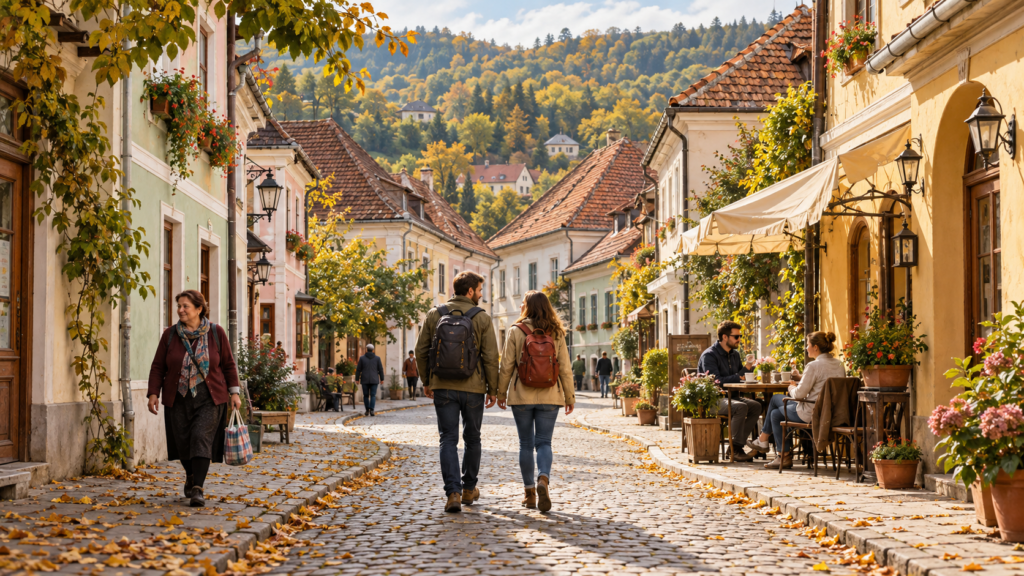
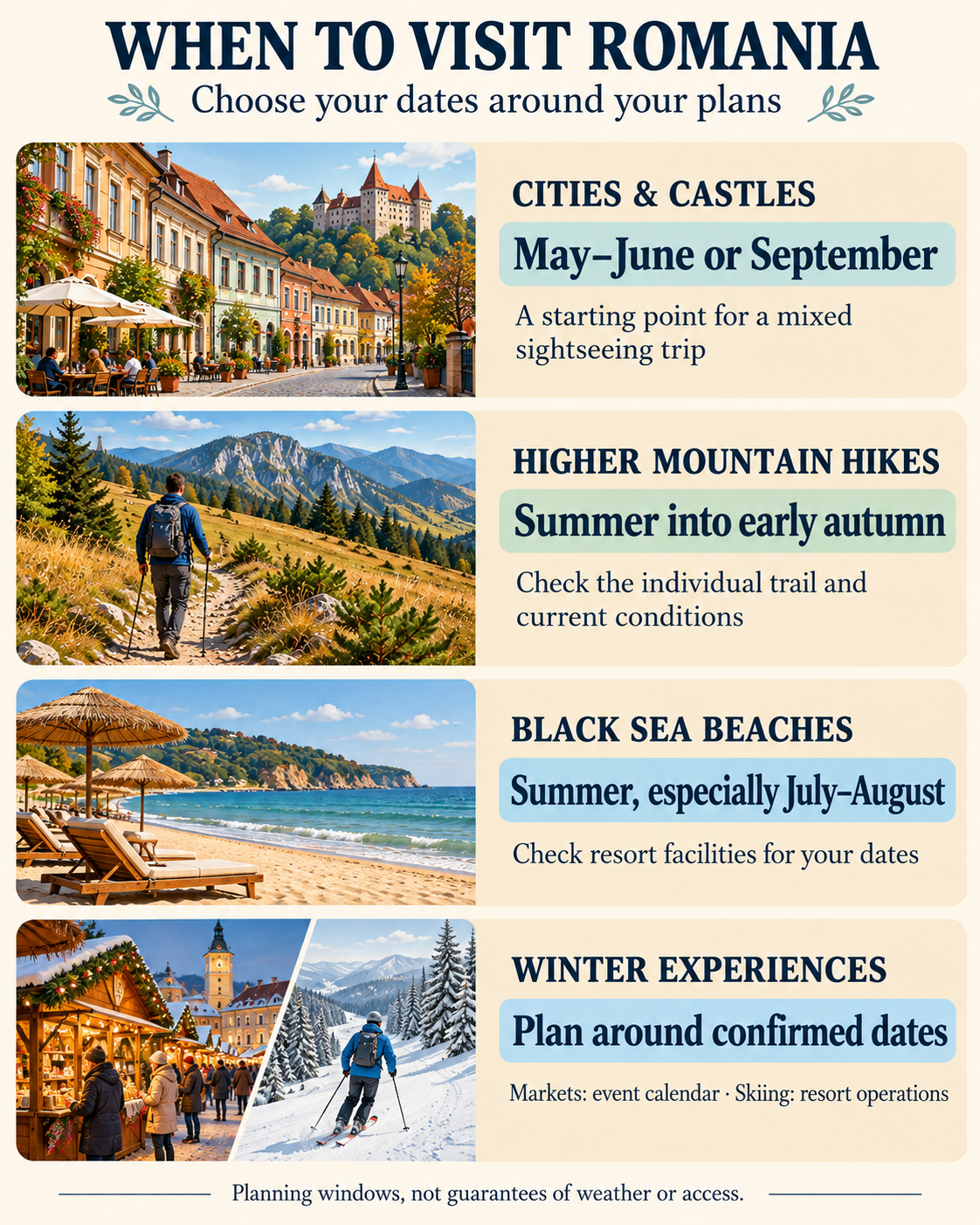
These are planning windows rather than fixed opening seasons. A museum, mountain road, ski lift and boat operator may each follow a different calendar.
For help deciding which places belong in your itinerary, start with our guide to things to do in Romania.
Romania Weather by Month
A single temperature for “Romania” can be misleading. Bucharest, a Transylvanian town, a mountain ridge and the coast can have very different conditions on the same day.
The figures below are rounded average daily lows and highs for Bucharest / Imh, based on weather reports from 1992–2021. They are not a forecast, a national average or the full range of temperatures you might experience. Bucharest climate averages.
Do not use these figures to pack for high-altitude hiking. Romania has substantial regional differences, and mountain conditions require their own forecast. Romania’s climate overview.
Before departure, check the forecast and warnings from Romania’s National Meteorological Administration. Historical averages help you choose a month; current conditions help you decide what to do that day.
Romania in Spring: March, April and May
Spring works best when you keep the itinerary adaptable.
For March, build the trip around places where you have worthwhile indoor options. A museum, café or longer lunch makes it easier to rearrange a day than an excursion with no alternative activity.
April offers a useful opportunity to combine a city stay with nearby sightseeing. Check the opening calendar of individual attractions before fixing your travel dates, especially around Easter.
May is a strong option for a first visit focused on towns, castles and countryside. It allows you to build a trip around walking and sightseeing without making high mountain access essential.
A practical spring approach is to:
Choose a small number of bases rather than moving every night.
Book the sights that matter most before filling the remaining days.
Keep one flexible day for an outdoor excursion.
Treat mountain access as a separate question from city weather.
For castle visits, use our Romania castles guide to compare locations and practical requirements. Choosing which castle to visit is more useful than trying to fit several into a day simply because they appear close on a map.
Romania in Summer: June, July and August
Romania in summer suits travellers who want a larger outdoor component, but it is worth choosing the route around your tolerance for heat.
The southern and eastern lowlands can become very hot, while mountain temperatures are generally lower. Cooler air at altitude does not mean that a mountain route is easy or free of weather risks. Romania’s seasonal climate.
For a city-based summer trip, schedule your longest walks early, keep indoor visits for part of the afternoon and check whether your accommodation has suitable cooling.
For an outdoor trip, decide whether you mainly want hiking, a scenic drive or a beach stay. Those are different holidays, with different booking priorities.
Summer on the Black Sea Coast
If a beach holiday is the main reason for visiting, start by comparing summer dates rather than treating spring or late autumn as equivalent alternatives.
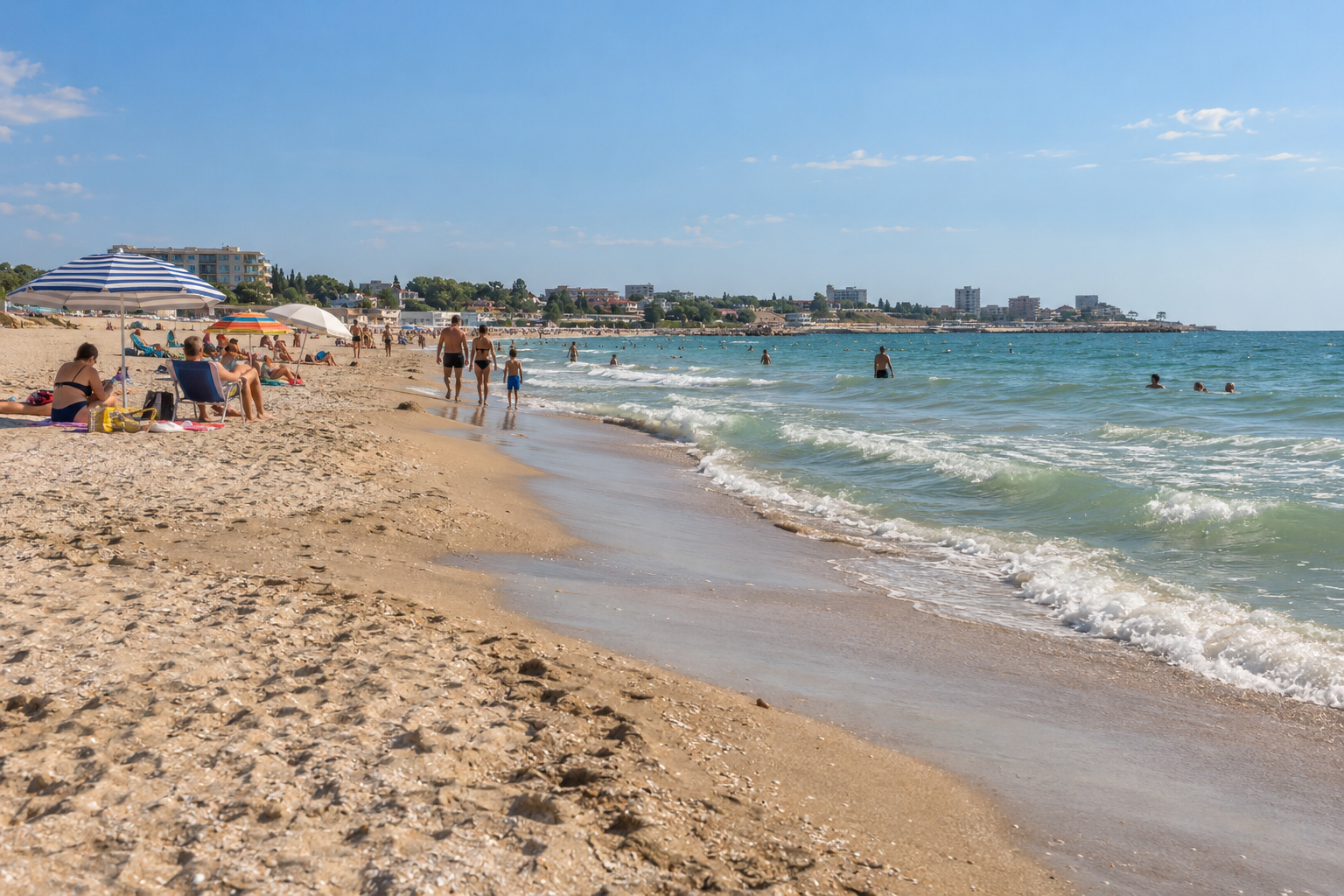
Check the individual resort and property. A hotel being open does not necessarily mean that every nearby beach service, restaurant or excursion is operating.
Transport can also be seasonal. CFR runs a dedicated summer coastal programme, so a train available during summer may not operate on the same pattern outside that period. Check your actual travel date rather than copying a summer timetable. CFR’s 2026 coastal train programme.
If travelling near the beginning or end of the season, ask your accommodation which facilities will be available during your stay.
Romania in September and October
These months suit different versions of an autumn trip.
Romania in September
Choose September first if you want a varied itinerary rather than a holiday centred on one seasonal activity.
A useful approach is to combine city stays with optional outdoor days. Keep the mountain excursion movable, and avoid booking every transfer so tightly that there is no room to respond to conditions.
September is also worth comparing with summer when choosing accommodation, but do not assume that every September weekend is inexpensive. Check the total for your actual route and dates.
Romania in October
Romania in October makes more sense for towns, castles and a flexible countryside itinerary than for a trip that depends on summer-like mountain conditions.
Plan outdoor stops during daylight and leave room for indoor visits. If autumn foliage is a priority, remember that its timing varies with location, altitude and the year’s weather. A photograph taken in one valley is not a calendar for the entire country.
For a Bucharest–Brașov journey, consider whether you want to stop in Sinaia or travel directly and make excursions from your base. Our Bucharest to Brașov transport guide explains the practical differences.
Check individual attraction calendars before buying tickets. Seasonal maintenance and weekly closing days can matter more than the month itself.
Romania in Winter: What Kind of Trip Works?
Romania in winter is worth considering when you choose winter-compatible activities from the beginning.
A compact itinerary with a comfortable base, museums, restaurants and one or two planned excursions is easier to manage than a long checklist of outdoor sights.
Do not make snow in a particular town a condition for enjoying the trip. Have enough to do if the streets are clear, wet or icy rather than covered in fresh snow.
Christmas Markets
For a festive trip, book around the organiser’s published dates rather than assuming that all markets open and close together.
Sibiu’s market takes place in Piața Mare and has its own annual programme. Check the official Sibiu Christmas Market website before arranging accommodation.
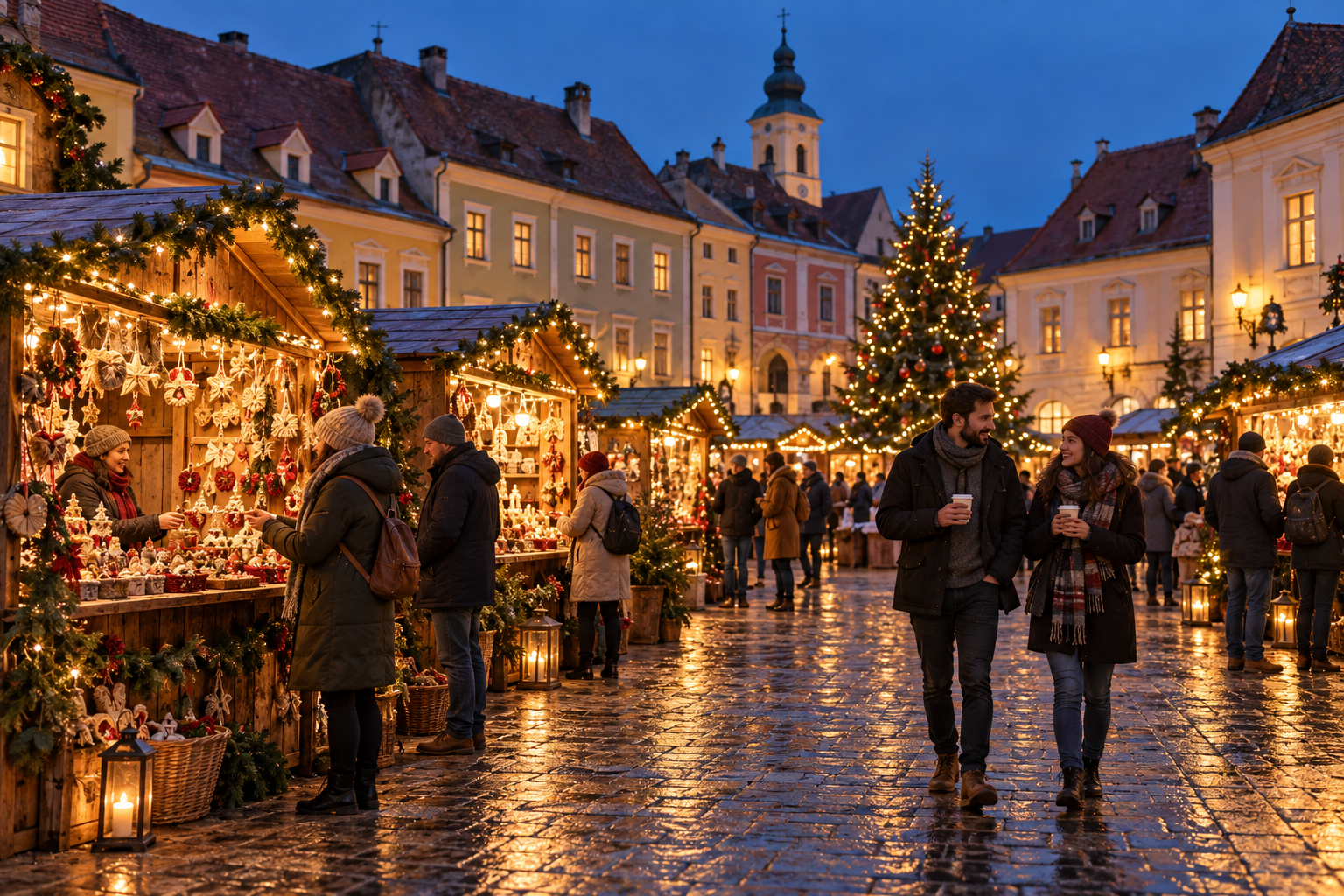
A market visit can anchor an evening, but it should not be your only plan. Leave time for the city itself, and check museum and restaurant schedules around holidays.
Brașov and Mountain Resorts
Separate a stay in Brașov from a skiing holiday. Staying in the city does not automatically provide access to open slopes, lessons or equipment.
If skiing is essential, check the resort’s operating information and booking conditions before committing to a non-refundable stay.
Likewise, a summer walking route is not automatically suitable in winter. Consult local mountain-rescue guidance and choose activities appropriate to your experience and equipment. Salvamont visitor guidance.
Best Time to Visit Bucharest and Transylvania
Bucharest
For a walking-heavy city break, compare May and September first. April, June and October can also fit, depending on your preferred temperatures and daily plans.
In summer, organise sightseeing around breaks from the heat. In winter, group outdoor stops with nearby indoor visits so that you are not committed to spending the entire day outside.
Our Bucharest travel guide helps you choose the sights before deciding how many days to allocate.
Transylvania
The best time to visit Transylvania depends on whether you mean towns and villages or the surrounding mountains.
For a route centred on Brașov, Sibiu, Sighișoara and countryside stops, late spring and early autumn are useful starting points. A hiking-focused trip needs more specific planning.
Avoid treating all of Transylvania as one day trip. Select the places that matter most, then leave enough time between them to enjoy the journey rather than constantly catching up with the itinerary.
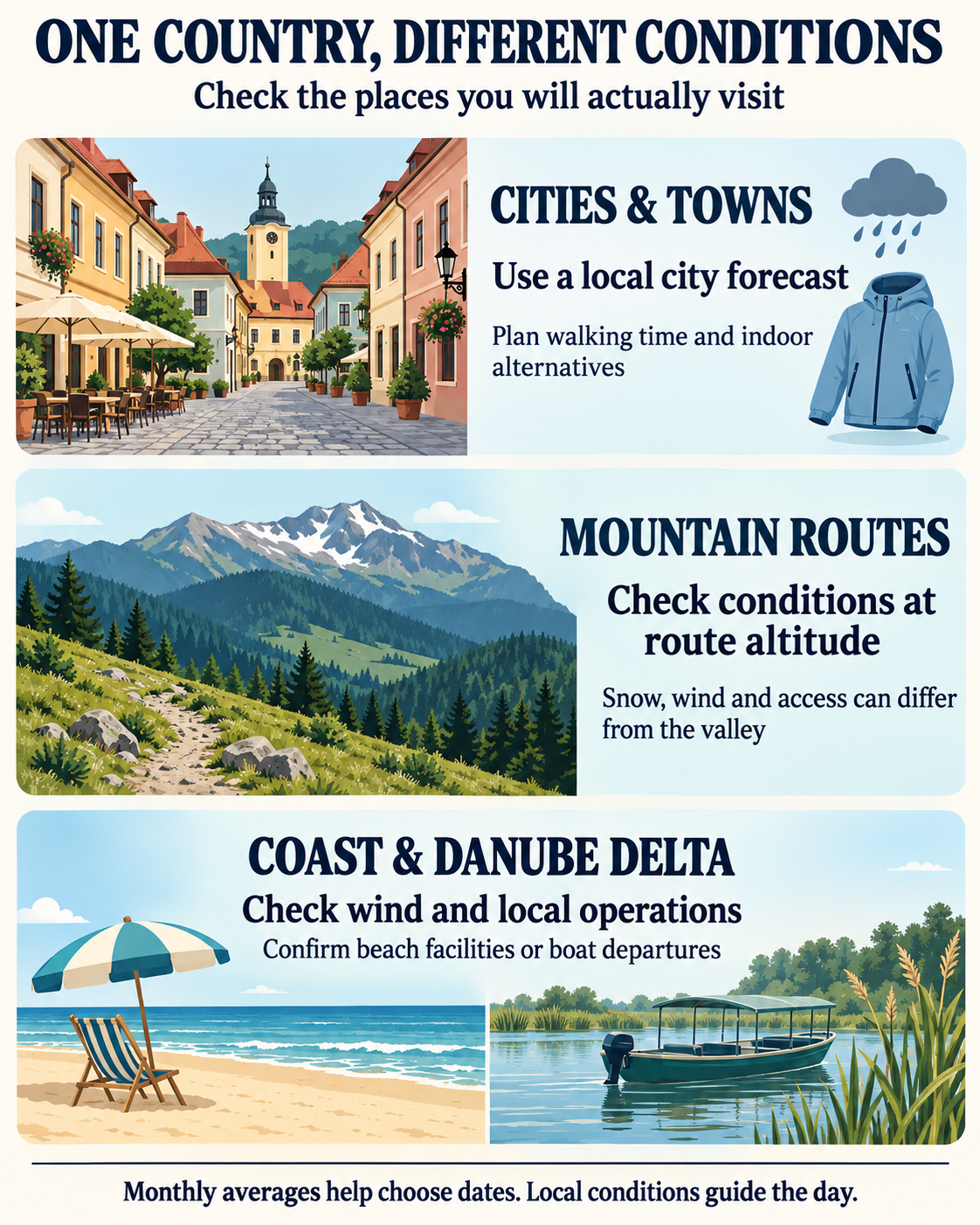
When to Visit the Carpathians and Mountain Roads
For higher mountain hiking, summer into early autumn is the broad planning window to investigate. It is not a promise that a particular trail will be clear or appropriate for your group.
Before an outing, check:
The specific route and its difficulty.
Current weather and warnings.
Snow or ice on the route.
Available daylight.
Access to the starting point.
Whether your equipment and experience match the conditions.
Use Salvamont’s local services for current mountain information. Our Carpathian Mountains Romania guide can help you choose an area before researching the individual walk.
Transfăgărășan and Other Scenic Roads
Do not select your dates from a generic statement that a mountain road “opens in summer”.
The Transfăgărășan and other high routes need a separate access check. Confirm the section you intend to use, any operating restrictions and an alternative route before departure. A navigation app displaying a road is not proof that you can drive through it.
Use Romania Tourism’s scenic-road information as a starting point, then verify the current road status close to your journey.
If the drive is the main purpose of the trip, keep the booking flexible enough to change plans.
Best Time to Visit the Danube Delta
For a first Delta visit, spring to early autumn gives you a broad period to investigate, but the best dates depend on the wildlife and activities you want to see.
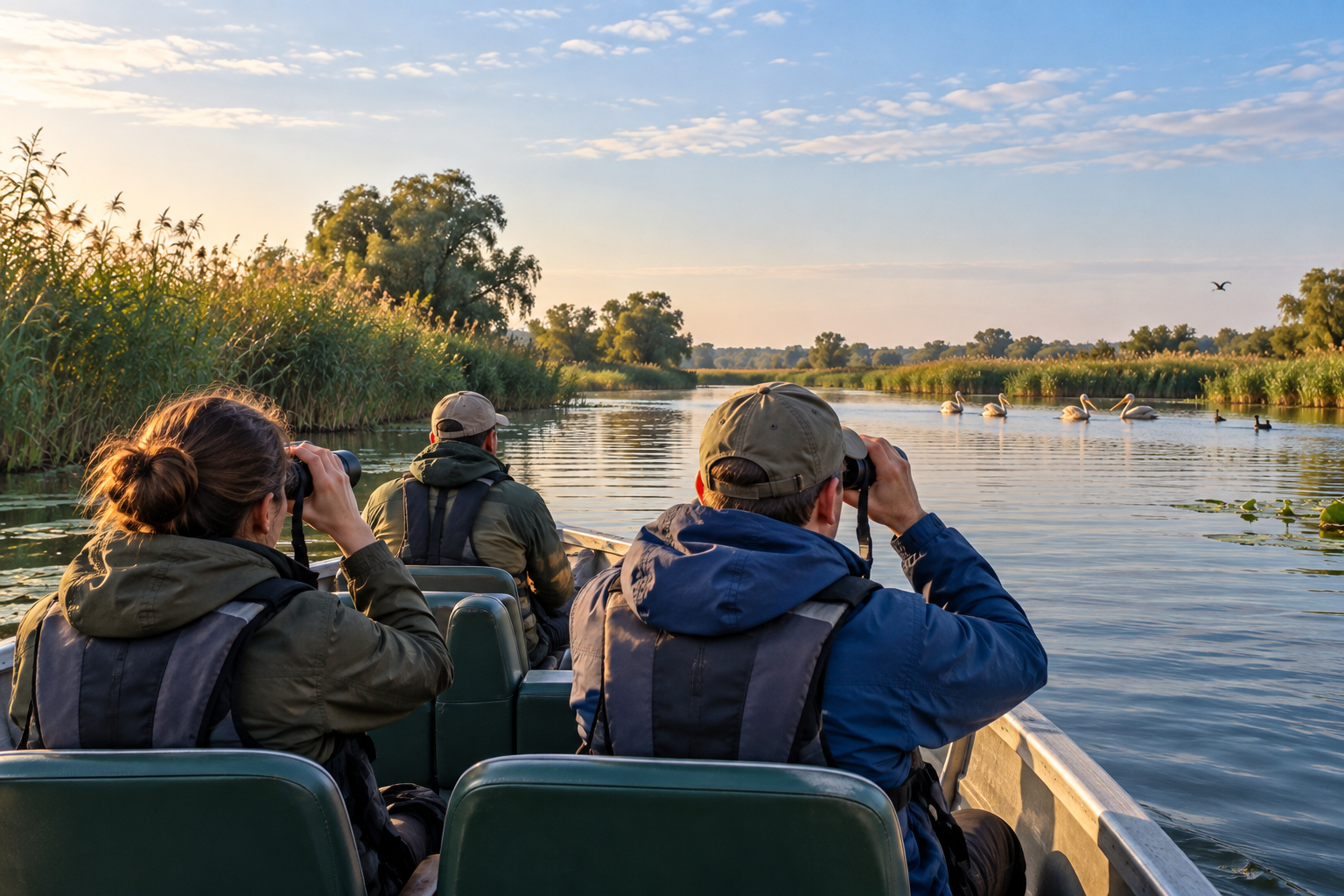
Birdwatching is not one uniform season. Different species have different seasonal patterns, and some winter visitors require a deliberately planned winter trip. Romania Tourism’s Danube Delta guide.
Before booking, ask the operator:
Which excursions run on your dates?
What is a realistic wildlife expectation?
How long will you spend on the boat?
What happens if conditions prevent the outing?
Are transfers to your accommodation included?
For a nature-focused trip, the operator’s answers are more useful than a blanket promise that one month is “the best”.
When Is Romania Cheapest to Visit?
There is no single cheapest month for every Romanian itinerary.
A city hotel, ski resort and coastal property serve different markets. The lowest room rate also may not produce the lowest total trip cost once flights, transport and available activities are included.
Rather than relying on an unsupported seasonal price range, compare two or three versions of the same trip.
Keep these details consistent:
The same number of nights and travellers.
Similar accommodation location and room type.
The same meal and baggage inclusions.
Comparable cancellation conditions.
The same essential excursions.
For example, if one option costs 300 RON per room per night and another costs 420 RON, the difference over five nights is 600 RON per room. These are illustrative numbers, not quoted Romanian hotel rates. They show how to compare offers once you have real prices.
Check event dates before assuming that a normally quieter month will be cheaper. Romania Tourism maintains an events calendar, but confirm the individual event with its organiser.
A lower price is only useful if the trip still includes what you want to do.
What to Pack for Your Season
Pack for the places and activities in your itinerary, not just the arrival airport.
For a spring or autumn sightseeing trip, take layers, a rain-resistant outer layer and comfortable shoes suitable for wet streets.
For summer, include sun protection and light clothing, but add warmer layers if your route includes mountains or evenings outdoors.
For winter, prioritise warmth and footwear appropriate to the expected conditions. Specialist mountain activities need their own equipment planning.
A small day bag is useful throughout the year. Keep essential medication, booking details and a power bank accessible during transfers.
A Short Checklist Before Booking
Before paying for non-refundable arrangements:
Identify the activity that depends most on the season.
Check the relevant attraction, operator or resort calendar.
Compare accommodation and transport for your actual dates.
Leave at least some flexibility for weather-dependent outings.
Check forecasts and local conditions again shortly before travel.
Choose the month around your priorities, then build the route. Starting with a long list of places and hoping they all work in the same week is less reliable.