
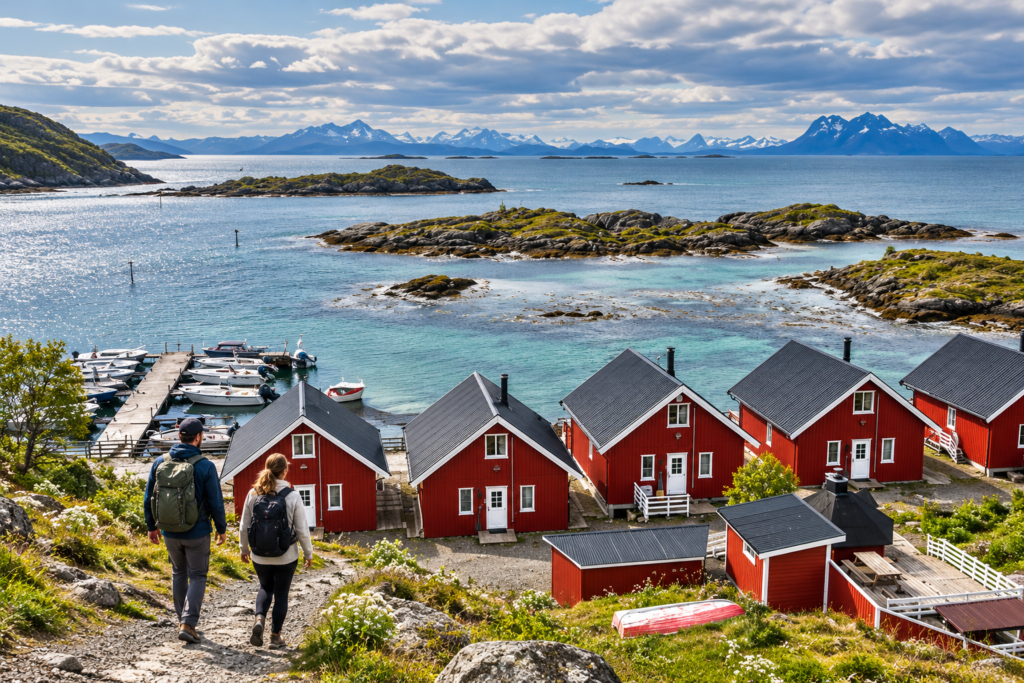
Travellers exploring a Norwegian waterfront, illustrating Norway trip cost

Norway Trip Cost: Daily Budgets and 7, 10 and 14-Day Examples

Your Norway trip cost depends mainly on where you sleep, how often you move, and which paid experiences you choose.

A trip with shared accommodation, supermarket lunches, and public transport can cost considerably less than one involving a rental car, restaurant meals, and organised excursions every day. The difference is often in the itinerary rather than the number of days alone.

For a seven-day trip with six nights, NOK 15,000 per person is a useful starting target for a moderate budget, assuming two adults share a room, use public transport, and include some paid sightseeing. International flights are additional.

A more economical trip is possible, while a car-based itinerary or a holiday with frequent guided activities may require substantially more.

This guide explains the main expenses and provides transparent examples for different trip lengths.

Prices checked in October 2026. Budget ranges and worked examples are planning estimates, not booking quotes. All amounts are in Norwegian kroner, abbreviated NOK.

Is Norway Expensive to Visit?

Yes, particularly when your trip involves private accommodation, frequent restaurant meals, and several paid excursions.

However, those costs do not apply equally to every day. A waterfront walk, a park visit, and an afternoon exploring a neighbourhood may require little spending beyond meals and transport.

The most useful question is therefore: which parts of your holiday will create the largest costs?

For many travellers, the answer is:

  • Accommodation in the places they want to stay.
  • Transport between regions.
  • Boat trips and organised activities.
  • Eating and drinking out.
  • Car rental and its additional charges.

You can control a Norway travel budget more effectively by planning those items first than by trying to save a small amount on every coffee.

Norway Daily Budget: A Starting Point

The following estimates are per person, assuming either a hostel bed or two people sharing accommodation.

Expense Economical travel Moderate travel More comfortable travel
Accommodation, per night
NOK 400–650
NOK 700–1,200
NOK 1,400–2,500
Food, per day
NOK 250–400
NOK 500–800
NOK 900–1,500
Local transport, per day
NOK 50–100
NOK 80–150
NOK 150–350
Attractions, averaged per day
NOK 0–150
NOK 150–350
NOK 300–700
Daily subtotal, including one night
NOK 700–1,300
NOK 1,430–2,500
NOK 2,750–5,050

These subtotals exclude international flights, travel between regions, car rental, shopping, and a contingency reserve.

The attraction allowance is an average. You might spend nothing on admission one day and several hundred kroner on a museum or excursion the next.

Do not simply multiply these figures by your holiday length without checking the number of nights and adding major transport or activity bookings.

Accommodation Costs in Norway

Accommodation is often the largest recurring expense, and sharing a room can make a substantial difference.

For example, a room costing NOK 1,800 per night is NOK 900 per person when shared by two adults. A solo traveller booking the same room pays the full amount.

Simple double hotel room with a desk and luggage in Norway

Planning Allowances

Use these as starting estimates when comparing actual availability:

Accommodation type Suggested planning allowance Price basis
Hostel dormitory bed
NOK 400–700
Per person/night
Basic private room
NOK 1,000–1,600
Per room/night
Moderate hotel room
NOK 1,600–2,400
Per room/night
Higher-end hotel
NOK 2,800–5,000+
Per room/night
Apartment or cabin
Price individually
Check occupancy, cleaning, linen, and location

These are broad allowances rather than national averages. Popular dates and small destinations with limited rooms can exceed them.

Compare the final price, including:

  • Breakfast.
  • Cleaning and linen charges.
  • Parking.
  • Cancellation conditions.
  • The transport needed to reach your activities.

An inexpensive room outside the centre may save little if it creates daily taxi journeys.

City Hotels and Fjord Accommodation

In a city, you may have several accommodation options near public transport. In a fjord village, the convenient choices can be much more limited.

Book important overnight stops before arranging activities around them. Staying farther away only helps if the transport connections still work.

For an Oslo stay, our Oslo travel guide explains the main areas and sightseeing priorities.

Food and Drink Costs

Food spending depends heavily on the balance between self-catering and restaurants.

Visit Norway publishes rough reference prices of NOK 35–65 for a cappuccino and NOK 190–350 for a meal in a budget restaurant. A three-course mid-range restaurant meal is listed at NOK 650–1,500. These are indicative figures, not fixed prices. Visit Norway’s price guide
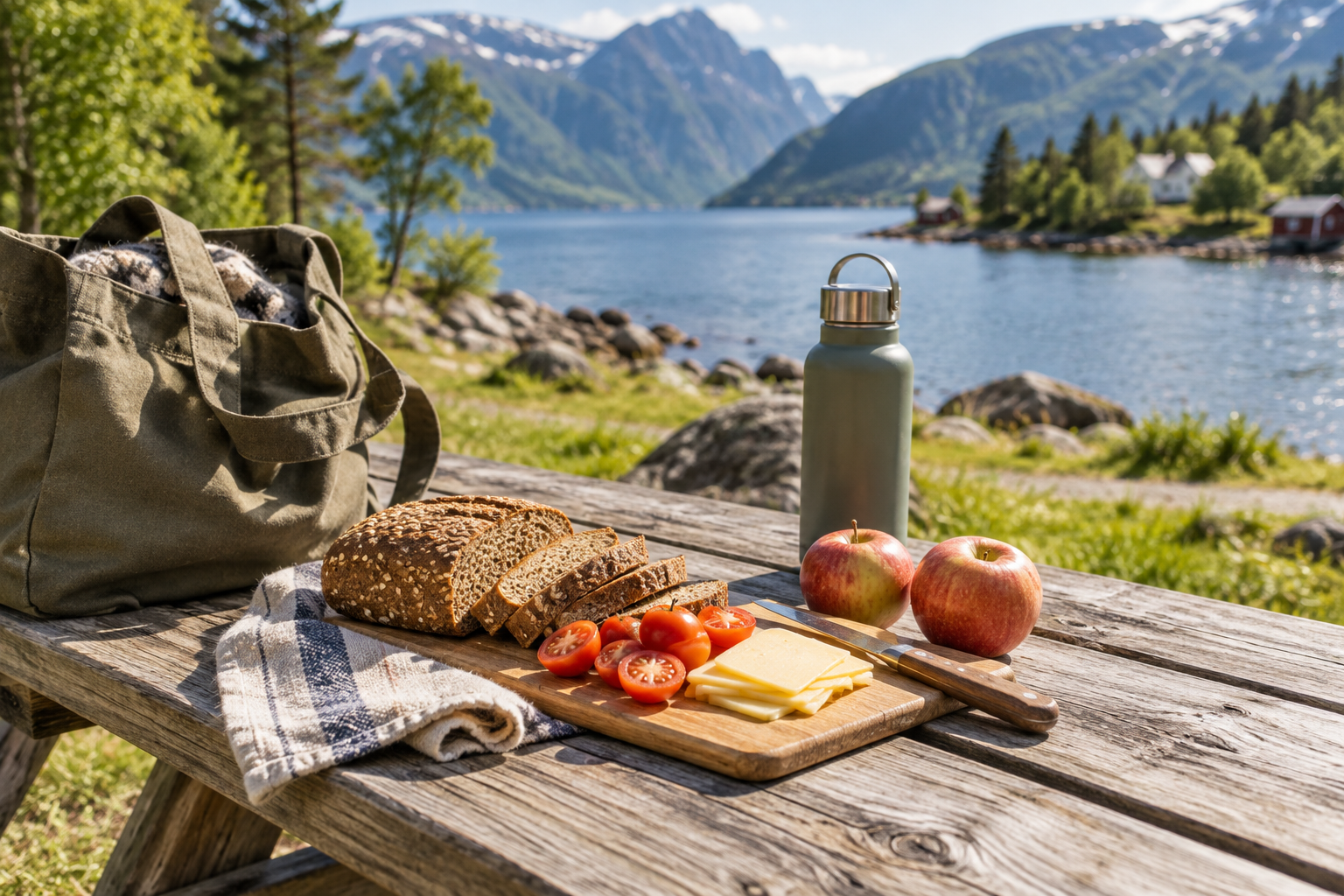
Supermarket lunch with bread, cheese, fruit and a reusable water bottle

How to Build a Daily Food Budget

NOK 250–400 per person: primarily self-catering and supermarket food, with limited café or takeaway spending.

NOK 500–800 per person: a mixture of groceries, cafés, and restaurant meals, especially when breakfast is included in the room price.

NOK 900–1,500 or more per person: frequent restaurant meals, additional drinks, or more expensive dining.

Alcohol can increase these totals quickly. Keep it separate if you want to understand your essential food costs.

Ways to Spend Less Without Missing Local Food

Choose a few meals you particularly want to try, then use simpler options for the rest.

A grocery lunch on a travel day can leave room for a restaurant dinner. Accommodation with cooking facilities may help on a longer stay, provided its total price is competitive.

Our Norwegian food guide can help you decide which dishes deserve part of your dining budget.

Public Transport and Travel Between Regions

Separate local transport from longer journeys when calculating your budget.
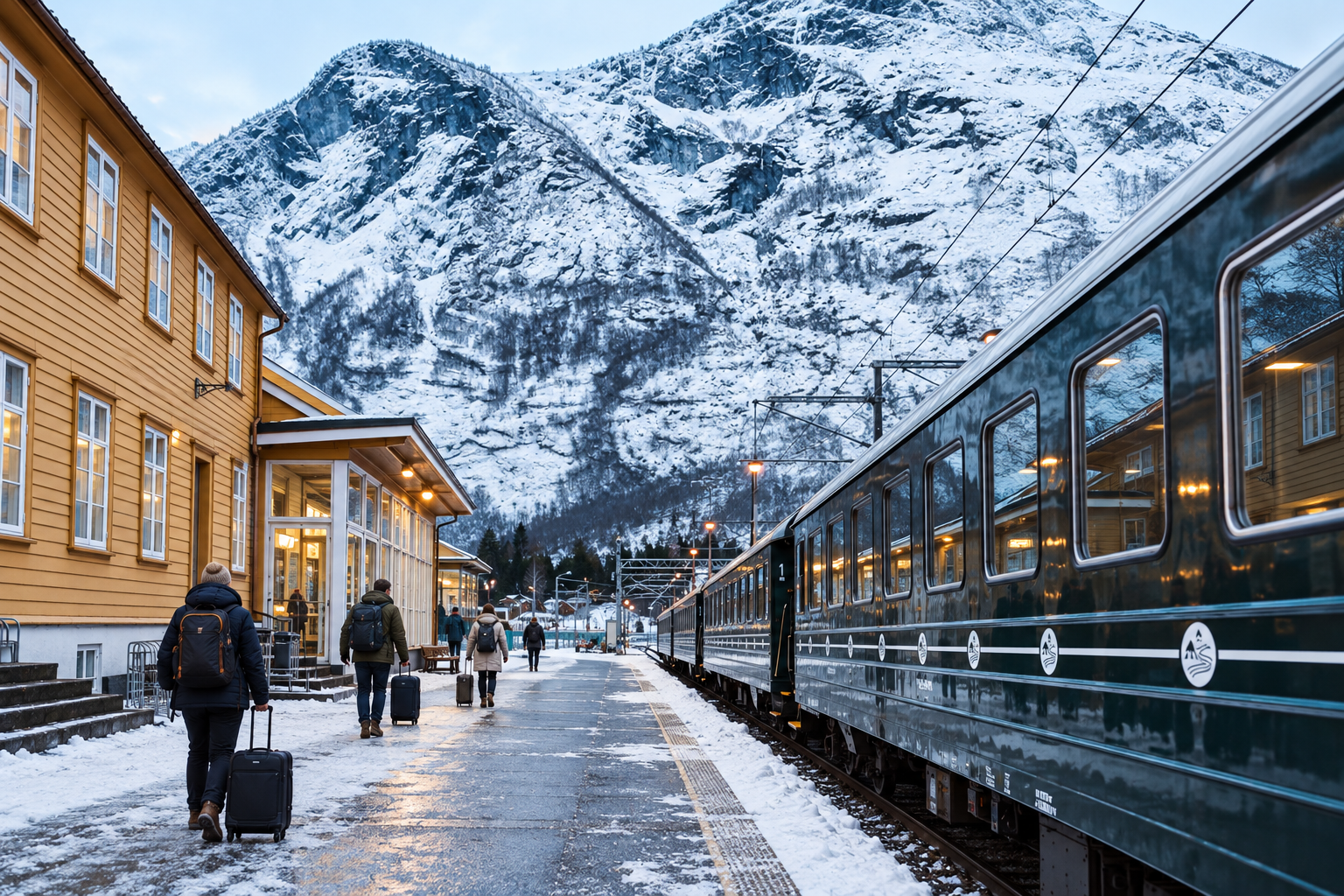
Passenger train at a Norwegian station with travellers carrying luggage

Local Transport

Walking can cover much of a central city itinerary. Public transport becomes more useful when visiting attractions outside the centre or staying farther away.

Compare single tickets with time-based tickets for the journeys you will actually make. For Oslo, consult Ruter’s current ticket information.

Airport transfers may require different zones or tickets, so check them separately.

Intercity Trains and Buses

There is no single useful fare for “travelling around Norway.” The cost depends on your route, date, departure, and ticket conditions.

Price each major leg before booking accommodation:

  • Arrival airport to your first base.
  • Travel between cities.
  • Connections into fjord areas.
  • Return travel or departure airport transfer.

For rail journeys, Vy’s low-fare calendar helps compare available departures.

Check restrictions before buying the cheapest ticket. A lower fare may offer less flexibility if your plans change.

Domestic Flights

A domestic flight can reduce travel time on a long journey, but compare the complete cost:

  • Ticket.
  • Checked baggage.
  • Seat selection, if needed.
  • Transport to and from both airports.

A low advertised fare is not necessarily the lowest total journey cost.

Fjord Cruises and Other Paid Activities

Paid activities can create the biggest difference between two otherwise similar holidays.

A museum visit and a full-day excursion combining several transport services have very different budgets.

As a current reference, standard adult admission at MUNCH is NOK 220, with different prices for younger visitors. Check eligibility and the latest rate before booking. MUNCH visitor information

For larger excursions, price the exact product. Fjord Tours currently advertises the classic Norway in a Nutshell journey from NOK 2,698 per person, with the final price depending on the selected trip. That illustrates why a major excursion needs its own budget line. Fjord Tours

Avoid Double-Counting

Some excursions include transport you would otherwise purchase separately.

If a package replaces a train, bus, or boat journey in your itinerary, remove that journey from your separate transport allowance.

Also check:

  • Whether the trip is one-way or return.
  • The starting and finishing points.
  • Meals and accommodation, if any.
  • Pickup arrangements.
  • Cancellation conditions.

Our Norway fjords guide helps you choose the region before comparing excursions.

Norway Trip Cost for 7, 10 and 14 Days

The following is a worked moderate-budget example, not an average of booked holidays.

It assumes:

  • Two adults share a room costing NOK 1,800 per night.
  • Each person allows NOK 600 per day for food.
  • Local transport averages NOK 100 per day.
  • Travel between regions and attractions have separate allowances.
  • There is no rental car.
  • International flights and shopping are excluded.

A seven-day trip has six nights, a ten-day trip has nine nights, and a fourteen-day trip has thirteen nights.

Worked Budget Per Person

Expense 7 days / 6 nights 10 days / 9 nights 14 days / 13 nights
Accommodation: NOK 900 per person/night
NOK 5,400
NOK 8,100
NOK 11,700
Food: NOK 600 per day
NOK 4,200
NOK 6,000
NOK 8,400
Local transport: NOK 100 per day
NOK 700
NOK 1,000
NOK 1,400
Travel between regions and airport transfers
NOK 1,800
NOK 2,500
NOK 3,500
Attractions and excursions
NOK 2,000
NOK 3,000
NOK 4,000
Connectivity, small expenses, and contingency
NOK 1,000
NOK 1,400
NOK 2,000
Total per person
NOK 15,100
NOK 22,000
NOK 31,000

Replace the transport and excursion allowances with actual quotes for your route. A NOK 2,698 excursion, for example, exceeds the seven-day activity allowance unless some of its included transport replaces another expense.

What Changes on a Seven-Day Trip?

With one week, keeping the itinerary compact helps control costs.

A city stay with one major excursion has a different spending pattern from changing accommodation repeatedly and travelling between several regions.

What Changes on a Ten-Day Trip?

Ten days give you more room for a second base, but additional transfers and excursions can absorb much of the extra budget.

Add the actual cost of each new stop rather than assuming that three more days only mean three more meals and hotel nights.

What Changes on a Fourteen-Day Trip?

Two weeks can support a broader itinerary, but it does not require moving every day.

Longer stays may reduce the number of transfers and make self-catering more practical. Conversely, adding domestic flights, car rental, and guided activities can increase the total considerably.

Norway Trip Cost for Two People

For two adults following the moderate example above:

Trip length Combined budget for two
7 days / 6 nights
NOK 30,200
10 days / 9 nights
NOK 44,000
14 days / 13 nights
NOK 62,000

International flights and shopping remain additional.
These figures already assume a shared room. Do not halve accommodation again.
A solo traveller booking the same NOK 1,800 room would add another NOK 900 for each night compared with the per-person example. A hostel bed or less expensive single room could reduce that difference.

Convert Your Norway Budget into Your Currency

Use the converter below to translate Norwegian kroner into your home currency. Enter a total from this guide and select your preferred currency.

Exchange rates are indicative. Your bank, card provider or exchange service may use a different rate and charge fees. All budgets in this guide are shown in NOK.

Open the NOK currency converter on XE

How Much Should You Add for International Flights?

Price international flights separately because your departure airport and travel dates can change the total substantially.

Include:

  • Return or multi-city airfare.
  • Baggage.
  • Necessary connections or overnight stays.
  • Airport transfers not already included elsewhere.
  • Any additional accommodation nights caused by flight times.

Compare the full itinerary. Arriving in one city and leaving from another may cost more in airfare but save a long return journey.

Car Rental: Calculate the Whole Cost

A rental car can be useful for a fjord road trip, especially when several travellers share it. For a city-focused holiday, it may add costs without helping much.

Check more than the headline rental rate:

  • Insurance and the excess.
  • Fuel or charging.
  • Road tolls.
  • Vehicle ferries.
  • Parking.
  • Additional drivers.
  • One-way rental fees.
  • The card and deposit requirements.

Norway uses automated toll collection. Check how your rental company bills tolls and whether it adds administration charges. Official background is available from AutoPASS.
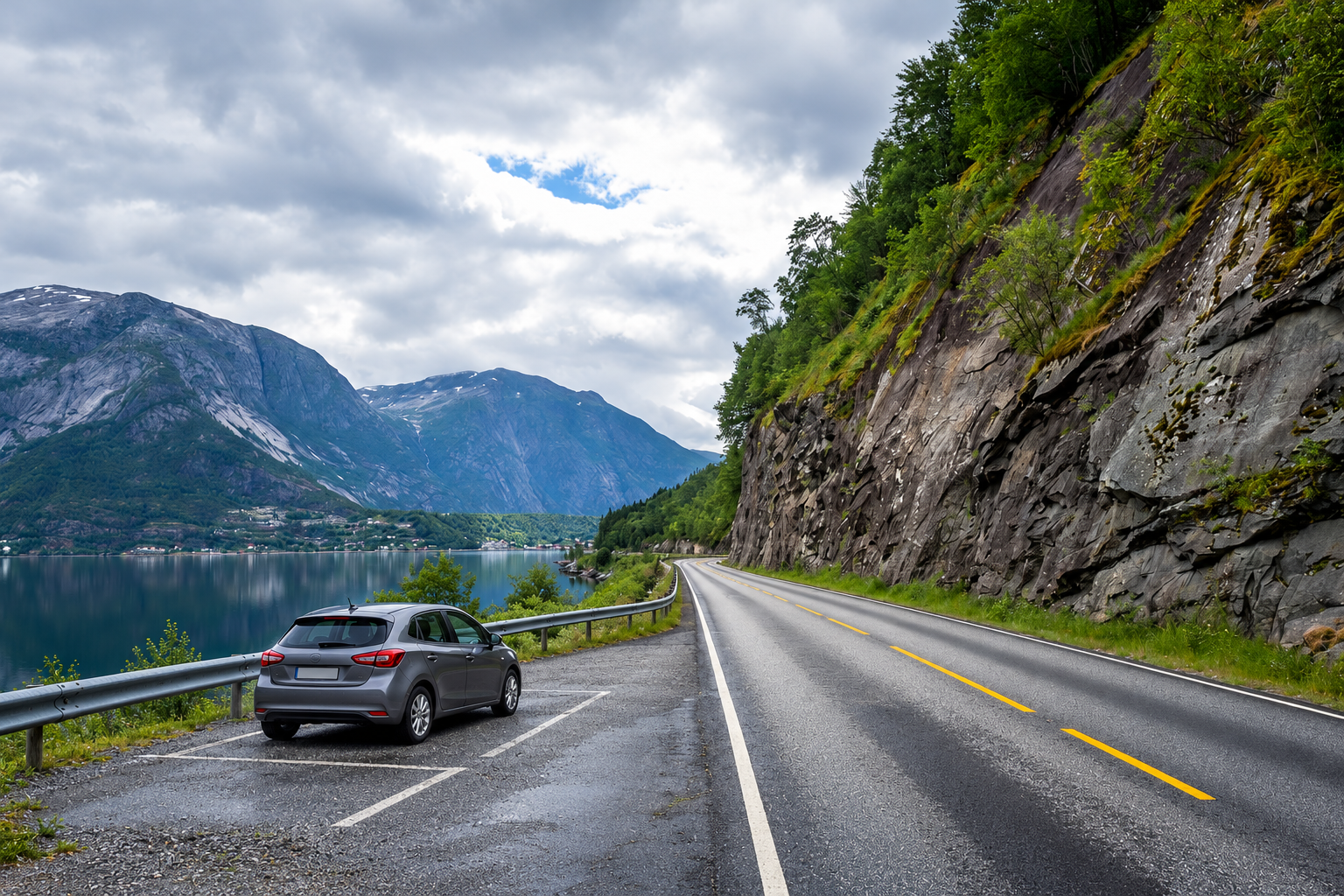
Compact rental-style car parked in a designated bay beside a Norwegian fjord

Illustrative Seven-Day Car Budget

The following figures demonstrate the calculation; they are assumptions to replace with your own quotes.

Car-related expense Example allowance
Rental: NOK 1,000 × 7 days
NOK 7,000
Additional cover or rental extras, if selected
NOK 1,400
Fuel or charging
NOK 1,400
Tolls and vehicle ferries
NOK 1,000
Parking
NOK 700
Total for the vehicle
NOK 11,500
Per person when shared by two
NOK 5,750

Fuel use, ferry crossings, and tolls depend on the route. One-way fees are not included in this example.

When adding a car to your trip budget, remove the train and bus journeys it replaces. Keep any transport you still need, such as airport transfers before collection or a passenger sightseeing cruise.

How to Visit Norway on a Budget

A cheaper trip needs a few deliberate choices rather than constant compromise.

Choose Fewer Bases

Fewer accommodation changes can mean fewer transfers, less time in transit, and more flexibility to use economical meal options.

Share Accommodation Where Practical

Compare the room total rather than the first per-person price displayed. Check whether breakfast or cooking facilities make a meaningful difference.

Select Your Main Paid Experience

Choose the excursion you most want, then build less expensive sightseeing around it.

Free walks and public spaces can balance a paid cruise or museum visit. You do not need an organised activity every day.

Use Public Transport for a City Trip

Renting a car only for the road-trip portion can avoid paying for unused days and city parking.

Compare Dates Around Your Actual Route

Travelling outside summer is not automatically cheaper everywhere. A northern-lights destination or ski resort can have strong winter demand.

Use our best time to visit Norway guide to compare seasonal access before choosing dates only for their accommodation prices.

Small Expenses That Are Easy to Miss

Leave room for:

  • Mobile data or an eSIM.
  • Luggage storage.
  • Laundry.
  • Snacks and additional café stops.
  • Card or ATM fees.
  • Late-night transport.
  • Accommodation extras.
  • Weather-related changes to plans.

Keep an additional emergency buffer accessible beyond the amount you expect to spend. The contingency in a worked budget is not a promise that every unexpected expense will fit within it.

Paying in Norway and Converting Your Budget

Norway uses the Norwegian krone, NOK. Card and phone payments are widely accepted, although you should carry a backup payment option and check your card’s fees. Visit Norway’s payment guidance

Keep your planning figures in NOK until you compare the final total with your home currency.

A currency converter provides an indication of the exchange value. Your bank or payment provider may use a different rate and charge additional fees.

Before paying, check the currency and conversion terms offered at checkout rather than assuming that a displayed home-currency amount is the best option.

Build Your Own Norway Vacation Cost

Start with the expenses tied to your actual dates.

  1. Accommodation: add the total for every night.
  2. Transport: price flights, transfers, intercity journeys, or the complete car budget.
  3. Food: multiply your daily allowance by the number of days.
  4. Activities: add the excursions and admissions you intend to book.
  5. Extras: include connectivity, luggage, shopping, and a contingency.

For a shared trip, separate costs paid per person from costs paid per room or vehicle.

Then check for overlap. Packages, hotel breakfasts, travel passes, and included transfers may replace expenses already listed elsewhere.

The most useful budget is one you can trace back to your bookings and choices.

Frequently Asked Questions

How much does a seven-day trip to Norway cost?

The moderate worked example in this guide totals NOK 15,100 per person for seven days and six nights, excluding international flights. It assumes two adults share a room and use public transport.

Is Norway expensive for tourists?

Yes, particularly for accommodation, restaurant meals, and organised activities. Sharing rooms, self-catering for some meals, and choosing fewer transfers can make a substantial difference.

Can you travel in Norway on NOK 1,000 per day?

It may be possible with inexpensive accommodation, careful food spending, and mostly free sightseeing. Treat major transport and excursions separately, and check actual accommodation availability before relying on that target.

Is a rental car cheaper than public transport?

Sometimes, especially when several people share it. Compare rental, cover, fuel or charging, tolls, ferries, and parking against the journeys it replaces.

How much does Norway cost for two people?

The moderate examples total NOK 30,200 for seven days, NOK 44,000 for ten days, and NOK 62,000 for fourteen days. International flights and shopping are additional.

Are fjord cruises included in the daily budget?

The daily table contains an averaged attraction allowance. A major cruise or excursion should be priced individually and included in your activity total, with any included transport accounted for.

Is winter cheaper than summer?

It depends on the destination. Winter demand for northern lights and skiing can keep prices high in popular areas.

Should you calculate your budget in euros or kroner?

Build it in NOK first because local prices are charged in kroner. Convert the total into your home currency when comparing costs, allowing for exchange-rate differences and payment fees.

Leave a Comment

Your email address will not be published. Required fields are marked *