Official 1991–2020 climate normals and methodology are available through the KMA Climate Data Service.
January: Cold, Dry and Quiet
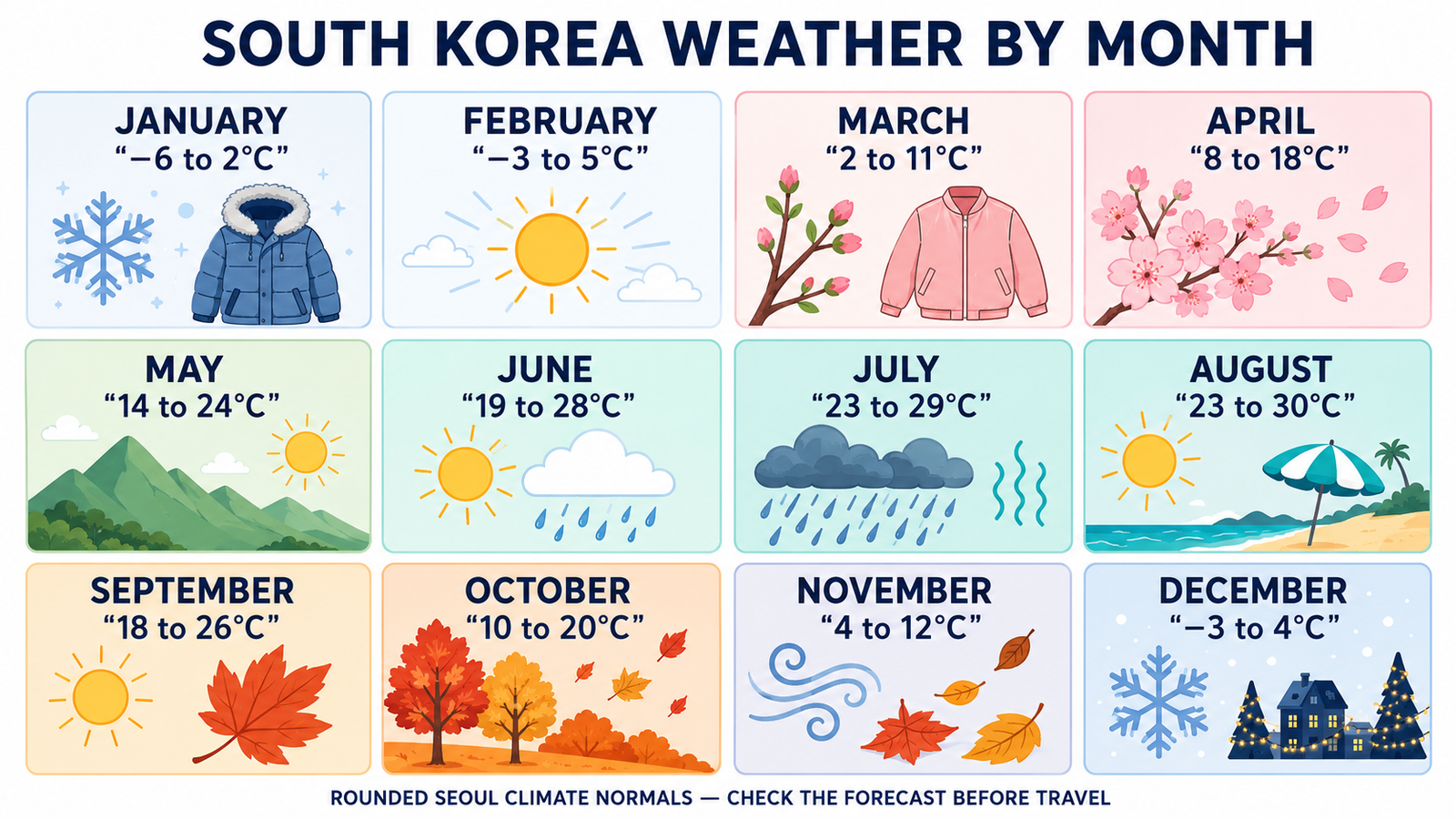
January is typically the coldest month in Seoul. Temperatures can remain below freezing, especially in the morning and at night, while mountain areas may be significantly colder.
This is a suitable time for:
- ski resorts;
- snow and ice festivals;
- museums and galleries;
- jjimjilbangs;
- cafés, shopping and indoor attractions;
- travellers who prefer fewer outdoor crowds.
Cold wind can make the temperature feel lower than the forecast suggests. Bring an insulated coat, gloves, warm footwear and layers suitable for heated indoor spaces.
Winter sports are generally concentrated from December through February, although opening dates and slope conditions depend on weather and snow management. Check the resort’s official website rather than assuming every slope will operate.
Travellers interested in indoor wellness can use the South Korea wellness guide to compare jjimjilbangs, spas and other experiences.
February: Winter with Early Signs of Spring
February remains cold, but conditions usually begin to change toward the end of the month. It can work well for travellers who want winter scenery without travelling during the year-end period.
Seollal, the Korean Lunar New Year, often falls in January or February. Its exact date changes annually.
During Seollal:
- intercity tickets may sell quickly;
- some businesses close;
- museums and palaces may change their operating schedules;
- Seoul can feel quieter as residents travel to their hometowns;
- cultural events may be held at palaces and folk villages.
In 2026, the official Seollal holiday ran from February 16 to 18. Future dates should be checked through the official VISITKOREA public-holiday calendar.
March: A Variable Transition Month
March is the beginning of meteorological spring, but it should not be treated as consistently warm.
Early March can still feel wintry, particularly in the morning. Later in the month, temperatures become more suitable for walking and the first major spring flowers begin appearing in southern regions.
March is useful for:
- visitors comfortable with changing weather;
- early spring flowers;
- city sightseeing before peak blossom weekends;
- lower-elevation hiking;
- travellers who can pack both warm and lighter layers.
Spring air quality can vary. Check current PM2.5 and PM10 conditions through the official AirKorea monitoring service, particularly before planning a full outdoor day.
April: Blossoms and Comfortable City Weather
April is one of the most popular months to visit South Korea. Temperatures are usually suitable for long city walks, palace visits and outdoor attractions.
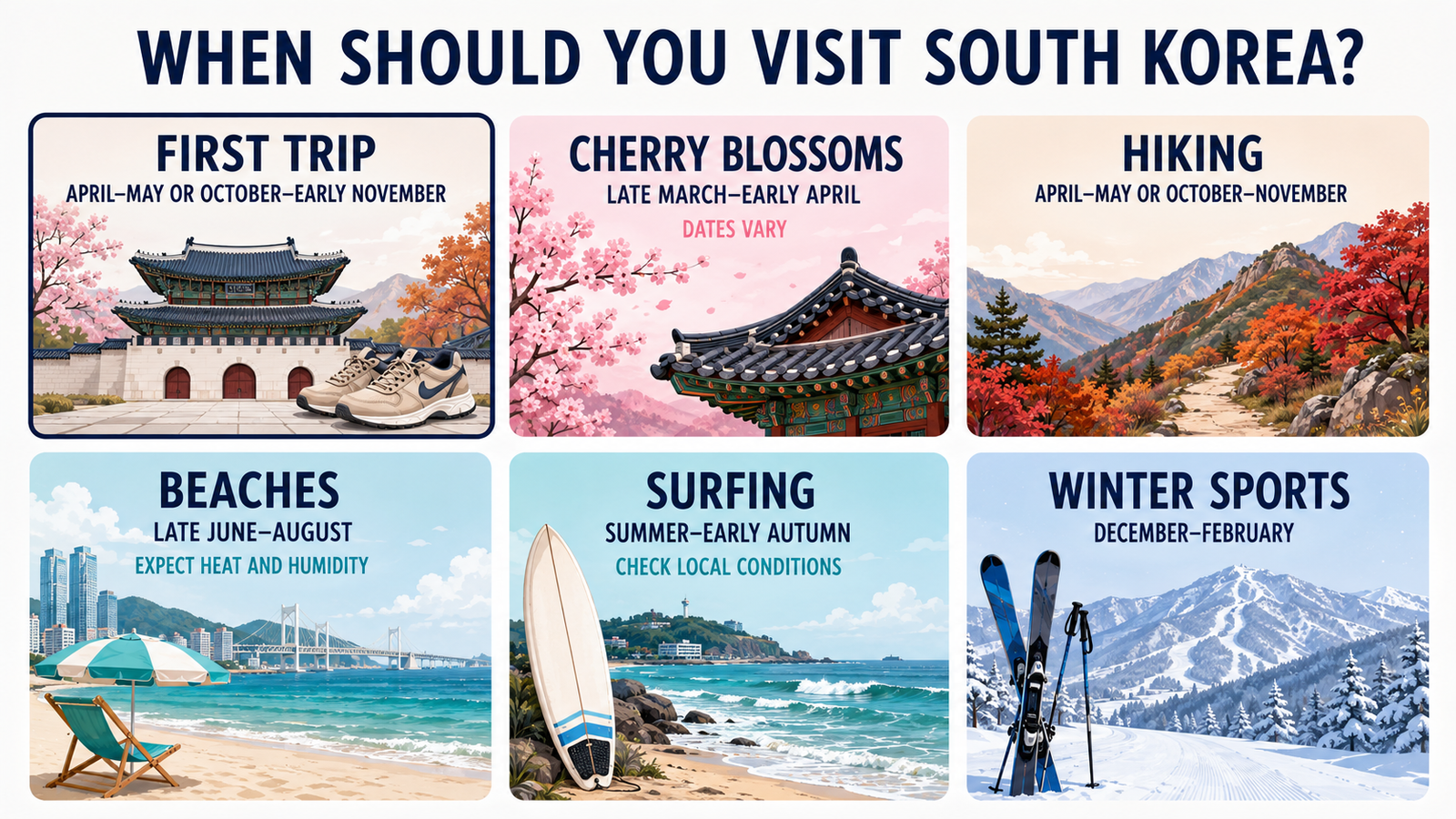
Cherry blossoms commonly attract visitors from late March into early April, but the timing varies by region and year. Blossoms generally appear earlier in Jeju and southern areas than in Seoul and northern destinations.
Do not plan a non-refundable trip around one predicted peak day. Warm or cold weather can shift blooming, and rain or wind can shorten the period.
April works particularly well for:
- Seoul and Gyeongju;
- historic landmarks;
- spring flower events;
- photography;
- day trips;
- moderate hiking;
- combining cities by train.
Popular blossom streets can become crowded on weekends. Visit early in the morning or explore smaller neighborhood locations instead of concentrating only on the most photographed sites.
For landmark planning, use the South Korea historical landmarks guide.
May: One of the Most Versatile Months
May is warm without the sustained midsummer humidity. It is one of the easiest months for a multi-city itinerary involving Seoul, Gyeongju and Busan.
It suits:
- hiking;
- palace and neighborhood walks;
- festivals;
- temple stays;
- coastal cities;
- outdoor museum and architecture routes.
National holidays and family-oriented events can make selected attractions busier. In 2026, public holidays included Workers’ Day on May 1, Children’s Day on May 5 and Buddha’s Birthday on May 24, observed on May 25.
Buddha’s Birthday can be an interesting cultural period because temples and streets may be decorated with lanterns. Visitors should still treat active religious spaces respectfully and check individual program schedules.
The temple stay guide explains program types, costs, schedules and etiquette.
June: Warm Weather and the Approach of Jangma
Early June can offer useful summer conditions before the wettest period develops. Later in the month, humidity and rainfall become more important planning factors.
According to Korea Meteorological Administration climate normals, the summer rainy period known as jangma typically begins around:
- June 19 in Jeju;
- June 23 in southern Korea;
- June 25 in central Korea.
These are long-term averages, not guaranteed start dates. The rainy period lasts around a month on average, but actual rainfall can arrive in concentrated episodes rather than as continuous rain every day.
June travellers should:
- keep indoor alternatives;
- use weather-resistant shoes;
- protect electronics;
- avoid planning every major outdoor attraction on consecutive days;
- check trail and ferry conditions;
- allow flexibility for Jeju.
July: Rain, Humidity and Indoor–Outdoor Planning
July is usually hot, humid and one of the wettest months. It can still support a successful trip, but the itinerary should be designed differently from a spring or autumn visit.
Instead of scheduling full outdoor days, combine:
- an early palace or neighborhood walk;
- a museum during the hottest or wettest hours;
- an evening market or indoor attraction;
- flexible coastal activities;
- additional time for transport disruption.
A waterproof shell is often more useful than a heavy raincoat. Lightweight, quick-drying clothing also works better than materials that remain wet.
Mountain trails can become slippery, streams can rise, and some routes may temporarily close. Check local warnings before hiking.
July is not the easiest choice for a first trip based mainly on walking, but it may suit travellers attending summer events or combining cities with beaches.
August: The Hottest Period
August is generally the hottest month. High temperatures combined with humidity can make long outdoor itineraries tiring.
This period is best suited to visitors who deliberately want:
- beaches;
- coastal cities;
- water activities;
- summer nightlife;
- air-conditioned museums and shopping areas;
- evening-focused schedules.
Take heat seriously. Schedule demanding walks early, rest during the hottest hours and carry water.
Weather systems and tropical cyclones can affect flights, ferries, coastal activities and Jeju. The Korea Meteorological Administration reports that South Korea is affected directly or indirectly by several tropical cyclones in an average year, although their timing and impact vary.
Anyone planning coastal activities should follow local safety instructions rather than relying on a general seasonal description.
September: Summer Gradually Gives Way to Autumn
September is a transition month. Early September can remain hot and humid, while later weeks may feel much more comfortable.
It can work well for:
- Busan and coastal cities;
- late-summer activities;
- city sightseeing later in the month;
- travellers who want warmth without choosing peak August.
Weather disruption remains possible, particularly near the coast or Jeju.
Chuseok, one of Korea’s most important holidays, can fall in September or October. Millions of people travel domestically, placing pressure on trains, buses and roads.
In 2026, the Chuseok holiday runs from September 24 to 26. Visitors travelling during this period should reserve intercity transport early and verify opening hours.
Chuseok is not necessarily a reason to avoid Korea. It can provide cultural events and a quieter atmosphere in parts of Seoul, but transport planning becomes more important.
October: The Best All-Round Month
For many travellers, October is the best month to visit South Korea.
Typical advantages include:
- comfortable temperatures;
- lower humidity than summer;
- good hiking conditions;
- developing autumn colors;
- practical city-to-city travel;
- outdoor festivals;
- comfortable evenings, particularly earlier in the month.
Foliage generally develops earlier in northern mountains and higher elevations, then progresses toward cities and southern regions. Exact timing changes annually.
Popular national parks can be extremely busy on foliage weekends. If hiking is a priority:
- visit on a weekday;
- start early;
- use public transport where possible;
- check the final cable-car or return-bus schedule;
- choose a route that matches daylight and ability.
The hiking in South Korea guide compares routes, difficulty, distance and transport.
November: Cooler, Drier and Less Predictable
Early November can still provide autumn color in cities and southern areas, while later November becomes noticeably colder.
This month suits travellers who prefer:
- cooler walking conditions;
- museums and cultural attractions;
- fewer foliage-season crowds after the peak;
- city-based itineraries;
- a mixture of indoor and outdoor activities.
Pack a warmer layer and check sunset times before planning historical sites or hikes.
Late November is not visually dramatic everywhere, but it can be more comfortable than summer for travellers who prioritize food, museums, shopping and urban neighborhoods.
December: Winter Begins
December is cold and comparatively dry. Snow is possible, but visitors should not assume that central Seoul will remain covered in snow.
December works for:
- seasonal lighting;
- winter markets and festivals;
- ski trips;
- museums;
- shopping;
- jjimjilbangs;
- food-focused travel.
Daylight is shorter, so schedule outdoor landmarks earlier. Indoor attractions can fill the later afternoon and evening.
Christmas Day is a public holiday in South Korea, while New Year sunrise trips can increase demand for selected coastal and mountain destinations.
Spring in South Korea: March to May
Spring is often described as one of the best seasons to visit Korea, but the three months differ significantly.
Advantages
- moderate temperatures in April and May;
- flowers and seasonal landscapes;
- comfortable palace and neighborhood walks;
- good conditions for many hiking routes;
- numerous festivals.
Disadvantages
- highly crowded blossom locations;
- variable March temperatures;
- changing bloom dates;
- possible fine-dust or yellow-dust episodes;
- higher demand during popular weekends and holidays.
The official tourism organization publishes updated blossom information, but it advises visitors that actual bloom and peak dates may differ according to weather. See the latest VISITKOREA spring information.
Summer in South Korea: June to August
Summer is the most demanding season for travellers who plan to walk extensively.
Advantages
- beaches and water activities;
- summer festivals;
- long daylight;
- active nightlife;
- green landscapes.
Disadvantages
- heat and humidity;
- jangma rainfall;
- possible typhoon-related disruption;
- slippery hiking routes;
- higher physical strain;
- busy domestic holiday destinations.
Summer is easier when the itinerary includes museums, cafés, markets and flexible indoor alternatives.
Autumn in South Korea: September to November
Autumn combines warm early-season weather with cooler hiking and foliage conditions later.
Advantages
- comfortable October temperatures;
- autumn foliage;
- good hiking;
- lower humidity;
- outdoor festivals;
- practical city sightseeing.
Disadvantages
- popular parks become crowded;
- Chuseok affects transport;
- early September can still feel like summer;
- foliage forecasts are not guarantees;
- temperatures fall quickly in November.
For many first-time travellers, mid-October through early November offers the best balance.
Winter in South Korea: December to February
Winter is appropriate for travellers who accept cold weather and plan accordingly.
Advantages
- skiing and snow activities;
- winter festivals;
- quieter outdoor attractions;
- jjimjilbangs and indoor culture;
- seasonal lights;
- potentially lower demand outside holidays and resorts.
Disadvantages
- freezing temperatures;
- cold wind;
- shorter daylight;
- mountain access may require additional preparation;
- holiday closures;
- snow is not guaranteed in every city.
Winter travel should be chosen for winter experiences, not because Seoul is expected to look continuously snow-covered.
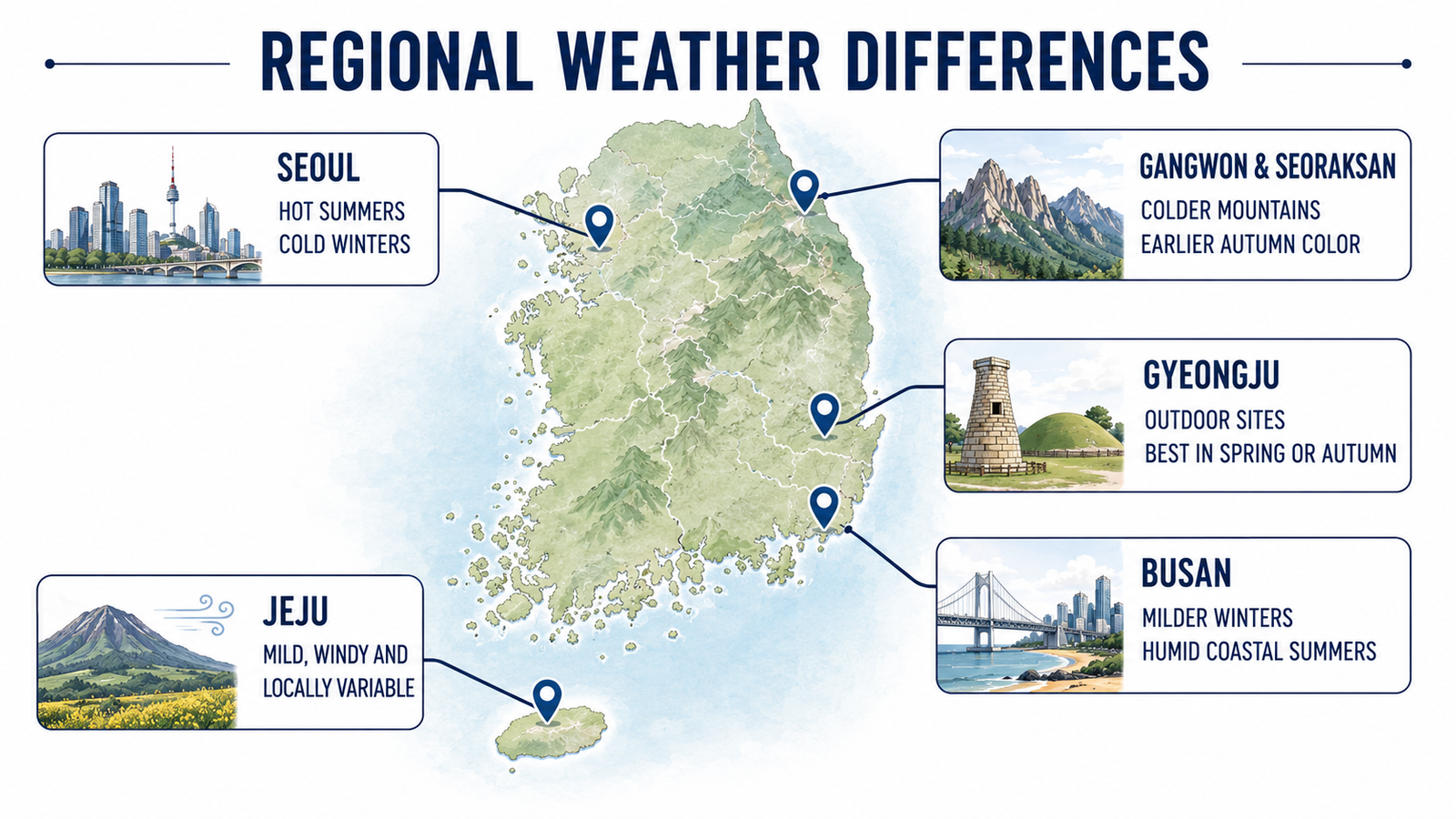
Do not use a Seoul forecast to plan Hallasan, Seoraksan or a coastal ferry.
How Travel Costs Change by Season
The cost of a trip to South Korea depends not only on where you stay and how you travel, but also on when you visit. Accommodation and international flights usually show the greatest seasonal variation, while public transport, museum admission and everyday food prices remain comparatively stable throughout the year.
Seasonal prices are only one part of the budget. Our South Korea trip cost guide provides daily estimates for accommodation, food, transport and attractions.
Typical Daily Travel Budget
Excluding international flights, a practical daily budget per person is approximately:
- Budget travel: ₩60,000–₩100,000, usually with hostel accommodation, inexpensive meals and public transport.
- Mid-range travel: ₩150,000–₩250,000, including a private room, restaurant meals, transport and paid attractions.
- Comfortable travel: ₩250,000 or more, particularly with higher-end hotels, taxis, tours and frequent intercity travel.
Solo travellers often spend more per person because they cannot divide the cost of a hotel room. Shopping is not included.
When Is South Korea Cheapest to Visit?
For many international visitors, the best chance of finding lower accommodation prices is during the colder period from late November to February, excluding Christmas, New Year and Seollal. Parts of the summer rainy season may also offer lower city-hotel prices, although coastal destinations and Jeju can become more expensive during school holidays.
Travellers looking for a balance between weather and cost should consider late May, early June or the second half of November. These periods can be less crowded than the main cherry blossom and autumn foliage weeks, although conditions vary from year to year.
Transport fares, restaurant prices and admission fees do not usually change simply because the season changes. The main savings therefore come from choosing less popular dates and booking flights and accommodation early.
For a broader breakdown of accommodation, transport, food and daily expenses, see our South Korea itinerary and travel guide.
Best Time by Type of Trip
First visit to Seoul
Choose:
April–May or October–early NovemberThese periods are suitable for palaces, neighborhoods, shopping districts, museums and evening activities.
Hiking trip
Choose:
April–May or October–NovemberAutumn is particularly attractive, but foliage weekends can be crowded.
Food-focused trip
Almost any season can work. Winter favors warming soups and indoor dining, while summer brings different seasonal dishes and market conditions.
Use the best Korean food guide to identify dishes and regional experiences.
Festival trip
Festival opportunities exist throughout the year, but exact dates must be checked individually.
The South Korea festivals guide compares major events by month, location and travel style.
Surfing trip
Conditions vary between Yangyang, Busan and Jeju. Summer and early autumn can offer opportunities, but weather, wave conditions and local operator schedules must be confirmed.
See the surfing in South Korea guide for destination comparisons, lessons and safety considerations.
Art, museums and architecture
These interests work throughout the year. Summer and winter are particularly suitable for building a trip around indoor attractions.
Useful guides include: